
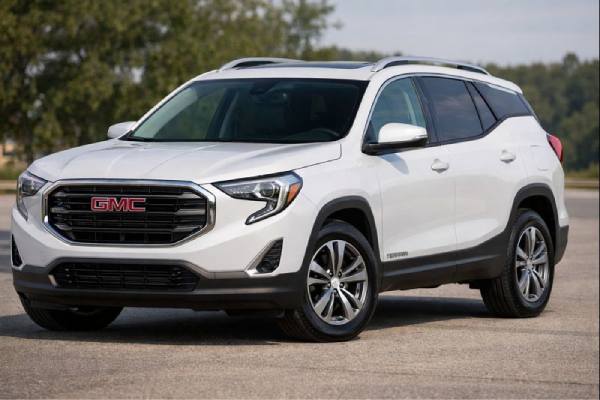
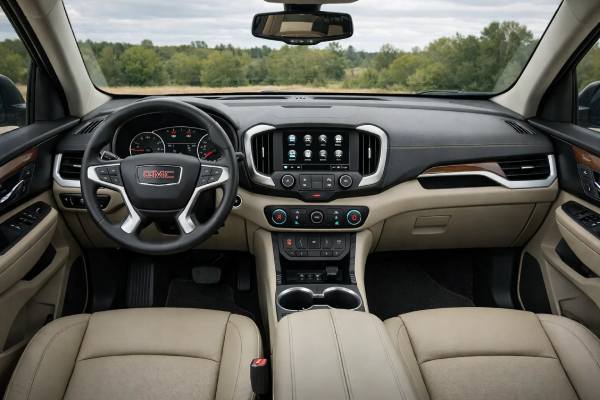
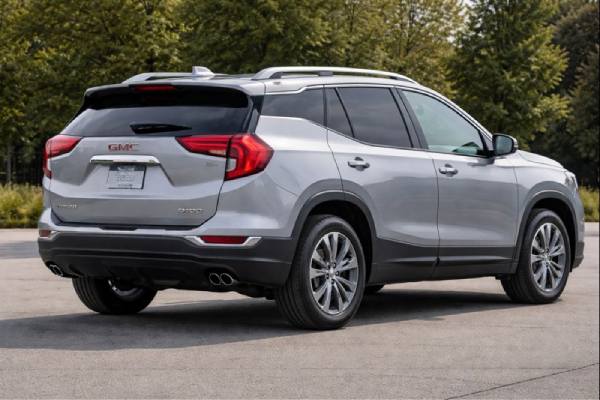
The 2018–2021 GMC Terrain AWD with the 1.5L LYX turbo is a “right-sized” compact SUV built around efficiency and day-to-day usability, but with an all-wheel-drive system that meaningfully improves traction on wet pavement, winter roads, and steep gravel driveways. The engineering story is balance: a small-displacement turbo for low-load economy, a 9-speed automatic to keep revs down at cruise, and an on-demand AWD setup that can decouple when you do not need it. The trade-offs are also clear. AWD adds weight and complexity, which can slightly soften acceleration and raise operating costs if fluid services get ignored. For buyers, the sweet spot is a well-maintained example with complete service records, software updates done, and no driveline noises—because this model rewards consistent upkeep more than heroic repairs.
What to Know
- Strong everyday traction and stability in rain and snow compared with FWD, especially on all-season or winter tires.
- Turbocharged torque makes city driving easy without needing high rpm.
- Practical packaging: useful cargo shape, comfortable ride, and modern safety tech availability.
- Ownership caveat: keep AWD and transmission fluids on a schedule if you drive in severe conditions (short trips, hills, towing, snow).
- Typical interval: change engine oil and filter using the oil-life monitor (often 8,000–12,000 km / 5,000–7,500 mi, or 12 months—whichever comes first).
Section overview
- LYX AWD Terrain profile
- Data sheet and capacities
- Trim mix and safety gear
- AWD 1.5T reliability patterns
- Service plan and buying advice
- Driving impressions and fuel use
- Competitor comparison guide
LYX AWD Terrain profile
This Terrain configuration is best understood as a traction-focused, efficiency-first compact SUV. The LYX 1.5L turbo (170 hp) is tuned for regular fuel and real-world drivability, not headline acceleration. Its useful trait is midrange torque: the engine makes its “working power” early enough that the vehicle feels responsive in traffic, merging, and moderate hills without constant downshifts. The 9-speed automatic supports that personality by keeping the engine in a calmer rpm band at steady speeds, which helps noise, fuel use, and long-distance comfort.
The AWD system is the key differentiator versus the common FWD versions. It is primarily an on-demand layout: most of the time, it behaves like a front-driver for efficiency, then it sends torque rearward when slip is detected or when the control logic predicts the need (cold/wet conditions, quick throttle, corner exit, and so on). Many Terrains also offer a driver-selectable mode strategy (depending on trim) that adjusts throttle mapping, shift behavior, traction-control thresholds, and AWD response.
Where AWD matters most is not off-roading, but low-grip starts and transitions: pulling away from a snowy curb, climbing a slippery ramp, accelerating while turning on wet asphalt, or controlling wheelspin on uneven gravel. It also reduces the “one tire does everything” burden that FWD can face when the front tires are asked to steer, drive, and manage braking load simultaneously.
The cost of that capability is added mass and added service items. AWD Terrains typically weigh more than comparable FWD builds and have more rotating hardware (prop shaft, rear drive unit, couplings). That can slightly dull initial acceleration and can reduce fuel economy in stop-and-go driving. It can also introduce the kinds of age-related issues you should listen and feel for: low-speed clunks, driveline vibration under load, or a faint whine that rises with road speed.
For most owners, this model makes the most sense if you face real winter, steep streets, frequent rain, or you value “calm traction” over maximum mpg. If you do not need AWD, the FWD 1.5L is simpler and usually cheaper to run—so the AWD version should earn its keep in your climate and routes.
Data sheet and capacities
Below are practical specifications for the 2018–2021 Terrain AWD with the 1.5L LYX turbo. Some items vary by trim, wheel package, and market, so treat the tables as a “working baseline,” then verify against your build label and service information.
Engine and performance
| Item | Specification |
|---|---|
| Code | LYX |
| Engine layout and cylinders | Inline-4, transverse; DOHC; 4 valves/cyl |
| Bore × stroke | 74.0 × 86.6 mm (2.91 × 3.41 in) |
| Displacement | 1.5 L (1490 cc) |
| Induction | Single turbocharger, intercooled |
| Fuel system | Direct injection |
| Compression ratio | 10.0:1 |
| Max power | 170 hp (127 kW) @ 5600 rpm |
| Max torque | 275 Nm (203 lb-ft) @ 2000–4000 rpm |
| Timing drive | Chain (inspect for noise/correlation faults; replace if out of spec) |
| Emissions and efficiency standard | U.S. EPA / equivalent market standard |
| Rated efficiency (typical, AWD) | about 9.0–10.5 L/100 km (22–26 mpg US) depending on wheels and test cycle |
| Real-world highway @ 120 km/h (75 mph) | often ~8.5–9.8 L/100 km (24–28 mpg US) if tires and alignment are healthy |
Transmission and driveline
| Item | Specification |
|---|---|
| Transmission | 9-speed automatic (9T45 family) |
| Drive type | On-demand AWD (rear torque engagement when needed) |
| Gear ratios | 1st 4.69 / 2nd 3.31 / 3rd 3.01 / 4th 2.45 / 5th 1.92 / 6th 1.45 / 7th 1.00 / 8th 0.75 / 9th 0.62 |
| Differential | Open (traction managed by brake-based controls) |
Chassis and dimensions
| Item | Specification |
|---|---|
| Platform | GM D2XX |
| Suspension (front / rear) | MacPherson strut / independent multi-link |
| Steering | Electric power steering |
| Brakes | 4-wheel discs; rotor size varies by brake package (commonly 300–321 mm front, ~288 mm rear) |
| Wheels and tires | Typically 17–19 in; tire sizes vary by trim and package |
| Ground clearance | Varies by tire and trim; confirm for your build |
| Length / width / height | Approx. 4.66 m / 1.84 m / 1.66 m (varies slightly by equipment) |
| Wheelbase | Approx. 2.73 m |
| Turning circle (kerb-to-kerb) | Approx. 11.4 m (varies by wheel and tire) |
| Curb weight | Commonly ~1,650–1,750 kg (trim dependent) |
Performance and capability (typical)
| Item | Typical range |
|---|---|
| 0–100 km/h (0–62 mph) | ~9.5–10.5 s (trim, wheels, conditions) |
| Towing capacity | Often up to 680 kg (1500 lb) when properly equipped; verify by VIN and trailering package |
| Payload | Varies widely by trim and equipment; check door-jamb label |
Fluids, service capacities, and key torque
| Item | Specification |
|---|---|
| Engine oil | dexos1 full synthetic, typically SAE 0W-20 |
| Engine oil capacity (with filter) | AWD: 5.0 L (5.3 US qt) |
| Coolant | DEX-COOL; typical mix 50/50 with clean water |
| Cooling system capacity | 6.6 L (7.0 US qt) |
| Transmission fluid | DEXRON-VI (verify for your market/service bulletin updates) |
| Transfer case / AWD fluid | Model-specific; commonly “dealer-specified” fluid—follow service information |
| A/C refrigerant | Refer to under-hood label for type and charge |
| Wheel lug nut torque | 140 Nm (100 lb-ft) |
Safety and driver assistance snapshot (availability varies)
| Item | Notes |
|---|---|
| Crash ratings | IIHS ratings vary by test and equipment; headlight performance is a known weak point across several trims |
| ADAS suite | Forward collision alert, automatic emergency braking, lane keep assist, blind-spot monitoring, rear cross-traffic alert (often trim- or package-dependent) |
Trim mix and safety gear
For 2018–2021, the Terrain range is typically organized around SLE, SLT, and Denali (with SL as an entry trim in some years/markets). The 1.5L turbo is the volume powertrain; AWD availability depends on trim, year, and package strategy. When shopping, focus less on the badge and more on the mechanical and functional “tells” that change ownership experience: wheels/tires, lighting, driver-assistance hardware, and whether the vehicle has the AWD controls and calibrations you want.
Trims and options (what actually changes):
- SLE / SLT often represent the best value. They commonly offer AWD, heated seats, remote start, and the key safety options without Denali-specific cost. Wheels may be 17–18 inches depending on packages—often the sweet spot for ride quality and tire cost.
- Denali adds upscale interior materials, more standard tech, and distinct wheels and lighting. The downside is running cost: larger wheels are more prone to curb damage and can raise tire prices, and some headlight variations still score poorly in objective testing despite looking premium.
- Infotainment tiers matter. The underlying system is generally reliable, but higher trims may include upgraded audio, navigation, and more integrated phone features. The practical buyer test is simple: confirm Bluetooth stability, camera clarity, USB port function, and that all steering-wheel controls behave correctly.
Option packages to look for (or avoid):
- Driver-assistance packages are worth prioritizing if you commute or do lots of highway miles. Adaptive cruise control (when equipped) can be a major fatigue reducer, but it is not universal across all trims and years.
- Smaller wheel packages (often 17–18 in) can be a long-term advantage: better ride compliance, less pothole risk, and cheaper tires. Unless you strongly prefer appearance, the biggest wheels are rarely the “best ownership” choice.
- Cold-climate equipment (heated steering wheel, heated rear seats, remote start) is a quality-of-life upgrade in winter regions and can reduce windshield fogging and driver fatigue.
Safety ratings (how to interpret them):
Safety scores are heavily equipment-dependent. Ratings bodies test specific configurations, and items like headlights, forward crash prevention, and even seat-belt reminders can change results. The Terrain generally performs well in structural crashworthiness tests, but headlights have been a recurring weak category in objective scoring across multiple trims and model years. If you drive frequently at night on unlit roads, treat headlight performance as a buying criterion, not a minor detail.
Safety systems and ADAS (what to verify on a used example):
- Confirm the full airbag set and that there are no airbag or restraint warning lights.
- Verify LATCH/ISOFIX anchors are intact and easy to access if you use child seats.
- Test the camera system (rear camera clarity, guidelines, and parking sensors if equipped).
- If the vehicle has AEB, lane assist, blind-spot monitoring, or rear cross-traffic alert, confirm they initialize properly and do not show intermittent fault messages—because sensor and calibration issues after windshield or bumper work are common in the used market.
A practical tip: match the vehicle’s equipment list to the build label in the glove box/door area when available. It helps you avoid buying an “almost equipped” Terrain that is missing the one feature you assumed it had.
AWD 1.5T reliability patterns
Reliability on this Terrain variant is usually better when you treat it like a modern turbo car: warm it up gently, keep oil quality high, and do not ignore small drivability changes. The LYX and its supporting systems are not fragile, but they do not tolerate neglected maintenance as well as older, lower-output naturally aspirated engines.
Common issues (higher prevalence)
- Intermittent hesitation, rough idle, or a “soft” throttle response
Symptoms: stumble after cold start, uneven idle, occasional misfire feel, or reduced power messages that clear.
Likely causes: carbon buildup common to direct injection, aging spark plugs, intake leaks, or sensor issues (MAF/MAP related).
Remedy: confirm plugs are correct type and gap, check for vacuum/charge-air leaks, and ensure software updates are applied. - EVAP purge system quirks
Symptoms: hard start after refueling, rough idle after filling up, occasional check-engine light.
Likely causes: purge valve behavior or related EVAP components.
Remedy: diagnostic scan, smoke test if needed, replace the faulty component rather than chasing symptoms. - Transmission shift quality complaints
Symptoms: flare on light throttle, delayed engagement, harsh 2–3 or 3–4 feel, or “busy” shifting on rolling terrain.
Likely causes: adaptive learning out of range, aging fluid in severe duty, or calibration needs.
Remedy: confirm correct fluid and level, check for technical updates, and perform relearn procedures when appropriate.
Occasional issues (moderate prevalence)
- Cooling system seepage or thermostat-related faults
Symptoms: slow coolant loss, sweet smell, heater performance changes, temperature warnings.
Likely causes: hose junctions, thermostat housing, or water pump seepage.
Remedy: pressure test and repair early; overheating events are far more expensive than a proactive fix. - AWD driveline noises
Symptoms: low-speed clunk, vibration under load, or faint whine with speed.
Likely causes: rear drive unit wear, coupler issues, prop shaft imbalance, or fluid condition.
Remedy: confirm tire sizes match on all four corners (critical), inspect for leaks, and service fluids on schedule.
Rare but costly (watch closely)
- Turbocharger oiling or boost control faults
Symptoms: blue smoke, persistent underboost codes, loss of power under load, abnormal whistling.
Likely causes: oil quality neglect, oil feed/return issues, or boost control hardware problems.
Remedy: do not “drive through it.” Diagnose quickly and verify no oil starvation history.
Recalls, TSBs, and software actions
For 2018–2021, assume there may be recall campaigns or service bulletins that affect infotainment, powertrain calibrations, airbags, or other systems. The practical approach is:
- Run an official VIN check and request dealer campaign history.
- Confirm powertrain control module and transmission updates have been applied when applicable.
- Treat ADAS sensor faults seriously—post-collision bumper work and windshield replacement can trigger misalignment or calibration issues.
If you buy one used, prioritize a vehicle with proof of completed campaigns and a clean diagnostic scan. On modern GM vehicles, “software state” is a real reliability variable.
Service plan and buying advice
A good maintenance plan for this AWD Terrain is not complicated, but it must be consistent. The goal is to protect the turbocharger, timing chain system, and AWD hardware by keeping fluids clean and catching small leaks or sensor faults early.
Practical maintenance schedule (distance and time)
Every 8,000–12,000 km (5,000–7,500 mi) or 12 months
- Engine oil and filter (dexos1 full synthetic; typically 0W-20).
- Tire pressure check and quick tread scan (inside-edge wear can indicate alignment drift).
Every 12,000–16,000 km (7,500–10,000 mi)
- Tire rotation (AWD models benefit from strict rotation to keep tire diameters closely matched).
- Brake inspection: pad thickness, rotor condition, and caliper slide movement.
Every 24,000–32,000 km (15,000–20,000 mi)
- Cabin air filter.
- Engine air filter (more often if you drive dusty roads).
Every 48,000–80,000 km (30,000–50,000 mi)
- Brake fluid exchange (especially if you see humid climate or mountain driving).
- Transmission service: for heavy city use, hills, or hot climates, consider earlier fluid service even if the basic schedule is longer.
Every 80,000–120,000 km (50,000–75,000 mi)
- Spark plugs (direct-injected turbo engines are sensitive to plug condition; replace before misfires start).
- Coolant service (verify the correct coolant type and mixture).
AWD-specific (interval depends on use)
- If you drive snow, steep grades, towing, or frequent short trips: schedule transfer case / rear drive unit fluid service earlier rather than later. If the official schedule is vague, use a conservative interval (for example, 48,000–80,000 km / 30,000–50,000 mi) and follow the correct fluid specification.
Fluids and essentials that matter
- Oil quality is non-negotiable. Turbochargers rely on clean oil for bearing health and thermal stability.
- Coolant level stability matters. Small seepage can become overheating under load.
- Tires must match. On-demand AWD systems can be stressed by mismatched diameters; replace tires as a set when possible.
Buyer’s guide checklist (fast but effective)
Before the test drive
- Check service records for oil changes, spark plugs, coolant service, and any drivetrain fluid work.
- Confirm recall/campaign completion via VIN and dealer printout.
- Look underneath for dampness around drivetrain housings and cooling components.
During the drive
- Cold start: listen for rattles, timing-chain noise, or high idle surging beyond the normal warmup.
- Light throttle: feel for “busy” shifting or flare; note if it improves as the vehicle warms.
- Tight parking-lot turns: listen for clunks; verify no binding sensation.
- Highway cruise: watch for vibration, steering shimmy, or wandering (often tire or alignment-related).
After the drive
- Scan for pending codes if possible.
- Verify all ADAS features initialize and do not show intermittent faults.
Years, trims, and options to seek
- Seek trims that include the safety tech you want and wheels you can afford to replace. For most owners, mid-trim with smaller wheels and the right driver-assistance package offers the best long-term balance.
Durability outlook is solid when maintenance is documented. The “expensive Terrains” are usually the neglected ones, not the inherently defective ones.
Driving impressions and fuel use
On the road, the 1.5T AWD Terrain is more about smooth traction and comfort than punch. Step-off acceleration is adequate, and the turbo helps it feel stronger than the horsepower number suggests in normal traffic. The engine’s torque band supports relaxed driving: you do not need to rev it hard to keep up, and that tends to keep cabin noise modest.
Ride, handling, and NVH
- Ride quality is typically composed, especially on 17–18 inch wheels. Larger wheels can sharpen impacts and add tire noise on rough pavement.
- Steering is light and predictable. Feedback is limited (normal for the class), but the vehicle tracks straight well when alignment and tires are in good shape.
- Braking feel is usually consistent, though pedal feel can soften if brake fluid is old or if the vehicle is driven hard in mountains.
Powertrain character
- The turbo’s response is tuned for smoothness, not instant snap. Expect a small delay when you roll into the throttle from low rpm; it is usually more noticeable in “comfort” drive logic and less in sportier modes (if equipped).
- The 9-speed aims to keep revs low. In rolling terrain, it can occasionally hunt between gears if the driver holds a very light throttle. A slightly firmer pedal or a different drive mode often reduces this.
- Start/stop behavior varies by battery health and climate. A weak 12V battery can make restarts rougher and can create “electrical gremlins” that disappear after battery replacement.
Real-world efficiency
AWD and larger wheels usually cost some mpg compared with FWD. In mixed driving, many owners see a spread that reflects route and climate more than the engine itself:
- City-heavy driving: often ~10.0–12.0 L/100 km (20–24 mpg US), with winter at the higher end.
- Highway 100–120 km/h: often ~8.5–9.8 L/100 km (24–28 mpg US), assuming steady speeds and healthy tires.
- Cold-weather penalty: short trips and winter tires can add a noticeable increase; it is normal to see a 10–20% hit when temperatures drop and the engine spends more time warming up.
Traction and control
In rain and snow, the AWD system’s biggest benefit is composure during transitions—accelerating while turning, cresting slippery hills, or starting from a stop on a mixed-grip surface. The stability-control tuning is generally conservative, which helps most drivers. Tires still matter more than drivetrain: quality all-seasons or true winter tires will change the vehicle more than any drive mode.
Load and towing
This is not a heavy tow platform, but it can handle light utility towing when properly equipped. If towing is part of your plan, verify the exact rating for your VIN and confirm cooling system health and transmission behavior on grades.
Competitor comparison guide
The compact SUV class is crowded, so the right comparison depends on what you value: traction, fuel cost, interior ergonomics, or long-term simplicity. Here is how the 1.5T AWD Terrain generally stacks up in the real world.
Versus Honda CR-V AWD (1.5T)
- Where the Terrain competes well: cabin comfort, torque feel at low rpm, and available features per dollar in some trim combinations.
- Where the CR-V often wins: resale value and a reputation for consistent refinement. CR-V packaging is also a benchmark for cargo usability.
- Buyer logic: choose the Terrain if you prefer its seating position, feature set, or deal pricing; choose CR-V if you prioritize broad market confidence and resale.
Versus Toyota RAV4 AWD (2.5)
- Where the Terrain competes well: smoother turbo torque delivery in everyday passing and a more “quiet comfort” feel in some setups.
- Where the RAV4 often wins: proven drivetrain simplicity (non-turbo in many trims) and strong long-term ownership perception.
- Buyer logic: choose RAV4 if you want “set and forget” ownership; choose Terrain if you want turbo drivability and find a well-documented, well-priced example.
Versus Mazda CX-5 AWD (2.5)
- Where the Terrain competes well: interior space feel and ride comfort, plus a calmer “commuter” personality.
- Where the CX-5 often wins: steering feel, handling balance, and a more cohesive sporty driving experience.
- Buyer logic: CX-5 is for drivers who enjoy the act of driving; Terrain is for drivers who want traction and comfort with a modern feature set.
Versus Ford Escape AWD (1.5/2.0)
- Where the Terrain competes well: solid road manners and a straightforward interior layout; the GM 9-speed behavior can feel smoother than some competitors when well-calibrated.
- Where Escape can win: power options (especially 2.0) and, in some years, broader electrified availability.
- Buyer logic: compare specific model years carefully—equipment and powertrain strategy vary widely.
Bottom line
The Terrain AWD 1.5T is most compelling when you want winter-ready traction without stepping into a larger, heavier SUV. It is not the fastest option, but it is often a comfortable, well-equipped daily driver that rewards good records and correct tires. If you buy based on condition, maintenance proof, and equipment fit—not just trim name—you can land a very satisfying long-term vehicle in this segment.
References
- 2021 GMC Terrain/Terrain Denali Owner’s Manual 2021 (Owner’s Manual)
- 2021 GMC Terrain 4-door SUV 2021 (Safety Rating)
- Gas Mileage of 2021 GMC Terrain 2021 (Official EPA Database)
- TechLink-engine-oil-capacities-A-2021.pdf 2021 (Service Reference)
- 1.5L I-4 LSD Turbo Engine | GM Powered Solutions 2021 (Technical Overview)
Disclaimer
This article is for informational purposes only and is not a substitute for professional diagnosis, inspection, or repair. Specifications, torque values, service intervals, and procedures can vary by VIN, market, trim, and installed equipment. Always verify details using your official owner’s manual, factory service information, and dealer records before performing service or purchasing parts. If you found this guide useful, please consider sharing it on Facebook, X (Twitter), or your favorite forum to support our work.