
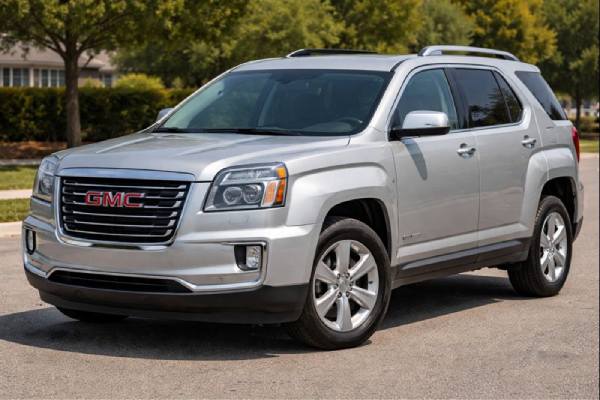
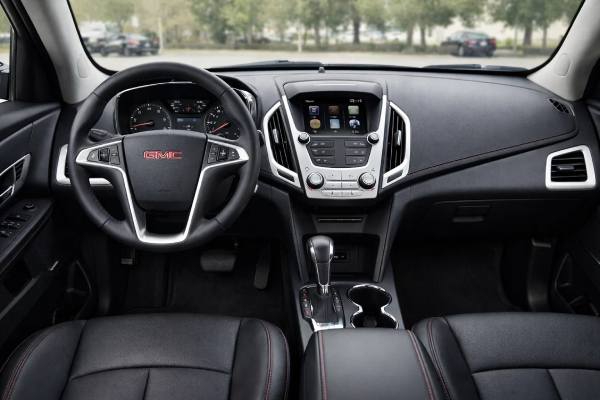
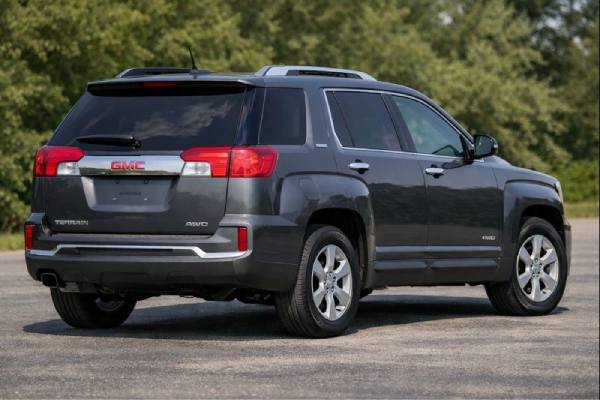
The 2016–2017 facelift GMC Terrain AWD with the 2.4L LEA (182 hp) is a very specific kind of compact-to-midsize crossover: heavy-duty feeling, quiet for its age, and tuned more for stability and comfort than quick reactions. The on-demand AWD system adds confidence on wet roads and light snow, but it also adds weight, extra fluids to service, and a few more seals and bearings that can age out.
What makes this version worth understanding is the powertrain mix. The LEA is a direct-injected Ecotec four-cylinder with decent top-end power, but it can be sensitive to oil quality and service habits—especially if it sees short trips or stretched intervals. Pair that with GM’s 6-speed automatic and you get a vehicle that can be very durable when maintained “by the book,” yet disappointing when it’s treated like an appliance. This guide focuses on what to check, how to maintain it, and where it stands against key rivals.
Owner Snapshot
- Strong highway comfort and straight-line stability for long commutes and family duty.
- AWD adds real traction in rain and light snow without the complexity of a full-time system.
- Parts availability and service familiarity are generally good in most markets.
- Watch for oil-related engine wear patterns if prior owners stretched oil changes or ignored warnings.
- Plan transfer case fluid service every 72,000 km (45,000 mi) under severe use (snow, towing, frequent hills).
Contents and shortcuts
- Facelift Terrain AWD in focus
- LEA 2.4 specs tables
- Trims options and safety tech
- Reliability patterns and known faults
- Maintenance plan and buying checks
- Road feel and real mpg
- Terrain AWD vs key rivals
Facelift Terrain AWD in focus
This facelift Terrain AWD sits at the “comfort-first” end of its class. It’s built on GM’s Theta architecture family (often referenced by GMT177 for Terrain), with a tall seating position, substantial doors and pillars, and a calm ride that favors freeway stability. In daily use, it feels heavier than many competitors—because it is. That weight matters when you evaluate performance, braking feel, and fuel use.
The AWD system is the key differentiator versus the FWD version. In normal cruising it behaves like a front-driver, then routes torque rearward when the front tires slip or when traction demands increase. That design is good for efficiency and low wear, but it still adds hardware: a power transfer unit (transfer case), a rear drive module, and extra seals and bearings. Those parts can go a long time, yet they dislike neglected fluid service and mismatched tires (more on that later).
The LEA 2.4L engine is a direct-injected (DI) four-cylinder. DI improves power and efficiency, but it also tends to put more stress on oil quality and can encourage intake-valve carbon build-up over long mileage. Owners who drive mostly short trips should treat oil changes as a wear-control strategy, not a suggestion. If you see a clean service record, this powertrain can be perfectly sensible.
Where this Terrain shines is in the ownership experience rather than the spec-sheet sprint. You get a stable chassis, good visibility, and a cabin that usually ages well if it wasn’t abused. The tradeoff is that it does not feel light on its feet, and the 2.4L must work harder in an AWD body. If you tow, carry a full load often, or live in mountainous terrain, you’ll feel that strain and you should budget for more frequent fluid checks.
A smart way to think about this model is as a durable commuter and family hauler with winter capability—provided you respect three rules: keep quality oil in it, keep AWD tires matched, and keep drivetrain fluids from becoming “lifetime.”
LEA 2.4 specs tables
Below are practical specs for the 2016–2017 facelift Terrain AWD with the 2.4L LEA. Some figures (especially weights and certain capacities) can vary by trim, wheel package, and market; treat them as “typical” and confirm for your VIN when ordering parts or fluids.
Engine and performance
| Item | Spec |
|---|---|
| Code | LEA |
| Engine layout and cylinders | I-4, DOHC, 4 cylinders, 4 valves/cyl |
| Bore × stroke | 88 × 98 mm (3.46 × 3.86 in) |
| Displacement | 2.4 L (2,384 cc) |
| Induction | Naturally aspirated |
| Fuel system | Direct injection (DI) |
| Compression ratio | ~11.2:1 (typical for LEA) |
| Max power | 182 hp (136 kW) @ ~6,700 rpm |
| Max torque | 233 Nm (172 lb-ft) @ ~4,900 rpm |
| Timing drive | Chain |
| Fuel | Regular unleaded (market-dependent octane recommendation) |
| Rated efficiency (EPA, reference point) | 10.2 L/100 km (23 mpg US combined) for AWD 2.4L (EPA cycle) |
Transmission and AWD driveline
| Item | Spec |
|---|---|
| Transmission | 6-speed automatic (GM 6T45 family, application-dependent) |
| Typical gear ratios (6T45 family) | 1st 4.58 / 2nd 2.96 / 3rd 1.91 / 4th 1.45 / 5th 1.00 / 6th 0.75 / Rev 2.94 |
| Final drive ratio | Varies by calibration and market (confirm by RPO/build code) |
| Drive type | On-demand AWD |
| Differentials | Open (front and rear; traction handled by brake-based stability system) |
Chassis, dimensions, and capacities
| Item | Spec |
|---|---|
| Suspension (front/rear) | MacPherson strut / independent multi-link |
| Steering | Electric assist (EPS), rack type |
| Brakes | 4-wheel disc, ABS, stability control |
| Wheels/tyres (common) | 17–19 in wheels depending on trim; match tire circumference on AWD |
| Length / width / height (approx.) | ~4,707 / 1,849 / 1,684 mm (~185.3 / 72.8 / 66.3 in) |
| Wheelbase (approx.) | ~2,858 mm (~112.5 in) |
| Turning circle (typical) | ~11.8–12.0 m (~38.7–39.4 ft) |
| Fuel tank | 71.1 L (18.8 US gal / 15.6 UK gal) |
| Cargo volume (typical, SAE) | 895 L (31.6 ft³) seats up / 1,809 L (63.9 ft³) seats down |
Performance and capability
| Item | Spec (typical) |
|---|---|
| 0–100 km/h (0–62 mph) | ~9.5–10.5 s (trim and conditions dependent) |
| Top speed | ~175–185 km/h (~109–115 mph) |
| Towing capacity | Typically up to 680 kg (1,500 lb) with 2.4L (confirm by market and equipment) |
Fluids and service capacities
| Item | Specification | Capacity (typical) |
|---|---|---|
| Engine oil | GM dexos1; 5W-30 is commonly specified | ~4.7 L (5.0 US qt) with filter (confirm for VIN) |
| Coolant | Dex-Cool type coolant mix | 7.8 L (8.2 US qt) |
| Automatic transmission/ATF | DEXRON-VI | Service fill varies; total fill is higher (confirm procedure) |
| Transfer case (AWD) | GM transfer case fluid (application-specific part number) | 0.7 L (0.74 US qt) |
| Wheel nut torque | — | 140 Nm (103 lb-ft) |
Electrical
| Item | Spec (typical) |
|---|---|
| 12V battery | Group size varies; ~500–700 CCA common |
| Alternator output | Application-dependent (often ~120–150 A range) |
Safety and driver assistance
| Item | Notes |
|---|---|
| IIHS crashworthiness (applies broadly to 2014–2017) | Many structural tests rated Good; headlights can score poorly depending on trim; some crash-prevention tech was optional |
| Airbags | Multiple airbags including front, side, and curtain (config varies by year/trim) |
| Core stability systems | ABS, traction control, electronic stability control |
Trims options and safety tech
For 2016–2017 facelift Terrain, trims generally fall into “mainstream” (SLE-1/SLE-2), “upscale” (SLT), and “premium” (Denali). In practice, two vehicles with the same engine can feel very different depending on wheels, seating, and driver-assistance content, so shopping by trim badge alone is not enough.
Trims and what changes mechanically
Most differences are equipment-based—wheels, infotainment, lighting, and seat materials—rather than major chassis hardware. Still, a few details can alter ownership:
- Wheel and tire packages: Larger wheels usually mean firmer ride, higher tire cost, and more sensitivity to alignment. On AWD, it also raises the importance of keeping tire sizes and wear levels matched across all four corners.
- Cooling and towing prep: Some builds include additional towing-related equipment or cooling capacity depending on region. The 2.4L is typically rated for lighter towing, so a factory tow package matters for wiring, hitch integration, and transmission heat management.
- Lighting: Denali-style or upgraded headlamps can change real nighttime safety, even if the vehicle is identical underneath. Headlight performance is one of those “hidden” differentiators that matters more than many owners expect.
Option packages worth understanding
Common packages bundle features that affect both safety and repair cost:
- Convenience packages: Power liftgate, remote start, upgraded HVAC controls. Good for daily use, but adds modules and actuators that can fail with age (blend door actuators are a common example across many vehicles).
- Driver alert packages: Often include blind-spot monitoring and rear cross-traffic alert. These are very useful in crowded parking and lane changes, but they add radar sensors that can require calibration or replacement after minor bumper damage.
- Infotainment and audio tiers: Upgraded infotainment can improve usability, but older systems can also be more finicky about battery voltage. A weak battery can create “ghost” electrical issues.
Safety ratings and what they mean in 2016–2017
Safety ratings can be confusing because test protocols and equipment vary. Here’s the practical way to read them:
- Crashworthiness vs crash avoidance: Many vehicles score well in structure/airbags but lag in headlight quality or automatic braking availability. For this Terrain generation, headlight performance and optional crash-prevention equipment are often the deciding factors.
- Trim-sensitive results: A top trim may have better lighting or optional forward-collision features, while a base trim might not. Always match the rating context to the exact equipment.
ADAS and service implications
If your Terrain has blind-spot monitoring, rear cross-traffic alert, or forward collision features, keep two ownership realities in mind:
- Sensor alignment matters. A small bump that barely marks a bumper cover can still shift a sensor bracket.
- Battery health becomes more important. Many intermittent warnings come from low voltage during cold starts or after sitting.
If you want the safest configuration, prioritize (in order): well-performing headlights, stability/traction systems in good working order with quality tires, and any functional blind-spot/rear-cross-traffic coverage.
Reliability patterns and known faults
This facelift Terrain AWD can be reliable, but it rewards owners who treat maintenance as preventative. Below are the issues that most often shape real ownership cost, organized by prevalence and cost impact. Exact frequency depends on climate, driving style, and maintenance history.
Common, low-to-medium cost issues
- Oil life and consumption patterns (common; medium risk if ignored):
Symptoms: Low oil warnings, noisy cold starts, rough running, burning smell, or increasing top-up needs.
Likely cause: Extended oil intervals, low oil level events, or oil control ring/PCV system sensitivity.
Remedy: Shorten oil change intervals, use the correct dexos-rated oil, and document consumption. If consumption is severe, diagnosis matters before parts swapping. - Intake carbon build-up (occasional; medium cost):
Symptoms: Hesitation, reduced fuel economy, rough idle, misfires at higher mileage.
Likely cause: Direct injection places fuel in the cylinder, not over the intake valves, allowing deposits to build over time.
Remedy: Proper diagnosis; cleaning methods vary (chemical or walnut blasting depending on severity and shop capability). - HVAC blend door actuators (common; low-to-medium cost):
Symptoms: Clicking behind the dash, uneven temperature left-to-right, airflow stuck on one mode.
Likely cause: Plastic gears in actuators wear with cycling.
Remedy: Replace the failing actuator(s); verify calibration after installation.
AWD-specific wear points
- Transfer case and rear drive module fluid neglect (occasional; medium-to-high cost if it escalates):
Symptoms: Whine, vibration, clunks on engagement, or seepage around seals.
Likely cause: Old fluid, seal aging, or running mismatched tires that keep the system “working” constantly.
Remedy: Fluid service on schedule; fix leaks early; keep tires matched in brand, size, and wear. - Wheel bearing noise (occasional; medium cost):
Symptoms: Humming that changes with speed or load (swaying left/right).
Likely cause: Bearing wear accelerated by potholes, heavy loads, or corrosion in harsh climates.
Remedy: Replace the affected hub assembly; check alignment and tire condition.
Less common but higher-cost risks
- Timing chain wear and correlation faults (rare-to-occasional; high cost):
Symptoms: Rattle at startup, check engine light with timing correlation codes, poor running.
Likely cause: Oil quality issues over time can accelerate chain and guide wear.
Remedy: Confirm via scan data and inspection; replace chain set if out of spec rather than chasing sensors. - Transmission shift quality changes (occasional; medium-to-high cost):
Symptoms: Harsh 2–3 shifts, delayed engagement, shudder, or hunting.
Likely cause: Fluid age, adaptive learning issues, or internal wear.
Remedy: Start with proper fluid level/condition checks and service history review; a software update and relearn can help in some cases, but mechanical wear needs mechanical repair.
Recalls, service bulletins, and how to verify
Because recall populations can be wide and market-specific, the best approach is consistent: run the VIN through the official recall database, then ask a dealer for a completion printout. Do not rely on “previous owner said it was done.” If you are buying, request proof of recall completion and any drivetrain fluid services; those two items alone can separate a good Terrain from a problem one.
Maintenance plan and buying checks
A clean maintenance plan for the 2016–2017 Terrain AWD is less about fancy extras and more about removing the known stressors: oil neglect, heat, and AWD mismatch. Below is a practical schedule that works well for real owners.
Maintenance schedule you can actually follow
Every 8,000–10,000 km (5,000–6,000 mi) or 6–12 months (whichever comes first):
- Engine oil and filter (use the correct dexos-rated oil; confirm grade for your market)
- Quick inspection: oil level trend, coolant level, visible leaks, tire wear pattern
Every 20,000–25,000 km (12,000–15,000 mi):
- Tire rotation (AWD benefits from consistent wear)
- Cabin air filter
- Brake inspection (pad thickness, rotor condition, slider movement)
Every 40,000–50,000 km (25,000–30,000 mi):
- Engine air filter
- Brake fluid check; replace if dark or if moisture content is high (many owners do brake fluid every 2–3 years as a safe baseline)
- Alignment check (especially if you see inner-edge tire wear)
Every 72,000 km (45,000 mi) under severe use (snow, towing, frequent hills, heavy city driving):
- Transfer case fluid (AWD)
- Extra inspection of AWD leaks and driveline mounts
Every 160,000 km (100,000 mi) range (or earlier if symptoms appear):
- Spark plugs (confirm exact plug type and gap for your VIN)
- Coolant service if it has not been maintained on time (use correct coolant type and mix)
Battery window (common real-world):
- Test annually after year 4; many 12V batteries need replacement around 4–6 years depending on climate.
Fluid notes that prevent expensive mistakes
- Do not “universal fluid” the AWD. Transfer case and rear drive units can require specific fluids. Using the wrong spec can create noise or premature wear.
- Transmission service is not one-size-fits-all. A drain-and-fill interval strategy is often safer than an aggressive flush on a high-mileage unit with unknown history.
Buyer’s guide: what to inspect before you commit
Bring a flashlight, a basic scan tool if possible, and a checklist:
- Oil history and oil level behavior: Look for consistent oil changes and ask whether it needs top-ups between services.
- AWD tire match: Confirm all four tires match in brand, model, size, and similar tread depth. If not, assume the AWD has seen extra stress.
- Transfer case and rear drive leaks: Check for wetness around housings and seals.
- Cold start behavior: Listen for rattles, watch idle stability, and note any warning lights.
- Transmission feel: Smooth engagement, no “flare” on upshifts, no harsh downshifts.
- Electronics sanity check: Test HVAC modes, camera (if equipped), parking sensors, and infotainment stability—low voltage can disguise itself as many problems.
Long-term durability outlook
If you buy a Terrain AWD 2.4 that has documented oil changes, matched tires, and evidence of drivetrain fluid care, it can be a steady long-term vehicle. If those basics are missing, the purchase price savings can evaporate quickly through AWD driveline noise, oil-related engine wear, or transmission complaints.
Road feel and real mpg
The driving personality of this Terrain is defined by three things: weight, gearing, and tuning for comfort. If you expect it to feel like a light compact SUV, it will disappoint. If you want a settled, confidence-building ride, it delivers—especially on long highway runs.
Ride, handling, and NVH
- Ride comfort: The suspension is generally forgiving over broken pavement, especially on smaller wheels with taller tire sidewalls. Bigger wheels tighten response but can add impact harshness.
- Straight-line stability: A strong point. It tracks well on the highway and does not feel nervous in crosswinds for most drivers.
- Steering feel: More “accurate and calm” than “communicative.” Electric assist makes low-speed parking easy, but feedback is limited.
- Cabin noise: Usually reasonable at cruising speeds. Tire choice matters more than many owners realize; aggressive all-seasons can raise drone.
Powertrain character: what it feels like day to day
The 2.4L LEA makes its best power higher in the rev range. Around town, it’s adequate, but you may notice that it needs throttle (and downshifts) to move the AWD chassis with authority. The 6-speed automatic generally behaves well when healthy, though it can “hunt” between gears on rolling roads if you hover at light throttle. Smoothness improves when the engine is in good tune, the air filter is clean, and the transmission fluid is not overdue.
AWD engagement is typically unobtrusive. You may feel it most on wet roundabouts, slick inclines, and quick merges in rain where front tires would otherwise spin. In snow, it is helpful—but tires still matter more than AWD. Good winter tires will outperform AWD on mediocre all-seasons.
Real-world efficiency
Using EPA ratings as a useful benchmark, the 2017 Terrain AWD 2.4L is listed at 23 mpg US combined (20 city / 28 highway), which translates to roughly 10.2 L/100 km combined (about 11.8 L/100 km city and 8.4 L/100 km highway). In real use:
- City-heavy driving: Expect higher consumption, especially with short trips and cold starts.
- Highway at 120 km/h (75 mph): Many owners land around 8.5–10.0 L/100 km (24–28 mpg US) depending on wind, tires, and load.
- Winter penalty: Cold weather can add meaningful consumption due to longer warm-up times and denser rolling resistance.
Performance metrics that matter
A typical 0–100 km/h time around the 10-second range is normal for this configuration. That’s not “fast,” but it’s usable. Passing power is more about planning: the transmission will drop gears, the engine will rev, and it will get the job done—just not with the effortless surge you’d get from a turbo rival or a V6.
If your priorities are quiet commuting, comfortable seating, and winter traction rather than sporty response, this powertrain fits the vehicle’s character well.
Terrain AWD vs key rivals
In the 2016–2017 landscape, the Terrain’s core rivals include the Honda CR-V, Toyota RAV4, Ford Escape, and other mainstream crossovers. The Terrain wins on some “feel” factors and loses on some efficiency and packaging metrics.
Where the Terrain AWD holds its own
- Highway composure: The Terrain often feels more planted at speed than some lighter rivals, especially in poor weather. If you do long motorway trips, that calmness is a real advantage.
- Cabin comfort and seating position: Many drivers appreciate the upright seating and “solid” cabin impression.
- AWD simplicity: On-demand AWD is a practical design—effective without demanding driver input.
Where rivals usually beat it
- Fuel efficiency and power-to-weight: Many competitors deliver similar space with better economy or better low-end torque. Some turbo rivals feel stronger in everyday passing because they make torque earlier.
- Interior packaging: Competitors often offer more “useful” cargo and rear-seat space for the footprint. The Terrain’s design priorities lean more toward style and structure than maximum room.
- Headlight performance and modern ADAS availability: Depending on trim, some rivals offered stronger lighting and more widely available crash-avoidance tech during the same period.
Best-fit buyer profiles
Choose the Terrain AWD 2.4 if you value:
- Stable highway manners and a comfortable ride
- Light-snow and wet-weather traction with simple operation
- A proven, familiar GM drivetrain when maintained correctly
Consider a rival if you prioritize:
- Best-in-class fuel economy
- More responsive acceleration with less noise
- The strongest suite of standard driver-assistance tech for the era
A realistic verdict
A well-kept 2016–2017 Terrain AWD 2.4 is a sensible, comfortable used SUV—especially when priced below the most in-demand rivals. The trick is buying the right example: you want documented oil service, matched tires, and evidence that AWD fluids were not ignored. With that foundation, it can be a solid long-term vehicle that feels more substantial than its class suggests.
References
- Owner’s Manual 2017 (Owner’s Manual)
- Gas Mileage of 2017 GMC Terrain 2017 (Official Fuel Economy Data)
- 2017 GMC Terrain 4-door SUV 2017 (Safety Rating)
- Vehicle Detail Search – 2016 GMC TERRAIN | NHTSA 2016 (Recall Database and Ratings Portal)
Disclaimer
This article is for informational purposes only and is not a substitute for professional inspection, diagnosis, or repair. Specifications, torque values, fluid capacities, service intervals, and procedures can vary by VIN, market, and equipment. Always verify details using the official owner’s manual and service information for your exact vehicle before performing work or buying parts.
If this guide helped you, please consider sharing it on Facebook, X (Twitter), or your favorite forum—it’s a simple way to support our work.