
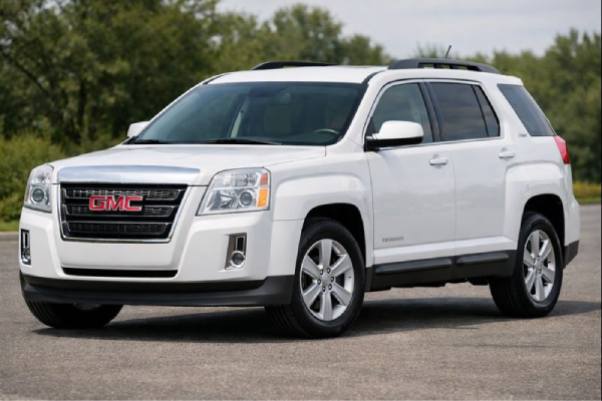
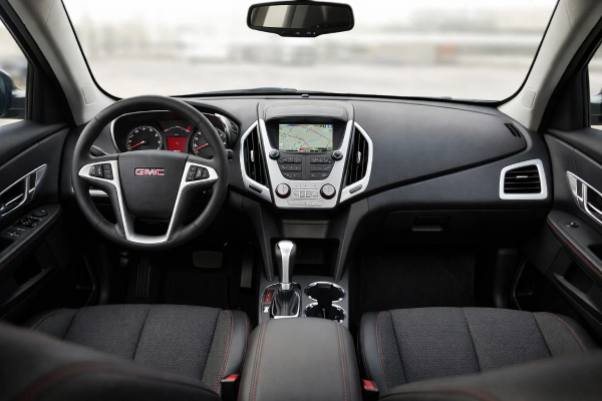
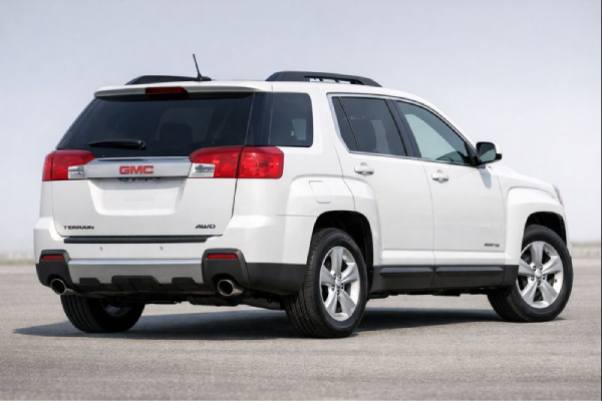
The 2011–2012 GMC Terrain AWD with the 3.0-liter V6 (RPO LFW) is a compact crossover that leans more “comfortable highway family hauler” than “sport SUV.” The V6 is smooth and willing at higher rpm, and the on-demand AWD system adds year-round traction without the constant binding you get from old-school part-time 4WD. In practice, this Terrain is at its best as a commuter and road-trip vehicle that occasionally sees snow, rain, steep driveways, or loose gravel.
Ownership hinges on two things: keeping up with fluids (especially if you tow or drive in hot-stop traffic) and avoiding “it feels fine” neglect on the AWD driveline. The good news is that the platform is straightforward, parts availability is strong, and the cabin and ride quality still feel pleasantly “grown up” for the class.
Owner Snapshot
- Smooth, high-revving V6 power makes passing and highway merges easier than four-cylinder versions.
- AWD adds confidence on wet pavement and snow, especially with proper all-season or winter tires.
- Expect lower fuel economy than FWD and plan for slightly higher tire and driveline service costs.
- Change engine oil when the oil-life monitor calls for it or at least every 12 months, whichever comes first.
- Keep all four tires closely matched in tread depth to protect the AWD system (aim for within 2–3 mm).
Guide contents
- AWD Terrain V6 ownership profile
- Technical specs for LFW AWD
- Trims packages and safety tech
- Common failures and recalls
- Service schedule and inspection guide
- On-road feel and fuel use
- Competitors and alternatives
AWD Terrain V6 ownership profile
Think of this Terrain as a comfort-first crossover with an “adult” powertrain. The 3.0-liter V6 (LFW) is a direct-injected, DOHC V6 that delivers its 264 hp high in the rev range. Around town it feels quiet and refined, but it is not a low-rpm torque monster. If you drive it like a relaxed cruiser, it behaves that way. If you ask for a quick overtake, it will downshift and spin—smoothly—but you will hear it work.
The AWD system is the real differentiator versus the FWD version. It is primarily front-driven for efficiency and sends torque rearward when the front tires slip or when the system predicts traction demand. For owners, that translates to predictable stability in rain and slush and fewer “one tire spins, the other watches” moments when pulling away on a cold morning. The trade-off is complexity: a power transfer unit (PTU) at the front, a prop shaft, and a rear drive module (rear differential and clutch pack). Those parts are durable when fluid condition stays healthy, but they are not maintenance-free in harsh use.
Where this model shines:
- All-weather commuting: With decent tires, it tracks calmly and feels secure in mixed conditions.
- Family duty: Wide-opening doors, easy seating position, and a quiet highway cabin suit daily life.
- Light towing and gear hauling: The V6 is the better choice if you tow occasionally, carry a full load, or drive hilly routes.
Where ownership demands attention:
- Tires matter more on AWD. Mismatched tread depth can overwork the clutch pack and differentials.
- Fluid aging is real. Short trips and heat cycles are tough on oil and driveline lubricants.
- Cooling and airflow maintenance pays off. A clean radiator stack and fresh coolant help keep temperatures stable in summer traffic.
If you want a compact SUV that feels planted in winter and you do not mind slightly higher fuel and service costs than a four-cylinder FWD, the 2011–2012 Terrain AWD V6 is a sensible, easy-to-live-with choice—provided you treat maintenance as prevention, not reaction.
Technical specs for LFW AWD
Below are practical, VIN-sensitive specs for the 2011–2012 GMC Terrain AWD with the 3.0L V6 (LFW) and 6-speed automatic. Use these as a decision-making baseline, then verify your exact build (trim, tire size, tow package, market) in official service information.
Engine and performance
| Item | Specification |
|---|---|
| Code | LFW (3.0L V6, direct injection) |
| Layout and valvetrain | V6, DOHC, 24 valves (4 valves/cyl) |
| Displacement | 3.0 L (2,997 cc) |
| Bore × stroke | 89.0 × 80.0 mm (3.50 × 3.15 in) |
| Induction | Naturally aspirated |
| Fuel system | Direct injection (DI) |
| Compression ratio | ~11.7:1 |
| Max power | 264 hp (197 kW) @ ~6,950 rpm |
| Max torque | ~222 lb-ft (301 Nm) @ ~5,100 rpm |
| Timing drive | Chain |
| Emissions/efficiency standard | EPA (US-market spec varies by region) |
| Rated efficiency (typical AWD) | ~13.1 L/100 km combined (18 mpg US) |
| Real-world highway @ 120 km/h (typical) | ~10.5–11.8 L/100 km (20–22 mpg US) |
Transmission and driveline
| Item | Specification |
|---|---|
| Transmission | 6-speed automatic (Hydra-Matic family; application varies by calibration) |
| Drive type | On-demand AWD (front-biased with rear engagement) |
| Differential | Open front; rear drive module with clutch engagement (system design varies by year) |
| Tire matching guidance | Keep all four tires within ~2–3 mm tread depth to reduce AWD stress |
(Gear ratios and final drive can vary by calibration and tow package; verify by RPO codes and service data.)
Chassis and dimensions
| Item | Specification |
|---|---|
| Platform | GMT177 |
| Suspension (front/rear) | MacPherson strut / independent multi-link |
| Steering | Electric power steering (EPS) |
| Brakes | 4-wheel disc with ABS and stability control |
| Ground clearance (typical) | ~175 mm (6.9 in) |
| Length / width / height | ~4,707 / 1,849 / 1,685–1,702 mm (185.3 / 72.8 / 66.3–67.0 in) |
| Wheelbase | ~2,858 mm (112.5 in) |
| Turning circle | ~11.8 m (38.7 ft) |
| Curb weight (AWD V6 typical) | ~1,830–1,900 kg (4,035–4,190 lb) |
| Fuel tank | ~70 L (18.5 US gal / 15.4 UK gal) |
| Cargo volume (typical SAE) | ~895 L (31.6 ft³) seats up / ~1,800 L (63.7 ft³) seats down |
Performance and capability
| Item | Typical figure (varies by trim/tires/load) |
|---|---|
| 0–100 km/h (0–62 mph) | ~8.0–8.6 s |
| Top speed | ~180 km/h (112 mph) limited (market dependent) |
| Braking 100–0 km/h | ~38–41 m (125–135 ft from 62–0 mph, tire dependent) |
| Towing capacity | Up to ~1,588 kg (3,500 lb) with tow equipment (market dependent) |
| Payload | Often ~400–500 kg (880–1,100 lb), verify door placard |
Fluids and service capacities (decision-grade)
| Item | Spec (typical) |
|---|---|
| Engine oil | dexos1 5W-30; ~5.7 L (6.0 US qt) (verify for your pan/filter) |
| Coolant | Dex-Cool type, 50/50; capacity varies by system |
| Transmission fluid | Dexron VI; service and total fill vary by method |
| AWD PTU and rear drive module | Gear oil specification varies by unit; capacity is small—do not overfill |
| A/C refrigerant | R134a (charge varies by build label) |
Electrical
| Item | Specification (typical) |
|---|---|
| 12V battery | 12V lead-acid, group size varies by market |
| Alternator output | Commonly 150A-class (verify by RPO) |
| Spark plugs | Iridium-type, gap per service data |
Safety and driver assistance (era-correct)
| Item | Notes |
|---|---|
| Crash ratings | Check IIHS and NHTSA pages for the exact model year and test type |
| Core safety systems | ABS, stability control, traction control, multi-airbag system |
| Driver assistance | Backup camera and park assist often optional; modern AEB and lane-keep were not typical on this generation |
Trims packages and safety tech
For 2011–2012, most Terrains were sold in familiar GMC trim steps, commonly SLE and SLT (with sub-trims such as SLE-1/SLE-2 and SLT-1/SLT-2 depending on market). The V6 and AWD were typically optional rather than universal, so the smartest shopping move is to identify the mechanical content first, then treat trim level as the comfort-and-features layer.
Trims and options that matter mechanically
AWD availability: AWD was often packaged with the V6 or offered alongside it. Even when the badge says “AWD,” confirm function on a test drive: in low-traction starts you should feel the rear engage smoothly (no harsh bang, no persistent binding on dry pavement).
Tow equipment: If towing is part of your plan, look for factory tow wiring, receiver, and cooling provisions. The V6 can handle moderate loads better than the four-cylinder, but heat management is what preserves transmissions long-term. If you see evidence of heavy towing (worn hitch pin hole, trailer brake wiring splices, stressed rear suspension), assume the vehicle needs a deeper inspection.
Wheels and tires: Larger wheels can sharpen response but often increase tire cost and road noise. For AWD, prioritize tire quality and matching tread depth over aggressive styling.
Interior and infotainment: Higher trims often add better seat materials, heated seats, upgraded audio, and convenience items. These do not change the drivetrain, but they affect ownership satisfaction. Verify every feature works—older infotainment and camera systems can be expensive to diagnose when wiring or modules fail.
Quick identifiers when shopping
- RPO codes: The glovebox/door-jamb service label (varies by market) can confirm drivetrain and axle content.
- Badging is not enough: Some vehicles wear replacement liftgates or incorrect badges after repair.
- Listen for driveline clues: A steady hum rising with speed can indicate wheel bearings; a rumble on light throttle may hint at rear driveline wear.
Safety ratings and what they mean here
This generation predates today’s “tech-first” safety packages. Its safety story is mainly about structure, airbags, and stability control—not automatic emergency braking. That is not a deal-breaker, but it changes how you evaluate safety value: choose the best-maintained example, keep tires and brakes strong, and ensure stability-control and ABS operate correctly.
- IIHS: Useful for roof strength and offset crash performance comparisons between vehicles in the same era.
- NHTSA: Useful for star ratings and for checking recalls and complaint patterns.
Safety systems and child-seat practicality
Expect front airbags, side-impact airbags, and curtain airbags, plus LATCH anchors for child seats. Before buying, physically verify:
- LATCH anchor access is not blocked by seat covers or damaged trim.
- Seat belts retract cleanly and lock properly.
- The airbag warning light proves out at start and then turns off.
If you want modern ADAS, this is not the right generation. If you want a straightforward, stable crossover with proven passive safety fundamentals, the Terrain can still be a good fit.
Common failures and recalls
A well-kept Terrain AWD V6 can be durable, but certain issues repeat often enough that you should screen for them on every test drive. Below is a practical map by prevalence and cost tier. Exact incidence varies by climate, mileage, and maintenance quality.
Common, lower-to-medium cost issues
- HVAC blend door or mode actuator faults (common, low–medium): Clicking behind the dash, stuck temperature or airflow direction.
Remedy: Actuator replacement and recalibration. - Wheel bearing noise (common, medium): A humming that changes with speed and sometimes with gentle lane changes.
Remedy: Hub assembly replacement; do both sides if wear is similar. - Oil seepage and gasket aging (common, low–medium): Minor seep at covers or front/rear seals as mileage climbs.
Remedy: Confirm it is seepage, not active dripping; fix before it reaches belts, mounts, or electrical connectors.
Occasional, medium-to-higher cost issues
- Direct-injection sensitivity (occasional, medium): Rough idle, misfires, or fuel trim codes can come from injectors, intake deposits, or ignition wear.
Remedy: Diagnose with scan data; avoid “parts darts.” Use top-tier fuel and maintain plugs/coils on schedule. - Timing chain stretch symptoms (occasional, high if ignored): Rattle at cold start, cam correlation codes, or persistent misfire behavior.
Remedy: Do not continue driving with timing correlation faults; correct oil maintenance reduces risk. - Transmission shift quality complaints (occasional, medium–high): Harsh 2–3, flare, or delayed engagement can be fluid condition, adaptive learning, or mechanical wear.
Remedy: Check for service history, scan for codes, verify software updates, and evaluate fluid condition.
AWD-specific watch points (severity depends on neglect)
- PTU or rear drive module fluid breakdown (occasional, medium–high): Burnt odor, leaks, or whining under load. Heat and neglected fluid accelerate wear.
Remedy: Inspect for leaks, verify correct fluid type, consider preventive fluid service if history is unknown. - Tire mismatch stress (preventable, can become expensive): Binding, vibration, or driveline chatter after installing two new tires only.
Remedy: Replace tires as a matched set or shave to match tread depth; rotate regularly.
Recalls, service actions, and how to verify
Do not guess—verify. Your process should be:
- Run the vehicle’s VIN through the official recall database.
- Ask the seller for dealer repair history or proof of recall completion.
- Confirm on a test drive that warning lights behave normally and that the vehicle passes readiness monitors after a proper drive cycle.
Because recall scope changes over time, your most accurate answer will always come from the official VIN lookup and dealer records rather than a generic list. Even if a recall is “completed,” confirm the repair quality: wiring routing, fastener torque, and trim fitment matter on older vehicles.
Service schedule and inspection guide
A simple, consistent maintenance rhythm is what makes this Terrain a low-drama daily driver. Below is a practical schedule designed for the AWD V6, blending typical manufacturer-style intervals with real-world “what fails when neglected” priorities. Always adjust for your driving profile: short trips, hot climates, mountain driving, and towing justify shorter intervals.
Routine schedule (distance or time, whichever comes first)
- Engine oil and filter: Follow the oil-life monitor; hard cap at 12 months. If you do mostly short trips, consider 8,000–10,000 km (5,000–6,000 mi) intervals. Use dexos-approved 5W-30.
- Tire rotation and pressure check: Every 8,000–10,000 km (5,000–6,000 mi). AWD needs consistent rolling diameter.
- Cabin air filter: Every 24,000–30,000 km (15,000–20,000 mi) or yearly in dusty/pollen-heavy areas.
- Engine air filter: Inspect every oil service; replace around 45,000–60,000 km (28,000–37,000 mi) depending on conditions.
- Brake fluid: Every 2 years, regardless of mileage.
- Coolant: Often a long-life interval (commonly 5 years as a planning number), but verify by label and service history.
- Spark plugs: Long-life iridium plugs typically last well past 120,000 km (75,000 mi); many plans target 150,000–160,000 km (95,000–100,000 mi), but use service data for your VIN.
- Automatic transmission fluid: If history is unknown, a conservative plan is inspection at 80,000–100,000 km (50,000–62,000 mi) and service based on fluid condition and use (especially towing/heat).
- AWD PTU and rear drive module fluid: Not every owner’s schedule calls for it early, but from a longevity standpoint, inspect and consider fluid service around 80,000–120,000 km (50,000–75,000 mi), sooner if towing or frequent stop-and-go heat.
Fluids, specs, and torque values (practical essentials)
Because exact capacities and torque specs can vary by engine accessory layout and market, use these as “decision-grade” targets and verify before turning a wrench:
- Wheel lug nuts: Commonly 140 Nm (100 lb-ft).
- Engine oil: dexos 5W-30; typical fill about 6.0 qt (5.7 L).
- Transmission fluid: Dexron VI; avoid universal fluids unless they explicitly meet the spec.
Buyer’s inspection checklist (what to look at first)
- Cold start behavior: Any metallic rattle that persists, rough idle, or flashing check-engine light is a stop sign.
- AWD function and tire match: Confirm four matching tires (brand/model/size) and measure tread depth.
- Fluid evidence: Look for fresh undercoating that might hide leaks; inspect the PTU area and rear drive module for wetness.
- Cooling stack cleanliness: Leaves and debris between condenser and radiator cause overheating and A/C performance loss.
- Electronic health: Test windows, locks, HVAC modes, camera, and steering feel. Electrical “small issues” add up quickly on older crossovers.
Long-term durability outlook
If you keep oil changes consistent, keep tires matched, and do preventive driveline fluid attention, this Terrain can age well. Most expensive outcomes come from a chain of neglect: old oil → timing and DI issues, mismatched tires → AWD stress, overheated fluid → transmission complaints. Break those chains early and the vehicle typically remains dependable.
On-road feel and fuel use
The driving character of the AWD V6 Terrain is calm, stable, and confidence-inspiring rather than sporty. The suspension prioritizes bump absorption and straight-line comfort, which is exactly what most owners want from a compact crossover. Over broken pavement it filters impacts well, and on the highway it tracks with a steady, slightly heavy “planted” feel compared with lighter, noisier rivals from the same era.
Ride, handling, and NVH
- Ride quality: Composed at city speeds and reassuring on rough highways. You feel the size and weight, but not in a clumsy way.
- Steering: Electric power steering is light to moderate, tuned for ease rather than feedback. It makes parking simple but does not communicate much road texture.
- Braking feel: Generally predictable. A soft pedal can indicate old brake fluid, worn pads, or sliding hardware; it is usually fixable with proper service.
- Cabin noise: The V6 is smooth, but under hard acceleration it sounds like it is working—because peak power arrives high in the rev range.
Powertrain character (what it feels like daily)
The 3.0 V6 is a good match for an AWD Terrain because it compensates for the extra driveline drag and weight. Throttle response is typically clean, though direct-injection engines can feel less linear at very low rpm than old port-injected designs. The 6-speed automatic tends to favor early upshifts in gentle driving and will downshift decisively for passing. If you feel hunting between gears on rolling hills, check for software updates and confirm tire size consistency; both can influence shift behavior.
Real-world efficiency expectations
This is not the “buy it to save fuel” Terrain. Owners usually see:
- City driving: Often around 14–15 L/100 km (16–17 mpg US) depending on traffic and warm-up time.
- Highway at 100–120 km/h: Often 10.5–11.8 L/100 km (20–22 mpg US) when tires are properly inflated and the engine is healthy.
- Mixed use: Commonly near 12.5–13.5 L/100 km (17–19 mpg US).
Cold weather and short trips can push consumption up noticeably because the engine spends more time enriching mixture and heating catalysts. If winter fuel economy seems unusually poor, check thermostat behavior, tire pressures, and for any stored codes that hint at fuel trim issues.
Traction and control in real conditions
In rain and snow, the AWD system’s biggest value is stability during starts and during mid-corner throttle changes. Pair it with appropriate tires and it feels secure. Just remember: AWD helps you go, but tires and brakes help you stop and steer. If you plan frequent winter use, dedicate a winter tire set—this single decision does more for real safety than most feature packages available in 2011–2012.
Competitors and alternatives
Cross-shopping is where you decide whether the Terrain AWD V6 fits your priorities or whether a rival does the same job with fewer trade-offs. In 2011–2012, compact SUVs were rapidly improving, but many still lacked the refinement this GMC offered.
When the Terrain AWD V6 is the better pick
Choose the Terrain if you value:
- Quiet comfort and stable highway manners over sharp handling.
- A smoother engine than typical four-cylinders, especially for frequent merging, hills, and loaded driving.
- A “set-and-forget” driving experience where the vehicle feels substantial and relaxed.
This Terrain is often a strong value on the used market because it is not as aggressively sought-after as some rivals, even though it can be just as satisfying in daily life.
Key rivals and how they differ
- Toyota RAV4 V6 (similar-era): Often quicker and very reliable, but cabin feel and ride can be less “premium.” It is a great choice if you want stronger acceleration with a reputation for durability, though availability and pricing can be tougher.
- Honda CR-V (4-cylinder): Excellent practicality and efficiency, but less effortless power. If you rarely tow and mostly commute, the CR-V’s simplicity can win.
- Ford Escape (era-dependent): Can feel more agile, but powertrain and interior durability vary widely by year and engine choice. Shop carefully and inspect thoroughly.
- Hyundai Santa Fe V6: Often a good value with strong features, but maintenance history is everything. Some examples age very well; neglected ones can be expensive.
The buyer’s decision shortcut
Pick the Terrain AWD V6 if you want:
- AWD confidence + smoother engine feel
- Comfortable ride and a quieter cabin
- Straightforward ownership with good parts support
Pick a 4-cylinder rival if you want:
- Better fuel economy and lower operating costs
- Less drivetrain complexity
- Lower tire sensitivity (AWD still benefits from matching tires, but FWD is generally more forgiving)
Pick a sportier alternative if you want:
- Sharper steering and lighter curb weight feel
- More modern driver assistance (you will likely need a newer model year)
In short, the 2011–2012 GMC Terrain AWD 3.0 V6 is a strong “daily life” vehicle. Buy the cleanest, best-documented example you can find, budget for preventive driveline care, and it can deliver a long stretch of comfortable, confident service.
References
- Vehicle Detail Search – 2012 GMC TERRAIN SUV AWD | NHTSA 2025 (Safety Rating and Recall Overview)
- Recalls | NHTSA 2025 (Recall Database)
- 2012 GMC Terrain 4-door SUV | IIHS-HLDI 2025 (Safety Rating)
- Manuals and Guides | Vehicle Support | GMC 2025 (Owner’s Manual Portal)
Disclaimer
This article is for informational purposes only and is not a substitute for professional diagnosis, inspection, or repair. Specifications, torque values, fluid capacities, service intervals, and procedures can vary by VIN, market, model year, and installed equipment. Always verify details using official owner literature and service documentation for your exact vehicle.
If you found this guide useful, please consider sharing it on Facebook, X (Twitter), or your favorite forum to help others find reliable ownership information.