
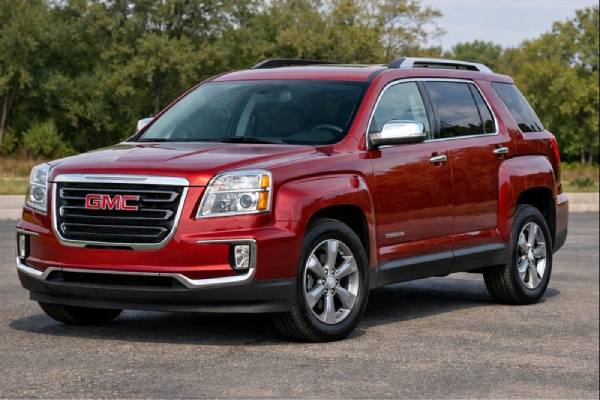
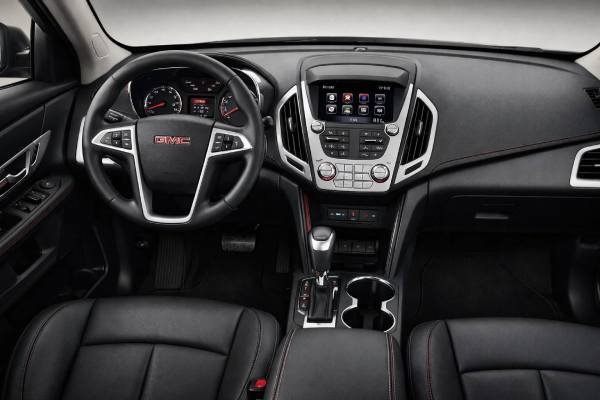
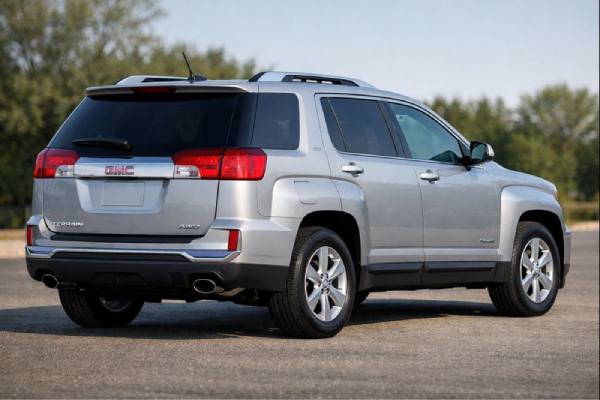
The facelift 2016–2017 GMC Terrain FWD with the LFX 3.6L V6 is the “fast one” in the first-generation Terrain family. With 301 hp sent through a 6-speed automatic to the front wheels, it delivers strong passing power and a calmer highway feel than the 4-cylinder versions, while keeping the simpler packaging of FWD (no rear drive unit or transfer case to service). The trade-off is weight, fuel use, and tighter under-hood access compared with the 2.4L. This version rewards owners who stay disciplined with oil quality and oil-change timing, because the LFX is a direct-injected, timing-chain V6 that prefers clean oil and consistent operating temperature. Buy well, maintain it like a powertrain-first vehicle, and it can be a very satisfying long-term compact crossover.
Quick Specs and Notes
- Strong V6 acceleration and confident highway passing without needing turbo boost.
- Simple FWD layout reduces AWD-related service items and rotating mass.
- Cabin and cargo packaging stay practical for family use and road trips.
- Direct injection means intake-valve deposits can build over time if driving is mostly short trips.
- Change engine oil at least every 12 months or 16,000 km (10,000 mi), sooner with heavy city use.
Start here
- LFX FWD facelift basics
- Specs and service capacities
- Trims packages and safety tech
- Reliability issues recalls and tsbs
- Maintenance plan and buyers checklist
- On-road performance and economy
- Terrain v6 vs main rivals
LFX FWD facelift basics
The 2016–2017 facelift Terrain is still the first-generation GMT177 platform, but with refreshed styling and a more modern infotainment look. In V6 FWD form, it sits in a sweet spot: you get the most output available for this generation without the extra driveline hardware of AWD. That matters for ownership because fewer driveline parts usually means fewer fluids, seals, and bearings to age out.
The LFX 3.6 is an all-aluminum, direct-injected (DI) V6 designed to make power up high while staying smooth at cruise. It uses dual overhead cams and variable valve timing to broaden the torque curve, and it is paired with a 6-speed automatic that keeps the engine in its stronger midrange on hills and during passing. In daily driving, the character is very different from the 2.4L: you use less throttle for the same pace, and you get more effortless merging and two-lane overtakes.
Where owners should be realistic is operating cost. This V6 adds weight and typically consumes more fuel around town. The engine bay is also busier, so some maintenance tasks can take longer. Direct injection improves power and efficiency, but it can encourage intake-valve deposits over long mileage, especially with repeated cold starts and short trips. The fix is not exotic, but it requires planning: periodic long drives to fully warm the engine, careful oil-change habits, and (if symptoms develop) a proper intake-valve cleaning strategy.
From a “what is it best at” perspective, this Terrain is a comfortable commuter and road-trip compact SUV with above-average straight-line performance for its era. It is less ideal if you want maximum fuel economy, or if you expect a modern suite of advanced driver assistance systems as standard equipment. Think of it as a durable, traditional GM crossover with one big advantage: the V6 makes it feel easier than most four-cylinder rivals when loaded with passengers and luggage.
Specs and service capacities
Below are practical, owner-focused specifications for the 2016–2017 Terrain facelift in FWD with the LFX 3.6L (301 hp). Minor variations can occur by VIN, build date, wheel package, and market, so treat these as a high-confidence baseline and verify for your exact vehicle when ordering parts or fluids.
Engine and Performance
| Item | Specification |
|---|---|
| Code | LFX |
| Layout and cylinders | V6, transverse; DOHC; 4 valves/cyl |
| Bore × stroke | 94.0 × 85.6 mm (3.70 × 3.37 in) |
| Displacement | 3.6 L (3,564 cc) |
| Induction | Naturally aspirated |
| Fuel system | Direct injection (DI) |
| Compression ratio | 11.5:1 (typical for LFX) |
| Max power | 301 hp (224 kW) @ 6,500 rpm |
| Max torque | 367 Nm (271 lb-ft) @ 4,800 rpm |
| Timing drive | Chain |
| Emissions / efficiency standard | EPA (US-market rating basis) |
| Rated efficiency | 11.8 L/100 km (20 mpg US / 24 mpg UK) combined |
| Real-world highway @ 120 km/h (75 mph) | ~10.5–11.5 L/100 km (20–22 mpg US / 24–26 mpg UK) depending on wind, tyres, and load |
| Aerodynamics | Cd not consistently published; expect typical compact SUV drag |
Transmission and Driveline
| Item | Specification |
|---|---|
| Transmission | 6-speed automatic (6T70 family commonly paired to the V6) |
| Drive type | FWD |
| Differential | Open (front transaxle) |
| Gear ratios (typical 6T70 set) | 1st 4.484, 2nd 2.872, 3rd 1.842, 4th 1.414, 5th 1.000, 6th 0.742, Rev 2.882 |
| Final drive ratio | Varies by calibration/package (commonly around the low-3 range) |
Chassis and Dimensions
| Item | Specification |
|---|---|
| Suspension (front/rear) | MacPherson strut / multi-link independent |
| Steering | Electric power steering |
| Brakes | 4-wheel discs with ABS and stability control (rotor sizes vary by package) |
| Wheels and tyres (common) | 225/65 R17 or 235/55 R18 (package-dependent) |
| Ground clearance | ~175 mm (6.9 in) |
| Length / width / height | ~4,707 / 1,849 / 1,684 mm (185.3 / 72.8 / 66.3 in) |
| Wheelbase | ~2,858 mm (112.5 in) |
| Turning circle (kerb-to-kerb) | ~12.4 m (40.7 ft) |
| Curb weight | ~1,730–1,820 kg (3,815–4,012 lb), equipment-dependent |
| Fuel tank | ~70 L (18.5 US gal / 15.4 UK gal) |
| Cargo volume | ~889 L (31.4 ft³) seats up; ~1,801 L (63.7 ft³) seats down (method varies by region) |
Performance and Capability
| Item | Specification |
|---|---|
| 0–100 km/h (0–62 mph) | ~6.8–7.5 s (tyres, temperature, and test method matter) |
| Top speed | Typically limited around ~180–190 km/h (112–118 mph) |
| Towing capacity | Up to ~1,588 kg (3,500 lb) when properly equipped (market/package dependent) |
| Payload | Varies by VIN and tyres; check door-jamb label |
| Roof load | Follow rail/crossbar rating; commonly modest for compact SUVs |
Fluids and Service Capacities
| Item | Specification |
|---|---|
| Engine oil | Dexos1-approved; 5W-30 typical; ~5.7 L (6.0 US qt) with filter |
| Coolant | Dex-Cool type; 50/50 mix typical; capacity varies by service procedure |
| Automatic transmission fluid | Dexron VI; capacity varies (service fill vs dry fill) |
| Differential / transfer case | Not applicable (FWD) |
| A/C refrigerant | R-134a (charge amount varies by label) |
| Key torque specs (typical) | Wheel lug nuts ~140 Nm (103 lb-ft); spark plugs commonly ~15–20 Nm (11–15 lb-ft) |
Electrical and Ignition
| Item | Specification |
|---|---|
| 12V battery | Group and rating vary; check label (CCA is the key metric) |
| Spark plugs | Iridium-type typical; gap per under-hood sticker/service info |
Safety and Driver Assistance
| Item | Specification |
|---|---|
| Crash ratings (IIHS) | Good in major crashworthiness tests; headlights rated Poor on the evaluated setup; optional front crash prevention rated Basic |
| ADAS availability | Mainly option-package driven (blind spot detection, lane departure warning, forward collision alert, rear park assist) |
Trims packages and safety tech
The 2016–2017 Terrain facelift generally revolves around SLE, SLT, and Denali-style positioning (names and exact content vary by region). The mechanical core for the V6 FWD is consistent—engine, transmission family, and basic suspension layout—while trims mostly change comfort, appearance, wheels, and the availability of driver-assistance features.
Trims and option logic that matter
When shopping, focus less on badges and more on three “functional” buckets:
- Tyre and wheel package: Larger wheels can sharpen response but often add road noise and replacement cost. They also influence ride comfort and pothole tolerance.
- Braking and towing equipment: If you plan to tow, confirm the vehicle is actually equipped for it (receiver, cooling provisions where applicable, and the right electrical connector). Do not assume the V6 alone guarantees tow readiness.
- Visibility and lighting: This generation’s headlight performance varies more than you might expect. If you drive rural roads at night, treat headlight performance as a first-class requirement, not a nice-to-have.
Quick identifiers during a walkaround
- Engine confirmation: The simplest confirmation is the under-hood engine cover/intake layout and the emissions label. The VIN and RPO (Regular Production Option) sticker can confirm LFX.
- Tow readiness: Look for a factory-style hitch and the correct trailer wiring connector. Aftermarket hitches are common, so check installation quality and corrosion around mounting points.
- Option-package clues: Blind-spot mirrors/icons, parking sensor circles in the bumpers, and steering-wheel buttons often reveal whether a safety package is present.
Safety ratings and what they mean in practice
For this generation, IIHS results show strong crashworthiness outcomes overall, with Good ratings in the main structural crash tests for the rated model range, while headlight performance can be the weak point on the tested configuration. That combination is common for vehicles of this era: the structure can perform well, but the lighting technology and beam pattern may lag newer designs.
NHTSA information is still worth checking because it aggregates recall information and safety-related complaints by model year. Even if you do not see an alarming pattern, it is a useful “sanity check” before you buy.
Driver assistance: what is realistic for 2016–2017
Do not expect modern automatic emergency braking to be standard here. Depending on trim and options, you may find:
- Rearview camera (commonly standard by this period)
- Rear park assist and cross-traffic alert (often optional)
- Blind spot detection (optional)
- Lane departure warning (optional)
- Forward collision alert (optional; test ratings may describe it as a basic-level system)
If you are servicing or repairing sensors, remember calibration matters. A bumper replacement, windshield work (if equipped with camera-based features), or alignment changes can require a proper scan-tool check and, in some cases, recalibration to restore correct operation.
Reliability issues recalls and tsbs
A well-maintained LFX Terrain can be solid, but it is not a “neglect proof” powertrain. The most useful way to think about reliability is to separate problems by how often they show up and how expensive they become if ignored.
Common, usually low to medium cost
- HVAC blend-door actuator clicking or poor temperature control → small electric actuator gears wear or lose position → actuator replacement and HVAC recalibration.
- Suspension wear noises (links, bushings, struts) → clunks over bumps, vague steering feel → replace worn links/bushings; align after major work.
- Wheel bearing hum → rising road-speed growl that changes in turns → bearing/hub assembly replacement.
- Brake maintenance sensitivity → pedal pulsation or uneven wear if neglected → correct pad material, proper bedding, and brake-fluid changes help consistency.
Occasional, medium cost (watch mileage and driving style)
- 6-speed automatic shift quality changes → flare, harsh shifts, or torque-converter clutch shudder → fluid condition matters; a proper diagnostic should confirm whether a fluid exchange, updated calibration, or hardware repair is needed.
- Cooling system seepage → slow coolant loss, sweet smell, crusted residue → pressure test, inspect hoses, thermostat housing area, and radiator end tanks; fix early to avoid overheating events.
Less common, higher cost if ignored
- Timing-chain wear symptoms (DI V6 risk factor) → cold-start rattle, correlation codes, sluggish response → root cause is often extended oil intervals or oil quality issues → confirm with scan data and service history; repair can be labor intensive.
- Direct-injection intake-valve deposits → rough idle, misfires under load, reduced efficiency → more likely with short-trip use → remedy ranges from driving-pattern changes to professional intake-valve cleaning when symptoms appear.
Recalls, service bulletins, and how to verify completion
This is the part many buyers skip—and it is one of the easiest wins. For any 2016–2017 Terrain:
- Use the official recall database lookup and check open campaigns by VIN.
- Ask the seller for dealer repair invoices or a printout showing recall completion.
- If the vehicle has a branded title history or unclear ownership, treat “recall unknown” as a reason to negotiate or walk away.
Pre-purchase checks worth paying for
If you want a high-confidence purchase, request evidence of:
- Regular oil changes (not just “oil life monitor said it was fine”)
- Transmission fluid history (especially if the test drive reveals shudder or delayed shifts)
- Cooling system health (pressure test and fan operation check)
- A scan for stored or pending codes, not only a dashboard light check
- Tyre condition and alignment wear patterns (cupping and feathering hint at suspension wear)
A Terrain that drives smoothly when fully warmed, shifts cleanly under gentle and moderate throttle, and shows stable coolant and oil condition is typically a better bet than one with “it just needs a tune-up” explanations.
Maintenance plan and buyers checklist
This maintenance plan is designed for long life, not minimum cost. It assumes mixed city and highway driving and focuses on the items that protect the LFX V6, the 6-speed automatic, and the chassis.
Core maintenance schedule
- Engine oil and filter: Follow the oil life system, but cap it at 16,000 km (10,000 mi) or 12 months. If you do short trips, idle a lot, or drive in extreme heat/cold, aim closer to 8,000–12,000 km (5,000–7,500 mi). Use the correct Dexos-approved oil grade for your market.
- Engine air filter: Inspect every 12 months; replace about every 24,000–48,000 km (15,000–30,000 mi) depending on dust.
- Cabin air filter: Replace every 12–24 months for HVAC performance and reduced fogging.
- Coolant: Use the correct Dex-Cool type and replace on the manufacturer schedule; many owners plan a coolant service around 5 years to reduce corrosion risk in older systems.
- Spark plugs: Replace around 160,000 km (100,000 mi) unless your service guide specifies otherwise. Misfire under load is a reason to inspect earlier.
- Automatic transmission fluid (Dexron VI): If you want longevity, consider a service interval in the 60,000–100,000 km (40,000–60,000 mi) range depending on use. Frequent towing or heavy city driving supports shorter intervals.
- Brake fluid: Every 2 years, regardless of mileage, to maintain boiling point and ABS/ESC component health.
- Tyre rotation and alignment: Rotate every 8,000–12,000 km (5,000–7,500 mi); check alignment annually or after pothole impacts.
- 12V battery: Test annually after year 3; replacement is common in the 4–6 year range depending on climate.
Fluid and parts notes that prevent mistakes
- Use Dexos1 engine oil approval where applicable; it is not just marketing—it affects deposit control and timing-system cleanliness.
- Use Dexron VI for the 6-speed automatic unless official service information for your VIN states otherwise.
- Do not “universal coolant” mix unless it explicitly meets the correct spec; coolant chemistry mismatches create sludge and heater-core issues over time.
Buyer checklist: what to seek and what to avoid
Seek:
- Documented oil services with reasonable intervals
- Smooth cold start and smooth warm idle
- Clean, decisive shifts and no converter shudder during light-throttle cruising
- Even tyre wear and no persistent suspension clunks
- Evidence recalls are completed
Be cautious with:
- Rough idle that improves only slightly when warm (possible deposits or vacuum issues)
- Overheating history, coolant smell, or recurring low coolant (cooling system neglect can be expensive later)
- A “tuned” or aggressively modified powertrain calibration unless you trust the work and have records
- A vehicle that has to “warm up for 10 minutes to drive right” (often a sign of underlying issues)
Long-term outlook
With consistent oil care, cooling system upkeep, and transmission-fluid discipline, the V6 Terrain can age better than its reputation suggests. Most costly stories start with long oil intervals, ignored warning lights, or overheating events. Treat it like a strong engine in a compact SUV, not like an appliance, and it usually responds well.
On-road performance and economy
The facelift Terrain V6 feels more “grown up” than the four-cylinder versions when you drive it like a daily tool. It is not a sporty chassis, but the engine’s reserve power changes how the whole vehicle behaves—especially with passengers on board.
Powertrain character
The LFX’s power builds smoothly, with a stronger top-end pull than many turbo fours of the same period. Around town, the benefit is not drag-racing; it is reduced throttle demand. You can merge, climb grades, or accelerate into faster traffic without the engine feeling strained. The 6-speed automatic generally keeps the V6 in the meat of its torque curve, but it can downshift readily on hills because it only has six ratios. That can feel busy compared with modern 8–10 speed units, yet it is also simpler and well understood by technicians.
Ride, handling, and NVH
- Ride: Tuned for comfort. It absorbs highway expansion joints well, though larger wheels can transmit sharper impacts.
- Handling: Predictable, safe understeer when pushed. The V6’s extra weight up front can make turn-in feel less eager than the 2.4L.
- Braking feel: Generally consistent if pads and rotors are kept in good shape; old brake fluid can make the pedal feel less confident under repeated stops.
- Noise: The V6 is typically quieter than a hard-working four-cylinder at the same speed, but tyre choice dominates cabin noise on coarse pavement.
Real-world efficiency
EPA fuel economy for the 3.6L FWD is commonly listed as 17 mpg city, 24 mpg highway, 20 mpg combined (about 13.8 / 9.8 / 11.8 L/100 km). In real use:
- City-heavy: ~14–16 L/100 km (15–17 mpg US) is normal if trips are short or traffic is dense.
- Highway at 100–120 km/h (60–75 mph): ~10.5–11.5 L/100 km (20–22 mpg US) is realistic.
- Mixed driving: ~12–13.5 L/100 km (17–20 mpg US) depending on terrain, weather, and tyres.
Cold weather reduces economy because the engine runs richer while warming and because cabin heat demands longer warm-up time. Short trips are a double penalty: worse fuel economy and a higher chance of DI deposit formation over time.
Key performance metrics that change the verdict
In this generation, the V6 makes the Terrain feel meaningfully quicker than the class average of the time. A well-running example typically lands around the high-6 to mid-7 second range to 100 km/h, and the more important number—passing power from highway speeds—is strong enough that it often feels like a size class above.
Load and towing reality
If you tow, expect a noticeable fuel penalty and plan maintenance accordingly. Keep transmission fluid fresh, watch coolant condition, and use conservative speeds on long grades. The Terrain can tow respectably when properly equipped, but it is still a compact crossover with a relatively short wheelbase compared with body-on-frame SUVs.
Terrain v6 vs main rivals
The 2016–2017 Terrain V6 plays a different game than many compact crossovers. Instead of chasing peak fuel economy, it offers traditional V6 smoothness and easy power. Here is how it stacks up against typical rivals you might cross-shop.
Against four-cylinder bestsellers (CR-V, RAV4, CX-5)
- Performance: The V6 Terrain usually feels stronger in straight-line acceleration and passing than the common naturally aspirated four-cylinder versions of the era.
- Efficiency: Most rivals win clearly at the pump, especially in city driving.
- Driving feel: The Mazda CX-5 typically wins for steering and chassis polish. The Terrain answers with a more relaxed powertrain feel when loaded.
- Ownership approach: Rivals often have simpler intake systems (port injection on some years) that can be less sensitive to deposit formation than DI-only engines.
Choose the Terrain V6 if you value effortless acceleration more than class-leading fuel economy.
Against turbo-four competitors (Escape 2.0, Cherokee 2.0T later years)
- Response: The V6 delivers linear, predictable power without turbo lag.
- Torque delivery: Many turbo fours offer strong low-end torque, but can feel less smooth at the top end or more sensitive to heat and fuel quality.
- Complexity: Turbos add heat management and additional parts; the V6 avoids turbo hardware but still carries DI complexity.
If you keep vehicles a long time and prefer naturally aspirated behavior, the Terrain V6 remains appealing.
Against V6 rivals (Jeep Cherokee 3.2, some Murano-era cross-shoppers)
- Character: Similar smoothness and “easy passing” vibe.
- Packaging: The Terrain’s boxier shape can be practical, though cabin design is dated versus some competitors.
- Maintenance: Focus on service history. Any V6 crossover of this age rewards documentation and penalizes neglect.
Best-fit buyer profiles
This specific Terrain is a strong pick if you:
- Drive highways frequently, carry passengers, or travel with cargo
- Want a compact SUV that does not feel underpowered
- Prefer simpler FWD hardware over AWD complexity
- Are willing to maintain a DI, timing-chain V6 with consistent oil discipline
You may be happier with a rival if you:
- Drive mostly short city trips and care most about fuel cost
- Want newer ADAS features standard (automatic emergency braking and lane centering)
- Prefer a more modern 8+ speed transmission feel
In short, the 2016–2017 Terrain FWD V6 is a “torque and comfort” choice in a class that increasingly moved toward smaller engines. If that personality matches your use case, it can be one of the more satisfying versions of this generation.
References
- Gas Mileage of 2017 GMC Terrain 2017 (Fuel Economy Data)
- 2017 GMC Terrain 2017 (Safety Rating)
- Vehicle Detail Search – 2017 GMC TERRAIN SUV FWD | NHTSA 2025 (Recall Database)
- Owner’s Manuals & Guides | GMC Canada 2025 (Owner’s Manuals)
Disclaimer
This article is for informational purposes only and is not a substitute for professional diagnosis, inspection, or repair. Specifications, torque values, fluid capacities, service intervals, and procedures can vary by VIN, market, build date, and installed equipment, so confirm all details using official owner and service documentation for your exact vehicle.
If this guide helped, please consider sharing it on Facebook, X (Twitter), or your favorite forum to support our work.