
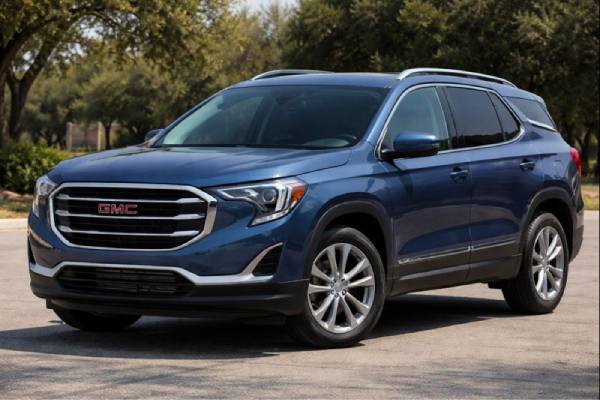
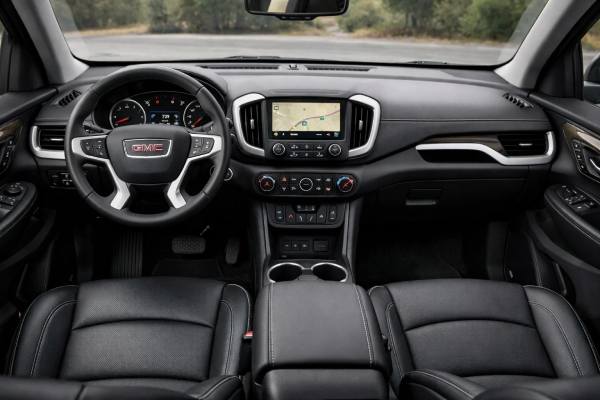
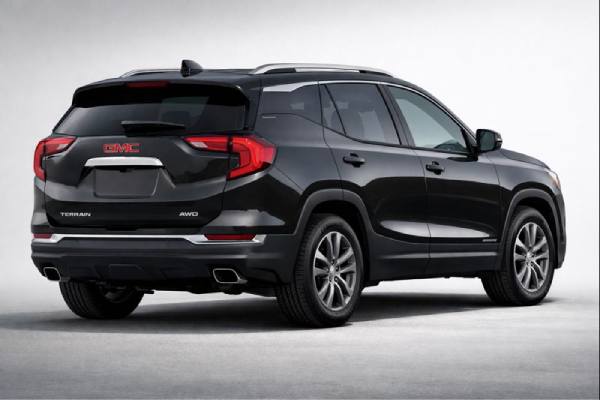
The 2018–2021 GMC Terrain FWD with the 1.5-liter turbo (LYX) is the “smart-spec” version of this compact SUV: lighter than AWD, simpler underneath, and tuned around everyday torque rather than headline speed. In real ownership, the strengths are easy to appreciate—quiet highway manners, a refined 9-speed automatic, and a chassis that feels stable without riding harshly. The tradeoffs are equally clear: direct injection and turbocharging demand consistent oil quality, and short-trip driving can magnify common modern issues like intake deposits, PCV moisture buildup, and stop-start battery wear. If you buy one well-maintained and keep to a sensible service rhythm, this Terrain can be a comfortable, efficient commuter that still has enough punch for merging, hills, and full loads.
What to Know
- Strong low-rpm pull for city driving thanks to turbo torque; FWD saves weight and complexity.
- Practical cabin packaging with adult-friendly rear space and a useful cargo shape.
- 9-speed gearing helps highway refinement, especially at 100–120 km/h (60–75 mph).
- Caveat: turbo and direct injection reward strict oil changes and clean air filtration.
- Typical interval: change oil and filter at least every 12 months (or sooner if you do many short trips).
Navigate this guide
- Terrain 1.5T FWD in context
- LYX and chassis numbers
- Trims, packages, and safety tech
- Reliability map for 2018–2021
- Maintenance schedule and buyer checks
- Driving feel and mpg reality
- Rival matchups and alternatives
Terrain 1.5T FWD in context
This configuration is the “daily-driver core” of the second-generation Terrain (platform code D2XX). From 2018 through 2021, the front-wheel-drive layout pairs naturally with the 1.5-liter turbo because it keeps curb weight and driveline drag down, which helps both efficiency and the way the vehicle responds around town. The LYX engine is a modern small-displacement turbo design: direct injection, variable valve timing, and a torque curve that arrives early enough to make the Terrain feel stronger than the horsepower number suggests.
Where this Terrain fits best is predictable use: commuting, family hauling, and longer highway trips. In that environment, the 9-speed automatic can settle into a tall gear, the cabin stays calm, and the vehicle’s stability at speed feels more “mid-size” than many compact SUVs. The chassis tuning leans toward comfort, with enough control to prevent float over highway undulations. FWD also reduces service exposure compared with AWD: no rear axle service, no transfer case, and fewer driveline seals that can seep over time.
The main ownership idea to understand is that “efficient turbo” engines are sensitive systems. The same design traits that make the Terrain responsive—tight ring packs, hot-running turbo hardware, and direct injection—also mean maintenance quality matters. Long oil intervals on short trips can accelerate deposits, while neglected air filtration can affect turbo efficiency and sensor readings. The good news is that most problems show symptoms early, and a clean maintenance history is a strong predictor of a good experience.
If you’re shopping, look at this model as a comfort-first compact SUV with respectable real-world economy and strong safety equipment availability, not as a performance play. Buy the best-maintained example you can find, prioritize documented oil services, and treat the vehicle’s electronic safety systems like part of the “powertrain” because they influence repair costs and calibration needs after even minor collisions.
LYX and chassis numbers
Below are specifications focused on the exact vehicle described: GMC Terrain FWD (D2XX) with the LYX 1.5-liter turbo gasoline engine rated at 170 hp, model years 2018–2021. Some measurements vary slightly by wheel and tire package, trim, and market equipment, so treat dimensions and weights as typical ranges unless your VIN documentation lists a single value.
Engine and performance
| Item | Specification |
|---|---|
| Engine code | LYX |
| Layout | Inline-4, aluminum block and head |
| Valvetrain | DOHC, 4 valves/cylinder (16V), VVT |
| Displacement | 1.5 L (1,490 cc) |
| Bore × stroke | 74.0 × 86.6 mm (2.91 × 3.41 in) |
| Induction | Turbocharged |
| Fuel system | Direct injection (DI) |
| Compression ratio | ~10.0:1 |
| Max power | 170 hp (127 kW) @ 5,600 rpm |
| Max torque | 275 Nm (203 lb-ft) @ ~2,000 rpm |
| Timing drive | Chain |
| Fuel | Regular unleaded (market dependent) |
Transmission and driveline
| Item | Specification |
|---|---|
| Transmission | Automatic, 9-speed |
| Driveline | Front-wheel drive (FWD) |
| ATF specification | DEXRON-VI (per owner documentation) |
Efficiency (official rating examples)
| Model year example | City | Highway | Combined |
|---|---|---|---|
| 2021 Terrain FWD 1.5T 9AT (EPA) | 25 mpg | 30 mpg | 27 mpg |
Helpful conversions (approx.): 27 mpg US ≈ 8.7 L/100 km; 30 mpg US ≈ 7.8 L/100 km; 25 mpg US ≈ 9.4 L/100 km.
Chassis and dimensions (typical)
| Item | Typical value |
|---|---|
| Front suspension | MacPherson strut |
| Rear suspension | Multi-link |
| Steering | Electric power steering |
| Length | ~4,633 mm (182.4 in) |
| Width | ~1,839 mm (72.4 in) (excluding mirrors) |
| Height | ~1,661 mm (65.4 in) |
| Wheelbase | ~2,725 mm (107.3 in) |
| Ground clearance | ~200 mm (7.9 in) |
| Turning circle | ~11.7 m (38.4 ft) |
Capacity, fluids, and key torque values (from owner documentation)
| Item | FWD specification |
|---|---|
| Engine oil with filter | 4.0 L (4.2 qt) |
| Engine coolant (system) | 6.6 L (7.0 qt) |
| Fuel tank | 56.0 L (14.8 gal US) |
| Brake fluid | DOT 3 |
| Wheel nut torque | 140 Nm (100 lb-ft) |
| Spark plug gap | 0.60–0.70 mm (0.024–0.028 in) |
Performance and capability (real-world typical)
| Metric | Typical range (FWD 1.5T) |
|---|---|
| 0–100 km/h (0–62 mph) | ~9.0–10.0 s (trim and conditions dependent) |
| Towing (when equipped) | Up to ~680 kg (1,500 lb) |
| Cargo volume | ~838 L (29.6 ft³) seats up; ~1,792 L (63.3 ft³) seats down (method dependent) |
Trims, packages, and safety tech
For 2018–2021, the Terrain lineup usually centers around SLE, SLT, and Denali, with special appearance groupings (such as Black Edition or similar) depending on model year and market. The key point for a buyer is that trims change comfort and technology more than they change the mechanical core: the LYX/9-speed/FWD combination is broadly consistent, while wheels, tires, brakes feel, and driver-assistance content vary significantly.
How to identify what you’re looking at quickly
- Badging and wheels: Denali is the easiest to spot (Denali badges, brighter exterior trim, typically larger wheels). SLE often has simpler wheel designs and fewer chrome details.
- Interior cues: Denali commonly adds upgraded leather and a more premium trim finish. SLE interiors are usually durable cloth or basic leatherette depending on package.
- Controls that matter: Look for steering-wheel buttons and camera/parking controls. If the car has adaptive cruise control, lane-keeping, and parking sensors, you’ll see dedicated icons and menu items.
Option packages that change ownership value
- Convenience packages: power liftgate, heated seats, remote start, and upgraded infotainment can make the vehicle feel a full class nicer without increasing repair complexity much.
- Trailering equipment: if towing matters, confirm the hitch hardware and cooling provisions were installed from the factory or properly added later. Also confirm the vehicle’s tow rating label guidance for that VIN.
- Wheel and tire packages: larger wheels often look better but can reduce ride comfort and increase tire replacement cost. If you drive on rough pavement, the “middle” tire sizes are often the sweet spot.
Safety ratings and what they mean in practice
This generation of Terrain generally performs well in crash testing structure categories, but results can depend on test version and equipment (especially headlights). In day-to-day risk, the bigger differentiator is whether the vehicle has modern crash-avoidance technology and whether it is working correctly.
Core passive safety
- Multiple airbags including front, side-impact, and side-curtain coverage (exact count and layout vary by year and market).
- LATCH/ISOFIX child-seat anchors; always inspect anchor bar condition if the vehicle is subject to a child-seat anchorage recall in your region.
Driver assistance and ADAS availability (typical)
- Commonly available: forward collision alert, automatic emergency braking, front pedestrian braking, lane keep assist with lane departure warning, following distance indicator, and automatic high beams.
- Often optional (trim and year dependent): blind zone alert, rear cross-traffic alert, rear park assist, surround-view cameras, and adaptive cruise control.
Calibration reality after repairs
If the Terrain has forward-facing cameras or radar-based systems, windshield replacement, front-end collision repair, and some suspension work can require recalibration. When you evaluate a used example, ask for repair invoices that show ADAS calibration was completed, not just “glass replaced” or “bumper repaired.”
Reliability map for 2018–2021
Reliability on the 1.5T FWD Terrain is best understood as a set of “modern turbo DI ownership patterns” rather than one fatal flaw. Most vehicles do well, but neglected maintenance, repeated short trips, and deferred software updates can trigger repeat visits. Below is a practical map by prevalence and cost tier, with symptoms and fixes written in workshop language.
Common (watch closely)
- PCV and oil mist management (low–medium cost)
Symptoms: rough idle, whistling, oily residue near intake plumbing, intermittent lean codes.
Likely cause: crankcase ventilation routing and moisture accumulation, especially in cold climates and short-trip use.
Remedy: inspect PCV paths and associated hoses; repair leaks; verify software is current; keep oil services consistent. - Turbo and charge-air leaks (medium cost)
Symptoms: reduced boost, sluggish acceleration, hissing under load, underboost codes.
Likely cause: loose clamps, cracked couplers, or a seep at the intercooler plumbing.
Remedy: smoke test intake tract; replace compromised couplers; verify wastegate control and boost sensor readings. - Stop-start battery wear and low-voltage weirdness (low–medium cost)
Symptoms: stop-start disabled messages, random infotainment resets, slow crank, sensor fault cascades.
Likely cause: aging 12V battery or poor charging health in short-trip patterns.
Remedy: proper battery test (not just voltage), check charging output, replace with correct spec battery, and register/reset battery monitor if required.
Occasional (depends on use and build)
- 9-speed shift quality complaints (medium cost if hardware; low if software)
Symptoms: harsh 1–2 shifts, “busy” gear hunting at low speed, delayed engagement.
Likely cause: adaptive shift learning out of range, fluid condition issues, or calibration needs.
Remedy: confirm no stored transmission codes; check for service actions; fluid service per schedule; re-learn procedures after updates. - Cooling system and thermostat behavior (medium cost)
Symptoms: slow warm-up, temperature swings, heater output inconsistency.
Likely cause: thermostat or sensor drift, sometimes compounded by low coolant level from minor seepage.
Remedy: pressure test system, confirm correct coolant type and mixture, repair leaks, replace thermostat/sensor as needed.
Rare but high-impact (verify history)
- Recall/service action items (high severity if ignored)
Some model years have safety recalls or service actions tied to specific components (for example, certain tire batches, or transmission-related hardware on limited populations).
Your process: run a VIN recall check, confirm completion at a dealer, and keep printouts with the service file.
Pre-purchase checks that prevent regret
- Cold start test: listen for abnormal rattles, then watch idle stability and boost response on a short drive.
- Scan for codes: even if the dash is clean, check pending codes and freeze-frame history.
- Confirm software campaigns: ask whether engine and transmission control modules have the latest calibrations.
- Inspect tires and alignment wear: uneven wear can indicate suspension impact damage or alignment neglect.
- Review fluid condition and service receipts: oil-change consistency matters more here than on older port-injected engines.
Maintenance schedule and buyer checks
A strong maintenance plan for the 2018–2021 Terrain 1.5T FWD blends the factory guidance (oil life monitoring, specified fluids) with a realistic view of turbo DI engines: frequent short trips and cold weather count as severe service even if mileage is low.
Practical maintenance schedule (distance or time, whichever comes first)
| Item | Normal use | Severe use (short trips, extreme cold/heat, heavy traffic) |
|---|---|---|
| Engine oil and filter (dexos1, SAE 0W-20) | Follow oil life monitor; at least 12 months | 8,000–10,000 km (5,000–6,000 mi) or 6–9 months |
| Tire rotation and pressure check | 10,000–12,000 km (6,000–7,500 mi) | Same, plus alignment check if wear appears |
| Engine air filter | Inspect every service; replace ~30,000–50,000 km | Replace sooner in dusty conditions |
| Cabin air filter | 15,000–30,000 km | 15,000–20,000 km if urban/pollen-heavy |
| Brake fluid (DOT 3) | Every 2–3 years | Every 2 years |
| Coolant (DEX-COOL mix) | Per factory interval; inspect annually | Inspect every season; service earlier if contamination/leaks |
| Spark plugs | Around 100,000 km (60,000 mi) typical | 80,000–100,000 km depending on load and fuel quality |
| Automatic transmission fluid | Follow factory schedule | Consider earlier service if towing or heavy city driving |
Fluid specs and capacities you can plan around
- Engine oil with filter: 4.0 L (4.2 qt) for FWD.
- Coolant system: 6.6 L (7.0 qt) total system capacity (approx.).
- Fuel tank: 56.0 L (14.8 gal US).
- Wheel nuts: 140 Nm (100 lb-ft).
Buyer’s guide: what to seek and what to avoid
Prioritize these traits
- Documented oil services at sensible intervals (not just “whenever the monitor asked,” especially for short-trip owners).
- A clean underhood inspection: no oily charge pipes, no crusted coolant marks, and no obvious aftermarket wiring splices.
- Tires in good condition with even wear; it’s a quiet way to judge suspension health and alignment care.
Be cautious with these patterns
- Lots of short trips with long oil intervals: it’s a common path to deposit-related drivability complaints.
- Repeated battery replacements or chronic stop-start issues: could indicate charging or parasitic draw problems.
- Accident repairs without ADAS calibration proof: a well-fixed bumper still may not mean a well-calibrated safety system.
Durability outlook
With consistent oil changes, clean filtration, and timely software updates, the LYX Terrain tends to age like a typical modern compact SUV: not “old-school simple,” but very manageable. The expensive surprises usually come from neglected service history, not from the base design.
Driving feel and mpg reality
On the road, the 1.5T FWD Terrain’s personality is calm and predictable. The steering is light but accurate, the body motions are controlled, and the vehicle tracks straight on the highway without feeling nervous. It is not sporty, yet it avoids the “top-heavy wobble” that some compact SUVs show when pushed through quick lane changes. Road noise depends heavily on tire choice: larger wheel packages can transmit more impact harshness, while mid-size tires tend to keep the cabin quieter and more compliant.
Powertrain character
The turbo four delivers its best work in the low-to-mid rpm range, where it produces useful torque for city gaps, on-ramps, and steady climbs. Throttle response is typically smooth, but there can be a small delay if you request sudden boost from a low-speed roll—normal behavior for a small turbo that prioritizes efficiency. The 9-speed automatic helps by keeping the engine in a favorable zone; under gentle throttle it upshifts early, and at highway speeds it often sits in a tall gear to reduce noise.
If you test drive, do three specific checks:
- Light throttle at 30–50 km/h (20–30 mph): confirm smooth low-gear behavior without harshness.
- Moderate acceleration to highway speed: confirm boost builds cleanly without surging.
- Rolling pass (80–120 km/h / 50–75 mph): confirm the kickdown is decisive, not confused.
Real-world efficiency
EPA figures for the 2021 FWD 1.5T are 25 mpg city, 30 mpg highway, and 27 mpg combined (about 8.7 L/100 km combined). In real use, many owners see:
- City-heavy driving: higher consumption if trips are short and stop-start is frequent.
- Highway cruising (100–120 km/h): often close to the official highway rating when tires are properly inflated and the vehicle isn’t overloaded.
- Cold weather: noticeable drop due to enrichment, longer warm-up, and cabin heating load.
Towing and load behavior
When equipped for towing, the Terrain can handle light utility trailers, but treat it as a “light-duty” tow vehicle. Expect:
- More frequent downshifts on grades.
- Higher coolant and transmission temperature sensitivity in hot weather.
- A meaningful fuel economy penalty when towing or carrying full loads (a 15–30% increase in fuel use is a realistic planning range).
For most owners, the payoff is that the Terrain drives “bigger than it is” in a good way: stable, quiet, and easy to place in traffic—exactly what you want from a compact SUV that spends most of its life commuting.
Rival matchups and alternatives
If you’re cross-shopping the 2018–2021 Terrain 1.5T FWD, you’re likely comparing it with the Honda CR-V 1.5T, Toyota RAV4 2.5, Mazda CX-5 2.5, Nissan Rogue, Hyundai Tucson, and Kia Sportage. The best choice depends on what you value most: long-term simplicity, driving feel, interior packaging, or driver-assistance content.
Where the Terrain stands out
Refinement for the money
The Terrain often feels quiet and composed at speed, especially in trims with comfort-focused tires. If your use case includes regular highway driving, that calmness can matter more than a small difference in 0–60 times.
Strong everyday torque without big fuel burn
A small turbo matches real traffic well. Compared to some naturally aspirated rivals, the Terrain can feel more responsive at low rpm, especially when lightly loaded.
Feature availability
Depending on trim and packages, you can get a very competitive safety-tech suite. If you find a used example with the right packages already installed, it can be a strong value versus adding options new on competitors.
Where rivals may be stronger
Long-term powertrain simplicity
Naturally aspirated engines (for example, a 2.5-liter non-turbo) can be more forgiving of imperfect service habits. If you know your driving is mostly short trips and you’re not meticulous about oil-change timing, a non-turbo rival can be the safer bet.
Driving engagement
Some competitors deliver clearer steering feel or more controlled cornering at the limit. If you want a compact SUV that feels sporty, the Terrain is usually not the segment leader.
Interior and cargo strategy
Packaging varies. The Terrain is practical, but rivals may offer different seating comfort, rear legroom geometry, or cargo floor solutions that fit your exact needs better.
Best-fit recommendations
- Choose the Terrain 1.5T FWD if: you want a comfortable commuter SUV with a premium-leaning feel, you value highway quiet, and you can commit to consistent oil and filter service.
- Choose a naturally aspirated rival if: you want maximum tolerance for short-trip life and minimal turbo-related complexity.
- Choose a hybrid rival if: fuel savings in city driving is the top priority and you’re comfortable with hybrid system complexity.
The Terrain’s “win condition” is simple: find one with clean history and the safety packages you want, then maintain it like the modern turbo DI vehicle it is. Done that way, it’s an excellent daily driver.
References
- 2021 GMC Terrain/Terrain Denali Owner’s Manual | GMC Canada 2021 (Owner’s Manual)
- Gas Mileage of 2021 GMC Terrain 2021 (Fuel Economy Database)
- Gas Mileage of 2018 GMC Terrain 2018 (Fuel Economy Database)
- Part 573 Safety Recall Report 20V-668 2020 (Safety Recall Report)
- Part 573 Safety Recall Report 21V-612 2021 (Safety Recall Report)
Disclaimer
This article is for informational purposes only and is not a substitute for professional diagnosis, inspection, or repair. Specifications, torque values, fluid types, capacities, service intervals, and procedures can vary by VIN, market, model year, and installed equipment, so verify all details using official owner and service documentation for your exact vehicle.
If you found this guide useful, consider sharing it on Facebook or X to help others find reliable, maintenance-focused vehicle information.