
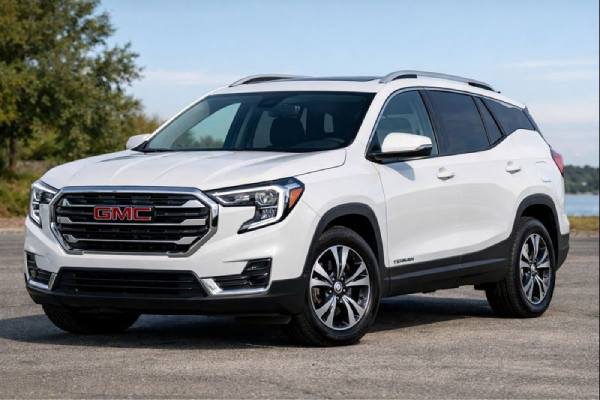
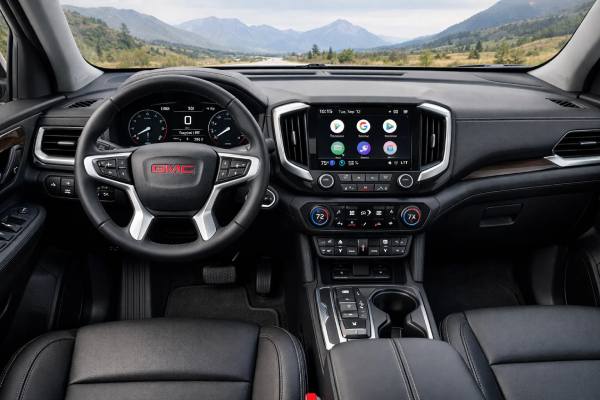
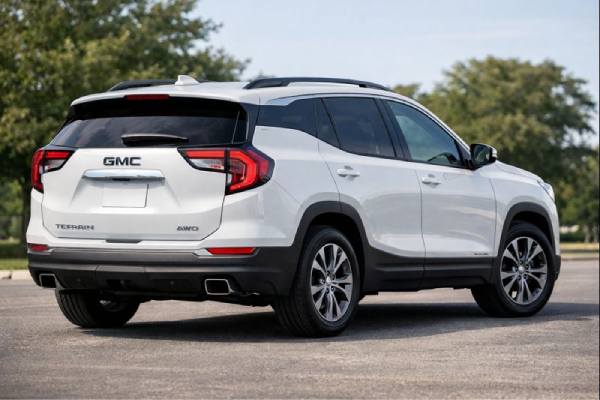
The 2023–2024 GMC Terrain FWD with the 1.5L turbo “LSD” engine is a facelift-era version of GM’s D2XX compact SUV, aimed at drivers who want a comfortable daily vehicle with modern safety tech and reasonable operating costs. The big story is that “LSD” here is an engine code (not a limited-slip differential), and it brings a modest power bump along with a familiar 9-speed automatic. In FWD form, the Terrain leans toward efficiency and predictable road manners rather than off-road ability, and its service needs look straightforward when you stay ahead of fluid intervals and don’t ignore early warning signs like coolant loss or rough cold starts. This guide focuses on what changes in the facelift years, how the powertrain behaves in real use, and what to inspect and maintain to keep ownership simple.
Owner Snapshot
- Smooth, easygoing ride quality with a calm cabin at highway speeds for a compact SUV.
- Strong everyday torque for city driving, with a 9-speed that helps keep revs low when cruising.
- Useful cargo flexibility (big step up with the rear seat folded) without moving to a larger SUV.
- Watch for cooling-system seepage and “small issues becoming big” if maintenance is delayed.
- Plan on engine oil and filter at least every 12 months (or sooner under short-trip/severe use).
Quick navigation
- Terrain 1.5T facelift explained
- LSD powertrain spec tables
- Trims, packages, and safety tech
- Reliability patterns and known fixes
- Maintenance plan and buying tips
- How it drives and saves fuel
- Rival check: where it lands
Terrain 1.5T facelift explained
For 2023–2024, the Terrain’s facelift keeps the same basic D2XX structure but updates the look and trims while continuing the core formula: a compact SUV with a comfortable suspension tune, a quiet-enough cabin, and simple family-duty packaging. In FWD form, you’re buying the most efficiency-oriented version—fewer driveline parts than AWD, slightly less weight, and typically lower tire and fluid complexity over time.
The “LSD” label is the most misunderstood part of this configuration. It is GM’s engine code for the turbocharged 1.5L inline-4 used in these facelift years. It does not mean the vehicle has a limited-slip differential. On the road, this turbo 1.5L is tuned for usable midrange torque rather than a sporty top-end, which fits the Terrain’s mission. You’ll feel the engine’s best work in normal city acceleration and merging, where the turbo’s low-to-mid rpm boost helps the vehicle move without needing high rpm.
Terrain ownership is usually defined by small “systems” rather than dramatic failures. Cooling system condition, oil quality, and intake/PCV health matter more than chasing performance mods. The 9-speed automatic is designed to keep the engine in its torque band and to drop revs at cruise, but it can feel busy in rolling hills or stop-and-go traffic when it is hunting for the “perfect” gear. Many owners adapt quickly; others prefer using a steady throttle and letting the transmission settle rather than constantly modulating the pedal.
The facelift Terrain also benefits from wide availability of driver assistance features across trims. That’s important for long-term satisfaction because safety tech is where compact SUVs have advanced the most since the underlying platform launched. If you pick the right trim and options, you can get strong daily comfort with useful lane support and blind-spot coverage, while keeping the powertrain simple and serviceable.
LSD powertrain spec tables
Below are practical, ownership-oriented specifications for the 2023–2024 Terrain FWD with the 1.5L turbo (engine code LSD). Values can vary by VIN, tire package, and market equipment, so treat them as reference points and verify for your exact vehicle.
Engine and performance (ICE)
| Item | Spec |
|---|---|
| Code | LSD |
| Engine layout and cylinders | Inline-4 (I-4), DOHC, 4 cylinders |
| Displacement | 1.5 L (≈ 1,490 cc) |
| Bore × stroke | 74.0 × 86.6 mm (2.91 × 3.41 in) |
| Induction | Turbocharged |
| Fuel system | Direct injection (DI) |
| Compression ratio | 10.0:1 |
| Max power | 175 hp (≈ 130 kW) @ 5,600 rpm |
| Max torque | 275 Nm (203 lb-ft) @ 2,000 rpm |
| Timing drive | Chain |
| Emissions / efficiency standard | EPA (US-market reference) |
| Rated efficiency (combined) | ≈ 9.0 L/100 km (26 mpg US) |
| Rated efficiency (city / highway) | ≈ 9.8 / 8.1 L/100 km (24 / 29 mpg US) |
| Real-world highway @ 120 km/h (75 mph) | Commonly ~8.5–9.5 L/100 km (25–28 mpg US), weather and tires matter |
Transmission and driveline
| Item | Spec |
|---|---|
| Transmission | 9-speed automatic |
| Transmission code | 9T45 (application varies by VIN/market) |
| Drive type | FWD |
| Gear ratios | 1st 4.69 / 2nd 3.31 / 3rd 3.01 / 4th 2.45 / 5th 1.92 / 6th 1.44 / 7th 1.00 / 8th 0.75 / 9th 0.62 / Rev 2.96 |
| Final drive ratio | 3.47 |
| Differential | Open (typical for FWD Terrain) |
Chassis and dimensions (typical references)
| Item | Spec |
|---|---|
| Suspension (front / rear) | Independent (front strut-type / rear independent) |
| Brakes | 4-wheel disc (sizes vary by trim) |
| Ground clearance | Approx. 200 mm (≈ 7.9 in), varies by tires/trim |
| Length | 4,630 mm (182.3 in) |
| Width | Approx. 1,839 mm (72.4 in) |
| Height | 1,661 mm (65.4 in) |
| Wheelbase | Approx. 2,725 mm (107.3 in) |
| Turning circle (kerb-to-kerb) | 11.8 m (38.7 ft) |
| Curb weight | ~1,551 kg (3,419 lb) |
| GVWR | ~1,995 kg (4,398 lb) |
| Fuel tank | 56.4 L (14.9 US gal) |
| Cargo volume | 838 L (29.6 ft³) seats up / 1,810 L (63.9 ft³) seats down (SAE method) |
Performance and capability (real-use expectations)
| Item | Typical value |
|---|---|
| 0–100 km/h (0–62 mph) | ~9.5–10.5 s (trim, tires, conditions) |
| 0–60 mph | ~9.0–10.0 s (conditions) |
| Top speed | Often electronically limited; typically ~180 km/h (≈112 mph) |
| Towing capacity | 680 kg (1,500 lb) where equipped/allowed |
| Payload (rough estimate) | ~444 kg (≈979 lb), varies by trim and options |
Fluids and service capacities (reference)
| Item | Spec |
|---|---|
| Engine oil | GM dexos1; 0W-20; 5.0 L (5.28 US qt) with filter |
| Coolant | GM Dex-Cool; 50/50 mix; 7.0 L (7.39 US qt) |
| Transmission/ATF | Type per service info; 11.0 L (11.6 US qt) |
| A/C refrigerant | R-1234yf; 500 g (17.6 oz) |
| A/C compressor oil | SP-A2; 150 mL (5.1 oz) |
| Key torque specs | Oil drain plug 24 Nm (18 lb-ft); wheel lug nuts 190 Nm (140 lb-ft) |
Electrical and ignition
| Item | Spec |
|---|---|
| 12V battery | 70 Ah (760 CCA) |
| Spark plugs | 4 total; gap 0.7 mm (0.028 in) |
Safety and driver assistance (availability summary)
| Item | Typical availability (trim-dependent) |
|---|---|
| Crash ratings | IIHS ratings available for 2024 model year (see References) |
| AEB | Commonly available (varies by trim/package) |
| Lane departure warning and lane keeping | Often standard for lane support features |
| Blind spot monitoring | Often optional (trim/package dependent) |
| Rear cross-traffic alert | Often bundled with blind-spot package |
| Adaptive cruise control | Usually optional, not universal across trims |
Trims, packages, and safety tech
For the 2023–2024 facelift Terrain, trims matter because they determine not just cosmetics, but also driver-assistance coverage, headlight performance, wheel/tire sizing, and cabin features that affect day-to-day satisfaction. In many markets, the Terrain lineup typically centers on SLE, SLT, AT4, and Denali. Since this article is about FWD, confirm which trims offered FWD in your region—some markets push AWD heavily on certain upper trims, and some equipment mixes change year to year.
Trims and quick identifiers (typical):
- SLE: The value-focused entry point. Look for cloth seating (often), simpler wheels, and fewer premium interior touches. This is often the easiest place to get FWD with sensible tire sizes and lower long-term replacement cost.
- SLT: More comfort and appearance upgrades. Often brings better upholstery and additional convenience features. Good middle ground if it also unlocks safety packages you want.
- AT4: Off-road styling cues and usually a more rugged appearance theme. In some markets it is heavily paired with AWD; verify FWD availability before shopping.
- Denali: Most premium interior and exterior details, and it is the trim where “nice-to-have” features are more likely to be included or easily optioned. Also the trim most likely to come with larger wheels that can ride firmer and cost more at tire time.
Options and packages that change ownership:
- Driver-assistance bundles: These are worth prioritizing because features like blind-spot detection and rear cross-traffic alert reduce daily stress. If you plan to keep the vehicle long-term, it’s often better to buy the tech you want up front than to settle and regret it later.
- Wheel and tire packages: Larger wheels can sharpen the look, but they can also increase tire cost and reduce ride compliance on broken pavement. If you value comfort and low noise, a smaller wheel with a taller tire sidewall usually helps.
- Infotainment and audio tiers: These don’t change reliability much, but they change your satisfaction. Test phone pairing, microphone clarity, and backup camera performance during a pre-purchase drive.
Safety ratings and what they mean in practice:
The Terrain has published crash-test results from major bodies for certain model years. Pay attention to test version notes (for example, “updated side test” vs older side protocols), because that’s where the industry has tightened standards. A vehicle can have “Good” results in older tests and only “Marginal” results in newer, more demanding ones without the vehicle getting worse—standards can simply rise.
ADAS calibration implications:
If your Terrain has forward camera and radar-based features (AEB, lane keeping, adaptive cruise where equipped), plan for calibration after windshield replacement, front-end collision repairs, or certain suspension alignment work. A shop that can document proper calibration reduces “mystery warning lights” and improves safety-system consistency.
Reliability patterns and known fixes
The 2023–2024 1.5T Terrain FWD tends to reward owners who treat it like a modern turbocharged DI vehicle: short trips and missed services create most of the expensive problems. The good news is that many issues show symptoms early, and preventative maintenance plus quick diagnosis usually keeps costs controlled.
Common (watch closely)
- Cooling system seepage or slow coolant loss (often shows up as low reservoir level over weeks).
Symptoms: Sweet smell after driving, low coolant message, heater performance changes.
Likely causes: Hose junctions, thermostat housing area, water-pump seepage, or small radiator leaks.
Remedy: Pressure test, fix the leak source (don’t just top up), and ensure correct Dex-Cool mix. - Rough cold start or unstable idle
Symptoms: Shaky idle, occasional misfire codes, hesitation right after startup.
Likely causes: Spark plug wear, injector deposit buildup, PCV/evap issues, or intake air leaks.
Remedy: Scan for codes and misfire counters, verify plugs and coils, inspect PCV routing, and address vacuum leaks before “throwing parts.” - Direct-injection intake valve deposits (long-term pattern)
Symptoms: Gradual loss of smoothness, reduced response, occasional cold stumble as mileage climbs.
Likely causes: DI engines do not wash intake valves with fuel; deposits accumulate faster with short trips.
Remedy: Good oil quality, periodic longer drives, and cleaning when symptoms justify it.
Occasional (depends on use and service history)
- 9-speed shift behavior complaints
Symptoms: Gear “busy-ness,” flare on certain upshifts, or delayed engagement.
Likely causes: Adaptation logic, fluid condition, or software updates; sometimes mechanical wear if neglected.
Remedy: Confirm correct fluid level and spec, check for software updates, and evaluate mounts and driveline lash. A re-learn procedure can help after repairs. - Turbocharger control issues
Symptoms: Reduced power, boost-related codes, whistle changes, or inconsistent acceleration.
Likely causes: Wastegate control problems, boost leaks, or sensor faults.
Remedy: Smoke test for leaks, check sensor plausibility, and verify actuator operation rather than replacing the turbo immediately.
Rare (but expensive if ignored)
- Oil dilution and accelerated wear under extreme short-trip use
Symptoms: Rising oil level, fuel smell in oil, increased timing-chain noise over time.
Likely causes: Repeated cold starts and short drives that never fully warm the oil.
Remedy: Shorten oil intervals, prioritize full warm-up drives, and investigate persistent fuel-in-oil signs.
Recalls, TSBs, and software actions
Because recall and service campaign coverage changes by build date, the safest approach is procedural:
- Run an official VIN check (recall database plus dealer service history).
- Ask for proof of completion for any open recalls or field actions.
- Request software update history if the vehicle has drivability or warning-light concerns.
When you test-drive, pay attention to warning messages, intermittent sensor alerts, and driver-assistance faults—those are often solved by correct calibration or module updates, but they can be time-consuming if the prior owner ignored them.
Maintenance plan and buying tips
A Terrain with the LSD 1.5T can be a low-drama daily vehicle if you maintain it like a turbo DI engine, not like an old naturally aspirated commuter. Below is a practical schedule that balances typical manufacturer guidance with real-world “severe use” realities (short trips, hot/cold extremes, heavy traffic).
Practical maintenance schedule (distance or time, whichever comes first)
- Engine oil and filter: Follow the oil life monitor, but a conservative baseline is 8,000–12,000 km (5,000–7,500 mi) or 12 months. Short trips and cold climates justify the shorter end. Use the specified dexos oil grade.
- Tire rotation and brake inspection: Every 10,000–12,000 km (6,000–7,500 mi). This keeps wear even and catches sticking calipers early.
- Engine air filter: Inspect at each oil service; replace around 30,000–45,000 km (20,000–30,000 mi) depending on dust.
- Cabin air filter: Every 20,000–30,000 km (12,000–18,000 mi) or yearly if you drive in heavy pollen/dust.
- Brake fluid: Every 2–3 years. Moisture contamination hurts pedal feel and corrosion resistance.
- Spark plugs: Many modern turbo engines benefit from earlier plug service than older NA engines; plan ~80,000–120,000 km (50,000–75,000 mi) depending on usage and misfire history.
- Coolant: Use the correct Dex-Cool type and mix. Plan around 5 years / 240,000 km (150,000 mi) unless the manual or your climate suggests earlier; fix any leaks promptly.
- Transmission fluid: If you keep the vehicle long-term, consider service around 70,000–100,000 km (45,000–60,000 mi), especially with heavy city use. Smooth shifting is cheaper than rebuilding.
- 12V battery testing: Start testing around 3–4 years, and expect replacement around 4–6 years depending on climate.
Service specs you’ll actually use
- Oil capacity: 5.0 L (5.28 qt) with filter (reference).
- Wheel lug torque: 190 Nm (140 lb-ft) (reference).
- Oil drain plug torque: 24 Nm (18 lb-ft) (reference).
Buyer’s guide checklist (fast but effective)
- Cold start test: Listen for timing-chain rattle, confirm idle stability, and watch for misfire counts if you have a scan tool.
- Cooling system check: Look for dried residue near hose joints and the coolant reservoir level trend.
- Transmission behavior: Confirm smooth engagement from Park to Drive/Reverse, and evaluate shift consistency during light throttle.
- Electronics and ADAS: Test the backup camera, parking sensors, lane functions, and blind-spot indicators (if equipped).
- Tire package sanity: If comfort and cost matter, avoid the largest wheel package unless you truly want the look.
- Paper trail: Ask for oil-change documentation and verify recalls and campaigns by VIN.
Long-term durability outlook: The drivetrain can go the distance if oil quality, cooling health, and transmission fluid condition are respected. Neglect tends to show up as “stacked” issues—small leaks, rough starts, and shifting complaints that become expensive when they accumulate.
How it drives and saves fuel
The Terrain FWD with the 1.5T LSD engine drives like a comfort-first compact SUV. The steering is tuned for easy control rather than road texture, and the suspension typically prioritizes bump isolation over sharp turn-in. That’s a plus if your daily reality includes rough pavement, long commutes, or passengers who notice ride quality more than cornering limits.
Ride, handling, and NVH
- Ride: Generally composed over highway joints and moderate potholes. The vehicle feels stable at speed, with a calm “tracking” nature in its lane.
- Handling: Safe and predictable, with moderate body roll. Tire choice can change the personality more than most people expect—larger wheels often feel firmer and louder.
- Cabin noise: Wind and road noise are usually controlled well for the class. Tires and wheel size again make a noticeable difference.
Powertrain character
- Throttle response: The turbocharger is tuned for usable low-to-mid rpm pull, but there can still be a small delay if you tip in suddenly from a low-speed roll. Smooth pedal inputs often feel more natural than quick stabs.
- Low-rpm torque: This is the engine’s strongest trait. It helps the Terrain feel “strong enough” in city gaps without needing high rpm.
- 9-speed logic: The 9-speed’s goal is efficiency. On rolling terrain it may shift more often than older 6-speed designs. Many drivers find it smoothest when you hold steady throttle instead of constantly modulating.
Real-world efficiency
Official combined fuel economy ratings for the 1.5T FWD configuration are typically in the mid-20s mpg (US). In practice:
- City: Short trips, cold starts, and stop-and-go traffic can pull results down noticeably.
- Highway (60–75 mph / 100–120 km/h): Expect better results, but speed, headwinds, and HVAC use matter. A steady cruise often rewards you with the best numbers.
- Winter penalty: Cold temperatures can reduce economy due to richer warm-up fueling, higher rolling resistance, and heavier HVAC loads.
Useful performance metrics (decision-grade)
- Passing power: The engine feels best in the midrange. If you need quick passing, the transmission usually drops multiple gears; that can feel abrupt if you aren’t expecting it.
- Braking feel: Typically consistent and easy to modulate for daily driving; brake maintenance (fluid and slide lubrication) keeps pedal feel stable over time.
- Turning circle: Tight enough for parking-lot use, and a real quality-of-life benefit in dense areas.
If you want a Terrain that feels relaxed and efficient most of the time, the FWD 1.5T is aligned with that goal. If you want a sportier, more immediate “punch,” you may prefer a rival with a stronger base engine or a hybrid system’s instant torque.
Rival check: where it lands
The compact SUV segment is brutally competitive, and the Terrain’s best strategy is balance: comfort, usable tech, and a powertrain that is “enough” without being thirsty. Here’s how the 2023–2024 Terrain FWD 1.5T generally compares.
Versus Toyota RAV4 (gas and hybrid)
- Terrain advantage: Often a calmer, comfort-oriented ride with an easygoing highway demeanor and straightforward turbo torque.
- RAV4 advantage: Hybrid availability and long-term durability reputation are hard to beat. If fuel cost and resale dominate your math, RAV4 Hybrid is usually the benchmark.
Versus Honda CR-V
- Terrain advantage: Simple daily usability and a relaxed feel; depending on trim, you may get the features you want without stepping into the highest price point.
- CR-V advantage: Strong packaging, refined controls, and (in many model years) excellent all-around efficiency options, especially with hybrid trims.
Versus Mazda CX-5
- Terrain advantage: More “soft comfort” character, often with a roomier-feeling cargo setup when seats are folded and a more laid-back tuning.
- CX-5 advantage: Sharper steering and handling feel. If driving enjoyment is a priority, Mazda usually wins.
Versus Ford Escape
- Terrain advantage: A more substantial, steady feel on the highway and a trim strategy that can be simpler to shop.
- Escape advantage: Depending on model year and powertrain, Escape can offer better efficiency options and more variety (including hybrids in many years).
Who the Terrain FWD 1.5T is best for
- Drivers who want comfort, predictable manners, and mainstream serviceability.
- Owners who prefer FWD simplicity and don’t need AWD traction for snow or rough roads.
- Buyers willing to stay on top of oil, coolant, and transmission maintenance—the keys to long-term success with modern turbo DI engines.
Who should shop elsewhere
- Anyone who wants top-tier crash-test performance under the newest test protocols across the board.
- Drivers who want hybrid-level fuel savings or stronger performance without turbo “behavior.”
- Owners who cannot commit to routine maintenance or who only drive very short trips—those patterns are harder on turbo DI engines.
References
- 2024 Terrain SLE, SLT, AT4 & Denali brochure 2024 (Brochure)
- Gas Mileage of 2024 GMC Terrain 2024 (Fuel Economy Database)
- 2024 GMC Terrain 4-door SUV 2024 (Safety Rating)
- Vehicle Detail Search – 2024 GMC TERRAIN SUV FWD | NHTSA 2024 (Recall Database)
- Manuals and Guides | Vehicle Support | GMC 2024 (Owner’s Manual Portal)
Disclaimer
This article is for informational purposes only and is not a substitute for professional diagnosis, inspection, or repair. Specifications, torque values, service intervals, and procedures can vary by VIN, market, model year, and installed equipment, so always verify details using the official owner’s manual and service documentation for your exact vehicle.
If this guide helped you, consider sharing it on Facebook, X (Twitter), or your favorite forum to support our work.