
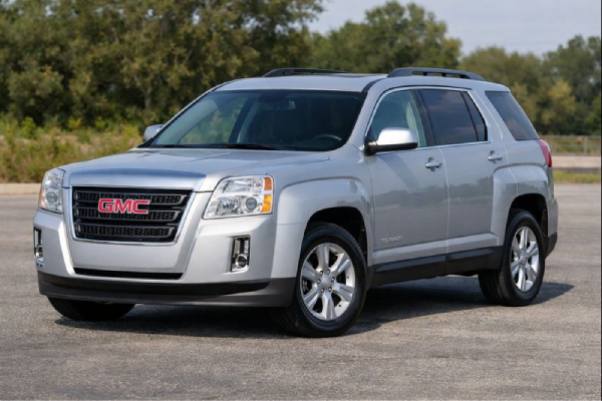
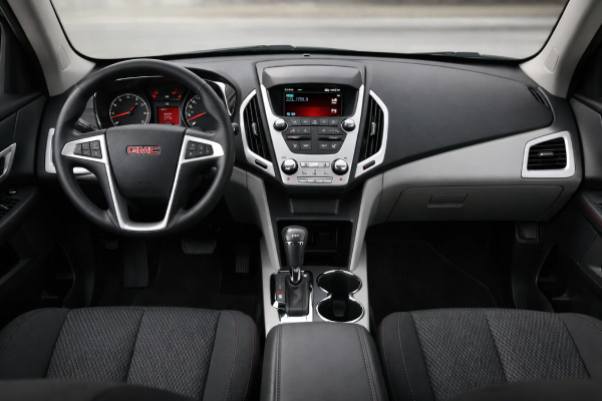
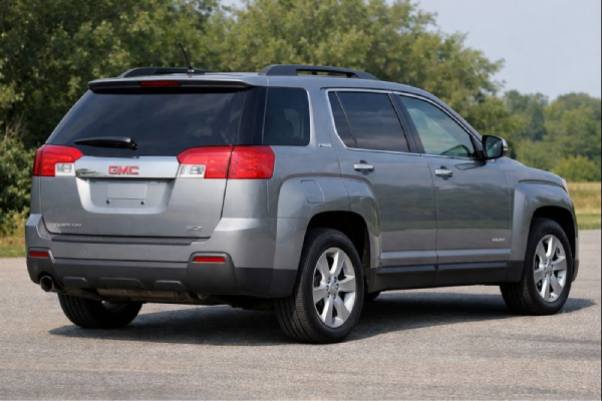
The 2010–2011 GMC Terrain FWD with the 2.4L direct-injected four-cylinder (often referenced as LAF in early documentation) sits in a sweet spot for buyers who want compact-SUV practicality with full-size comfort cues. Its engineering story is less about outright speed and more about space efficiency: a long wheelbase for the class, a clever sliding/reclining rear bench, and a chassis tuned for stable highway tracking. The 2.4L’s direct injection helps deliver respectable fuel economy for its size, but it also raises the stakes on oil quality and service habits—short-trip driving and delayed oil changes can show up later as timing and consumption complaints. If you’re shopping one today, your best results come from treating it like a “maintenance-sensitive” commuter SUV: verify service history, check for campaign completion, and keep fluids fresh.
Fast Facts
- Strong cabin and rear-seat usability for a compact SUV, especially with the sliding second row.
- Highway economy can be a real advantage in this class when driven gently.
- Direct-injection 2.4L ownership rewards frequent oil checks; low oil can cascade into bigger repairs.
- Plan on engine oil and filter service every 12 months or 12,000 km (whichever comes first), sooner in severe use.
- Expect lighter towing capability: typically 680 kg (1,500 lb) when properly equipped.
On this page
- Terrain FWD 2.4 ownership fit
- LAF 2.4 specs and capacities
- Trim choices and safety gear
- Common problems and service bulletins
- Maintenance plan and buyer checklist
- Real-world driving and economy
- Rival check: CR-V, RAV4, Escape
Terrain FWD 2.4 ownership fit
This Terrain configuration was designed to be a “big-feel” compact SUV: upright seating, wide doors, and a cabin that prioritizes everyday comfort over sporty minimalism. The long wheelbase for the segment is a major reason it feels settled at speed and roomy in the second row. The standout feature for owners is the MultiFlex rear seat (sliding and reclining), which changes how the cargo area works in real life—slide it back for adult legroom, or forward when you need more space behind the seatbacks.
The 2.4L direct-injected engine is the practical choice for most commuters. It’s not quick, but it’s predictable, and it pairs well with the 6-speed automatic’s tall highway gearing. Where many owners get tripped up is assuming “economy engine” also means “low attention engine.” Direct injection runs higher fuel pressure and tends to be less forgiving about oil level and oil quality. If the engine consumes oil between changes and the level isn’t monitored, timing-chain wear and noisy cold starts can follow. Treat oil checks as a habit, not a once-a-year surprise.
FWD also simplifies ownership versus AWD. There’s less driveline to service (no rear differential or transfer unit), fewer seals to leak, and fewer rotating assemblies adding drag. If you live in a mild climate and don’t regularly drive snow-covered hills, FWD is usually the better long-term value. On the other hand, if you routinely deal with slick grades or heavy winter conditions, you’ll want to compensate with good all-season or winter tires—tires make a bigger traction difference than most people expect.
For today’s used-market buyer, the best 2.4 FWD Terrain is one with:
- Documented oil changes (not just “recently serviced”).
- Evidence of recall and campaign completion.
- A transmission that shifts cleanly when hot and cold.
- No warning lights, and stable idle with A/C on.
It’s a comfortable, practical SUV when maintained like a machine—not like an appliance.
LAF 2.4 specs and capacities
Below are the most ownership-relevant specifications for the 2010–2011 Terrain FWD with the 2.4L direct-injected four-cylinder. Some items vary by VIN, emissions certification, wheel package, and mid-year running changes, so use these as a decision framework and verify against your vehicle’s service information.
Engine and performance
| Item | Specification |
|---|---|
| Code | LAF (2.4L DI I-4; some 2011 documentation may use different VIN engine identifiers) |
| Engine layout and cylinders | Inline-4, DOHC, 4 valves/cyl (16-valve) |
| Bore × stroke | 88.0 × 98.0 mm (3.46 × 3.86 in) |
| Displacement | 2.4 L (2,384 cc) |
| Induction | Naturally aspirated |
| Fuel system | Direct injection (SIDI) |
| Compression ratio | ~11.x:1 (varies by calibration/source) |
| Max power | 182 hp (136 kW) @ ~6,700 rpm* |
| Max torque | 233 Nm (172 lb-ft) @ ~4,900 rpm* |
| Timing drive | Chain |
| Rated efficiency (EPA) | 2010 FWD: 22/32/26 mpg (city/hwy/combined) ≈ 10.7/7.4/9.0 L/100 km (US) |
| Rated efficiency (EPA) | 2011 FWD: 22/31/26 mpg (city/hwy/combined) ≈ 10.7/7.6/9.0 L/100 km (US) |
| Real-world highway @ 120 km/h | Typically ~8.0–9.0 L/100 km (26–29 mpg US), depending on tires, wind, and load |
*RPM figures are commonly published for this engine family, but always verify by VIN calibration if you need exact test-point accuracy.
Transmission and driveline
| Item | Specification |
|---|---|
| Transmission | 6-speed automatic (commonly referenced as Hydra-Matic 6T45 family) |
| Drive type | FWD |
| Differential | Open (front transaxle differential) |
Chassis, dimensions, and utility (typical)
| Item | Specification |
|---|---|
| Front suspension | Strut-type |
| Rear suspension | Independent multi-link (four-link) with coil springs |
| Steering | Rack-mounted electric power steering (on 2.4L applications) |
| Brakes | 4-wheel disc with ABS, stability control |
| Fuel tank | ~71 L (18.8 US gal / 15.7 UK gal) |
| Cargo volume | ~900 L (≈31–32 ft³) seats up; ~1,800 L (≈63–64 ft³) seats down (method varies) |
| Towing capacity | Typically 680 kg (1,500 lb) when properly equipped |
Fluids and service capacities (key items)
| Item | Specification |
|---|---|
| Engine oil | dexos-approved 5W-30; ~5.0 L (5.3 US qt) with filter |
| Coolant | ~9.2 L (9.7 US qt) |
| Automatic transmission (drain and refill) | ~4.5 L (4.8 US qt) |
| Automatic transmission (approx. total fill) | ~8.1 L (8.6 US qt) |
| Spark plug gap | ~0.80 mm (0.031 in) |
| Wheel lug torque (check by year) | 2010 documentation may list higher than 2011; verify in your manual |
If you’re building an ownership plan, the oil spec, oil capacity, coolant capacity, and transmission service quantities above are the numbers that matter most.
Trim choices and safety gear
For 2010–2011, Terrain trims typically follow the SLE/SLT ladder (with sub-trims such as SLE-1, SLE-2, SLT-1, SLT-2 depending on market). The 2.4L FWD powertrain shows up across the range, so trims mostly change comfort, convenience, and wheel/tire packages rather than core drivetrain hardware. When shopping used, you want to identify what matters for your daily life and what adds long-term cost.
Trims and options that change the experience
Common equipment differences you’ll feel immediately:
- Seat material and comfort features: cloth vs leather, heated seats, and power adjustment. Heated seats add comfort but also add electrical complexity as vehicles age.
- Infotainment tier: base audio vs upgraded systems, optional navigation, Bluetooth integration, and USB inputs. Older head units can be expensive to replace if you’re chasing a factory look.
- Wheel and tire size: larger wheels sharpen response but can increase tire cost and road harshness. If your priority is ride and low running cost, the smaller wheel packages usually win.
- Convenience features: remote start, power liftgate, rear camera display location (mirror-integrated vs infotainment screen), and premium lighting.
Quick identifiers to look for during a walkaround:
- Badging and wheels: SLT trims often wear more brightwork and upgraded wheels.
- Interior tells: leather, red ambient lighting accents, and steering-wheel controls tend to cluster on higher trims.
- Option-package clues: look for roof rails, reverse camera, and parking sensors where fitted.
Safety ratings and crash protection
Safety messaging around this generation often highlights strong structural performance for its class. However, safety ratings depend on the exact test body and test year, and used buyers should treat ratings as “context,” not a guarantee. Confirm what applies to your exact model year and configuration.
What to check and what it means:
- IIHS tests: typically include moderate overlap front, side impact, roof strength, and head restraints/seat performance for whiplash protection.
- Airbag system: confirm no SRS warning light, and verify airbag recalls (if any) are closed out by VIN.
- Child-seat provisions: confirm LATCH/ISOFIX anchor condition and access—worn seat-bight plastics and missing covers aren’t dangerous by themselves, but they can hint at hard family use.
Driver assistance and stability systems (era-appropriate)
Most 2010–2011 compact SUVs were still in the “pre-AEB” (automatic emergency braking) era. Expect:
- ABS and stability control as core safety tech.
- Traction control tuned for road use, not off-road.
- Rearview camera commonly available and very useful on a tall-tailgate design.
If a seller describes modern ADAS features (lane centering, radar cruise, AEB), treat that as a misunderstanding unless you’ve verified aftermarket additions.
Common problems and service bulletins
A well-kept 2.4L Terrain can be dependable transportation, but the ownership pattern is clear: small maintenance misses can snowball. Below is a practical “what fails, how it shows up, what to do” map. Prevalence and cost vary by climate, driving style, and how often oil level was checked.
High-frequency, higher-impact concerns
- Oil consumption (common, cost tier: medium to high if ignored)
Symptoms: dropping oil level between services, noisy cold starts, rough idle, or timing-related fault codes after prolonged neglect.
Likely root causes: ring wear or PCV system behavior compounded by extended intervals.
Remedy: confirm consumption rate with measured top-offs, keep oil at the full mark, and follow the severe-service schedule if you do short trips. If consumption is extreme, professional diagnosis is required before throwing parts at it. - Timing chain stretch or tensioner wear (occasional to common, cost tier: high)
Symptoms: rattling on cold start, correlation codes, rough running, or persistent check-engine light.
Likely root causes: low oil level, dirty oil, or long intervals accelerating wear.
Remedy: address oil habits first; if symptoms persist, chain system inspection and repair should be done correctly (guides, tensioner, and root-cause correction). - Direct injection deposit behavior (occasional, cost tier: medium)
Symptoms: hesitation, misfire under load, reduced fuel economy.
Likely root causes: intake valve deposits over time (DI engines wash less fuel over intake valves).
Remedy: targeted cleaning strategies based on diagnosis; avoid “miracle bottle” fixes as a first step.
Medium-frequency drivetrain and chassis issues
- 6-speed automatic shift quality complaints (occasional, cost tier: medium)
Symptoms: harsh 2–3 shift, flare, delayed engagement when cold, or shudder in certain conditions.
Likely root causes: fluid aging, adaptive learning issues, or internal wear.
Remedy: verify fluid condition and service history; a fluid service done correctly can help some cases, but it’s not a cure-all for worn hardware. - Cooling system wear items (occasional, cost tier: medium)
Symptoms: coolant smell, slow seepage, temperature creep in traffic.
Likely root causes: age-related gasket hardening, thermostat housing seepage, water pump wear.
Remedy: pressure-test and fix leaks early; overheating events are what turn a manageable repair into an engine-risk event. - Suspension links and mounts (common with age, cost tier: low to medium)
Symptoms: clunks over bumps, vague steering feel, uneven tire wear.
Likely root causes: sway-bar links, strut mounts, control arm bushings.
Remedy: inspect systematically; don’t align the car until worn parts are corrected.
Software updates, recalls, and campaigns
Even when the vehicle drives “fine,” software updates and service actions can matter—especially for drivability quirks, false sensor codes, or transmission behavior. The most reliable approach is:
- Run the official VIN recall check and confirm closed actions in dealer history.
- Ask for documentation of any control-module reprogramming tied to drivability complaints.
- Treat unresolved recalls as a negotiation point—completion protects you and supports resale value.
Pre-purchase checks worth paying for
- Scan for diagnostic codes (including history codes), not just current lights.
- Confirm oil level and condition before the test drive.
- On a cold start, listen for chain rattle and watch idle stability.
- After a long drive, re-check for leaks and confirm the transmission behaves consistently when fully warm.
Maintenance plan and buyer checklist
If you want a 2.4L Terrain to last, you maintain it like a DI engine with a timing chain—because that’s exactly what it is. The schedule below blends typical manufacturer guidance with proven “used-car reality” adjustments for age and driving pattern. Always follow the severe schedule if you do short trips, lots of idling, stop-and-go commuting, or dusty conditions.
Practical maintenance schedule (distance or time, whichever comes first)
- Engine oil and filter: every 12,000 km (7,500 mi) or 12 months; every 8,000 km (5,000 mi) in severe use. Check level monthly.
- Engine air filter: inspect every 15,000 km (10,000 mi); replace around 30,000–45,000 km (20,000–30,000 mi) depending on dust.
- Cabin air filter: every 20,000–30,000 km (12,000–18,000 mi) or yearly if allergies/humidity are a concern.
- Coolant: follow official interval where specified; on older vehicles, many owners refresh around 5 years as preventative maintenance if history is unknown.
- Spark plugs: typically around 160,000 km (100,000 mi); sooner if misfire diagnosis confirms wear or contamination.
- Transmission fluid: if history is unknown, consider a service in the 70,000–100,000 km (45,000–60,000 mi) window and monitor shift quality.
- Brake fluid: every 2 years regardless of mileage (moisture absorption is time-driven).
- Brake inspection: at every tire rotation; replace pads/rotors based on thickness, corrosion, and feel.
- Tire rotation: every 8,000–12,000 km (5,000–7,500 mi).
- Alignment check: annually or after any suspension work, curb impacts, or uneven tire wear.
- 12V battery test: yearly after year 3; many batteries last 4–6 years depending on climate.
Fluid specifications and “decision” capacities
Use these to plan costs and avoid incorrect fluids:
- Engine oil: dexos-approved 5W-30, about 5.0 L with filter.
- Coolant capacity: about 9.2 L total system fill.
- Automatic transmission: about 4.5 L for a drain/refill; about 8.1 L total (approximate).
Essential torque values (high-impact fasteners only)
Torque values can differ by year and wheel package, so verify for your VIN. As a buyer, the most important takeaway is simply that these are not “guess tight” fasteners:
- Wheel lug nuts: values published for this platform vary by model year documentation—confirm and use a torque wrench.
Buyer’s guide checklist (what to inspect, and why)
Before starting:
- Check oil level on the dipstick. A seller who can’t show a normal oil level may be telling you something without saying it.
During cold start:
- Listen for timing chain rattle.
- Watch idle: a stable idle with A/C on is a good sign.
During the drive:
- Smooth, repeatable shifts (cold and hot) matter more than “it drives fine right now.”
- Brake feel should be consistent without steering shake.
After the drive:
- Look for fresh oil seepage, coolant smell, or wetness around hoses and housings.
- Scan for codes even if the dash is clear.
Best-case used buy: one-owner or well-documented multi-owner, consistent oil service, and proof of completed campaigns.
Real-world driving and economy
On the road, the 2.4L FWD Terrain feels like what it is: a comfort-first compact SUV with a tall seating position and a chassis tuned for stability. Steering effort is typically light at parking speeds and firms up enough on the highway to feel steady rather than twitchy. The suspension’s big advantage is composure—broken pavement and expansion joints are handled without the constant busy motion you get in shorter-wheelbase rivals. The trade-off is that the vehicle isn’t eager to change direction quickly; it prefers smooth inputs and rewards relaxed driving.
Powertrain character
The 2.4L direct-injected engine delivers its best work at moderate throttle. Around town, it’s adequate, but full-throttle merges can feel busy because the engine needs revs to make peak power. The 6-speed automatic usually masks this by dropping gears quickly, though some vehicles hunt more on rolling grades—especially with A/C load, passengers, or larger wheels.
Use cases where it feels strongest:
- Steady suburban driving at moderate speeds.
- Highway cruising where the tall top gear keeps revs down.
- Light-load commuting where you’re not demanding fast passing power.
Use cases where it feels weaker:
- Short freeway merge ramps at full load.
- High-speed passing without planning (you’ll wait for the downshift).
- Hilly terrain where it may shift more often.
Real-world efficiency
EPA ratings for this configuration are strong for its size:
- 2010 FWD 2.4: 22 city / 32 highway / 26 combined mpg (US).
- 2011 FWD 2.4: 22 city / 31 highway / 26 combined mpg (US).
In real life, many drivers land in the mid-20s mpg combined with mixed use, and the biggest swings come from speed and tires. At 120 km/h (75 mph), consumption rises noticeably versus 100–110 km/h cruising, which is typical for a tall crossover. Winter fuel economy also drops due to cold oil, winter fuel blends (where applicable), and longer warm-up times.
Braking, NVH, and daily comfort
Brake feel is generally confidence-inspiring when the system is healthy: stable in a straight line with predictable pedal response. Noise, vibration, and harshness (NVH) are usually acceptable for the class, though older examples can develop extra road noise from worn tires, wheel bearings, or aged door seals. The cabin’s upright design and visibility remain a daily win—especially in traffic and parking.
Load and towing (when applicable)
With the 2.4L, towing is best treated as occasional rather than routine. A properly equipped Terrain can handle light trailers, but keep speeds moderate, avoid overheating, and expect a clear fuel-economy penalty. If you plan to tow frequently, the bigger engine options (or a different vehicle class) make ownership simpler.
Rival check: CR-V, RAV4, Escape
To understand the 2010–2011 Terrain 2.4 FWD, compare it to three mainstream benchmarks: the Honda CR-V, Toyota RAV4, and Ford Escape of the same era. Each rival has a clear personality, and Terrain’s strengths are most obvious when you focus on cabin feel and highway manners rather than stoplight performance.
Where the Terrain 2.4 FWD wins
- Interior “big SUV” vibe: The seating position, dash design, and overall cabin presence feel more substantial than some rivals that prioritize lightness and simplicity.
- Rear-seat flexibility: A sliding/reclining second row changes daily usability in a way many competitors didn’t match at the time.
- Highway economy for its size: When driven calmly, this configuration can deliver excellent highway numbers for a roomy crossover.
Where rivals often do better
- Powertrain simplicity and long-term tolerance: Some competitors’ port-injected engines of the era can be more forgiving of short trips and missed oil checks than a direct-injected, chain-driven setup.
- Passing response: Many rivals feel quicker in real-world passing, either through gearing, power delivery, or lighter curb weight.
- Repair cost predictability: High-volume competitors often have a broader pool of independent-shop familiarity, which can reduce labor premiums in some markets.
Which rival fits which buyer
- Choose Terrain 2.4 FWD if you value comfort, rear-seat practicality, and highway stability, and you’re willing to stay disciplined with oil level checks and fluid maintenance.
- Choose CR-V if you want a reputation for ownership ease, predictable repairs, and a vehicle that feels “light and efficient” even when loaded.
- Choose RAV4 if you prioritize resale strength and a straightforward daily-driver feel, accepting that ride comfort and cabin feel vary widely by trim and year.
- Choose Escape (era-dependent) if you want a smaller-footprint crossover feel and don’t mind that some variants trade refinement for simplicity.
The Terrain’s best argument is not that it’s perfect—it’s that it offers a roomy, comfortable, practical experience that still makes sense today, as long as you buy the right example and maintain it proactively.
References
- 2011 GMC Terrain Owner Manual M 2011 (Owner’s Manual)
- Gas Mileage of 2010 GMC Terrain 2010 (Official Fuel Economy Data)
- Gas Mileage of 2011 GMC Terrain 2011 (Official Fuel Economy Data)
- 2011 GMC Terrain 4-door SUV 2011 (Safety Rating)
- Vehicle Detail Search – 2011 GMC TERRAIN SUV FWD 2011 (Recall Database and Ratings)
Disclaimer
This article is for informational purposes only and is not a substitute for professional inspection, diagnosis, or repair. Specifications, torque values, maintenance intervals, and procedures can vary by VIN, market, model year, and installed equipment—always verify details using the official owner’s manual and service documentation for your exact vehicle.
If you found this guide helpful, consider sharing it on Facebook, X, or your favorite forum to support our work and help other owners shop and maintain their vehicles more confidently.