
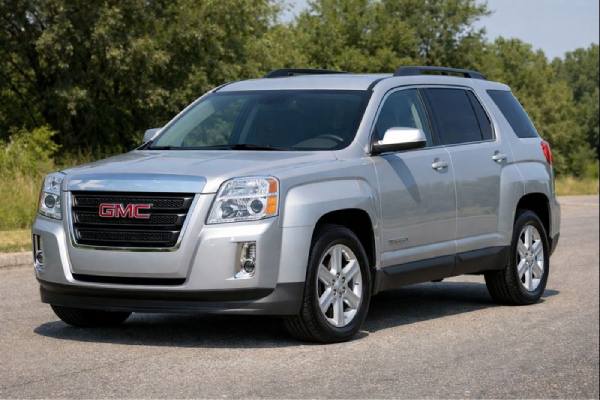
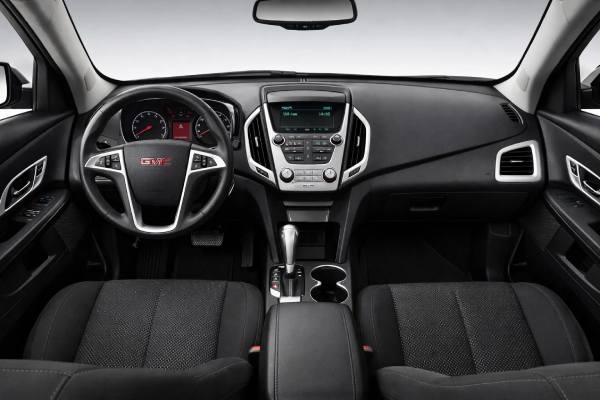
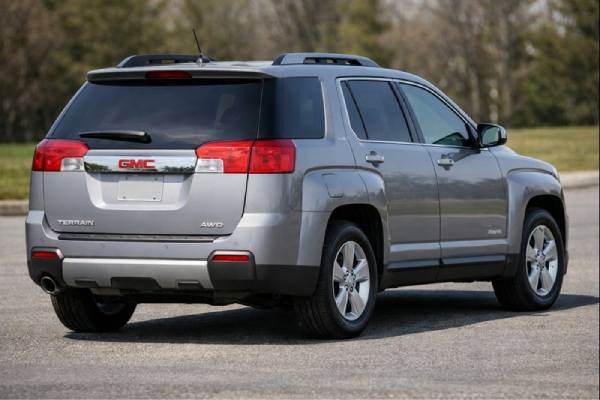
The 2010 GMC Terrain FWD with the LF1 3.0L V6 is the “launch-year” version of GMT177, and it has a very specific appeal: a relatively smooth, rev-happy direct-injection V6 paired with a 6-speed automatic and a simpler front-wheel-drive layout. In day-to-day ownership, that combination tends to deliver confident highway passing and fewer driveline parts to maintain than the AWD equivalent, while still keeping the compact-crossover packaging that made the Terrain popular—upright seating, a sliding rear seat, and usable cargo space.
This guide focuses on what matters most for buying and keeping one: the exact capacities and service intervals that affect long-term costs, the common wear points that show up with age, and what the safety results and equipment mean in real traffic. If you want the strongest non-turbo engine offered at the time, this is the Terrain to understand.
What to Know
- Strong high-rpm pull and smoothness for a compact crossover, especially on highway merges.
- FWD reduces AWD-related upkeep while keeping the same practical cabin and cargo layout.
- Budget for proactive fluid service; “lifetime” claims rarely age well past 160,000 km.
- Expect engine oil and filter service when the oil-life monitor calls for it, and at least every 12 months.
Quick navigation
- 2010 Terrain LF1 FWD explained
- LF1 FWD specs and capacities
- Equipment guide and crash protection
- Known faults and recall checks
- Service schedule and buying tips
- How it drives in practice
- Versus CR-V RAV4 Escape
2010 Terrain LF1 FWD explained
Think of the 2010 Terrain LF1 FWD as a compact crossover built around a “big-engine, simple-drive” idea. The LF1 is a 3.0L V6 with spark-ignition direct injection and variable valve timing—modern hardware for its day—paired with a conventional 6-speed automatic. In FWD form, it avoids the added weight, parasitic drag, and extra service items that come with an AWD transfer case and rear drive unit. That matters because many of these vehicles now live in the “second and third owner” phase, where fewer driveline parts usually means fewer surprises.
From an engineering standpoint, the V6 Terrain also differs from the base four-cylinder versions in ways owners notice. Steering assist strategy and calibration can vary by engine, and the V6 was designed to feel more confident under load—merges, hills, and passing—without relying on turbo boost. The trade-off is that peak output comes at higher rpm, so it often feels strongest when you let it rev rather than expecting diesel-like low-end shove.
Packaging is a big part of the Terrain’s appeal. The seating position is upright, the cargo floor is low enough to be practical, and the rear seat’s fore-aft adjustment lets you choose between rear legroom and cargo length. That flexibility is useful if you do a mix of commuting and weekend hauling. On the road, the Terrain is tuned more for stability and comfort than sharp handling; it’s an easy vehicle to place in traffic and a calm long-distance companion when the chassis is in good condition.
For most buyers today, the real question is not “Is it good?” but “Is this specific one maintained?” A clean-service-history LF1 FWD can be a satisfying, durable daily driver. A neglected one can quickly turn into a catch-up project—especially if fluids, cooling system health, and small electrical items have been ignored.
LF1 FWD specs and capacities
Below are the core specifications that matter for servicing, comparison shopping, and setting expectations. Values reflect the 2010 Terrain with the 3.0L V6 and 6-speed automatic in front-wheel drive form where applicable.
Engine and performance
| Item | Specification |
|---|---|
| Code | LF1 |
| Layout | 60° V6, DOHC, 24-valve, variable valve timing |
| Displacement | 3.0 L (3,000 cc class) |
| Induction | Naturally aspirated |
| Fuel system | Direct injection (SIDI) |
| Max power | 264 hp (197 kW) @ 6,950 rpm |
| Max torque | 301 Nm (222 lb-ft) @ 5,100 rpm |
| Timing drive | Chain |
| Spark plug gap | 1.1 mm (0.043 in) |
| Rated efficiency (EPA) | 17 / 25 / 20 mpg (city / highway / combined) |
Fuel economy conversions (approx.):
- 17 mpg US ≈ 13.8 L/100 km
- 25 mpg US ≈ 9.4 L/100 km
- 20 mpg US ≈ 11.8 L/100 km
Real-world highway at 120 km/h (75 mph): many owners land roughly in the 10.0–11.5 L/100 km (20–23 mpg US) range depending on tires, temperature, and terrain.
Transmission and driveline (FWD)
| Item | Specification |
|---|---|
| Transmission | 6-speed automatic |
| Drive type | FWD |
| Differential | Open (front) |
(Gear ratios and final drive can vary by calibration and build codes; confirm via the Service Parts Identification label for exact RPOs.)
Chassis and dimensions (typical 2010 FWD body)
| Item | Specification |
|---|---|
| Suspension (front/rear) | Independent strut / independent rear (multi-link/trailing arm family) |
| Brakes | 4-wheel disc with ABS |
| Wheelbase | 2,858 mm (112.5 in) |
| Length / width / height | 4,707 / 1,849 / 1,684 mm (185.3 / 72.8 / 66.3 in) |
| Ground clearance | 175 mm (6.9 in) |
| Turning circle (kerb-to-kerb) | ~12.2 m (40.0 ft) |
| Cargo volume | ~895 L (31.6 ft³) seats up / ~1,810 L (63.9 ft³) seats down (method varies by source) |
Fluids and service capacities (2010 V6)
| Item | Specification |
|---|---|
| Engine oil | GM6094M spec, SAE 5W-30 (synthetic 5W-30 or 0W-30 for extreme cold) |
| Engine oil capacity (with filter) | 5.7 L (6.0 qt) |
| Coolant | DEX-COOL, 50/50 mix with clean water |
| Coolant capacity | 10.2 L (10.8 qt) |
| Automatic transmission fluid | DEXRON-VI (check procedure matters) |
| ATF (drain and refill) | ~9.0 L (9.5 qt) |
| Fuel tank | 79.1 L (20.9 US gal / 17.4 UK gal) |
| Wheel nut torque | 170 Nm (125 ft-lb) |
Equipment guide and crash protection
For 2010, the Terrain lineup typically centers on SLE and SLT trims (with sub-levels like SLE-1/SLE-2 and SLT-1/SLT-2 depending on market). The easiest way to avoid confusion is to read the Service Parts Identification label (usually in the glovebox area). It lists RPO codes that identify major equipment—audio systems, wheels, towing prep, and sometimes calibration families. Two vehicles that both “look like SLT” can have meaningful differences in content.
Trims and options that matter mechanically
If you are shopping specifically for the LF1 V6, pay extra attention to these items because they affect ownership costs and usefulness:
- Tow-related equipment: A factory tow package (when fitted) usually brings the right cooling and hitch hardware. If you plan to tow, prioritize a vehicle with documented towing equipment rather than adding everything later.
- Wheel and tire size: 17-inch setups typically ride best and cost less in tires. Larger wheels look good but can increase tire cost and make impacts harsher—important on older suspension bushings.
- Seating and cargo configuration: The sliding second row is one of the Terrain’s most practical features. Confirm it works smoothly and locks securely.
- Infotainment and camera: Many 2010 Terrains were equipped with a rear vision camera, but verify function and screen condition (dead pixels and failing displays can show up with age).
Safety ratings and what they mean
On the insurance and crashworthiness side, the 2010 Terrain scores well in the tests that existed at the time. The Insurance Institute for Highway Safety (IIHS) shows strong results in the core structure-focused evaluations, and the model was recognized in IIHS award listings for that period. In practical terms, that means the body structure and restraints generally manage common crash modes well—provided the vehicle has not been poorly repaired after a prior collision.
Safety systems and driver assistance (2010 reality check)
A key ownership point: 2010-era safety tech is mostly passive and stability-focused, not “modern ADAS.”
Commonly expected equipment includes:
- Front, side, and curtain airbags (verify the airbag light proves out and goes off normally).
- Electronic stability control and traction control to reduce loss-of-control events.
- ABS to preserve steering during hard braking.
- LATCH/ISOFIX child-seat anchors (confirm the anchor points are intact and not damaged by prior misuse).
What you generally should not expect on a 2010 Terrain:
- Automatic emergency braking, adaptive cruise control, lane centering, or modern camera-based lane assist. If a seller claims these features, treat it as a misunderstanding unless the vehicle has aftermarket equipment.
After any windshield replacement, bumper work, or front-end repair, confirm that the ABS/stability system behaves normally and that no warning lights remain. On older vehicles, unresolved warning lights often mean deferred diagnostics, not “a simple sensor.”
Known faults and recall checks
At this age, reliability is less about “design flaws” and more about how the vehicle has been used and maintained. The LF1 V6 and 6-speed automatic can hold up well, but there are patterns worth watching. Below is a practical map by prevalence and cost tier.
Common (low to medium cost)
- Oil seepage and gasket aging
Symptoms: oily residue around covers, slow drips, burning-oil smell after a drive.
Likely causes: age-hardened seals, crankcase ventilation issues, overfilled oil.
Remedy: identify the true source before resealing; fix ventilation problems so leaks do not return. - Cooling system wear (hoses, thermostat behavior, reservoir cap)
Symptoms: fluctuating temp gauge, sweet smell, low coolant in the surge tank, intermittent overheating in traffic.
Likely causes: aging hoses, sticky thermostat, degraded cap pressure control.
Remedy: pressure test, inspect for dried coolant trails, and restore proper coolant mix and cap function. - Suspension consumables (bushings, links, struts over time)
Symptoms: clunks over bumps, vague steering on-center, uneven tire wear.
Likely causes: normal wear accelerated by potholes and heavy loads.
Remedy: replace worn components in pairs where appropriate and align afterward.
Occasional (medium cost)
- Direct-injection drivability sensitivity
Symptoms: rough idle, hesitation, reduced mpg.
Likely causes: injector deposits, intake valve deposits (DI engines can be prone), weak coils, aging plugs past interval.
Remedy: start with correct spark plugs and ignition health; use diagnosis before parts swapping. - 6-speed automatic shift quality changes
Symptoms: delayed engagement, harsh 2–3 shifts, shudder under light throttle.
Likely causes: fluid degradation, adaptive values, valve body wear, torque converter clutch issues on higher-mileage examples.
Remedy: confirm fluid condition and level using the correct procedure; consider earlier-than-minimum fluid service if history is unknown.
Rare but expensive (high cost)
- Internal engine mechanical issues (uncommon, but costly when present)
Symptoms: persistent misfire, low compression, heavy oil consumption, knock.
Likely causes: long oil-change intervals, overheating events, poor prior repair.
Remedy: compression/leak-down testing and a clear diagnostic plan before committing.
Recalls, service bulletins, and how to verify
Do not guess. Use an official VIN check and dealer service history printout to confirm open campaigns and prior completion. The Terrain line has had multi-year safety actions (some affecting later years as well), so the only safe approach is VIN-specific verification. When you find a campaign, match it to:
- the symptom it prevents,
- whether the remedy is a part replacement or a calibration update, and
- whether there is proof of completion (invoice, dealer record, or recall status showing “remedied”).
Pre-purchase checks to request
- Full service history with oil change cadence and coolant and transmission service evidence.
- A scan for stored codes, not just “no lights on the dash.”
- A cold start test (listen for abnormal timing-chain area noise, belt squeal, or unstable idle).
- Evidence the vehicle has not suffered a poorly repaired front-end collision (panel gaps, overspray, mismatched fasteners).
Service schedule and buying tips
A 2010 Terrain LF1 FWD lasts longest when you treat it like a system: fluids, cooling, and wear components all influence each other. Below is a practical schedule you can actually follow. Use it as a baseline, then adjust for climate, driving style, and towing.
Core maintenance schedule (distance or time, whichever comes first)
| Item | Normal use | Severe use (short trips, heat, hills, towing, heavy city) |
|---|---|---|
| Engine oil and filter | Oil-life monitor, and at least every 12 months | Oil-life monitor, often sooner; do not stretch intervals |
| Tire rotation | Every ~12,000 km (7,500 mi) | Every ~8,000–10,000 km (5,000–6,000 mi) |
| Engine air filter | Inspect; replace as needed | Inspect more often; dusty use shortens life |
| Cabin air filter | Yearly or as airflow drops | Yearly or sooner in dusty/pollen-heavy areas |
| Spark plugs (V6) | ~160,000 km (100,000 mi) | Same, but inspect earlier if misfire or mpg drop |
| Automatic transmission fluid | ~160,000 km (100,000 mi) | Earlier service is wise if towing or heat-soaked driving is common |
| Engine coolant (DEX-COOL) | ~240,000 km (150,000 mi) or 5 years | Same interval, but only if system stays clean and sealed |
| Brake fluid | Every 2–3 years is a smart practice | Every 2 years is a smart practice |
Fluid specifications and quick capacities (V6)
- Engine oil: GM6094M specification, SAE 5W-30; 5.7 L (6.0 qt) with filter.
- Coolant: DEX-COOL 50/50 mix; 10.2 L (10.8 qt) system fill.
- Automatic transmission: DEXRON-VI; drain and refill volume is about 9.0 L (9.5 qt) (procedure matters).
- Power steering (V6): uses DEXRON-VI in the hydraulic system (verify on the reservoir cap and manual guidance).
Essential torque value: wheel nuts 170 Nm (125 ft-lb)—important for brake work and wheel swaps.
Buyer’s guide: what to inspect in 30 minutes
- Fluids check: oil level and condition, coolant level and clarity, and any burnt smell near the transmission area.
- Cooling system pressure signs: dried coolant residue, swollen hoses, weak heater performance.
- Front suspension and tires: uneven wear on inner shoulders often hints at alignment or worn components.
- Brake feel: a long pedal can mean air or old fluid; pulsation can mean rotor issues.
- Electronics sanity test: windows, locks, HVAC modes, camera, and all warning lights proving out.
Long-term durability outlook
A well-kept LF1 FWD can be a durable, comfortable daily driver with manageable running costs. The “make or break” factor is maintenance discipline: clean oil, correct coolant chemistry, and timely transmission servicing do more for longevity than any single upgrade. If you find one with vague history, budget for a thorough baseline service so you are not inheriting someone else’s deferred maintenance.
How it drives in practice
The LF1-powered Terrain feels most like a traditional American V6 crossover from its era: smooth, quiet enough for long trips, and tuned for stability rather than sport. In traffic, the big advantage is effortlessness. You do not need to plan passes far in advance, and highway ramps feel less stressful than they do in many base-engine compact SUVs from the same period.
Ride, handling, and NVH
Ride quality is generally composed when the suspension is healthy. The chassis prefers a steady, planted line over quick direction changes, and the steering is calibrated for easy control rather than sharp feedback. Older examples can develop extra tire noise and thumps over broken pavement—usually a combination of aging struts, worn links, and tires that have hardened with age.
On the highway, the Terrain’s long wheelbase for the class helps it track confidently. Wind noise is usually reasonable, though door seals and mirror turbulence can become more noticeable over time. If you hear a persistent roar, do not assume it is “just road noise”—uneven tire wear or a wheel bearing can mimic that sound.
Powertrain character and shift behavior
The LF1 V6 makes its power higher in the rev range. Around town it feels smooth and responsive, but the strongest pull shows up when the transmission drops a gear or two and lets the engine spin. That is normal behavior for this engine’s tuning. A healthy 6-speed automatic should shift cleanly without flare (engine revs rising without matching acceleration) and without harsh bangs.
If the vehicle shudders lightly at steady speeds, it can be a sign the transmission fluid is old or the torque converter clutch is not behaving perfectly. Because these symptoms can overlap, correct diagnosis beats guesswork.
Real-world economy
EPA numbers for the 3.0L FWD are modest for the class, and most owners will see the biggest swing based on speed and trip length. Short trips and winter warm-ups can push consumption up quickly. On steady highway cruising, the vehicle can be noticeably more reasonable—especially with properly inflated tires and no roof racks or heavy cargo.
Traction and control (FWD reality)
In rain and light snow, stability control and decent tires do most of the work. In deeper snow or on steep, slick grades, FWD will reach its limit sooner than AWD, and tire choice becomes critical. If you live in a winter climate, prioritize a true winter tire over relying on electronics.
Towing and load behavior
When properly equipped, the V6 Terrain can handle moderate towing better than the four-cylinder versions. Expect a meaningful fuel economy penalty under load and pay close attention to cooling system health. If a seller towed regularly, you want evidence of more frequent transmission service and no history of overheating.
Versus CR-V RAV4 Escape
Cross-shopping matters because the 2010 Terrain LF1 FWD sits in an interesting spot: it offers a strong V6 in a compact-crossover body, but it is not the efficiency champion. Here is how it generally stacks up against key rivals from the same era.
Versus Honda CR-V (2.4L)
The CR-V’s advantage is simple, predictable ownership: strong reliability reputation, good packaging, and typically better fuel economy. Where the Terrain wins is power reserve. If you routinely drive fast highways, climb grades, or carry passengers and cargo, the LF1 V6 feels less strained. If you want the easiest “appliance” SUV, the CR-V is usually the safer bet.
Versus Toyota RAV4 (including V6 versions)
The RAV4 range is broad. Four-cylinder versions compete on efficiency and resale, while V6 versions (where available) can be genuinely quick. The Terrain’s strengths are ride comfort and an interior that can feel more “truck-like” and substantial to some drivers. The Toyota tends to lead on long-run durability and parts availability. If you find a clean Terrain with documented care, it can be a value play; if you want maximum predictability, the RAV4 usually edges ahead.
Versus Ford Escape (V6 era)
The Escape of that period can feel lighter and more agile, and it is often cheaper to buy. The Terrain feels more modern inside, more stable at highway speed, and generally more refined in ride quality. On the other hand, the Escape’s simpler systems in some trims can mean fewer expensive “comfort feature” failures. Choose the Terrain if you prioritize comfort and highway manners; choose the Escape if you want a smaller, simpler feel.
Bottom line
Pick the 2010 Terrain LF1 FWD when you want:
- V6 passing confidence in a compact footprint,
- a comfortable, stable ride, and
- a vehicle that rewards careful maintenance.
Skip it if you want:
- best-in-class fuel economy,
- modern driver-assistance tech, or
- “set it and forget it” ownership without verifying service history.
References
- Gas Mileage of 2010 GMC Terrain 2010 (Fuel Economy Database)
- 2010 GMC Terrain 2010 (Safety Rating)
- Car Safety Ratings | Vehicles, Car Seats, Tires 2025 (Safety Rating Database)
- Manuals and Guides | Vehicle Support | GMC 2025 (Owner’s Manual)
Disclaimer
This article is for informational purposes only and is not a substitute for professional inspection, diagnosis, or repair. Specifications, torque values, service intervals, and procedures can vary by VIN, market, build codes, and equipment. Always verify details using official owner information, service documentation, and manufacturer procedures for your exact vehicle.
If you found this guide useful, please consider sharing it on Facebook, X (Twitter), or your favorite forum to support our work.