

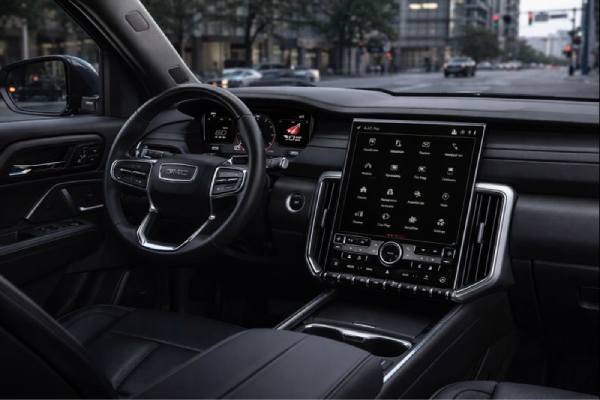

The 2025-present GMC Terrain with the 1.5-liter turbo (RPO LSD) and front-wheel drive targets the practical middle ground: compact-SUV space, reasonable running costs, and everyday drivability without the mass and complexity of a larger crossover. In this configuration, the Terrain’s engineering priorities show through in the details—low-rpm torque for city work, a calibration that favors smoothness over sportiness, and a chassis tuned for stability and predictable grip on mainstream all-season tires.
For owners, the big story is not peak power but the full ownership loop: how the turbo DI (direct-injected) engine handles short trips, what maintenance actually prevents the common issues, and how to keep the transmission, cooling system, and driver-assistance sensors happy over years of commuting. This guide focuses on that real-world view, while still giving you the technical tables and service specifics you need.
Quick Specs and Notes
- Strong day-to-day torque makes it easy to drive in traffic and on short highway merges, even with passengers.
- Compact exterior footprint is easy to park, while cabin packaging remains competitive for adults and cargo.
- FWD layout keeps weight, tire wear, and drivetrain service needs simpler than AWD for most owners.
- Ownership caveat: turbo direct-injection prefers consistent oil quality and sensible warm-up habits to avoid sludge and deposit problems.
- Plan on engine oil and filter service about every 8,000–12,000 km (5,000–7,500 mi) or 12 months, depending on duty cycle and the oil-life monitor.
Navigate this guide
- 2025 Terrain LSD FWD focus
- Core specs and capacities
- Trims, packages, and safety tech
- Reliability watchlist and updates
- Maintenance plan and buying tips
- Road manners and real economy
- Terrain vs compact rivals
2025 Terrain LSD FWD focus
Think of this Terrain as a “low-drama” daily driver built around efficiency, packaging, and predictable road manners. The LSD 1.5-liter turbocharged inline-four is designed to deliver usable torque early, which matters more than headline horsepower when you’re leaving a roundabout, climbing a short grade, or merging with a full cabin. In most real driving, you spend far more time between roughly 1,500 and 3,500 rpm than you do near redline, and that’s the band where this powertrain tries to feel responsive.
Front-wheel drive shapes the whole vehicle. It reduces drivetrain complexity—no rear differential, no prop shaft, no rear axle coupling—so there are fewer fluids and rotating components to service. It also tends to lower curb weight compared with AWD versions, which helps fuel consumption and braking wear in stop-and-go use. The tradeoff is traction on steep, loose, or snowy surfaces. For many owners, that tradeoff is acceptable if you invest in good tires (especially winter tires where applicable), because tires do more for real traction than driveline layout in mild conditions.
The Terrain’s chassis tuning is typically oriented toward stability and comfort. Expect a controlled ride over broken pavement rather than sporty sharpness. Steering is usually light-to-moderate, with an emphasis on easy lane placement and low effort at parking speeds. The vehicle’s inherent behavior is mild understeer (front tires give up first), which is a deliberate safety choice for mainstream crossovers.
From an ownership perspective, the key traits are thermal management and cleanliness. Turbocharged direct-injection engines can be extremely durable when oil quality is kept high, service intervals match the vehicle’s real duty cycle, and the engine is allowed to reach full operating temperature regularly. When those habits slip—lots of short trips, infrequent oil changes, bargain oil filters—deposit and moisture problems become more likely. The good news is that most prevention is simple and inexpensive compared with repairs: the right oil, the right filter, and a driving pattern that occasionally includes a proper warm run.
Finally, remember that “2025–present” can include mid-year calibration updates, option reshuffles, and sensor hardware revisions. For the most accurate picture of your exact vehicle, match your VIN to the build configuration and then cross-check service information by model year and engine code.
Core specs and capacities
Below are the key technical data points owners typically need for maintenance planning, compatibility checks, and real comparisons. Exact figures can vary slightly by market, emissions certification, wheel and tire package, and mid-year changes—so treat these as practical baselines and verify against your VIN documentation when ordering parts or fluids.
Engine and performance (ICE)
| Item | Specification |
|---|---|
| Code | LSD (RPO) |
| Engine layout and cylinders | Inline-4, aluminum block and head (typical), DOHC, 4 valves/cyl |
| Displacement | 1.5 L (≈1,490 cc) |
| Induction | Turbocharged |
| Fuel system | Direct injection (DI) |
| Compression ratio | Typically around 10:1 (varies by calibration/market) |
| Max power | 175 hp (≈130 kW) @ rpm (varies by calibration/market) |
| Max torque | Commonly ~275 Nm (≈203 lb-ft) @ low rpm (market-dependent) |
| Timing drive | Chain |
| Emissions and efficiency standard | Market-dependent (EPA/LEV/Tier standards in North America; other regions vary) |
| Rated efficiency (ICE) | Typically mid-7s to mid-8s L/100 km combined (mid-20s mpg US combined), depending on wheels and duty cycle |
| Real-world highway @ 120 km/h | Often ~8.0–9.0 L/100 km (26–29 mpg US) with steady conditions and correct tire pressure |
| Aerodynamics | Cd and frontal area vary by body and trim; not always published in retail specs |
Bore × stroke note: published bore/stroke figures for GM’s modern 1.5T family are commonly around 74.0 × 86.0 mm (2.91 × 3.39 in), but confirm for your exact engine and service data.
Transmission and driveline
| Item | Specification |
|---|---|
| Transmission | Automatic (type and ratios vary by market and year; some FWD builds use a step-type automatic, others use a CVT-style unit) |
| Drive type | FWD |
| Differential | Open front differential with brake-based traction control (typical) |
Chassis and dimensions (typical compact-SUV class baselines)
| Item | Typical specification (varies by year/market) |
|---|---|
| Suspension (front/rear) | Front strut; rear independent linkage (common for this platform class) |
| Steering | Electric power steering (EPS) |
| Brakes | 4-wheel disc with ABS and stability control |
| Wheels/tires | Commonly 17–19 in depending on trim |
| Ground clearance | Typically ~180–205 mm (7.1–8.1 in), trim-dependent |
| Length / width / height | Typically ~4,630–4,700 mm / ~1,840–1,860 mm / ~1,650–1,690 mm |
| Wheelbase | Typically ~2,720–2,780 mm |
| Turning circle | Often ~11.3–11.8 m (37–39 ft), wheel/tire dependent |
| Curb weight | Often ~1,550–1,700 kg (3,400–3,750 lb), depending on equipment |
Performance and capability (realistic expectations)
| Item | Typical range |
|---|---|
| 0–100 km/h (0–62 mph) | ~9.0–10.0 s (tires, temperature, and transmission type matter) |
| Top speed | Typically ~180–195 km/h (112–121 mph), market-limited |
| Braking 100–0 km/h | Often ~38–42 m (125–138 ft from 62–0 mph) with OE all-season tires |
| Towing capacity | Commonly ~680–1,500 kg (1,500–3,300 lb) depending on cooling, hitch rating, and market rules |
| Payload | Often ~400–550 kg (880–1,210 lb), trim dependent |
Fluids and service capacities (decision-useful baselines)
Because capacities can differ by oil pan design, cooler routing, and transmission type, use these as planning ranges and confirm before filling.
| Item | Typical specification |
|---|---|
| Engine oil | Dexos-approved full synthetic (commonly 0W-20); capacity often ~4.0–5.0 L (4.2–5.3 US qt) |
| Coolant | GM-approved long-life coolant; mix ratio typically 50/50; system capacity varies |
| Transmission fluid | Specific to transmission model; do not substitute “universal” ATF |
| Brake fluid | DOT 3 or DOT 4 (market dependent); flush interval by time is more important than mileage |
| A/C refrigerant | R-1234yf on many modern builds; charge varies by system |
| Key torque specs (critical fasteners only) | Wheel lug nuts commonly ~140 Nm (103 lb-ft) on many GM crossovers, but verify by wheel type |
Electrical
| Item | Typical specification |
|---|---|
| Alternator output | Often 130–170 A depending on equipment |
| 12 V battery | AGM or flooded type depending on start/stop; choose correct group size and CCA |
| Spark plugs | Iridium/platinum type; gap and part number are engine-specific |
Trims, packages, and safety tech
Most Terrain lineups are structured around a few recognizable trims, with option packages that bundle convenience, appearance, and driver-assistance content. For the LSD FWD configuration, the mechanical differences between trims are usually more about wheels, tires, and cooling or towing preparation than about the core engine itself. That matters, because wheels and tires can change ride quality, braking feel, road noise, and even real-world fuel economy more than many buyers expect.
Trims and options that actually change ownership
Wheel and tire packages:
- Smaller wheels with taller tire sidewalls generally ride better, resist pothole damage, and cost less to replace.
- Larger wheels can sharpen steering response but often add impact harshness and make tire replacement more expensive.
- If you prioritize comfort and durability, a mid-size wheel/tire package is often the sweet spot.
Cold-weather and comfort packages: Heated seats, heated steering wheel, and remote start improve livability, especially for short-trip duty cycles where you may want cabin heat sooner. If your Terrain has start/stop, verify whether it uses an AGM battery—this affects replacement cost and test procedures.
Tow preparation (where offered): Even when tow ratings look similar on paper, a factory tow package can mean improved cooling margins, a higher-capacity hitch structure, and a wiring solution that integrates cleanly with the vehicle’s body control module. That can reduce electrical gremlins compared with aftermarket wiring splices.
Infotainment tiers: The practical difference is not only screen size; it’s the number of microphones, USB ports, wireless phone integration stability, and whether the system supports over-the-air updates. Over time, the best infotainment setup is the one that remains compatible with your phone and doesn’t drain the battery with background wake-ups.
Quick identifiers when shopping used or confirming equipment
- Badging and wheel design often correlates strongly with trim and package level.
- Interior controls (seat heater switches, steering wheel buttons for cruise and lane support) are faster clues than screen menus.
- VIN build data is the final authority: it reveals engine RPO (LSD), driveline, and factory packages.
Safety ratings and what they mean in practice
Safety ratings can come from different bodies and test protocols, and results may change by model year even when the vehicle looks the same. A rating is only fully comparable within the same test regime and year. For buyers, the practical approach is:
- Confirm whether your specific model year has an NHTSA star rating and what the sub-scores show (frontal, side, rollover).
- Check whether IIHS performed the newer small-overlap or updated side tests for your year, and whether headlight performance was evaluated.
- Treat ratings as one input, not the only input—tires, brake condition, and proper ADAS calibration affect real-world outcomes.
Safety systems and ADAS: what to expect and what to maintain
Modern Terrains typically include core systems such as ABS, stability control, multiple airbags, and LATCH/ISOFIX child-seat anchors. Driver assistance commonly falls into two buckets:
Usually standard or widely available:
- Automatic emergency braking (AEB)
- Forward collision alert
- Lane departure warning and lane keep assistance
- Rear camera, rear park assist (availability varies)
Often optional or package-dependent:
- Adaptive cruise control (ACC)
- Blind-spot monitoring and rear cross-traffic alert
- Enhanced lane centering or steering assist features
- 360-degree camera system
Calibration implications: if the windshield is replaced, the front camera is disturbed, suspension height changes significantly, or the vehicle gets a wheel alignment, some systems may require recalibration. That is not a “nice to have.” Poorly calibrated ADAS can throw warnings, disable features, or behave inconsistently.
Reliability watchlist and updates
Overall reliability on the LSD 1.5T Terrain is strongly shaped by maintenance habits and usage pattern. Many “common problems” are not inevitable failures; they are the end result of short-trip moisture buildup, infrequent fluid service, or ignored small symptoms that snowball. Below is a practical map of what to watch, organized by prevalence and cost tier, with the symptoms → likely cause → recommended remedy format.
Common issues (watch closely)
1) Oil dilution and sludge risk (medium cost if ignored, low cost to prevent)
- Symptoms: rising oil level on the dipstick, fuel smell in oil, rough idle after many short trips, early timing-chain noise.
- Likely cause: repeated cold starts and short journeys where the engine never fully heats, plus extended oil intervals. Turbo DI engines can also run richer during warm-up.
- Remedy: shorten oil interval for short-trip use, use the correct full-synthetic spec, and ensure the engine gets periodic 20–30 minute fully warm drives. If sludge is suspected, do not “flush” aggressively without professional guidance—inspect first.
2) Direct-injection intake valve deposits (medium cost)
- Symptoms: hesitation, misfire under load, reduced fuel economy, persistent knock-correction behavior.
- Likely cause: fuel does not wash intake valves in DI engines, so deposits can build over time, especially with lots of low-temperature operation.
- Remedy: keep PCV system healthy, use quality oil, and consider professional intake cleaning (walnut blasting or approved methods) if misfires are confirmed and other causes are ruled out.
3) Cooling system seepage and thermostat behavior (medium cost)
- Symptoms: coolant smell after parking, low coolant warnings, slow warm-up or temperature swings.
- Likely cause: hose connection seepage, water pump weep, thermostat housing issues, or cap/degassing bottle problems.
- Remedy: pressure test, fix leaks early, and use only the correct coolant type to avoid seal compatibility issues.
4) Turbo plumbing leaks or boost control faults (medium to high cost depending on turbo damage)
- Symptoms: reduced power, whooshing noise under load, underboost codes, occasional limp mode.
- Likely cause: charge-air hose clamp loosening, intercooler leak, wastegate/actuator control issues, or sensor problems.
- Remedy: smoke test intake tract, inspect hoses and clamps, and confirm sensor readings before replacing the turbo.
Occasional issues (not rare, but not guaranteed)
Transmission behavior complaints (low to medium cost)
- Symptoms: shudder, flare, “hunting” between ratios, or delayed engagement.
- Likely cause: fluid condition, software calibration, or driving pattern mismatch (especially in stop-start commuting).
- Remedy: confirm the exact transmission model, check for calibration updates, and service fluid only with the correct spec. Avoid “universal” fluids and additives.
EVAP and emissions sensor faults (low to medium cost)
- Symptoms: check engine light, refueling difficulty, occasional rough running.
- Likely cause: purge valve issues, loose or failing capless fuel system components, or sensor aging.
- Remedy: smoke test EVAP system; replace the faulty component rather than guessing.
Electrical and infotainment glitches (low to medium cost)
- Symptoms: frozen screen, Bluetooth instability, battery drain after parking, random warning messages.
- Likely cause: software bugs, weak 12 V battery (especially with start/stop), or module sleep/wake issues.
- Remedy: test battery and charging system first, then apply official software updates.
Rare but high-impact items
Timing chain stretch from severe oil neglect (high cost)
- Symptoms: rattling at cold start, correlation fault codes, persistent roughness.
- Likely cause: poor oil quality, long intervals, sludge.
- Remedy: professional diagnosis; if out of spec, replace chain and related components and correct root cause.
Turbocharger bearing damage (high cost)
- Symptoms: blue smoke, loud whine, oil consumption, severe underboost.
- Likely cause: oil starvation, contaminated oil, or debris ingestion.
- Remedy: do not continue driving; diagnose oil supply and air filtration causes before replacing turbo.
Recalls, TSBs, and service actions: how to stay current
Because campaigns can appear after vehicles enter service, the best practice is to:
- Run an official VIN recall check at least twice a year.
- Keep dealer service records that show campaign completion.
- Ask specifically about powertrain control module (ECU) and transmission control updates if you notice drivability changes.
Maintenance plan and buying tips
A solid maintenance plan for the LSD 1.5T Terrain is less about doing exotic work and more about doing ordinary work on the right schedule for your actual usage. Turbo DI engines reward owners who treat oil and heat management seriously, and they punish those who rely on the longest possible intervals under the harshest short-trip conditions.
Practical maintenance schedule (distance or time, whichever comes first)
Every 8,000–12,000 km (5,000–7,500 mi) or 12 months
- Engine oil and filter (use the correct specification; avoid bargain filters)
- Tire pressure check and visual tire inspection
- Quick under-hood inspection (coolant level, seepage, belt condition)
Every 12,000–16,000 km (7,500–10,000 mi)
- Tire rotation
- Brake inspection (pad thickness, rotor condition, caliper slide movement)
- Check for software updates if you’ve had drivability or infotainment issues
Every 24,000–32,000 km (15,000–20,000 mi) or 2 years
- Cabin air filter
- Engine air filter (earlier in dusty regions)
- Brake fluid test (moisture content); flush if moisture is high or pedal feel degrades
Every 48,000–80,000 km (30,000–50,000 mi)
- Transmission fluid service if your use is heavy city driving, hot climates, or frequent short trips (follow the correct procedure and fluid spec for the exact transmission)
- Cooling system inspection (hoses, clamps, cap integrity, fan operation)
Every 80,000–120,000 km (50,000–75,000 mi)
- Spark plugs (many turbo DI engines prefer earlier plug service than older NA engines)
- Inspect ignition coils; replace only if testing indicates weakness or misfire history
- Consider intake deposit evaluation if performance has degraded and other causes are ruled out
At 5–6 years (typical window, climate-dependent)
- 12 V battery testing and likely replacement (earlier if start/stop equipped and used for short trips)
- Coolant condition check; replace per official interval or if contamination is suspected
Fluids: what matters most
- Oil: use the correct spec and viscosity for your market. Turbo engines generate heat and shear oil; the wrong oil can accelerate deposits and chain wear.
- Coolant: mix and type matter. Mixing “universal” coolants can reduce corrosion protection and harm seals.
- Transmission fluid: exact spec is non-negotiable; incorrect fluid can cause shudder or long-term wear.
Essential torque values (decision-useful)
- Wheel lug nuts: verify for your wheel type; many GM crossovers are around 140 Nm (103 lb-ft), but always confirm.
- Spark plugs: torque depends on plug design and head material; follow service data precisely.
- Drain plugs and filter housings: do not “over-torque” to stop a seep—replace seals and follow spec.
Buyer’s guide: what to check before purchase
Paperwork checks
- Confirm engine RPO (LSD) and driveline (FWD) from VIN/build data
- Look for evidence of timely oil service (not just “once a year,” but consistent)
- Verify recall and campaign completion by VIN
Mechanical checks
- Cold start listen: brief normal startup noise is fine; persistent chain rattle or loud ticking needs investigation
- Inspect for coolant residue around hose joints and thermostat housing area
- Test drive: watch for hesitation under moderate throttle and check for transmission shudder
Electronics and ADAS checks
- Verify camera clarity and absence of warnings
- Confirm lane and braking assist features behave consistently on a clean, well-marked road
- Ensure infotainment boots quickly, pairs reliably, and does not reboot during the drive
Recommended ownership setup
- If you do many short trips, plan shorter oil intervals and a periodic long warm drive.
- Budget for mid-life maintenance: tires, battery, plugs, and brake fluid are normal wear items.
Long-term outlook is generally favorable when the vehicle is maintained to match its duty cycle. Neglect—especially oil neglect—is the fastest way to turn a “normal” turbo DI crossover into an expensive project.
Road manners and real economy
In FWD form, the Terrain’s driving character is typically defined by smooth, predictable responses rather than sharp, sporty behavior. That suits its mission. Around town, the turbo 1.5’s torque arrives early enough that you can drive with light throttle and still keep up with traffic. The vehicle feels most relaxed when you let it build speed progressively rather than demanding instant acceleration from very low rpm.
Ride, handling, and NVH
Ride quality: Most trims aim for compliance—absorbing broken pavement without sending harsh impacts through the cabin. Wheel size plays a major role: larger wheels and lower-profile tires usually increase road noise and sharpness over potholes.
Handling balance: Expect safe understeer at the limit. In normal driving, body control is stable, and the Terrain tends to track straight on highways with minimal correction. In crosswinds and on rough surfaces, a well-aligned suspension and properly inflated tires matter more than any “sport mode.”
Steering feel: Steering is typically light at parking speeds and more weighted at speed, but feedback is modest. That’s normal for electric power steering calibrated for comfort. The upside is easy maneuvering and low fatigue in daily commuting.
Braking feel: Modern crossovers often have a brake pedal tuned for smooth stops rather than aggressive initial bite. Brake performance depends heavily on tire compound and rotor condition. If the pedal feels soft, do not assume “that’s normal”—brake fluid condition and pad glazing are common culprits.
Powertrain character and drivability
Throttle response: The turbo engine may feel slightly soft for the first moment of tip-in, then stronger as boost builds. That’s normal turbo behavior. In cold weather, response can be dulled until the engine is warm.
Transmission behavior:
- Some calibrations prioritize low rpm for fuel economy, which can feel like “lugging” under light load.
- In rolling terrain, the transmission may hunt if you hover at a throttle position right on the edge of a downshift. A small throttle adjustment often stabilizes it.
- If you feel consistent shudder, harsh engagement, or delayed drive selection, that’s not a “personality trait”—it’s a diagnostic item.
Real-world efficiency (what owners often see)
Official ratings vary by wheel/tire package and market rules, but real-world fuel economy for a 1.5T FWD compact SUV often falls into these patterns:
- City (frequent stops): typically 9.0–10.5 L/100 km (22–26 mpg US) depending on traffic density and trip length.
- Highway (steady 100–120 km/h): typically 7.5–9.0 L/100 km (26–31 mpg US) depending on wind, temperature, and tires.
- Mixed driving: typically 8.5–9.5 L/100 km (25–28 mpg US).
Cold weather can raise consumption significantly because warm-up enrichment and cabin heating loads dominate short trips. If most of your driving is under 10–15 minutes, your “average” will look worse than the official figure, even with perfect maintenance.
Load and towing notes
With FWD, towing ability (where rated) is usually adequate for small trailers, but traction on steep launches can be the limiting factor. If you tow:
- Use the correct hitch rating and wiring integration.
- Watch coolant and transmission temperatures on grades.
- Expect a noticeable consumption penalty—often 15–35% depending on speed, trailer shape, and load.
Terrain vs compact rivals
The Terrain LSD FWD sits in the heart of the compact-SUV segment, where most rivals are “good at everything, great at nothing.” To compare well, you need to decide what you value most: cabin quietness, fuel economy, long-term reliability, tech simplicity, or traction. Here’s how the Terrain typically stacks up in the areas buyers actually feel.
Versus Honda CR-V and Toyota RAV4
Strengths those rivals often have: strong resale value, broad dealer support, and powertrains with long track records. Hybrids in particular can offer excellent real-world efficiency without requiring plug-in charging habits.
Where Terrain can still win: comfort tuning, a straightforward torque-rich feel at normal speeds, and often a more “American crossover” driving posture and control layout that some owners prefer. If you dislike busy ride quality or overly firm suspensions, the Terrain’s comfort bias may suit you better—especially on smaller wheel packages.
Versus Mazda CX-5 / CX-50 and Subaru Forester
Mazda: tends to prioritize steering feel and cabin refinement, sometimes at the expense of rear seat space or ride softness depending on trim. If you want a more engaging drive, Mazda can be a strong alternative.
Subaru Forester: often excels in outward visibility and standard AWD availability. If winter traction is your primary concern and you want AWD without option-package complexity, the Forester is compelling.
Terrain’s angle: if you specifically want FWD simplicity, lower driveline maintenance, and a relaxed driving character, the Terrain matches that intent well. Put your money into tire quality and maintenance discipline, and the ownership experience can be very stable.
Versus Nissan Rogue, Hyundai Tucson, and Kia Sportage
These rivals often compete aggressively on interior tech and value packaging. Some offer very efficient powertrains, but long-term outcomes can hinge on transmission type, engine family history, and how well the vehicle tolerates short-trip use.
Terrain’s advantage is often the “known quantity” of its turbo four ownership pattern: maintain oil quality, keep the cooling system healthy, and stay current on software updates, and it generally behaves predictably. The more tech-dense a vehicle becomes, the more important it is to choose the one with a dealer network you trust for updates and calibration work.
The practical verdict
Choose the Terrain LSD FWD if you want:
- A comfortable compact SUV with simple FWD hardware.
- Everyday torque and easy drivability.
- A maintenance plan you can keep consistent without specialty tools.
Look harder at rivals if you want:
- A top-tier hybrid economy play.
- Standard AWD across the lineup.
- A sportier, more feedback-rich driving experience.
For most owners, the Terrain’s best value appears when the trim is kept sensible (avoid oversized wheels if roads are rough) and maintenance is matched to real duty cycle rather than stretched to the maximum allowed by the calendar.
References
- Manuals and Guides 2025 (Owner’s Manual Portal)
- Recalls 2025 (Recall Database)
- VIN Decoder 2025 (Vehicle Identification)
- FuelEconomy.gov 2025 (Official Economy Data)
- Choosing the Right Engine 2025 (Manufacturer Overview)
Disclaimer
This article is for informational purposes only and is not a substitute for professional diagnosis, repair, or safety inspection. Specifications, torque values, fluid capacities, service intervals, and procedures can vary by VIN, market, model year, and equipment. Always verify details using your official owner’s manual, factory service information, and dealer or qualified technician guidance.
If you found this guide useful, please consider sharing it on Facebook, X (Twitter), or your favorite forum to help others find dependable ownership information.