
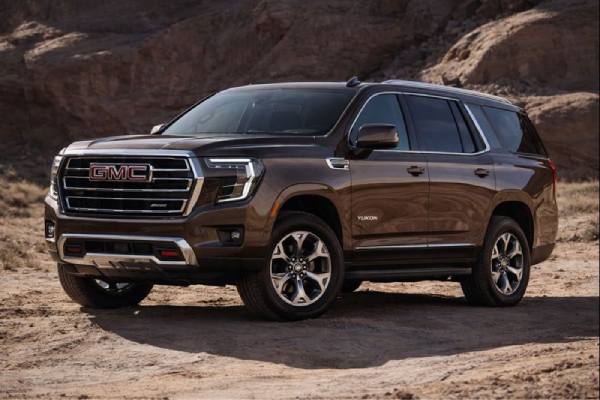
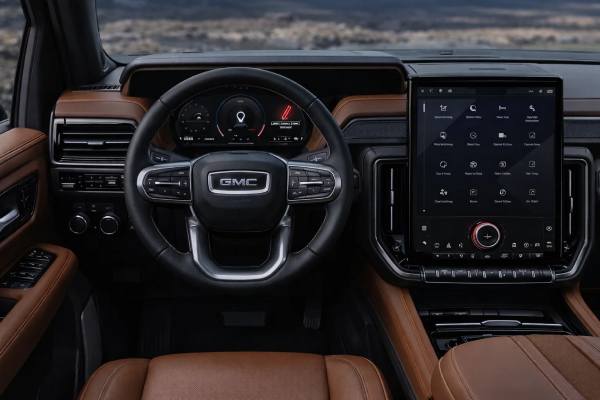
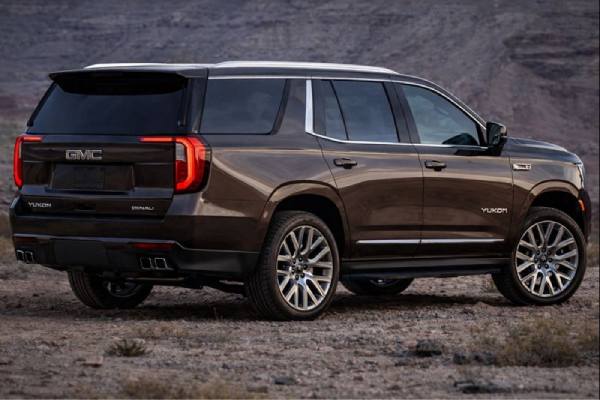
The facelifted 2025–present GMC Yukon 4WD with the LZ0 3.0-liter Duramax diesel is built for people who use a full-size SUV like a tool, not just a family shuttle. The big story is torque: this inline-six diesel delivers strong pull at low rpm, which matters for towing, mountain driving, and relaxed highway cruising. Pair that with a 10-speed automatic and a two-speed 4WD system, and you get an SUV that can cover long distances efficiently for its size while staying stable under load.
Ownership is mostly about using the diesel system correctly. Short trips, cheap fuel, and ignored fluids are what turn modern emissions hardware into headaches. If your driving pattern fits diesel strengths—steady highway miles, frequent towing, or heavy hauling—the LZ0 Yukon can be a satisfying, durable long-term choice when maintained with care.
Quick Specs and Notes
- Strong low-rpm torque makes towing and highway merging feel effortless, especially with a load.
- Diesel fuel range is a real advantage for road trips compared with most gas V8 trims.
- 4WD with a low range (on most configurations) adds real capability for snow, ramps, and off-pavement travel.
- If you mostly drive short trips, emissions regeneration cycles can become a nuisance and increase repair risk.
- Plan on checking Diesel Exhaust Fluid (DEF) level every 1,500–3,000 km (1,000–2,000 mi) depending on use.
Contents and shortcuts
- Yukon LZ0 facelift basics
- Specs and dimensions table
- Trims, packages, and ADAS
- Reliability issues and recalls
- Maintenance plan and buying tips
- Road performance and economy
- Diesel Yukon vs competitors
Yukon LZ0 facelift basics
This configuration is the “working long-distance” version of the Yukon lineup: a body-on-frame full-size SUV on GM’s T1 platform (T1UG for Yukon), paired with the LZ0 3.0-liter Duramax turbo-diesel and a 4WD driveline. The facelift (2025–present) focuses heavily on interior tech and trim changes, but the core mechanical appeal of the diesel remains the same: a broad torque band, low-effort cruising, and strong hill control when towing.
What makes the LZ0 different in daily use is how it delivers power. Instead of chasing rpm like a gas V8, it leans on boost and combustion efficiency to provide a steady shove at low and mid rpm. That means fewer downshifts, less noise under load, and less “hunting” in rolling terrain. It is also the reason many owners choose diesel even when they are not towing every day: the vehicle feels calmer, especially at highway speeds.
Modern diesel ownership is mostly emissions-system ownership. The Yukon’s diesel package uses exhaust aftertreatment hardware—diesel particulate filter (DPF) and selective catalytic reduction (SCR) with DEF—to meet emissions requirements. These systems work best when the vehicle reaches full operating temperature and sees longer steady drives. If your Yukon is used mainly for short, cold trips, the DPF will try to regenerate more often (burning soot), and that can raise fuel use and increase the odds of sensor-related faults.
4WD matters more than traction. With a heavy SUV, 4WD is also about driveline robustness and control in awkward situations: steep wet ramps, unplowed driveways, and towing on slick ground. Your exact setup depends on trim and option packages, but most 4WD Yukons use an electronically controlled transfer case, and many have an “Auto” mode that blends capability with on-road convenience.
Bottom line: the LZ0 diesel Yukon is a strong match for high-mileage drivers, road-trip families, and tow-regularly owners—if you respect diesel operating needs.
Specs and dimensions table
Below are practical, owner-focused specs for the 2025–present Yukon 4WD (T1UG) with the LZ0 3.0 Duramax diesel. Values can vary by wheelbase (Yukon vs Yukon XL), axle ratio, tyre package, and trailering equipment, so treat them as a configuration guide and verify against your door-jamb labels and official service information.
Engine and performance
| Item | Spec |
|---|---|
| Code | LZ0 |
| Engine layout and cylinders | Inline-6 (I-6), DOHC, 4 valves/cyl |
| Bore × stroke | 84.0 × 90.0 mm (3.31 × 3.54 in) |
| Displacement | 3.0 L (≈2993 cc) |
| Induction | Turbocharged |
| Fuel system | High-pressure common-rail direct injection (diesel) |
| Compression ratio | ~15.0:1 |
| Max power | 305 hp (227 kW) @ ~3,750 rpm |
| Max torque | 671 Nm (495 lb-ft) @ ~2,750 rpm |
| Timing drive | Chain (typical for this family) |
| Emissions hardware | DPF + SCR/DEF (market dependent) |
Transmission and 4WD driveline
| Item | Spec |
|---|---|
| Transmission | 10-speed automatic (GM 10L80 family) |
| Gear ratios (typical 10L80 set) | 1st 4.696 / 2nd 2.985 / 3rd 2.146 / 4th 1.769 / 5th 1.520 / 6th 1.275 / 7th 1.000 / 8th 0.854 / 9th 0.689 / 10th 0.636 |
| Drive type | 4×4 (2-speed transfer case on many builds) |
| Differential | Open standard; limited-slip or electronic locking availability varies by trim/package |
Chassis and dimensions
| Item | Typical spec (standard wheelbase Yukon) |
|---|---|
| Suspension (front/rear) | Independent front; rear multi-link solid axle (trim dependent) |
| Steering | Electric power steering |
| Ground clearance | ~200–210 mm (~7.9–8.3 in), package dependent |
| Length / width / height | ~5,330 mm / ~2,060 mm / ~1,940 mm (≈210.0 / 81.0 / 76.5 in) |
| Wheelbase | ~3,070 mm (≈120.9 in) |
| Turning circle | ~12.0–12.2 m (≈39–40 ft) |
| Curb weight | Often ~2,500–2,650 kg (≈5,500–5,850 lb), depending on equipment |
| Fuel tank | Typically ~100–110 L (≈26–29 US gal), market dependent |
Performance and capability
| Item | Typical range (real-world) |
|---|---|
| 0–100 km/h (0–62 mph) | ~7.8–9.0 s (tyres and weight matter) |
| Towing capacity | Commonly ~3,600–3,900 kg (≈8,000–8,600 lb), configuration dependent |
| Payload | Often ~550–800 kg (≈1,200–1,750 lb), configuration dependent |
Fluids and service capacities
| Item | Practical guidance (verify by VIN) |
|---|---|
| Engine oil | dexosD-approved 0W-20 is common; capacity often ~6.5–7.0 L (≈6.9–7.4 US qt) with filter |
| Coolant | GM DEX-COOL 50/50 mix is common; total system volume varies with rear HVAC |
| Transmission fluid | Use the exact GM-specified 10-speed ATF; service fill differs from total fill |
| Transfer case and differentials | Use the specified fluids for your transfer case and axle type; capacities vary by case and axle |
| A/C refrigerant | R-1234yf on many 2025+ vehicles; charge varies with rear A/C |
Electrical and ignition
| Item | Spec |
|---|---|
| 12V battery | AGM type common in this class; CCA varies by market |
| Alternator output | High-output units are common; exact amperage varies |
| Spark plugs | Not applicable (diesel uses compression ignition) |
Safety and driver assistance
Safety equipment depends on trim and option packages, but most 2025+ Yukons include a baseline suite with automatic emergency braking, lane support features, and camera assistance. Crash-test ratings may vary by model year and test protocol; always confirm the exact year and configuration in official databases before purchase.
Trims, packages, and ADAS
For the facelift era (2025–present), the Yukon lineup typically spans SLE, SLT, AT4, Denali, and Denali Ultimate, with seating and capability packages that can change how the truck feels more than the badge suggests. With the LZ0 diesel, the key is to confirm availability by trim and region, because diesel supply and packaging rules can change mid-year.
Trims and mechanical differences that matter
- SLE / SLT: Often the value trims. Focus on whether you get the transfer case you want (2-speed vs single-speed), the tow controller, and the cooling hardware that supports frequent towing.
- AT4: Usually the most off-pavement friendly setup. Look for underbody protection, all-terrain tyre sizing, and (if offered) a locking rear differential. Tyres make a bigger difference than most “off-road” badges.
- Denali / Denali Ultimate: Comfort and tech priority. Adaptive damping and air suspension (if equipped) can noticeably improve ride quality on broken pavement, but add long-term service cost.
Options worth understanding before you buy
- Max trailering package (or equivalent): Can change tow rating, cooling, hitch hardware, and sometimes axle ratio. If you tow near limits, this package often matters more than the engine choice.
- Adaptive air suspension: Great for leveling and ride comfort, especially with passengers and cargo. Long-term, plan for air-spring or compressor service at higher mileage.
- Wheel and tyre packages: Big wheels look great but can hurt ride comfort and make tyre replacement expensive. For mixed use, moderate wheel sizes are usually the best compromise.
- Seating configuration: Bench vs captains chairs changes usability, cargo flexibility, and third-row access.
Quick identifiers for the diesel
- “Duramax” and “Diesel” badging is common, but not universal.
- You should see a DEF filler (location varies), and the engine bay will have diesel-specific plumbing and insulation.
- A test drive should reveal a low-rpm, steady pull rather than high-rpm acceleration.
Safety systems and ADAS
Most 2025+ builds include core active safety tools such as AEB (automatic emergency braking), lane departure warning, lane keeping or lane assist features, forward collision alert, and parking sensors. Higher trims may add upgraded camera systems, surround view, trailer guidance aids, and hands-free driving features where available. If the vehicle has advanced lane-centering or hands-free features, confirm calibration requirements after windshield replacement, front-end repairs, or wheel alignment—many systems need a scan-tool routine or a road-learning procedure to perform correctly.
Reliability issues and recalls
The LZ0 diesel itself can be a strong long-term engine, but reliability is shaped by use pattern and maintenance quality more than most buyers expect. Below is a practical “what tends to go wrong” map, organized by prevalence and cost severity. Exact failure rates vary by year and region, so treat this as a checklist for inspection and ownership planning.
Common and usually moderate cost
- DPF regeneration complaints (short-trip use): Symptoms include frequent fan operation after shutdown, higher idle, a “hot” smell, or fuel economy dropping. Root cause is often repeated cold starts and short drives that never let the system finish a clean regen. Remedy: longer steady drives, correct oil, and fixing any upstream sensor faults that prevent regen completion.
- NOx/temperature sensor faults: Symptoms can include warning lights, reduced power, or emissions messages. Root causes range from sensor aging to wiring issues near hot exhaust components. Remedy is usually sensor replacement and sometimes a software update.
- DEF quality issues: Contaminated or old DEF can trigger warnings and derate strategies. Remedy is draining/refilling with fresh DEF and addressing heater/pump issues if present.
Occasional, higher cost if ignored
- EGR or intake system deposit issues: Diesels can accumulate deposits in EGR/intake paths depending on duty cycle. Symptoms include rough running, reduced power, or airflow codes. Remedy is cleaning, replacing affected components, and ensuring the engine reaches full operating temperature regularly.
- 10-speed shift quality problems: Harsh shifts, shudder, or gear hunting can stem from fluid condition, adaptive learning drift, or valve-body wear. Remedy may be a fluid service with the correct fluid, a re-learn procedure, or hardware repair.
Chassis and body items that age with mileage
- Air suspension leaks (if equipped): A sagging corner, slow height changes, or compressor overrun are typical symptoms. Often a moderate-to-high repair depending on parts pricing.
- Transfer case and front driveline wear: Binding in tight turns (in the wrong mode), clunks, or vibration can point to neglected fluid service or driveline joint wear.
Recalls and service actions
Because recall coverage changes over time, the smartest approach is systematic: run the VIN through the official recall database, confirm completion with dealer records, and ask for documentation of software campaigns (engine/transmission/ADAS/infotainment). For a used purchase, treat “all recalls done” as a required condition, not a nice-to-have.
Maintenance plan and buying tips
A diesel Yukon can be very “set it and forget it” once it is on a steady maintenance rhythm. The goal is to protect three expensive systems: the turbocharged diesel engine, the 10-speed transmission, and the emissions aftertreatment hardware.
Practical maintenance schedule
Use the vehicle’s Oil Life Monitor as the final authority, but these intervals are sensible planning anchors:
| Item | Interval (distance/time) | Notes |
|---|---|---|
| Engine oil and filter | ~10,000–16,000 km (6,000–10,000 mi) or 12 months | Short trips and towing shorten intervals. Use the correct diesel-rated oil spec. |
| Engine air filter | Inspect every 15,000 km (10,000 mi); replace as needed | Dusty areas can halve filter life. |
| Cabin air filter | 15,000–30,000 km (10,000–20,000 mi) | A clogged filter strains HVAC and fogging control. |
| Fuel filter / water separation | 40,000–70,000 km (25,000–45,000 mi) | Interval varies by system and fuel quality. |
| DEF | Top up as needed | Don’t let it run empty; buy sealed containers from reputable sources. |
| Transmission fluid | 70,000–100,000 km (45,000–60,000 mi) under severe use | Towing and heat make fluid service more important. |
| Transfer case and diff fluids | 70,000–100,000 km (45,000–60,000 mi) under severe use | Especially important for frequent 4WD use or towing. |
| Brake fluid | Every 2 years | Helps prevent internal corrosion and pedal fade. |
| Coolant | Per official interval | More time-based than mileage-based for many owners. |
| Tyre rotation and alignment check | Rotate every 8,000–12,000 km (5,000–7,500 mi) | Watch inside-edge wear on heavy SUVs. |
| 12 V battery test | Annually after year 3 | Replace proactively around 4–6 years in cold climates. |
Buyer’s guide: what to inspect on a used diesel Yukon
- Service history quality: Look for consistent oil services with the correct spec and documented transmission/driveline fluid services if it towed.
- Emissions behavior: Ask whether it completes regenerations normally. Lots of short-trip use is a red flag unless the owner understood diesel needs.
- Tow hardware: Inspect hitch, wiring, trailer brake controller function, and cooling-system condition if it lived a tow-heavy life.
- Suspension condition: Check for uneven ride height, bouncy damping, and steering wander—big tyres and worn components mask problems.
- Electronics: Test cameras, parking sensors, infotainment stability, and driver-assist functions. Heavy SUVs put high value on sensors that actually work.
Long-term durability outlook
If your driving includes regular highway heat cycles and you stay ahead of fluids, the diesel Yukon can age well. If your use is mostly short trips and idle time, a gas powertrain may be cheaper to own even if it uses more fuel.
Road performance and economy
The diesel Yukon’s driving personality is defined by low-effort motion. It is not a sports SUV, but it is an excellent long-distance machine when set up sensibly.
Ride, handling, and NVH
For a full-size body-on-frame SUV, the Yukon feels stable and planted on highways, especially with a moderate wheel size and a suspension package tuned for comfort. Steering is typically light and confidence-building rather than talkative. On rough pavement, adaptive damping and air suspension (if equipped) can make a noticeable difference by smoothing sharp impacts and keeping the body level with passengers and cargo.
Noise levels are a pleasant surprise for many diesel first-timers. At cruise, the inline-six usually settles into a low, quiet rhythm. Under acceleration, you will hear a muted diesel note, but it tends to be less “busy” than a gas engine working hard in the same vehicle.
Powertrain character
The LZ0’s torque is the star. You get strong forward motion without needing high rpm, which is exactly what you want in a heavy SUV. The 10-speed transmission helps keep the engine in its sweet spot, but it can feel active in rolling terrain. In most cases, the best strategy is simple: use Tow/Haul mode when towing or carrying heavy loads, and let the calibration prioritize cooling and gear control.
Real-world efficiency expectations
Exact fuel economy varies by axle ratio, tyre package, and load, but these are realistic planning numbers for many owners:
- Highway at 120 km/h (75 mph): often around 9.5–11.0 L/100 km (21–25 mpg US / 25–30 mpg UK) in good conditions.
- City-heavy use: often 12–14 L/100 km (17–20 mpg US / 20–24 mpg UK) depending on traffic and warm-up time.
- Cold weather: expect a meaningful drop because warm-up is slower and regenerations can be more frequent.
Towing behavior and consumption penalty
The diesel is a strong tow match because it holds speed on grades without constant downshifts. Stability depends heavily on hitch setup, tyre pressures, and trailer balance. Fuel use under tow typically rises sharply—often 20–40% higher under moderate towing, and more near the top of the tow rating. If towing is frequent, prioritize the correct trailering package and keep cooling and transmission service conservative.
Diesel Yukon vs competitors
The diesel Yukon 4WD is a niche choice in a segment that is increasingly gasoline- and hybrid-focused. That is good news if your needs match the diesel’s strengths, because fewer direct rivals offer the same combination of full-size SUV space, body-on-frame towing behavior, and long-range highway efficiency.
Against Ford Expedition (EcoBoost)
The Expedition’s turbo gas V6 often feels quicker and lighter on its feet, and it can be very strong for towing. The diesel Yukon’s advantage is calm torque delivery and the “big range” road-trip feel. For mostly short trips, the gas Ford is usually simpler to own.
Against Toyota Sequoia (hybrid)
The Sequoia hybrid delivers strong low-end response and can be efficient for its size, with fewer diesel emissions-specific ownership habits to learn. The diesel Yukon’s edge is long-distance cruising character and, in many markets, broader configuration flexibility (wheelbase, trims, and towing packages). If you rarely tow and do lots of mixed city driving, the Sequoia’s hybrid approach can be compelling.
Against Jeep Wagoneer and other V8-heavy choices
Big-displacement gas SUVs can be smoother and simpler in emissions architecture, and they often sound better doing hard work. The diesel Yukon’s advantage is fuel range and low-rpm effort. The tradeoff is that diesel aftertreatment components are expensive when neglected, so the “cheapest” diesel is often the one with the best service history.
Who should choose the diesel Yukon?
Pick the LZ0 Yukon 4WD if you:
- Drive long highway distances weekly,
- Tow regularly and want relaxed grade performance,
- Want fewer high-rpm moments and more low-effort torque, and
- Are willing to maintain DEF, use correct oil specs, and avoid a short-trip-only lifestyle.
If your Yukon is mainly a school-run vehicle with short commutes and lots of idling, you may be happier—and spend less—on a gas powertrain.
References
- Recalls 2025 (Recall Database)
- Yukon: Full-Size SUV 2025 (Manufacturer Specifications)
- Vehicle Ratings 2025 (Safety Rating)
Disclaimer
This article is for informational purposes only and is not a substitute for professional diagnosis, inspection, or repair. Specifications, torque values, fluid capacities, service intervals, and procedures can vary by VIN, market, model year, and equipment; always verify details using your official owner’s literature and service documentation for the exact vehicle.
If this guide helped you, please consider sharing it on Facebook, X (Twitter), or your favorite forum to support our work.