
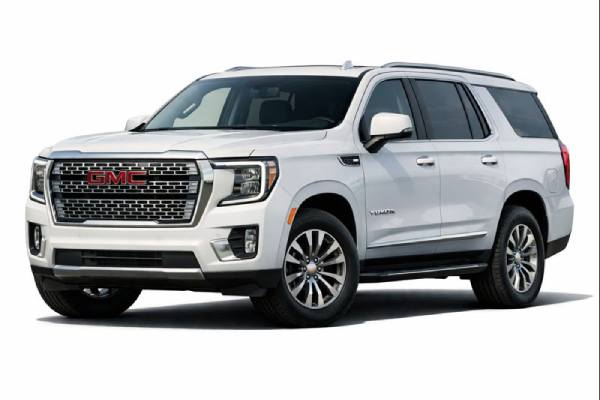
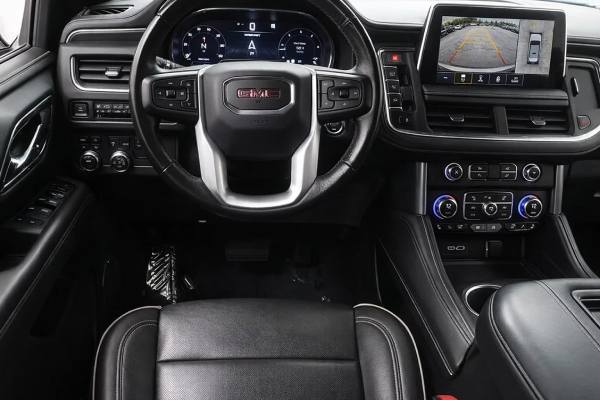
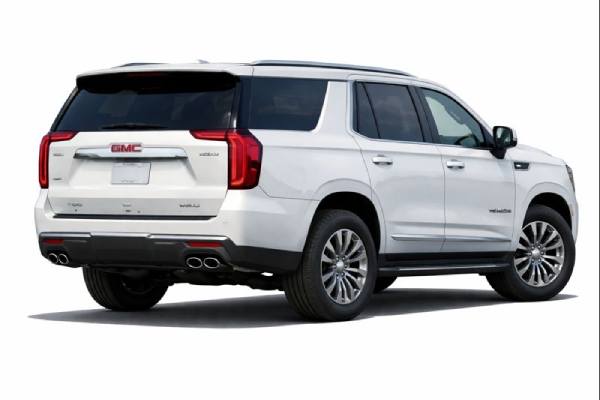
The 2021–2024 GMC Yukon 4WD with the L84 5.3L V8 is built around a simple ownership promise: big-SUV space with a powertrain that’s understressed, a chassis designed for towing stability, and a 4WD system that can be configured from “set-and-forget” traction to genuinely capable off-road hardware. The independent rear suspension is the key engineering change that defines this generation—it improves third-row comfort and road control, but it also adds more joints, bushings, and alignment sensitivity than the older solid-axle layout.
For buyers, the sweet spot is matching equipment to your real use. The 5.3L is the sensible everyday engine, while 4WD adds confidence in rain, snow, boat ramps, and dirt. Your long-term satisfaction will depend less on horsepower and more on maintenance discipline, correct tire choices, and staying current on software updates that affect drivability and safety systems.
Owner Snapshot
- Strong, predictable V8 torque and a 10-speed that keeps the engine relaxed at highway speeds.
- Available 2-speed transfer case and off-road-oriented hardware make this a true “do-the-job” family SUV.
- Independent rear suspension improves ride comfort and third-row usability versus older generations.
- Ownership caveat: large tires, heavy curb weight, and frequent towing can accelerate brake and suspension wear.
- Plan on engine oil service about every 12 months or 12,000 km (7,500 mi) (shorter under severe use).
Section overview
- GMC Yukon 4WD design notes
- 5.3L L84 4WD data sheet
- Yukon 4WD equipment and driver aids
- Common faults, recalls, and fixes
- Service schedule and pre-buy inspection
- Real-world driving and towing
- Rivals and which to choose
GMC Yukon 4WD design notes
The T1UG Yukon rides on GM’s full-size body-on-frame architecture, but it does not drive like the older “truck SUV” stereotype. The independent rear suspension (IRS) is the defining layout choice: it reduces impact harshness, helps keep the rear tires planted over broken pavement, and improves third-row comfort. The tradeoff is complexity—more moving parts and more alignment sensitivity—so tire condition and suspension bushings matter more than they did on older solid-axle Yukons.
For the 4WD buyer, the drivetrain is best thought of as a menu. Some trims use a single-speed transfer case for straightforward traction, while others offer a 2-speed transfer case with low range for controlled crawling and steep grades. Certain configurations add an “auto” 4WD mode and, depending on trim and year, off-road functions that change how the Yukon behaves on loose surfaces. The key ownership point is to buy the system you’ll actually use: low range is valuable for slow, controlled work, but it also adds service considerations and complexity.
The L84 5.3L V8 pairs well with 4WD because its usable torque arrives without drama. In day-to-day driving, it’s less about peak numbers and more about smooth throttle mapping, predictable engine braking on descents, and stable cooling behavior when you’re hauling passengers and gear. Most owners who tow occasionally or run winter roads find the 5.3L “enough” as long as the Yukon is correctly equipped (tow package, brake controller if needed, and the right tires).
The big ownership insight: a Yukon’s feel is dominated by its tires and wheel size. Moving from an all-season highway tire to an all-terrain pattern can transform winter and trail confidence, but it can also add noise and reduce fuel economy. Likewise, 22-inch wheels look sharp, but they reduce sidewall cushion and can increase the chances of pothole damage. If comfort and long-term durability are priorities, smaller wheels with more sidewall tend to be the calmer, more forgiving setup.
5.3L L84 4WD data sheet
Below are the most relevant specifications for the 2021–2024 Yukon 4WD when equipped with the L84 5.3L V8 and the 10-speed automatic. Exact figures can vary by year, wheelbase (Yukon vs Yukon XL), trim, and tow package, so treat these as a precise baseline and confirm against your VIN build and door-jamb ratings.
Engine and performance (L84)
| Item | Spec |
|---|---|
| Engine code | L84 |
| Layout | V8, overhead valve (2 valves/cyl), VVT |
| Displacement | 5.3 L (5,328 cc) |
| Bore × stroke | 96 × 92 mm (3.78 × 3.62 in) |
| Induction | Naturally aspirated |
| Fuel system | Direct injection; Dynamic Fuel Management |
| Compression ratio | 11.0:1 |
| Max power | 355 hp (265 kW) @ 5,600 rpm |
| Max torque | 383 lb-ft (≈519 Nm) @ 4,100 rpm |
| Timing drive | Chain (verify by VIN-specific service information) |
Transmission and driveline
| Item | Spec |
|---|---|
| Transmission | Hydra-Matic 10L80 10-speed automatic |
| Gear ratios | 4.70 / 2.99 / 2.16 / 1.78 / 1.53 / 1.28 / 1.00 / 0.85 / 0.69 / 0.64 (Rev 4.87) |
| Final drive | 3.23 (common; confirm by RPO/build data) |
| Drive type | 4WD (transfer case configuration varies by trim) |
Dimensions and capacities (regular Yukon vs Yukon XL)
| Item | Yukon | Yukon XL |
|---|---|---|
| Wheelbase | 3,071 mm (120.9 in) | 3,407 mm (134.1 in) |
| Length | 5,335 mm (210.0 in) | 5,721 mm (225.2 in) |
| Width | 2,058 mm (81.0 in) | 2,058 mm (81.0 in) |
| Height | 1,943 mm (76.5 in) | 1,943 mm (76.5 in) |
| Fuel tank | ~90.8 L (24.0 US gal) | ~106.0 L (28.0 US gal) |
| Cargo (behind 1st / 2nd / 3rd) | ~3,480 / 2,056 / 722 L | ~4,097 / 2,656 / 1,175 L |
Capability (what changes your decision)
Towing capacity depends heavily on equipment. In typical manufacturer guidance for this generation, a 5.3L Yukon 4WD can be rated around 7,700 lb (3,493 kg) in standard form and up to 8,200 lb (3,719 kg) when properly equipped with max trailering hardware. Always verify your exact rating using the door-jamb labels, the owner’s manual, and the build configuration.
Yukon 4WD equipment and driver aids
The 2021–2024 Yukon lineup is best understood as three layers: (1) core trims, (2) trailering and 4WD hardware choices, and (3) driver assistance and infotainment options that can change day-to-day satisfaction more than you’d expect.
Trims and what actually changes
Most markets revolve around SLE, SLT, AT4, Denali, and (later) Denali Ultimate. The practical differences are not only cosmetic:
- AT4 typically targets off-road use with all-terrain tires and added 4WD functions (such as hill descent control) that support slow-speed control on loose surfaces.
- Denali / Denali Ultimate focus on comfort, premium interior materials, and advanced tech availability; they’re also where you’ll most often see higher-end suspension choices (like adaptive damping and/or air suspension) depending on build.
- Wheel and tire packages matter: all-terrain setups improve grip in mud/snow but can add noise and reduce economy; larger wheel sizes tend to stiffen ride quality and raise replacement tire costs.
4WD and trailering options
If you plan to tow or travel in variable weather, prioritize functional equipment over badges:
- Transfer case type can differ by trim, with some configurations offering a 2-speed transfer case with low range for off-road control and steep-grade work.
- Trailering technology is less about max numbers and more about reducing stress: trailer profiles, checklists, and camera-related features can make frequent towing far easier.
- Max trailering package (where offered) often drives the headline tow rating and can change your real payload headroom because added equipment weight and passenger load reduce what you can tow.
Safety systems and ADAS availability
Yukons in this era commonly include the “baseline” active safety set (forward collision alert, pedestrian braking, lane keep assist, blind-zone monitoring), while higher trims add more capable versions and convenience features (surround vision, enhanced AEB, adaptive cruise, and hands-free driving where available). Feature availability can also change based on production timing and package combinations.
Practical ownership note: ADAS and camera features rely on clean sensors, correct windshield glass, and calibration after certain repairs. After windshield replacement, front-end alignment work, or camera module service, confirm that the shop can perform the required calibrations—otherwise, you can end up with nuisance warnings or reduced feature performance.
Common faults, recalls, and fixes
A Yukon 4WD can be very durable, but it’s a complex vehicle: a large body, many control modules, and a heavy-duty driveline that sees real load. The best way to think about reliability is by what’s common, what’s expensive, and what’s preventable.
Common (more likely) issues
- Tire and alignment wear: The IRS improves comfort, but it also means alignment and tire matching matter. Uneven wear (inside shoulders in particular) is often tied to alignment settings, worn bushings, or neglected rotations.
- Infotainment and camera glitches: These are frequently software-related. If you see intermittent camera dropout, connectivity issues, or random warning messages, ask a dealer to check for module updates before replacing parts.
- 4WD actuator and transfer case behavior: Occasional binding, delayed engagement, or service messages can stem from actuator issues, low/aged transfer case fluid, or calibration faults.
Occasional (varies by use) issues
- Dynamic Fuel Management (DFM) lifter concerns: Some owners report valvetrain noise, misfires, or rough running that can point to lifter problems. It’s not universal, but it can be costly if it happens outside warranty.
- 10-speed shift quality: A harsh shift, flare, or hunting can be a fluid condition issue, a learning/adaptation issue, or a calibration fix. Start with service history and software status before condemning hard parts.
Recalls, service actions, and how to handle them
Because recalls can be configuration-specific, always verify by VIN. Still, it’s useful to understand the pattern: many modern recalls are software remedies (module updates) rather than parts swaps. If a Yukon falls in an affected build range for a braking or driveline campaign, the dealer remedy is often an update or targeted component service.
Smart pre-purchase requests
- Full service history (oil changes, tire rotations, and any driveline fluid services).
- Proof of recall completion (dealer printout or completed campaign record).
- A scan for stored codes and confirmation that key modules are up to date.
- A test drive that includes tight turns (listen/feel for driveline binding) and highway cruising (check for vibration, steering correction, and brake pulsation).
Service schedule and pre-buy inspection
A Yukon rewards owners who treat maintenance as a plan, not a reaction. With a heavy 4WD SUV, the “cheap” mistakes are usually tire-related; the “expensive” ones are usually heat- or fluid-related.
Practical maintenance schedule (typical guidance)
Use the vehicle’s oil-life monitor and the official schedule for your VIN, but these intervals work well as a real-world framework:
- Engine oil and filter: every 12 months / 12,000 km (7,500 mi), or sooner for severe duty (short trips, towing, dusty roads). Use the correct GM-approved spec oil grade for your model year and climate.
- Tire rotation: every 8,000–12,000 km (5,000–7,500 mi); maintain similar tread depths on all four corners to reduce driveline stress.
- Engine air filter: inspect each oil service; replace around 30,000–70,000 km (20,000–45,000 mi) depending on dust and towing.
- Cabin air filter: typically every 12 months (more often in dusty or urban environments).
- Brake fluid: about every 3 years, especially if the vehicle tows or sees mountain driving.
- Transfer case and differential fluids: inspect regularly; consider service around 80,000–160,000 km (50,000–100,000 mi) depending on towing/off-road use (sooner for heavy use).
- Coolant: long-life coolant can run for multiple years, but always confirm the correct interval and coolant type for your exact model year.
Fluids, capacities, and torque values (decision-useful)
Exact capacities vary by hardware and service method, so focus on the “what” and “why”:
- Engine oil: correct specification matters more than a generic viscosity claim; always verify the final level using the correct measurement procedure.
- 10-speed transmission: service procedures and fill quantities vary by service type—use the official procedure.
- Wheel lug torque: confirm the exact torque for your wheel type and year during tire service to prevent brake pulsation and wheel damage.
Buyer’s inspection checklist (short but high-impact)
- Look for uneven tire wear and confirm a recent alignment printout if possible.
- Check for fluid seepage around the front differential, transfer case, and rear differential.
- Verify 4WD mode engagement (including low range if equipped) on a safe surface.
- Confirm all cameras and parking sensors work, and that the rear camera image is stable.
- If you’ll tow, confirm a factory hitch, brake controller setup (if equipped), and that trailering menus function correctly.
Long-term outlook: the L84 powertrain is generally a sensible match for the Yukon’s mission, but the platform’s real durability hinges on keeping tires, brakes, and driveline fluids in good shape—and not ignoring early warning signs like vibrations, harsh shifts, or intermittent electronic faults.
Real-world driving and towing
With the 5.3L and 10-speed, the Yukon 4WD is tuned for steady, confident motion rather than quick reactions. The steering is light for its size, the chassis feels planted at highway speeds, and the independent rear suspension makes a noticeable difference over expansion joints and broken pavement compared with older solid-axle SUVs.
Powertrain character
The 5.3L V8’s strength is how little effort it needs for normal driving. Around town, it relies on torque and short gearing rather than high revs. On the highway, the 10-speed’s taller gears keep the engine calm, which helps noise levels and long-distance comfort. Under load—such as a full cabin or moderate towing—the transmission will downshift decisively, and you’ll feel the “mass” of the vehicle more than any shortage of engine.
Efficiency you can plan around
EPA fuel economy varies by year and configuration. In practice:
- Short trips and cold weather can drop economy quickly because a large V8 takes time to warm up.
- All-terrain tires, roof boxes, and heavy wheels often cost more mpg than people expect.
- 4WD “auto” use can add some driveline drag compared with pure 2WD cruising.
Towing and stability
The Yukon’s towing confidence comes from wheelbase, weight, and cooling capacity more than raw horsepower. In real use:
- Expect a noticeable fuel economy penalty when towing, especially at highway speeds.
- Use tow/haul mode to stabilize shift behavior and improve engine braking on descents.
- Keep an eye on payload: passengers, luggage, and hitch weight can consume your payload rating faster than the tow rating suggests.
Traction and control
The main advantage of 4WD in daily life is confidence: wet highways, unplowed neighborhoods, gravel driveways, and slippery ramps. If you live in snow country or tow boats, 4WD is often worth it even if you rarely use low range. Just remember that traction helps you go—and helps you maintain stability—but it does not replace good tires or shorten braking distances on ice.
Rivals and which to choose
The Yukon 4WD sits in one of the most competitive segments, and the “best” choice depends on what you value: interior packaging, towing feel, efficiency, or long-term simplicity.
Chevrolet Tahoe and Suburban
These are the closest relatives (shared fundamentals), so the decision often comes down to styling, trim philosophy, and feature packaging. If you like GMC’s interior presentation and Denali/AT4 lineup, the Yukon can feel more premium “out of the box.” If you prefer a different value mix and trim structure, Tahoe/Suburban can be easier to shop.
Ford Expedition 4×4
The Expedition often appeals to buyers who want strong turbocharged torque and a different interior and infotainment ecosystem. It can tow confidently, but test-drive matters: some owners prefer the V8’s linear response and sound in the Yukon, especially when loaded.
Toyota Sequoia (hybrid)
The Sequoia’s hybrid system can deliver strong low-speed torque and a modern efficiency story, but packaging and third-row/cargo details can be a deciding factor. If you want a familiar V8 layout and traditional towing feel, the Yukon offers a different kind of predictability.
Jeep Wagoneer and Nissan Armada
Wagoneer targets space and comfort with a distinct brand feel; Armada targets durability and value with a simpler approach but older architecture. If you prioritize the newest driver-assist features and a modern cabin layout, compare equipment carefully—especially for hands-free driving and camera systems.
A quick recommendation by use case
- Family road trips, winter roads, occasional towing: Yukon 4WD with sensible wheel/tire sizing and the trailering equipment you’ll actually use.
- Frequent towing: prioritize the max trailering configuration, cooling readiness, and payload headroom over luxury add-ons.
- Rough roads and light off-road: choose configurations with the more capable transfer case and a tire package that matches your terrain.
If you choose the Yukon 4WD for what it is—an all-purpose, heavy-duty family hauler—its strengths are very real. The best builds are the ones that keep complexity aligned with your needs, not just your wish list.
References
- Yukon Models 2024 Features, Specs and Options 2024 (Features and Specs Guide)
- 2021 GMC Yukon and Yukon XL Specifications 2021 (Specifications)
- Gas Mileage of 2024 GMC Yukon 2024 (EPA Fuel Economy)
- NHTSA Datasets and APIs | NHTSA 2025 (Recall and Rating Data)
- Safety Recall N242454440 Momentary Rear Wheel Lock-Up 2024 (Recall Bulletin)
Disclaimer
This article is for informational purposes only and is not a substitute for professional diagnosis, inspection, or repair. Specifications, torque values, service intervals, and procedures can vary by VIN, market, model year, and equipment. Always verify details using your official owner’s manual and manufacturer service documentation for your exact vehicle.
If this guide helped, please consider sharing it on Facebook, X (Twitter), or your favorite forum to support our work.