
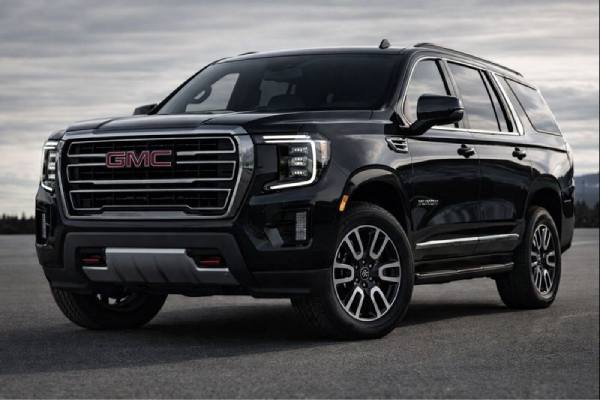
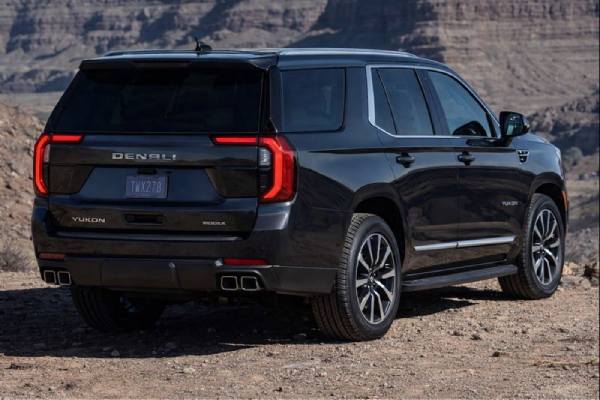
The facelift-era GMC Yukon Denali RWD with the L87 6.2L V8 targets buyers who want full-size SUV comfort with a stronger “luxury truck” feel than a crossover can offer. In Denali trim, the chassis tuning, cabin materials, and noise control matter as much as horsepower—because you spend most of your time cruising, not sprinting. The 6.2’s broad torque, paired with a modern 10-speed automatic, is tuned to move a heavy body-on-frame SUV smoothly at low rpm, which is exactly what makes it feel expensive. RWD also brings a slightly cleaner steering feel and fewer driveline variables than 4WD, but it shifts the traction burden to tires—especially in winter and when towing. This guide focuses on the real ownership picture: what the specs mean, what typically wears, and how to maintain it for long service life.
Owner Snapshot
- Strong low-rpm pull and relaxed highway character suit long trips and heavy loads.
- Denali ride isolation and cabin quiet are standout strengths for a body-on-frame SUV.
- RWD simplifies the drivetrain versus 4WD, often reducing service items long-term.
- Plan for higher tire and brake wear if you tow often or drive mostly in town.
- Change engine oil by the Oil Life Monitor or within 12 months (whichever comes first).
Quick navigation
- Denali RWD L87 explained
- Technical specs and capacities
- Denali equipment and ADAS
- Known issues and recall checks
- Service plan and buyer tips
- Real driving and fuel use
- Rivals: luxury full-size SUVs
Denali RWD L87 explained
Think of the 2025–present Yukon Denali RWD as a three-part formula: a tall, stiff body-on-frame platform (T1UG), a high-output small-block V8 (L87 6.2L), and a luxury-focused suspension and interior package. That mix is why the Denali feels different from most large crossovers. The frame and rear-drive layout are designed to carry tongue weight, people, and cargo without the “floating” feel that can show up in unibody SUVs near their limits.
The L87 is an aluminum 6.2-liter V8 tuned for strong, effortless acceleration rather than high-rev theatrics. It uses modern direct injection and cylinder deactivation strategies to improve fuel consumption under light load. In day-to-day driving, you feel it as a quiet, low-rpm surge when you lean into the throttle, followed by quick, clean shifts from the 10-speed. When you’re towing, the benefit is control: the engine can stay in a stable torque band, and the transmission has enough ratio spread to avoid constant hunting on mild grades.
RWD changes the ownership and driving details more than many people expect. Advantages include fewer driveline components than 4WD (no transfer case, no front differential, fewer seals and joints), which can mean less service complexity over the long run. The trade-off is traction management: tire selection and condition matter more, especially in wet or cold climates. If you live where winter tires are normal, the RWD Denali can still be very manageable, but you should budget for a dedicated winter set rather than relying on all-seasons.
The facelift-era Denali’s “value” is also in its engineering polish: quieter glass and cabin isolation strategies, steering calibration aimed at stable highway tracking, and suspension hardware tuned for smooth impact absorption without the wallow older full-size SUVs were known for. If your use case is mostly long highway runs, occasional towing, and family hauling, this powertrain and layout align well—provided you accept the fuel and tire costs that come with a large, heavy SUV.
Technical specs and capacities
Below are model-typical specifications for the Yukon Denali RWD with the 6.2L L87 V8. Exact figures can vary by wheelbase (standard vs XL), axle ratio, wheel and tire package, tow package content, and market regulations—so treat these as a configuration guide, then verify for your VIN.
Engine and performance (ICE)
| Item | Spec (typical) |
|---|---|
| Code | L87 |
| Engine layout and cylinders | V8, OHV, 2 valves/cyl |
| Displacement | 6.2 L (6162 cc) |
| Bore × stroke | 103.25 × 92.0 mm (4.07 × 3.62 in) |
| Induction | Naturally aspirated |
| Fuel system | Direct injection (DI) |
| Compression ratio | ~11.5:1 (configuration-dependent) |
| Max power | 420 hp (313 kW) @ rpm (varies by calibration/market) |
| Max torque | ~624 Nm (460 lb-ft) @ rpm (varies by calibration/market) |
| Timing drive | Chain |
| Emissions / efficiency standard | EPA (US) / market-dependent elsewhere |
Transmission and driveline
| Item | Spec (typical) |
|---|---|
| Transmission | 10-speed automatic (Hydra-Matic family; exact code varies) |
| Drive type | RWD |
| Differential | Open or optional limited-slip/lock function depending on tow and axle package |
Chassis and dimensions (standard wheelbase reference)
| Item | Spec (typical) |
|---|---|
| Platform | T1UG (body-on-frame) |
| Suspension (front / rear) | Independent front; solid rear axle with coil/link setup (package-dependent) |
| Steering | Electric power steering |
| Brakes | 4-wheel discs; sizes vary by package |
| Wheels and tires | Multiple; common 20–22 in fitments in Denali |
| Length / width / height | ~5330–5350 mm / ~2060 mm / ~1940 mm (varies) |
| Wheelbase | ~3070 mm (varies) |
| Turning circle | ~12.2–12.8 m (varies) |
| Curb weight | ~2600–2800+ kg (varies significantly) |
| Fuel tank | ~90–100 L (varies by market and emissions package) |
| Cargo volume | SAE method; varies with seating and wheelbase |
Performance and capability (typical)
| Item | Spec (typical) |
|---|---|
| 0–100 km/h (0–62 mph) | ~6.3–7.0 s (tires, load, and test method affect results) |
| Top speed | Limited electronically; varies by market |
| Towing capacity | Up to ~3600–3800 kg (8000–8400 lb) with proper tow equipment (varies) |
| Payload | Often ~600–750 kg (1300–1650 lb) depending on options |
Fluids and service capacities (typical guidance)
Because these values can change with coolers, pans, and build codes, use them as planning numbers and verify in official service documentation for your VIN.
| Item | Specification (typical) | Capacity (typical) |
|---|---|---|
| Engine oil | GM dexos-approved, often 0W-20 (check cap and manual) | ~7.6 L (8.0 US qt) with filter |
| Coolant | Dex-Cool type, 50/50 mix unless otherwise specified | ~12–16 L (varies) |
| Automatic transmission fluid | GM-spec ATF (varies by unit) | Service-fill varies; full dry fill varies |
| Rear differential | GM gear oil spec by axle | Varies by axle |
| A/C refrigerant | R-1234yf (most modern builds) | Charge varies by wheelbase and HVAC |
Electrical (typical)
| Item | Spec (typical) |
|---|---|
| Alternator output | ~170–220 A (package-dependent) |
| 12V battery | AGM-type on many builds; capacity varies |
| Spark plugs | Iridium-type; gap and torque per service manual |
Safety and driver assistance (availability summary)
| Item | Notes |
|---|---|
| Crash ratings | NHTSA/IIHS availability varies by model year and test coverage |
| ADAS suite | Typically includes AEB and lane support features; availability varies by package and year |
Denali equipment and ADAS
Denali is less about a single feature and more about the combination: standard comfort equipment, upgraded materials, and chassis tech that makes a tall SUV feel calm at speed. For the 2025–present refresh, focus on three ownership-relevant areas—chassis hardware, cabin systems, and driver assistance—because those are the parts that most affect long-term satisfaction and repair complexity.
Trims and identifiers (baseline guide). Denali is typically positioned above SLT/AT4-style mainstream trims as the luxury-oriented grade. You can usually identify it by Denali badging, the signature grille treatment, upgraded wheel designs, and a higher-end interior theme (leather, contrast stitching, wood or metal accents depending on spec). If you shop used, confirm trim in the vehicle information screen and build sheet, not only the exterior badges.
Option packages that change the mechanical story. On a full-size SUV, the towing and suspension packages matter more than “appearance packages.” Look for:
- Tow and trailering content that adds cooling, hitch hardware, and trailer-brake integration. This is what turns “can tow” into “tows confidently.”
- Adaptive suspension systems (air ride or magnetorheological damping depending on build) that can materially improve ride quality and keep the body controlled with passengers and cargo.
- Wheel and tire packages that change ride and tire cost. Larger wheels can look great but often increase replacement cost and reduce sidewall compliance on broken pavement.
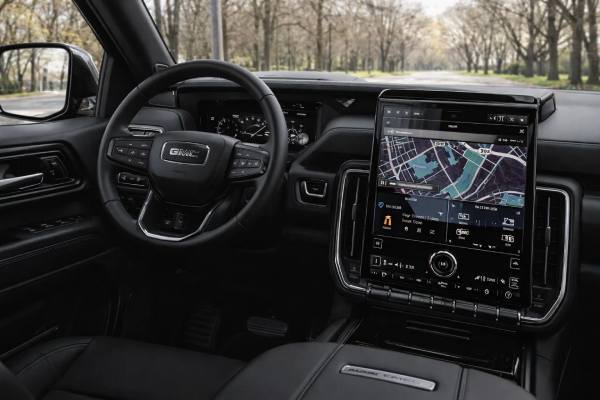
Infotainment and cabin electronics. Denali-grade audio, larger displays, and multi-zone HVAC are a big part of the appeal, but they also increase the number of modules and sensors. That doesn’t mean they are unreliable—only that a low-voltage battery or a network issue can show up as “random” warnings. In practice, keeping the 12V system healthy prevents many nuisance faults.
Safety systems and ADAS (driver assistance). Expect modern baseline features such as automatic emergency braking (AEB), forward collision alert, lane departure warning/lane keeping support, blind-spot monitoring, rear cross-traffic alert, and parking sensors—though what’s standard vs optional depends on exact year and package. If the vehicle is equipped with camera-based lane support and radar cruise, calibration matters after certain repairs:
- Windshield replacement (camera alignment)
- Front bumper work (radar sensor alignment)
- Alignment changes beyond normal toe adjustments (can affect lane-centering behavior)
Safety ratings reality check. Large SUVs are not always tested across every rating organization and every year. If a published rating exists, ensure you’re comparing the same model year and test protocol. If a rating does not exist, focus on what you can verify: seatbelt and airbag coverage, child-seat anchors (LATCH/ISOFIX), and whether the vehicle has the ADAS features you want—and that they function correctly after repairs.
Known issues and recall checks
A 2025–present facelift Denali RWD is still new enough that true long-term patterns are developing, but the underlying systems—GM’s 6.2L small-block family, 10-speed automatic behavior, and modern electronics—have known themes worth watching. The best approach is to rank issues by (1) how commonly they occur and (2) how expensive they are when they do.
Common or recurring themes (watch closely)
- Direct-injection carbon buildup (medium cost, longer timeline). Any direct-injected gasoline engine can accumulate intake-valve deposits over time because fuel no longer washes the valves. Symptoms can be mild roughness at idle, cold-start stumble, or reduced efficiency. It’s often mileage- and driving-style-dependent (short trips increase risk). A professional intake cleaning is the typical remedy.
- Cylinder deactivation lifter concerns (medium to high cost if it occurs). Modern small-block V8s can use lifter hardware for cylinder deactivation. If a lifter issue develops, symptoms may include misfires, ticking, check-engine lights, and poor running. The cost can be high because it can involve top-end work. Many engines run indefinitely without this problem, but it’s a known risk category in this engine family—so pay attention to any abnormal valvetrain noise or misfire history.
Occasional issues (often fixable, but annoying)
- 10-speed shift quality and shudder complaints (low to medium cost). Some owners report shift “busyness,” harsh 1–2 behavior, or a shudder under light throttle. Causes range from software calibration to fluid condition to torque converter behavior. The fix can be as simple as a calibration update, but sometimes requires deeper diagnosis.
- Suspension system faults (medium cost). Adaptive dampers, air springs, height sensors, and compressors can trigger warnings or uneven ride height. Symptoms include a corner sitting low, compressor running frequently, or a “service suspension” message. Repairs vary from sensor replacement to compressor or air spring service.
Rare but high-impact risks (verify diligently)
- 6.2L internal engine concerns in certain production windows (high cost). Recent years of 6.2L applications across GM trucks and SUVs have seen reports and official actions related to internal engine damage on some builds. That does not automatically mean a 2025–present vehicle is affected, but it makes VIN-based recall/TSB verification essential. If buying used, insist on proof of completed recall actions and ask for the service history printout.
Software and calibration updates
Modern Yukons rely on many modules: engine, transmission, brake control, camera/radar systems, and infotainment. When a vehicle shows odd driveability behavior (gear hunting, throttle hesitation, sensor warnings), an official reflash or module update is often the first step. For buyers, the best indicator is a dealer service record showing updates were applied when campaigns were released.
How to verify recalls and service actions
- Run an official VIN recall check and confirm “no open recalls.”
- Ask for dealer service history (printout is better than verbal confirmation).
- Test-drive with varied conditions: cold start, stop-and-go, steady 60–75 mph (100–120 km/h), and a few firm accelerations.
- Scan for stored codes (even if no warning lights are present).
This is the single most effective way to avoid inheriting expensive problems on a high-content SUV.
Service plan and buyer tips
A Yukon Denali can be very durable when maintained like a working truck, not like a soft crossover. The key is to treat fluids and wear items as “load management,” because weight, heat, and short-trip use are what age these vehicles.
Practical maintenance schedule (distance or time)
Use the Oil Life Monitor (OLM) as the primary guide, but set sensible limits:
- Engine oil and filter: OLM, or at least every 12 months; for heavy towing/short trips, consider ~8000–10,000 km (5000–6000 mi). Use the exact dexos-approved viscosity listed for your VIN.
- Engine air filter: Inspect every 15,000 km (10,000 mi); replace around 45,000–60,000 km (28,000–37,000 mi) or sooner in dust.
- Cabin air filter: Every 15,000–30,000 km (10,000–20,000 mi) depending on environment.
- Spark plugs: Often around 150,000–160,000 km (90,000–100,000 mi) on modern iridium setups—verify for your exact engine calibration.
- Coolant: Commonly 5 years / 240,000 km (150,000 mi) for long-life coolant, but verify for your model year and market.
- Automatic transmission fluid: “Severe service” matters here. If you tow, drive in heat, or do lots of stop-and-go, plan a service around 70,000–100,000 km (45,000–60,000 mi). If you do mostly highway cruising with light loads, you can often extend—still, fluid condition is cheap insurance.
- Rear differential fluid: Inspect for leaks at every oil change; service intervals vary widely by axle and use. Towing increases the need.
- Brake fluid: Every 2–3 years regardless of mileage (moisture control).
- Brakes: Inspect at every rotation. Heavy city driving and towing can cut pad life dramatically.
- Tires: Rotate about every 10,000–12,000 km (6000–7500 mi). Maintain correct pressures; this reduces shoulder wear and improves stability when loaded.
- 12V battery test: Start testing annually after year 3; replace proactively when capacity is falling, because weak voltage causes false module faults.
Buyer’s guide checklist (what to inspect)
- Powertrain: Cold start for ticking/knocking, smooth idle, no misfire counters, no hesitation on moderate acceleration, no persistent shudder at steady throttle.
- Cooling system: Look for dried coolant residue, consistent operating temperature, and strong cabin heat (air pockets can show up as weak heat).
- Suspension: Listen for clunks over sharp bumps; check for uneven ride height after sitting overnight.
- Brakes and hubs: Pulsation under braking (rotor thickness variation) and humming that changes with speed (possible bearing wear).
- Electronics: Test all cameras, parking sensors, and driver-assistance features; verify all keys are included and work.
- Underbody: Check for impact damage, fluid leaks, and corrosion at seams (especially if the vehicle lived in salted-road regions).
Long-term durability outlook
With consistent oil service, careful towing practices, and proactive fluid maintenance, this platform can go the distance. The main threats to long-term ownership cost are (1) high-content suspension components, (2) modern electronics sensitive to voltage, and (3) the small probability of high-cost engine or transmission issues—making service history and VIN checks non-negotiable.
Real driving and fuel use
On the road, the Denali RWD is defined by composure. The steering is tuned for stability, so it won’t feel “sporty,” but it tracks confidently at highway speeds and doesn’t require constant micro-corrections. The suspension’s job is to keep a tall body calm—especially with passengers—and Denali hardware generally does that well, smoothing out expansion joints and long undulations better than many rivals. Around town, you still feel the vehicle’s mass. The best way to drive it smoothly is to be gentle with initial throttle tip-in and let the V8’s torque do the work without chasing revs.
Powertrain character
The 6.2L V8 feels strong at low to mid rpm, which is where a full-size SUV lives most of the time. You get immediate response for passing, and the 10-speed can drop multiple gears quickly without drama. In normal driving, it tends to upshift early and hold a tall gear to keep noise down. In tow/haul mode, the transmission logic typically becomes more assertive: it holds gears longer, downshifts sooner on grades, and uses engine braking more proactively.
Efficiency you can actually expect
Exact EPA label values vary by configuration, but the ownership reality is consistent:
- City driving: the Denali’s weight and frequent stops drive consumption up quickly.
- Highway cruising: steady-speed efficiency is much better, especially around 65–75 mph (105–120 km/h), but large frontal area and gearing still limit gains.
- Cold weather: short trips in winter can noticeably worsen fuel use because warm-up losses are larger on a big V8.
A practical planning range for many owners is roughly 13–16 mpg US (18–15 L/100 km) in mixed use depending on traffic, tires, and driving style, with highway-only runs often better and dense city use worse.
Braking feel and confidence
Brakes on a heavy SUV are always working. Expect a solid pedal and stable straight-line stops when everything is healthy, but also expect consumables to wear faster if you drive in town or tow frequently. If you feel pedal pulsing, it’s often rotor thickness variation rather than a “warped rotor” in the literal sense; repeated high-heat stops can accelerate it.
RWD traction and control
In dry conditions, RWD feels clean and predictable. In rain or snow, tires matter more than drivetrain. If you plan to drive in winter climates, a true winter tire setup is the biggest single improvement you can make for safety and drivability. For towing, ensure your rear tires are in excellent condition and correctly inflated, because the rear axle carries more of the stability burden.
Load and towing experience
With the correct tow equipment, the Denali can tow confidently, but physics still applies. Expect:
- More frequent downshifts on grades
- Higher coolant and transmission temperatures under sustained load
- A significant fuel-economy penalty—often 25–40% depending on trailer weight, speed, wind, and terrain
For frequent towing, prioritize the factory trailering package, use weight distribution where appropriate, and service transmission and differential fluids on a “severe use” schedule.
Rivals: luxury full-size SUVs
Shopping a Yukon Denali usually means you’re comparing it to a short list of full-size SUVs that can genuinely haul people and tow. Here’s how the Denali RWD with the 6.2L V8 typically stacks up in real ownership terms.
Cadillac Escalade (closest cousin)
The Escalade is the most direct alternative because it shares much of the platform DNA. You’re often paying for brand position, interior presentation, and feature packaging. If you want the most upscale GM interpretation and don’t mind higher parts and insurance costs, Escalade makes sense. If you want much of the same underlying capability with a more conservative luxury approach, Denali can be the sweet spot.
Lincoln Navigator
Navigator leans into effortless comfort and a smooth power delivery strategy, often feeling “softer” and more isolated in typical luxury driving. It’s a strong choice if your priority is relaxed cruising and premium cabin ambience. Compare towing package content and long-term maintenance costs carefully, and pay attention to how each vehicle’s driver assistance behaves on your typical roads.
Ford Expedition Platinum
Expedition is often a pragmatic rival: spacious, capable, and familiar to service almost anywhere. Depending on market and configuration, it can offer strong towing credentials and competitive packaging. Denali tends to win on luxury “finish” and V8 character for buyers who prefer naturally aspirated response, while Expedition can appeal with different powertrain strategy and value.
Jeep Wagoneer and Grand Wagoneer
These can deliver impressive comfort and technology, but complexity and ownership cost can vary widely by build. If you love the interior concept and features, prioritize a clean service history and thorough electronics testing. Denali’s advantage is the long-established GM truck ecosystem for parts and service familiarity in many regions.
Toyota Sequoia
Sequoia is a durability-minded choice with a different powertrain approach depending on year. It can be compelling for buyers who prioritize long-term brand reputation and don’t need maximum interior packaging flexibility. Compare third-row space, cargo utility, and how the powertrain feels under load versus the 6.2’s traditional V8 character.
The Denali verdict in this class
Choose the Denali RWD if you want:
- A classic, confident full-size SUV feel with strong towing-friendly torque
- A quiet, well-finished cabin without jumping to the highest-priced badge in the segment
- A drivetrain that can be simpler to maintain than 4WD (for the right climate and use case)
Choose a rival if you prioritize:
- Standard AWD/4WD use in harsh winters (or frequent off-pavement use)
- A specific luxury presentation or brand experience
- A particular packaging advantage (seat layouts, infotainment style, or pricing strategy)
In the end, Denali’s strongest argument is balance: it blends truck-grade capability with a luxury calibration that makes daily driving feel controlled and calm—provided you maintain it like a heavy-duty vehicle and verify recalls and service actions by VIN.
References
- Manuals and Guides | Vehicle Support | GMC 2025 (Owner’s Manual Portal)
- Recalls | NHTSA 2025 (Recall Database)
- Vehicle Safety Ratings and Recalls | NHTSA 2025 (Safety Rating)
- Ratings 2025 (Safety Rating)
Disclaimer
This article is for informational purposes only and is not a substitute for professional inspection, diagnosis, or repair. Specifications, torque values, service intervals, and procedures vary by VIN, market, build date, and equipment; always confirm details using official owner and service documentation for your specific vehicle.
If you found this guide useful, please consider sharing it on Facebook, X (Twitter), or your favorite forum to help support our work.