
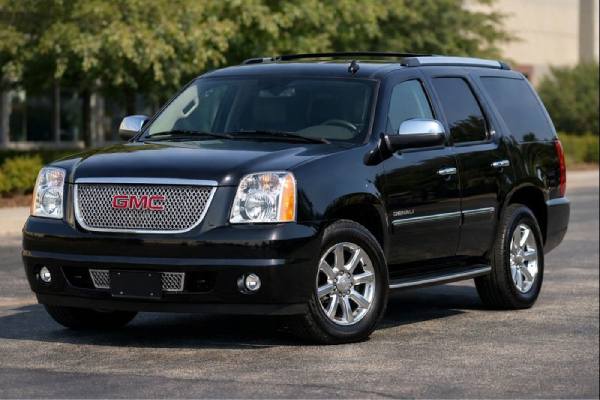
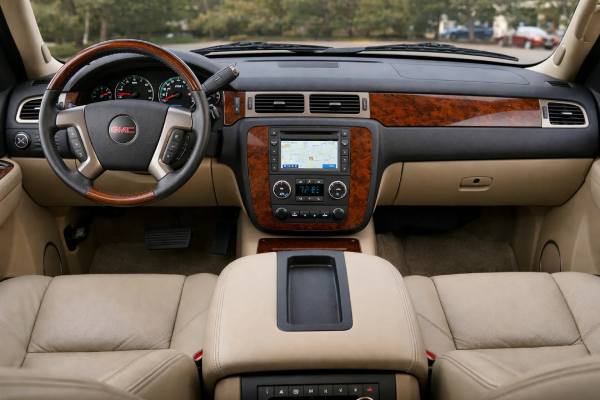
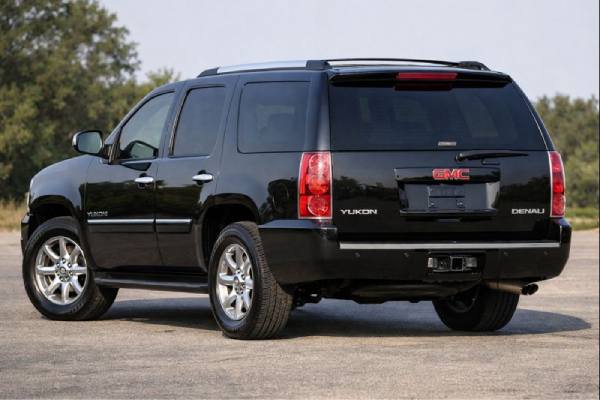
The 2007–2008 Yukon Denali RWD sits at a sweet spot in GM’s full-size SUV timeline: the newer GMT900 chassis, the big 6.2L L92 V8, and a modern 6-speed automatic—all wrapped in a body-on-frame package that still feels “truck tough.” In RWD form, it’s also a little simpler than the AWD version: fewer driveline parts to service, less front-end drag, and typically better highway economy.
Owners tend to choose this Denali for three reasons: effortless passing power even when loaded, confident long-distance comfort, and real utility (family duty, towing, and winter roads with the right tires). The trade-off is that age-related wear shows up in predictable places—front suspension, brake hardware, electronics, and cooling seals—so buying well matters more than buying cheap.
What to Know
- Strong, smooth power delivery from the 6.2L V8 and 6-speed automatic, especially at highway speeds
- RWD layout reduces AWD driveline complexity and can lower long-term service costs
- Excellent towing and people-hauling capability when equipped and maintained correctly
- Budget for front-end wear items (hubs, ball joints, shocks) as mileage climbs past ~160,000 km (100,000 mi)
- Oil and filter service is typically every 8,000–12,000 km (5,000–7,500 mi) or 12 months (use the oil-life monitor if functioning correctly)
Quick navigation
- Denali RWD GMT900 deep dive
- L92 6.2 specs tables
- Denali equipment and safety
- Reliability hot spots and fixes
- Maintenance schedule and buyer checks
- Driving feel and real economy
- Denali RWD versus key rivals
Denali RWD GMT900 deep dive
Think of the 2007–2008 Yukon Denali RWD as a “comfortable heavy-duty tool.” It’s built on a body-on-frame platform (GMT900), which keeps towing manners and durability priorities front and center. Yet Denali trim adds the refinement you actually notice every day: quieter cabin materials, more standard equipment, and a powertrain that feels less strained than the smaller V8 options.
The headline is the L92 6.2L V8. In real driving, it’s not just fast—it’s effortless. The engine doesn’t need to hunt for torque when you merge, climb grades, or carry seven people plus cargo. Pairing it with the 6-speed automatic is a big deal versus earlier 4-speed trucks. The wider ratio spread gives you a stronger launch gear, better passing response, and calmer engine speed on the highway.
RWD matters for ownership. It usually means:
- fewer moving parts than AWD (no transfer case services, fewer seals and bearings in the front driveline)
- slightly better highway economy and less steering “drag”
- simpler diagnosis when you chase vibrations or clunks
But RWD also puts more responsibility on tires. With a powerful V8 and a light rear axle when unloaded, traction depends heavily on tire compound and tread depth. For winter climates, a dedicated cold-weather tire set is the difference between “fine” and “frustrating.”
From an engineering point of view, this Denali uses independent front suspension and a solid rear axle. The ride is tuned for stability and comfort, not sports-car agility. That’s a feature, not a flaw: it tracks well at speed, feels planted with a trailer, and absorbs bad pavement without constantly punishing the cabin. The cost is that front-end wear parts are consumables over time, especially if it lives on rough roads or tows often.
If you maintain it like a long-term asset—fluids on schedule, cooling system tight, suspension addressed before it turns into tire wear—the Yukon Denali RWD can remain a confident, capable vehicle long after many crossovers feel “used up.”
L92 6.2 specs tables
Below are practical, model-relevant specifications for a 2007–2008 Yukon Denali RWD with the L92 6.2L V8. Minor variations can occur by VIN, axle ratio, tire package, and towing equipment.
Engine and performance (ICE)
| Item | Specification |
|---|---|
| Code | L92 |
| Engine layout and cylinders | V8, OHV (pushrod), 2 valves/cyl, hydraulic roller lifters |
| Displacement | 6.2 L (6,162 cc / 376 cu in) |
| Bore × stroke | 103.25 × 92.0 mm (4.065 × 3.622 in) |
| Induction | Naturally aspirated |
| Fuel system | Sequential port fuel injection (PFI) |
| Compression ratio | ~10.5:1 |
| Max power | 380 hp (283 kW) @ ~5,500 rpm |
| Max torque | ~565 Nm (417 lb-ft) @ ~4,200 rpm |
| Timing drive | Chain |
| Emissions/efficiency standard | EPA-era U.S. certification (varies by calibration) |
| Rated efficiency (typical) | Expect high-teens mpg (US) combined depending on tire/axle, driving, and load |
Transmission and driveline
| Item | Specification |
|---|---|
| Transmission | 6-speed automatic (6L80 family) |
| Typical gear ratios | 4.03 / 2.36 / 1.53 / 1.15 / 0.85 / 0.67 (rev ~3.06) |
| Drive type | RWD |
| Final drive ratio | Varies; commonly in the low-3s (confirm axle code) |
| Differential | Typically open; traction-aid/locking features depend on build and package |
Chassis and dimensions (standard-length Yukon, not XL)
| Item | Typical specification (approx.) |
|---|---|
| Suspension (front/rear) | Independent front; solid rear axle with multi-link/coil setup |
| Steering | Power-assisted truck-type steering (ratio varies) |
| Brakes | 4-wheel discs; ABS and stability control equipped |
| Wheels/tires | Package-dependent (often 20 in Denali wheels) |
| Length | ~5,150 mm (203 in) |
| Width | ~2,000 mm (79 in) |
| Height | ~1,950 mm (77 in) |
| Wheelbase | ~2,950 mm (116 in) |
| Turning circle | ~12.2–12.8 m (40–42 ft) range (tire/trim dependent) |
| Curb weight | Often ~2,500–2,700 kg (5,500–6,000 lb), equipment dependent |
| Fuel tank | ~98 L (26 US gal / 22 UK gal) |
Cargo volume (SAE-style, typical)
| Configuration | Volume |
|---|---|
| Behind 3rd row | ~480 L (~17 ft³) |
| Behind 2nd row | ~1,710 L (~60 ft³) |
| Max (seats folded) | ~3,080 L (~109 ft³) |
Performance and capability (real-world typical ranges)
| Metric | Typical range (varies by tires, load, altitude) |
|---|---|
| 0–100 km/h (0–62 mph) | ~7.0–8.0 s |
| Towing capacity | Often ~3,400–3,600 kg (7,500–8,000 lb) with correct equipment |
| Payload | Commonly ~600–750 kg (1,300–1,650 lb) depending on options |
Fluids and service capacities (decision-useful guidance)
| System | Typical spec and notes |
|---|---|
| Engine oil | 5W-30 commonly used; capacity often ~6.6 L (7.0 US qt) with filter |
| Coolant | Dex-Cool type coolant; capacity varies (verify by VIN) |
| Transmission | Dexron VI; total fill varies widely (pan drain is much less than total) |
| Differential | Synthetic gear oil commonly 75W-90; capacity varies |
| Brake fluid | DOT 3 (confirm cap/owner information) |
| Spark plugs | Long-life plugs; common gap ~1.52 mm (0.060 in) (verify plug spec by VIN) |
Key torque specs (common “critical fastener” guidance)
| Fastener | Typical torque |
|---|---|
| Wheel lug nuts | ~190 Nm (140 lb-ft) (confirm wheel type) |
| Spark plugs | Often ~25 Nm (18 lb-ft) depending on plug design |
| Engine oil drain plug | Commonly ~25–30 Nm (~18–22 lb-ft) range (verify pan and plug) |
Denali equipment and safety
Denali trim on the Yukon is more than appearance. For 2007–2008, it generally bundles the strongest gas engine offered in the line (the 6.2L), higher-end interior materials, and the comfort features that turn a big SUV into a daily driver rather than a weekend tool.
Trims and options (what matters on the used market)
Even within “Denali,” the most meaningful differences come from packages and build codes, not badges. When shopping, focus on equipment that changes operating cost, towing confidence, or repair exposure:
- Tow package and hitch equipment: Some trucks have the full factory trailering setup, others are missing key hardware or wiring. Confirm the hitch rating label, wiring connectors, and whether the vehicle has the right cooling hardware if you plan to tow.
- Rear suspension type: Many Denalis use premium dampers and self-leveling features. They ride well, but replacement shocks (and sensors, if equipped) can be expensive.
- Wheel and tire size: Denali often runs 20-inch wheels. They look right, but tire cost is higher, and they can transmit more sharp impacts on broken pavement.
- Seating configuration: Most are 7- or 8-passenger setups depending on second-row buckets vs bench. Family utility changes dramatically with this choice.
- Audio and infotainment level: Upgraded systems can sound great, but older modules and amplifiers may fail with age. Check every speaker and all steering-wheel controls.
Quick identifiers: Denali typically has unique grille and badging, standard 6.2 branding in many markets, and more standard comfort equipment. For certainty, use the glovebox/door jamb RPO codes and confirm the engine code.
Safety ratings (how to interpret them)
For 2007–2008 full-size SUVs, safety ratings depend heavily on the testing organization and test version used at the time. Use ratings as a baseline, then prioritize condition and tire quality because those affect real stopping distance and stability more than a badge does on a 2.5-ton vehicle.
If you’re comparing vehicles, look for:
- presence of electronic stability control (GM often brands stability control systems; verify operation by checking for warning lights and by scanning for stored faults)
- side curtain airbags and their coverage rows (first/second/third row coverage varies by year and configuration)
Safety systems and driver assistance (what’s actually here)
Don’t expect modern ADAS (automatic emergency braking, lane keeping, radar cruise). This era Denali focuses on foundational safety hardware:
- Airbags: Front airbags plus side/curtain airbags are common, but verify all airbags with a scan tool and ensure no “SRS/Airbag” warning lights.
- ABS and stability control: These systems are key on a high center-of-gravity SUV. A healthy system should be silent and unobtrusive until you need it.
- LATCH/child-seat provisions: Check anchor points physically; plastic covers break and anchors can get buried under seat cushions.
- Brake assist/traction control integration: Works best with matched tires and correct tire pressures. Mixed tire sizes or uneven tread depth can confuse wheel-speed logic.
A useful ownership note: after brake or suspension work, some shops skip proper steering-angle or yaw sensor calibration checks. If you see stability-control lights after repairs, treat it as a fixable calibration/sensor issue—not something to ignore.
Reliability hot spots and fixes
A 2007–2008 Yukon Denali RWD can be a reliable long-haul SUV, but it rewards preventive maintenance. Most problems fall into predictable categories: front-end wear, aging electronics, fluid leaks, and occasional transmission or engine control issues. Below is a practical way to think about the common issues—by prevalence and by cost severity.
Common and usually low-to-medium cost
- Front wheel hub/bearing wear
Symptoms: humming that rises with speed, ABS sensor faults, looseness at the wheel.
Likely cause: integrated hub bearing wear; sometimes water intrusion or impact damage.
Remedy: quality hub assembly replacement; check sensor wiring routing. - Steering clunk or looseness (intermediate shaft or linkage wear)
Symptoms: clunk over small bumps, vague on-center feel.
Cause: wear in shaft or steering linkage joints.
Remedy: inspect and replace worn components; align afterward. - Brake pedal pulsation and uneven pad wear
Symptoms: vibration under braking, pulling, hot brake smell.
Cause: rotor runout, seized caliper slides, old brake fluid.
Remedy: service slides, replace rotors/pads as needed, flush fluid. - EVAP leaks (small leak codes) and fuel cap issues
Symptoms: check-engine light with EVAP codes, occasional fuel smell.
Cause: aging hoses, purge/vent valves, cap seal.
Remedy: smoke test and targeted part replacement.
Occasional and medium-to-high cost
- 6-speed automatic shift quality issues
Symptoms: harsh 1–2, delayed engagement, flare, or shudder under light load.
Cause: fluid degradation, valve body wear, torque converter problems, outdated calibration.
Remedy: correct fluid service with the right spec, scan for slip data, consider reflash if applicable; address converter issues early to prevent debris damage. - Cooling system seepage (water pump, radiator seams, hose junctions)
Symptoms: coolant smell, slow loss, crusty residue, overheating in traffic or while towing.
Cause: seal aging, clamp relaxation, pump bearing wear.
Remedy: pressure test, replace leaking components, refresh coolant correctly. - Accessory drive and electrical aging
Symptoms: intermittent charging issues, battery drain, flickering lights, HVAC blower problems.
Cause: alternator wear, poor grounds, aged relays, blower resistor or control module failures.
Remedy: voltage-drop testing, battery load test, clean grounds before replacing parts.
Rare but expensive (watch items)
- Internal engine problems are not “typical,” but neglect can make them real. Overheating events, extended oil intervals, or persistent misfires can damage catalysts and valvetrain components.
Early warning signs: persistent misfire counters on a scan tool, oil pressure concerns, repeated overheating, or heavy oil contamination.
Recalls, TSBs, and service actions
Because this is an older platform family with a long production run, it’s common for recalls and service bulletins to exist across broad year ranges. The most responsible approach is procedural:
- Run the official VIN check through the manufacturer and the national safety database in your market.
- Ask a dealer for recall completion history.
- During inspection, scan all modules for stored history codes; some past recall-related faults can remain even when warning lights are off.
A good Yukon Denali isn’t one with “no issues.” It’s one where issues have been addressed correctly, with clean fluid condition, tight cooling performance, and a front end that doesn’t rattle.
Maintenance schedule and buyer checks
A simple maintenance plan is the best “mod” for this Denali. The goal is to keep the powertrain lubricated, the transmission healthy, and the cooling system leak-free—while staying ahead of suspension wear that can turn into tire cost.
Practical maintenance schedule (distance/time)
Use this as a sensible baseline; always defer to the correct service information for the VIN and equipment.
| Interval | What to do | Notes |
|---|---|---|
| Every 8,000–12,000 km (5,000–7,500 mi) or 12 months | Engine oil and filter | Use correct oil spec; verify oil-life monitor behavior |
| Every 15,000 km (10,000 mi) | Tire rotation; brake inspection | Check inside-edge wear (front), measure pads/rotors |
| Every 30,000 km (20,000 mi) | Engine air filter; cabin air filter | Replace sooner in dusty areas |
| Every 50,000–80,000 km (30,000–50,000 mi) | Transmission fluid service (severity-dependent) | Towing/city heat = shorter interval |
| Every 50,000–80,000 km (30,000–50,000 mi) | Rear differential fluid | Also inspect seals and axle vent |
| Every 2 years | Brake fluid flush | Reduces corrosion in ABS components |
| Every 5 years | Coolant service | Also inspect water pump and hoses |
| 160,000–200,000 km (100,000–125,000 mi) band | Plugs (verify), belts, tensioners, front-end refresh as needed | Many trucks need hubs/ball joints/shocks in this zone |
Fluid specifications and “buying decisions”
You don’t need every capacity memorized, but you do need proof that correct fluids were used:
- Engine oil: correct viscosity and proper filter; avoid extended intervals without documentation.
- Transmission fluid: correct spec matters; mixed fluids can worsen shift quality.
- Coolant: use the correct long-life coolant type and proper mix ratio; topping off with “whatever” is a common slow-burn mistake.
Buyer’s guide: inspection checklist
Bring a flashlight, a small mirror, and plan enough time for a cold start plus a full warm-up.
Body and chassis
- Look for corrosion at frame seams, brake lines, and rear suspension mounts (especially if the vehicle lived in road-salt regions).
- Check door bottoms and tailgate seams for bubbling and trapped debris.
Engine and cooling
- Cold start should be clean: no loud ticking that persists, no heavy smoke, and no flashing warning lights.
- Inspect coolant reservoir level and look for dried residue around the water pump and radiator seams.
- Watch temperature stability in traffic; weak fans or coolant seepage show up here.
Transmission and driveline
- From a stop, engagement should be prompt (no long delay into Drive/Reverse).
- Under light throttle, shifts should be consistent. A repeating shudder under gentle acceleration deserves diagnosis, not excuses.
Suspension and steering
- Drive over small bumps at low speed: clunks and steering looseness are common, but they cost money.
- Inspect tire wear pattern. Uneven wear often means worn joints, weak shocks, or alignment issues.
Electronics
- Test every window, seat function, HVAC mode, and infotainment function. Small failures add up quickly in premium trims.
Recommended shopping approach (years and setup)
For 2007–2008 Denali RWD specifically, prioritize:
- a vehicle with documented transmission servicing and stable shift quality
- clean cooling system history (no overheating stories)
- front-end work already done with quality parts (or priced accordingly)
Long-term durability is strong when maintenance is consistent. The riskiest buys are neglected trucks that “drive fine” on a short test but show dirty fluids, weak cooling, and uneven tires—those are usually telling the truth.
Driving feel and real economy
The driving experience is exactly what many buyers want from a Denali: big, stable, quiet enough, and strong everywhere in the rev range. It doesn’t feel sporty, but it does feel controlled—especially on long highway trips where crosswinds and road grooves can make cheaper full-size SUVs tiring.
Ride, handling, and NVH (noise, vibration, harshness)
- Ride: tuned for comfort. It absorbs broken pavement well for a truck-based SUV, though large wheels can add sharpness over pothole edges.
- Handling: predictable. You feel the height and mass, but body motions are managed better than older GMT800 trucks.
- Steering: more “truck” than “car.” On-center feel can be slightly vague, but it should not wander. Excess wander often points to worn components rather than design.
- Braking feel: strong when maintained, but heat and weight punish neglected brake hardware. Fresh fluid and properly serviced calipers matter.
Powertrain character
The L92’s biggest advantage is how little it strains. At 60–75 mph (100–120 km/h), it has immediate passing power without needing full-throttle drama. The 6-speed transmission keeps the engine in a useful band, and the top gears drop rpm for quieter cruising.
A well-sorted example should:
- downshift cleanly on moderate throttle
- avoid repeated “gear hunting” on gentle grades
- feel smooth at low speeds without harsh bumps between gears
If it doesn’t, you’re often looking at fluid condition, a calibration issue, or a mechanical wear problem—not “normal for the model.”
Real-world efficiency (what owners actually see)
Full-size, V8, body-on-frame SUVs are sensitive to speed and tire choice. Real-world numbers vary, but these patterns are consistent:
- City-heavy driving: typically high teens L/100 km (low-to-mid teens mpg US)
- Highway at 100–110 km/h (62–68 mph): often mid-teens mpg US (mid-to-high teens mpg UK) if the truck is healthy and tires are properly inflated
- Highway at 120 km/h (75 mph): expect a clear penalty; aero and gearing can’t fully fight physics on a tall SUV
Cold weather, short trips, aggressive tires, and roof boxes can move the needle more than many people expect.
Load, towing, and stability
This Denali is a confident tow platform when it’s equipped correctly and the trailer is set up well:
- Use a weight-distributing hitch when appropriate and keep tongue weight in spec.
- Watch transmission temperatures on long grades; heat is the enemy of automatic longevity.
- Expect a significant consumption increase while towing. Under moderate tow loads, plan on a noticeable percentage drop in economy; under heavy tow and high speed, it can be substantial.
A final practical note: the best “performance upgrade” for a towing Denali is usually maintenance—fresh fluids, strong brakes, correct tires, and cooling system health.
Denali RWD versus key rivals
In 2007–2008, the Yukon Denali’s closest competitors weren’t crossovers—they were other full-size, V8, body-on-frame SUVs. Comparing them well means focusing on three real-world factors: powertrain strength, cabin comfort and packaging, and long-term service burden.
Versus Ford Expedition (5.4L era)
- Powertrain feel: The Denali’s 6.2L typically feels stronger for passing and grades, especially when loaded.
- Transmission behavior: The 6-speed pairing in the Denali helps keep it responsive without constant high rpm.
- Ownership angle: Both can be durable, but buy based on service history; each has known wear patterns.
Versus Toyota Sequoia (older-generation 4.7L)
- Reliability reputation: Toyota tends to carry a strong reputation, but age and rust exposure can flip the script.
- Performance: The Denali is usually quicker and feels more relaxed at speed.
- Cost profile: Toyota parts can be pricier in some markets; Denali parts are widely available but premium-trim components add cost.
Versus Nissan Armada (5.6L)
- Power: Armada power is competitive, but the Denali’s overall refinement and Denali-specific equipment often feel more “premium SUV” than “big utility.”
- Interior: Denali trim usually wins on perceived material quality and feature content for the era.
Versus Cadillac Escalade (same platform family)
This is the most direct comparison because the core bones are similar. The Denali often becomes the smarter buy when:
- you want much of the power and comfort without the Escalade’s typical price premium
- you prioritize “usable luxury” over brand statement
- you want a better chance of finding a well-maintained example at a reasonable total cost
The Denali RWD niche
The RWD Denali’s real advantage today is ownership simplicity. When two trucks are equally well kept, the RWD version can be:
- cheaper to maintain over time (fewer driveline fluids and seals)
- slightly more efficient on the highway
- easier to diagnose when vibrations or noises appear
The trade-off is traction in poor conditions—solved more by tires and driver habits than by badges. If you want a powerful, comfortable, tow-capable SUV and you can commit to keeping it maintained, the 2007–2008 Yukon Denali RWD remains a strong value in the full-size segment.
References
- 2007 GMC Yukon Owner Manual M 2007 (Owner’s Manual)
- 2007 GMC YUKON 4 DR RWD – Vehicle Detail Search – NHTSA 2007 (Safety Rating and Recall Database)
- 2008 GMC YUKON 4 DR RWD – Vehicle Detail Search – NHTSA 2008 (Safety Rating and Recall Database)
Disclaimer
This article is for informational purposes only and is not a substitute for professional diagnosis, inspection, or repair. Specifications, torque values, service intervals, and procedures can vary by VIN, market, model year, and installed equipment, so verify details using the official owner information and service documentation for the specific vehicle you are working on.
If this guide helped you, consider sharing it on Facebook or X (Twitter) to support our work.