
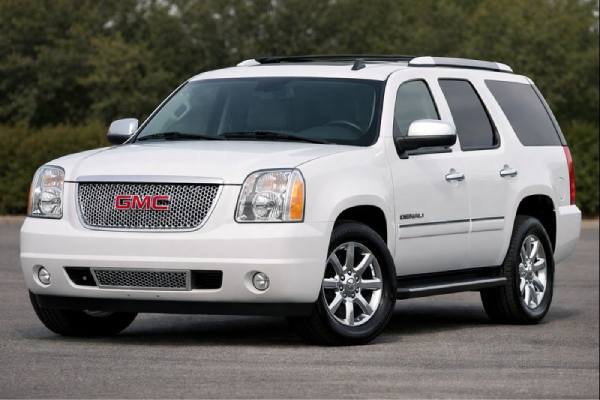
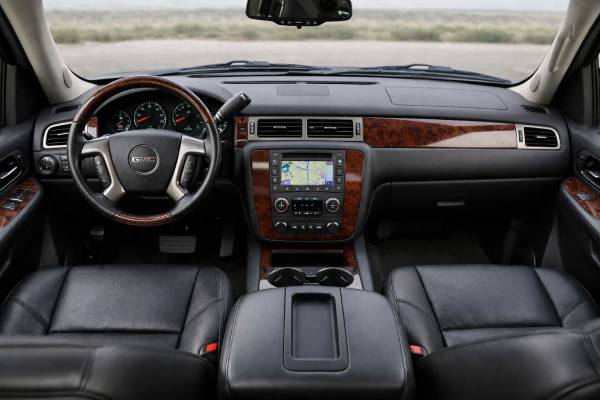
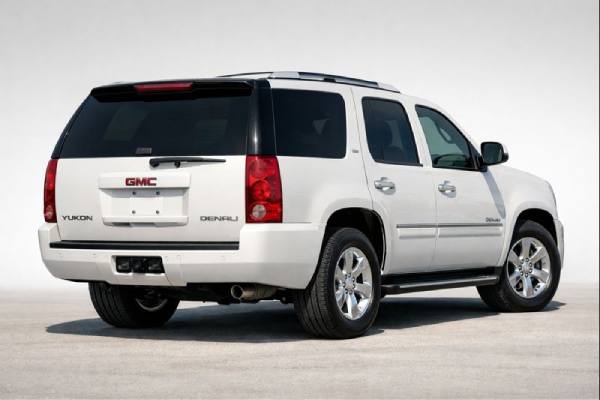
The 2009–2013 GMC Yukon Denali RWD (GMT900) is a classic full-size, body-on-frame SUV built around one simple idea: combine genuine truck capability with a quiet, premium daily-driver feel. Its L9H 6.2-liter V8 delivers strong low-rpm torque for towing and effortless highway passing, while the Denali trim adds damping control and cabin isolation that can make this big SUV feel smaller than it is—until you reach for a parking spot.
Ownership is mostly about understanding priorities. The platform is mature, parts availability is excellent, and routine service is straightforward for a competent shop. But the same traits that make it such an easy long-haul family hauler—weight, power, heat, and load—also mean fluids, brakes, tires, and cooling health matter more than they would on a crossover. If you maintain it like a truck, it tends to behave like a truck.
What to Know
- Strong V8 torque and stable highway manners make it a confident tow and road-trip SUV.
- Denali ride tuning and insulation deliver a noticeably calmer cabin than many rivals of the era.
- Expect real fuel use to climb quickly with city driving, short trips, or any towing.
- Rotate tires every 8,000–13,000 km (5,000–8,000 mi) to protect ride quality and steering feel.
- Budget for age-related rubber and electronics refreshes (bushings, sensors, battery, grounds) as mileage rises.
Guide contents
- Yukon Denali RWD deep dive
- L9H 6.2 specs and capacities
- Denali trim, options, and safety
- Reliability patterns and known issues
- Maintenance plan and buying checklist
- Real-world driving and performance
- How it stacks up against rivals
Yukon Denali RWD deep dive
In the GMT900 generation, the Yukon Denali sits at the “luxury-truck” intersection: a full-size SUV with a strong ladder frame, a refined interior, and a powertrain that doesn’t feel strained. The RWD layout is a meaningful distinction. It reduces driveline complexity versus AWD/4×4, cuts some rotating mass, and usually improves steering feel and service access. The tradeoff is obvious: traction and winter confidence depend heavily on tires and driver restraint, especially with an unloaded rear axle.
The L9H 6.2-liter V8 is the centerpiece. It’s a big-displacement, naturally aspirated engine tuned for broad torque rather than peaky power. In practice, that means the Yukon Denali RWD feels “awake” at part throttle—useful for merging, hill climbs, and towing—without needing constant downshifts. The 6-speed automatic (the common pairing in this era) helps keep the engine in the right band and lowers highway rpm compared with older 4-speed units.
Chassis-wise, the Denali’s value is composure. These trucks are tall and heavy, so ultimate cornering grip isn’t the mission. Instead, the Denali calibration focuses on stability, reduced float over long undulations, and less head toss over patchy pavement. When everything is in good condition (shocks, bushings, alignment, tires), it can feel surprisingly “buttoned down” for something this large.
Where owners are happiest long-term is when expectations match reality. This is not a “cheap to run” vehicle, even when it’s reliable. Consumables are big: oil quantity, cooling capacity, tire sizes, brake rotor mass, and fuel burn all scale with weight and power. The payoff is capability you can actually use: a confident highway cruiser, excellent cabin room, and real towing ability that many modern crossovers still can’t match.
L9H 6.2 specs and capacities
Below are practical, ownership-focused specifications for the 2009–2013 Yukon Denali RWD with the L9H 6.2L V8. Some figures vary slightly by model year, market, axle ratio, and option content, so treat them as “best typical” and verify against your VIN build and service information when ordering parts.
Engine and performance
| Item | Spec (typical for L9H 6.2) |
|---|---|
| Code | L9H |
| Layout and cylinders | V8, OHV (pushrod), 2 valves/cyl (16 valves total) |
| Displacement | 6.2 L (≈ 6,162 cc) |
| Bore × stroke | ≈ 103.25 × 92.0 mm (≈ 4.07 × 3.62 in) |
| Induction | Naturally aspirated |
| Fuel system | Port injection (sequential) |
| Compression ratio | ≈ 10.5:1 |
| Max power | 403 hp (≈ 300 kW) @ rpm (varies slightly by calibration) |
| Max torque | ≈ 565 Nm (417 lb-ft) @ rpm (varies slightly by calibration) |
| Timing drive | Chain |
| Spark plug gap | 0.040 in (1.02 mm) |
Transmission and driveline
| Item | Spec (common pairing) |
|---|---|
| Transmission | 6-speed automatic (commonly 6L80 family) |
| Drive type | RWD |
| Typical gear ratios (6-speed auto) | 1st 4.03 / 2nd 2.36 / 3rd 1.53 / 4th 1.15 / 5th 0.85 / 6th 0.67 / Rev 3.06 |
| Final drive (common) | 3.42:1 (other ratios may exist by package) |
| Differential | Typically open; traction control handles wheelspin (locker availability varies by build) |
Chassis and dimensions
| Item | Typical spec (SWB Yukon) |
|---|---|
| Suspension (front) | Independent, truck-style control arms (torsion bar architecture common on this platform) |
| Suspension (rear) | Solid axle with multi-link/coil spring arrangement |
| Steering | Power-assisted rack (tuned for stability rather than quickness) |
| Brakes | 4-wheel discs with ABS and stability control |
| Wheels/tires (common Denali fitments) | Often 20-inch wheels; exact tire size varies by year and option |
| Length / width / height (approx.) | ≈ 5,130 mm / 2,010 mm / 1,950 mm (≈ 202 in / 79 in / 77 in) |
| Wheelbase (approx.) | ≈ 2,950 mm (≈ 116 in) |
| Turning circle (approx.) | ≈ 12.5–13.0 m (≈ 41–43 ft) |
| Curb weight (typical range) | ≈ 2,550–2,700 kg (≈ 5,600–6,000 lb), equipment-dependent |
Capability and key service capacities
| Item | Value |
|---|---|
| Towing capacity (typical Denali 2WD, equipment-dependent) | Up to about 3,765 kg (8,300 lb) with correct hitching and cooling equipment |
| Cooling system capacity | 18.1 qt (17.1 L) |
| Engine oil with filter | 6.0 qt (5.7 L) |
| Fuel tank (regular / extended, where fitted) | 26.0 gal (98.4 L) / 31.5 gal (119.2 L) |
| Transmission fluid (pan drop + filter) | 6.0 qt (5.7 L) |
| Wheel nut torque | 140 lb-ft (190 Nm) |
If you plan to tow, the “numbers that matter” are less about peak tow rating and more about temperature control and braking condition. A well-maintained cooling system, fresh brake fluid, healthy pads/rotors, and correct load distribution typically make a bigger real-world difference than chasing the maximum published trailer number.
Denali trim, options, and safety
For 2009–2013, “Denali” is less about cosmetic badges and more about a bundled configuration: the 6.2L V8, upscale interior materials, and feature content aimed at comfort and convenience. In many markets, Denali also tends to include ride-control hardware that helps the Yukon feel more settled over uneven pavement—important in a tall SUV that spends a lot of time on highways.
Trims and quick identifiers
Even when the window sticker is long gone, Denali models usually stand out through a combination of cues:
- 6.2L V8 (L9H) pairing rather than the more common 5.3L V8 trims.
- Denali-specific grille and exterior detailing, usually with more chrome and a “premium” face.
- Standard larger wheels (often 20-inch) and a more road-biased tire setup.
- Interior upgrades: leather seating, higher-grade trim pieces, and typically a better audio/head unit package.
Because this platform ran for several years without a full redesign, equipment changes often come as “quiet updates.” The most meaningful differences for buyers tend to be infotainment revisions (Bluetooth/USB behavior, navigation head unit versions), camera availability, and package content bundling.
Options and packages that change ownership
Not every option matters equally. The ones that tend to change real-world satisfaction (and reconditioning cost) include:
- Tow package content: receiver type, cooling upgrades, wiring, brake controller compatibility, and rear axle ratio.
- Rear entertainment and upgraded audio: great when functional, expensive when screens, amplifiers, or modules fail.
- Power steps, liftgate, and seat motors: convenience features that add electrical complexity and aging points.
- Parking sensors and camera: helpful on a large SUV; inspect for sensor faults and intermittent camera operation.
Safety structure, restraints, and driver aids
These Yukons predate today’s widespread automatic emergency braking and lane-centering systems. Safety strength comes primarily from mass, structure, airbags, and stability control, not modern ADAS.
Commonly present safety elements include:
- Stability control and traction control, which are especially important on RWD in wet or cold conditions.
- ABS with brake assist logic (feel can be “truck-like,” but effective when maintained).
- Airbag coverage (front and side/curtain coverage is typical for the era, but exact counts and coverage depend on year and market).
- Child-seat anchors: check LATCH/ISOFIX points and ensure third-row access mechanisms operate smoothly.
Safety ratings: how to interpret them
For U.S.-market vehicles, safety ratings can come from different bodies and test types. The key is to verify the exact configuration (2WD vs 4WD/AWD, weight class, and test year methodology). For this generation, you’ll often find official rating records under the vehicle’s listing. Use those as the final reference, since rating protocols can change over time.
Practical takeaway: regardless of published ratings, your real safety outcome on a 2009–2013 full-size SUV is strongly influenced by tire condition, brake health, and stability-control integrity (no warning lights, correct wheel-speed sensors, good battery voltage and grounds).
Reliability patterns and known issues
The GMT900 Yukon Denali is built on a widely used truck platform, and that’s a major reliability advantage: problems are well understood, parts are common, and most independent shops know the architecture. That said, reliability depends on treating it as a high-load vehicle. Heat management, clean fluids, and electrical health have outsized influence compared with smaller SUVs.
Below is a practical “prevalence vs severity” map. Exact frequency depends on mileage, climate, and how hard the vehicle has been worked (towing, short trips, and heavy city use accelerate wear).
Common, usually medium cost
- Suspension and steering wear (bushings, links, ball joints, alignment drift)
Symptoms: clunks over bumps, vague steering, uneven tire wear.
Root cause: age, weight, and big wheels/tires amplify bushing load.
Remedy: replace worn components in sets, then align; don’t “align around” bad parts. - Brake system wear and pulsation
Symptoms: pedal shake, vibration under braking, long stops when hot.
Root cause: heavy vehicle + city use + towing; over-torqued lugs can worsen rotor issues.
Remedy: quality rotors/pads, correct lug torque, fresh brake fluid. - Cooling system aging (hoses, radiator seepage, fan control issues)
Symptoms: coolant smell, slow loss, temperature creep under load.
Root cause: heat cycles and plastic tank aging.
Remedy: pressure test, repair leaks early, keep fan operation correct.
Occasional, can become high cost if ignored
- 6-speed automatic behavior changes under heat (shift flare, shudder, harsh shifts)
Symptoms: delayed engagement, rumble-strip feel, inconsistent shifts when hot.
Root cause: fluid breakdown, torque converter wear, or calibration sensitivity.
Remedy: correct fluid spec, service at sensible intervals, diagnose early before hard-part damage. - Engine oil consumption and top-end noise
Symptoms: low oil between services, valvetrain tick on cold start, occasional misfires.
Root cause: extended oil intervals, stuck rings, or valvetrain component wear (varies by build).
Remedy: shorten oil interval, verify PCV system function, address misfires promptly to protect catalysts.
Rare, but expensive when it hits
- Major driveline wear from heavy towing without fluid discipline
Symptoms: differential whine, vibration, overheating, burnt-fluid odor.
Root cause: sustained heat and load with old lubricant.
Remedy: change axle lubricant on a schedule that reflects towing use; inspect for leaks. - Electrical “cascade” issues from weak battery/grounds
Symptoms: random warning lights, module communication faults, intermittent no-start.
Root cause: voltage drops, corroded grounds, aging battery and cables.
Remedy: load-test the battery, clean grounds, confirm alternator output, fix root voltage issues first.
Recalls, service bulletins, and how to verify
Because recall and service action coverage depends on VIN and production date, the correct process is:
- Run the VIN through the official recall database.
- Ask for dealer service history printouts (many recall repairs are recorded there).
- Confirm evidence of completion (stickers, updated parts, or documented repair orders).
For buyers, the big advantage of this platform is that a well-maintained example can be very durable—but a neglected one can “stack” deferred maintenance into a large initial catch-up bill. Your goal is to avoid trucks with overlapping warning signs: overheating history, rough shifting, multiple electrical gremlins, and mismatched tires.
Maintenance plan and buying checklist
A Yukon Denali RWD is easiest to own when you use a maintenance plan that assumes real-world load, not just minimum intervals. The good news: service access is generally straightforward, and most consumables are conventional. The key is to prevent heat- and age-driven failures—cooling, transmission fluid condition, and braking system health are the pillars.
Practical maintenance schedule
Use the oil-life monitor if it’s functioning correctly, but set sensible “hard limits”:
- Engine oil and filter: follow oil-life monitor, but cap at once per year maximum; shorten to 8,000–10,000 km (5,000–6,000 mi) for short trips, heavy city driving, or towing.
- Tire rotation: 8,000–13,000 km (5,000–8,000 mi); correct inflation matters for ride and steering stability.
- Engine air filter: inspect each oil service; replace more often in dust.
- Cabin air filter (if equipped): typically yearly or as airflow drops.
- Coolant: replace on a time basis if history is unknown; prioritize leak-free operation and correct mixture.
- Brake fluid: every 2 years is a smart real-world interval for a heavy SUV.
- Transmission fluid: if you tow or drive hot/city-heavy, treat fluid as a wear item—service on a conservative schedule rather than “lifetime.”
- Differential fluid: especially important with towing; shorten intervals if the truck works hard.
- Spark plugs: replace by age/mileage and address any misfire immediately to protect catalytic converters.
- 12V battery: test annually after year 3; replace proactively if cold-cranking performance is marginal.
Key service specs and “decision-making numbers”
- Engine oil capacity (with filter): 6.0 qt (5.7 L)
- Cooling system capacity: 18.1 qt (17.1 L)
- Transmission service fill (pan drop + filter): 6.0 qt (5.7 L)
- Wheel lug torque: 140 lb-ft (190 Nm)
- Spark plug gap: 0.040 in (1.02 mm)
These figures help you sanity-check invoices and avoid common service errors like underfilling after a pan drop, incorrect lug torque, or sloppy cooling-system refills.
Buyer’s guide: inspection checklist
Bring a flashlight, a scan tool if possible, and plan for a long test drive.
- Cold start: listen for abnormal ticking beyond normal brief start-up noise; watch for smoke and check for misfire counters if you can scan.
- Transmission behavior: ensure consistent, predictable shifts when fully warm; do several moderate accelerations and a few gentle stop-and-go cycles.
- Cooling health: verify stable temperature in traffic and on a grade; inspect for dried coolant traces.
- Brakes and steering: check for pulsation, pulling, and looseness; uneven tire wear often reveals front-end wear or poor alignment.
- Electrical and infotainment: test every window, seat motor, mirror, sensor, camera, and audio function; module problems can hide behind a “works sometimes” demo.
- Undercarriage and corrosion: inspect brake lines, fuel lines, body mounts, and frame seams—especially in salted climates.
- Tires: confirm all four match (brand/model/size) and have even tread depth; mismatches can create stability-control and handling issues.
Long-term durability outlook
A cared-for Denali RWD can age well because the platform is fundamentally robust. The ownership sweet spot is a truck with evidence of steady fluid service and prompt repairs, not one that was “run until something broke.” When buying, prioritize condition and records over low mileage—short-trip, low-mile vehicles can actually be harder on oil and electronics than higher-mile highway trucks.
Real-world driving and performance
The Yukon Denali RWD’s driving experience is defined by two contrasts: it feels calm and substantial at speed, but you’re always aware of its size and mass when the road gets tight or the parking space gets small. When everything is healthy, it’s a very confidence-inspiring highway machine.
Ride, handling, and NVH
On the highway, the Denali’s strongest trait is straight-line stability. The wheelbase and weight help it track well in crosswinds, and the cabin is typically quieter than you’d expect from a truck-based SUV. Road noise depends heavily on tire choice—aggressive all-terrain patterns can undo much of the Denali’s refinement.
In corners, the Yukon behaves like what it is: tall and heavy. You don’t drive it like a sporty SUV. The best approach is smooth inputs—brake earlier, turn in gently, and let the chassis settle. Worn shocks or tired bushings show up as extra float and a “second bounce” over dips, which is your cue that it’s time to refresh damping and front-end components.
Powertrain character
The L9H 6.2 feels strong at low rpm, which is ideal for daily driving. You don’t need to floor it to make progress; moderate throttle usually produces clean acceleration. The 6-speed automatic typically keeps revs low at cruise, then downshifts decisively for passing. If the transmission feels indecisive (“hunting”) on rolling hills, it may be normal calibration behavior—but it can also be a hint that fluid condition, tire size changes, or sensor issues are pushing the shift logic out of its comfort zone.
Real-world efficiency
This is not an economy-first vehicle, and setting expectations matters. City driving and short trips are the worst case. Highway cruising is where it does best, especially at steady speeds and with moderate acceleration habits. If you tow, fuel use rises sharply and becomes more sensitive to speed (aerodynamic drag dominates).
A practical owner tip: watch engine temperature, transmission temperature (if displayed or available via scan tool), and oil level. Fuel economy changes can sometimes act as an early warning for dragging brakes, failing oxygen sensors, or tire pressure issues—especially if you know your typical baseline.
Towing and load behavior (RWD-specific)
With correct equipment and good setup, the Denali RWD can tow confidently. The keys are:
- Weight distribution and tongue weight: too little tongue weight can make a big SUV feel unstable.
- Brake control: trailer brakes and a properly adjusted controller reduce heat load on the SUV’s brakes.
- Cooling margin: heat is the enemy; ensure the cooling system is healthy before asking for sustained grade pulls.
Traction-wise, RWD is perfectly workable for towing on dry pavement, but you need to be realistic on wet ramps, gravel, or snow. A good set of tires is often the difference between drama-free towing and wheelspin frustration.
How it stacks up against rivals
In the 2009–2013 era, the Yukon Denali RWD competed in a field where most vehicles were either more utilitarian or less capable. Its main advantage was the combination of strong V8 performance, premium trim, and genuine towing strength—all in a package that many owners and shops already understood well.
Against Ford Expedition (same era)
The Expedition’s strengths often show up in packaging and day-to-day usability, while the Denali counters with its 6.2’s relaxed power delivery and a very “planted” highway feel when properly maintained. On the used market, the deciding factor is often condition and service history rather than brand—both can be excellent or expensive depending on prior care. The Denali typically “feels” more upscale inside for the money, but Ford can win on certain family-friendly layout details.
Against Toyota Sequoia
The Sequoia’s reputation leans strongly toward long-term durability, and it often carries that premium in used pricing. The Denali’s advantage is that parts and repairs can be more budget-friendly in many regions, and the Denali’s road manners can be more “luxury-truck” than “big utility,” depending on tire choice and suspension condition. If you want the most appliance-like ownership experience and can pay the Toyota tax, Sequoia is compelling. If you want strong towing with a plush feel and widespread service familiarity, the Denali stays competitive.
Against Nissan Armada (older generation)
The Armada can be a value pick and is often overlooked, but the Denali tends to feel more refined in trim execution and has an enormous ecosystem of parts knowledge. The Yukon’s platform breadth also helps with used-market repairs—more shops have seen the same issues before, which can reduce diagnostic time.
Who should choose the Yukon Denali RWD?
This specific configuration makes the most sense for:
- Drivers who want full-size SUV space and real towing ability without stepping up to a heavy-duty truck.
- Owners who prefer a simpler driveline than AWD/4×4 and live in milder climates (or run proper winter tires).
- Buyers who can commit to “truck-grade” maintenance habits: fluids, brakes, tires, and cooling system attention.
If you need frequent low-traction capability (snowy hills, muddy worksites, boat ramps year-round), an AWD/4×4 variant may be the better tool. But if your life is mostly pavement with occasional towing, the Denali RWD can be a sweet spot: powerful, comfortable, and mechanically straightforward.
References
- 2010 GMC Yukon Denali/Yukon XL Denali Owner Manual M 2009 (Owner’s Manual)
- Vehicle Detail Search – 2013 GMC YUKON SUV RWD | NHTSA 2013 (Recall Database)
- Current ratings for Large SUVs 2025 (Safety Rating)
- Used 2013 GMC Yukon MPG & Gas Mileage Data 2013 (Fuel Economy)
Disclaimer
This article is for informational purposes only and is not a substitute for professional inspection, diagnosis, or repair. Specifications, torque values, fluid types, capacities, maintenance intervals, and procedures can vary by VIN, market, production date, and installed equipment. Always verify details using your official owner’s manual, service manual, and current manufacturer service information before performing work.
If this guide helped you, consider sharing it on Facebook, X/Twitter, or your favorite forum to support our work.