
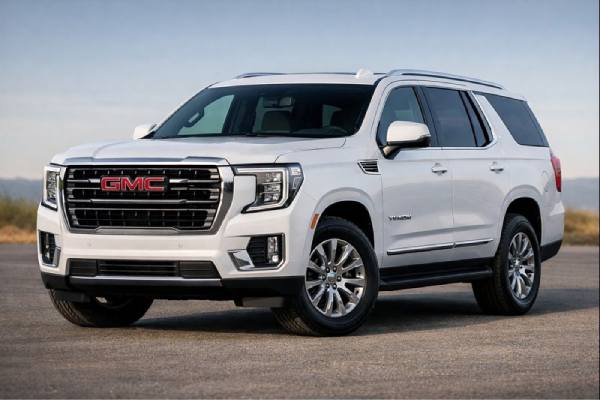
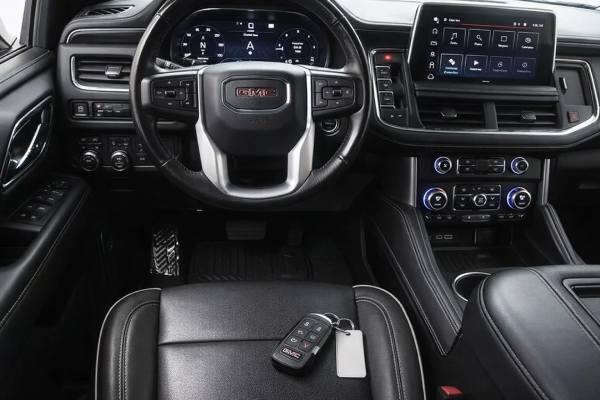
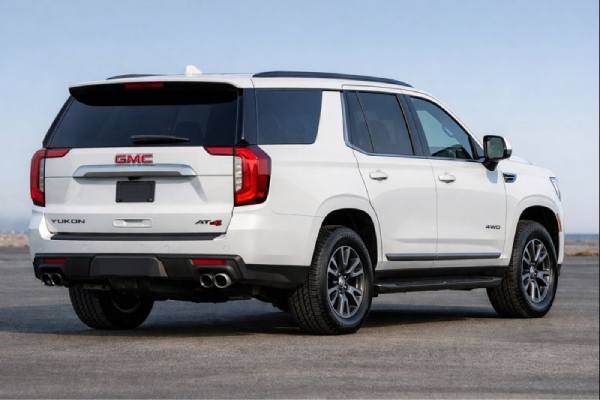
The 2021–2024 GMC Yukon Denali RWD sits in a sweet spot for buyers who want full-size SUV space and towing muscle without stepping all the way into luxury-brand pricing. In Denali form, the 6.2L L87 V8 is the centerpiece: strong output, confident passing power, and a relaxed feel at highway speeds thanks to the 10-speed automatic. This generation also moved to independent rear suspension, which improves ride comfort and third-row packaging compared with older truck-style layouts.
The trade-off is that this is still a large, heavy SUV, so consumables (tires, brakes) and fuel costs can be meaningful—especially if you tow, run 22-inch wheels, or do mostly city driving. If you prioritize long-distance comfort, family hauling, and a traditional V8 driving character, the Denali RWD is one of the more satisfying ways to get there.
Owner Snapshot
- Smooth, strong V8 with effortless highway passing and towing confidence
- Independent rear suspension helps ride comfort and cargo usability
- Denali equipment level is high without needing many “must-have” options
- Watch for L87-related recall and service history before buying used
- Change engine oil at least every 12 months or 12,000 km (7,500 mi)
Navigate this guide
- Denali RWD layout and ownership
- L87 6.2L specifications tables
- Denali features, packages, and ADAS
- Known problems, TSBs, and recalls
- Service schedule and buyer checks
- Performance feel and fuel use
- Denali RWD against competitors
Denali RWD layout and ownership
Denali RWD (T1UG) is the “street-first” expression of the Yukon. The rear-wheel-drive layout keeps the drivetrain simpler than 4WD and typically trims a bit of weight and mechanical complexity. For many owners who live in mild climates and spend most of their time on pavement, that translates to fewer driveline components to service (no transfer case, no front differential, fewer axle seals) while still keeping the Yukon’s core strengths: three-row space, high towing potential with the right equipment, and a calm long-distance ride.
The big engineering shift for 2021+ is independent rear suspension (IRS). Compared with the previous solid axle design, IRS helps ride quality over broken pavement, improves body control on sweeping roads, and frees up space so the third row and cargo area work better. It’s not a sports SUV, but it is noticeably more composed than older body-on-frame SUVs in the same class. The Denali’s tuning generally aims for quietness and stability—exactly what you want in a large family hauler.
Denali trim also changes ownership in a practical way. The cabin materials, seating comfort, available air suspension, and higher-end driver assistance features can make the Yukon feel like a genuine step above mainstream trims. However, those same upgrades can increase long-term costs: larger wheels mean pricier tires, adaptive dampers and air components can age, and the tech load is heavier (cameras, parking sensors, infotainment modules, and driver-assistance sensors).
For real-world fit, two body lengths matter: standard Yukon and Yukon XL. The XL’s extra length mainly benefits third-row legroom “feel” and, more importantly, the cargo area behind the third row—useful if you regularly carry adults in the third row and still need space for strollers, coolers, or luggage.
Who is it best for?
- Families who road-trip and value a quiet cabin, confident passing power, and genuine cargo volume.
- Owners who tow boats or campers a few times per year and want a stable tow platform.
- Drivers who prefer a traditional V8 feel over turbocharged or hybrid power delivery.
Who should think twice?
- Heavy city drivers looking for low operating cost.
- Buyers who need snow traction and frequently travel in poor weather (a good tire helps, but 4WD is still an advantage).
- Anyone who wants “set-and-forget” ownership without paying attention to recalls and service records.
L87 6.2L specifications tables
This section focuses on the 2021–2024 Yukon Denali RWD with the L87 6.2L V8 and 10-speed automatic. Exact figures can vary by year, wheelbase (Yukon vs Yukon XL), axle ratio, wheels/tires, and option packages, so treat the tables as a configuration guide and verify against your VIN build sheet and official service information.
Engine and performance
| Item | Specification |
|---|---|
| Code | L87 (RPO L87) |
| Layout and cylinders | V8, 8 cylinders, OHV, 2 valves/cyl |
| Displacement | 6.2 L (6162 cc) |
| Bore × stroke | 103.25 × 92.0 mm (4.07 × 3.62 in) |
| Induction | Naturally aspirated |
| Fuel system | Direct injection (DI) |
| Compression ratio | 11.5:1 |
| Max power | 420 hp (313 kW) @ 5600 rpm |
| Max torque | 624 Nm (460 lb-ft) @ 4100 rpm |
| Timing drive | Chain |
| Efficiency standard | EPA (U.S.) |
Transmission and driveline
| Item | Specification |
|---|---|
| Transmission | 10-speed automatic (10L80 family) |
| Drive type | RWD |
| Gear ratios (1–10) | 4.69 / 2.99 / 2.15 / 1.80 / 1.52 / 1.28 / 1.00 / 0.85 / 0.69 / 0.63 |
| Final drive ratio | Varies by package; verify by RPO code |
Chassis and dimensions (typical)
| Item | Yukon (std wheelbase) | Yukon XL (long wheelbase) |
|---|---|---|
| Length | ~5334 mm (210.0 in) | ~5720 mm (225.2 in) |
| Width (w/o mirrors) | ~2058 mm (81.0 in) | ~2058 mm (81.0 in) |
| Height | ~1943 mm (76.5 in) | ~1943 mm (76.5 in) |
| Wheelbase | ~3071 mm (120.9 in) | ~3407 mm (134.1 in) |
| Suspension (front/rear) | Independent / Independent (multi-link IRS) | Independent / Independent (multi-link IRS) |
| Brakes (front/rear) | 4-wheel discs | 4-wheel discs |
| Fuel tank (gas) | 91 L (24.0 US gal) | 91 L (24.0 US gal) |
Cargo volume (SAE-style, common published figures)
| Cargo volume | Yukon | Yukon XL |
|---|---|---|
| Behind 3rd row | ~722 L (25.5 ft³) | ~1176 L (41.5 ft³) |
| Behind 2nd row | ~2056 L (72.6 ft³) | ~2656 L (93.8 ft³) |
| Max (seats folded) | ~3480 L (122.9 ft³) | ~4098 L (144.7 ft³) |
Capability and efficiency (typical)
| Item | Typical figure (varies by equipment) |
|---|---|
| 0–60 mph (0–97 km/h) | ~5.8–6.3 s |
| Towing capacity | Up to ~3810 kg (8400 lb) when properly equipped |
| EPA fuel economy (6.2 gas) | Often around mid-teens combined; verify by model year |
Denali features, packages, and ADAS
Denali is less about a single “best option” and more about how you want the Yukon to behave: comfort cruiser, towing workhorse, or tech-forward daily driver. The baseline Denali equipment is already strong—premium interior materials, a high feature count, and a quieter cabin than lower trims. Most buyers then decide between three practical option themes: trailering confidence, ride comfort, and driver assistance.
Trims and quick identifiers
For this article’s scope, the main trim is Yukon Denali (standard wheelbase) and Yukon XL Denali (long wheelbase). Quick tells usually include Denali badging, unique grille treatment, more upscale leather and wood accents, and typically larger wheel packages. If you’re cross-shopping used listings, confirm it’s truly Denali (not a rebadged SLT) by checking the VIN build sheet or RPO codes and the interior equipment list.
Common option packages that change ownership
- Advanced trailering features: Trailer brake controller, camera-based trailer views, and integrated trailer guidance are valuable if you tow more than occasionally. These reduce stress, but they also increase sensor and camera dependencies—keep lenses clean and plan for calibration if a camera module is replaced.
- Air suspension and adaptive damping: If equipped, air ride can improve comfort and help leveling under load. The long-term downside is more complexity: air springs, lines, compressor, and height sensors can eventually require service.
- Wheel and tire packages: 22-inch wheels look great but typically ride firmer and make tire replacement expensive. If you prioritize ride comfort and durability, smaller wheels with taller sidewalls are usually the better ownership move.
Safety systems and driver assistance
Most Yukons of this era include a core suite of driver aids, but standard vs optional can vary by year and package. Typical features you’ll see include:
- Automatic Emergency Braking and Front Pedestrian Braking
- Forward Collision Alert and Following Distance Indicator
- Lane Keep Assist and Lane Departure Warning
- Blind Zone Alert and Rear Cross Traffic Alert (often packaged)
- Adaptive Cruise Control (commonly optional or package-based, depending on year)
Two practical ownership notes matter here:
- Calibration after repairs: Windshield replacement, front bumper work, alignment changes, or camera/radar replacement can require recalibration. That’s normal—but it adds time and cost after collision repairs.
- Tire size and sensor behavior: Mixing tire sizes or running heavily worn tires can affect stability control and some ADAS behaviors. Keep all four tires closely matched in wear and size.
Safety ratings context
Safety ratings can depend on drivetrain, curb weight, and test protocols that change over time. When you shop, verify the specific year and configuration through official databases, and treat “general statements” in listings as marketing unless they reference an official rating source.
Known problems, TSBs, and recalls
A Yukon Denali with the L87 can be a durable long-haul SUV when it’s maintained well, but there are several known patterns worth understanding. The key is to separate “annoying but manageable” from “stop-driving-and-investigate.”
Common or recurring (lower to medium cost)
- Infotainment glitches and camera oddities
Symptoms: freezing screen, intermittent camera feed, Bluetooth drops, occasional warning messages.
Likely cause: software bugs, module communication issues, low 12V battery health.
Remedy: update software where applicable, test the 12V battery and charging system, and document repeatable faults before a dealer visit. - Brake wear and vibration under load
Symptoms: steering shake on braking, faster pad wear, or heat-related fade when towing.
Likely cause: high vehicle mass plus city driving, aggressive wheel/tire packages, or repeated downhill braking.
Remedy: keep brake fluid fresh, use quality pads/rotors, and downshift early on long grades. - Air suspension or adaptive damper aging (if equipped)
Symptoms: uneven ride height, compressor running often, harsh ride, suspension warnings.
Likely cause: air leaks, tired compressor, height sensor faults, or damper wear.
Remedy: diagnose leaks early; ignoring compressor overwork can turn a small leak into a larger repair.
Occasional but higher impact
- Dynamic Fuel Management (DFM) lifter-related concerns
Symptoms: misfires, rough running, ticking, check-engine light, or reduced power.
Likely cause: lifter or valvetrain issues in cylinder deactivation systems (pattern seen across several modern V8 applications).
Remedy: prompt diagnosis, avoid extended driving with a persistent misfire, and keep oil changes consistent (shorter intervals for heavy use). - 10-speed shift quality complaints (varies by calibration and wear)
Symptoms: harsh shifts, shudder, gear “hunting,” or delayed engagement.
Likely cause: fluid condition, adaptive learning behavior, or internal wear patterns in some units.
Remedy: confirm the latest software calibration, follow correct fluid service procedures, and evaluate driveline mounts and tire match.
Recalls and service actions to prioritize
The headline item for this exact engine family is the L87 engine recall affecting certain 2021–2024 GM trucks and SUVs. The safety concern is potential internal engine component defects that can lead to engine damage and loss of propulsion. If you’re buying used, you should treat recall completion proof as non-negotiable.
What to do:
- Run an official recall check by VIN and print/save the result.
- Ask for dealer repair documentation showing recall completion, not just “it should be done.”
- Listen for warning signs (knocking, sudden roughness, warning lights, reduced propulsion messages). Any of these should trigger immediate inspection rather than “drive it and see.”
Finally, remember that a “clean” test drive doesn’t guarantee the absence of a known issue. The better indicator is a clean service history, correct oil service cadence, and clear proof that applicable recall actions and software updates have been completed.
Service schedule and buyer checks
A Yukon Denali RWD rewards owners who treat it like the heavy-duty vehicle it is. The goal is simple: keep fluids fresh, manage heat (especially when towing), and avoid “wait until it breaks” habits with tires, brakes, and the 12V electrical system.
Practical maintenance schedule (typical)
- Engine oil and filter: follow the oil life monitor, but cap it at 12 months / 12,000 km (7,500 mi) for normal use. If you tow, idle a lot, or do short trips, use 6 months / 8,000 km (5,000 mi) as a safer ceiling.
- Engine air filter: inspect every oil change; often 24,000–48,000 km (15k–30k mi) depending on dust.
- Cabin air filter: typically 12 months / 20,000–25,000 km (12k–15k mi), sooner if you notice reduced airflow or odor.
- Brake fluid: every 2–3 years, regardless of mileage, especially if towing or mountain driving.
- Coolant: follow the official interval for your year; inspect level and condition annually and address leaks early.
- Spark plugs: commonly around 160,000 km (100,000 mi) in modern GM V8 applications, but verify by year and service documentation.
- Transmission fluid: if you plan to keep the SUV long term or tow, a conservative service window (often 60,000–80,000 km / 40k–50k mi) is a reasonable durability play, even when the factory schedule is longer.
- Rear differential fluid: inspect and service on a towing-oriented schedule, especially if you notice noise or do frequent heavy loads.
- Tire rotation and alignment: rotate every 10,000–12,000 km (6k–7.5k mi); align annually if you see uneven wear.
- 12V battery test: annually after year three; replace proactively if testing weak—many “random” electronic issues start here.
Fluid specs and decision-grade notes
- Engine oil: dexos-approved 0W-20 is typical for the L87; always verify the exact spec and any recall-related updates for your VIN.
- Transmission fluid: GM low-viscosity ATF is commonly specified for the 10-speed family—use the exact approved fluid.
- Coolant: GM Dex-Cool type (typically 50/50 mix), unless your market differs.
Essential torque values (common decision-makers)
- Wheel lug nuts: about 190 Nm (140 lb-ft) on many Yukon applications (verify for your wheel type).
- Trailer hitch fasteners and suspension bolts: always torque to spec after service—critical for towing stability.
Buyer’s checklist (used Denali RWD)
- Verify the VIN recall status and get documentation for completed recall work (especially engine-related actions).
- Confirm oil change history with dates and mileage, not just “regularly serviced.”
- Inspect tires closely: mismatched brands/sizes or uneven wear can signal alignment issues or poor maintenance.
- Test all cameras and parking sensors: replacement and calibration can be costly.
- Check for suspension warnings and listen for compressor cycling (if air ride is equipped).
- Do a long test drive: include low-speed stop-and-go, highway cruising, and a few strong accelerations to feel for shudder or harsh shifts.
If the SUV passes these checks with clean records, the Denali RWD is one of the more confidence-inspiring full-size SUVs to own long term.
Performance feel and fuel use
With the L87, the Denali’s character is best described as “effortless.” You don’t need to rev it hard to move quickly; the V8’s torque builds naturally, and the 10-speed keeps the engine in its comfort zone. In daily driving, that means easy merges, confident two-lane passing, and less stress when the vehicle is loaded with passengers and gear.
Powertrain behavior
- Throttle response: strong and immediate for a naturally aspirated engine. It feels most lively from low-to-mid rpm, which is exactly where a heavy SUV spends its time.
- 10-speed logic: generally smooth, but it will use multiple downshifts for quick passing. In Tow/Haul mode, it tends to hold gears longer and downshift earlier to control heat and maintain speed on grades.
- Sound and refinement: Denali tuning prioritizes low cabin noise. You still hear the V8 when pushed, but cruising is typically quiet for the segment.
Ride, handling, and NVH
Independent rear suspension helps the Yukon feel less “truck-like” over expansion joints and patchy pavement. The Denali’s steering is tuned for stability more than feedback—light enough for parking lots, steady on the highway. On winding roads, the Yukon behaves predictably, but you feel the mass: smooth inputs and good tires matter more than aggressive driving.
If equipped with air suspension/adaptive damping, the ride can be more controlled under load and more comfortable at speed. The compromise is that large wheels and low-profile tires can make sharp bumps more noticeable, especially in urban driving.
Real-world efficiency
The 6.2L Denali is not bought for fuel savings, and that’s okay—just set expectations correctly.
- City driving: frequent stops and short trips often land in the low-to-mid teens (mpg US) depending on traffic and temperature.
- Highway cruising (100–120 km/h / 60–75 mph): many drivers see mid-to-high teens (mpg US) if speeds are reasonable and tires are properly inflated.
- Mixed use: typically lands in the mid-teens.
Towing changes the picture quickly. Under moderate towing, expect a noticeable consumption penalty; with heavy trailers and high speeds, fuel use can climb sharply. If you tow often, the best “efficiency mod” is driving style: slower highway speeds, early downshifts on grades, and stable trailer setup usually matter more than anything else.
Capability notes that change the verdict
- Passing under load: this is where the 6.2 shines. The Denali stays composed and doesn’t feel strained.
- Braking feel: good when fresh, but the Yukon’s weight means brakes work hard—maintain them proactively if you tow.
- Turning circle and parking: it’s still a big SUV. Cameras and sensors aren’t luxuries here; they’re daily quality-of-life tools.
Denali RWD against competitors
The Yukon Denali RWD competes in a crowded full-size SUV space where each rival has a distinct “best use” personality. The Denali’s strongest argument is balance: strong V8 performance, high-end comfort, real towing capability, and a modernized suspension layout that makes daily driving easier than older body-on-frame designs.
Chevrolet Tahoe High Country (related platform sibling)
If you’re comparing within the GM family, the Tahoe High Country can feel like a close cousin with similar powertrain choices. The decision often comes down to interior design, feature packaging, and price. Denali typically leans into a more upscale presentation, while Tahoe can offer similar fundamentals with different styling and option structure. For buyers who want the same basic engineering with a slightly different value equation, the Tahoe is the first cross-shop to do.
Ford Expedition (3.5L EcoBoost)
The Expedition’s turbo V6 delivers strong low-end torque and can feel quick, especially at altitude where turbos maintain power better than naturally aspirated engines. If you prefer turbo torque and a different cabin layout, it’s a compelling alternative. The Denali counters with classic V8 smoothness, a refined cruising character, and a premium feel that many buyers find immediately familiar.
Jeep Wagoneer (V8-era and newer variants)
The Wagoneer emphasizes size, presence, and comfort, with strong road-trip appeal. In day-to-day ownership, the practical question is service experience and long-term durability expectations in your region. The Denali tends to benefit from a very large dealer and parts ecosystem, which can matter when you’re keeping a complex vehicle for many years.
Toyota Sequoia (hybrid)
The Sequoia is the efficiency-and-torque wildcard. If you want better fuel economy and don’t mind a different power delivery feel, the hybrid approach can make sense. The Denali’s advantage is simpler “V8 logic,” a familiar towing character, and (often) more traditional packaging for cargo and seating depending on configuration.
Nissan Armada (value angle)
Armada can be a strong value play with a traditional V8 feel, but it’s an older design in many respects. If you prioritize modern cabin tech, advanced trailering cameras, and the updated ride benefits of IRS in this class, the Denali usually feels like the newer, more feature-dense tool.
Bottom line
Choose the Yukon Denali RWD if you want:
- A confident, smooth V8 experience with strong real-world passing power
- High-comfort road-trip manners and a premium interior without luxury-brand pricing
- A capable tow platform—especially when properly optioned and maintained
Choose a rival if your priorities are:
- Maximum efficiency (hybrid options)
- Turbocharged torque character (Expedition)
- A different pricing and equipment mix (Tahoe/other trims)
References
- 6.2L L87 V-8 Small-Block Engine | GM Powered Solutions 2025 (Technical Specifications)
- Gas Mileage of 2024 GMC Yukon 2024 (Fuel Economy Database)
- Safety Recall N252494001 L87 Engine Loss of Propulsion 2025 (Recall Bulletin)
- Yukon Models 2024 Features, Specs and Options 2024 (Manufacturer Specifications)
- 2024 Chevrolet Tahoe 4-door SUV 2024 (Safety Rating)
Disclaimer
This article is for informational purposes only and is not a substitute for professional diagnosis, inspection, or repair. Specifications, torque values, service intervals, and procedures can vary by VIN, model year, market, and installed equipment. Always verify details using official owner and service documentation for your specific vehicle.
If this guide helped you, please consider sharing it on Facebook, X (Twitter), or your favorite forum to support our work.