
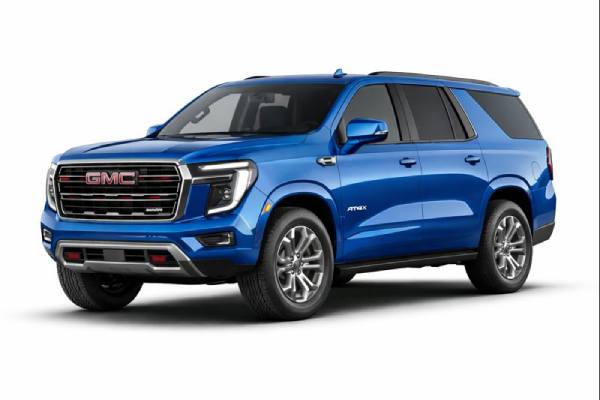


The facelifted 2025–present GMC Yukon 4WD with the L84 5.3L V8 is the “do-everything” version of the T1 full-size SUV idea: body-on-frame strength, a modern 10-speed automatic, and a selectable four-wheel-drive system that expands where and when the Yukon can work. Compared with RWD, the big story is traction and control—snowy driveways, muddy boat ramps, wet grass at campsites, and towing launches become less stressful. The trade-off is added hardware (transfer case, front differential, front axles) that brings extra fluid services and more potential wear points. In ownership terms, this Yukon rewards buyers who choose options with intent (tow package, cooling, brakes, tire size) and who maintain it like a truck: clean fluids, good tires, and regular inspections. Done right, it’s a confident family hauler that can handle real weather and real loads.
What to Know
- 4WD adds real traction on slick ramps, snow, and loose surfaces—especially with the right tires.
- L84 V8 delivers steady, linear power that suits towing and long highway runs.
- Factory tow equipment can matter more than trim level for capability and durability.
- Plan for extra driveline maintenance: transfer case and front differential fluids are part of life.
- Rotate tires every 10,000–12,000 km (6,000–7,500 mi) to keep 4WD systems happy and wear even.
Guide contents
- What this 4WD L84 Yukon is
- Specs tables for L84 4WD
- Options, safety, and driver assist
- Reliability patterns and service actions
- Maintenance and smart shopping
- Driving feel, mpg, and towing
- How it stacks up against rivals
What this 4WD L84 Yukon is
The 2025–present facelift Yukon 4WD with the L84 5.3L V8 sits in the middle of the lineup’s “capability spectrum.” It’s not the most powerful engine offered in the platform family, but it is often the most balanced choice for owners who want full-size space and real traction without chasing peak horsepower. In a practical sense, it’s designed to do three jobs well: carry people comfortably, tow confidently when properly equipped, and handle poor-weather traction with fewer compromises than a rear-drive-only setup.
Powertrain character in one sentence: the naturally aspirated 5.3L V8 delivers predictable response and strong low-to-midrange pull, while the 10-speed automatic keeps the engine in a useful band without constantly feeling busy.
Why 4WD matters on a Yukon: 4WD isn’t just for off-road trails. On a heavy SUV, traction becomes a safety and convenience factor in everyday scenarios—wet leaves on a steep neighborhood road, slushy roundabouts, gravel driveways, and pulling a trailer up a slick ramp. The added front driveline can reduce wheelspin and stability-control intervention, which can feel calmer and more controlled for the driver.
The ownership trade: you’re adding components that will eventually need fluid changes and may need attention as mileage rises. Depending on trim and market, the Yukon’s system may offer multiple modes (such as 2HI, Auto, 4HI, and sometimes 4LO), but the exact mode set and transfer case type can vary. The key point is simple: more capability, more hardware.
Who this configuration fits best:
- Drivers in four-season climates who want confident winter traction without stepping into an off-road-specialist trim.
- Families who road-trip and occasionally tow, especially if they travel in rain, snow, or mountain regions.
- Owners who prefer proven V8 simplicity over turbocharged alternatives, and who will maintain the driveline fluids on time.
Who should be cautious:
If you will never use 4WD and you prioritize lowest operating costs, RWD can be cheaper to maintain. If you frequently tow at the limit or drive steep grades in heat, you’ll want a tow-focused option package and a disciplined service routine.
Specs tables for L84 4WD
This section focuses on practical, configuration-aware specs for the facelift Yukon 4WD with the L84 5.3L V8 (355 hp). Values vary by wheelbase, trim, tire size, axle ratio, brakes, tow package, and market emissions rules—use your VIN build data and door-jamb labels to confirm the exact numbers for your vehicle.
Engine and performance
| Item | GMC Yukon 4WD L84 (typical) |
|---|---|
| Engine code | L84 |
| Layout | V8, naturally aspirated |
| Displacement | 5.3 L (5,328 cc) |
| Fuel system | Direct injection (DI) |
| Valvetrain | OHV (pushrod) |
| Induction | NA |
| Max power | 355 hp (approx. 265 kW) |
| Max torque | Configuration-dependent; typically in the ~380 lb-ft class |
| Timing drive | Chain |
| Emissions standard | Market-dependent (EPA/other) |
Transmission and driveline
| Item | Typical detail (verify by trim) |
|---|---|
| Transmission | 10-speed automatic |
| Drive type | 4WD |
| Transfer case | Type and modes vary (some trims add low range) |
| Front differential | Present (adds fluid service) |
| Rear differential | Open or limited-slip (package-dependent) |
| Axle ratios | Vary with tow/trim and tire size |
Chassis and dimensions
| Item | Notes for owners |
|---|---|
| Suspension | Layout varies by trim and ride-control options |
| Steering | Power-assisted; ratio and tuning vary |
| Brakes | 4-wheel discs; size can change with wheel/tow packages |
| Wheels and tires | Tire size strongly affects ride, cost, and winter traction |
| Ground clearance | Varies; off-road packages may sit higher |
| Turning circle | Large; tire scrub can be a wear factor |
| Curb weight | High; increases brake and tire demand |
Capability and performance (what changes real life)
| Item | What to confirm |
|---|---|
| Towing capacity | Depends heavily on tow package, axle ratio, and cooling |
| Payload | Often the limiting factor with passengers + tongue weight |
| Roof load | Varies; check owner documentation |
| 0–100 km/h (0–62 mph) | Strong for a full-size SUV; not a performance model |
Fluids and service capacities (planning list)
| System | What you need to know |
|---|---|
| Engine oil | Use the specified viscosity and spec; capacity varies by pan/filter |
| Coolant | Use the specified long-life coolant and correct mix ratio |
| Transmission fluid | Use only the specified ATF for the 10-speed family |
| Transfer case fluid | Must be correct spec; service interval depends on duty cycle |
| Front differential fluid | Extra service item vs RWD |
| Rear differential fluid | Spec depends on open vs limited-slip |
| A/C refrigerant | Type and charge are on the under-hood label |
Safety and driver assistance (spec-style summary)
| Item | Notes |
|---|---|
| Crash ratings | Check the official rating body for your exact year/trim |
| Headlights | Ratings can vary by trim and lamp type |
| ADAS | Some features standard, others package-dependent |
Owner tip: For towing and payload, trust the vehicle’s labels first. “Generic” specs are helpful, but your door sticker is the truth for safe loading.
Options, safety, and driver assist
On a 4WD Yukon, options aren’t just comfort upgrades—they can change mechanical behavior, towing confidence, and the long-term cost curve. The goal is to pick equipment that matches your real use rather than stacking features you won’t maintain or benefit from.
Trims and packages that change capability
Tow-focused equipment (high priority if you tow)
Factory trailering content often bundles the pieces that keep a heavy SUV composed under load: integrated brake controller (where offered), hitch and wiring, trailer camera provisions, and cooling upgrades. Even if two Yukons share the same engine, the tow-equipped one usually feels calmer on grades and less “busy” in shifting because the system is designed for heat management.
Transfer case type and 4WD modes
Mode availability varies by trim and market. Some configurations emphasize automatic engagement for mixed traction, while others add a low-range mode for slow-speed control on steep or loose surfaces. When shopping, confirm the mode set on the selector and verify it matches your needs. If you launch boats or travel in deep snow, the right modes matter more than luxury trim.
Wheel and tire packages (quietly important)
Large wheels can improve steering response and appearance, but they can raise tire replacement costs sharply and can reduce sidewall “cushion” over rough roads. For four-season use, a sensible wheel size with a quality all-weather or winter tire often outperforms a wide, summer-leaning tire on large rims.
Safety ratings: how to read them the right way
Safety ratings depend on the testing organization, the test year’s protocol, and sometimes trim-specific equipment like headlights. When you evaluate safety:
- Look up ratings for the exact model year and vehicle class.
- Treat headlights as a safety item, not a styling detail—visibility and glare control are major factors.
- Consider crash prevention technology separately from crash structure; both matter.
ADAS features and what “standard vs optional” really means
Common driver-assistance features include automatic emergency braking, lane keeping support, blind-spot monitoring, rear cross-traffic alert, and adaptive cruise control. On many trims, some are standard while others are package-dependent. Confirm what is installed on the exact vehicle you’re buying—don’t rely on a trim name alone.
Service and calibration implications
Modern camera- and radar-based systems can require recalibration after windshield replacement, front-end repair, wheel alignment, and some suspension work. If the vehicle has had front bumper work or glass replacement, ask for documentation that the shop completed calibrations. It’s a small detail that can protect both safety performance and resale value.
Reliability patterns and service actions
A facelifted model can improve day-to-day usability through software refinements, but it also introduces new calibrations and modules that may take time to mature. The best way to think about reliability on a modern full-size SUV is to separate issues into categories: wear from mass, complexity from electronics, and known risk areas tied to the engine and driveline design.
Common and usually manageable (low to medium cost)
Tire and brake consumption
- Why it happens: curb weight, wheel size, and city driving heat cycles.
- What you feel: vibration under braking, uneven tire wear, noisy pads.
- What helps: regular rotations, quality pads/rotors, correct tire pressures, and alignment checks.
Infotainment or camera glitches
- Why it happens: software updates, module communication, low-voltage events.
- What you feel: screen reboots, camera lag, random warnings that disappear.
- What helps: keep software updated, and treat the 12V battery as a “core system,” not an afterthought.
Occasional (medium cost, can become serious if ignored)
V8 valvetrain and cylinder-management concerns (risk-aware ownership)
- Symptoms: ticking noises, misfire, rough idle, warning lights, reduced power.
- Why it matters: a persistent misfire can damage catalytic converters and escalate costs.
- Owner approach: don’t drive through a misfire, keep oil changes appropriate to duty cycle, and ensure the vehicle receives applicable calibrations.
10-speed shift quality complaints
- Symptoms: harsh low-gear shifts, hunting on grades, shudder at light throttle.
- Common causes: adaptive learning, software calibration needs, or driveline vibration from tires/wheels.
- Fix path: confirm updates first; then verify tire condition, driveline angles, and correct fluid spec if service is needed.
Rare but higher cost (often option-dependent)
4WD system wear points
The added components—transfer case, front differential, front axles—are generally durable, but they add service items and seals that can age.
- Watch for: leaks, binding in tight turns (could be tire mismatch or driveline issue), and unusual noises under load.
- Prevention: keep tire sizes matched and rotate on schedule; mismatched circumference can stress 4WD systems.
Adaptive suspension/air-leveling (if equipped)
- Watch for: uneven ride height, compressor running frequently, warning messages.
- Reality: excellent when healthy, more expensive when it’s not.
Recalls, TSBs, and how to verify
Treat official recall completion as mandatory, not optional. Verify with an official VIN check and dealer documentation. For used purchases, insist on proof—especially for safety and powertrain-related campaigns. Keep a record for future resale and peace of mind.
Maintenance and smart shopping
A 4WD Yukon rewards disciplined maintenance because it carries more weight, more driveline hardware, and often more electronic systems than smaller SUVs. The goal is not to over-service, but to service the right items at the right time—especially if you tow, drive short trips, or see winter salt.
Practical maintenance schedule (distance/time)
Use this as a sensible baseline and adjust for duty cycle (towing, heavy city use, short trips, extreme heat/cold).
| Item | Typical interval | Notes |
|---|---|---|
| Engine oil and filter | 10,000–12,000 km (6,000–7,500 mi) or 12 months | Severe use: shorten interval |
| Tire rotation | 10,000–12,000 km (6,000–7,500 mi) | Helps 4WD driveline and wear balance |
| Engine air filter | 30,000–60,000 km (20,000–40,000 mi) | Dusty use: inspect sooner |
| Cabin air filter | 15,000–30,000 km (10,000–20,000 mi) | Cheap comfort upgrade |
| Brake inspection | Every oil change | Heavy vehicle = frequent checks |
| Brake fluid | Every 2–3 years | Moisture control supports ABS/ESC |
| Coolant | Often 5 years (long-life) | Verify exact spec and interval |
| Transfer case fluid | Duty-dependent | Towing/off-road/snow use can justify earlier service |
| Front differential fluid | 60,000–100,000 km (40,000–60,000 mi) | Earlier if worked hard |
| Rear differential fluid | 60,000–100,000 km (40,000–60,000 mi) | Limited-slip may require specific fluid |
| 12V battery test | Annually after year 3 | Replace proactively if weak |
Fluids and “do not improvise” rules
- Use the specified transfer case and differential fluids; substitutes can create chatter, binding, or accelerated wear.
- Match tire sizes and tread depth across an axle, and keep rotations consistent—4WD systems dislike circumference mismatch.
- If you tow, treat cooling performance as a maintenance item: keep the radiator stack clean and inspect hoses and clamps.
Buyer’s guide: what to inspect before purchase
Paperwork and build clarity
- Confirm tow equipment, axle ratio (if listed), and 4WD mode set.
- Verify recall completion and check for recent software updates.
- Look for consistent oil change history; gaps matter more than brand of oil.
Mechanical walk-around
- Tires: uneven wear hints at alignment or suspension issues.
- Brakes: look for vibration during a test drive and check pad thickness.
- Underbody: inspect for fluid leaks around differentials and transfer case.
Test drive checks
- Low-speed tight turns: should be smooth without binding (binding can indicate tire mismatch or driveline issues).
- Light throttle cruise: watch for shudder and listen for humming that changes with speed (tire or bearing clues).
- Full-stop to gentle takeoff: should feel consistent and not harsh.
A clean, correctly optioned Yukon is usually a better buy than a higher trim with the wrong towing or tire setup for your needs.
Driving feel, mpg, and towing
The facelift Yukon 4WD with the L84 feels like a traditional full-size SUV—stable, substantial, and relaxed—yet the 10-speed transmission and modern chassis tuning keep it from feeling old-fashioned. Where it shines is composure with people and luggage on board and confidence on long highway runs.
Ride, handling, and cabin noise
Ride: With the right tire choice, the Yukon absorbs highway expansion joints and rolling bumps well. Large wheel packages can transmit sharper impacts and raise replacement costs, so if you value comfort and durability, moderate wheel sizes are often the sweet spot.
Handling: Expect predictable responses rather than agility. The Yukon’s mass and height show up in fast direction changes, but it tracks straight with confidence. Steering feel varies by trim and tires; what matters most is stability and consistency—both strong points in this class.
NVH (noise and vibration): Wind noise is usually well managed for the segment. Tire choice has an outsized effect—aggressive tread patterns can make the cabin noticeably louder.
Powertrain behavior in real life
Throttle and torque: The L84 delivers smooth, linear pull. You won’t feel turbo lag, and the engine generally responds naturally to small pedal inputs, which helps with trailer maneuvering and city driving.
10-speed logic: Under load, the transmission will downshift—this is normal and often desirable. A good setup feels decisive, not indecisive. If you tow, a tow/haul mode (when equipped) can reduce hunting and improve engine braking on descents.
Real-world efficiency (what moves the needle)
Fuel use in a full-size 4WD SUV depends heavily on:
- Speed (aero drag rises quickly above 110–120 km/h / 70–75 mph)
- Tire type and pressure
- Short-trip frequency (cold starts hurt economy)
- Payload and towing
A realistic owner strategy is to plan for variability and focus on controllables: keep tires inflated, reduce unnecessary roof accessories, and drive at steady speeds on highways.
Towing and load confidence
When properly equipped, the Yukon can tow substantial loads, but payload is often the real constraint. Tongue weight plus passengers plus cargo can exceed payload before you hit the tow rating. For safer towing:
- Confirm your specific vehicle’s tow rating and payload label.
- Use a weight-distributing hitch when appropriate.
- Expect higher fuel consumption and longer braking distances—plan accordingly.
- Service brakes and driveline fluids more proactively if towing is frequent.
4WD adds traction benefits for launches and low-speed control, but it does not change the laws of physics—tires, brakes, and loading discipline still decide safety.
How it stacks up against rivals
The facelift Yukon 4WD L84 competes in a field where every option is competent, but each carries a different ownership “personality.” Your best choice depends less on brand loyalty and more on how you drive, where you live, and whether you tow.
Versus Chevrolet Tahoe 4WD (closest sibling)
The Tahoe is the mechanical cousin, often differing in styling, packaging, and feature availability. If you’re cross-shopping, compare:
- Tow package content (controllers, cooling, cameras)
- Wheel sizes and tire costs
- Driver-assistance feature availability by trim
- Warranty and dealer support in your area
In many cases, the best deal is the one with the right options and the cleanest service record.
Versus Ford Expedition 4WD (turbo strategy)
The Expedition’s turbocharged V6 approach can deliver strong torque and competitive towing capability. The trade-offs can include additional complexity (turbos, intercooling, heat management) and a different power delivery feel. If you prefer the linear response and traditional sound of a V8, the Yukon L84 has a clear appeal. If you like turbo torque and don’t mind the added complexity, the Expedition may fit.
Versus Toyota Sequoia (hybrid strategy)
Hybrid full-size SUVs can offer strong low-speed response and sometimes better efficiency in mixed driving, but they add high-voltage components and different long-term service considerations. If you prioritize a conventional ICE maintenance profile and want a familiar V8 experience, the Yukon’s approach can feel simpler—though it still requires disciplined servicing.
Versus value-focused alternatives
Some rivals can look attractive on price, but the ownership picture includes tire and brake costs, driver-assistance maturity, interior durability, and resale stability. In this segment, a well-optioned, well-maintained vehicle often beats a cheaper one that lacks tow equipment or needs immediate reconditioning.
The decision shortcut
Choose the Yukon 4WD L84 if you want: full-size space, real-weather traction, V8 smoothness, and truck-like capability with manageable complexity—provided you keep up with driveline fluids and wear items.
References
- Check for Recalls: Vehicle, Car Seat, Tire, Equipment | NHTSA 2025 (Recall Database)
- Large SUVs – IIHS-HLDI 2025 (Safety Rating)
- 2025 GMC Yukon and Yukon XL Offer New Design, Elevated Technology, and First-Ever AT4 Ultimate 2024 (Manufacturer Publication)
- Build & Price: 2025 Yukon | GMC 2025 (Manufacturer Publication)
Disclaimer
This article is for informational purposes only and is not a substitute for professional diagnosis, inspection, or repair. Specifications, torque values, service intervals, and procedures vary by VIN, market, model year, and installed equipment. Always verify details using your official owner’s and service documentation, and follow manufacturer procedures.
If this guide helped, please consider sharing it on Facebook, X/Twitter, or your preferred community group to support our work.