
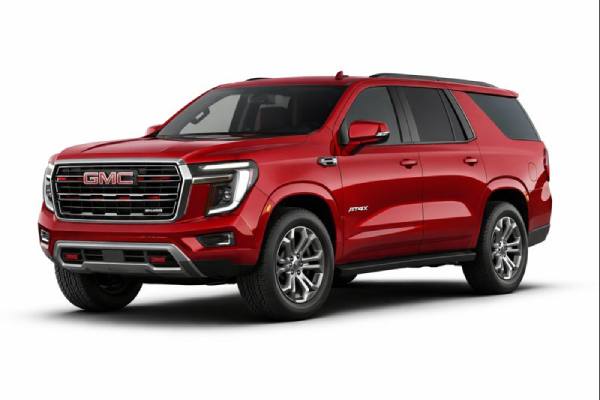
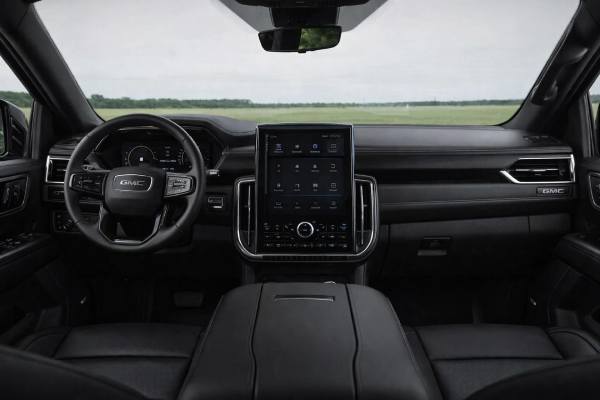
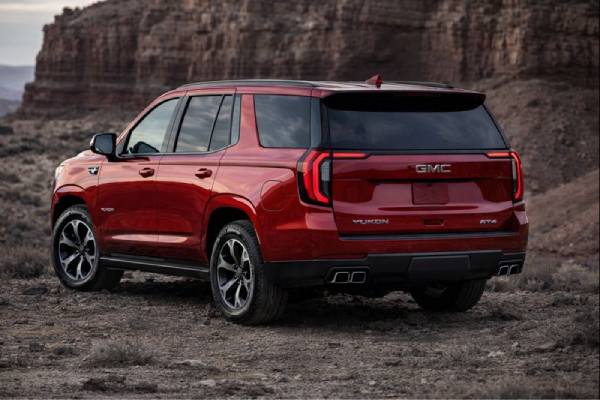
The facelifted 2025–present GMC Yukon RWD with the L84 5.3L V8 is the “core” full-size SUV formula: a body-on-frame chassis, a simple rear-drive layout, and a naturally aspirated V8 paired with a modern 10-speed automatic. For many owners, that combination hits a sweet spot—strong low-speed torque for daily driving and trailering, predictable servicing compared with turbocharged alternatives, and a calmer ownership experience than complex 4WD systems when you don’t need them. The trade-offs are real, though: curb weight is high, tire and brake wear can add up, and the 5.3L’s fuel economy is highly sensitive to speed, payload, and short-trip use. If you buy with the right options and maintain it with “truck logic” (fluids, cooling, and driveline inspections), this Yukon can be a durable long-distance family hauler.
Owner Snapshot
- Confident V8 pulling power for passengers and light-to-moderate towing when properly equipped.
- RWD layout reduces 4WD-related complexity and servicing for drivers in mild climates.
- Big-cabin comfort and highway stability are strengths, especially on long trips.
- Budget for tires, brakes, and alignment—mass and wheel sizes make wear expensive.
- Plan oil changes around 12 months / 10,000–12,000 km (6,000–7,500 mi) (short-trip or towing use: sooner).
Jump to sections
- L84 RWD facelift profile
- L84 specs and capacities
- Trims, tech, and safety gear
- Known faults and service bulletins
- Maintenance schedule and buying tips
- How it drives in real life
- RWD Yukon vs alternatives
L84 RWD facelift profile
This 2025–present Yukon is the refreshed version of GM’s T1 full-size SUV platform, and in RWD/L84 form it’s aimed at owners who want the traditional strengths—space, towing ability, and relaxed V8 power—without paying the weight, cost, and service complexity of a transfer case, front differential, and additional CV joints.
What you’re getting, in plain terms:
- Engine: The L84 is a 5.3L naturally aspirated V8 rated at 355 hp. It’s built for low- and mid-range torque rather than “sports SUV” top-end power, and it’s typically paired to a 10-speed automatic in this application.
- Chassis: Like other full-size GM SUVs, the Yukon rides on a body-on-frame structure. That matters because it tends to feel stable with passengers and cargo, and it tolerates towing and rougher roads well.
- RWD advantages: If you don’t routinely deal with steep snow grades, muddy access roads, or unpaved tow launches, RWD can be a practical choice. There’s less rotating mass and fewer driveline fluids to service, and diagnostics are simpler when something does go wrong.
What the facelift usually changes for owners:
Facelifts in this segment often focus on interior technology, driver-assistance availability, and calibration updates (transmission logic, ADAS tuning, infotainment stability). The mechanical core remains familiar, which is good for parts availability and shop familiarity. The risk, as with any new model-year refresh, is early software “teething,” so you want evidence of dealer updates and a clean service history.
Who this Yukon fits best:
- Families doing long highway trips with occasional towing.
- Owners who want a V8 feel—linear throttle, no turbo lag, and predictable heat management when loaded.
- Drivers in moderate climates who don’t need 4WD traction aids.
Who should think twice:
If your driving is mostly short trips (cold starts, quick shutdowns) or you regularly tow near the limit, you’ll want a stricter maintenance routine, more frequent fluid checks, and careful attention to cooling and braking condition.
L84 specs and capacities
Below are practical, ownership-focused specifications for the facelift Yukon RWD with the 5.3L L84. Some values vary by wheelbase, wheels/tires, brakes, tow package, and seating configuration—verify your exact vehicle using the door-jamb labels and official service documentation.
Engine and performance
| Item | Specification (Yukon RWD L84) |
|---|---|
| Code | L84 |
| Layout | V8, aluminum-block family (truck/SUV spec) |
| Displacement | 5.3 L (5,328 cc) |
| Induction | Naturally aspirated (NA) |
| Fuel system | Direct injection (DI) |
| Valvetrain | OHV V8 (pushrod) |
| Max power | 355 hp (varies by calibration/market) |
| Max torque | Typically in the ~500 Nm / ~380 lb-ft class (verify by VIN/spec sheet) |
| Timing drive | Chain |
| Recommended fuel | Typically regular unleaded in most markets (verify fuel door/owner info) |
Transmission and driveline
| Item | Specification |
|---|---|
| Transmission | 10-speed automatic (truck/SUV duty) |
| Drive type | RWD |
| Differential | Rear open diff common; limited-slip may be package-dependent |
| Final drive ratio | Varies by package/tow rating |
Chassis and dimensions (typical for standard-wheelbase Yukon)
| Item | Typical value (verify by configuration) |
|---|---|
| Suspension (front) | Independent front suspension |
| Suspension (rear) | Multi-link / solid-axle based rear architecture (package-dependent) |
| Brakes | 4-wheel discs; sizes vary with wheels/tow package |
| Wheels and tires | Multiple sizes; larger wheels increase tire cost and impact harshness |
| Length / width / height | Full-size SUV footprint; varies with roof rails, wheels, and trim |
| Wheelbase | Standard wheelbase for Yukon; extended wheelbase is Yukon XL (different model) |
| Turning circle | Large; expect parking-lot planning and higher tire scrub |
| Fuel tank | Large-capacity tank typical for the segment (varies by market) |
| Cargo volume | Highly dependent on 2nd/3rd row position and measurement method |
Performance and capability (real-world oriented)
| Item | What to expect |
|---|---|
| 0–60 mph / 0–100 km/h | Strong “big SUV” acceleration; not a performance SUV |
| Highway passing | Confident at moderate speeds; downshifts are normal under load |
| Towing capacity | Can be high when properly equipped; confirm rating on your vehicle’s label and tow package |
| Payload | Often the limiting factor for family + gear + tongue weight |
Fluids and service capacities (common planning values)
| System | Typical spec (confirm for VIN) |
|---|---|
| Engine oil | 0W-20 class is common; capacity varies with filter and pan design |
| Coolant | Dex-Cool type is common; use the specified mix ratio |
| Transmission fluid | Use only the specified GM ATF for the 10-speed family |
| Rear differential | Gear oil spec depends on diff type (open vs limited-slip) |
| A/C refrigerant | Type and charge vary by build; verify under-hood label |
Electrical
| Item | Notes |
|---|---|
| 12V battery | Size/CCA varies by options (start/stop, audio, towing) |
| Alternator | Output varies by electrical load and packages |
Safety and driver assistance (availability-focused)
| Item | Notes |
|---|---|
| Crash ratings | Ratings can vary by year/test protocol; check the official databases for your exact year/trim |
| ADAS | AEB, lane assistance, blind-spot features often vary by trim/package |
Tip for owners: When you see “varies by configuration” above, treat it as a prompt to look at your door sticker and option codes. For towing and payload, those labels matter more than any generic spec table.
Trims, tech, and safety gear
For the facelift era, Yukon equipment tends to split into two categories: (1) the structural/mechanical pieces that change capability (towing, cooling, brakes, axle ratio), and (2) the comfort/tech layers (seating, infotainment, cameras, driver assistance). For the L84 RWD buyer, it’s the first category that determines whether the SUV feels effortless—or strained—when loaded.
Trims and options that matter mechanically
Tow package and trailering equipment
If you plan to tow, prioritize factory trailering equipment. The best packages typically bundle items like an integrated brake controller, upgraded cooling, wiring, hitch hardware, and tow-oriented drive modes. Even if you tow “only a few weekends a year,” those components reduce transmission heat and brake stress.
Axle ratio and wheel/tire package
Axle ratio (and sometimes tire diameter) changes how the Yukon feels off the line and on grades. A more tow-oriented ratio can improve low-speed pulling and reduce gear hunting. Larger wheels can look great but often raise tire replacement costs and can make the ride sharper on broken pavement.
Suspension choices (if offered on your trim)
Some packages add adaptive damping or air-leveling capability. These can improve ride control and keep the rear from sagging with cargo or tongue weight, but they also add components that may need attention later (compressors, height sensors, air bladders). If long-term simplicity is your goal, the “standard” suspension is often the lowest-risk path.
Tech and cabin options (ownership reality)
Infotainment and camera systems
A large SUV benefits from strong camera coverage—parking and trailer maneuvers are easier, and you’re less likely to curb expensive wheels. If a surround-view camera is optional, many owners consider it worth it.
Seating configurations
Second-row captain’s chairs increase aisle access to the third row; a bench can maximize passenger count. Choose based on how you actually use the vehicle—changing later is usually expensive.
Safety ratings and how to interpret them
Crash-test scores and safety awards can change with test updates and trim-level equipment (especially headlights and advanced crash prevention tech). For a practical buyer:
- Check official sources for your exact year and configuration.
- Treat “available” ADAS as different from “standard.”
- Focus on the features you’ll keep enabled: automatic emergency braking, lane keeping support, blind-spot monitoring, and rear cross-traffic alert are the everyday value plays.
ADAS and service considerations
Modern driver assistance systems rely on cameras and radar sensors that can require recalibration after windshield replacement, front-end repairs, suspension work, or alignment changes. When shopping used, ask for invoices that show proper calibration steps—not just the physical repair.
Known faults and service bulletins
A full-size SUV is a system of systems: engine management, transmission controls, chassis electronics, and infotainment all interact. For the L84 Yukon RWD, the most common ownership pain points tend to fall into predictable buckets: V8 valvetrain behavior under modern cylinder-management strategies, software calibration issues, and wear items stressed by weight.
Below is a prevalence-and-severity map that matches what owners and shops typically see on late-model GM full-size trucks and SUVs. Use it as a checklist, not a prediction—maintenance history and operating conditions matter.
Common (low to medium cost, but annoying)
Infotainment glitches and camera dropouts
- Symptoms: screen freezes, intermittent Bluetooth issues, camera lag, random reboots.
- Likely cause: software stability, module communication errors, or low-voltage events.
- Remedy: verify the latest infotainment and module updates; test 12V battery health and charging performance.
Brake wear and vibration
- Symptoms: steering shake under braking, pulsation, squeal.
- Likely cause: heat cycling and rotor deposits; heavy vehicle + stop-and-go driving.
- Remedy: high-quality pads/rotors, proper bedding, and frequent inspections if you tow or drive hills.
Occasional (medium cost)
Cylinder-management and lifter-related concerns (L84 family risk)
- Symptoms: ticking noise, misfires, rough running, check-engine light, loss of power.
- Likely cause: valvetrain component wear or control issues in systems that deactivate cylinders under light load.
- Remedy: prompt diagnosis (don’t keep driving through a misfire), correct oil viscosity and change intervals, and ensure calibration updates are applied.
10-speed shift quality complaints
- Symptoms: harsh 1–2, shudder under light throttle, gear “searching” on grades.
- Likely cause: adaptive learning, fluid condition, or calibration updates needed.
- Remedy: check for software updates first; if symptoms persist, verify fluid condition/spec and rule out driveline vibration sources (tires, driveshaft balance).
Rare but high-cost (watch for on higher trims)
Air-leveling or adaptive suspension component failures (if equipped)
- Symptoms: rear sag, compressor noise, “service suspension” messages, uneven ride height.
- Likely cause: leaks, tired compressor, sensor faults.
- Remedy: pinpoint leaks early; replacing a compressor without fixing leaks usually repeats the failure.
Cooling system stress under towing
- Symptoms: rising temps on long grades, fan roaring frequently, “reduced power” warnings.
- Likely cause: blocked radiator stack, coolant condition, weak thermostat, or inadequate tow-package cooling for your usage.
- Remedy: keep the cooling stack clean, service coolant on time, and don’t ignore early warning signs.
Recalls, service actions, and how to verify
The only reliable method is an official VIN lookup plus dealer records showing completion. When you shop, run the VIN before you negotiate, and again after purchase—new campaigns can be added later. Save a screenshot or printout for your records.
Maintenance schedule and buying tips
The Yukon’s size and capability mean maintenance is less about “oil only” and more about managing heat, wear, and fluids. If you follow a truck-style routine, the L84 can be straightforward to live with.
Practical maintenance schedule (distance/time)
Use these as planning intervals; always defer to the oil-life monitor and the official schedule for your VIN and duty cycle.
| Item | Typical interval | Notes |
|---|---|---|
| Engine oil and filter | 10,000–12,000 km (6,000–7,500 mi) or 12 months | Short trips, idling, towing: reduce interval |
| Tire rotation | 10,000–12,000 km (6,000–7,500 mi) | Helps prevent cupping and uneven wear |
| Engine air filter | 30,000–60,000 km (20,000–40,000 mi) | Dusty roads: inspect more often |
| Cabin air filter | 15,000–30,000 km (10,000–20,000 mi) | Often cheap; improves HVAC performance |
| Brake inspection | Every oil change | Heavy vehicle = frequent checks |
| Brake fluid | Every 2–3 years | Moisture control matters for ABS/ESC systems |
| Coolant | 5 years (typical long-life) | Verify type and mix ratio |
| Transmission service | Varies by duty | Towing/heat can justify earlier service |
| Rear differential fluid | 60,000–100,000 km (40,000–60,000 mi) | Earlier if towing frequently |
| Spark plugs | Often long-life (high mileage) | Verify exact interval for L84 |
| 12V battery test | Annually after year 3 | Replace proactively if weak; electronics hate low voltage |
Fluid specs and “decision-making” notes
- Oil viscosity: Use the specified grade. On modern V8s with cylinder management, correct viscosity and frequent changes under severe use are cheap insurance.
- Transmission fluid: Use only the specified ATF. Mixing “universal” fluids can create shudder or harsh shifts.
- Diff fluid: Limited-slip units may require an additive or a specific fluid—confirm before service.
Essential torque values (verify by service data)
These are common “planning” torque items many owners ask shops about; treat them as placeholders until verified for your VIN:
- Wheel lug nuts: often in the ~190 Nm (140 lb-ft) class on full-size GM trucks/SUVs
- Engine oil drain plug: commonly ~25–30 Nm (18–22 lb-ft) class depending on pan design
Buyer’s guide checklist (what to inspect)
Paperwork first
- Full service history, especially oil change intervals.
- Proof of recall/service campaign completion via VIN lookup.
- Any towing history: ask directly and inspect accordingly.
Mechanical checks
- Cold start listen: abnormal ticking, misfire feel, or warning lights are deal-breaker signals until diagnosed.
- Transmission behavior: smooth low-speed creep, consistent shifts, no shudder at light throttle.
- Brakes: check for vibration and uneven pad wear.
- Tires: uneven wear suggests alignment or suspension issues (or chronic under-inflation).
Electronics
- Confirm cameras, parking sensors, and driver assistance features work without warnings.
- Check battery and charging system health—many “random” glitches start with low voltage.
Which configurations to seek (and avoid)
- Seek: factory tow equipment if you’ll tow; sensible wheel sizes if you want lower running costs.
- Be cautious: heavily optioned suspension systems if long-term simplicity is the top priority—great when new, pricier later.
How it drives in real life
A Yukon in RWD/L84 form feels like a traditional American full-size SUV, but with a more modern transmission and tighter electronic controls than older generations.
Ride, handling, and NVH
Ride quality:
Expect a stable, “big platform” ride. The Yukon tends to absorb long highway waves well, which is why families like it for road trips. Sharp impacts depend heavily on wheel/tire choice—large wheels with low-profile tires can make potholes feel harsher and increase the chance of wheel damage.
Handling:
This is not a nimble SUV, but it is predictable. Body motion is controlled for the segment, and straight-line stability is a strength. In tight corners, the vehicle’s mass and high center of gravity are always present, so smooth steering inputs and good tires matter.
Noise:
At highway speeds, wind and tire noise are the main factors. Aggressive all-terrain tires can noticeably raise cabin noise; touring tires can make the Yukon feel more “luxury” without changing the trim.
Powertrain character (L84 + 10-speed)
Throttle response and torque feel:
A naturally aspirated V8 delivers power in a linear way. You don’t get turbo surge; you get steady push. Around town, that makes the Yukon feel effortless even with passengers.
Transmission behavior:
The 10-speed’s job is to keep the engine in an efficient band and provide the right gear for grades and passing. Under load, you should expect downshifts—what matters is that they’re consistent and not harsh. Drive modes (when equipped) can change how quickly it downshifts and how it holds gears on descents.
Real-world efficiency
Fuel consumption varies dramatically with speed and use:
- City/short trips: frequent cold starts and stop-and-go driving raise consumption.
- Highway: steady speeds help, but aero drag at 75–80 mph (120–130 km/h) can push consumption up quickly in a large SUV.
- Towing: expect a meaningful increase, especially at higher speeds or in hills.
A practical owner approach is to treat efficiency as a “range planning” issue: keep tires properly inflated, avoid unnecessary roof accessories, and plan towing speeds realistically.
Load and towing impressions
When properly equipped, the Yukon is generally stable with trailers, but your limiting factor is often payload (passengers + cargo + trailer tongue weight). For confident towing:
- Use a weight-distributing hitch when appropriate.
- Keep the cooling stack clean and monitor temps on long grades.
- Don’t ignore brake feel—this vehicle’s mass demands strong braking performance.
RWD Yukon vs alternatives
The L84 RWD Yukon competes less on “spec-sheet bravado” and more on the ownership mix of space, towing confidence, and traditional V8 feel. Here’s how it stacks up against common alternatives.
Versus Chevrolet Tahoe (platform cousin)
The Tahoe is the closest mechanical relative. Differences often come down to trim packaging, interior presentation, and pricing. If you’re cross-shopping, compare:
- Standard safety tech by trim
- Seat comfort and cargo practicality
- Wheel/tire sizes (running costs)
- Tow package content and axle ratio availability
In many cases, the better choice is simply the one with the right options and clean service history.
Versus Ford Expedition (turbo V6 strategy)
The Expedition’s turbocharged V6 approach can deliver strong torque and competitive towing capability. The trade-off is complexity: turbos, intercoolers, and heat management add variables over long-term ownership. If you prefer the simplicity and sound/feel of a naturally aspirated V8, the Yukon L84 has a clear appeal. If you want strong torque at altitude and don’t mind turbo complexity, the Expedition can be compelling.
Versus Toyota Sequoia (hybrid strategy)
A hybrid full-size SUV can shine in low-speed efficiency and response, but hybrids introduce high-voltage components and different long-term service considerations. Toyota’s reputation for durability is a big draw, but some buyers still prefer the conventional maintenance profile of an ICE-only V8 powertrain (even with cylinder-management complexity).
Versus Nissan Armada and other value plays
Value-focused competitors can look attractive on purchase price, but pay attention to:
- Driver assistance availability and calibration sophistication
- Real-world fuel consumption with your driving patterns
- Parts and dealer network strength in your area
Bottom line
Choose the Yukon L84 RWD if you want a classic full-size SUV experience—strong, smooth V8 power; big interior; and fewer driveline components than 4WD. Choose a rival if your priorities lean toward hybrid efficiency, turbocharged torque characteristics, or a different tech/price balance.
References
- 2025 GMC Yukon and Yukon XL Offer New Design, Elevated Technology, and First-Ever AT4 Ultimate 2024 (Manufacturer Publication)
- Build & Price: 2025 Yukon | GMC 2025 (Manufacturer Publication)
- Check for Recalls: Vehicle, Car Seat, Tire, Equipment | NHTSA 2025 (Recall Database)
- Large SUVs – IIHS-HLDI 2025 (Safety Rating)
Disclaimer
This article is for informational purposes only and is not a substitute for professional diagnosis, inspection, or repair. Specifications, torque values, service intervals, and procedures vary by VIN, market, model year, and installed equipment. Always verify details using your official owner’s and service documentation and follow manufacturer procedures.
If this guide helped, please consider sharing it on Facebook, X/Twitter, or your favorite forum to support our work.