
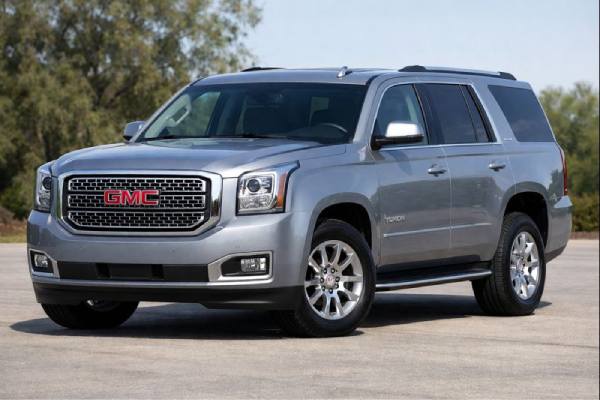
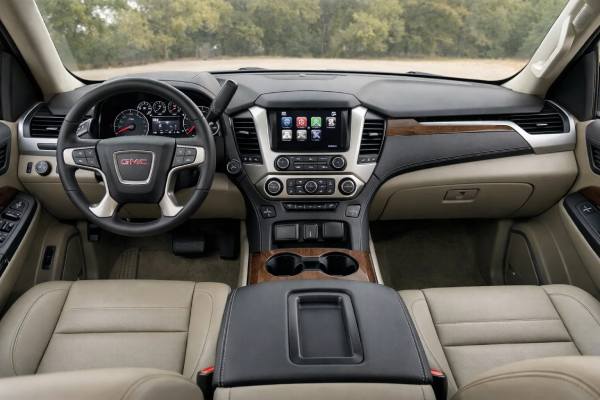
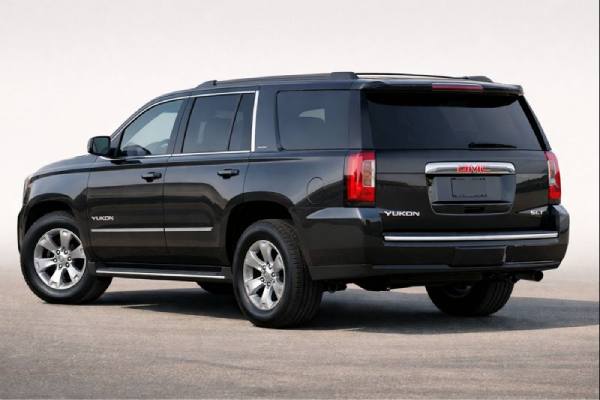
The 2015–2020 GMC Yukon RWD (K2UG) with the L83 5.3L V8 is the “big SUV” formula refined: body-on-frame strength, a modern direct-injected small-block, and road manners that feel calmer than the older generations. In rear-wheel drive form, it’s also the simplest Yukon to own long-term because it deletes the transfer case, front differential, and extra half-shafts—fewer wear items, fewer fluid services, and less drivetrain drag.
The L83’s strengths are low-rpm torque and efficient cruising for its size, helped by cylinder deactivation and tall highway gearing. Where owners need to stay alert is the same place most modern GM V8 trucks can bite: oil quality and change discipline matter, and certain valve-train and transmission behaviors are easier to prevent than to “fix later.” If you want maximum towing stability and straightforward maintenance, this Yukon is a strong candidate—if you buy the right spec and keep up with fluids.
Quick Specs and Notes
- Strong torque delivery and relaxed highway gearing make it an easy long-distance tow rig when properly equipped.
- RWD layout reduces drivetrain complexity and service cost versus 4WD, with slightly better efficiency potential.
- Cabin and chassis feel more modern than GMT900, especially in steering precision and braking confidence.
- Watch for V8 cylinder-deactivation lifter symptoms and address them early to avoid larger repairs.
- Typical engine oil service: every 8,000 km (5,000 mi) or 6 months for mixed short-trip use, even if the oil life monitor allows longer.
Jump to sections
- K2UG Yukon RWD in context
- L83 5.3 specs tables
- Trims packages and safety tech
- Reliability hotspots and recalls
- Maintenance schedule and buying tips
- Real-world driving and mpg
- RWD Yukon vs key rivals
K2UG Yukon RWD in context
This Yukon sits in a sweet spot for buyers who want traditional full-size SUV capability without stepping into the higher running costs of newer turbocharged or hybrid-heavy lineups. The K2UG generation (2015–2020) brought meaningful structural and usability upgrades over GMT900: a stiffer body structure, better noise control, more consistent steering feel (electric power steering), and a cabin layout that finally feels designed around modern daily use. In RWD form, it’s also the cleanest mechanical layout in the range.
From an engineering standpoint, the L83 is the key story. It’s a Gen V small-block with direct injection (DI), variable valve timing (VVT), and cylinder deactivation (often called Active Fuel Management). That combination is why a nearly 2.5-ton SUV can still return reasonable highway fuel economy numbers when driven gently. It’s also why the Yukon rewards owners who treat oil quality, oil level checks, and warm-up habits seriously. DI runs higher fuel pressure, and cylinder deactivation changes load paths in the valvetrain. Those aren’t “fragile,” but they are less forgiving of neglected maintenance than older port-injected V8s.
RWD also shapes the Yukon’s personality. Compared with 4WD models, you typically get:
- Slightly lower curb weight and fewer rotating components, which helps acceleration feel and efficiency.
- Less driveline binding and fewer vibration sources (especially noticeable as mileage climbs).
- Fewer fluid services (no transfer case, no front differential).
- A traction tradeoff: in rain, snow, steep wet ramps, or loose gravel, tire choice and weight distribution matter more.
Where this Yukon shines is as an all-rounder: highway family travel, towing medium-to-heavy trailers, and hauling people plus cargo without the packaging compromises of many crossovers. The platform’s limits are also clear: it’s wide in urban parking, consumables (tires, brakes) are truck-sized, and neglected examples can become expensive quickly because repairs tend to be labor-heavy.
If you’re shopping today, focus less on the badge and more on spec discipline: tow package content, axle ratio, tire type, service history, and whether the vehicle spent its life towing, idling, or short-tripping. Those factors predict ownership satisfaction far more than the model year alone.
L83 5.3 specs tables
Below are specs targeted to the 2015–2020 Yukon RWD with the L83 5.3L V8. Some figures vary by axle ratio, wheel and tire package, emissions certification, and towing equipment. When you’re making buying or service decisions, verify using your VIN build sheet and service information.
Engine and Performance
| Item | Specification |
|---|---|
| Code | L83 |
| Engine layout and cylinders | V8, 8 cylinders; OHV (pushrod) |
| Valvetrain | 2 valves/cyl (16 total), VVT, cylinder deactivation |
| Displacement | 5.3 L (5,328 cc) |
| Bore × stroke | 96.0 × 92.0 mm (3.78 × 3.62 in) |
| Induction | Naturally aspirated |
| Fuel system | Direct injection (DI) |
| Compression ratio | 11.0:1 (typical for L83) |
| Max power | 355 hp (265 kW) @ ~5,600 rpm |
| Max torque | 519 Nm (383 lb-ft) @ ~4,100 rpm |
| Timing drive | Chain |
| Emissions and efficiency standard | EPA (U.S. market) |
| Rated efficiency (typical, 2WD) | 2015: 10.5 / 7.4 / 9.4 L/100 km (22 / 32 / 25 mpg US) equivalent formatting* |
| Real-world highway at 120 km/h (75 mph) | ~11.0–13.0 L/100 km (18–21 mpg US), wind and tires dominate |
*FuelEconomy.gov publishes mpg figures; the L/100 km values above are common conversions and will vary by exact listing, tires, and axle ratio.
Transmission and Driveline
| Item | Specification |
|---|---|
| Transmission | 6-speed automatic (6L80 family) |
| Gear ratios | 1st 4.03 / 2nd 2.36 / 3rd 1.53 / 4th 1.15 / 5th 0.85 / 6th 0.67 / Rev 3.06 |
| Final drive ratio | Commonly 3.08; tow-focused packages may use 3.42 (varies by build) |
| Drive type | RWD |
| Differential | Open standard; locking rear differential may be optioned (build-dependent) |
Chassis and Dimensions
| Item | Specification |
|---|---|
| Suspension (front) | Independent, coil-over style with control arms |
| Suspension (rear) | Solid axle, multi-link with coil springs |
| Steering | Electric power steering |
| Brakes | 4-wheel disc (diameter varies by package; typical ~345 mm front / ~330 mm rear) |
| Wheels and tires | Common: 265/65 R18 or 275/55 R20 (package-dependent) |
| Ground clearance | ~200 mm (7.9 in), varies with tires and suspension |
| Length / width / height | ~5,180 / 2,045 / 1,890 mm (203.9 / 80.5 / 74.4 in) |
| Wheelbase | ~2,946 mm (116.0 in) |
| Turning circle (kerb-to-kerb) | ~11.8 m (38.7 ft), package-dependent |
| Curb weight | Typically ~2,450–2,650 kg (5,400–5,850 lb), configuration-dependent |
| GVWR | Commonly ~3,250–3,330 kg (7,200–7,350 lb), build-dependent |
| Fuel tank | ~98 L (26.0 US gal / 21.6 UK gal) |
Performance and Capability
| Item | Typical figure (varies by tires, axle ratio, load) |
|---|---|
| 0–100 km/h (0–62 mph) | ~7.5–8.5 s |
| Top speed | Electronically limited, typically ~175 km/h (109 mph) |
| Braking 100–0 km/h | ~40–45 m (typical for class; tires matter most) |
| Towing capacity | Up to ~3,800 kg (8,400 lb) with max trailering equipment (verify by VIN) |
| Payload | Often ~650–800 kg (1,430–1,760 lb), configuration-dependent |
Fluids and Service Capacities
| System | Spec and typical capacity (verify by VIN) |
|---|---|
| Engine oil | dexos1-approved 0W-20; ~7.6 L (8.0 US qt) with filter |
| Coolant | Dex-Cool type; 50/50 mix; capacity varies by system |
| Automatic transmission | Dexron VI; service fill varies (pan drop vs overhaul) |
| Rear differential | Synthetic gear oil commonly 75W-90; capacity varies |
| A/C refrigerant | R-134a (typical for this era); charge varies by label |
Electrical
| Item | Specification (typical) |
|---|---|
| Alternator output | Often ~170 A (package-dependent) |
| 12V battery | Group size and CCA vary; many builds use high-CCA truck batteries |
| Spark plugs | Long-life iridium; gap and part number vary by calibration label |
Safety and Driver Assistance
| Area | What to expect |
|---|---|
| Core safety systems | ABS, stability control, traction control, multiple airbags |
| Child seats | LATCH anchors (2nd row); check 3rd-row provisions by year |
| ADAS availability | Forward collision alert and lane alerts often optional; adaptive cruise and parking assists vary widely by year and trim |
| Headlight performance | Depends strongly on housing type and bulb condition; aim for clean lenses and correct aim |
Trims packages and safety tech
For 2015–2020, Yukon trim structure is fairly consistent, but the equipment story is really “packages plus year changes.” The base SLE and mid-level SLT are where most RWD L83 trucks live, while Denali is typically paired with the 6.2L—so when you see an L83 Denali listing, confirm it carefully. Your goal as a buyer is to identify functional hardware (axle ratio, cooling, brake controller wiring, hitch content, and tire spec), not just leather and screens.
Trims and quick identifiers
- SLE: Often cloth interior, simpler wheels, fewer driver aids. Great value if the service history is strong and it has the towing equipment you need.
- SLT: Usually adds leather, upgraded audio options, more comfort features, and more package availability (including safety tech).
- Denali (mostly 6.2L): More standard luxury and suspension options; not the target spec for an L83-focused guide, but worth mentioning because listings sometimes blur the details.
Quick ways to confirm equipment without guessing:
- RPO codes (build codes): Look in the glovebox/door area sticker or ask for the build sheet. Axle ratio, locking differential, towing equipment, and suspension options show up here.
- Hitch and cooling hardware: A true max-trailering style build typically has a more complete hitch setup and added cooling capacity.
- Brake controller presence: Some trucks are pre-wired, some include the integrated controller, and some have aftermarket units. If you tow, this matters.
Options that change ownership
- Tow and trailering equipment: This is the most important option family for this Yukon. It can change axle ratio, cooling, wiring, hitch class, and overall towing confidence.
- Wheel and tire packages: Larger wheels can look great, but tire replacement cost rises and ride compliance can drop. For towing stability, quality tires and correct load rating matter more than diameter.
- Suspension upgrades: Some builds have auto-leveling or premium damping. These can improve control but may increase repair cost later.
Safety ratings and what they mean
This generation sits in an in-between era: it has strong fundamentals (mass, structure, stability control) but many examples lack modern automatic emergency braking that newer SUVs include as standard. That doesn’t make it unsafe—it means you should treat driver assistance as a bonus, not a guarantee.
When you review safety, separate three things:
- Crash-test rating results (which can differ by year and test protocol).
- Equipment installed on your exact vehicle (airbags and sensors can vary).
- Condition and calibration after repairs (a mis-aimed sensor or windshield replacement can affect function).
Driver assistance and service implications
Common systems you may encounter include blind-spot monitoring, rear cross-traffic alert, parking sensors, lane alerts, and forward collision alerts. If your Yukon has radar or camera-based systems:
- Demand evidence of correct calibration after collision repair or windshield replacement.
- Verify that warning lights are not “taped over” problems—scan the system properly.
- Test-drive on a smooth road and a rough road. Some issues only appear with vibration or steering input.
Bottom line: pick the trim for comfort, but pick the packages for capability. A well-optioned SLT with documented maintenance is usually a better buy than a higher-trim truck with unclear history.
Reliability hotspots and recalls
A well-maintained L83 Yukon can run a long time, but it has a few known patterns that show up across GM’s Gen V V8 truck family. The best approach is to think in three buckets: common annoyances, occasional drivability issues, and high-cost failures you want to prevent.
Common issues (often manageable)
- A/C performance drift: Many owners encounter weak cooling that traces to condenser leaks, valve issues, or aging seals. Symptom: gradually warmer vent temps, oily residue on condenser fins. Remedy: proper leak test, replace leaking components, evacuate and recharge to label spec.
- Infotainment glitches and camera faults: Screen freezes, Bluetooth drops, or intermittent camera feed. Symptom: random resets, delayed boot, black screen. Remedy: software updates where available and verify ground connections before replacing modules.
- Suspension and steering wear: Clunks over bumps or vague on-center feel as mileage climbs. Symptom: knock over sharp edges, uneven tire wear. Remedy: inspect control arm bushings, ball joints, alignment, and tire condition.
Occasional issues (watch mileage and usage)
- 6-speed automatic behavior: Some trucks develop torque-converter shudder or shift flare, especially with old fluid or heavy heat cycles. Symptom: vibration under light throttle in higher gears, or inconsistent shifts. Remedy: fluid condition check, correct service procedure, and address early—waiting can increase the repair scope.
- Direct injection deposits: DI can contribute to intake valve deposits because fuel no longer washes the valves. Symptom: rough idle, misfires, reduced efficiency over time (not always dramatic). Remedy: keep oil consumption in check, use quality fuel, and address misfires quickly; professional cleaning may be needed in higher-mileage cases.
High-cost risks (prevention matters)
- Cylinder deactivation lifter problems: The most discussed L83 family risk is lifter behavior related to cylinder deactivation. Symptom: ticking, misfire, check-engine light, sometimes a dead cylinder. Likely cause: lifter sticking or collapsing, sometimes cascading into cam wear. Remedy: diagnose immediately; continued driving can turn a “top-end” repair into a full valvetrain and cam job.
Recalls, TSBs, and how to verify
Do not assume a recall is “too old to matter.” The right process:
- Run the official VIN recall check (free) and print/save results.
- Request dealer service history showing completion where possible.
- Confirm any drivability-related software updates were applied, especially if the truck has shifting complaints or warning lights.
Because recalls and service bulletins vary by build date and supplier, the safest buyer move is verification, not memory. If a seller can’t document recall completion, price the truck accordingly and plan a dealer check immediately after purchase.
Maintenance schedule and buying tips
This Yukon rewards owners who treat it like a truck: frequent checks, consistent fluids, and preventive service before symptoms become expensive. The L83’s best protection is clean oil at the correct viscosity, plus transmission care that matches how the vehicle is used (towing and city heat cycles count as “severe”).
Practical maintenance schedule
Use this as a durability-focused plan for mixed driving and occasional towing:
- Engine oil and filter: every 8,000 km (5,000 mi) or 6 months. If you do many cold starts, short trips, or idle time, shorten to 6,000 km (3,750 mi). Check oil level monthly.
- Engine air filter: inspect every 16,000 km (10,000 mi); replace around 32,000–48,000 km (20,000–30,000 mi) depending on dust.
- Cabin air filter: every 24,000–32,000 km (15,000–20,000 mi) or annually if allergies/dust.
- Transmission fluid: inspect condition at 60,000 km (37,000 mi). If towing or heavy city use, consider a service around 80,000–100,000 km (50,000–60,000 mi).
- Rear differential fluid (RWD): 80,000–120,000 km (50,000–75,000 mi), sooner if towing often.
- Brake fluid: every 2–3 years (moisture control matters for pedal feel and ABS components).
- Coolant: follow the factory interval, but plan an inspection at 5 years and service when condition or history is unclear.
- Spark plugs: commonly around 150,000–160,000 km (100,000 mi), but replace sooner if misfires occur.
- Serpentine belt and hoses: inspect annually; replace belt preventively around 120,000–160,000 km (75,000–100,000 mi) if unknown.
Fluid specs, the short list
- Oil: dexos1-approved 0W-20 (correct spec matters for cold flow and lifter behavior).
- ATF: Dexron VI.
- Coolant: Dex-Cool compatible, correct mix ratio.
- Gear oil: synthetic 75W-90 is common for rear axle, but verify if a locking differential requires additives.
Essential torque values (decision-useful)
These are common “ownership” torque checks; verify for your wheels and fasteners:
- Wheel lug nuts: often ~190 Nm (140 lb-ft)
- Spark plugs: typically in the 20–25 Nm range (15–18 lb-ft) depending on plug design
- Oil drain plug: typically in the 20–30 Nm range (15–22 lb-ft)
Buyer’s inspection checklist
On a test-drive and inspection, prioritize:
- Cold start: listen for abnormal ticking that persists after warm-up; confirm smooth idle.
- Transmission behavior: steady-speed light throttle in top gears should be smooth—no shudder.
- Cooling system: check for dried coolant residue, fan operation, and stable temperature under load.
- Underbody: look for rust at seams and crossmembers, especially on vehicles from salted climates.
- Electronics: verify all cameras, parking sensors, seat functions, and HVAC modes.
- Towing evidence: inspect hitch wear, trailer wiring condition, and rear suspension sag. Towing isn’t bad—neglected towing is.
Best year and spec guidance
If all else is equal, later years often benefit from incremental refinements and updated infotainment. But the “best” Yukon is the one with documented oil services, early transmission care, and a clean diagnostic scan. For most buyers, an SLT with the right towing equipment and a clean history is the durable value play.
Real-world driving and mpg
The RWD L83 Yukon drives like a large, well-sorted truck—because it is one—but it’s more composed than many people expect. Steering is lighter than older hydraulic setups, and the chassis feels less busy on the highway. What you notice most is stability: long wheelbase geometry, wide track, and a calm straight-ahead attitude make it a natural road-trip vehicle. Around town, the tradeoff is size: tight parking lots and narrow streets demand planning, and the turning circle is only “good for the class,” not small.
Powertrain character
The 5.3L’s strength is usable torque, not drama. Throttle response is generally predictable, and the 6-speed automatic aims to keep revs low. Under light load, you’ll often feel the transmission settle into tall gears quickly, especially on flat roads. When you ask for passing power, it can downshift one or two gears, then pull steadily rather than sharply.
Two driving notes matter for ownership:
- Cylinder deactivation feel: Some drivers sense subtle transitions during gentle cruising. Good engine mounts and correct oil help keep it unobtrusive.
- Heat management under load: On long grades with a trailer, the Yukon’s behavior depends heavily on tow equipment and cooling package. Use tow/haul mode early, not after it starts hunting gears.
Ride, handling, and NVH
Ride quality is typically best on the more moderate wheel sizes with higher tire sidewalls. Larger wheels can sharpen steering response but often add impact harshness over potholes. Body roll is present—as expected in a tall SUV—but controlled, and the rear axle stays well-behaved when bushings and shocks are healthy.
Cabin noise depends on tires more than anything else. Aggressive all-terrain tread can turn a quiet Yukon into a droning one at 100–120 km/h. If you value refinement, choose a highway-terrain tire with the correct load rating.
Real-world efficiency
EPA ratings give a helpful baseline. For example, FuelEconomy.gov listings for the Yukon 2WD 5.3 show combined fuel economy in the high teens mpg range depending on year and configuration. In real use:
- City: 13–17 mpg US (18–13.8 L/100 km) depending on traffic and warm-up time.
- Highway (75 mph / 120 km/h): 18–21 mpg US (13.1–11.2 L/100 km) if winds and tires cooperate.
- Mixed towing: expect a meaningful penalty; even a moderate trailer can raise consumption by 25–50% depending on speed and aero.
Towing confidence and stability
A properly equipped Yukon tows with reassuring mass and braking capability, but it’s still sensitive to setup:
- Use a weight-distributing hitch when appropriate.
- Keep trailer tires and Yukon tires at correct pressures.
- Choose brake controller setup that produces smooth, progressive trailer braking.
The best towing Yukons aren’t the ones with the biggest screens—they’re the ones with the correct cooling, axle ratio, and a drivetrain that has been serviced on time.
RWD Yukon vs key rivals
In the 2015–2020 market, the Yukon’s main rivals are the Ford Expedition, Toyota Sequoia, and Nissan Armada. Each has a distinct personality, and your best choice depends on whether you prioritize towing feel, reliability predictability, or cabin packaging.
Versus Ford Expedition
The Expedition is often the performance and space alternative, especially in later model years where turbocharged power and lighter construction can deliver strong acceleration. The Yukon counters with a simpler naturally aspirated V8 character and a long parts-and-service ecosystem. If you do a lot of remote travel or prefer straightforward drivability, the L83 plus traditional automatic can feel less “busy” than turbo powertrains, especially when loaded. If maximum interior volume and quick acceleration are priorities, Expedition can be compelling.
Versus Toyota Sequoia
Sequoia’s reputation leans toward long-haul durability, and its V8 behavior is traditional and robust. The tradeoff is usually efficiency and interior tech modernization for the same years. The Yukon often feels more contemporary in infotainment, cabin design, and steering response, while Sequoia appeals to buyers who want a simpler, proven mechanical feel and can accept higher fuel use.
Versus Nissan Armada
Armada can offer strong value and a powerful V8 feel, often at a lower used price point. The Yukon typically wins on breadth of configurations, towing ecosystem, and the ease of finding service expertise and parts in many regions. Armada can be a smart buy if you find a clean, well-kept example and value comfort-per-dollar, but the Yukon’s market depth makes it easier to shop “by spec.”
Why choose the Yukon RWD specifically
If you don’t truly need 4WD traction hardware, the RWD Yukon has three practical advantages:
- Lower mechanical complexity: fewer driveline parts to service and replace over time.
- Potentially lower running costs: fewer fluids and fewer failure points.
- More predictable long-term feel: fewer rotating components and less driveline lash as mileage builds.
The honest limitation is traction. If you live in snow and must drive during storms, a 4WD Yukon with proper tires may be the safer ownership choice. But in dry climates or for primarily paved-road towing, RWD is often the smarter durability and cost decision—especially when paired with the right tires and a careful maintenance routine.
References
- Gas Mileage of 2015 GMC Yukon 2015 (Fuel economy ratings)
- Gas Mileage of 2020 GMC Yukon 2020 (Fuel economy ratings)
- Vehicle Detail Search – 2019 GMC YUKON SUV RWD | NHTSA 2019 (Recall Database)
- 2020 GMC Yukon 2020 (Safety Rating)
- 15-06-01-002C 1..2 2019 (TSB)
Disclaimer
This article is for informational purposes only and is not a substitute for professional inspection, diagnosis, or repair. Specifications, torque values, fluid capacities, maintenance intervals, and procedures can vary by VIN, market, model year, and installed equipment. Always verify details using your official service information, owner’s manual, and labeling on the vehicle.
If this guide helped, please consider sharing it on Facebook, X (Twitter), or your favorite forum to support our work.