

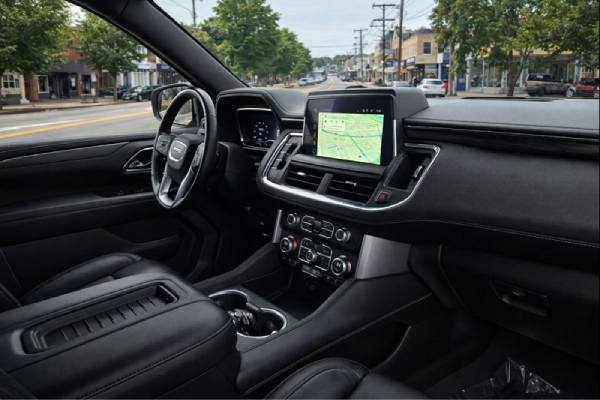
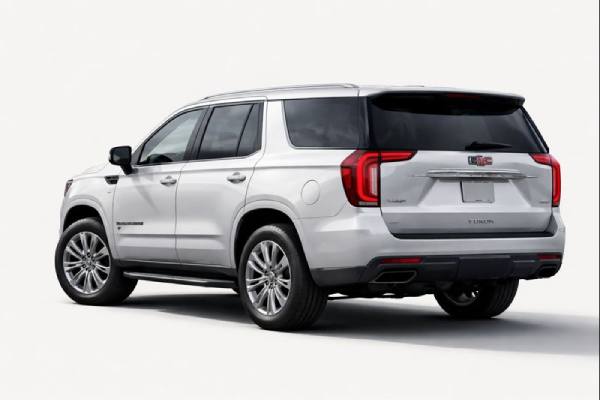
The 2021–2024 GMC Yukon RWD with the LM2 3.0L Duramax diesel is the “long-haul” version of this full-size SUV: strong low-rpm torque, relaxed highway cruising, and better range than the gasoline V8s when conditions are right. The diesel’s character is defined by its turbocharged inline-six design and modern emissions hardware (DPF and DEF-based SCR), so ownership is as much about driving pattern and maintenance discipline as it is about power. In RWD form, the Yukon also keeps weight and driveline complexity down compared with 4WD models, which helps ride smoothness and can reduce service costs over time. If you tow, commute, or rack up miles, the diesel Yukon makes a compelling case—provided you understand fuel-quality needs, filter intervals, and the realities of short-trip diesel use.
What to Know
- Strong low-rpm torque makes towing and highway merging feel effortless, even with passengers and cargo.
- Diesel range is a real advantage for long trips, especially at steady 65–75 mph (105–120 km/h).
- RWD configuration is simpler than 4WD, with fewer driveline service points over the long term.
- Short trips can accelerate DPF loading and EGR soot buildup; occasional longer drives help.
- Plan on engine oil and filter service about every 12,000 km (7,500 mi) or 12 months, depending on your oil-life monitor.
Guide contents
- T1UG Yukon diesel explained
- LM2 specs and capacities
- Yukon trims, packages, and safety
- Reliability hotspots and recalls
- Maintenance schedule and buying tips
- Driving feel and real mpg
- Diesel Yukon versus competitors
T1UG Yukon diesel explained
The T1UG-generation Yukon rides on GM’s newer full-size truck architecture, and in RWD form it delivers the cleanest expression of the platform: fewer driveline parts than 4WD, a slightly lighter curb weight, and a predictable, stable feel on-road. Add the LM2 3.0L Duramax diesel, and the ownership story shifts toward torque, efficiency, and long-distance comfort.
The LM2 is a turbocharged inline-six, which matters for how the Yukon drives. Inline-sixes are naturally balanced, so the engine tends to feel smooth and “long-legged” compared with a big V8 that relies more on displacement than boost. The diesel’s peak horsepower number (277 hp) is not the headline; the torque curve is. Most of the useful pull arrives low in the rev range, so the Yukon doesn’t need to downshift as aggressively on grades or when towing. In normal driving, you’ll often notice lower rpm at cruising speeds and less throttle to maintain speed.
The trade-off is that modern diesels are emissions systems first and engines second. Your Yukon uses a diesel particulate filter (DPF) to trap soot and a selective catalytic reduction (SCR) system that injects diesel exhaust fluid (DEF) to reduce NOx. If you mostly drive short trips, the exhaust may not get hot enough for consistent DPF regeneration (self-cleaning), which can increase soot loading over time. That does not mean the diesel is “bad for city use,” but it does mean you should plan periodic longer drives and avoid repeatedly shutting the vehicle off mid-regeneration.
RWD changes the capability picture too. You still get serious towing potential for a family SUV, but traction is more tire-dependent on slick ramps, wet boat launches, and snow. If your use case includes steep, slippery grades or frequent winter travel, tire choice and weight distribution (tongue weight and cargo placement) become even more important than the drivetrain badge.
Bottom line: the diesel RWD Yukon is at its best as a highway commuter, road-trip vehicle, and moderate-to-heavy tow rig—especially for drivers who value range and easy torque over the sound and simplicity of a gasoline V8.
LM2 specs and capacities
Below is a focused spec set for the 2021–2024 Yukon RWD with the LM2 3.0L Duramax diesel. Exact values can vary by model year, emissions certification, wheel and tire package, and installed trailering equipment, so treat this as a decision-making baseline and confirm for your VIN.
Engine and performance (LM2 3.0 Duramax diesel)
| Item | Specification |
|---|---|
| Engine code | LM2 |
| Layout | Inline-6 (I-6), DOHC, 4 valves/cyl (24-valve) |
| Displacement | 3.0 L (2,993 cc) |
| Bore × stroke | 84.0 × 90.0 mm (3.31 × 3.54 in) |
| Induction | Turbocharged (variable-geometry style), intercooled |
| Fuel system | Common-rail direct injection (diesel) |
| Compression ratio | ~15.0:1 |
| Max power | 277 hp (207 kW) @ ~3,750 rpm |
| Max torque | 624 Nm (460 lb-ft) @ ~1,500 rpm |
| Timing drive | Chain (no routine replacement interval; inspect if noisy or out of correlation) |
| Emissions aftertreatment | EGR + DPF + SCR (DEF) |
Transmission and driveline (RWD)
| Item | Specification |
|---|---|
| Transmission | 10-speed automatic (GM/Ford 10-speed family) |
| Drive type | RWD |
| Typical gear ratios (10-speed) | 1st 4.69 / 2nd 2.98 / 3rd 2.15 / 4th 1.77 / 5th 1.52 / 6th 1.28 / 7th 1.00 / 8th 0.85 / 9th 0.69 / 10th 0.64 |
| Rear differential | Open (locking diff is not a common Yukon option; traction relies on brake-based systems and tires) |
Dimensions and capacities (standard Yukon, not XL)
| Item | Typical value |
|---|---|
| Wheelbase | 3,071 mm (120.9 in) |
| Length | ~5,334 mm (210.0 in) |
| Width (w/o mirrors) | ~2,058 mm (81.0 in) |
| Height | ~1,943 mm (76.5 in) |
| Turning circle | ~12.4 m (40.7 ft) |
| Fuel tank | ~91 L (24.0 US gal / 20.0 UK gal) |
| Cargo volume | ~722 L (25.5 ft³) seats up / ~3,481 L (122.9 ft³) seats down (method varies) |
Performance and capability (real-world ranges)
| Metric | Typical range |
|---|---|
| 0–60 mph (0–97 km/h) | ~8–9 s (trim and conditions dependent) |
| Towing capacity | typically ~3,400–3,720 kg (7,500–8,200 lb) with trailering equipment |
| Payload | typically ~600–770 kg (1,300–1,700 lb), varies widely by trim/options |
Fluids and service capacities (high-level)
| System | Typical guidance |
|---|---|
| Engine oil | DexosD-approved, commonly 0W-20; capacity varies by service fill |
| DEF (diesel exhaust fluid) | Fill as prompted; avoid running low to prevent reduced-power modes |
| Fuel filters | Follow severe-duty schedule if you tow often or buy fuel from low-turnover stations |
If you want one “ownership shortcut,” it’s this: keep fuel and fluids boring—use the correct diesel fuel, keep DEF fresh and clean, and follow the service monitor plus the diesel-specific filter schedule.
Yukon trims, packages, and safety
For 2021–2024, the Yukon lineup usually spans SLE, SLT, AT4, and Denali (plus Denali Ultimate in later years). The LM2 diesel is typically available across multiple trims, but availability can change year to year and may be constrained by supply. When you’re shopping, focus less on the badge and more on the mechanical and functional equipment that affects how the Yukon drives, tows, and ages.
Trims and option packages that matter
Trailering equipment is the big differentiator. Depending on year and trim, packages can add a higher-capacity hitch setup, integrated trailer brake controller, tow/haul programming, extra cooling, and towing mirrors. For a diesel Yukon, these packages matter because they influence tow rating, stability, and drivetrain temperature control on long grades. If towing is part of your plan, prioritize a Yukon with the factory trailering package rather than retrofitting piece by piece.
Suspension choices also change the experience. Most trims use independent front suspension and a rear multi-link with coil springs. Optional air ride (and premium dampers on higher trims) can improve ride comfort and keep the vehicle level under tongue weight, which helps headlight aim and steering feel. The downside is complexity: air compressors, height sensors, and air springs can become long-term maintenance items.
Interior and seating configuration matters for day-to-day value. Bench second rows maximize passenger count; captain’s chairs improve access and comfort. Denali and higher trims tend to add more sound insulation and upgraded audio, which pairs well with the diesel’s quiet, low-rpm cruising.
Safety ratings and what to look for
Full-size SUVs are not always tested by every safety body in every model year, and test protocols change. When ratings are available, confirm the exact year and test version rather than assuming a score carries over. In shopping, treat safety as two layers:
- Structure and restraint systems: multiple airbags, strong occupant cell, and child-seat anchors (LATCH/ISOFIX-equivalent in many markets). Check third-row belt operation and seat latch function, especially if the vehicle has seen heavy family use.
- Active safety and ADAS: many Yukons include a bundle of driver-assistance features such as automatic emergency braking (AEB), forward collision alert, lane-keeping support, blind-spot monitoring, and rear cross-traffic alert. Adaptive cruise control and higher-end camera systems may be standard only on higher trims or specific packages.
A practical note: ADAS repairs can require calibration after windshield replacement, bumper work, or wheel alignment. If you buy a Yukon with advanced camera and radar features, budget for correct calibration—not just “it seems fine”—because small aiming errors can cause nuisance warnings or reduced system performance.
Reliability hotspots and recalls
The diesel Yukon can be a durable high-mileage SUV, but reliability is strongly shaped by usage pattern (short-trip city driving vs long steady runs), towing frequency, and maintenance consistency. The best way to think about issues is by prevalence and cost tier—then match that to your driving.
Common, usually medium-cost concerns
- DPF regeneration behavior (common, medium):
Symptoms: frequent “cleaning exhaust filter” messages, elevated idle, a hot smell after parking, or reduced fuel economy over a tank.
Likely cause: repeated short trips that don’t allow the DPF to regenerate fully.
Remedy: change driving pattern (periodic longer drives), ensure the engine reaches full temperature, and avoid shutting off mid-regeneration when possible. If warnings persist, a dealer may need to perform a forced regeneration and check sensors. - EGR and intake soot buildup (common, medium):
Symptoms: rougher idle, reduced responsiveness, or recurring emissions-related codes.
Likely cause: normal diesel soot and EGR (exhaust gas recirculation) operation, accelerated by short trips.
Remedy: correct oil and fuel, occasional longer drives, and diagnostic checks for sticking valves or sensor drift. - NOx or exhaust sensors (common, medium):
Symptoms: check-engine light, emissions warnings, or reduced-power strategies.
Likely cause: sensor aging, contamination, or wiring issues.
Remedy: proper diagnostic scan before replacing parts; software updates can sometimes reduce false triggers.
Occasional, higher-impact issues
- Transmission shift quality (occasional, medium to high):
Symptoms: harsh 1–2 or 2–3 shifts, flare, shudder under light throttle, or delayed engagement.
Likely cause: adaptive learning issues, fluid condition, or valve-body wear in some cases.
Remedy: confirm software updates, perform correct fluid service where applicable, and avoid “parts swapping” without data. A well-maintained 10-speed can be smooth, but ignored symptoms can get expensive. - Cooling system components (occasional, medium):
Symptoms: coolant smell, low coolant warnings, or temp swings under load.
Likely cause: hose connections, thermostatic valves, or coolant control components aging.
Remedy: pressure test and correct coolant spec; address leaks early to protect turbo and emissions systems.
Low-prevalence, high-cost risks to keep in mind
- Turbocharger and actuator faults (rare, high):
Symptoms: loss of boost, limp mode, whistling changes, or heavy smoke.
Likely cause: actuator failure, sensor issues, or boost leaks; occasionally oiling problems.
Remedy: diagnose boost control and charge-air plumbing first; use high-quality oil and correct intervals to protect turbo bearings.
Service actions, software, and recalls
Because recalls and field actions vary by year and VIN, your best practice is simple:
- Run the VIN through an official recall database.
- Ask a dealer to print the warranty history and completed campaigns.
- Confirm the latest engine and transmission calibrations are installed, especially if you notice shift behavior or emissions warnings.
For pre-purchase, request evidence of diesel-specific care: clean fuel filter service history, DEF use, and documentation that warning lights were properly diagnosed rather than cleared.
Maintenance schedule and buying tips
A diesel Yukon rewards routine. The goal is not just “change oil,” but to keep the emissions system, fuel system, and cooling system healthy so the engine stays efficient and trouble-free.
Practical maintenance schedule (typical, confirm for your VIN)
Every 12,000 km (7,500 mi) or 12 months
- Engine oil and filter (use the correct diesel-rated specification, commonly DexosD 0W-20).
- Tire rotation; inspect brakes and suspension joints.
- Check DEF level and top up with fresh, sealed DEF if needed.
Every 24,000–36,000 km (15,000–22,500 mi)
- Replace cabin air filter (more often in dusty climates).
- Inspect engine air filter; replace earlier if you tow on dirt roads.
Every 32,000–48,000 km (20,000–30,000 mi)
- Diesel fuel filter service (many diesel owners treat this as “do not skip,” especially if fuel quality is uncertain).
- Drain any water separator if equipped and specified.
Every 5 years
- Brake fluid flush (moisture control matters for pedal feel and corrosion).
- Coolant service at the manufacturer interval for the exact coolant type used.
As-needed, but plan ahead
- Automatic transmission service: follow the official schedule; towing and hot climates usually move you toward a shorter interval.
- Rear differential fluid: consider earlier service if you tow frequently.
- Serpentine/accessory belt and hoses: inspect at service visits; replace on condition or at the recommended mileage.
Fluids, parts, and torque values (decision-level)
- Oil: use the exact diesel oil spec listed for your model year; the wrong oil can increase ash loading in the DPF over time.
- DEF: store sealed DEF away from heat; do not use contaminated funnels.
- Torque values: for critical fasteners (lugs, suspension, hitch), rely on factory specs—incorrect torque can create vibration, uneven tire wear, or hitch issues.
Buyer’s guide: what to check before you commit
1) Emissions health and driving pattern
Ask how the vehicle was used. A diesel that lived on the highway often behaves better than one used for repeated 2-mile school runs. Look for a history of emissions warnings or repeated dealer visits for the same codes.
2) Trailering equipment match
If you plan to tow, buy a Yukon already equipped with the factory trailering package and brake controller. It usually costs less than retrofits and keeps tow ratings straightforward.
3) Suspension and electronics
Test every camera angle, parking sensor, and driver-assistance feature. For air suspension, listen for the compressor, check ride-height behavior, and inspect for uneven stance after sitting overnight.
4) Fluids and service proof
Diesels are less forgiving of neglected fuel filtration and incorrect oil. A clean, well-documented service history is worth paying for.
Overall durability outlook: with correct oil, fuel filter discipline, and smart driving habits, the LM2 Yukon can be a strong long-term keeper—especially for high-mileage owners.
Driving feel and real mpg
On the road, the diesel Yukon feels more “effortless” than fast. The inline-six’s smoothness and the turbo-diesel torque curve make the SUV feel calm even when it is loaded. You’ll notice it most in three scenarios: merging, climbing grades, and towing.
Ride, handling, and NVH (noise, vibration, harshness)
The T1UG Yukon is tuned for stability, and in RWD form the steering and chassis feel straightforward. The steering is typically light at parking speeds and steadies up on the highway. Body control depends heavily on wheel and tire size and whether the vehicle has premium dampers or air suspension. Larger wheels can sharpen response but often add impact harshness over broken pavement.
Cabin noise at highway speeds is where the diesel can shine. At a steady cruise, the engine often sits at low rpm and blends into the background, especially in trims with extra sound insulation. Around town, you may hear more diesel clatter when cold, but it usually fades once warm.
Powertrain character and transmission behavior
The diesel’s throttle response is best described as “torque-first.” It does not need to rev to feel strong; instead, it pulls early and steadily. The 10-speed transmission tries to keep the engine in its efficient band, which can mean frequent but subtle shifts in gentle driving. When calibrations and adaptives are healthy, shifts are nearly invisible. If you feel repeated harshness or shudder, treat it as a diagnostic item rather than “that’s just how they are.”
Drive modes (when equipped) can change shift mapping and throttle sensitivity. Tow/haul mode generally holds gears longer, improves engine braking strategy, and can reduce heat buildup under load.
Real-world efficiency (what owners typically see)
Your results depend on speed, wind, tires, and payload more than most people expect:
- Highway (60–75 mph / 100–120 km/h): the diesel often delivers its best results here, especially on steady terrain.
- City: short trips reduce efficiency because warm-up losses are higher, and frequent DPF management events can add fuel use.
- Mixed use: many owners land in the “good for a full-size SUV” range, but it’s not magic—big tires, roof racks, and heavy throttle erase gains.
Towing and load behavior
With a moderate trailer, the diesel’s low-end torque helps the Yukon feel composed. The key is temperature management: long grades and hot days are where proper cooling and the correct trailering package matter. Expect a meaningful fuel-economy penalty when towing—often a double-digit percentage—depending on trailer shape and speed. A weight-distributing hitch (when appropriate) and correct tire pressures improve stability and braking confidence.
If you want a Yukon that feels relaxed at 70 mph with a family and gear, the diesel delivers that “easy pace” better than most gasoline alternatives.
Diesel Yukon versus competitors
The diesel Yukon RWD sits in a narrower niche than the typical V8 full-size SUV: it’s aimed at drivers who value range, towing composure, and highway efficiency more than peak horsepower or off-road hardware. Here’s how it generally compares.
Versus Chevrolet Tahoe diesel (same platform, different badge)
Mechanically, the Tahoe diesel and Yukon diesel are close relatives. The differences are usually packaging, trim strategy, and feature availability. Yukon buyers often prioritize interior presentation and available tech bundles. If you’re choosing between them, shop the specific vehicle’s equipment and condition—service history matters more than the grille.
Versus Ford Expedition (gasoline turbo V6)
A turbo gasoline V6 competitor can feel quicker in short bursts and may avoid diesel emissions complexity (no DEF). However, on long highway runs, the diesel Yukon can offer better range per tank and a calmer low-rpm towing feel. If your driving is mostly short trips, the gasoline option may be simpler and more forgiving.
Versus Toyota Sequoia (hybrid in newer generations)
A hybrid full-size SUV can deliver strong low-speed torque and good around-town drivability without diesel aftertreatment concerns. The trade is that hybrids add their own complexity (battery, power electronics), and real-world highway efficiency may not always beat a diesel at steady speeds. If your use is mixed city plus highway and you keep vehicles a long time, compare warranty coverage and long-term service costs.
Versus premium diesel SUVs
Some premium SUVs offer diesel-like torque with a different cost structure and often less towing focus. The Yukon’s advantage is its truck-based capability, cabin space, and serviceability across a wide dealer and independent shop network.
Who should pick the diesel Yukon RWD?
Choose it if you:
- Drive long distances regularly and want fewer fuel stops.
- Tow moderate loads and prefer torque and stability over sporty acceleration.
- Want a large, comfortable SUV but don’t need 4WD hardware.
Skip it if you:
- Mostly drive short, cold-start trips with little highway time.
- Want maximum traction in winter without changing tires or driving habits.
- Prefer the simplest ownership path and plan to neglect maintenance (the diesel will not forgive it).
When the use case fits, the diesel Yukon is a smart, adult choice: quiet, capable, and efficient for its size—best enjoyed by owners who treat maintenance as part of the value equation.
References
- Gas Mileage of 2021 GMC Yukon 2021 (Official Economy Data)
- Check for Recalls: Vehicle, Car Seat, Tire, Equipment | NHTSA 2025 (Recall Database)
- Owner Manuals | GMC 2024 (Owner’s Manual Portal)
- 2021 Chevrolet/GMC 3.0L Duramax Diesel Engine Supplement 2021 (Owner’s Manual Supplement)
Disclaimer
This article is for informational purposes only and is not a substitute for professional diagnosis, repair, or safety inspection. Specifications, torque values, fluid types, service intervals, and procedures can vary by VIN, market, model year, and installed equipment. Always verify details using your official owner’s manual, service information, and dealer documentation for your specific vehicle.
If this guide helped you, please consider sharing it on Facebook, X, or your favorite forum to support our work.