
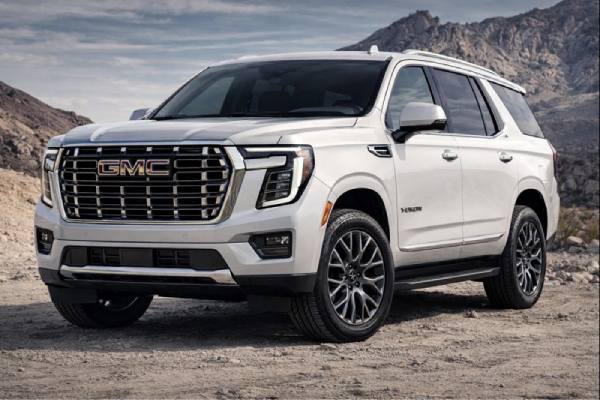
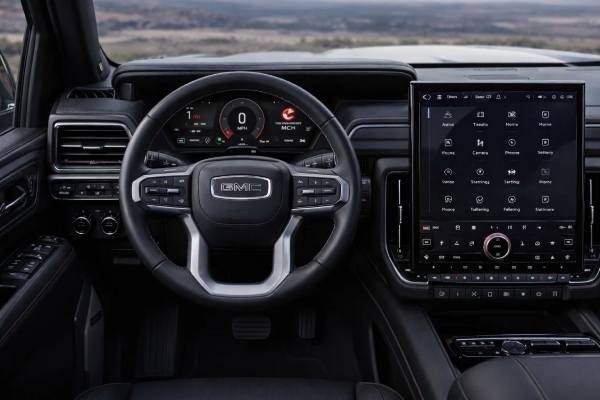
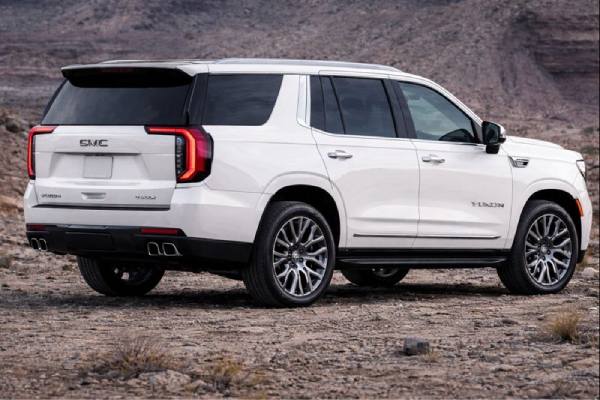
The facelift-era GMC Yukon RWD with the LZ0 3.0-liter Duramax turbo-diesel is built for owners who want full-size SUV space and towing confidence without living at the fuel pump. The diesel’s defining trait is low-rpm torque—the kind you feel when merging, climbing grades, or pulling a trailer—paired with a 10-speed automatic that keeps the engine in its sweet spot. In RWD form, it also avoids the extra front driveline weight and complexity of 4WD, which can help with cost and service simplicity.
Where the ownership story gets more specific is emissions hardware. Modern diesels run clean, but they do it with systems that need correct fluids, healthy sensors, and occasional highway use to complete regeneration events. If your driving pattern matches that reality, the Yukon diesel can be one of the most relaxed long-distance cruisers in the class.
What to Know
- Strong towing and grade performance thanks to diesel torque delivered at low rpm
- Efficient for a full-size SUV, especially on steady highway runs
- Smooth, quiet cruising character for long trips compared with many gasoline V8 setups
- Emissions components (DPF and DEF system) can add cost if used mostly on short trips
- Plan oil and filter service around 12,000–16,000 km (7,500–10,000 mi) or the oil-life monitor, whichever comes first
Section overview
- 2025 Yukon diesel identity
- LZ0 Duramax specs tables
- Trims, tow gear, and ADAS
- Diesel reliability and campaigns
- Service schedule and buying tips
- Driving feel and mpg reality
- Yukon diesel vs key rivals
2025 Yukon diesel identity
This Yukon configuration is a very particular blend: body-on-frame strength, rear-wheel-drive simplicity, and a modern turbo-diesel inline-six tuned for real work. In practice, that means it feels less like a “big crossover” and more like a comfortable light-duty truck with a third row—especially when you load it up or hitch a trailer.
The LZ0 diesel’s advantage is not just fuel economy; it is how it makes power. Instead of building speed with revs, it leans on torque, so you get calmer throttle inputs and fewer dramatic downshifts in day-to-day use. That can make the Yukon easier to drive smoothly in traffic and less tiring on long highway stretches. RWD also keeps the steering feel a bit cleaner than the 4WD setup, and it can reduce maintenance items over time (no front differential, no transfer case, fewer CV joints).
The tradeoff is traction. If you routinely deal with steep, icy driveways, muddy launches at a boat ramp, or deep snow, 4WD can be worth the extra hardware. With RWD, tire choice matters more—an all-season that is merely “fine” on an AWD crossover may feel limited on a heavy RWD SUV.
The other defining piece is emissions control. The Yukon diesel uses a diesel particulate filter (DPF) to trap soot and a DEF (diesel exhaust fluid) system to reduce NOx emissions. These systems usually behave quietly in the background—until driving conditions work against them. Frequent short trips in cold weather, lots of idling, or repeated stop-and-go runs can interrupt DPF regeneration and increase the chance of warning lights. Owners who regularly do 20–30 minutes of steady-speed driving tend to have fewer issues.
If your typical week includes highway time, moderate towing, and long family trips, the diesel Yukon RWD is often at its best: stable, unhurried, and surprisingly efficient for its size.
LZ0 Duramax specs tables
Below are practical, owner-facing specs for the standard-wheelbase Yukon RWD with the LZ0 3.0-liter turbo-diesel. Some figures vary by trim, tire size, cooling package, and tow equipment, so treat capacities and ratings as “typical” and verify by VIN and door-jamb labels.
Engine and performance
| Item | Specification |
|---|---|
| Code | LZ0 |
| Engine layout and cylinders | Inline-6, DOHC, 4 valves/cyl (24-valve) |
| Displacement | 3.0 L (2,993 cc) |
| Induction | Turbocharged (diesel) |
| Fuel system | High-pressure common-rail direct injection |
| Bore × stroke | 84.0 × 90.0 mm (3.31 × 3.54 in) |
| Compression ratio | ~15:1 (market-dependent) |
| Max power | 305 hp (227 kW) @ rpm (diesel-rated) |
| Max torque | 671 Nm (495 lb-ft) @ rpm (diesel-rated) |
| Timing drive | Chain |
| Emissions and efficiency standard | EPA (U.S. market), aftertreatment with DPF and DEF |
| Rated efficiency (2WD, EPA) | 10.2 L/100 km (23 mpg US / 27.6 mpg UK) combined; 11.2 (21 / 25.2) city; 9.0 (26 / 31.2) highway |
| Real-world highway @ 120 km/h (75 mph) | Commonly ~8.5–10.5 L/100 km (22–28 mpg US / 26–34 mpg UK), depending on tires, wind, load, and temperature |
Transmission and driveline
| Item | Specification |
|---|---|
| Transmission | 10-speed automatic |
| Drive type | RWD |
| Gear ratios (typical 10-speed) | 1st 4.69 / 2nd 2.99 / 3rd 2.15 / 4th 1.77 / 5th 1.52 / 6th 1.28 / 7th 1.00 / 8th 0.85 / 9th 0.69 / 10th 0.64 |
| Final drive ratio | Varies by axle and tow equipment (commonly in the low-3s) |
| Differential | Open standard; limited-slip or locking function may be package-dependent |
Chassis, dimensions, and capacities
| Item | Specification |
|---|---|
| Platform | T1 (T1UG application) |
| Suspension (front/rear) | Independent front; multi-link rear with coil springs |
| Steering | Electric power steering |
| Length / width / height (approx.) | 5337 mm (210.1 in) / 2057 mm (81.0 in) / 1920 mm (75.6 in) |
| Wheelbase (approx.) | 3071 mm (120.9 in) |
| Turning circle (kerb-to-kerb, approx.) | 12.1 m (39.7 ft) |
| Fuel tank (typical) | ~91 L (24.0 US gal / 20.0 UK gal) |
| Cargo volume (approx., SAE) | 722 L (25.5 ft³) seats up; 2056 L (72.6 ft³) behind 1st row; up to ~3480 L (122.9 ft³) max |
Performance and capability
| Item | Typical result (varies by trim and tires) |
|---|---|
| Acceleration 0–100 km/h (0–62 mph) | ~7.8–8.6 s |
| Top speed | Electronically limited (often ~170–180 km/h / 106–112 mph) |
| Braking 100–0 km/h (62–0 mph) | Often ~40–43 m (131–141 ft) with good tires |
| Towing capacity (properly equipped) | Commonly up to ~3629 kg (8000 lb) in 2WD form (verify per trim and tow package) |
| Payload | Often ~650–750 kg (1430–1650 lb), equipment-dependent |
Fluids and service capacities
| System | Fluid (typical) | Notes |
|---|---|---|
| Engine oil | dexosD 0W-20 | Capacity varies by configuration; confirm by VIN/service info |
| Coolant | Dex-Cool (50/50) | Capacity varies; confirm by VIN |
| Transmission | Dexron ULV (10-speed) | Service strategy varies with duty cycle |
| Rear differential | 75W-90 gear oil | If equipped with a locking/limited-slip function, follow the correct additive/spec |
| DEF tank | Diesel Exhaust Fluid | Consumption depends heavily on load and towing |
| A/C refrigerant | R-1234yf | Charge varies by trim and rear HVAC equipment |
| Key torque specs | Lug nuts commonly 190 Nm (140 lb-ft) | Always follow wheel and fastener spec for your exact wheel package |
Safety and driver assistance (high-level)
| Area | What to expect |
|---|---|
| Core safety | Multiple airbags, stability control, trailer sway strategies (when equipped) |
| ADAS availability | AEB, lane support, blind-spot features, parking assists (standard/optional varies by trim) |
| Hands-free driving | Super Cruise availability depends on trim and package strategy |
Trims, tow gear, and ADAS
Facelift-era Yukon equipment strategy matters because the diesel can be package-sensitive. In some model-year launches, the diesel may appear as “late availability,” and certain seat or technology combinations can be restricted. The most buyer-friendly approach is to decide your priorities first—diesel, seating layout, trailering tech, and driver assistance—then confirm the exact build you want is orderable.
Trim walk-through (typical U.S. lineup)
- Elevation / SLT-style mid trims (market-dependent naming): These are often the best value if you want the diesel primarily for road-trip efficiency and daily comfort. Look for the cooling and trailering equipment you need rather than cosmetic packages.
- AT4 and off-road-focused trims: Even in RWD form, these can bring tougher tires and underbody-oriented hardware, but the true off-road advantage usually comes with 4WD. Still, they can be attractive if you want the interior and tech mix.
- Denali and Denali Ultimate: Luxury-focused trims add bigger wheels, upgraded sound, richer interiors, and more available tech. Bigger wheels can reduce ride compliance and may slightly hurt real-world economy.
Trailering and towing options that change the experience
If towing is part of your plan, prioritize functional options over styling:
- Integrated trailer brake controller for consistent braking feel and safer downhill control.
- Upgraded cooling (often bundled with trailering packages) to reduce heat stress on long grades.
- Hitch guidance and trailer camera provisions if you tow often—these reduce stress and improve hook-up accuracy.
- Axle ratio and tire package matched to towing use. A “sporty” wheel/tire setup can be less stable or less durable under frequent heavy towing.
Also confirm whether your chosen configuration includes the towing assist features you care about (blind-spot trailering support, hitch view, and smart trailer integration). These can be the difference between “it can tow” and “it tows confidently.”
Safety systems and ADAS
Most Yukons are available with a strong set of driver aids, but the key is standard vs optional. When comparing vehicles, ask whether the following are included without extra packages:
- Automatic emergency braking and forward collision alert
- Lane keeping or lane departure prevention (and whether it is gentle or intrusive)
- Blind-spot monitoring and rear cross-traffic alert
- Adaptive cruise control availability (and whether it works smoothly in traffic)
- Surround-view cameras and parking sensors (very useful on a wide SUV)
If you’re shopping used later, verify features in the vehicle menus and by build sheet—badges and trim names don’t always guarantee a specific ADAS bundle.
Diesel reliability and campaigns
The LZ0 3.0 Duramax is a sophisticated diesel, and reliability is best understood as a mix of core engine durability and emissions-system dependability. The rotating assembly and block architecture are built for torque, but the ownership cost curve can change quickly if sensors, heaters, or aftertreatment components fail out of warranty.
Common vs occasional vs rare issues
Common (pattern-driven)
- DPF regeneration interruptions: Symptoms include a soot-load warning, reduced power, or frequent regen requests. Root cause is often repeated short trips, cold starts, and idle-heavy use. Remedy is driving pattern adjustment (steady highway run), ensuring correct oil spec, and addressing any underlying sensor faults that prevent regen completion.
- DEF usage surprises: High consumption can happen with heavy towing, high speed, or extended idling. If consumption spikes suddenly, it can also indicate a dosing or NOx-sensor issue.
Occasional (depends on conditions)
- NOx sensor faults and heater issues: Symptoms can include a check-engine light, emissions warnings, or reduced-speed modes. Root cause is usually sensor degradation, wiring/connector issues, or heater element faults in cold climates. Remedy is proper diagnosis (sensor vs harness) and correct calibration updates if required.
- EGR system deposits: Symptoms include rough running, fault codes, or reduced efficiency. Root cause is soot and condensation patterns in certain drive cycles. Remedy can involve cleaning/replacement and verifying software updates.
Rare (higher-cost tier)
- Turbocharger control problems: Symptoms include poor boost response or limp mode. Root cause can be actuator/control faults, vacuum/pressure leaks, or contamination. Remedy is targeted diagnostics before replacing the turbo assembly.
- Oil pump drive belt service (design-dependent): Some modern light-duty diesels use a belt to drive the oil pump. The key is following the manufacturer’s service strategy and not ignoring timing-related noises or correlation codes. Belt service is typically a major labor event if required, so it’s worth asking about in long-term ownership planning.
Software, calibrations, and campaigns
On modern full-size SUVs, a surprising share of “reliability” is software and module coordination—engine, transmission, emissions, and ADAS all talk to each other. If you experience odd shift behavior, regen frequency changes, or repeated sensor codes, ask the dealer to check for:
- Engine and transmission calibration updates that address drivability
- Emissions-system update campaigns (if any apply to your VIN)
- Camera/radar recalibration requirements after windshield, bumper, or suspension work
Pre-purchase checks that reduce risk
- Confirm diesel oil specification used at prior services (wrong oil can accelerate DPF/ash issues).
- Check for consistent highway use in the vehicle’s history, especially in cold climates.
- Scan for stored emissions-related codes and check readiness monitors.
- Inspect for exhaust leaks, soot traces, or unusual smells after a test drive.
- Verify recall and campaign completion by VIN and service records.
Service schedule and buying tips
A diesel Yukon rewards disciplined maintenance. The goal is not just longevity; it’s preventing expensive emissions and fuel-system issues that often start small. Below is a practical schedule for typical mixed use, with “severe duty” notes for towing, frequent short trips, and dusty conditions.
Practical maintenance schedule
| Item | Typical interval | Notes |
|---|---|---|
| Engine oil and filter | 12,000–16,000 km (7,500–10,000 mi) or oil-life monitor | Use the correct diesel oil spec; shorten interval for towing/short trips |
| Engine air filter | Inspect every 12,000–16,000 km; replace 24,000–48,000 km (15,000–30,000 mi) | Dusty roads and towing shorten life |
| Cabin air filter | 24,000 km (15,000 mi) or yearly | More often in polluted/dusty areas |
| Fuel filter / water separation | Follow the official interval; consider earlier if fuel quality is uncertain | Water in diesel fuel is expensive—don’t ignore warnings |
| DEF refill | As needed (often every few thousand km) | Keep sealed DEF and avoid contamination |
| Transmission fluid | Duty-cycle dependent (earlier for frequent towing) | Heat is the enemy; towing-focused service is smart |
| Rear differential fluid | 72,000–120,000 km (45,000–75,000 mi) | Shorter with towing or high heat |
| Brake fluid | Every 2 years | Moisture control protects ABS modules |
| Brake pads/rotors | Inspect every tire rotation | Heavy vehicles eat brakes faster in city use |
| Tires | Rotate every 10,000–12,000 km (6,000–7,500 mi) | Keep alignment in spec to avoid expensive wear |
Diesel-specific “do this and you’ll spend less” habits
- Give it a weekly steady run: Even 20–30 minutes at consistent speed helps the DPF complete regeneration and keeps the system happier.
- Don’t stretch oil changes on short-trip use: The oil-life monitor is helpful, but short trips and cold starts justify a conservative interval.
- Use clean DEF and keep the filler area clean: DEF contamination can cause costly dosing problems and sensor faults.
- Watch battery health: Diesels rely on strong cranking and stable voltage for modules and heaters; a weak 12V battery can cause “ghost” faults.
Buyer’s inspection checklist
- Check for coolant or oil leaks around turbo plumbing and charge-air components.
- Listen for unusual whistling, surging, or hesitation under moderate throttle.
- Verify all cameras, parking sensors, and ADAS features work; calibration can be expensive.
- Inspect tires for uneven wear (alignment or suspension bushing issues).
- If towing matters: confirm hitch hardware, brake controller function, and cooling package presence.
Long-term durability outlook
With the right driving pattern and correct fluids, the diesel Yukon can be a durable long-distance SUV. The biggest ownership risk is not the engine block itself; it’s neglected maintenance, repeated short trips, and delayed attention to emissions warnings.
Driving feel and mpg reality
The diesel Yukon’s road personality is defined by calm thrust and low effort. You do not need to “spin it up” to get moving; the torque arrives early and stays useful through normal passing speeds. In daily traffic, that makes the Yukon feel lighter than its curb weight suggests, especially once rolling.
Ride, handling, and noise
For a body-on-frame SUV, the Yukon can be impressively settled on the highway. The long wheelbase and mass smooth out expansion joints, and the cabin tends to stay quiet at cruise. The diesel helps here: at steady speeds it often runs at low rpm, reducing the busy engine note that some gasoline V8s maintain under load.
Handling is predictably truck-like: stable in a straight line, slower to change direction, and sensitive to tire choice. Large wheels with low-profile tires can sharpen response but typically reduce ride comfort and increase impact harshness. If comfort is a priority, favor smaller wheels with taller sidewalls.
Powertrain character and 10-speed behavior
The 10-speed automatic generally complements the diesel well by keeping the engine in its torque band. Under moderate acceleration you’ll feel smooth, frequent ratio changes rather than dramatic downshifts. In hilly terrain or when towing, the transmission may hold gears longer to manage heat and maintain boost; that’s normal. If you notice hunting between gears on gentle grades, it’s often improved by using tow/haul mode or selecting a different drive mode.
Efficiency in real use
EPA-style ratings for the 2WD diesel Yukon land around 21 mpg city, 26 mpg highway, and 23 mpg combined (about 11.2 / 9.0 / 10.2 L/100 km respectively). In the real world:
- Highway cruising is where the diesel shines, especially at moderate speeds and with lighter wheel/tire packages.
- City driving can narrow the advantage if you idle often or run short trips that never fully warm the powertrain.
- Cold weather typically reduces efficiency and can increase regen frequency, which also affects consumption.
Towing and load behavior
With a moderate trailer, the diesel’s advantage is how relaxed it feels. It can pull grades without constant high-rpm noise, and the cooling and brake controller options (when equipped) make a bigger difference than raw horsepower. Expect a noticeable consumption penalty when towing—often a double-digit percentage increase depending on speed, trailer shape, and wind. The best towing setup is usually the one with the right cooling and camera support, not necessarily the flashiest trim.
Yukon diesel vs key rivals
The Yukon diesel sits in a narrowing niche: full-size SUVs are trending toward gasoline turbo engines, hybrids, or high-output V8s. That makes the diesel’s combination of torque and highway efficiency both distinctive and, for the right owner, very compelling.
Closest sibling: Chevrolet Tahoe diesel
In many ways the Tahoe is the Yukon’s nearest competitor because it shares much of the underlying engineering. Differences come down to styling, packaging, interior themes, and how options bundle. If you’re cross-shopping, compare:
- Availability of diesel with your preferred trim and seating layout
- Ride quality differences from wheel packages
- Driver assistance packaging (some features may be easier to get on one than the other)
Ford Expedition (gas turbo)
The Expedition’s turbo gasoline powertrain tends to feel quicker in some passing situations and can be simpler in emissions ownership terms (no DEF). But if you do long highway trips or tow frequently, the diesel Yukon’s low-rpm pull and steady efficiency can feel more natural and less stressed.
Jeep Wagoneer and Grand Wagoneer
These often compete on cabin size, presence, and features. They can be strong tow vehicles, but their powertrains typically emphasize horsepower and refinement rather than diesel-style efficiency. If your use is mostly urban and you value a big, premium cabin, they’re worth a look. If you rack up highway kilometers, the diesel Yukon usually has the advantage in range-per-tank behavior.
Toyota Sequoia hybrid
The Sequoia leans into hybrid torque and modern efficiency, but its packaging and third-row/cargo tradeoffs can matter for families. The Yukon’s traditional full-size layout may be better if you routinely use all three rows and carry gear.
Who should choose the Yukon diesel RWD?
Choose it if you:
- Drive long distances, travel often, or want better highway efficiency in a full-size SUV
- Tow regularly and value low-rpm torque and calmer grade performance
- Prefer RWD simplicity and will invest in good tires for your climate
Skip it (or choose gas/4WD) if you:
- Mostly do short trips with long idle time and little highway driving
- Need maximum winter traction and regularly drive in deep snow or mud
- Want the simplest emissions ownership path over the next decade
References
- 2025 GMC Yukon | Large SUV | GMC 2025 (Manufacturer Specifications)
- Fuel Economy of 2025 GMC Yukon 2025 (Official Fuel Economy Data)
- 2025 Chevrolet Tahoe 4-door SUV 2025 (Safety Rating)
- NHTSA Announces Model Year 2025 Vehicles for 5-Star Safety Ratings Testing 2024 (Safety Program Update)
Disclaimer
This article is for informational purposes only and is not a substitute for professional inspection, diagnosis, or repair. Specifications, torque values, service intervals, capacities, and procedures vary by VIN, market, trim, and equipment. Always verify details using official owner information, service documentation, and your vehicle’s labels before performing maintenance or authorizing repairs.
If you found this guide useful, please consider sharing it on Facebook, X (Twitter), or your favorite forum to help others find it.