
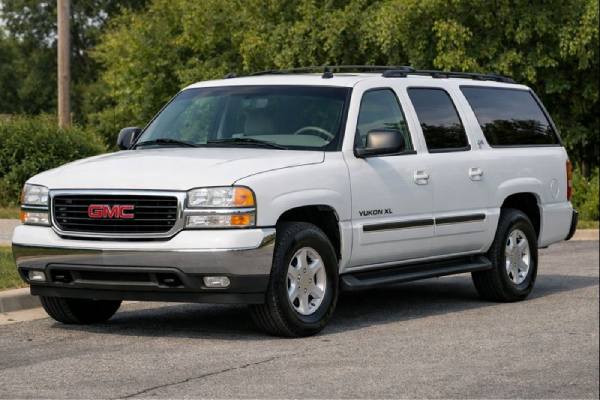
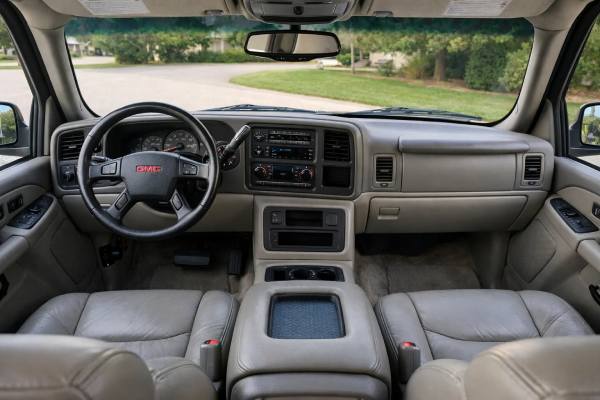
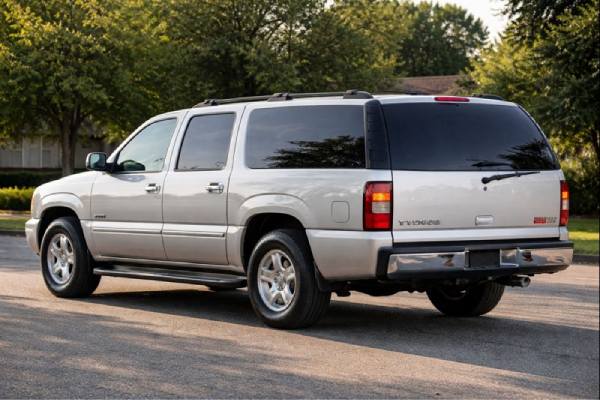
If you want the longest GMT800 Yukon XL with the heavy-duty running gear, the 2500 4WD is the “work truck in an SUV suit.” The LQ4 6.0L V8 focuses on durability and steady torque rather than high-rpm drama, and the 2500 chassis brings 8-lug hubs, LT tires, stronger axles, and typically the 4L80-E automatic—hardware that matters if you tow, haul, or drive rough roads regularly. The tradeoffs are predictable: more weight, firmer ride on E-rated tires, and higher fuel use than a 1500. But owners who stay ahead of fluids, cooling, and driveline wear often keep these trucks reliable for a very long time, especially when the 4WD system is exercised and serviced instead of ignored.
Essential Insights
- Heavy-duty 2500 driveline and typically a 4L80-E make it a strong choice for regular towing and load carrying.
- The LQ4 6.0L favors long-term durability and parts availability over cutting-edge efficiency.
- 4WD adds capability, but transfer-case and front-end wear can become expensive if maintenance is skipped.
- Plan on checking and servicing driveline fluids (transfer case and differentials) about every 80,000 km (50,000 mi) when used for towing or harsh conditions.
- Expect real-world fuel consumption to climb quickly with speed, tire size, and trailer weight—budget accordingly.
Quick navigation
- What this 2500 4WD is
- LQ4 and chassis specs
- Trims, options, and safety
- Common problems and remedies
- Maintenance and buying strategy
- Real-world driving and towing
- Rivals and better fits
What this 2500 4WD is
The GMT800 Yukon XL 2500 4WD sits in a narrow but useful niche: maximum interior volume with the heavier-duty components normally associated with ¾-ton trucks. Compared with a 1500 Yukon XL, the 2500 typically brings higher-rated suspension pieces, LT tires on 8-lug wheels, stronger axles, and cooling capacity meant to survive long pulls at higher combined weights. That matters in the real world because towing stability and powertrain temperature control are what separate “can tow” from “tows all day.”
The LQ4 6.0L V8 is part of GM’s LS-based truck family (cast-iron block in this application), and it’s best understood as a torque-and-longevity engine. It is not stressed for its output, it has broad parts interchange across GM trucks of the era, and most repairs are straightforward for a competent shop. The engine’s reliability reputation is tied less to internal failures and more to the supporting systems: fuel delivery, cooling, sensors, and exhaust hardware that age over two decades.
The 4WD system is the other major identity piece. Depending on year and equipment, you’ll see a traditional 2-speed transfer case, and on some trims an automatic mode that can apportion torque to the front axle when slip is detected. This adds traction in snow, mud, and wet ramps, but it also adds wear points: the transfer case itself, the front axle actuator system, CV joints (if equipped), and front hub bearings. A 2500 4WD that spends its life towing and seeing winter road salt needs more underbody inspection and more consistent driveline fluid service than the same truck in a dry climate.
Finally, expectations: this is a large, heavy SUV with a tall profile. It can be very stable when set up correctly (tires, alignment, brakes, load distribution), but it rewards owners who treat it like a working platform rather than a “set it and forget it” commuter.
LQ4 and chassis specs
Below are practical, owner-focused specifications for the Yukon XL 2500 4WD (GMT800) with the LQ4 6.0L and the typical heavy-duty drivetrain. Exact figures can vary by model year, axle ratio, and RPO codes, so treat these as representative and verify against the vehicle’s door sticker and service information.
Engine and performance (ICE)
| Item | Spec |
|---|---|
| Engine code | LQ4 |
| Layout | V8, OHV pushrod |
| Valvetrain | 2 valves/cyl (16V total) |
| Bore × stroke | 101.6 × 92.0 mm (4.00 × 3.62 in) |
| Displacement | 6.0 L (5,967 cc) |
| Induction | Naturally aspirated |
| Fuel system | Sequential MPFI |
| Timing drive | Chain |
| Max power | 300 hp (224 kW) @ rpm varies by calibration |
| Max torque | ~360 lb-ft (~488 Nm) @ rpm varies by calibration |
| Recommended fuel | Regular unleaded |
Transmission and driveline (typical 2500 4WD)
| Item | Spec |
|---|---|
| Transmission | 4-speed automatic (commonly 4L80-E on 2500) |
| Common gear ratios | 2.48 / 1.48 / 1.00 / 0.75 (Rev 2.07) |
| Drive type | 4WD |
| Transfer case | 2-speed; type varies by year/trim (verify by RPO tag) |
| Differentials | Typically open; locking rear diff may be optioned (verify RPO) |
| Typical axle ratios | 3.73 common; 4.10 often paired with tow-focused setups |
Chassis and dimensions (representative)
| Item | Spec |
|---|---|
| Platform | GMT800 (body-on-frame) |
| Wheelbase | 3,302 mm (130.0 in) |
| Overall length | 5,570 mm (219.3 in) |
| Turning circle (kerb-to-kerb) | ~13.6 m (44.5 ft) |
| Ground clearance (approx.) | ~180 mm (7.1 in) |
| Kerb weight (varies by equipment) | roughly 2,600–2,900 kg (5,800–6,400 lb) |
| GVWR (common) | ~3,901 kg (8,600 lb) |
Capability (real-world relevant)
| Item | Spec |
|---|---|
| Towing (max, configuration-dependent) | up to ~5,443 kg (12,000 lb) |
| Payload | typically ~520–680 kg (1,150–1,500 lb), options-dependent |
| Fuel tank | 140.0 L (37.5 US gal) for Yukon XL 2500 |
Fluids and service capacities (key items)
| System | Spec |
|---|---|
| Engine oil | GM6094M oil meeting API specs; common viscosity 5W-30; 5.7 L (6.0 US qt) |
| Transfer case fluid (many 4WD setups) | ~1.9 L (2.0 US qt) (fluid type varies; confirm by RPO/label) |
| Wheel lug torque (critical) | 190 Nm (140 lb-ft) |
Electrical (typical)
| Item | Spec |
|---|---|
| Electrical system | 12 V |
| Battery | size and CCA vary; check tray/label |
| Alternator | output varies by option content |
Safety and driver assistance (era-accurate)
| Item | Spec |
|---|---|
| Crash ratings | Check by exact year/variant in official databases (testing varies by configuration) |
| Airbags | Front airbags standard; side airbags may be optional by year/trim |
| Stability/traction systems | ABS standard; traction and stability features vary by year/trim (verify RPO) |
| ADAS | Modern features like AEB/ACC/LKA generally not present on this generation |
Trims, options, and safety
For 2000–2006, Yukon XL trim structure usually centers on SLE and SLT, with Denali models existing on the Yukon line (and Yukon XL Denali on some years). On the 2500 specifically, availability can be narrower than a 1500, and the “mechanical truth” of the vehicle often comes down to axle ratio, differential type, and tow/cooling equipment rather than the badge on the liftgate.
Trims and equipment patterns to know
- SLE vs SLT often separates interior comfort and convenience (seat materials, audio, power features) more than core mechanical strength. A well-optioned SLE 2500 can be mechanically identical to an SLT 2500 if they share the same axle ratio, tow package, and differential.
- Seating configurations can vary (bench vs captain’s chairs, front 40/20/40), and the interior “tell” is usually the second-row setup plus whether the truck has rear HVAC controls and vents. If you care about long-distance family duty, confirm rear HVAC operation and blend-door behavior during the test drive.
- Tow and cooling packages are where the 2500 earns its keep. Look for signs of factory trailering equipment: receiver style, 7-pin connector, transmission cooler lines and auxiliary coolers, and a stable brake controller wiring setup.
Quick identifiers before you decode anything
If you only have five minutes with a seller, do this:
- Check the tire type: LT-metric, Load Range E tires often indicate the 2500 duty cycle and matching suspension intent.
- Look at lug count: 8-lug wheels are a fast visual confirmation you’re in 2500 territory.
- Scan for tow hardware: receiver, 7-pin, and evidence of weight distribution use (shiny wear points, hitch hardware marks).
- Look for a glovebox sticker or RPO list (if present): it’s the cleanest way to confirm axle ratio and differential type.
Safety ratings: how to interpret them on a 2000–2006 truck
This is the era where you should treat safety as a mix of design fundamentals and maintenance condition:
- Testing differences: crash-test results can differ by year, test protocol, and exact configuration. Many owners see “a star rating” and assume it transfers across all variants—it does not. Always look up the exact model year and drivetrain in official databases.
- What matters most in ownership today: brakes, tires, and suspension condition can change stopping distance and emergency stability more than any original brochure claim. A 2500 on mismatched tires or tired shocks can feel far less secure than it should.
Safety systems and “driver assistance” (in the modern sense)
Expect basic systems, not today’s automated safety tech:
- ABS is common, and it should cycle smoothly without pulling. If the ABS light is on, treat it as a real repair item—not a cosmetic dash issue.
- Traction and stability availability varies by year/trim and sometimes by GVWR. If present, confirm it functions by checking for warning lights and verifying wheel speed sensor behavior (common failure point on older trucks).
- Child seats: look for tether anchors and the condition of seat belts. A family-hauling Yukon XL should have belts that retract crisply and latch positively.
Common problems and remedies
A good way to think about reliability on a 20+ year-old Yukon XL 2500 4WD is “systems aging,” not “one fatal flaw.” Below is a prevalence-and-cost map, followed by symptom → cause → remedy guidance that matches how these trucks typically fail in the real world.
Prevalence and cost tier map
Common (low to medium cost)
- Front hub bearings and wheel speed sensors
- Transfer case encoder motor / position sensor issues
- Fuel pump wear (especially if run low on fuel often)
- Exhaust manifold bolt leaks (“ticking” on cold start)
- HVAC blend door / actuator issues
Occasional (medium cost)
- Transfer case internal wear (noise, binding, inconsistent engagement)
- Steering intermediate shaft clunk and front-end looseness
- Alternator/battery draw problems from aging wiring or add-on accessories
- Transmission shift quality issues from heat or neglected fluid
Rare but expensive (high cost)
- Transmission rebuild (often heat/towing-related)
- Differential damage from low fluid or ignored bearing noise
- Severe rust in brake lines, frame sections, or body mounts (region-dependent)
Symptom → likely cause → recommended remedy
- 4WD won’t engage / flashes then returns to 2HI
- Likely: encoder motor failure, switch/module issues, or front axle actuator problems.
- Remedy: scan for transfer-case and chassis codes, verify power/ground, then address encoder motor or actuator components. Don’t guess—parts swapping gets expensive quickly.
- Binding or hopping in tight turns on dry pavement
- Likely: driving in locked 4HI on high-traction surfaces, mismatched tire diameters, or transfer-case clutch issues (on auto modes).
- Remedy: confirm all four tires are identical size and wear; use correct 4WD mode; service transfer-case fluid; investigate for internal clutch pack wear if symptoms persist.
- Growling/humming that changes with speed, sometimes worse when turning
- Likely: front hub bearing wear (very common).
- Remedy: replace the hub assembly on the affected side(s), then re-check alignment and tire wear. Treat it early—bearing failures can take out sensors and increase brake rotor wear.
- Hard starts, lean codes, or loss of power under load
- Likely: fuel pump pressure dropping, restricted fuel filter (if equipped), or intake air measurement issues.
- Remedy: verify fuel pressure under load, not just at idle; replace pump module if it can’t hold spec.
- Temperature creeping up on grades or while towing
- Likely: partially restricted radiator, weak fan clutch, aging coolant, or towing beyond the cooling setup.
- Remedy: pressure test, verify fan clutch engagement, confirm coolant condition, and ensure the radiator and condenser stack is clean (external debris matters more than people expect).
- Transmission hunting or flare on 2–3 / 3–4 shifts
- Likely: fluid degradation, heat, or internal wear.
- Remedy: check fluid condition and temperature management (coolers, lines), then decide on service vs rebuild based on slip codes and driving symptoms.
Recalls, TSBs, and service campaigns: how to handle them correctly
Instead of relying on forum lists, verify by VIN:
- Use the official recall lookup to confirm whether recalls are open and whether remedies were performed.
- Ask for dealer documentation or a service history printout. A “fixed years ago” story without paperwork is not proof.
Maintenance and buying strategy
A Yukon XL 2500 4WD rewards owners who treat maintenance as a system, not a checklist. The platform is robust, but it’s heavy, and towing or winter driving amplifies small weaknesses. Below is a practical schedule that fits how these vehicles are actually used, plus a buyer’s guide aimed at avoiding expensive surprises.
Practical maintenance schedule (distance/time)
Engine oil and filter
- Every 8,000 km (5,000 mi) or 6 months as a conservative baseline (even if the oil-life monitor allows longer).
- Use a quality 5W-30 that meets the required GM spec for the era; capacity is 5.7 L (6.0 qt).
Engine air filter
- Inspect every 15,000 km (10,000 mi); replace around 30,000–45,000 km (20,000–30,000 mi) depending on dust.
Cabin air filter (if equipped)
- Inspect annually; replace when airflow drops or odors persist (many trucks of this era vary by HVAC setup).
Coolant
- Replace about every 5 years (or sooner if contaminated). Always confirm the correct coolant type for your model year and the mix ratio. If you tow, keep the cooling system “boringly healthy”—it protects the transmission, too.
Spark plugs and ignition
- Many LS-based truck engines can run long plug intervals, but age matters. If plugs and wires are unknown, plan inspection around 160,000 km (100,000 mi).
Transmission fluid
- If the truck tows: service (fluid and filter) about every 50,000–80,000 km (30,000–50,000 mi), and prioritize cooler health. If you don’t tow, you can extend, but don’t ignore burnt smell or dark fluid.
Transfer case and differentials
- Change roughly every 80,000 km (50,000 mi) for towing, snow, or frequent 4WD use; otherwise inspect and change based on fluid condition. Transfer case capacity is about 1.9 L (2.0 qt) on many 4WD setups, but fluid type varies—confirm by RPO/service info.
Brake fluid
- Every 2–3 years regardless of mileage (moisture accumulation is real).
Brakes, tires, alignment
- Inspect at every oil service. Rotate tires every 10,000–12,000 km (6,000–7,500 mi). On 4WD, matching tire circumference is not optional—mismatch can stress driveline components.
12V battery and charging system
- Test annually; replace preventively if you see slow cranking in cold weather or unstable voltage under load.
Essential torque and “don’t wing it” items
- Wheel lug torque is 190 Nm (140 lb-ft) on the specified setup.
Over/under-torque can warp rotors, damage studs, and create wheel retention risk—especially on a heavy 2500.
Buyer’s guide: inspection checklist that actually saves money
Before you drive it
- Rust check: brake lines, fuel lines, rocker panels, rear quarters, and body mounts. In salted climates, budget for line replacement if corrosion is visible.
- Fluid leaks: rear main area, valve cover seepage, transmission cooler lines, and transfer case seals.
- Tires: verify all four match brand, size, and similar tread depth. Mismatched tires on a 4WD can be a hidden driveline tax.
During the test drive
- 4WD operation: cycle through modes (in appropriate conditions). Listen for clunks, grinding, or long delays.
- Steering and front-end feel: shimmy, vibration, or wander can be worn hubs, ball joints, tie rods, or tires.
- Brake behavior: pedal feel should be consistent; ABS should not be lit.
Paperwork to request
- Evidence of fluid services (transmission, transfer case, differentials).
- Proof of recall status by VIN using official lookup tools.
Best-fit years and setups (practical guidance)
- If you tow often, prioritize a truck with documented cooling system work and driveline fluid service over one with nicer leather.
- Avoid heavily lifted examples unless the build quality is excellent and you’re comfortable diagnosing driveline angles, bearing life, and calibration issues.
Real-world driving and towing
The Yukon XL 2500 4WD drives like what it is: a long, heavy, body-on-frame truck designed to stay composed under load. When everything is tight—steering linkage, hubs, shocks, and tires—it tracks straight and feels more secure at towing speeds than many lighter SUVs. But if the front end is worn, the same truck can feel vague and busy, especially on rough pavement.
Ride, handling, and NVH
- Ride quality: On LT E-rated tires, the truck often feels firmer than a 1500 at low speed. The payoff is stability when loaded. If it rides harshly and chatters over bumps, suspect overinflated tires, worn shocks, or aged suspension bushings.
- Steering: Expect light-to-moderate effort with limited feedback. Excess play is usually fixable, but you must chase it systematically (hubs, tie rods, idler/pitman arms, steering shaft).
- Braking: A healthy 2500 brake system feels confident, but it is still stopping a lot of mass. If braking feels inconsistent under repeated use, look for heat-soaked pads, warped rotors from improper lug torque, or aging calipers.
Powertrain character
The LQ4 6.0L delivers its usefulness in the midrange. It pulls steadily, doesn’t feel fragile, and tolerates long highway days well when the cooling system is healthy. The typical 4-speed automatic shifts with a truck-like rhythm, and it may hold gears longer under load. Under towing, you want that behavior: fewer unnecessary shifts and better temperature control.
Real-world efficiency expectations
Fuel use depends heavily on speed, tire choice, and load:
- Unloaded highway (around 100–120 km/h / 60–75 mph): owners often see fuel consumption in the high teens to low twenties (L/100 km), with headwinds and roof loads making a noticeable difference.
- City and short trips: consumption rises quickly because the truck is heavy and geared for work.
- Towing: plan for a meaningful penalty. A moderate trailer can add 25–50% consumption, and high frontal-area trailers can do more.
The useful mindset is “range planning,” not chasing an optimistic number. With a 140.0 L (37.5 gal) tank, the Yukon XL 2500 can still cover long distances, but towing range can shrink more than new owners expect.
Towing and load behavior (what you actually feel)
- Stability: The longer wheelbase helps, and the 2500 hardware feels less stressed.
- Braking confidence: Good trailer brakes and a properly set weight-distributing hitch matter more than raw tow rating.
- Temperature management: Watch coolant and transmission behavior on grades. If temperatures climb, fix cooling issues before they become transmission bills.
- Traction: 4WD is genuinely helpful for slippery launch ramps, snowy roads, and steep gravel driveways. Just remember: the safest 4WD system is the one you service and exercise.
Rivals and better fits
The best rival comparisons depend on what you want the Yukon XL 2500 4WD to do. It competes less on features and more on heavy-duty capability paired with maximum interior space.
Closest alternatives (same basic mission)
- Chevrolet Suburban 2500 (GMT800)
The most direct alternative: same core platform philosophy, similar heavy-duty hardware, and similar ownership realities. Cross-shopping usually comes down to condition, rust, options, and pricing rather than inherent superiority. - Ford Excursion (heavy-duty SUV of the era)
Excursion buyers often prioritize extreme towing and truck-based durability. The tradeoffs are size, ride, and market pricing. If you want maximum trailer stability and don’t mind the footprint, it’s a legitimate alternative.
Mainstream full-size SUVs (good, but different priorities)
- Ford Expedition (and later EL/Max concepts in the segment)
Often more comfort-tilted, but usually not the same “¾-ton-like” feel as the Yukon XL 2500. If most of your driving is unloaded family duty with occasional towing, this category can make more sense. - Toyota Sequoia (first-gen)
Typically a strong reliability play with good usability, but the towing and payload story differs by configuration, and it does not mirror the Yukon XL 2500’s heavy-duty orientation.
When the Yukon XL 2500 4WD is the better choice
Pick it if you prioritize:
- Repeated towing or hauling with less strain and better stability.
- A simple, serviceable V8 and widely available parts.
- Long-distance practicality (space, tank size) and winter traction.
When a rival may fit better
Look elsewhere if you prioritize:
- Better fuel efficiency and modern safety tech.
- A softer, more car-like ride without HD tire stiffness.
- Newer ADAS features (AEB, ACC, lane support), which this generation generally lacks.
References
- GM Owner Manuals 2006 (Owner’s Manual)
- Check for Recalls: Vehicle, Car Seat, Tire, Equipment | NHTSA 2025 (Recall Database)
- Manuals and Guides | Vehicle Support | GMC 2025 (Manufacturer Support)
- Vehicle Detail Search – | NHTSA 2025 (Vehicle Database)
Disclaimer
This article is for informational purposes only and is not a substitute for professional diagnosis, inspection, or repair. Specifications, torque values, fluid types, capacities, maintenance intervals, and procedures can vary by VIN, model year, market, and installed equipment. Always verify details against your official owner’s manual and factory service information for your exact vehicle.
If this guide helped, please consider sharing it on Facebook, X (Twitter), or your favorite forum to support our work.