
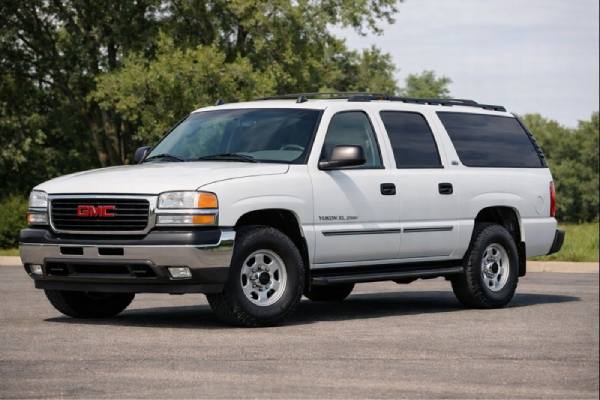
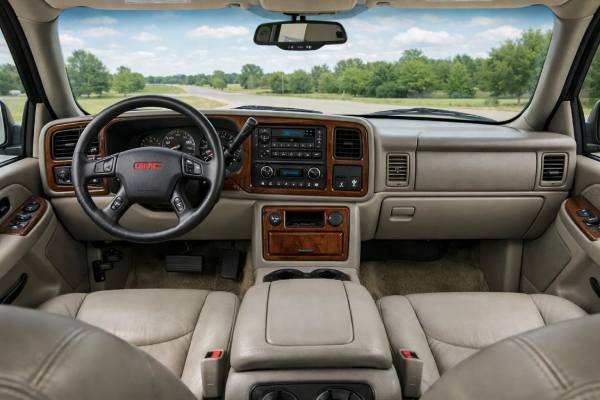
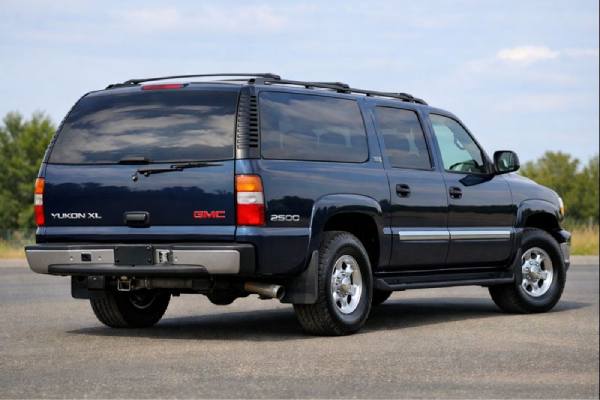
The GMT800 Yukon XL 2500 4WD is a rare blend: full-size SUV space with heavy-duty hardware and GM’s big-block 8.1-liter V8 (L18). It was built for owners who actually use the third row, haul people and gear year-round, and still want serious towing margin without stepping up to a pickup. The 8.1’s strength is effortless torque—especially under load—paired with the durable 4L80E automatic and a truck-grade 4WD system.
The trade-offs are real: fuel consumption is the price of admission, and age-related wear on steering, brakes, and driveline parts is common at today’s mileages. Buy the right example, maintain it like a working truck, and this Yukon XL can be one of the most dependable long-haul tow-and-family rigs of its era.
What to Know
- Strong low-rpm torque makes towing and mountain grades feel relaxed compared with smaller V8s
- Heavy-duty chassis parts (axles, transmission, cooling) handle sustained load better than 1500 models
- 4WD improves traction in rain, snow, and boat ramps, but adds maintenance points and driveline drag
- Transfer case wear leaks can turn expensive if ignored—check for fluid seepage and pump-rub symptoms
- Plan oil changes every 8,000 km (5,000 mi) or 6 months, especially with towing or short trips
Section overview
- Big-block 2500 4WD explained
- L18 4WD specs and dimensions
- Trims, packages, and safety
- Common failures and service actions
- Maintenance plan and buyer’s checklist
- Real-world driving and towing
- How it stacks up against rivals
Big-block 2500 4WD explained
Think of the Yukon XL 2500 4WD (2001–2006) as a Suburban-grade work platform wearing GMC badges and a more upscale interior. The “2500” label matters: compared with 1500 models, the HD variant typically brings a stronger transmission (4L80E rather than the lighter-duty 4L60E), heavier axles, higher-capacity cooling, and a suspension tuned to carry and tow without feeling overloaded. In real ownership terms, the 2500’s advantage is thermal headroom—coolant, oil, transmission fluid, and brakes tend to stay happier when you do hard things for long periods.
The L18 8.1-liter V8 is the headline. It is an overhead-valve (pushrod) big-block with a simple valvetrain and a broad torque curve. The power number (320 hp) is less important than how it delivers: it pulls from low rpm with less downshifting, and that reduces stress and heat in the transmission during towing. If you tow a travel trailer, horse trailer, or heavy boat, that “less busy” feel is part comfort and part longevity.
4WD on this platform is also about use case. It is not a rock-crawler setup, but it is excellent for traction management: wet ramps, snow-packed driveways, muddy campgrounds, and icy highways. The system’s weakest link is not usually the gears—it’s neglect. Transfer cases, front differentials, and CV joints live a harder life when fluids go unchanged or when tires are mismatched in size and wear. A 2500 4WD Yukon XL is happiest when you treat it like a truck: match tires carefully, keep driveline fluids fresh, and address leaks quickly.
The ownership story today is mostly about condition. Many of these SUVs spent years towing or hauling families—sometimes both. A well-kept example can feel surprisingly “tight” on the road. A neglected one will show it through steering play, driveline clunks, uneven tire wear, and a long list of deferred fluid services. The good news is that the platform is straightforward to inspect and repair, and parts availability remains strong.
L18 4WD specs and dimensions
Below are practical, model-relevant specs for the Yukon XL 2500 4WD with the L18 8.1-liter V8. Exact figures can vary by model year, axle ratio, tire package, and option codes, so treat these as the correct “shape” of the vehicle and confirm VIN-specific details when ordering parts.
Engine and performance
| Item | Specification |
|---|---|
| Code | L18 (8.1 l V8) |
| Engine layout and cylinders | V8, OHV pushrod, 2 valves/cyl (16 valves total) |
| Bore × stroke | 107.0 × 102.0 mm (4.21 × 4.02 in) |
| Displacement | 8.1 l (8,128 cc) |
| Induction | Naturally aspirated |
| Fuel system | Sequential MPFI (port injection) |
| Compression ratio | ~9.1:1 |
| Max power | 320 hp (239 kW) @ ~4,200 rpm |
| Max torque | ~617 Nm (455 lb-ft) @ ~3,200 rpm |
| Timing drive | Chain |
| Rated efficiency (typical real-world) | Mixed use often lands around 18–22 L/100 km (13–11 mpg US) depending on speed and load |
| Real-world highway @ 120 km/h (75 mph) | Commonly ~15–18 L/100 km (16–13 mpg US) if lightly loaded |
Transmission and driveline
| Item | Specification |
|---|---|
| Transmission | 4L80E 4-speed automatic |
| Gear ratios | 1st 2.48 / 2nd 1.48 / 3rd 1.00 / 4th 0.75 / Rev 2.07 |
| Drive type | 4WD |
| Transfer case (common types) | NV261 (manual shift) or NV263 (electric shift), depending on option codes and year |
| Differentials | Typically open front; rear may have locking/limited-slip option depending on RPO and axle |
Chassis and dimensions (Yukon XL 2500)
| Item | Specification |
|---|---|
| Platform | GMT800, body-on-frame |
| Suspension (front/rear) | Independent front with torsion bars / HD rear (often leaf springs on 2500-spec SUVs) |
| Steering | Hydraulic power steering (recirculating ball) |
| Brakes | 4-wheel disc (sizes vary by year and package) |
| Length / width / height | ~5,570 mm / 2,000 mm / 1,900 mm (approx. 219 in / 79 in / 75 in) |
| Wheelbase | ~3,302 mm (130.0 in) |
| Turning circle | ~13.0 m (about 43 ft), tire-dependent |
| Curb weight | Often ~2,800–3,100 kg (6,200–6,800 lb), configuration-dependent |
| GVWR | Commonly ~3,900 kg (8,600 lb), package-dependent |
| Fuel tank | Often ~148 L (39 US gal / 32.5 UK gal) on 2500-spec SUVs |
| Cargo volume (approx., SAE) | ~1,300 L (46 ft³) behind 3rd row / ~2,550 L (90 ft³) behind 2nd / ~3,700 L (131 ft³) max |
Capability (realistic ranges)
| Item | Typical range |
|---|---|
| 0–100 km/h (0–62 mph) | ~9–11 s (trim and traction dependent) |
| Braked towing | Often ~4,500–5,400 kg (10,000–12,000 lb), highly dependent on axle ratio and equipment |
| Payload | Often ~600–900 kg (1,300–2,000 lb), highly dependent on configuration |
Fluids and service capacities (common references)
| Item | Typical specification |
|---|---|
| Engine oil | 5W-30 (GM-spec equivalent); capacity commonly ~6.2 L (6.5 US qt) with filter |
| Coolant | Dex-Cool type (50/50 mix); total capacity varies with cooling package |
| Transmission fluid | Dexron-type ATF; total capacity varies (pan drop vs full service) |
| Transfer case fluid | Spec varies by transfer case model (confirm by tag/RPO) |
| Differential fluid | Typically 75W-90 gear oil; limited-slip/locker may require additive depending on unit |
Electrical (typical)
| Item | Typical specification |
|---|---|
| Alternator output | Often 130–145 A depending on options |
| 12V battery | Group size varies; high CCA recommended for cold starts and towing |
| Spark plugs | Long-life plugs; gap and part number vary by year (confirm by VIN) |
Safety and driver assistance (era-appropriate)
| Item | Notes |
|---|---|
| Crash ratings | Check by exact year on NHTSA; tests and protocols vary by model year |
| ADAS | Modern AEB/ACC/lane systems were not typical for this era; focus is airbags, ABS, and stability/traction control availability |
If you want this table set to your exact truck, the simplest path is reading the SPID/RPO label (usually in the glovebox) and confirming engine/trans/transfer case codes before ordering parts or fluids.
Trims, packages, and safety
Trim naming on early-2000s Yukons can look simple—SLE and SLT are the common pillars—but the real differences often come from packages and axle/driveline codes. For an XL 2500 4WD with the 8.1, focus on the equipment that changes how it works under load, not the chrome.
Trims and key equipment patterns
- SLE often targets value: durable cloth or basic leather depending on year, fewer luxury electronics, and sometimes fewer factory tow-related extras unless specifically optioned.
- SLT typically adds leather, upgraded audio, more convenience features, and more frequent pairing with towing and comfort packages.
Seating is usually three rows with multiple configurations. Pay attention to the second-row setup (bench vs captain’s chairs) and third-row hardware condition. Missing seat hardware, broken latches, or worn seat tracks are common, and they matter if you actually use the space.
Option packages that change the mechanical story
- Tow package equipment is the big one. Depending on year, it may bundle a hitch receiver, wiring, heavier cooling, a higher-output alternator, and sometimes a more favorable axle ratio. On a 2500, you still want to confirm the receiver rating, 7-pin wiring, and whether a trailer brake controller was integrated or added later.
- Axle ratio and differential options can transform towing feel. A lower (numerically higher) ratio generally improves launch and hill control at the expense of rpm at highway speed.
- Tire and wheel packages matter because the wrong tire load rating is a silent failure point. For 2500 duty, you want tires with the right load index and a matched set to protect the transfer case.
Quick identifiers: the SPID/RPO label is your friend. It lists codes for axle ratio, differential type, transfer case, and towing-related equipment. For shoppers, that’s more reliable than seller descriptions.
Safety ratings and what they mean today
For 2001–2006 vehicles, the most useful safety information is:
- NHTSA crash-test and rollover data by model year, which can differ even within the same generation depending on test versions.
- Recall status and whether the vehicle has had safety-related repairs completed.
In day-to-day driving, the Yukon XL 2500’s safety strengths are its mass, stable highway manners, and generally robust braking hardware for the era. Its weaknesses, by modern standards, are limited active safety technology and older airbag/stability-control designs. Some later-year trucks and higher trims are more likely to have stability control and additional airbags, but you should confirm equipment rather than assume it.
Safety systems and service implications
Expect ABS and traction control to be common. Stability control may vary by year/trim. These systems rely on wheel speed sensors, hub assemblies, steering angle sensors (when equipped), and correct tire sizing. After any steering or suspension work—especially on a high-mileage 2500—an alignment and careful road test are part of “safety equipment,” not an optional extra.
Common failures and service actions
Most “problems” on a Yukon XL 2500 4WD are predictable wear patterns. The key is separating annoyances from true budget threats, and catching the expensive ones early.
High-prevalence issues (common)
- Transfer case pump wear and leaks (medium to high cost if ignored)
- Symptoms: damp case seam, ATF smell, low fluid, whining or chain noise under load.
- Likely cause: internal pump wear points and long intervals between fluid changes; sometimes worsened by mismatched tire diameters.
- Remedy: confirm transfer case model, inspect for rub marks/leaks, service fluid on schedule, repair case wear early before it runs low.
- Front hub bearing assemblies (medium cost)
- Symptoms: humming that rises with speed, ABS light, steering vibration, uneven tire wear.
- Likely cause: mileage plus load; large tires and aggressive offsets accelerate wear.
- Remedy: replace hub assembly as a unit, verify sensor wiring, then align.
- Steering wear: idler arm, pitman arm, center link, steering box play (low to medium cost)
- Symptoms: wandering, clunk over bumps, vague on-center feel.
- Remedy: inspect systematically; replace in a matched set when wear is widespread.
- Brake system fatigue under heavy use (medium cost)
- Symptoms: pedal pulsation, long stopping distances, hot brake smell after grades, steering shake while braking.
- Likely cause: towing without adequate engine braking, old fluid, sticking calipers.
- Remedy: refresh brake fluid, confirm caliper slide condition, use quality pads/rotors, and verify trailer brake setup.
Occasional issues (vehicle-dependent)
- Fuel pump module wear (medium cost)
- Symptoms: long crank, lean codes, loss of power under load.
- Remedy: verify fuel pressure under load, not just at idle.
- Cooling system age issues (low to medium cost)
- Symptoms: slow coolant loss, heater performance drop, temps creeping up while towing.
- Remedy: pressure test, inspect radiator, hoses, water pump seepage, and fan clutch function.
- Exhaust manifold fasteners and leaks (low to medium cost)
- Symptoms: ticking on cold start, exhaust smell.
- Remedy: repair before it becomes a broken-stud job.
Rare but expensive (watch-list)
- Transmission overheating and converter stress (high cost if neglected)
- Symptoms: delayed shifts when hot, burnt ATF smell, shudder under load.
- Remedy: confirm cooler flow, service fluid appropriately, and avoid towing in overdrive if it causes hunting.
- Front differential or CV joint damage (high cost)
- Symptoms: clicking in turns (CV), grinding/whine (diff), vibration under power.
- Remedy: inspect boots, check fluid, and address early.
Recalls, TSBs, and how to verify
Instead of memorizing recall lists, use a repeatable process:
- Run the VIN through the official recall lookup.
- Cross-check the model-year page for recalls and investigations.
- Ask for dealer records showing completion.
Because these trucks are now decades old, it’s common to find “open” recalls on vehicles that have changed owners multiple times. Confirming recall completion is one of the best free risk-reducers you have.
Maintenance plan and buyer’s checklist
Treat the Yukon XL 2500 4WD like a working truck and it will usually respond like one. The maintenance plan below prioritizes the parts that protect the big expenses: engine, transmission, transfer case, differentials, cooling, and brakes.
Practical maintenance schedule (distance and time)
Every 8,000 km (5,000 mi) or 6 months
- Engine oil and filter (towing, short trips, and winter use benefit from the shorter interval)
- Inspect for leaks: oil pan, rear main area, transmission pan lines, transfer case seams
- Check tire pressure and tread depth; confirm all four tires match in size and wear
Every 16,000 km (10,000 mi)
- Rotate tires and inspect brakes (pad thickness, rotor condition, caliper slides)
- Inspect steering linkage and front suspension joints for play
- Check 4WD operation: engagement, indicator behavior, and noises
Every 48,000–80,000 km (30,000–50,000 mi)
- Replace engine air filter; cabin air filter if equipped
- Service differential fluids (front and rear), especially if towing or driving in water/snow slush
- Transfer case fluid service (interval depends on use and transfer case model)
Every 80,000–100,000 km (50,000–60,000 mi)
- Transmission service strategy depends on history: if fluid is clean and shifts are good, a pan drop/filter and refill is often safer than an aggressive flush on a high-mileage unit
- Coolant service if age is unknown, and inspect radiator and hoses closely
Every 160,000 km (100,000 mi)
- Spark plugs (confirm exact interval and plug type by year/VIN)
- Inspect ignition wires/coils (as applicable) and address misfires early
Every 2 years (regardless of mileage)
- Brake fluid exchange (particularly important for towing and mountain driving)
Every 4–6 years
- 12V battery test and replacement planning (so you do not lose a battery under load in winter)
Fluids, parts, and “do not guess” items
- Transfer case fluid type is not universal. Confirm the transfer case model or RPO code before filling. Using the wrong fluid can cause clutch chatter, poor engagement, or accelerated wear.
- Tire matching is non-negotiable on 4WD. Replace as a set when possible. If not, match circumference closely and keep the best-matched tires on the driven axle strategy recommended by your tire professional.
- Cooling performance matters more than “no overheating.” A truck that runs slightly hot under tow is telling you something—fan clutch, radiator flow, thermostat, and coolant condition all deserve attention.
Buyer’s checklist (fast but high-value)
Driveline
- Any clunk on takeoff or when shifting from reverse to drive (U-joints, mounts, driveline slack)
- Transfer case seepage or wetness at seams
- Evidence of mismatched tires or unusual tire wear patterns
Engine
- Cold start behavior: smooth idle, no heavy exhaust ticking, no persistent misfire
- Oil leaks at the rear of the engine and around the oil cooler lines (common age items)
- Cooling system pressure holds steady; no mystery coolant loss
Transmission
- Shifts should be consistent hot and cold
- No burnt ATF smell; fluid not black
- Under load (test drive on a grade), watch for hunting between gears
Chassis
- Steering should track straight without constant correction
- Brake pedal should be firm; no major pulsation
- Frame and brake line corrosion should be inspected carefully in rust-prone regions
Long-term durability outlook
If the driveline fluids have been maintained, the cooling system is healthy, and the truck has not been run on mismatched tires, the Yukon XL 2500 4WD tends to age well mechanically. The most expensive surprises usually come from deferred driveline leaks, chronic overheating while towing, or “cheap fixes” that ignored load ratings and alignment fundamentals.
Real-world driving and towing
On the road, the Yukon XL 2500 4WD feels more like a truck than a modern SUV—and that is both the charm and the learning curve. The seating position is commanding, the hood line is honest about the mass you’re moving, and the chassis communicates load changes clearly. At city speeds, the size is the main factor: parking requires attention, and tight streets highlight the turning circle. Once you’re rolling, the truck settles into a stable, confidence-inspiring rhythm.
Ride, handling, and NVH
The 2500’s suspension tuning favors control under load. Unladen, it can feel firm over sharp impacts, especially compared with a 1500 model. Under passengers, gear, or trailer tongue weight, it often improves—less bobbing and less rear-end “float.” Steering is hydraulic and typically light-to-moderate at speed, but it will not feel modern-precise. If yours feels vague, it’s often worn linkage rather than a “bad design.”
Cabin noise depends heavily on tires and door seals. Aggressive all-terrain tires add hum. Exhaust leaks and worn engine mounts can add vibration. A well-kept example can cruise quietly enough for long trips, but it won’t match modern SUVs for wind isolation.
Powertrain character
The L18’s best feature is low-rpm authority. In daily driving it means fewer downshifts and less throttle drama merging onto highways. With a trailer, it means the truck can hold speed on moderate grades without constantly “searching” for a gear. The 4L80E is not a fast-shifting transmission by modern standards, but it is generally consistent and strong when kept cool and fed clean fluid.
Real-world efficiency (what owners actually see)
Fuel consumption is driven by speed and load more than almost anything else. A realistic expectation:
- Mixed driving: roughly 18–22 L/100 km (13–11 mpg US)
- Highway at 100–110 km/h (60–70 mph): often 14–17 L/100 km (17–14 mpg US)
- Highway at 120 km/h (75 mph): commonly 15–18 L/100 km (16–13 mpg US)
- Towing: very load-dependent; it is normal to see a significant increase, especially with tall trailers and headwinds
Cold weather and short trips can push consumption notably higher. If you’re shopping, pay attention to whether the truck reaches operating temperature quickly and whether the thermostat and fan clutch behave normally.
4WD behavior and traction
In rain and snow, 4WD is a confidence tool, not a license to drive faster than conditions allow. The system is most valuable on starts, ramps, and slick climbs. Keep tire tread depth healthy and match all four tires closely to reduce stress on the transfer case. Also remember that stopping performance depends on tires and brakes, not the number of driven wheels.
Towing feel (what matters beyond the rating)
With a properly set up trailer (correct tongue weight, good brake controller, and a weight-distributing hitch when appropriate), the Yukon XL 2500 is a stable tow vehicle. It benefits from:
- Engine braking and smart gear selection on long descents
- Transmission temperature awareness (adding or verifying an auxiliary cooler is often worthwhile)
- Trailer brakes that do real work, not “just enough to pass inspection”
If you tow regularly, the best upgrade is often maintenance: fresh brake fluid, high-quality pads, correct tire load rating, and serviced driveline fluids.
How it stacks up against rivals
The Yukon XL 2500 4WD with the 8.1 sits in a niche that most rivals only briefly occupied: an SUV with heavy-duty truck hardware and real towing intent. When you compare it, it helps to focus on three things: towing behavior under sustained load, cost and complexity of repairs, and day-to-day livability for families.
Versus GM 1500 SUVs (5.3 and 6.0)
Compared with a 1500 Yukon XL/Suburban with the 5.3, the 2500 feels less strained when towing. The 5.3 can tow, but it often works harder—more rpm, more shifts, and less reserve on long grades. The 6.0 in some GM models narrows the gap, but the 8.1 still wins on torque and “effortlessness.” The trade-off is fuel use and sometimes a firmer ride. If you rarely tow and mostly commute, a 1500 makes more sense. If you tow heavy and often, the 2500 is the more relaxed tool.
Versus Ford Excursion (V10 era)
The closest historical alternative is the Ford Excursion with the V10. Both are big, body-on-frame, and built for load. The Yukon XL 2500’s advantage is often drivetrain simplicity and the widespread GM truck parts ecosystem. The Excursion’s advantage can be payload and a different feel in steering and suspension depending on configuration. Both are expensive to fuel; both reward careful maintenance records.
Versus modern half-ton SUVs
A newer half-ton SUV may offer better crash tech, quieter cabins, and better fuel economy, but it can be more complex and costly when major electronics or modern transmission systems age. The GMT800’s strength is mechanical clarity: most issues are diagnoseable without specialized tools, and many repairs are straightforward. The modern SUV’s advantage is safety technology and refinement, not necessarily towing “ease” at the same weight and wind profile.
Versus pickups for towing
A pickup often tows better simply because of wheelbase options, payload flexibility, and hitch geometry. However, the Yukon XL’s key advantage is interior volume with an enclosed cargo area and full-time family comfort. If you tow and need enclosed space for gear, pets, or passengers, the XL layout is hard to replace.
The verdict
Choose this Yukon XL 2500 4WD if you want a truck-grade tow and people mover with proven hardware and you can accept fuel costs. Avoid it if your driving is mostly short trips and city parking, or if you want modern crash-avoidance technology as standard. As a used buy, condition and history matter more than the badge—find the clean, maintained one, and it can be a long-term keeper.
References
- Manuals and Guides 2025 (Owner’s Manual Portal)
- Recalls 2025 (Recall Database)
- Vehicle Detail Search – 2004 GMC YUKON XL 2500 2025 (Safety and Recalls)
- 2003 GMC YUKON XL 2500 – Vehicle Detail Search 2025 (Safety and Recalls)
- EPA Fuel Economy 2025 (Fuel Economy Database)
Disclaimer
This article is for informational purposes only and is not a substitute for professional diagnosis, inspection, or repair. Specifications, torque values, service intervals, and procedures vary by VIN, model year, market, and installed equipment; always verify details using official owner and service documentation for your exact vehicle.
If you found this guide helpful, please consider sharing it on Facebook, X, or your favorite forum to help others find it.