
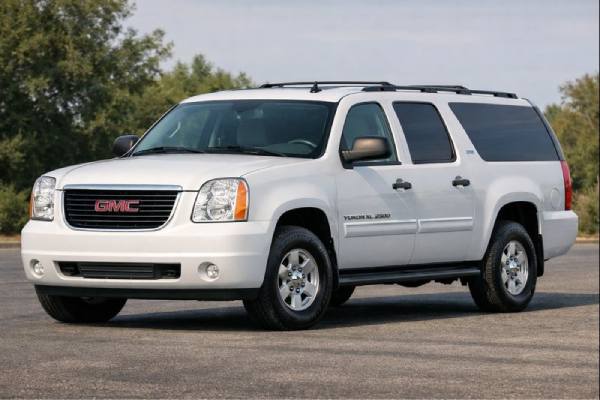
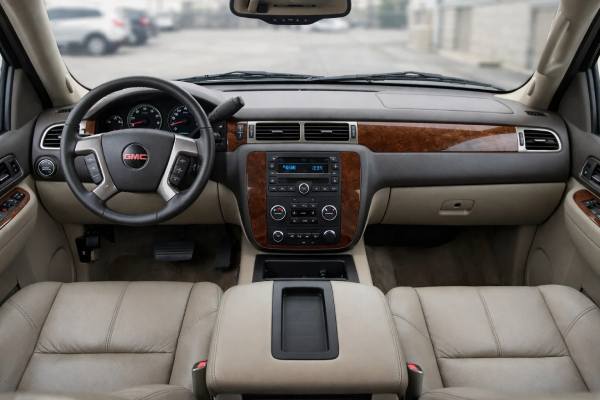
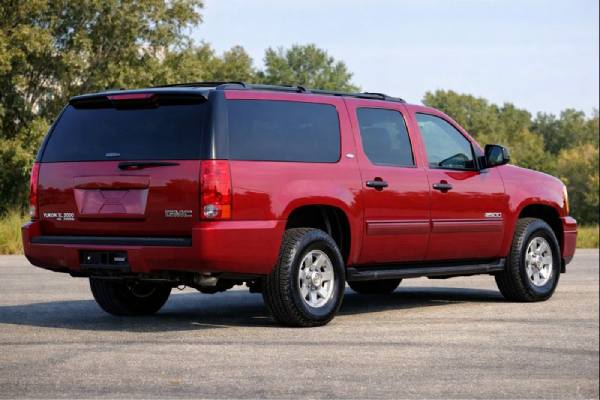
The 2007–2009 GMC Yukon XL 2500 4WD is one of the last “heavy-duty family haulers” built on a true 3/4-ton foundation. It pairs GM’s LY6 6.0-liter V8 (352 hp) with HD running gear, an 8-lug chassis, and a two-speed 4WD system designed for real towing and harsh-duty use. Compared with a 1500-series Yukon XL, the 2500’s mission is less about soft ride and more about thermal capacity, axle strength, and stability under load—especially when you add trailer tongue weight, passengers, and cargo.
Ownership tends to be straightforward when maintenance is proactive: fluids, cooling system health, and front-end wear items matter more than gadgetry. If you want an older full-size SUV that can tow confidently and still seat a full crew, this is a short-list vehicle—provided you buy based on condition, not just miles.
Owner Snapshot
- Strong towing and load stability for a full-size SUV, especially with the right axle ratio and factory tow equipment.
- Simple, proven LY6 V8 character: smooth power delivery and predictable service needs.
- 4WD traction and low range add real capability on ramps, snow, and unpaved launch areas.
- Expect higher running costs: fuel use and front-end wear increase with tire size, lift kits, and frequent towing.
- Change engine oil about every 8,000–10,000 km (5,000–6,000 mi) or sooner under severe-duty use.
Quick navigation
- What makes this 4WD 2500 different
- LY6 4WD specs and dimensions
- Trims, RPO codes, and safety equipment
- Reliability trouble spots and recalls
- Maintenance plan and smart buying tips
- Real-world driving, towing, and mpg
- How it stacks up against rivals
What makes this 4WD 2500 different
The Yukon XL 2500 4WD sits in a niche most modern SUVs no longer cover: heavy-duty mechanicals with three-row practicality. The “2500” part is the headline. You get 8-lug hubs, a stronger rear axle assembly, heavier brakes (relative to 1500 models), and suspension tuning aimed at keeping the truck composed when the cargo area is full and a trailer is pushing on the hitch. In day-to-day driving it can feel firmer—especially over sharp edges—but the payoff shows up when you’re doing the work this platform was built for.
The “4WD” part is not just a badge. Unlike AWD systems that shuffle power automatically with no low range, this Yukon XL 2500 uses a two-speed transfer case architecture (equipment varies by build). In practice, that means you can choose a normal on-road mode and a true low-range mode for controlled traction at low speed—useful for boat ramps, snowy driveways, muddy job sites, and maneuvering a trailer at crawl pace. The downside is more driveline complexity: extra fluids, extra seals, and more wear points if 4WD is neglected or abused (especially with mismatched tire sizes).
The LY6 6.0-liter V8 is the right match for this chassis. It’s not a “fast” engine by modern turbo standards, but it’s predictable: steady torque, linear throttle, and a cooling and oiling strategy designed for truck duty. When you keep the cooling system healthy and service the transmission and transfer case on time, this powertrain tends to deliver a long service life—particularly in stock form.
One final point that matters more than people expect: these trucks vary by build codes and axle ratios. Two Yukon XL 2500 4WDs of the same year can feel different in towing confidence and fuel use depending on gearing, tire size, and whether the factory tow package is intact. Buying smart means reading the truck, not the brochure.
LY6 4WD specs and dimensions
Below are “typical” specifications for a 2007–2009 Yukon XL 2500 4WD with the LY6 6.0L. Treat them as decision-grade guidance, then verify the exact configuration using the glovebox RPO label (option codes), the VIN build data, and the underhood labels. Heavy-duty SUVs can differ by axle ratio, cooling package, and transfer case type.
Engine and performance (ICE)
| Item | Spec |
|---|---|
| Code | LY6 |
| Engine layout and cylinders | V8 (90°), OHV pushrod, 2 valves/cyl (16 valves total) |
| Bore × stroke | 101.6 × 92.0 mm (4.00 × 3.62 in) |
| Displacement | 6.0 L (5,967 cc) |
| Induction | Naturally aspirated |
| Fuel system | Sequential port fuel injection (PFI) |
| Compression ratio | ~9.6:1 |
| Max power | 352 hp (262 kW) @ ~5,400 rpm |
| Max torque | ~518 Nm (382 lb-ft) @ ~4,200 rpm |
| Timing drive | Chain |
| Real-world highway @ 120 km/h (75 mph) | Commonly ~16–20 L/100 km (12–15 mpg US / 14–17 mpg UK), depending on tires and load |
Transmission and driveline
| Item | Spec |
|---|---|
| Transmission | 6-speed automatic (Hydra-Matic family; HD application) |
| Gear ratios | 1st 4.03 / 2nd 2.36 / 3rd 1.53 / 4th 1.15 / 5th 0.85 / 6th 0.67 / Rev 3.06 |
| Drive type | 4×4 (two-speed transfer case; mode set varies by build) |
| Final drive ratio | Commonly 3.73 or 4.10 (verify by RPO) |
| Differential | Typically open front; rear may be open or locking (verify by RPO) |
Chassis and dimensions (typical GMT900 XL footprint)
| Item | Spec |
|---|---|
| Suspension (front/rear) | Independent front; solid rear axle with heavy-duty springing |
| Steering | Hydraulic power assist (ratio varies by year and option) |
| Wheels and tyres | 8-lug wheels; common sizes 245/75 R16 or similar (varies) |
| Length / width / height | ~5,650 mm / ~2,010 mm / ~1,960 mm (222.4 / 79.1 / 77.2 in) |
| Wheelbase | ~3,302 mm (130.0 in) |
| Turning circle (kerb-to-kerb) | ~13.0–13.5 m (43–44 ft) |
| Curb weight | Often ~2,700–2,900 kg (5,950–6,400 lb), equipment dependent |
| Fuel tank | Often ~150 L (39.7 US gal / 33.0 UK gal), verify by year and market |
Performance and capability (realistic expectations)
| Item | Spec |
|---|---|
| 0–100 km/h (0–62 mph) | ~9.0–10.5 s (stock, unloaded) |
| Top speed | ~170–180 km/h (105–112 mph), limiter and tire rating dependent |
| Towing capacity (braked) | Commonly ~3,700–4,100 kg (8,200–9,000 lb), equipment and axle ratio dependent |
| Payload | Often ~650–900 kg (1,430–1,980 lb), configuration dependent |
Fluids and service capacities (verify by VIN)
| Item | Spec |
|---|---|
| Engine oil | 5W-30 meeting the required GM standard; ~5.7 L (6.0 US qt) with filter |
| Coolant | Dex-Cool type OAT coolant, 50/50 mix; capacity varies by cooling package |
| Transmission/ATF | Dexron-VI; capacity varies by pan and service method |
| Transfer case | Fluid depends on transfer case type and mode system; verify before filling |
| Key torque specs | Wheel lug nuts often ~190 Nm (140 lb-ft) on 8-lug wheels (confirm for your wheel type) |
Electrical and ignition
| Item | Spec |
|---|---|
| Alternator output | Varies by options and tow package |
| 12 V battery | Group size and CCA vary by climate package |
| Spark plugs | Long-life plugs; gap and exact part number vary by year and emissions label |
Safety and driver assistance (era-appropriate)
| Item | Spec |
|---|---|
| Crash ratings | NHTSA ratings vary by year/body configuration; verify by model-year lookup |
| Airbags | Typically front airbags plus side-curtain coverage (trim and year dependent) |
| ADAS | No modern AEB/ACC/LKA in this generation; stability control and traction control are the key systems |
Trims, RPO codes, and safety equipment
For 2007–2009, the Yukon XL 2500 line is usually simpler than the 1500 lineup: fewer luxury variations, more emphasis on durability and towing. In many markets you’ll see SLE and SLT as the main trims, with equipment differences focused on interior finish, seating, audio, and convenience features rather than major driveline changes. The most important “trim” details are often hidden in the build codes.
Use the glovebox RPO label like a decoder ring. The RPO (Regular Production Option) label lists option codes that tell you what the truck actually is: axle ratio, differential type, transfer case system, trailering equipment, cooling, and even alternator output in some cases. When you’re comparing two trucks, RPO codes often matter more than the badge on the liftgate.
What to prioritize for this specific model:
- Factory trailering equipment and cooling. If you tow, look for evidence the truck was ordered with the heavy-duty trailering setup: integrated hitch hardware, correct receiver class, transmission cooling provisions, and intact wiring. Aftermarket hitch work can be fine, but you want the OEM-level thermal management.
- Axle ratio. A numerically higher ratio (often 4.10, when equipped) typically improves launch feel and grade control under load at the cost of higher cruise rpm and fuel use. A taller ratio can feel calmer on the highway but may work the transmission harder when towing.
- Seating and payload realities. Nine-passenger seating exists in this era, but payload disappears fast when you fill all rows and add tongue weight. If you regularly carry people and tow, you want to run the numbers using the door-jamb payload label on the exact truck.
Safety ratings (how to interpret what you find)
Crash-test ratings for older SUVs can be confusing because test protocols and trim availability change over time. For this generation, the most reliable approach is to look up the exact model year and body configuration in the NHTSA database, then read what tests were actually performed. Treat any blanket statement like “it’s a 5-star SUV” with skepticism unless it matches the exact entry.
Safety systems and “driver assistance” in this era
Don’t expect modern ADAS such as automatic emergency braking or lane-keeping. Instead, focus on the foundational safety hardware and control systems:
- Electronic stability control and traction control: critical for tall, heavy SUVs and especially valuable when towing in crosswinds or in emergency maneuvers.
- ABS and brake balance: brake condition and tire quality affect real stopping distances more than trim level.
- Child-seat provisions: confirm LATCH/ISOFIX anchors are intact and accessible if you use child seats.
- Parking support: rear parking sensors and camera availability vary; confirm function because repairs can be more involved than they look.
If you want a safety “upgrade” that genuinely moves the needle, prioritize: excellent tires, fresh brake fluid, well-maintained brakes, and fully functioning stability control and ABS sensors.
Reliability trouble spots and recalls
The Yukon XL 2500 4WD is generally durable when kept close to stock and serviced on time, but it has predictable wear points. Think in systems: engine longevity usually depends on cooling and oil discipline; driveline depends on fluid condition and correct tire sizing; chassis life depends on steering and suspension maintenance.
Common issues (higher prevalence)
- Front-end wear (steering and suspension)
Symptoms: wandering at speed, clunks over bumps, uneven tire wear, steering wheel shimmy under braking.
Likely causes: worn ball joints, tie rods, idler/pitman arms, control arm bushings, or tired shocks.
Remedy: inspect with the truck loaded and unloaded; align after parts replacement; avoid oversize tires that accelerate wear. - Wheel hub and bearing assemblies
Symptoms: humming that changes with steering input, ABS lights if sensor integration is affected.
Likely causes: bearing wear accelerated by heavy loads, water intrusion, or large-offset wheels.
Remedy: replace the hub assembly as a unit; verify ABS sensor signal quality afterward. - Transfer case and 4WD system neglect
Symptoms: binding, unexpected mode changes, leaks, or noisy operation in 4WD.
Likely causes: old fluid, actuator or encoder motor wear, or running mismatched tire diameters.
Remedy: correct tire sizing, refresh the proper fluid, and address leaks early.
Occasional issues (moderate prevalence)
- Exhaust manifold bolt leaks
Symptoms: ticking on cold start that quiets when warm, exhaust smell under hood.
Likely causes: broken or backed-out manifold bolts.
Remedy: repair with quality hardware; check for warped manifolds. - Cooling system weak links over age
Symptoms: rising temps under load, coolant smell, slow coolant loss.
Likely causes: radiator degradation, hose aging, thermostat or water pump wear.
Remedy: pressure-test, fix leaks, and replace suspect parts before towing season. - Transmission behavior complaints (shift feel, heat management)
Symptoms: harsh shifts, delayed engagement, or shudder under light load.
Likely causes: fluid age, thermostat/cooler issues, or calibration sensitivity.
Remedy: service with correct fluid and temperature discipline; confirm cooler flow; seek a factory-level scan for codes before assuming hard parts.
Rare but high-cost issues
- Severe overheating events leading to head gasket damage, warped components, or transmission damage.
- Corrosion in rust-belt trucks affecting brake lines, body mounts, and underbody fasteners.
Recalls, TSBs, and coverage
For vehicles this old, the only safe rule is: verify by VIN. Recalls can be open or already completed depending on region and ownership history. When shopping, request documentation showing recall remedies were performed and confirm with the official VIN lookup. If the seller cannot show proof, assume you’ll need to verify at a dealer.
Pre-purchase checks to request:
- Evidence of recent fluid services (engine, transmission, transfer case, differentials).
- Cooling system inspection results (pressure test and fan operation).
- A scan report showing no active powertrain, ABS, or airbag faults.
- Tire brand and size matching on all four corners (critical for 4WD).
Maintenance plan and smart buying tips
A Yukon XL 2500 4WD lasts longest when you treat it like a working truck, not a “lifetime fluid” SUV. Heat, load, and age are the enemies. A good plan focuses on fluids, cooling, brakes, and steering wear items.
Practical maintenance schedule (distance and time)
Use this as a baseline, then tighten intervals if you tow often, idle a lot, or drive in extreme heat/cold.
- Engine oil and filter: every 8,000–10,000 km (5,000–6,000 mi) or 6 months (severe duty: closer to 5,000 mi).
- Engine air filter: inspect every 15,000 km (10,000 mi); replace as needed (dusty use shortens this).
- Cabin air filter: every 15,000–30,000 km (10,000–20,000 mi) depending on environment.
- Coolant: every 5 years (or sooner if contamination or leaks appear).
- Spark plugs: commonly 150,000 km (100,000 mi) if using the specified long-life plugs.
- Transmission fluid: every 50,000–80,000 km (30,000–50,000 mi) for tow-heavy use; longer intervals only if temps are controlled and shifts are clean.
- Transfer case fluid: every 50,000 km (30,000 mi) if used regularly; at minimum, inspect condition every 2 years.
- Front and rear differential fluid: every 50,000–80,000 km (30,000–50,000 mi) (shorten if towing or water exposure).
- Brake fluid: every 2 years, regardless of mileage.
- Brake pads and rotors: inspect at every tire rotation; towing can cut pad life sharply.
- Serpentine belt and hoses: inspect yearly; replace at first signs of cracking, glazing, or seepage.
- 12 V battery test: annually; replace proactively around 4–6 years depending on climate.
Fluids to use (decision-grade guidance)
- Engine oil: typically 5W-30 meeting the required GM specification on the underhood label.
- ATF: Dexron-VI for most applications in this era.
- Coolant: Dex-Cool type OAT coolant, generally mixed 50/50 with clean water.
- Transfer case: confirm the transfer case type first; different systems can require different fluids.
Buyer’s guide: what to inspect on a 2500 4WD
Bring a flashlight, a scan tool if possible, and enough time for a cold start.
Body and frame
- Rust around brake and fuel lines, rocker seams, rear wheel arches, and body mounts.
- Evidence of past repairs or undercoating used to hide corrosion.
Engine and cooling
- Cold-start behavior (listen for exhaust leaks and abnormal valvetrain noise).
- Coolant condition (no oil sheen, no sludge) and correct fan operation.
- Any sign of chronic overheating is a red flag.
Driveline and 4WD
- Confirm 4WD mode engagement, including low range (safe area only).
- Look for transfer case leaks and driveshaft play.
- Verify all four tires match in brand, size, and wear depth.
Chassis and brakes
- Steering play, clunks, and brake pedal feel.
- Uneven tire wear suggests worn parts or alignment issues.
Best ownership outlook usually comes from trucks that stayed stock, towed within ratings, and show consistent fluid service records. Modified suspension and oversized tires are not automatic deal-breakers, but they raise your odds of accelerated wear and driveline stress.
Real-world driving, towing, and mpg
In daily use, the Yukon XL 2500 4WD feels like what it is: a long, heavy-duty SUV with a truck backbone. The front end is typically stable at speed, and the wheelbase helps it track straight on the highway—especially when you’re pushing through wind or carrying a roof box. The tradeoff is maneuverability: parking lots require planning, and tight urban turns remind you this is a full-size XL body.
Ride, handling, and NVH
Ride quality depends heavily on tires and suspension condition. With stock-size tires and fresh shocks, the truck can feel controlled and surprisingly calm on smooth pavement. Over broken surfaces, the HD setup can transmit more impact than a 1500-series Yukon XL. Noise is generally dominated by tires, age of door seals, and drivetrain condition rather than the engine itself. If you hear a steady hum that changes with steering input, suspect wheel bearings first.
Powertrain character
The LY6 6.0L delivers its power in a smooth, predictable ramp rather than a dramatic surge. That’s a good thing when towing: throttle modulation is easy, and the engine doesn’t feel fragile. Passing performance is “adequate-plus” for the era; it’s happiest when the transmission can downshift decisively and the cooling system is strong.
Expect the transmission to work under load. A healthy setup will downshift on grades and hold gears when needed without hunting constantly. If it hunts, runs hot, or feels indecisive, treat it as a diagnostic clue: fluid condition, cooler performance, and throttle calibration matter.
Real-world efficiency
Fuel consumption is the price of the heavy-duty mission. In mixed driving, many owners see figures that land roughly in the low-to-mid teens (mpg US), with highway improving if you keep speeds modest and tires stock. Add 4WD hardware, aggressive tires, lift kits, or heavy trailers, and consumption climbs quickly. A practical way to think about it:
- City and short trips: worst-case, because warm-up and stop-start punish a big V8.
- Highway cruising: best-case, especially in steady conditions.
- Towing: plan for a significant penalty; your right foot and aerodynamic drag become the main variables.
Towing and load behavior
This is where the 2500 earns its reputation. With a properly set up hitch and trailer brakes, it tends to feel more planted than lighter SUVs. The long wheelbase helps reduce trailer-induced yaw, and the HD cooling strategy (when intact) supports long grades better than many half-ton SUVs. Still, towing confidence depends on fundamentals:
- Use a weight-distributing hitch when appropriate.
- Keep tire pressures correct for load.
- Maintain brake fluid and trailer brake hardware.
- Watch transmission temperature if you have a gauge or scan tool.
If your use case is frequent towing, prioritize a stock, well-maintained truck with correct gearing and a proven service history over a nicer interior.
How it stacks up against rivals
The Yukon XL 2500 4WD competes less with modern three-row SUVs and more with a small group of heavy-capable, body-on-frame options—many of which no longer exist in the same form.
Versus 1/2-ton full-size SUVs (Yukon XL 1500, Tahoe, Expedition EL)
A 1500-series full-size SUV usually rides softer, steers lighter, and costs less to run. But when you load up passengers, cargo, and a heavy trailer, the 2500’s stronger foundation shows up in stability and durability margins. If your towing is occasional and moderate, a 1500 can be the better daily choice. If towing is frequent or you routinely run heavy payloads, the 2500 is the more honest tool.
Versus Toyota Sequoia (same era)
The Sequoia is often praised for refinement and reliability, but it doesn’t match the Yukon XL 2500’s HD flavor in chassis hardware and “built for load” feel. The Toyota can be an excellent family hauler, yet the GMC’s long wheelbase and heavy-duty intent can be more confidence-inspiring when the trailer and payload numbers rise.
Versus heavy-duty pickups (Silverado and Sierra 2500HD)
If towing is your primary mission and you don’t need enclosed third-row seating, a 2500HD pickup can be the smarter solution: more capability headroom, more aftermarket support, and often easier service access. The Yukon XL 2500’s advantage is that it combines HD capability with enclosed cargo, three rows, and an SUV cabin environment—especially valuable for long trips with people, pets, and gear.
Versus used “specialty” alternatives (older Excursion-class SUVs)
Some older HD SUVs can match or exceed towing capacity, but they tend to bring higher age-related risk, fewer comfort features, and sometimes harder-to-source parts. The GMT900 Yukon XL 2500 sits in a sweet spot: modern enough to live with daily, old enough to be mechanically approachable.
Bottom line: the Yukon XL 2500 4WD is best for buyers who genuinely use the capability—towing, hauling, winter travel—and who are willing to maintain it like a working vehicle. If you want the look without the upkeep mindset, a lighter SUV will usually be a better experience.
References
- 2009 GMC Yukon, Yukon XL Owner Manual M – Experience GM 2009 (Owner’s Manual)
- Check for Recalls: Vehicle, Car Seat, Tire, Equipment | NHTSA 2025 (Recall Database)
- Car Safety Ratings | Vehicles, Car Seats, Tires | NHTSA 2025 (Safety Rating)
- Vehicle Detail Search – 2008 GMC YUKON XL | NHTSA 2025 (Safety Rating and Recalls)
- Gas Mileage of 2009 GMC Yukon 2025 (Fuel Economy Database)
Disclaimer
This article is for informational purposes only and is not a substitute for professional diagnosis, inspection, or repair. Specifications, torque values, service intervals, and procedures can vary by VIN, market, axle ratio, emissions package, and installed equipment; always verify details using official owner and service documentation for your exact vehicle.
If this guide helped, please consider sharing it on Facebook, X (Twitter), or your favorite forum to support our work.