
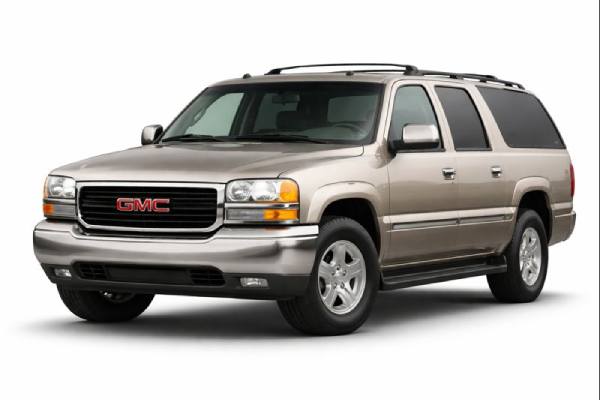
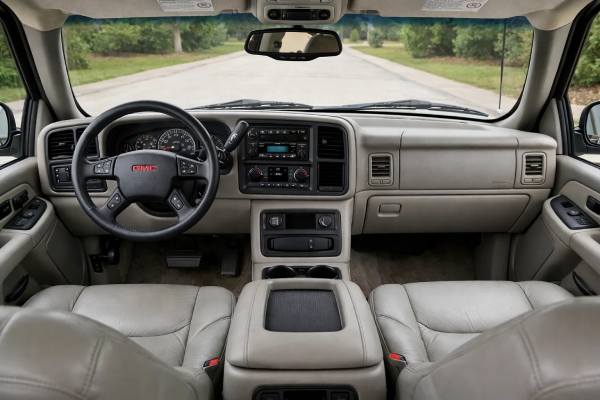
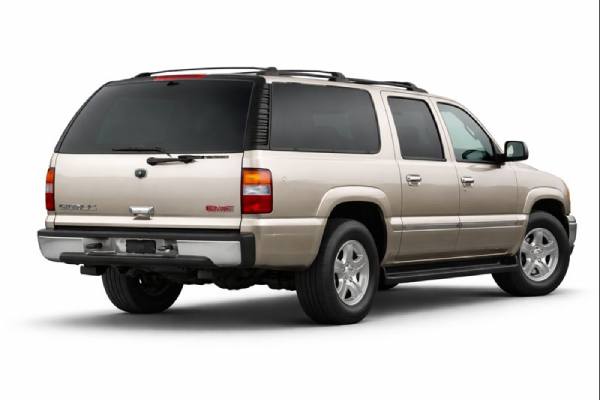
The GMT800 Yukon XL 2500 RWD with the LQ4 6.0-liter V8 is the “heavy-duty, long-wheelbase” take on a full-size SUV. Where the 1500 models focus on everyday comfort, the 2500’s stronger axles, higher GVWR, and 4L80-E automatic are built to carry more, tow more, and handle sustained load without feeling fragile. It is also one of the simplest ways to get big-family space and true truck hardware in one package—especially if you want 2WD for lower complexity and easier driveline service.
Most examples today are high-mileage, so ownership is less about the original brochure and more about condition: cooling system health, steering and front-suspension wear, brake condition, and how well it was maintained under towing. Get those right, and this platform can deliver long, predictable service.
Owner Snapshot
- Strong towing and load tolerance thanks to 2500-series running gear and the 4L80-E automatic.
- LQ4 6.0 V8 is understressed for the vehicle’s size and responds well to careful cooling and oil maintenance.
- Straightforward 2WD driveline means fewer transfer-case and front-diff variables than 4WD models.
- Expect age-related repairs: steering-link wear, fuel pump modules, and electrical gremlins are common on older GMT800s.
- Change engine oil and filter at least every 12 months (even if mileage is low), and sooner under towing or short trips.
Guide contents
- Yukon XL 2500 RWD purpose
- LQ4 6.0 numbers and capacities
- Trims, tow gear, and safety
- Aging GMT800 issues to watch
- Upkeep schedule and buyer checks
- How the 6.0 drives
- Rivals and real alternatives
Yukon XL 2500 RWD purpose
The Yukon XL 2500 RWD exists for buyers who want Suburban-sized interior volume but with 2500-series truck strength. Think of it as a long-wheelbase SUV body on heavy-duty Silverado/Sierra hardware: stronger rear axle assemblies, higher payload ratings, and a transmission designed for heat management and torque capacity rather than light-duty efficiency.
What you get, mechanically, versus a 1500 Yukon XL:
- Higher GVWR and payload headroom. The 2500 typically carries a higher Gross Vehicle Weight Rating, which matters if you routinely load eight people, cargo, and hitch weight at the same time.
- Heavier-duty transmission. The common pairing here is the 4L80-E 4-speed automatic, a long-running unit known for durability under towing when fluid condition and temperatures are kept under control.
- Big cooling and braking considerations. These trucks often came with towing-oriented cooling packages, and the platform generally benefits from fresh coolant, a good fan clutch (where equipped), and brake hardware kept in top condition.
Why the LQ4 6.0 makes sense in the XL 2500:
With a curb weight that can live well north of 2,600 kg (5,700 lb) depending on equipment, the Yukon XL 2500 asks a lot of any engine. The LQ4’s advantage is not “sports SUV” power—it is usable torque and durability margin. You do not have to lean on the throttle constantly to keep speed on grades, and that tends to reduce transmission hunting and heat buildup.
RWD-specific advantages (and tradeoffs):
- Advantages: fewer driveline parts (no transfer case, front differential, or CV axles), typically lower service complexity, and fewer fluid circuits to neglect.
- Tradeoffs: traction in snow or on steep loose surfaces depends heavily on tires and rear differential behavior. If you live in a winter climate, budget for true winter tires and keep the rear axle lubricant fresh.
Ownership reality in 2025:
The newest 2006 models are now approaching two decades old. The best examples are not the lowest mileage—they are the ones with documented fluid services, cooling system attention, and steering/suspension refreshes. If you’re shopping, treat this as a “condition-first” platform: a clean, well-kept SUV with 250,000 km can be a better buy than a neglected one with half the mileage.
LQ4 6.0 numbers and capacities
Below are the practical specs you’ll actually use for maintenance, comparison shopping, and towing decisions. Values can vary slightly by model year, emissions calibration, axle ratio, and equipment, so use them as a baseline and verify against the vehicle’s VIN information, under-hood labels, and service literature.
Engine and performance (LQ4 6.0 V8)
| Item | Specification |
|---|---|
| Engine code | LQ4 |
| Layout | V8, OHV (pushrod), 2 valves/cyl |
| Displacement | 6.0 L (5,967 cc) |
| Bore × stroke | 101.6 × 92.0 mm (4.00 × 3.62 in) |
| Induction | Naturally aspirated |
| Fuel system | Sequential MPFI |
| Compression ratio | ~9.4:1 (typical) |
| Max power | 300 hp (224 kW) @ ~4,400 rpm (typical) |
| Max torque | ~488 Nm (360 lb-ft) @ ~4,000 rpm (typical) |
| Timing drive | Chain |
| Firing order | 1-8-7-2-6-5-4-3 |
Transmission and driveline (2WD)
| Item | Specification |
|---|---|
| Transmission | 4-speed automatic (commonly 4L80-E) |
| Gear ratios | 1st 2.48 / 2nd 1.48 / 3rd 1.00 / 4th 0.75 / Rev 2.07 (typical) |
| Drive type | RWD (2WD) |
| Common axle ratios | 3.73 or 4.10 (varies by build/tow package) |
| Differential | Open or locking (varies; confirm by RPO/build codes) |
Chassis and dimensions (Yukon XL 2500 platform)
| Item | Approximate specification |
|---|---|
| Wheelbase | ~3,302 mm (130.0 in) |
| Length | ~5,565–5,575 mm (~219 in) |
| Width | ~2,000–2,010 mm (~79 in) |
| Height | ~1,940–1,970 mm (~76–78 in) |
| Turning circle | ~13.7 m (~45 ft) typical |
| Curb weight | ~2,650–2,950 kg (~5,840–6,500 lb) depending on equipment |
| GVWR | commonly around 3,900 kg (~8,600 lb), verify on door sticker |
Fluids, service capacities, and key specs (from factory documentation)
| Item | Specification and capacity |
|---|---|
| Engine oil | 6.0 qt (5.7 L) with filter; use oil meeting GM6094M (SAE 5W-30 typical) |
| Coolant | DEX-COOL 50/50 mix; 6.0 V8 cooling system approx 16.2–16.8 qt (15.3–15.9 L) depending on fan/e-fan setup; add ~2.0 L if equipped with rear heat |
| Automatic transmission fluid | DEXRON-VI (listed for later documentation) |
| Rear axle lubricant | SAE 75W-90 synthetic axle lubricant (spec-driven; towing may justify more frequent changes) |
| Brake fluid | DOT 3 (Delco Supreme 11 or equivalent) |
| Fuel tank (XL 2500) | 37.5 gal (140.0 L) |
| Wheel nut torque | 140 lb-ft (190 Nm) |
| Spark plug gap (6.0 VIN U) | 0.040 in (1.01 mm) |
Performance and capability (realistic expectations)
A stock Yukon XL 2500 RWD is not about top speed; gearing and aero favor stability and load. Typical outcomes you’ll see in the real world:
- 0–60 mph (0–97 km/h): often around the high-8 to low-10 second range depending on axle ratio and load.
- Towing: commonly in the 4,500–4,800 kg (10,000–10,500 lb) range when properly equipped, but the exact limit depends on axle ratio, hitch equipment, and cooling package—always confirm on the vehicle’s tow placard and door labels.
- Highway economy: expect higher fuel use under load; plan your ownership costs around towing being a meaningful penalty rather than a small one.
Trims, tow gear, and safety
Because the Yukon XL 2500 was a narrower-volume model than the 1500, trims and option mixes can look “inconsistent” on the used market. That’s normal: many were ordered for specific jobs (family towing, fleet use, long-distance hauling), and equipment often reflects that.
Trims and common configurations
You’ll generally encounter SLE and SLT branding on GMT800 Yukons, with the 2500 more commonly appearing in higher-content configurations. Practical identifiers include:
- Interior tells: SLT typically brings upgraded upholstery and more convenience features; SLE often has more durable, simpler interiors.
- Seating: most are 7–9 passenger layouts depending on front seating and second-row configuration.
- Suspension: some trucks use self-leveling rear setups or towing-oriented springs; confirm ride height and rear stance with a loaded cargo area.
Options that change how the vehicle works
If you care about towing and long-term durability, these options matter more than cosmetics:
- Axle ratio (3.73 vs 4.10): A 4.10 ratio usually feels more confident with heavy trailers and reduces gear hunting, but can increase fuel use at cruising speed.
- Locking differential (when fitted): Helps traction on wet ramps, snow, and uneven surfaces. Verify by build codes (RPO) or by physical inspection/service records.
- Tow package content: Look for transmission cooling provisions, hitch receiver class, wiring, and any evidence of proper trailer-brake integration.
Safety ratings and what they mean on a 2000–2006 SUV
Safety testing evolved significantly during this era. You may see different rating formats depending on year and test body. Use the official VIN-based lookup tools for your exact vehicle, but here’s how to interpret the platform:
- Structure and restraints: Dual front airbags were typical for the time; side-impact and curtain protection is not comparable to modern SUVs.
- ABS and stability systems: ABS was widely used; stability control (StabiliTrak) availability depends on year and trim and is not universal across all 2000–2006 builds. If your vehicle has it, keep wheel speed sensors and steering-angle inputs healthy—warning lights are not cosmetic.
- Rollover risk: Any tall, heavy SUV has a higher center of gravity than a sedan. Tires, correct pressures, and suspension condition matter more than many owners realize—especially when towing.
Driver assistance: what exists (and what does not)
Expect “classic” systems rather than modern ADAS:
- You typically get: ABS, traction control on many builds, optional stability control on some trims/years, and conventional cruise control.
- You typically do not get: automatic emergency braking, adaptive cruise control, lane-keep assist, or modern headlight performance ratings.
- Child seats: LATCH/ISOFIX provisions exist in many configurations, but placement and ease of use vary by seating row—check your exact seat layout before assuming third-row usability.
Aging GMT800 issues to watch
A Yukon XL 2500 that has lived an easy commuter life will age differently than one that towed hard for years. The goal here is to map problems by how often they happen and how expensive they tend to be, with the most useful “symptom → cause → remedy” patterns.
Common issues (high prevalence)
- Steering play and wander (low to medium cost):
Symptoms: vague on-center feel, clunks over bumps, frequent alignment drift.
Likely causes: idler and pitman arm wear, worn tie-rod ends, tired control-arm bushings, and sometimes a loose steering gearbox adjuster or worn intermediate shaft.
Remedy: refresh linkage as a system, then align; don’t chase it with tires alone. - Fuel pump module fatigue (medium cost):
Symptoms: long cranks, random stalling, lean codes, loss of power under load.
Likely causes: pump wear or poor electrical connection at the module.
Remedy: replace with a quality module and inspect harness/grounds; avoid “pump-only” shortcuts if the housing and sender are tired. - Cluster and switchgear glitches (low to medium cost):
Symptoms: intermittent gauge readings, backlighting issues, inconsistent warning lights.
Likely causes: aging stepper motors/solder joints and wear in high-use switches.
Remedy: proper cluster rebuild or replacement; check charging voltage so you don’t blame the cluster for alternator problems.
Occasional issues (moderate prevalence)
- Cooling system weak points (medium to high cost if ignored):
Symptoms: slow coolant loss, overheating in traffic or towing, fan roar that never settles.
Likely causes: radiator end-tank seepage, water pump wear, thermostat issues, air pockets after improper service, or a weak fan clutch (where used).
Remedy: pressure test, fix leaks properly, refill with correct coolant mix, and verify fan operation under load. - Knock sensor and harness intrusion (medium cost):
Symptoms: reduced power, knock sensor codes, poor fuel economy.
Likely causes: water intrusion in the valley area under the intake on some LS-based engines.
Remedy: replace sensors/harness and address sealing practices during reassembly. - Exhaust manifold bolt leaks (low to medium cost):
Symptoms: ticking on cold start that quiets when warm, occasional exhaust smell.
Likely causes: broken manifold bolts or warped manifolds.
Remedy: proper extraction and hardware replacement; plan for labor complexity.
Rare but expensive (low prevalence, high consequence)
- Transmission overheating and clutch wear (high cost):
Symptoms: flare shifts, harsh engagement, burnt fluid smell, slipping under load.
Likely causes: neglected fluid, repeated overheating, towing in overdrive when it shouldn’t, clogged cooler, or worn internal components.
Remedy: diagnose temperatures first; sometimes a cooler service and fluid strategy saves it, sometimes it’s rebuild time. - Brake line corrosion in rust regions (high safety impact):
Symptoms: soft pedal, visible rust scaling, fluid seepage.
Likely causes: underbody corrosion from winter salt.
Remedy: replace affected lines with correct routing and secure mounting; inspect at every service.
Recalls, TSBs, and service actions
Instead of relying on memory, always verify by VIN. For shopping, request:
- A VIN recall report from an official database.
- Evidence of completion (dealer invoice, service record, or official printout).
- A test drive long enough to fully warm the drivetrain and check for heat-related issues.
Upkeep schedule and buyer checks
A GMT800 Yukon XL 2500 can be durable, but it does not tolerate skipped fluids and “drive it until it breaks” habits—especially if it tows. The schedule below is a practical baseline for a 2000–2006 LQ4/4L80-E 2WD truck. Adjust shorter if you tow often, idle heavily, or do frequent short trips.
Practical maintenance schedule (distance or time)
| Item | Interval (typical) | Notes |
|---|---|---|
| Engine oil and filter | 8,000–10,000 km (5,000–6,000 mi) or 12 months | Shorter under towing/short trips; use correct oil spec and keep level correct |
| Engine air filter | 24,000–40,000 km (15,000–25,000 mi) | Dusty use needs shorter intervals |
| Cabin air filter (if equipped) | 24,000–40,000 km (15,000–25,000 mi) | Not all builds use one; verify |
| Coolant | 5 years or ~240,000 km (150,000 mi) typical for long-life coolant | Only if system stays clean and sealed; many owners refresh sooner on older trucks |
| Spark plugs | 160,000 km (100,000 mi) typical for many LS-era platinum plugs | Confirm plug type and inspect coils/wires as needed |
| Automatic transmission fluid and filter | 50,000–80,000 km (30,000–50,000 mi) under towing; longer if light duty | Heat kills automatics—prioritize temperature control |
| Rear differential fluid | 50,000–80,000 km (30,000–50,000 mi) under towing | Also after water intrusion or leak repair |
| Brake fluid | Every 2 years | Moisture lowers boiling point and corrodes internals |
| Serpentine belt and hoses | Inspect every oil service; replace by condition | Replace before long towing trips if cracking/glazing appears |
| Tires: rotate and inspect | Every 8,000–10,000 km (5,000–6,000 mi) | Keep pressures correct; towing loads demand disciplined tire care |
| 12V battery test | Yearly; replace commonly every 4–6 years | Voltage stability helps electronics and starting reliability |
Fluid specs and quick decision numbers
- Engine oil capacity: 5.7 L (6.0 qt) with filter.
- Fuel tank (XL 2500): 140.0 L (37.5 gal).
- Wheel nut torque: 190 Nm (140 lb-ft).
- ATF type (listed in later factory literature): DEXRON-VI.
- Coolant: DEX-COOL, 50/50 mix, with capacity dependent on cooling fan configuration.
Buyer’s guide: inspection checklist that actually saves money
Body and frame (rust regions especially):
- Inspect brake and fuel lines, rocker panels, rear quarter areas, and frame seams.
- Look for uneven rear ride height (can indicate tired springs or load-leveling issues).
Engine and cooling:
- Cold start listen: ticking (exhaust leak), belt noise, or lifter chatter that doesn’t settle.
- Pressure test the cooling system; check for dried coolant residue at radiator tanks and water pump.
- Verify fan operation and that it manages temperature on a long idle and a hill pull.
Transmission and driveline:
- Confirm shift quality hot and cold; check for delayed engagement into Drive/Reverse.
- Inspect ATF condition (color and smell) and look for leaks at cooler lines.
- Check rear axle for seepage and listen for bearing howl at steady speed.
Steering and suspension:
- Test for play at the wheel; clunks over bumps often mean linkage wear.
- Inspect tires for feathering or cupping (alignment or worn components).
Recommended “sweet spot” buys:
- Trucks with documented transmission service, cooling system repairs done correctly, and refreshed steering components.
- Avoid examples that towed heavy without transmission temperature management or show chronic overheating history.
How the 6.0 drives
Driven empty, the Yukon XL 2500 RWD feels like what it is: a long, heavy truck with a calm, deliberate character. It does not dart, but it also does not feel nervous. The payoff is straight-line stability and a “big flywheel” smoothness that many owners still like for highway travel.
Ride, handling, and NVH
- Ride quality: The long wheelbase helps the Yukon XL settle into highway cruising. Sharp impacts can still come through, especially if the suspension is worn or tires are overinflated for empty driving.
- Handling: Body roll is normal. A healthy suspension will feel predictable, but worn idler/pitman arms or tired shocks can make it feel loose and slow to respond.
- Noise: Wind and tire noise depend heavily on door seals, mirror design, and tire type. A fresh set of highway-terrain tires can transform perceived refinement.
LQ4 power delivery and transmission behavior
The LQ4’s strength is usable torque, not drama. Around town, it pulls cleanly without needing high rpm. Under load, it prefers steady throttle and sensible gear choice:
- Passing and merging: Strong enough for confident merges, especially with 4.10 gears, but it will downshift decisively when you ask for speed at highway pace.
- 4-speed logic: The 4L80-E’s wide ratio spacing means you notice downshifts more than on modern 8–10 speed trucks. If it hunts between gears while towing, treat that as a setup issue (gear choice, tow/haul use, axle ratio, cooling, and trailer weight) rather than “normal.”
Real-world efficiency expectations
Fuel use is highly sensitive to speed, tires, gearing, and load:
- Highway cruising: Keeping speed moderate matters more than almost anything else due to aero drag.
- City driving: Short trips and idle time push consumption up quickly.
- Towing: Expect a meaningful penalty; plan routes and cooling strategy accordingly.
Towing and heat management
If you tow with this platform, your best “performance mod” is maintenance and temperature control:
- Use tow/haul behavior appropriately and avoid unnecessary overdrive lugging on grades.
- Ensure coolant, fan function, and transmission cooling are correct before blaming the drivetrain.
- Brake feel matters: if pedal travel grows under repeated stops, service the brake fluid and check caliper/rotor condition.
When everything is healthy, the Yukon XL 2500 is a confident tow vehicle for its era, with the long wheelbase providing stability and the HD drivetrain giving you some mechanical margin that 1500-series SUVs do not.
Rivals and real alternatives
When comparing a 2000–2006 Yukon XL 2500 RWD, you get the clearest answers by comparing use cases, not brand loyalty. The 2500 is about carrying and towing with fewer compromises, and that narrows the true rival list.
Closest mechanical cousin: Chevrolet Suburban 2500
This is the nearest alternative in concept and hardware. Differences usually come down to trim availability, condition, price, and local rust history rather than engineering. If you find a cleaner Suburban 2500 with better records, it can be the smarter buy even if you started shopping “GMC only.”
Ford Excursion (and heavy-duty Ford-based swaps)
The Excursion is the obvious “big SUV” alternative from the same era. Pros include strong towing configurations and a different interior/layout feel. Cons include age-related complexity depending on engine choice and typically higher purchase prices for clean examples. If you want maximum cabin space and tow presence, it’s a valid cross-shop, but budget for condition-based repairs the same way.
Ford Expedition (1st/2nd generation) and Lincoln Navigator
These can feel more carlike in some trims, but they are generally a different mission than a 2500-series GM. If your towing is light and you want a softer daily driver, an Expedition-type alternative can make sense. If you’re consistently hauling heavy loads, the 2500’s HD hardware is the point.
Toyota Sequoia (1st generation) and Nissan Armada (early years)
These can offer strong reliability reputations and easier daily manners, but they are not direct replacements for a 2500-series tow-and-haul brief. If your main need is family space with moderate towing, they’re worth a look. If your need is heavy payload plus frequent towing, the Yukon XL 2500 stays in a smaller club.
How to decide quickly
Choose the Yukon XL 2500 RWD if you want:
- A long-wheelbase SUV with true heavy-duty fundamentals (especially for towing stability).
- A simpler 2WD driveline with fewer front-end driveline systems to maintain.
- A platform with abundant parts availability and straightforward service access.
Choose a rival instead if you want:
- Better modern crash structure and ADAS (in which case, you likely need a much newer SUV).
- A lighter, more efficient daily driver where towing is occasional rather than central.
- A specific interior or seating layout that better matches your family use.
In the end, the best “rival” is often another well-maintained full-size SUV with records. Condition and service history decide far more than badges at this age.
References
- GM Owner Manuals 2006 (Owner’s Manual)
- Manuals and Guides | Vehicle Support | GMC 2025 (Owner Information)
- NHTSA Vehicle Details | NHTSA 2025 (Vehicle Information)
- Check for Recalls: Vehicle, Car Seat, Tire, Equipment | NHTSA 2025 (Recall Database)
- Vehicle Safety Ratings and Recalls | NHTSA 2025 (Safety Rating)
Disclaimer
This article is for informational purposes only and is not a substitute for professional diagnosis or repair. Specifications, torque values, service intervals, and procedures can vary by VIN, market, model year, and equipment; always verify details against the correct official owner’s and service documentation for your exact vehicle.
If you found this guide useful, please consider sharing it on Facebook, X, or your favorite forum—your support helps us keep publishing detailed, practical references.