
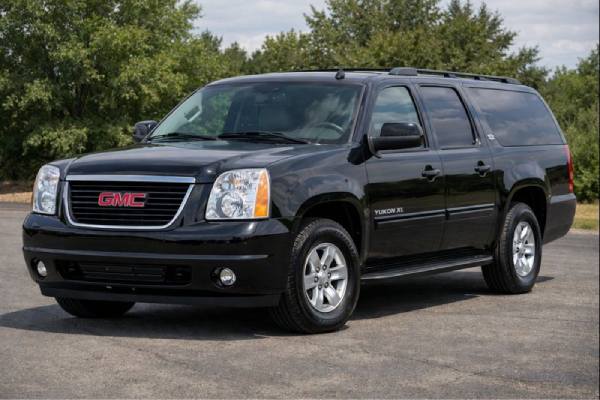
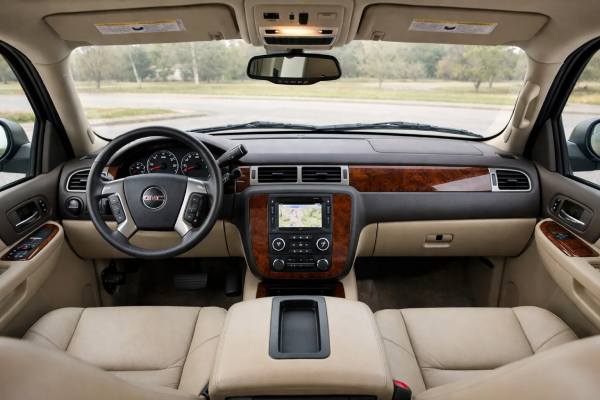
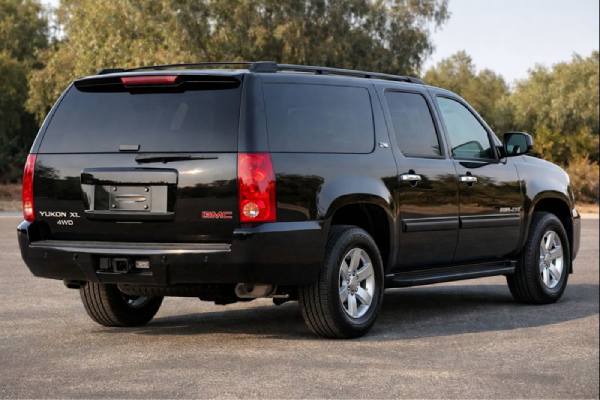
The 2007–2009 GMC Yukon XL 4WD with the 6.0L L76 V8 is a very specific kind of full-size SUV: built for long highway days, heavy family duty, and real towing—without stepping up to a 2500-series truck-based ride. Under the hood, the L76 combines traditional GM small-block strengths (simple packaging, broad parts support) with modern touches for its era, including variable valve timing and cylinder deactivation on light loads. In the real world, that means you get strong midrange pull and relaxed cruising—plus the complexity that comes with more electronics and emissions hardware than the older 6.0s.
If you’re shopping one today, the value is in the platform’s capability-per-dollar. The risk is age: rubber, fluids, sensors, and 4WD components do not care that the engine is “truck tough.” A careful inspection and a realistic maintenance plan make the difference between a dependable workhorse and an expensive project.
Owner Snapshot
- Strong towing manners for a half-ton XL, especially with the factory tow package and correct axle ratio
- L76 6.0L delivers confident passing power even when loaded, with a smooth, low-stress character
- 4WD system adds year-round traction, but transfer case service history matters more than mileage alone
- Budget for age-related interior electronics and HVAC actuator repairs on many examples
- Plan engine oil and filter service about every 8,000 km (5,000 mi) or 6 months for mixed use and towing
Jump to sections
- GMC Yukon XL 4WD character
- L76 6.0 technical specs
- Build codes, trims, and safety
- Reliability issues and campaigns
- Upkeep priorities and purchase checks
- Driving feel, 4WD, and fuel use
- 4WD Yukon XL vs competitors
GMC Yukon XL 4WD character
Think of this Yukon XL as a “family-hauler that happens to tow.” The GMT900 chassis gives you a full-length, body-on-frame layout with truck-grade running gear, but the XL wheelbase and suspension tuning are meant to keep it calm at speed. That long wheelbase is the quiet advantage: it helps straight-line stability, reduces trailer-induced twitchiness, and makes crosswinds less dramatic than shorter SUVs.
The L76 6.0L is the other defining trait. It’s a naturally aspirated V8 that makes its best power without feeling peaky. In daily driving, the engine doesn’t need big throttle openings to keep the Yukon moving, which matters because these trucks carry real mass. When you add passengers, cargo, and a trailer, the “extra displacement” approach pays off—less hunting between gears and fewer high-rpm moments.
4WD changes ownership more than performance. With a 4WD transfer case and front driveline in the mix, you gain traction flexibility (snowy inclines, wet ramps, gravel launches) but you also add service items that 2WD owners never face. The best long-term 4WD Yukon XLs are usually the ones that weren’t left in “set-and-forget” mode for years. Owners who cycle the system occasionally, keep tires matched, and service the transfer case fluid tend to have fewer surprises.
Where this model fits best today:
- Tow-and-travel households that want one vehicle for road trips, towing, and winter traction
- Contractors and owners of heavy toys who need interior space without moving to a heavy-duty pickup
- Rural drivers who benefit from ground clearance and traction but still want three-row comfort
Where it can disappoint:
- Short-trip city use: a heavy SUV with V8 running costs and more heat/cool cycles on electronics
- Neglected examples: “runs strong” can hide overdue fluids, tired suspension, and 4WD wear
- Expectation mismatch: it’s stable and capable, but it will never feel light, quick, or cheap to fuel
If you want a long-life, low-drama Yukon XL, prioritize condition and records over trim badges. This platform rewards maintenance, and punishes “I’ll fix it later” ownership.
L76 6.0 technical specs
Specs for these trucks vary by year, axle ratio, tow package, and even calibration updates, so treat the tables below as a practical reference and verify with the vehicle’s VIN/RPO codes and official documentation.
Engine and performance (L76 6.0L)
| Item | Specification |
|---|---|
| Code | L76 |
| Layout | V8, OHV (pushrod), 16 valves (2 valves/cyl) |
| Displacement | 6.0 L (5,967 cc) |
| Bore × stroke | 101.6 × 92.0 mm (4.00 × 3.62 in) |
| Induction | Naturally aspirated |
| Fuel system | Sequential port fuel injection (PFI) |
| Compression ratio | ~10.4:1 (varies by application) |
| Max power | 366 hp (273 kW) @ ~5,100 rpm |
| Max torque | ~510 Nm (376 lb-ft) @ ~4,200 rpm |
| Timing drive | Chain |
| Emissions/efficiency standard | U.S. EPA-certified (varies by model year) |
| Rated efficiency (example) | 16.8 L/100 km (14 mpg US) combined (see fuel table) |
Transmission, 4WD system, and gearing (common configurations)
| Item | Specification |
|---|---|
| Transmission | Automatic (4-speed or 6-speed depending on build/year; confirm RPO) |
| 4-speed ratios (typical) | 3.06 / 1.63 / 1.00 / 0.70 (Rev ~2.29) |
| 6-speed ratios (typical 6L80) | 4.03 / 2.36 / 1.53 / 1.15 / 0.85 / 0.67 (Rev ~3.06) |
| Drive type | 4WD (transfer case with selectable modes; Auto 4WD on some builds) |
| Final drive ratio | Commonly ~3.42 or ~3.73 (tow package often pairs with shorter gearing) |
| Differentials | Typically open; rear locking differential may appear with certain RPOs |
Chassis and dimensions (Yukon XL GMT900)
| Item | Specification |
|---|---|
| Front suspension | Independent, torsion-bar style |
| Rear suspension | Solid axle, coil springs |
| Steering | Power rack-and-pinion |
| Brakes | 4-wheel discs with ABS (sizes vary by package) |
| Length | ~5,650 mm (222 in) |
| Width | ~2,010 mm (79 in) |
| Height | ~1,950 mm (77 in) |
| Wheelbase | ~3,300 mm (130 in) |
| Turning circle | ~12.8 m (42 ft) (approx.) |
| Fuel tank | ~117 L (31 US gal / 26 UK gal) |
| Cargo volume (approx., SAE) | ~1,300 L (46 ft³) seats up / ~3,900 L (137 ft³) max |
Performance and capability (realistic ranges)
| Item | Typical range (condition and gearing dependent) |
|---|---|
| 0–100 km/h (0–62 mph) | ~7.0–8.0 s |
| Top speed | ~170–180 km/h (105–112 mph), often limited |
| Towing capacity (braked) | Up to ~3,400–3,700 kg (7,500–8,200 lb) with correct equipment |
| Payload | Commonly ~600–800 kg (1,300–1,750 lb) depending on trim and options |
Fuel economy (EPA estimates example)
| Configuration | City | Highway | Combined |
|---|---|---|---|
| Yukon XL 1500 4WD, 6.0L, automatic (example listing) | 12 mpg US | 17 mpg US | 14 mpg US |
Fluids and service capacities (verify by VIN and drivetrain)
| Item | Typical specification |
|---|---|
| Engine oil | Dexos-approved 5W-30 (common); capacity ~6.6 L (7.0 US qt) |
| Coolant | GM-approved long-life coolant; 50/50 mix (capacity varies widely by cooling package) |
| Transfer case | AutoTrak-type fluid on some systems; capacity ~2.0 L (approx.) |
| Differentials | Gear oil spec depends on axle/RPO; capacity varies (front and rear differ) |
| Lug nuts (critical torque) | ~190 Nm (140 lb-ft) typical for full-size GM trucks (verify wheel type) |
Build codes, trims, and safety
For 2007–2009, “trim” on a Yukon XL tells you comfort and cosmetics, but the RPO codes (Regular Production Options) tell you what you really bought: axle ratio, towing equipment, 4WD transfer case type, suspension tuning, and electronic features. If you’re buying used, ask for a photo of the glovebox/door-jamb RPO label (or a dealer build sheet) and match it to what you see on the truck.
Trims and options that change how it drives
Common trim names in this era include SLE and SLT, but equipment varies heavily. The options that matter most for ownership and capability:
- Tow package content: hitch hardware, integrated wiring, external transmission cooling (on many builds), and trailer brake controller provisions.
- Axle ratio: a shorter ratio (numerically higher, such as ~3.73) generally improves launch and towing feel, while a taller ratio (~3.42) can reduce engine speed at cruise.
- Suspension packages: some trucks use automatic rear leveling, which helps load control but adds compressor/air-shock components to maintain.
- Wheel/tire packages: larger wheels can sharpen steering response but increase tire cost and sensitivity to alignment.
Quick identifiers in the driveway:
- Factory tow: look for the receiver hitch integrated cleanly into the rear structure and an OEM-style trailer connector bracket.
- Auto-leveling rear: listen for a compressor after loading the cargo area and look for air lines at rear shocks.
- 4WD mode selector: the knob/button layout can hint at the transfer case type (some have Auto 4WD, others do not).
Safety ratings and what they mean today
Safety ratings for this period depend on test body, test method, and exact configuration. For shoppers, the practical approach is:
- Check official results by model year and body style, not just “Yukon” in general.
- Treat ratings as baseline structure performance, then focus on real-world risk reducers: tires, brakes, lighting, and stability control.
- Assume modern ADAS is not present. You typically won’t get automatic emergency braking, lane centering, or modern blind-spot systems from the factory on these years.
Safety systems and driver assistance
What you can usually expect on a well-equipped GMT900 Yukon XL:
- Front airbags, plus side-impact airbags (often front-seat mounted) and curtain airbags (depending on build)
- ABS and electronic stability control (GM’s stability system branding varies)
- LATCH child-seat anchors (verify condition of anchors and plastic covers)
- Tire pressure monitoring (TPMS) on most U.S.-market examples, with sensor batteries that can age out
Ownership tip: after suspension or steering work, make sure the steering angle sensor and stability system calibrations are correct. A Yukon XL can feel “off” even with good parts if alignment and sensors don’t agree.
Reliability issues and campaigns
At this age, reliability is less about a single “bad design” and more about how the vehicle has been used: towing frequency, oil change habits, and whether 4WD service was treated as optional (it’s not). Below is a practical map of what tends to show up, organized by prevalence and cost tier.
Common (expect to see)
1) AFM-related valvetrain wear (L76)
- Symptoms: ticking at idle, misfire under load, rough cold starts, check-engine light with cylinder misfire codes
- Likely root cause: lifter issues on engines with cylinder deactivation (Active Fuel Management), sometimes accelerated by extended oil intervals
- Remedy: diagnostic confirmation first; lifter/cam repair can be major. Consistent oil quality and level checks help prevent worst-case outcomes.
2) HVAC blend/door actuators and control quirks
- Symptoms: clicking behind the dash, stuck temperature on one side, airflow not changing properly
- Root cause: small actuator motors/gears wearing out
- Remedy: actuator replacement; labor varies by actuator location.
3) Front-end wear (4WD adds load)
- Symptoms: clunks over bumps, vague steering, uneven tire wear
- Root cause: ball joints, tie rods, control arm bushings, wheel bearings (wear rate depends on tire size and alignment)
- Remedy: replace worn components in sets when appropriate; follow with a precise alignment.
Occasional (depends on use and service history)
4) Transfer case and 4WD engagement issues
- Symptoms: service 4WD message, mode won’t change, binding on tight turns, abnormal noises
- Root cause: encoder motor, switch issues, fluid condition, mismatched tire sizes causing driveline stress
- Remedy: confirm tire match first (brand/model/size/tread depth). Then scan for transfer case module codes and verify fluid spec.
5) Cooling system aging
- Symptoms: slow coolant loss, overheats under towing, sweet smell after shutdown
- Root cause: hose fittings, radiator end tanks, water pump seepage, neglected coolant
- Remedy: pressure test and correct coolant spec; towing trucks benefit from preventative attention here.
Rare but expensive (watch for red flags)
6) Transmission distress under towing
- Symptoms: shudder, slipping on shifts, delayed engagement, burnt fluid smell
- Root cause: heat, overdue fluid service, heavy towing without adequate cooling
- Remedy: do not “flush and hope.” Diagnose properly; a rebuild is sometimes the only durable fix.
Recalls, TSBs, and how to verify
Because recall applicability can depend on VIN and previous completion, the most accurate method is an official VIN lookup plus dealer service history. When shopping:
- Request proof of recall completion (repair order lines, dealer printout, or manufacturer history).
- Avoid vehicles with vague stories like “the dealer handled it years ago” without paperwork.
- If the seller cannot provide records, assume you must verify and potentially schedule outstanding work.
Upkeep priorities and purchase checks
A good maintenance plan for an older Yukon XL 4WD is about preventing two expensive outcomes: overheating under load and driveline wear from neglected fluids. Below is a practical schedule, plus a buyer’s checklist that catches the most common money pits.
Practical maintenance schedule (distance/time)
- Engine oil and filter: every 8,000 km (5,000 mi) or 6 months; shorten with heavy towing, lots of idling, or short trips
- Engine air filter: inspect every 15,000 km (10,000 mi); replace as needed (dusty areas may be sooner)
- Cabin air filter (if equipped): every 15,000–25,000 km (10,000–15,000 mi)
- Coolant: replace on a time basis (commonly 5 years) unless documentation shows a recent service with correct coolant type
- Spark plugs: commonly around 160,000 km (100,000 mi) on iridium setups; inspect coils and wires as age dictates
- Transmission fluid: service interval depends on transmission and duty; towing trucks should treat ATF as a frequent service item
- Transfer case fluid (4WD): inspect at least yearly; service roughly every 50,000–80,000 km (30,000–50,000 mi) if used in snow/towing
- Front and rear differential fluids: service every 80,000–120,000 km (50,000–75,000 mi), sooner if water contamination or heavy towing
- Brake fluid: every 2 years regardless of mileage
- Tires: rotate every 8,000–10,000 km (5,000–6,000 mi); maintain matched tread depth across all four tires on 4WD
- Battery and charging system: test annually; most 12V batteries live ~4–6 years depending on climate and use
Fluids and parts: what to insist on
- Use correct transfer case fluid for the installed system (wrong fluid can cause chatter and premature wear).
- Use manufacturer-approved coolant and don’t mix types unless the service documentation supports it.
- For the L76, choose an oil that meets the correct GM specification for the model year and keep the level checked between changes.
Buyer’s checklist (do this before purchase)
Driveline and 4WD
- Confirm all 4WD modes engage without flashing lights or warning messages
- Check for binding on tight, slow turns (can indicate tire mismatch or transfer case issues)
- Inspect for leaks at transfer case and differential seals
Engine and cooling
- Cold-start listen: no prolonged ticking, no misfire feel, no flashing check-engine light
- Check coolant condition and look for crusting at hose connections, radiator seams, and water pump area
- If towing is in your plan, verify transmission cooling and watch temperatures on a test drive if possible
Chassis and brakes
- Uneven tire wear suggests alignment or worn front-end parts
- Brake pedal should feel firm; pulsation may mean rotor issues or caliper slide problems
- Look underneath for rust at brake lines, frame seams, and body mounts (region-dependent)
Electronics and interior
- Cycle HVAC modes and temperatures; listen for actuator clicking
- Confirm power seat functions, window regulators, and instrument lighting consistency
Long-term outlook: a well-maintained Yukon XL 4WD can run deep into high mileage, but it’s only “cheap to own” if you proactively service fluids and address small issues before they cascade.
Driving feel, 4WD, and fuel use
The driving experience is defined by two things: mass and stability. Around town, the Yukon XL feels big—because it is. You notice it when parking, turning tightly, and threading narrow streets. On the highway, that same size becomes the benefit: the truck settles into a steady, confident stride that many crossovers cannot match, especially when you add passengers and luggage.
Ride, handling, and NVH (noise, vibration, harshness)
- Ride: generally composed, with a “long wheelbase calm” over expansion joints. Worn shocks or rear leveling components can turn that calm into float.
- Handling: predictable rather than agile. A fresh front end and correct tire pressures make a bigger difference than many owners expect.
- Braking feel: decent for the era, but brake condition is critical on these heavy SUVs—especially if towing.
- Cabin noise: wind and tire noise dominate more than engine noise; exhaust leaks and aging door seals are common culprits when noise is excessive.
L76 powertrain character
The L76 delivers a strong, usable midrange. Merging and passing feel effortless compared to 5.3L trucks, particularly when loaded. Throttle response is generally smooth, but it can feel softer off-idle than you’d expect because the drivetrain is calibrated to move weight gently and keep traction in check. If equipped with cylinder deactivation, you may notice a subtle change in tone or vibration during steady cruising.
Transmission behavior depends on which unit you have. The best examples shift cleanly without flare, hunt less on grades, and keep temperatures in check when towing. If you feel frequent gear searching at light throttle, check for tire size changes, axle ratio mismatch to expectations, or overdue transmission service.
Real-world fuel economy and what moves the needle
EPA estimates for a 6.0L 4WD Yukon XL commonly land around 14 mpg US combined in period listings, with city near 12 and highway near 17 as a realistic baseline for a healthy truck on stock-size tires. Real-world results vary mainly with:
- Speed (75 mph / 120 km/h can cost noticeably more fuel than 65 mph / 105 km/h)
- Tire size and tread (aggressive all-terrains and oversized tires reduce efficiency)
- Short trips and idling (heavy penalty on a large-displacement V8)
- Towing (expect a major drop; plan fuel stops accordingly)
4WD usage tips that prevent damage
- Keep all four tires matched in size, brand, and tread depth. Mismatch stresses the transfer case.
- Use Auto 4WD or 4HI only when conditions justify it; avoid prolonged use on dry pavement if your system warns against it.
- If you rarely use 4WD, cycle it periodically to keep components moving and to reveal problems before you need traction urgently.
4WD Yukon XL vs competitors
The Yukon XL 4WD L76 sits in a niche that still makes sense: full-size interior volume, V8 torque, and real towing capability. The question is whether you want that classic full-size SUV formula—or whether a newer crossover (or a different body-on-frame rival) fits better.
Compared with Chevrolet Suburban/Tahoe (same family)
Why the Yukon XL wins: you can often find better value per dollar in equivalent-condition Yukons versus the most in-demand Suburbans, while sharing most mechanical parts.
Why it loses: shopping is harder because option content varies a lot; two “similar” trucks can be very different underneath.
If you’re open to badge-swapping, condition matters more than grille shape. Buy the best-maintained GMT900 you can find.
Compared with Ford Expedition EL (same era)
Expedition EL advantages: independent rear suspension in later generations improves ride and third-row comfort, and some buyers prefer Ford’s cabin ergonomics.
Yukon XL advantages: the GM small-block parts ecosystem is huge, and the towing feel with a long wheelbase and V8 torque is a known quantity.
If you prioritize a softer ride and interior packaging, the Ford is worth a look. If you prioritize broad service familiarity and a proven truck-V8 layout, the Yukon stays compelling.
Compared with Toyota Sequoia (V8, body-on-frame)
Sequoia advantages: Toyota durability reputation and often strong long-term drivetrain reliability.
Yukon XL advantages: typically easier to find in heavy-tow configurations, and parts availability can be cheaper in many regions.
The Sequoia can be a smarter “keep it forever” option if you find a clean one. The Yukon XL can be the better utility purchase when you need maximum cargo length and tow flexibility at a lower entry price.
Compared with modern crossovers
A modern three-row crossover will usually beat the Yukon XL on fuel economy, cabin tech, and daily maneuverability. Where the Yukon still wins is the stuff crossovers hate:
- sustained towing
- heavy loads and long road trips with a full cabin
- rougher roads and winter traction needs with proper tires
If your life genuinely uses that capability, the Yukon XL’s tradeoffs are rational. If you mostly commute and occasionally road-trip, a newer crossover often delivers a better ownership experience per liter of fuel.
References
- 2009 GMC Yukon, Yukon XL Owner Manual M – Experience GM 2009 (Owner’s Manual)
- Gas Mileage of 2008 GMC Yukon 2008 (Fuel Economy Data)
- Car Safety Ratings | Vehicles, Car Seats, Tires | NHTSA 2025 (Safety Rating Tool)
- Check for Recalls: Vehicle, Car Seat, Tire, Equipment 2025 (Recall Database)
Disclaimer
This article is for informational purposes only and is not a substitute for professional inspection, diagnosis, or repair. Specifications, torque values, service intervals, and procedures can vary by VIN, market, drivetrain, and installed options, so always verify details against the official owner’s manual and service documentation for the exact vehicle you’re working on.
If you found this guide useful, please consider sharing it on Facebook, X (Twitter), or your favorite forum to help support our work.