
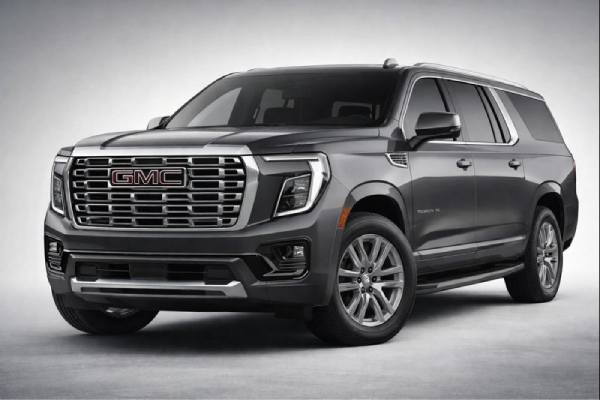

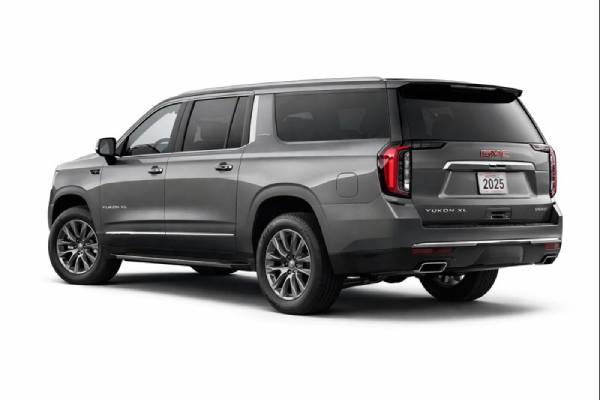
The 2025–present GMC Yukon XL 4WD with the LZ0 3.0L Duramax diesel targets a very specific ownership sweet spot: full-size three-row space and serious towing utility, with better highway efficiency and long-range cruising than the gas V8s. The key engineering story is torque delivery and thermal management. The LZ0’s low-rpm pull makes the XL feel calmer under load, and the 10-speed automatic can hold taller gears at steady speeds, reducing noise and fuel use when you are not asking for peak power. In 4WD form, you gain traction tools for winter, steep ramps, and boat launches, but you also add driveline complexity—transfer case, front differential, and additional fluid services. If you want a large SUV that covers long highway distances, carries adults in all rows, and still behaves like a work vehicle when needed, this is one of the most compelling configurations in the Yukon line.
Top Highlights
- Strong low-rpm torque makes towing and merging feel easier than many gas trims.
- 4WD traction and low range (when equipped) improve control on snow, gravel, and steep launches.
- Diesel highway efficiency supports long range between fill-ups for road-trip duty.
- Extra aftertreatment systems (DEF, DPF) add cost and complexity if you drive mostly short trips.
- Plan on engine oil and filter service about every 12,000 km (7,500 mi) or 12 months (use the oil-life monitor as the final call).
Quick navigation
- LZ0 Yukon XL 4WD at a glance
- LZ0 4WD specs and measurements
- Trims, packages, and driver assist
- Reliability patterns and service bulletins
- Maintenance routine and shopping advice
- Real-world performance and efficiency
- Rivals and when to pick the diesel
LZ0 Yukon XL 4WD at a glance
Think of the Yukon XL LZ0 as a long-wheelbase tow-and-travel SUV first, and a luxury family hauler second. The Duramax diesel’s main advantage is usable torque—the kind you feel at 1,500–2,500 rpm—so the vehicle does not need to rev or downshift as often when you add passengers, cargo, or a trailer. In day-to-day driving, that translates to smoother, more relaxed acceleration and less “gear hunting” on rolling highways.
4WD changes the ownership profile in two ways. First, it improves confidence in low-grip situations (wet grass at a campsite, slushy city streets, steep driveways) and, if equipped with low range, gives you slower, more controlled launches for boat ramps or maneuvering a trailer on uneven ground. Second, it adds hardware: a transfer case, a front differential, and additional half-shafts/CV joints. Those parts are durable when serviced, but they do introduce more fluids and seals that eventually need attention.
The XL body matters, too. Compared with the standard Yukon, you gain meaningful third-row livability and cargo space behind it—enough that many owners keep all rows up and still carry strollers, luggage, or work gear. That extra length also affects turning and parking, so tire choice, alignment health, and camera/parking-sensor condition become more important than they are on shorter SUVs.
Bottom line: if you regularly drive long distances, tow, or run fully loaded, the LZ0 diesel’s calm effort and range are the reason to choose it.
LZ0 4WD specs and measurements
Below are practical, owner-focused specs for the 2025–present Yukon XL 4WD with the LZ0 3.0L diesel. Exact figures can vary by trim, wheel/tire package, towing equipment, and market. Use these as a decision guide, then confirm against the vehicle’s door-jamb labels and official service information for your VIN.
Engine and performance (diesel)
| Item | Specification |
|---|---|
| Code | LZ0 |
| Layout | Inline-6, turbocharged diesel |
| Displacement | 3.0 L (2,993 cc) |
| Induction | Turbocharged (diesel VGT-style system) |
| Fuel system | High-pressure common-rail direct injection |
| Max power | 305 hp (227 kW) @ rpm (varies by calibration/market) |
| Max torque | 671 Nm (495 lb-ft) @ rpm (varies by calibration/market) |
| Timing drive | Chain |
| Emissions hardware | DOC/DPF/SCR with DEF (AdBlue) |
Transmission and driveline (4WD)
| Item | Specification |
|---|---|
| Transmission | 10-speed automatic (application varies by market/trim) |
| Drive type | 4WD |
| Transfer case | Electronic 2-speed (common on 4WD full-size GM SUVs; varies by trim) |
| Differential options | Open standard; eLSD availability depends on trim/package |
Dimensions and capacities (typical XL values)
| Item | Typical figure (approx.) |
|---|---|
| Length | ~5,720 mm (~225 in) |
| Wheelbase | ~3,407 mm (~134 in) |
| Width | ~2,060 mm (~81 in) (without mirrors, market-dependent) |
| Height | ~1,940 mm (~76 in) (varies by suspension and tires) |
| Turning circle | ~12.7 m (~42 ft) (tire-dependent) |
| Fuel tank | ~106 L (~28 US gal) (market-dependent) |
Performance and capability (real-world ranges)
| Metric | Typical range |
|---|---|
| 0–100 km/h (0–62 mph) | ~8.0–9.5 s (trim and load-dependent) |
| Towing capacity | ~3,630–3,760 kg (~8,000–8,300 lb), depending on axle ratio and tow package |
| Payload | Often ~600–800 kg (~1,300–1,750 lb), trim-dependent |
Efficiency (official rating example)
The EPA fuel-economy listing for a 2025 Yukon XL 4WD diesel configuration is commonly shown around 20 mpg city / 26 mpg highway / 22 mpg combined (roughly 10.7 / 9.0 / 10.2 L/100 km).
Fluids and service capacities (owner-planning level)
| Fluid | What to know |
|---|---|
| Engine oil | Use the diesel-spec oil approved for your market (often dexosD); capacity varies by service procedure |
| DEF | Keep the tank topped for long trips; low DEF can trigger speed/starting limitations over time |
| Transfer case and differentials | Fluids are service items—especially if towing, driving in deep snow, or frequent short trips |
If you are building a maintenance budget, assume the diesel’s consumables (fuel filters where applicable, DEF, and aftertreatment-related sensors over time) will slightly offset the fuel savings versus a gas model—especially if your driving pattern prevents clean, regular DPF regenerations.
Trims, packages, and driver assist
Yukon XL trim strategy changes year to year, but the ownership advice stays consistent: focus on the equipment that changes capability (towing hardware, cooling, axle ratio, differential type, 4WD system) and the equipment that changes repair cost (air suspension, large wheel packages, high-end lighting modules, and advanced driver-assist sensors).
Trims and option logic (what matters mechanically)
Common trim families include work-to-luxury steps such as SLE/SLT and upper trims like AT4 and Denali (and “Ultimate” variants in some markets). For the LZ0 diesel, pay attention to:
- Tow package content: integrated brake controller, hitch hardware class, wiring, trailer camera features, and—most importantly—cooling upgrades that keep oil and transmission temperatures in check on grades.
- Axle ratio availability: small gearing differences can meaningfully affect tow ratings and how “busy” the transmission feels.
- Differential choice: an electronic limited-slip differential (when offered) improves traction on slick ramps and helps stability when pulling a trailer out of a turn.
- Suspension type: some trims offer adaptive damping and/or air suspension. Ride quality can be excellent, but long-term costs rise because sensors, compressors, and air springs are more expensive than steel coils.
- Wheel and tire packages: larger wheels often look great but can reduce ride comfort, increase tire costs, and raise the chance of impact damage.
Safety ratings (how to interpret them)
Full-size SUVs are not always rated the same way across regions, and rating coverage can be incomplete depending on model year and test protocol updates. The most useful approach is:
- Check your market’s official crash-test database for the exact model year.
- Confirm whether the result applies to the Yukon, the Yukon XL, or a closely related platform sibling.
- Treat trim differences (lighting, ride height, tire grip) as real-world modifiers, even when the core body structure is shared.
Driver assistance and ADAS (standard vs optional reality)
Expect a baseline suite that typically includes automatic emergency braking, forward-collision alert, lane-keeping support, parking sensors, and a rear camera. Higher trims and option packages may add:
- Adaptive cruise control (excellent for towing and long trips).
- Lane centering / lane assist upgrades (dependent on sensors and calibrations).
- Trailer-focused aids (additional camera angles, trailer length settings, and blind-spot adjustments for towing).
- Hands-free driving systems (market and trim dependent), which require sensor integrity and careful windshield replacement practices.
Service note: after windshield replacement, bumper repair, or alignment work, ADAS calibrations may be required. Budget for that possibility, and verify a shop can perform it correctly before you commit to a repair.
Reliability patterns and service bulletins
The LZ0 diesel is generally chosen by owners who rack up highway miles—an operating pattern that tends to be kinder to aftertreatment systems than constant short trips. Still, modern diesels have more emissions and air-management hardware than the average gas V8, so reliability depends heavily on driving pattern, fuel quality, and maintenance discipline.
Common vs occasional vs rare (what owners actually see)
Common (watch closely):
- DPF regeneration interruptions: If your driving is mostly short trips, the DPF (diesel particulate filter) may not complete regeneration cycles cleanly. Symptoms include rising fuel consumption, a “hot” smell after shutdown, cooling fans running longer, or warning messages asking you to keep driving.
- DEF-related warnings: Low DEF is simple; DEF-quality and heater issues are not. In cold climates, heater faults can trigger repeated warnings and may lead to reduced performance if ignored long enough.
- Soot and EGR system buildup: Stop-and-go usage can accelerate deposit formation. You may notice rough idle, reduced response, or increased regen frequency.
Occasional (mileage/age dependent):
- NOx sensor failures: These can appear as check-engine lights with emissions-related codes. They are often fixable but can be pricey due to parts cost and diagnostic time.
- Turbo actuator or boost-control issues: Not constant, but when they appear, symptoms include sluggish acceleration or limp-mode behavior.
- Cooling system seepage: Long coolant hose runs and heat cycling can expose weak clamps or seals over time.
Rare but high cost (pay attention to early signs):
- Aftertreatment component replacement (DPF/SCR catalyst) if the vehicle has been repeatedly driven with unresolved faults or poor regen conditions.
- High-pressure fuel system concerns if contaminated fuel enters the system (water or gasoline contamination is the big risk).
Software and calibrations
Many driveability and emissions faults on modern diesels are best addressed with updated calibrations (ECU/TCU). If a vehicle has a history of repeat warnings, ask for documentation showing dealer-level diagnostics and any applied updates. A “cleared codes” story without receipts is a red flag.
Recalls and service actions
Do not rely on seller claims alone. Verify outstanding recalls and service campaigns through official VIN tools and dealer records. For a 2025–present model, this is especially important because early production runs sometimes receive mid-cycle software and component revisions.
Maintenance routine and shopping advice
A Yukon XL diesel can be a very durable long-term vehicle when you treat it like the heavy-duty machine it is. The trick is keeping the maintenance plan boringly consistent and matching the vehicle to the right driving pattern.
Practical maintenance schedule (distance or time)
Use the oil-life monitor as the final authority, but a planning schedule like this works well for most owners:
- Engine oil and filter: ~12,000 km (7,500 mi) or 12 months (short-trip and towing users should shorten intervals).
- Fuel filter (if serviceable in your market): commonly every ~30,000–45,000 km (20,000–30,000 mi) or as specified.
- Air filter: inspect every 12 months; replace around 24 months or sooner in dusty areas.
- Cabin filter: 12 months is a reasonable cadence.
- Brake fluid: every 2–3 years regardless of mileage.
- Coolant: follow OEM interval; do not “mix and match” coolant chemistries.
- Transmission fluid: if you tow often, do severe-duty service (many owners plan 60,000–80,000 km / 40,000–50,000 mi); light-duty highway users can often go longer per OEM guidance.
- Transfer case fluid (4WD): plan periodic service—more often with frequent 4WD use, heavy towing, or deep-snow operation.
- Front and rear differential fluids: same logic as transfer case—towing and high-load use justify shorter intervals.
- DEF: top up before long trips; avoid letting it run low repeatedly.
Key buyer checks (diesel + 4WD specific)
Bring this checklist to a pre-purchase inspection:
- Cold start behavior: listen for abnormal knocking, extended cranking, or unstable idle.
- Scan for stored codes: especially emissions/aftertreatment and boost-control history.
- Check regen pattern: ask the seller how the vehicle is used. Frequent short trips are the risk factor.
- Inspect intercooler and charge plumbing: look for oil misting beyond normal film, loose clamps, or seepage.
- 4WD engagement test: verify smooth shifts into 4HI and (if equipped) 4LO; binding, loud clunks, or flashing indicators need diagnosis.
- Look for fluid service proof: transfer case and differential services matter more on 4WD than most sellers admit.
- Towing equipment integrity: hitch wear, trailer wiring function, brake controller operation, and cooling system condition.
Best-fit ownership profile
This configuration shines for owners who:
- Drive longer distances weekly (helping DPF regen health),
- Tow moderate loads regularly,
- Live in winter climates and want traction without giving up interior space.
If your driving is mostly five-minute errands, a gas model often makes life simpler.
Real-world performance and efficiency
The diesel Yukon XL 4WD does not feel “fast” in a sporty sense; it feels effortless. That is the difference. The engine’s torque arrives early, so the vehicle builds speed without drama, and the 10-speed can keep revs low once you are cruising. For daily commuting, that often means fewer downshifts and a calmer cabin—especially compared with high-output turbo gas engines that rely more on boost and revs.
Ride, handling, and NVH (noise, vibration, and harshness)
- Ride comfort: the XL wheelbase helps it settle on highways. Bigger wheels can undo that benefit by adding impact harshness.
- Steering and stability: steering is tuned for predictable control rather than feedback. On-center stability is usually strong, but tire pressure and alignment matter because of the vehicle’s mass.
- Braking feel: expect strong stopping power, but plan for maintenance—this is a heavy SUV, and towing accelerates pad/rotor wear.
Powertrain character and towing behavior
- Diesel pull: the engine feels strongest in the low-to-mid range, which is exactly where you want it for towing.
- Transmission logic: in tow/haul, shifts tend to be more decisive and engine braking is more present on descents.
- Heat management: sustained grades with a trailer are a good test. A well-equipped tow package and clean cooling stack are the difference between confidence and temperature anxiety.
Efficiency and range in the real world
Official fuel-economy ratings provide a baseline, but results depend heavily on speed and wind. Typical owner experiences look like:
- Highway at 100–110 km/h (62–68 mph): often very close to the rating when unloaded.
- Highway at 120–130 km/h (75–80 mph): expect a noticeable penalty (diesels still do well, but aero drag dominates).
- City and short trips: diesel efficiency advantage shrinks; frequent cold starts and incomplete warm-up raise consumption and stress aftertreatment.
Under load
Towing can raise fuel consumption dramatically—often by 30–60% depending on trailer size, speed, and terrain. The diesel advantage is that it stays composed while doing it, and it usually returns to good economy once you disconnect and cruise again.
Rivals and when to pick the diesel
The Yukon XL diesel 4WD competes in a narrow but important segment: long-wheelbase, three-row, body-on-frame SUVs that can tow real weight and still cover highway miles comfortably.
Closest rivals
- Chevrolet Suburban 3.0 diesel (4WD): the closest match mechanically. Your decision often comes down to interior design, trim packaging, and price.
- Ford Expedition Max (3.5 EcoBoost gas): strong performance and towing, but fuel economy and long-range cruising can favor the diesel GM twins depending on usage and fuel prices.
- Jeep Wagoneer L (gas): spacious and comfortable, often powerful, but operating costs and efficiency can vary widely by engine and trim.
- Toyota Sequoia (hybrid): not a direct XL-length match in some markets; strong reliability reputation, but packaging and cargo behavior differ.
Where the Yukon XL diesel wins
- Long-distance efficiency: if you do real highway miles, diesel efficiency and range are hard to ignore.
- Low-rpm towing confidence: torque delivery feels “right-sized” for a heavy SUV pulling a trailer.
- All-season usability with 4WD: traction tools matter if you launch boats, tow in winter, or travel to remote areas.
Where a rival (or a gas Yukon) may fit better
- Short-trip city life: repeated cold starts and short drives are the diesel’s weak environment.
- Lower complexity preference: gas engines eliminate DEF and reduce aftertreatment-related ownership variables.
- Service access: if your area has limited diesel-specialist support, diagnostics and parts wait times can become a real inconvenience.
A simple rule works: choose the LZ0 diesel if you drive long, tow, and keep vehicles for years. Choose gas if your usage is mostly short hops, you rarely tow, and you want the simplest ownership experience.
References
- 2025 Fuel Economy Guide 2025 (Official Fuel Economy Data)
- Recalls 2025 (Recall Database)
- Vehicle Safety Ratings 2025 (Safety Rating Database)
- Ratings 2025 (Safety Rating)
Disclaimer
This article is for informational purposes only and is not a substitute for professional diagnosis, repair, or safety evaluation. Specifications, torque values, fluid types, service intervals, and procedures vary by VIN, market, model year, and equipment. Always verify details using your vehicle’s official owner’s manual and service documentation, and consult a qualified technician for repair decisions.
If this guide helped, please consider sharing it on Facebook, X (Twitter), or your favorite forum to support our work.