
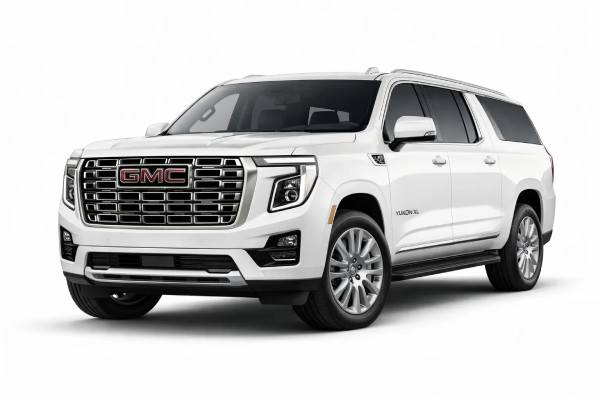
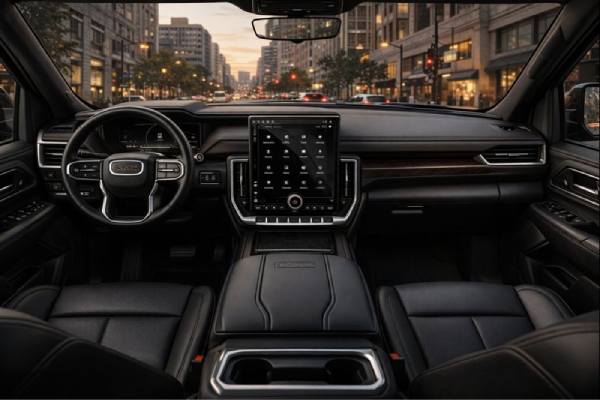
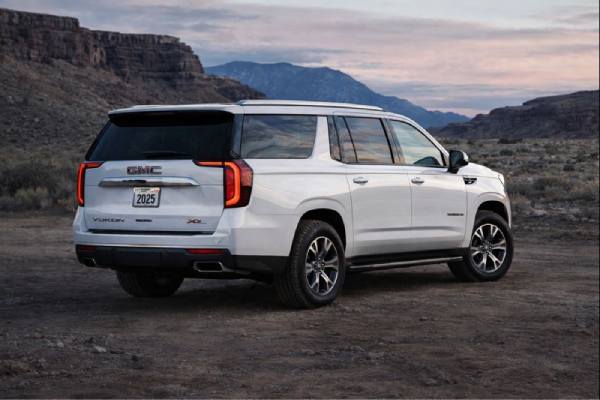
The Yukon XL Denali 4WD is the “do-it-all” version of GMC’s longest SUV: big cargo, true three-row space, and a driveline meant to work year-round. With the L87 6.2L V8 and 10-speed automatic, it blends strong low-end torque with relaxed highway gearing, while the 4WD system adds traction and durability benefits for snow, wet ramps, and frequent towing. The Denali trim also changes the ownership feel: more sound isolation, richer materials, and—when optioned—adaptive damping and air suspension that can improve ride control despite the XL’s size.
If you want a family-hauler that can tow confidently, cover long distances comfortably, and still handle rough weather, this is the Yukon XL to understand in detail before you buy.
Quick Specs and Notes
- Strong V8 power with confident passing even when loaded.
- 4WD hardware improves traction on wet ramps, snow, and gravel, especially with tow duty.
- Long wheelbase smooths highway ride and makes trailer stability easier to manage.
- Budget for higher tire and brake wear if you tow often or run 22-inch wheels.
- Plan on oil changes about every 12,000 km (7,500 mi) or 12 months, sooner with heavy towing.
Contents and shortcuts
- Yukon XL Denali 4WD explained
- L87 specs and measurements
- Denali packages and safety tech
- Known problems and factory fixes
- Service schedule and buying tips
- How it drives and tows
- Denali 4WD vs key rivals
Yukon XL Denali 4WD explained
Think of the Yukon XL Denali 4WD as a heavy-duty family platform built around three priorities: passenger space, towing stability, and long-distance comfort. The “XL” matters as much as the Denali badge. Compared with the standard-length Yukon, the XL’s longer wheelbase gives you more third-row usability and a bigger cargo well behind it—useful for road trips, strollers, sports gear, or work equipment without folding seats. That extra length also helps when towing: it calms pitch and yaw motions that can make shorter SUVs feel busy with a trailer.
The Denali trim shifts the character from “fleet-capable” to “premium-capable.” You typically get more sound-deadening, upgraded seating materials, richer trim, and higher-end infotainment and audio options. On the road, Denali ownership often comes down to suspension choice. The standard setup is tuned for comfort, but options like adaptive damping (and, on some builds, rear air leveling or full air suspension) can noticeably reduce float and improve control with passengers, cargo, or a trailer tongue load.
The 4WD system is not just for deep snow. For many owners, the real value is repeatable traction in everyday situations: wet boat ramps, steep gravel driveways, slick urban winters, and towing launches where rear-wheel drive can spin a tire. A 2-speed transfer case (when fitted) adds low range for slow, controlled movement on loose terrain, backing a trailer on uneven ground, or crawling out of a muddy job site. The trade-off is complexity: more fluid services, more seals, and more rotating parts than RWD.
In this generation, the L87 6.2L V8 is the performance centerpiece. It delivers strong acceleration for a vehicle this size, but it also asks for disciplined maintenance—especially oil quality and change intervals—because modern cylinder deactivation systems depend on clean oil and correct viscosity to keep lifters and oil control circuits happy. Bottom line: the Yukon XL Denali 4WD is at its best when you treat it like a premium truck—capable, but not maintenance-optional.
L87 specs and measurements
Below are the core technical specs that matter most for ownership: what’s under the hood, how the 10-speed and 4WD system behave, and the dimensions that affect parking, payload, and towing. Figures can vary by model year, wheel size, suspension package, and market equipment, so treat these as typical for the 2021–present Yukon XL Denali 4WD with the L87.
Engine and performance (ICE)
| Item | Specification |
|---|---|
| Code | L87 |
| Engine layout and cylinders | V8, OHV (pushrod), 2 valves/cyl |
| Bore × stroke | 103.25 × 92.0 mm (4.07 × 3.62 in) |
| Displacement | 6.2 L (6,162 cc) |
| Induction | Naturally aspirated |
| Fuel system | Direct injection |
| Compression ratio | ~11.5:1 |
| Max power | 420 hp (313 kW) @ ~5,600 rpm |
| Max torque | 624 Nm (460 lb-ft) @ ~4,100 rpm |
| Timing drive | Chain |
| Emissions and efficiency standard | EPA (market dependent) |
| Rated efficiency (typical) | ~14–15 L/100 km combined (16–17 mpg US; 19–20 mpg UK) |
| Real-world highway @ 120 km/h (75 mph) | ~12.5–14.5 L/100 km (16–19 mpg US; 19–23 mpg UK) |
Transmission and driveline
| Item | Specification |
|---|---|
| Transmission | 10-speed automatic (Hydra-Matic 10L80 family) |
| Gear ratios | 4.69 / 2.98 / 2.15 / 1.80 / 1.52 / 1.27 / 1.00 / 0.85 / 0.69 / 0.64 |
| Drive type | 4WD (system and transfer case vary by build) |
| Transfer case | Single-speed or 2-speed (low range on 2-speed units) |
| Differential | Typically open; some packages add electronic traction aids |
Chassis and dimensions
| Item | Typical specification |
|---|---|
| Suspension (front / rear) | Independent front; multi-link rear (coil or air, depending on package) |
| Steering | Electric power steering |
| Brakes | 4-wheel disc (sizes vary by year/package) |
| Wheels/tires | Common: 275/50 R22 or 275/60 R20 (varies) |
| Ground clearance | ~200–210 mm (7.9–8.3 in), package dependent |
| Length / width / height | ~5,720 / 2,060 / 1,930–1,950 mm (225.2 / 81.1 / 76.0–76.8 in) |
| Wheelbase | ~3,407 mm (134.1 in) |
| Turning circle | ~12.6–13.0 m (41–43 ft), wheels/tires dependent |
| Curb weight | ~2,750–2,900 kg (6,060–6,390 lb), options dependent |
| Fuel tank | ~106 L (28.0 US gal / 23.3 UK gal) |
Cargo volume (SAE-style reporting, typical)
| Configuration | Volume |
|---|---|
| Behind 3rd row | ~1,175 L (~41.5 ft³) |
| Behind 2nd row | ~2,655 L (~93.8 ft³) |
| Behind 1st row | ~4,100 L (~144.7 ft³) |
Performance and capability (typical, varies by tires and options)
| Metric | Typical result |
|---|---|
| 0–100 km/h (0–62 mph) | ~6.5–7.0 s |
| 0–60 mph | ~6.0–6.6 s |
| Braking 100–0 km/h | ~40–44 m |
| Braking 62–0 mph | ~125–145 ft |
| Towing capacity | ~3,500–3,700 kg (7,700–8,200 lb), equipment dependent |
| Payload | ~635–750 kg (1,400–1,650 lb), equipment dependent |
Fluids and service capacities (typical guidance)
| Item | Specification (confirm by VIN) |
|---|---|
| Engine oil | dexos 0W-20; ~7.6 L (8.0 US qt) with filter |
| Coolant | GM-approved Dex-Cool type; ~13–15 L (13.7–15.9 US qt) |
| Transmission fluid | GM 10-speed ATF; service fill varies widely by method |
| Front and rear differential | GM gear oil spec varies by axle; capacity varies |
| Transfer case | GM transfer case fluid; capacity varies by unit |
| A/C refrigerant | R-1234yf; charge varies by system build |
Electrical (typical)
| Item | Typical specification |
|---|---|
| Alternator output | ~170–220 A (package dependent) |
| 12V battery | AGM type common; group size varies |
| Spark plugs | Iridium type; gap and torque per service info |
Safety and driver assistance (availability varies by year/package)
| Item | Notes |
|---|---|
| Crash ratings | Vary by year and test body; check the exact model year listing |
| ADAS | AEB, lane support, blind-spot monitoring, rear cross-traffic alert; ACC often package-dependent |
| Headlights (IIHS context) | Ratings can vary by trim lighting option |
Denali packages and safety tech
Denali isn’t a single fixed equipment list across all years—it’s a trim level with common themes (luxury, quietness, technology) plus option packages that can materially change how the SUV drives, tows, and ages. For shoppers, the goal is to identify which Denali you’re looking at, then confirm which packages it actually has.
Trims and configurations you’ll see most
Most buyers encounter the Yukon XL Denali as a well-equipped default, but there are still meaningful variations:
- Seating layouts: Many are 7- or 8-passenger depending on second-row captain’s chairs vs bench. If you regularly carry adults in the third row, the XL body is the bigger win than any trim badge.
- Wheel and tire packages: 22-inch wheels look right on the Denali, but they can increase tire cost and can feel harsher over sharp impacts compared with a 20-inch setup. If you tow often, prioritize a tire with a higher load rating over looks.
- Ride-control packages: Adaptive damping and air suspension (where equipped) can improve body control and keep the vehicle level under load. They also add long-term service considerations (compressors, air springs, height sensors).
Packages that change the “mechanical” experience
Option names vary by year, but watch for the functional items below because they affect towing and long-term ownership:
- Trailering equipment upgrades: Integrated brake controller, hitch guidance features, enhanced cooling, and towing mirrors (where available). These tend to reduce stress on hot grades and make trailer setup less error-prone.
- 4WD transfer case type: Some builds prioritize automatic engagement, others add true low range. If you back trailers on uneven terrain or deal with deep snow, a 2-speed transfer case is worth seeking out.
- Cooling and braking differences: Heavy-duty trailering equipment and wheel size can change brake feel and thermal capacity in subtle ways—important if you tow near the limit.
Safety ratings and what they mean here
Safety results depend on the exact year and the test organization’s version of the protocol. Full-size SUVs also don’t always have the same depth of testing coverage as compact crossovers. The practical takeaway is to look up:
- Your exact model year (not “2021–present” as a group).
- Your exact lighting option if headlight performance is included.
- Whether optional ADAS was fitted, because a base ADAS suite can differ from a package-based suite.
ADAS and ownership implications
Modern driver assistance adds real value on a vehicle this large, but it also changes repair realities:
- AEB and forward sensors: If the front fascia is damaged or even removed for repairs, calibration may be required.
- Lane support and cameras: Windshield replacement can trigger recalibration needs.
- Parking sensors and surround view: Great for daily use, but expect higher repair cost after minor impacts.
Quick identifier tips when inspecting:
- Look for an integrated trailer brake controller and tow/haul controls that match the steering wheel and cluster layout.
- Confirm 4WD mode selector type and whether low range is present.
- Check the tire sidewall for load index, not just size—important for stability and towing confidence.
Known problems and factory fixes
The Yukon XL Denali 4WD is fundamentally a robust full-size SUV, but “robust” does not mean “problem-free.” The most expensive issues tend to be oil-control related (modern V8 systems), driveline seals and fluids (because 4WD adds parts), and electronics that require calibration rather than simple parts swaps. Here’s a practical prevalence-and-severity map.
Common (most likely to encounter)
- Infotainment glitches and camera issues (low to medium severity): Symptoms can include freezes, blank screens, slow boot, or intermittent camera dropout. Often the remedy is software updates, module resets, or targeted component replacement.
- Brake wear and tire wear (medium cost over time): The XL’s mass and wheel sizes mean tires and brakes can disappear faster than owners expect—especially with frequent city driving, mountain descents, or towing.
- Alignment drift and uneven tire wear (medium): Large SUVs can go out of alignment after pothole impacts. Catching it early prevents expensive tire replacement.
Occasional (depends on use and climate)
- 10-speed shift feel complaints (medium): Some owners report harsh shifts, hunting, or shudder-like sensations, often tied to adaptive learning, fluid condition, or calibration updates. A correct diagnostic approach matters here—don’t shotgun parts.
- Transfer case or differential seepage (medium): Extra driveline components mean more seals and vents. Seepage is not always a leak, but it should be monitored because low fluid can become a high-cost failure.
- Air suspension or adaptive damper concerns (medium to high): If equipped, symptoms include uneven ride height, compressor noise, or bouncy ride. These systems work well when healthy, but repairs are more specialized.
Rare (but high impact)
- Valvetrain-related V8 issues (high): Modern cylinder deactivation systems rely on lifters and oil control circuits. Warning signs can include misfires, ticking noises, rough running, or check-engine lights under certain conditions. Clean oil, correct viscosity, and sensible intervals reduce risk, but diagnostics must be precise if symptoms appear.
- Major driveline noise (high): Persistent whining, grinding, or vibration under load can point to axle, bearing, or transfer case problems—especially if the vehicle has towed heavy or run mismatched tires.
Mileage and use patterns that change risk
- Short trips and cold starts: More moisture and fuel dilution in oil, stressing oil control systems.
- Frequent towing: Higher thermal loads on transmission and driveline fluids; more brake wear.
- Snow belt operation: More corrosion exposure, more 4WD engagement cycles, and more underbody impacts.
Recalls, TSBs, and “service actions”
Recalls and bulletins change over time and vary by model year. The best practice is to verify by VIN and confirm completion in dealer records. When a software update is the official remedy (powertrain, transmission, camera, ADAS), insist that the update is documented on the repair order—future troubleshooting becomes easier.
Pre-purchase checks to request
- Full maintenance history with oil type and interval noted.
- Proof of 4WD system fluid service if the vehicle towed or operated in harsh climates.
- Tire brand/model and tread depth on all four corners (mismatched tires can stress driveline systems).
- Scan for stored codes and confirm any warning lights were not recently cleared without repair.
Service schedule and buying tips
A Yukon XL Denali 4WD can age extremely well if you treat its fluids and wear items as the cost of capability. The schedule below is a practical “real-owner” plan that complements factory oil-life monitoring, with extra attention to towing and 4WD hardware.
Practical maintenance schedule (distance or time, whichever comes first)
- Engine oil and filter: Every 12,000 km (7,500 mi) or 12 months; every 8,000 km (5,000 mi) with frequent towing, idling, or short-trip use. Use the specified dexos-grade oil.
- Tire rotation and pressure check: Every 10,000–12,000 km (6,000–7,500 mi). Rotate more often if you see shoulder wear on 22-inch setups.
- Engine air filter: Inspect every 20,000–25,000 km (12,000–15,000 mi); replace as needed (sooner in dust).
- Cabin air filter: Every 20,000–25,000 km (12,000–15,000 mi) or annually in heavy pollen areas.
- Brake fluid: Every 3 years regardless of mileage (moisture control matters for pedal feel and corrosion).
- Coolant: Typically around 5 years / 240,000 km (150,000 mi) for long-life coolant, but shorten if severe service or contamination occurs.
- Spark plugs: Commonly around 160,000 km (100,000 mi) for modern iridium plugs; check your exact year’s interval.
- Transmission fluid: If you tow regularly or drive in heat, consider a service around 70,000–100,000 km (45,000–60,000 mi). For light duty, you may extend, but clean fluid helps shift quality.
- Transfer case and differentials: Inspect for leaks annually; service around 80,000–100,000 km (50,000–60,000 mi) for frequent 4WD use, towing, or harsh climates.
- 12V battery test: Annually after year 3; replacement often falls in the 4–6 year window depending on climate and accessory load.
Fluid specs and capacities (decision-useful)
- Engine oil: dexos 0W-20; about 7.6 L (8.0 US qt) with filter.
- Coolant: GM-approved long-life coolant type; capacity varies by configuration.
- Driveline fluids: Use the exact transfer case and axle fluid specs for your VIN; wrong fluid can cause noise, chatter, or premature wear.
Essential torque values (common reference points)
- Wheel lug nuts: ~190 Nm (140 lb-ft) typical for this class.
- Spark plugs: torque varies by plug and head design; verify the exact spec before service.
- Use official service info for any driveline fasteners (transfer case and differential plugs vary by axle and housing).
Buyer’s guide: what to seek and what to avoid
Seek:
- A Denali with documented oil changes and a consistent shop history.
- Matching tires on all four corners with even wear.
- If you tow: integrated brake controller, proper hitch setup, and evidence of driveline fluid service.
Be cautious with:
- Vehicles on their third set of mismatched tires or uneven tread depths (a driveline stress clue).
- Persistent vibration at highway speeds (could be tires, could be driveline).
- Air suspension faults (not a deal-breaker, but price accordingly).
Long-term outlook:
- The platform is built for mileage, but it rewards owners who keep fluids fresh, address small leaks early, and avoid running heavy loads on worn tires or brakes.
How it drives and tows
For a vehicle with this footprint, the Yukon XL Denali 4WD can feel surprisingly relaxed—provided it’s on good tires and the suspension is in good shape. The long wheelbase is the star: it smooths highway ripples and reduces the “busy” body motion that shorter SUVs can have on broken pavement. In town, the trade-off is simple physics—tight parking lots and narrow drive-throughs require more planning, and curb impacts are expensive if you’re on large wheels.
Ride, handling, and NVH
- Ride quality: The XL rides best at highway speeds, where mass and wheelbase work in your favor. Adaptive damping and air suspension (if equipped) help reduce float and keep the body controlled over dips.
- Steering feel: Electric steering is tuned for easy effort rather than road texture. It’s accurate enough, but don’t expect a sporty feel.
- Cabin noise: Denali trims tend to be quieter than lower trims, but tire choice matters a lot—aggressive all-terrain patterns add hum.
Powertrain character
The L87 V8 gives the Denali a confident, effortless feel. Throttle response is strong at low speeds for a naturally aspirated engine, and the 10-speed’s wide ratio spread helps it stay in the torque band without dramatic downshifts. Under light load it will often settle into higher gears quickly, keeping the cabin calm.
Where owners notice the transmission most:
- Rolling acceleration (passing): Usually a quick downshift or two, then steady pull.
- Hunting on grades: Can happen when lightly loaded on rolling terrain; tow/haul mode usually reduces it.
Real-world efficiency
Expect fuel economy to be highly sensitive to speed and tire choice.
Typical real-world patterns:
- City-heavy driving: ~15–18 L/100 km (13–16 mpg US; 16–19 mpg UK) depending on traffic and warm-up time.
- Highway cruising (100–120 km/h / 60–75 mph): ~12.5–14.5 L/100 km (16–19 mpg US; 19–23 mpg UK).
- Mixed use: often lands around ~14–15 L/100 km (16–17 mpg US).
Cold weather can add a noticeable penalty due to longer warm-up, winter fuel blends, and higher rolling resistance tires.
4WD behavior and traction
In normal conditions, many systems prioritize efficiency and stability, then add front axle engagement when needed. The key ownership point is tires: the best 4WD system can’t outwork poor winter tires. With proper tires, 4WD helps:
- Pulling away confidently on slick intersections.
- Stability when a trailer unloads the rear axle on wet surfaces.
- Reduced wheelspin when merging or climbing hills in snow.
Load and towing impressions
When properly equipped, the Yukon XL Denali 4WD is a stable tow platform. The long wheelbase helps keep the trailer “behind you” rather than steering the vehicle. Practical tips:
- Use tow/haul mode early on grades and in stop-and-go towing to manage heat.
- Keep trailer tongue weight in the recommended range; too light creates sway.
- Expect a fuel economy penalty of roughly 25–50% under moderate towing, and more at high speeds or with tall trailers.
- If you tow near the limit often, shorten transmission and driveline fluid intervals.
Denali 4WD vs key rivals
The Yukon XL Denali 4WD lives in a competitive niche: premium full-size SUVs that can carry adults in three rows and still tow real weight. Here’s how it generally stacks up.
Versus Ford Expedition MAX
- Strengths for Ford: Often feels lighter on its feet, and the turbo V6 delivers strong midrange torque with good passing power.
- Strengths for GMC: The V8 delivers a smooth, linear feel and a classic towing character; many owners prefer the Denali interior ambiance and the calm highway ride of the XL’s wheelbase.
- Ownership angle: Turbocharged performance can be excellent, but some buyers prefer the simplicity of naturally aspirated power delivery. Both demand maintenance discipline—just in different places.
Versus Jeep Wagoneer L
- Strengths for Jeep: Big interior volume, strong power, and a premium feel in upper trims.
- Strengths for GMC: The Denali’s road manners can feel more “settled,” and the GM ecosystem for towing features and service coverage is widely familiar.
- Ownership angle: Compare real-world fuel economy and tire/brake costs carefully—both are heavy vehicles with premium running costs.
Versus Toyota Sequoia
- Strengths for Toyota: Strong reputation for durability and a modern hybrid powertrain approach (depending on year).
- Strengths for GMC: The Yukon XL’s extended-length body provides a different cargo-and-third-row practicality level. If you truly need adult third-row space plus cargo behind it, the XL layout is hard to replace.
- Ownership angle: Toyota’s powertrain strategy and packaging can trade cargo layout for drivetrain design; decide which daily use case matters more.
Versus Cadillac Escalade ESV
- Strengths for Cadillac: More luxury presentation, more brand-forward tech and design elements.
- Strengths for GMC: Similar core platform benefits with a typically lower buy-in cost and a more understated ownership profile.
- Ownership angle: If you want the platform’s strengths without paying for maximum badge and trim complexity, Denali is often the sweet spot.
The practical verdict
Choose the Yukon XL Denali 4WD if you prioritize:
- XL-length cargo and third-row practicality,
- confident towing stability,
- a premium, quiet highway experience,
- and a 4WD system that makes year-round use easier.
Consider rivals if you: want the lightest-feeling drive, prefer a specific powertrain philosophy (turbo or hybrid), or want the most overt luxury branding.
References
- Recalls 2025 (Recall Database)
- Ratings 2025 (Safety Rating)
- Find and Compare Cars 2025 (Fuel Economy Database)
- 2021 3L Duramax Diesel Supplement 2021 (Service Information)
Disclaimer
This article is for informational purposes only and is not a substitute for professional diagnosis, repair, or safety advice. Specifications, torque values, fluid capacities, service intervals, and procedures can vary by VIN, model year, market, and installed equipment. Always verify details using official owner literature and service documentation for your exact vehicle.
If this guide helped, please consider sharing it on Facebook, X (Twitter), or your favorite forum to support our work.