
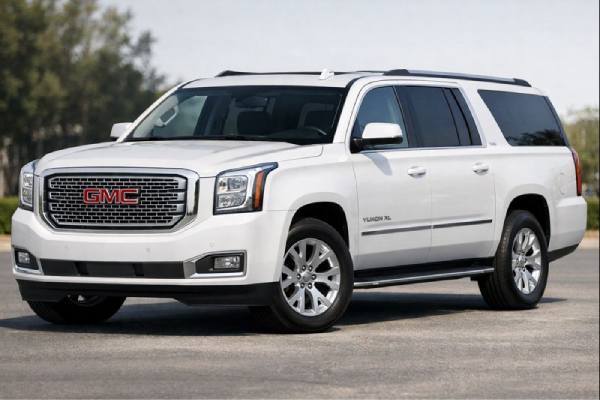
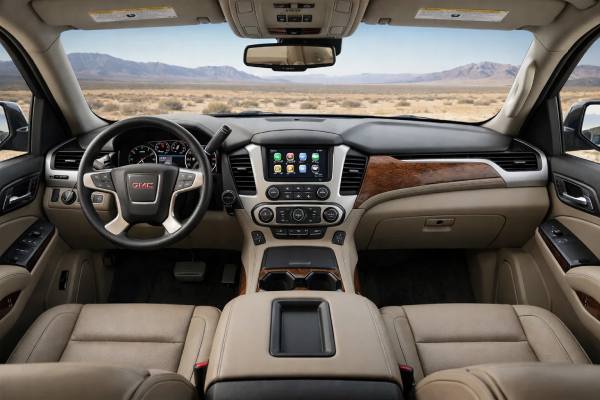
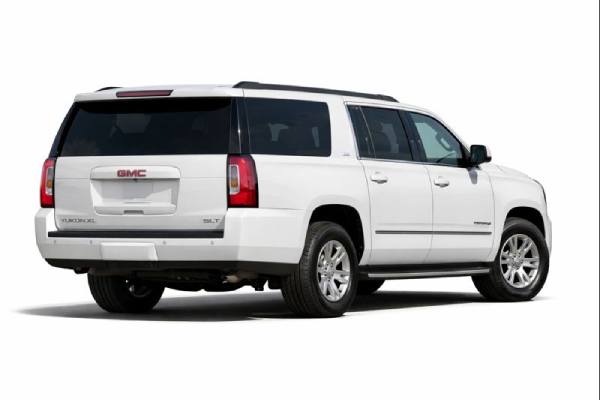
The 2015–2020 GMC Yukon XL Denali RWD (K2UG) is a traditional full-size SUV built around two priorities: effortless torque and long-distance comfort with real towing muscle. The 6.2L L86 EcoTec3 V8 (420 hp) gives the Denali its signature character—strong low-rpm pull, quick passing power, and relaxed highway cruising. In RWD form, you also avoid 4WD transfer-case complexity and gain a little efficiency and steering lightness, while keeping the same stout frame, independent front suspension, and solid rear axle.
Ownership tends to be best when you treat it like the heavy-duty family hauler it is: keep fluids fresh, address small drivability issues early, and don’t ignore warning signs from the engine’s cylinder-deactivation hardware or the transmission’s shift quality. Do that, and the XL Denali can be a genuinely satisfying “big vehicle that feels smaller” daily driver.
Owner Snapshot
- Strong, quiet highway cruiser that stays composed even when fully loaded.
- Excellent towing manners for a full-size SUV, especially with a properly set up weight-distributing hitch.
- 6.2L V8 delivers confident passing power without needing high rpm.
- Budget for higher-cost suspension and drivetrain repairs as mileage climbs, especially if ride-control parts are worn.
- Plan engine oil and filter service around 12 months or 12,000 km (7,500 mi) maximum (shorter for towing and short-trip use).
Quick navigation
- GMC Yukon XL Denali RWD essentials
- Yukon XL Denali L86 spec sheet
- Denali XL equipment, years and ADAS
- Reliability hotspots and service bulletins
- Maintenance schedule and buying advice
- Driving feel, towing and economy
- Yukon XL Denali RWD competitor check
GMC Yukon XL Denali RWD essentials
Think of this generation Yukon XL Denali as a premium Suburban-style platform with GMC’s most upscale interior tuning, the bigger V8, and (usually) the highest equipment level. The “XL” is the whole point for many owners: it adds meaningful cargo depth behind the third row and a calmer, more planted feel at speed. The K2UG chassis is body-on-frame, so it behaves differently than a unibody crossover—more mass, more capability, and a stronger separation between “structure” and “cabin.”
With the L86 6.2L V8, you get direct injection (DI), variable valve timing (VVT), and cylinder deactivation (GM’s Active Fuel Management, often called AFM). In practice, that means great torque for merging and towing, and decent highway economy for the size when the engine can drop cylinders on gentle grades. The trade-off is complexity: lifters and related valvetrain hardware matter more here than on older small-blocks, and oil quality and change intervals affect long-term outcomes.
RWD specifically is a smart pick for owners who mostly drive paved roads and want fewer driveline parts to service. It also tends to feel slightly more “clean” in steering and front-end response than the 4WD versions, simply because there’s less hardware in motion. The downside is traction: with this much curb weight and torque, tire choice and rear-axle traction control calibration matter in rain, cold, and steep driveways.
Where the XL Denali shines is the “real life” combination: three-row comfort, serious towing ratings, and a drivetrain that doesn’t feel strained. Where it can frustrate is when small issues stack up—ride-control wear, drivability quirks, and high parts prices if you buy one that’s overdue for maintenance.
Yukon XL Denali L86 spec sheet
Below are the specs most owners actually use for decisions: performance outputs, towing limits, dimensions, and the service capacities you’ll reference when planning maintenance. Values can vary by model year, axle ratio, wheel/tire package, emissions equipment, and optional content—so treat these as a baseline and verify against your door-jamb labels and official documentation for your VIN.
Engine and performance (L86 6.2L V8)
| Item | Specification |
|---|---|
| Engine code | L86 (EcoTec3) |
| Layout | V8, OHV (pushrod), 2 valves/cyl |
| Displacement | 6.2 L (6162 cc) |
| Induction | Naturally aspirated |
| Fuel system | Direct injection |
| Compression ratio | 11.5:1 (typical for this 6.2 family) |
| Max power | 420 hp (313 kW) @ 5600 rpm |
| Max torque | 460 lb-ft (623 Nm) @ 4100 rpm |
| Timing drive | Chain |
| Spark plug gap | 0.95–1.10 mm (0.037–0.043 in) |
Transmission and driveline (year split matters)
Most 2015–2017 Yukon XL Denali models use an 8-speed automatic (8L90 family). Later years commonly use a 10-speed automatic (10L80 family). Exact fitment can vary by year and build.
| Item | 8-speed (8L90 family) | 10-speed (10L80 family) |
|---|---|---|
| 1st | 4.56 | 4.70 |
| 2nd | 2.97 | 2.99 |
| 3rd | 2.08 | 2.15 |
| 4th | 1.69 | 1.77 |
| 5th | 1.27 | 1.52 |
| 6th | 1.00 | 1.28 |
| 7th | 0.85 | 1.00 |
| 8th | 0.65 | 0.85 |
| 9th | — | 0.69 |
| 10th | — | 0.64 |
| Reverse | 3.82 | 4.87 |
| Drive type | RWD | RWD |
Chassis, dimensions, and weights (typical for XL)
| Item | Value (approx.) |
|---|---|
| Suspension (front) | Independent, coilover-type layout |
| Suspension (rear) | Solid axle, coil springs |
| Length | ~5697 mm (224.3 in) |
| Wheelbase | ~3302 mm (130.0 in) |
| Width (no mirrors) | ~2045 mm (80.5 in) |
| Height | ~1889 mm (74.4 in) |
| Turning circle | ~13.4 m (44 ft) |
| Curb weight | ~2600–2750 kg (5730–6060 lb), equipment-dependent |
| Fuel tank | 119.2 L (31.5 US gal / 26.2 UK gal) |
Performance and capability (real-world useful numbers)
| Item | Typical expectation |
|---|---|
| 0–60 mph (0–97 km/h) | ~6.0–6.7 s (conditions and tires matter) |
| Highway passing (50–80 mph) | Strong; usually under ~5 s with kickdown |
| Towing capacity (Yukon XL Denali 2WD) | 3674 kg (8,100 lb) with correct axle ratio and equipment |
| GCWR (gross combined) | 6350 kg (14,000 lb) |
| Max tongue weight (with weight distributing hitch) | 453 kg (1,000 lb) |
| Max tongue weight (weight carrying hitch) | 272 kg (600 lb) |
Fluids and service capacities (owner-facing)
| System | Specification (common) | Capacity (approx.) |
|---|---|---|
| Engine oil | Dexos 1 Gen 2; commonly SAE 0W-20 | 8.0 L (8.5 US qt) |
| Coolant | Dex-Cool (50/50 mix typical) | 16.5 L (17.4 US qt) |
| A/C refrigerant | R-134a (check underhood label) | varies |
| Wheel nut torque | — | 190 Nm (140 lb-ft) |
If you tow regularly or drive in heat, treat transmission and axle fluids as “working fluids,” not lifetime fill. Fresh fluid is cheap insurance compared with a transmission rebuild or differential repair.
Denali XL equipment, years and ADAS
Denali is the “top of the stack” trim for this generation, so most examples you’ll shop already include the features people want: premium leather, upgraded audio, power-folding third row, and a heavier emphasis on cabin quietness (including active noise cancellation on many builds). Still, the Yukon XL Denali range changes in meaningful ways across 2015–2020—especially in powertrain and driver assistance tech.
Trims and options that actually change the vehicle
Even within Denali, you’ll see equipment packages that affect comfort, cost, and long-term maintenance:
- Ride control and suspension tuning: Some XL Denalis use adaptive damping (often marketed as Magnetic Ride Control on GM’s premium SUVs). It drives beautifully when healthy, but shocks are expensive when worn. If the vehicle bounces over highway undulations or “thumps” over sharp edges, plan for suspension spend.
- Wheel and tire packages: 20-inch wheels are the easiest to live with. 22-inch packages look right on a Denali, but they cost more in tires, ride more firmly, and can amplify road noise as the tires age.
- Power running boards: Convenient, but motors and hinges dislike winter salt and neglect. Listen for slow operation or binding.
- Trailering equipment: A factory integrated trailer brake controller and the correct hitch setup make a big difference in stability and brake feel when towing in the 3,000–3,700 kg range.
Year-to-year and drivetrain changes worth noting
- Transmission evolution: The biggest functional change is the move from the 8-speed era to the 10-speed era. The 10-speed generally keeps the engine in its torque band with smaller ratio gaps and can feel more decisive on grades. The 8-speed can be smooth, but some owners report shudder or busy shifting when fluid ages or if calibration is outdated.
- Infotainment generations: Mid-cycle updates can change screen responsiveness, Bluetooth reliability, and camera quality. Test everything in a driveway: pairing, microphones, USB ports, and the reverse camera.
Safety ratings and what they mean here
Safety “ratings” can be confusing because testing evolves and not every body style gets the same tests every year. For this model line:
- NHTSA (U.S.) provides star ratings for certain configurations. Use the NHTSA vehicle detail page for your exact year and drivetrain to avoid assuming one rating applies to all.
- IIHS coverage for large SUVs can be more limited than for high-volume crossovers. For the 2017 Yukon XL, IIHS focuses on crash avoidance availability (like forward collision warning and optional automatic emergency braking in certain packages) and child-seat anchor evaluations, rather than providing a full crash-test suite for every variant.
ADAS and driver assistance: what’s common, what’s optional
Expect many Denalis to have:
- Blind-spot monitoring and rear cross-traffic alert (often standard or widely optioned on Denali).
- Lane departure warning and lane keeping support (availability varies by year and package).
- Forward collision alert and automatic emergency braking (more commonly present in later years or within specific “driver alert” packages).
A practical ownership note: if the windshield is replaced, forward-facing camera calibration may be required for lane and collision systems to behave correctly. Budget for calibration if you see warning lights after glass work.
Reliability hotspots and service bulletins
Overall, the Yukon XL Denali RWD can be dependable, but it’s not a “set and forget” vehicle once it gets into higher mileage. The key is knowing which systems tend to fail, what symptoms look like early, and which fixes prevent repeat problems.
Common issues (higher prevalence)
- AFM lifter and valvetrain wear (medium to high cost):
Symptoms: ticking that doesn’t go away warm, misfires, rough idle, loss of power, check-engine light.
Likely cause: a collapsed lifter or cam lobe wear tied to cylinder-deactivation hardware, oil quality, long intervals, or repeated cold short trips.
Remedy: proper diagnosis (misfire counters, compression/leakdown, valve cover inspection where applicable). Repairs can range from lifters to camshaft work. If you’re shopping, avoid engines with persistent ticks or unexplained misfire history. - 8-speed drivability complaints (medium cost):
Symptoms: shudder under light throttle (often around 30–60 mph), “busy” shifting, delayed engagement.
Likely cause: fluid condition, torque converter clutch behavior, or calibration.
Remedy: verify fluid condition and service history; some cases improve with correct fluid service and updated programming. - A/C performance issues (low to medium cost):
Symptoms: weak cooling, especially at idle or in heat; rear air not keeping up.
Likely cause: leaks at condenser lines/components, or wear in high-use systems.
Remedy: leak check, proper recharge by weight, confirm condenser fan operation. - Suspension wear and ride-control costs (medium to high cost):
Symptoms: floaty ride, clunks, uneven tire wear, nose dive, poor control on wavy highways.
Likely cause: worn dampers, control arm bushings, or ball joints; adaptive dampers raise replacement cost.
Remedy: inspect for leaks and bushing play; budget realistically if the vehicle is on 22-inch wheels and has lived on rough roads.
Occasional issues (vehicle age and environment dependent)
- Brake feel changes under load: heavy SUVs eat brakes if used in hills or towing. If pedal feel is inconsistent, inspect pads/rotors and ensure brake fluid isn’t overdue.
- Power steps and exterior electronics: slow steps, intermittent operation, or water intrusion issues show up more in salted climates.
- Cooling system “small leaks” as mileage climbs: hoses, clamps, and plastic fittings can seep before they fail. Catching this early prevents overheating events.
Rare but expensive failures
- Transmission internal wear from chronic overheating or towing without proper fluid service.
- Engine oiling-related damage if oil level is allowed to drop or if incorrect oil is used repeatedly.
Recalls, TSBs, and software updates: how to handle them
Rather than memorizing a long recall list, use a disciplined approach:
- Run your VIN through the official recall lookup tools and print the results.
- Ask a dealer for a service history summary showing recall completion and any “field actions.”
- If the SUV shows odd shift behavior or ADAS warnings, ask whether updated calibrations exist—on some issues, a reflash is the official fix.
Pre-purchase checks that pay off
- Cold start listen test: any persistent tick, knock, or misfire is a negotiating point—or a walk-away.
- Scan tool check: misfire counts, fuel trims, and transmission temperature history (if available).
- Underbody and frame inspection: rust, seepage at the rear main area, and differential leaks.
- Tire wear pattern: feathering and inner-edge wear can signal alignment or suspension bushing issues.
- Test every electrical feature: camera, parking sensors, liftgate, seat motors, HVAC mode doors, and infotainment ports.
Maintenance schedule and buying advice
A Yukon XL Denali will treat you well if you maintain it like a heavy vehicle that works for a living—even if your “work” is family travel. Below is a practical schedule that’s conservative enough to protect expensive parts without being wasteful.
Practical maintenance schedule (time or distance, whichever comes first)
- Engine oil and filter: every 8,000–12,000 km (5,000–7,500 mi) or 12 months. Use the oil-life monitor as a guide, but shorten intervals for towing, extreme heat, lots of idling, or repeated short trips.
- Engine air filter: inspect at every oil service; replace around 24,000–48,000 km (15,000–30,000 mi) depending on dust.
- Cabin air filter: replace every 12 months (or sooner if airflow drops or odors develop).
- Coolant (Dex-Cool): typically 5 years / 240,000 km (150,000 mi) for the first major interval, then follow the service manual guidance. If you buy used and history is unclear, consider a baseline service sooner.
- Spark plugs: commonly around 160,000 km (100,000 mi). Misfires under load can also justify earlier replacement.
- Brake fluid: every 2 years, especially if towing or mountain driving.
- Transmission fluid: if you tow or drive hot/hilly routes, consider 70,000–100,000 km (45,000–60,000 mi) intervals. For gentle highway-only use, you can often go longer, but “lifetime fluid” is optimistic on a 2.7-ton SUV.
- Rear differential fluid: inspect for leaks annually; service around 70,000–100,000 km (45,000–60,000 mi) if towing or heavy city driving.
- Serpentine belt and hoses: inspect annually after 5 years; plan replacement around 160,000–200,000 km (100,000–125,000 mi) or sooner with cracks/noise.
- Battery and charging system: test annually after year 3; many batteries age out around 3–5 years depending on climate.
Fluid guidance you can use when shopping
- Prefer documented oil changes with the correct specification oil.
- Confirm coolant type: mixing coolants can cause long-term issues.
- For transmissions, the “right fluid” matters. If a seller can’t prove the correct spec was used, assume you’ll do a proper service after purchase.
Buyer’s inspection checklist (high-value items)
- Engine health: no persistent tick, no rough idle, no misfire history, stable oil pressure behavior.
- Transmission behavior: no shudder at light throttle, no harsh engagement into Drive/Reverse, consistent shifts when warm.
- Suspension and steering: no clunks over speed bumps; stable highway tracking; steering shouldn’t feel vague or “nervous.”
- HVAC performance: cold A/C at idle, rear A/C effective, mode changes work quickly.
- Brakes: no vibration, no soft pedal; inspect rotor condition if the vehicle has towed.
- Rust and corrosion: check brake lines, rocker seams, and body mounts in salt states.
- Towing hardware integrity: hitch receiver condition, wiring, brake controller function, and evidence of overloaded towing (bent hardware, uneven rear tire wear).
Which years to seek (and what to avoid)
A good rule is to buy the best-maintained example, then prefer the years with the equipment you want:
- If you value smoother gear spacing and modern calibration, later-year 10-speed builds are often appealing.
- If you’re cost-sensitive and can verify excellent transmission fluid history, an earlier-year 8-speed can still be a great buy.
- Avoid “cheap for a reason” Denalis with worn ride-control parts, neglected fluid history, and multiple unresolved warning lights—the parts prices erase the bargain quickly.
Long-term outlook: maintained examples regularly deliver strong service life, but neglected ones can become expensive fast because repairs often land in the “premium SUV” price tier.
Driving feel, towing and economy
The Yukon XL Denali RWD drives like a modernized version of the classic American full-size SUV: big, confident, and surprisingly easy to place once you adapt to the length. The steering is typically light-to-moderate, tuned more for stability than for feedback. On the highway, the XL wheelbase helps it feel calm over expansion joints and less pitchy than shorter SUVs.
Ride, handling, and NVH (noise, vibration, harshness)
- Ride quality: With healthy dampers, it’s composed and controlled for the size. Large wheels can sharpen impacts, so a 20-inch setup usually rides best.
- Cornering balance: You feel the mass, but the chassis is predictable. It won’t feel sporty, yet it’s stable in sweepers and doesn’t wander if alignment and tires are right.
- Cabin noise: One of the Denali’s strengths. Wind and road noise are generally well managed, though aggressive tires or worn suspension components can raise the noise floor.
Powertrain character
The L86 6.2L feels “effortless.” It makes torque early, so it doesn’t need to rev to move the XL quickly. In traffic, throttle response is typically strong and linear. The cylinder-deactivation behavior is usually subtle, but you may notice it as a faint change in exhaust note or a light vibration on very gentle throttle.
- 8-speed behavior: can be smooth and quick, but it’s more sensitive to fluid condition and calibration.
- 10-speed behavior: tends to keep the engine in the sweet spot with smaller steps, which can feel more refined on rolling grades.
Real-world fuel economy (what owners actually see)
Expect fuel use to depend heavily on speed, tires, and load:
- City driving: often in the high teens (mpg US) at best; stop-and-go and short trips can drop it quickly.
- Highway cruising: low 20s (mpg US) is achievable at moderate speeds with stock tires and gentle terrain.
- Mixed driving: commonly lands around the high teens to ~20 mpg US.
Cold weather and short trips can cut economy noticeably, because the engine spends more time warming up and the transmission stays in lower gears.
Towing and load behavior (where the XL earns its keep)
Properly equipped, the Yukon XL Denali 2WD is rated to tow 8,100 lb (3,674 kg), but the “feel” of towing depends more on setup than on raw rating:
- A weight-distributing hitch improves stability and braking confidence as trailers get heavier.
- Tongue weight discipline matters: aim for 10–15% of trailer weight, staying within the hitch and vehicle limits.
- Expect a fuel economy penalty that can be substantial. A moderate trailer often costs 25–40% economy; a heavy, blunt trailer can cost more.
On long grades, watch transmission temperature and use Tow/Haul mode. The L86 has enough torque to hold speed without constant downshifts, but the vehicle’s mass still demands good cooling and good brakes.
Yukon XL Denali RWD competitor check
Cross-shopping usually comes down to a few direct rivals and a couple of “internal rivals” inside GM’s own showroom logic.
Chevrolet Suburban (same platform cousin)
A similarly equipped Suburban is mechanically close, so differences are mostly in styling, feature packaging, and price. If you find a better-maintained Suburban with equivalent drivetrain and options, it can be the smarter purchase. The Denali often wins on interior presentation and feature bundling.
Cadillac Escalade ESV (upmarket sibling)
The Escalade ESV is the “same idea, turned up.” You’ll usually get more luxury cues and sometimes more standard equipment, but ownership costs can climb (tires, suspension, trim parts). If you want value, the Yukon XL Denali often hits the sweet spot: nearly the same practicality with less badge tax.
Ford Expedition MAX (main non-GM alternative)
The Expedition MAX typically counters with strong turbo V6 torque and a modern transmission strategy. It can feel lighter on its feet and may offer better real-world economy for some drivers. The Yukon fights back with V8 simplicity of power delivery, a familiar GM truck feel, and a cabin that many owners find more relaxed at steady highway speeds.
Toyota Sequoia (older-generation alternative in this era)
Toyota’s full-size SUV of the period is known for durability, but it often gives up interior packaging efficiency, modern tech, and sometimes towing sophistication compared to the Denali. If you want “newer-feeling” comfort and features in this size class, the Yukon XL Denali generally feels more contemporary.
How to choose based on your priorities
- Choose the Yukon XL Denali RWD if you want a classic V8 feel, strong towing ratings, and a premium cabin without stepping up to Escalade pricing.
- Consider an Expedition MAX if you want modern turbo torque, potentially better fuel economy, and you prefer Ford’s driving dynamics.
- Consider a Suburban if you want nearly identical utility and can find a better-maintained example for less money.
- Choose the Escalade ESV if you want maximum luxury cues and accept higher parts and cosmetic repair costs.
In the end, condition beats brand in this segment. A well-documented Yukon XL Denali with clean fluids and resolved service campaigns will out-own a “cooler” rival that’s been neglected.
References
- 2015 GMC Yukon Denali/Yukon XL Denali Owner Manual M 2015 (Owner’s Manual)
- Gas Mileage of 2017 GMC Yukon 2017 (Official Fuel Economy Data)
- 2017 GMC Yukon XL 4-door SUV 2017 (Safety Rating)
- Vehicle Detail Search – 2017 GMC YUKON XL 1500 SUV 4WD | NHTSA 2017 (Safety Rating and Recalls)
- GMC Introduces Its Most Luxurious, Advanced and Capable Sierra 1500 Lineup 2021 (Technical Specifications)
Disclaimer
This article is for informational purposes only and is not a substitute for professional diagnosis, inspection, or repair. Specifications, torque values, fluid types, capacities, maintenance intervals, and procedures can vary by VIN, market, model year, and installed equipment. Always verify details using official owner/service documentation for your exact vehicle and consult qualified technicians when needed.
If you found this guide useful, please consider sharing it on Facebook, X (Twitter), or your favorite forum to support our work.