
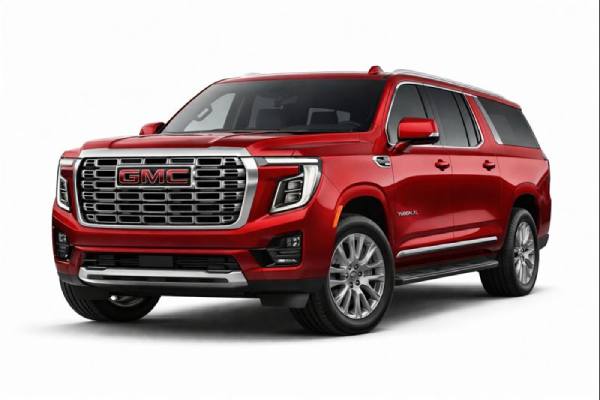
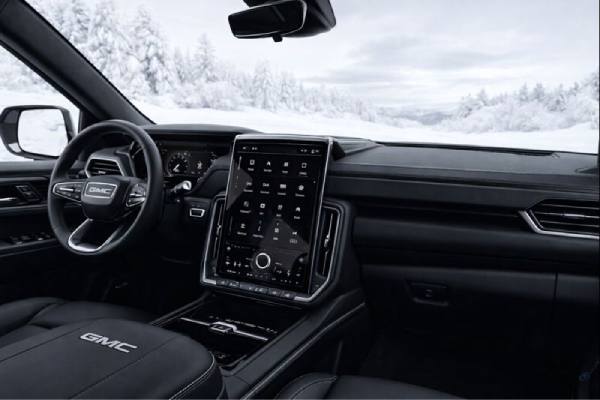
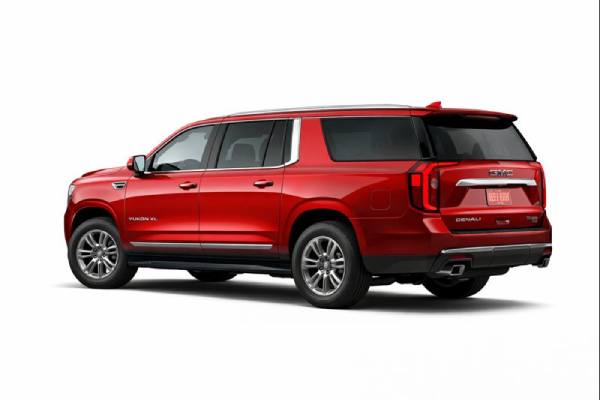
The Yukon XL Denali RWD with the 6.2L L87 is the “big luxury SUV” formula done the modern GM way: a body-on-frame chassis, a strong V8, and enough electronic management to make it feel calmer and more efficient than its size suggests. If you’re shopping this exact configuration, the ownership story usually comes down to three things: (1) how you’ll use it (towing, long highway runs, or short trips), (2) which suspension package it has (standard, Magnetic Ride Control, and/or air ride), and (3) how disciplined you are about fluids and software updates.
This guide focuses on the Denali RWD powertrain because it drives and costs differently than the 4WD versions: fewer driveline parts, often slightly better efficiency, and a simpler service profile, but less all-weather traction without the right tires.
Owner Snapshot
- Strong V8 torque and relaxed highway manners make it an easy long-distance and towing platform.
- Denali cabin tech and available ride-control hardware can genuinely reduce fatigue on rough roads.
- RWD simplifies driveline servicing versus 4WD and often trims running costs over time.
- Budget for higher tire and brake wear if you tow often or drive heavy city miles.
- Follow the Oil Life Monitor and change oil at least every 12 months, even on low mileage.
Navigate this guide
- Denali RWD L87 big picture
- Specs and service capacities
- Trims, packages, and driver assist
- Reliability issues and service actions
- Maintenance plan and buying checklist
- Real-world driving and efficiency
- Rivals and where the Denali fits
Denali RWD L87 big picture
Think of the Yukon XL Denali RWD as a luxury shuttle built on a truck foundation. The T1 platform prioritizes stability, towing structure, and serviceability, while Denali adds sound insulation, higher-grade interior trim, and a more “finished” calibration for steering, damping, and driver assistance. The XL body matters as much as the Denali badge: you gain meaningful cargo length behind the third row and a longer wheelbase that improves straight-line composure, especially on the highway or with a trailer.
The L87 6.2L V8 is the centerpiece. It’s tuned for effortless speed rather than drama: strong mid-range pull, easy passing power, and a calm feel at 110–130 km/h (70–80 mph) even with a full cabin. In most markets, it pairs with a 10-speed automatic that uses close ratio spacing to keep engine rpm low in cruise, then drops multiple gears quickly when you ask for acceleration. In daily driving, that translates to two ownership advantages: a quieter cabin at speed and fewer “busy” shifts when you’re rolling gently through traffic.
RWD specifically changes the personality. Without front-axle hardware, the steering can feel a touch lighter and cleaner on-center, and there’s less driveline complexity to maintain long term. The trade-off is traction management: in wet, snow, or steep gravel, the right tires matter more than ever. For many owners, a dedicated winter tire set is the simplest “upgrade” you can buy.
Finally, Denali’s available suspension options (Magnetic Ride Control and/or air ride, depending on year and equipment) can transform how the XL feels. If you care about ride quality, confirm what’s installed before you buy: two Yukon XL Denalis can feel surprisingly different on the same road.
Specs and service capacities
Below are practical, owner-facing specifications for the Yukon XL Denali RWD with the L87 6.2L. Exact values can vary by model year, axle ratio, wheel package, and emissions market, so treat these as “typical” and verify against your VIN build sheet and service information.
Engine and performance (L87 6.2L V8)
| Item | Spec (typical) |
|---|---|
| Code | L87 |
| Layout | V8, OHV (pushrod) |
| Displacement | 6.2 L (6,162 cc) |
| Induction | Naturally aspirated |
| Fuel system | Direct injection (DI) |
| Max power | 420 hp (313 kW) @ ~5,600 rpm (typical) |
| Max torque | 624 Nm (460 lb-ft) @ ~4,100 rpm (typical) |
| Timing drive | Chain |
| Emissions standard | Market dependent (EPA / others) |
Owner-facing quick-reference guides often note that equipment and availability vary by vehicle and timing, which is why VIN-based confirmation matters when you’re comparing listings.
Transmission and driveline (RWD)
| Item | Spec (typical) |
|---|---|
| Transmission | 10-speed automatic (application dependent by year) |
| Drive type | RWD |
| Differential | Rear open diff (limited-slip availability varies by package/market) |
Chassis, dimensions, and weights (XL body)
| Item | Spec (typical) |
|---|---|
| Platform | GM T1 |
| Suspension (front) | Independent (truck/SUV IFS layout) |
| Suspension (rear) | Multi-link with coil springs (air ride optional on some builds) |
| Length | ~5,720 mm (~225 in) |
| Wheelbase | ~3,407 mm (~134 in) |
| Width (excl. mirrors) | ~2,058 mm (~81 in) |
| Curb weight | Commonly ~2,600–2,800 kg (5,700–6,200 lb), varies by equipment |
| Fuel tank | Large-capacity tank (commonly ~28 US gal / ~106 L on many builds) |
Capability (towing and payload)
Because trailering ratings depend heavily on axle ratio, hitch equipment, cooling package, and tire load rating, treat online “max tow” claims with caution. When you’re shopping, ask for a photo of the door-jamb tire and loading label and confirm the receiver hitch class and trailer brake controller presence.
Fluids and service capacities (owner-useful)
| System | Spec (typical owner-facing guidance) |
|---|---|
| Engine oil | GM-approved dexos oil; viscosity varies by year/market (often 0W-20 on late-model GM V8s) |
| Coolant | Dex-Cool type OAT coolant (50/50 mix typical) |
| Automatic transmission | GM low-viscosity ATF (Dexron ULV type used in many 10-speeds) |
| Rear differential | GM-approved synthetic gear oil (spec varies with axle and limited-slip status) |
For manuals and official capacity data, GMC’s support portal is the best starting point (select your year and then Manuals and Guides).
Trims, packages, and driver assist
Even within “Yukon XL Denali,” equipment can vary a lot. Your goal is to identify what changes the driving feel, the towing confidence, and the long-term repair bill.
Denali identifiers and seating layouts
Most Denali RWD XL models are configured as 7- or 8-passenger vehicles depending on second-row setup:
- Second-row captain’s chairs (7-passenger): easier third-row access, more comfort, typically preferred for family road trips.
- Second-row bench (8-passenger): maximum seating and a different “cargo and people” balance; check whether the center seat has full comfort features.
Quick visual tells often include Denali exterior trim cues, higher-grade leather, and the Denali-specific interior finishes. However, don’t assume the presence of advanced suspension or trailering hardware based on trim alone.
Packages that matter mechanically
When you’re scanning listings, prioritize these because they change how the XL drives and what it costs to maintain:
- Adaptive damping (Magnetic Ride Control): noticeably tighter control over body motion on broken pavement and highway undulations.
- Air ride adaptive suspension: improves ride isolation and can add ride-height flexibility (especially valuable with heavy loads), but adds compressor and air-spring complexity.
- Trailering equipment (integrated brake controller, hitch guidance, cooling upgrades): the difference between “it can tow” and “it tows confidently.”
Infotainment and audio tiers
Denali often gets higher audio and larger-screen setups, but the real ownership question is software stability. Ask the dealer (or a GM-capable shop) to confirm the vehicle is current on infotainment and module updates, especially if you see intermittent camera dropouts or driver-assistance warnings on the test drive.
Safety ratings and how to read them
For full-size SUVs, crash-test coverage can vary by year and test protocol. In North America, owners typically reference NHTSA (star ratings) and IIHS (crash compatibility and headlight evaluations when available). If a specific Yukon XL Denali year is not listed, check closely related variants and confirm the exact test configuration before you compare scores.
ADAS features: standard vs optional thinking
Common driver-assistance features on modern Denali builds may include:
- Automatic emergency braking (vehicle and pedestrian, depending on year)
- Lane keeping support (lane keep assist and/or lane departure warning)
- Blind-spot monitoring and rear cross-traffic alert
- Adaptive cruise control (often optional or packaged)
- Hands-free systems on certain builds (availability varies by year and package)
After windshield replacement, bumper repair, alignment work, or suspension changes, ADAS recalibration may be required. Budget for that if you plan wheel and tire changes or if you buy a vehicle with prior front-end damage.
Reliability issues and service actions
The Yukon XL Denali RWD can be a long-lived vehicle, but it rewards owners who stay ahead of known patterns. Below is a practical way to think about issues by prevalence and cost tier.
Common to occasional (watch closely)
- Valve-train and lifter concerns (medium to high cost): Modern GM V8s that use cylinder deactivation strategies can, in some cases, develop lifter noise, misfires, or rough running. Symptoms often include tapping noises on cold start, a steady misfire under light load, or a check-engine light with cylinder-specific codes. A good diagnostic approach is to confirm oil condition and level, scan for misfire history, and verify whether there are updated parts or calibrations for the vehicle’s build date.
- Infotainment and camera glitches (low to medium cost): Intermittent resets, blank camera views, or driver-assistance warnings can be software-related or tied to module communication. Confirm update history and test every camera view during the drive.
- Brake wear on heavy use (low to medium cost): With curb weight and passenger loads, pads and rotors can disappear quickly in city driving or towing. Pulsation under braking usually means rotor hot spots or thickness variation rather than “warped rotors.”
Occasional (depends on use and environment)
- 10-speed shift quality complaints (medium cost): Harsh 1–2 shifts, delayed engagement, or shudder under light throttle can come from fluid condition, adaptives, or internal wear. Document the behavior, and insist on correct fluid spec and level checks before deeper repairs.
- Cooling system leaks (medium cost): Look for dried coolant residue, sweet smells after parking, or unexplained coolant loss. A pressure test is cheap and revealing.
- Suspension component wear (medium cost): Air ride (if equipped) adds failure points: compressor, lines, and air springs. Magnetic dampers can be expensive when they age. Listen for persistent clunks over small bumps and confirm the vehicle sits level after overnight parking.
Rare but high impact
- Engine internal failures (high cost): Any sudden knock, low oil pressure warnings, or persistent metallic noise should be treated as stop-driving events. If you’re buying used, prioritize complete service records and avoid vehicles with vague “engine noise fixed” history unless you have proof of professional repair with documentation.
Recalls, TSBs, and how to verify completion
Service actions change over time, and coverage can be VIN-specific. Your best practice:
- Run the VIN through official recall tools and print the results.
- Ask the seller for dealer repair history showing completion dates.
- On the test drive, confirm all warning lights illuminate at key-on and then go out after start.
If you tow, also confirm the trailer-brake controller and trailer lighting functions work correctly; electrical issues are easier to solve before purchase than after you’ve registered the vehicle.
Maintenance plan and buying checklist
A big SUV becomes inexpensive to own only when maintenance is consistent. The Yukon XL Denali RWD is not fragile, but it is complex, and deferred service compounds quickly.
Practical maintenance schedule (distance or time)
Use the Oil Life Monitor (OLM) as the baseline, but apply a “severe use” mindset if you do short trips, lots of idling, towing, dusty roads, or heavy city driving.
- Engine oil and filter: follow OLM; many owners choose 8,000–12,000 km (5,000–7,500 mi) intervals for mixed use, and at least every 12 months regardless of mileage.
- Tire rotation and pressure check: every 10,000–12,000 km (6,000–7,500 mi); align if you see uneven wear.
- Engine air filter: inspect every 15,000 km (9,000 mi); replace by condition (dusty areas may need earlier).
- Cabin air filter: every 15,000–30,000 km (9,000–18,000 mi) depending on environment.
- Brake fluid: every 2 years (moisture control matters in heavy vehicles).
- Coolant: follow the official interval for your year; inspect level and condition at every service.
- Transmission service: follow official guidance; if you tow or run hot city cycles, consider earlier fluid service than the maximum interval.
- Rear differential fluid: especially important if you tow; a 50,000–80,000 km (30,000–50,000 mi) change window is a reasonable “heavy-use” planning range.
- Spark plugs: commonly ~160,000 km (100,000 mi) on many modern GM engines, but verify for your build and market.
Fluids and parts: what to insist on
- Use the exact GM fluid specification (especially ATF), not “universal” substitutes.
- Use quality filters (ACDelco/GM Genuine or equivalent-tier) to protect oiling and variable-control systems.
Essential torque values (verify before wrenching)
- Wheel lug nuts: commonly around 190 Nm (140 lb-ft) on many full-size GM SUVs (confirm for your wheel type).
- Spark plugs: torque varies by plug design and head material; verify before replacement.
Buyer’s checklist (fast but thorough)
Bring a flashlight and take your time:
- Underbody: look for impact damage, fluid seepage, crushed pinch seams, and rust hotspots near seams.
- Cooling system: check for coolant smell, crusted residue, and stable operating temperature in traffic.
- Transmission behavior: confirm smooth engagement (P→D, P→R), consistent shifts when warm, and no shudder at steady speed.
- Suspension: check ride height consistency, listen for clunks, and watch for warning messages.
- Electronics: test every camera view, parking sensors, seat functions, and all USB/charging points.
- Service proof: oil changes, brake fluid, tires, and any module updates—paperwork matters.
Long-term durability outlook is good when the vehicle is serviced on time and used in a way that lets fluids reach full operating temperature regularly.
Real-world driving and efficiency
The Yukon XL Denali RWD’s driving experience is defined by calm control rather than agility. You feel the mass in tight spaces, but once rolling, the chassis feels planted and predictable.
Ride, handling, and NVH
On the highway, the long wheelbase smooths expansion joints and reduces pitching over crests. Denali-level sound insulation keeps wind and tire noise lower than you’d expect for a body-on-frame SUV, especially on touring-oriented tires. With adaptive damping packages, the body stays flatter in lane changes and the “secondary motion” after bumps is better controlled, which is where this platform can feel most premium.
Steering is typically light-to-moderate with an emphasis on stability. You won’t get sports-sedan feedback, but you do get reassuring on-center behavior—important in a vehicle that may spend hours at a time on motorways.
Powertrain character
The L87 V8 feels strongest in the middle of the rev range. In normal driving, the 10-speed tends to upshift early and keep rpm low, which is good for noise and fuel use. When you ask for passing power, it drops gears quickly and the SUV accelerates with surprising ease for its size. If you feel “gear hunting,” try a different drive mode (if equipped) and confirm the transmission has the latest calibrations.
Real-world efficiency (what owners actually see)
Fuel economy depends heavily on speed, tires, and load:
- Mixed driving: often lands in the mid-to-high teens mpg (US) for many owners, worse with short trips and heavy city traffic.
- Highway cruising: improves meaningfully at steady speeds, but climbs quickly in consumption once you cruise fast or drive into headwinds.
- Towing: expect a large penalty; planning a 30–60% increase in fuel use under moderate-to-heavy tow is realistic.
Converted to metric, many owners see something like 14–18 L/100 km depending on conditions, with towing pushing higher.
Braking feel and confidence
Brakes are tuned for smoothness, but repeated hard stops on a heavy vehicle generate heat. If you tow or drive mountains, prioritize high-quality pads, correct tire load ratings, and regular brake inspections. A soft pedal often points to fluid age or heat, while pulsation points to rotor surface issues.
Traction and control in RWD form
RWD is fine in dry conditions, and stability control is generally well-calibrated, but traction is tire-limited on slick surfaces. If you live where winters are real, winter tires are not optional—they are the difference between “manageable” and “stressful.”
Rivals and where the Denali fits
The Yukon XL Denali RWD competes in a small group of “full-size, three-row, long-wheelbase” SUVs where buyers care about towing confidence, passenger comfort, and long-haul refinement.
Key rivals
- Ford Expedition Max: typically the closest direct alternative in mission. It often feels lighter in response thanks to turbocharged torque characteristics, but long-term complexity depends on engine and cooling stress under heavy use.
- Jeep Wagoneer L: big interior volume and comfort, with a different powertrain character. Depending on engine choice, it can offer strong mid-range performance, but you’ll want to evaluate real-world reliability trends and dealer support in your area.
- Cadillac Escalade ESV: shares the core architecture with more luxury focus and higher parts pricing. If you want maximum prestige and features, it can be compelling; if you want a simpler value equation, Denali often makes more sense.
- Luxury crossovers (long wheelbase): they can feel more car-like, but typically do not match the Yukon XL’s towing structure and payload flexibility.
Where the Denali RWD wins
- Relaxed V8 power delivery that feels effortless at highway speeds.
- Body-on-frame capability for towing and heavy passenger loads.
- Denali refinement without stepping into Escalade pricing territory.
Where it gives up ground
- Fuel consumption versus smaller SUVs or electrified competitors.
- Parking and maneuvering in dense urban areas.
- RWD traction in winter compared with AWD/4WD alternatives (unless you plan tires carefully).
The smart-buy strategy
If your driving is mostly highway and you tow occasionally, a well-optioned RWD Denali can be a sweet spot: fewer driveline parts than 4WD, excellent cruising comfort, and strong capability when configured correctly. If you tow heavy and often, prioritize the correct trailering equipment, cooling provisions, and tire load ratings over cosmetic options.
References
- Vehicle Support | GMC Support 2025 (Owner Support)
- Manuals and Guides | GMC Support 2025 (Owner’s Manual Portal)
- Recalls | NHTSA 2025 (Recall Database)
- Getting to Know Your 2025 GMC Yukon/XL 2025 (Quick Reference Guide)
Disclaimer
This article is for informational purposes only and is not a substitute for professional diagnosis, repair, or safety advice. Specifications, torque values, fluid types, service intervals, and procedures can vary by VIN, market, build date, and installed equipment. Always verify details using your official owner’s manual, factory service information, and applicable recall documentation.
If this guide helped, please consider sharing it on Facebook, X (Twitter), or your favorite forum to support our work.