

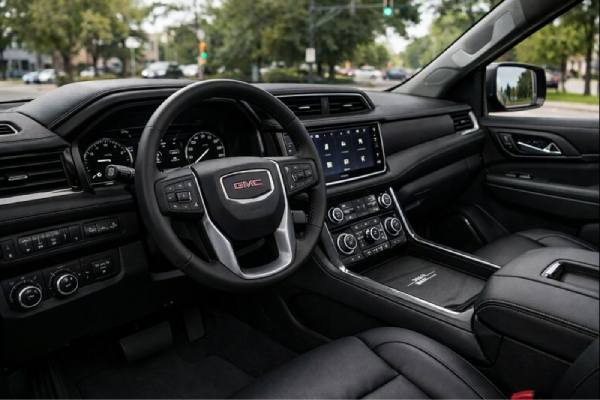
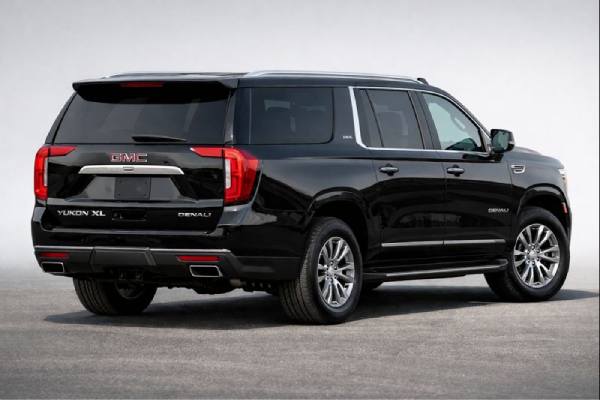
The Yukon XL RWD with the 3.0L Duramax (LM2) is a rare mix in the full-size SUV world: long-wheelbase family space, body-on-frame strength, and diesel torque tuned for relaxed towing and highway efficiency. In the T1 platform generation, you also get a more modern chassis than older Yukon XLs—most importantly an independent rear suspension that improves ride control and third-row comfort, plus a 10-speed automatic that keeps the diesel in its sweet spot. Ownership success is mostly about using it like a diesel: letting the emissions system complete regenerations, staying on top of the fuel filter and DEF habits, and planning ahead for the long-term service items unique to the 3.0 Duramax. If your driving includes long trips, frequent towing, or high annual mileage, this configuration can be a smart “big SUV” solution.
Owner Snapshot
- Strong low-rpm pull makes towing feel calmer than most gasoline rivals.
- Highway fuel economy is a real advantage for long trips in a 3-row XL body.
- Independent rear suspension improves ride comfort and cargo practicality.
- Diesel ownership adds DEF and emissions-system upkeep; short-trip use is the enemy.
- Plan oil and filter service around 12,000 km (7,500 mi) or 12 months (whichever comes first).
Navigate this guide
- Why the T1UG diesel matters
- LM2 diesel specs and capacities
- Trims, options, and safety tech
- Reliability, faults, and service actions
- Maintenance schedule and buying checks
- Road feel, towing, and economy
- Diesel Yukon XL vs competitors
Why the T1UG diesel matters
This Yukon XL is built for “big miles with big loads.” The LM2 3.0 Duramax is an inline-six turbo-diesel designed around usable torque, not high rpm. In everyday driving it feels like it has a longer “elastic band” of shove from low speed: you don’t need to rev it to merge or to keep speed on grades. That matters in the XL body because curb weight and frontal area are substantial, and RWD models typically see more consistent efficiency than 4WD when the weather allows.
The T1 platform also changed how these trucks drive. The independent rear suspension (IRS) is the headline: it improves ride isolation over broken pavement, reduces rear axle “hop” on sharp bumps, and makes the third row less punishing on long trips. It also helps packaging—cargo behind the third row is genuinely usable, and the load floor is easier to work with than earlier solid-axle generations.
RWD is the simplest driveline for ownership. There’s no transfer case service schedule to juggle, fewer seals and couplers, and less rotating mass. The trade-off is traction: if you live in steep, snowy areas, you’ll need true winter tires and realistic expectations. For mixed climates, many owners prefer RWD plus good tires and a disciplined towing setup (proper tongue weight, trailer brake controller use, and conservative speeds).
Where this model rewards discipline is diesel emissions. The system is extremely effective when it’s hot and doing steady work, but short trips and long idle time can load the diesel particulate filter (DPF) and trigger forced regeneration or warning messages. If your typical week is lots of 3–5 km runs, the diesel advantage shrinks and the ownership “caveats” grow.
LM2 diesel specs and capacities
Below are practical, ownership-relevant specifications for a Yukon XL RWD with the LM2 3.0L Duramax and 10-speed automatic. Some numbers vary by trim, wheel/tire package, and trailering equipment—treat weights and a few capacities as ranges unless you confirm by VIN/build sheet.
Engine and performance (LM2)
| Item | Spec |
|---|---|
| Code | LM2 |
| Engine layout and cylinders | Inline-6 (6 cyl), DOHC, 4 valves/cyl |
| Bore × stroke | 84 × 90 mm (3.30 × 3.54 in) |
| Displacement | 3.0 L (2,993 cc) |
| Induction | Turbocharged |
| Fuel system | High-pressure common-rail direct injection |
| Compression ratio | 15.0:1 |
| Max power | 277 hp (207 kW) @ 3,750 rpm |
| Max torque | 624 Nm (460 lb-ft) @ 1,500 rpm |
| Timing drive | Chain (valvetrain); oil-pump drive uses a belt system (service-critical—see reliability) |
| Emissions hardware (key items) | DPF + SCR/DEF system, NOx sensors |
Rated efficiency (EPA, Yukon XL 2WD diesel)
| Cycle | Rating |
|---|---|
| City | 11.2 L/100 km (21 mpg US) |
| Highway | 8.7 L/100 km (27 mpg US) |
| Combined | 10.2 L/100 km (23 mpg US) |
Transmission and driveline (RWD)
| Item | Spec |
|---|---|
| Transmission | 10-speed automatic (10L80 family) |
| Gear ratios (1–10) | 4.69 / 2.98 / 2.15 / 1.77 / 1.52 / 1.28 / 1.00 / 0.85 / 0.69 / 0.64 |
| Reverse | 4.87 |
| Final drive ratio | 3.23 (typical for diesel trailering setups) |
| Drive type | RWD |
| Differential | Typically open; some trailering packages may change hardware—verify by RPO/build codes |
Chassis, dimensions, and volumes (Yukon XL body)
| Item | Spec |
|---|---|
| Suspension (front/rear) | Independent front; independent rear (IRS) |
| Length | 5,720 mm (225.2 in) |
| Width | 2,057 mm (81.0 in) |
| Height | 1,943 mm (76.5 in) |
| Wheelbase | 3,406 mm (134.1 in) |
| Cargo volume (behind 3rd / 2nd / 1st row) | 1,175 / 2,656 / 4,097 L (41.5 / 93.8 / 144.7 ft³) |
| Fuel tank (approx.) | 106 L (28.0 US gal) |
Capability (diesel Yukon XL, equipment-dependent)
| Item | Typical figure |
|---|---|
| Max trailering (Yukon XL diesel) | Around 3,540–3,630 kg (7,800–8,000 lb) depending on package |
| GVWR (example diesel XL spec) | About 3,493 kg (7,700 lb) |
| Payload (example diesel XL spec) | About 709 kg (1,563 lb) |
| Roof load | Market- and rack-dependent; verify with your owner documentation |
Fluids and service capacities (diesel-specific confirmed values)
| Item | Spec |
|---|---|
| Engine oil | GM dexosD; SAE 0W-20 |
| Engine oil capacity (with filter) | 6.6 L (7.0 US qt) |
| Engine coolant capacity (SUV) | 20.7 L (21.9 US qt) |
| DEF tank | 20.3 L (5.3 US gal) |
| Transmission fluid | Typically DEXRON ULV; capacity varies by service method—verify by VIN/service manual |
| Rear differential fluid | Typically synthetic gear oil (often 75W-90); capacity varies—verify by axle and package |
| A/C refrigerant | Check underhood label (type and charge vary by wheelbase and HVAC) |
Trims, options, and safety tech
For the diesel Yukon XL RWD, trims matter less for the basic powertrain and more for towing hardware, suspension complexity, and driver-assistance availability. Most years in this generation follow a familiar ladder: SLE, SLT, AT4 (more off-road oriented, often paired with 4WD), and Denali (luxury and tech focus). Because you’re targeting RWD + diesel, your real-world shopping pool often concentrates in SLE/SLT and some Denali builds, depending on year and market availability.
Quick trim identifiers (useful when listings are vague)
- SLE: simpler exterior detailing, fewer standard cameras, usually smaller wheels.
- SLT: more chrome brightwork, upgraded interior materials, often more convenience tech.
- Denali: signature grille, higher-end leather and audio options, more standard tech content.
- AT4: typically paired with off-road cues and more 4WD-focused equipment (less common as RWD).
Options that change ownership (not just comfort)
- Trailering packages (core value on diesel): Look for integrated trailer brake controller, hitch hardware, and the camera/“trailering app” features if you tow often. These reduce stress and add real safety margin when backing and merging.
- Air Ride Adaptive Suspension: Excellent comfort and load leveling benefits, especially when carrying passengers plus gear. The downside is long-term complexity—compressors, air lines, and height sensors add failure points compared with steel springs.
- Enhanced camera systems: Multiple camera angles are more than a luxury in a 5.7-meter SUV. They also help avoid curb strikes (expensive wheel/tire damage) and reduce parking lot bumps that can misalign ADAS sensors.
Safety systems and ADAS: what’s typical
Many builds include a “base” safety suite (often branded as a Pro Safety package) featuring items like forward collision alert, automatic emergency braking, front pedestrian braking, lane-keeping support, and automatic high beams. Higher trims and option bundles may add adaptive cruise control, blind-spot monitoring, rear cross-traffic alert, surround-view cameras, and trailer-oriented camera views.
Crash ratings: how to interpret them here
Full-size SUVs can be tricky because testing coverage varies by year, body length, and exact variant. When you see a star rating or a “Top Safety Pick” style badge mentioned, confirm that it applies to the correct model year and body style (XL) and note that headlight and trim-specific equipment can change a rating outcome. If you tow, also treat stability-control and trailer-sway control as “safety equipment,” even though they aren’t crash-test scores—they prevent the events that lead to crashes.
After service recalibration (often overlooked)
If your Yukon XL has camera-based lane support, front radar for adaptive cruise, or surround-view cameras, budget time after windshield replacement, front-end repairs, or some alignments. A vehicle can “drive straight” yet have ADAS that behaves oddly until it’s calibrated correctly.
Reliability, faults, and service actions
Think of this Yukon XL diesel as two systems living together: a robust truck chassis and a modern diesel emissions package. The chassis and 10-speed can be very durable, but the diesel’s long-term happiness depends heavily on use pattern.
Below is a practical issue map by prevalence and severity/cost tier, plus what to watch for.
Common (low to medium cost, but important)
- DPF regeneration complaints (medium):
Symptoms: rising fuel consumption, hot/burning smell after driving, warnings about exhaust filter cleaning.
Likely cause: frequent short trips, long idle, interrupted regens.
Remedy: change driving pattern (a steady 20–30 minute drive at road speed helps), keep up with oil changes, and address any underlying sensor faults promptly. - DEF habits and “countdown” warnings (medium):
Symptoms: DEF low warnings, “poor quality” messages, eventual speed limitation if ignored.
Likely cause: low DEF level, contaminated DEF, wrong product.
Remedy: use DEF meeting the correct labeling standard, keep the tank from running near empty, and avoid old/contaminated fluid.
Occasional (medium to high cost)
- Fuel filter water contamination (medium):
Symptoms: “water in fuel” messages, rough running, stalling risk in severe cases.
Likely cause: bad fuel source or water accumulation; cold weather can freeze trapped water.
Remedy: drain/replace filter as instructed, avoid questionable fuel stations, and treat warnings as urgent. - 10-speed shift quality concerns (medium):
Symptoms: flare, harsh shift, hunting, or shudder under light throttle.
Likely cause: fluid condition, adaptive learning out of range, valve-body wear, or calibration needs.
Remedy: correct fluid and service procedure, plus software updates where applicable.
Rare but high-impact (high cost)
- Long-term diesel “deep service” items (high):
The 3.0 Duramax family is known for an oil-pump drive belt system that becomes a major service consideration at higher mileage. This is not an everyday failure for most owners, but it is a planning item because labor can be significant. - Turbocharger and emissions sensor faults (high):
Symptoms: reduced power, check engine light, limp mode, frequent regen messages.
Likely cause: sensor drift (NOx, pressure sensors), actuator issues, or leaks.
Remedy: proper diagnosis matters—parts swapping gets expensive quickly.
Recalls, TSBs, and software updates
Modern GM trucks often receive drivability and infotainment updates that materially improve ownership (shift logic, sensor fault sensitivity, camera behavior). Rather than relying on generic lists, verify open campaigns by VIN and ask the dealer for completion history. For a used purchase, request printouts showing recalls and field actions completed, plus evidence of correct oil specification use (dexosD 0W-20 is non-negotiable for the LM2).
Pre-purchase checks worth paying for
- A scan for stored emissions-related codes (even if the dash is clean).
- Evidence of normal regen behavior (no repeated warnings, no chronic “exhaust filter” messages).
- Proof of correct oil spec and sensible change cadence.
- Trailer equipment condition if it towed frequently (receiver, wiring, brake controller function).
Maintenance schedule and buying checks
A diesel Yukon XL can be very dependable if you treat maintenance as a system—engine, emissions, driveline, brakes, and tires all interact when you tow or haul.
Baseline maintenance schedule (practical planning)
Use this as a “do not miss” checklist, then refine by your owner documentation and oil-life monitor.
- Engine oil and filter: every 12,000 km (7,500 mi) or 12 months; sooner for heavy towing, lots of idle time, or repeated short trips. Use dexosD SAE 0W-20.
- Fuel filter: follow the fuel-filter life monitor; don’t ignore water-in-fuel messages. If you travel rural routes or tow long distances, consider a more conservative replacement habit.
- DEF (diesel exhaust fluid): keep the tank above the “low” threshold; top up before trips. If it’s empty or very low, add at least a couple of gallons-equivalent so the system can clear speed limitations.
- Engine air filter: replace when indicated by the filter-life system or at least inspect at every oil service (dusty climates load them fast).
- Cabin air filter: typically every 15,000–30,000 km (10,000–20,000 mi) depending on environment.
- Coolant: use the correct long-life coolant; interval varies by market and formulation—follow official documentation and avoid mixing types.
- Transmission service: if you tow, plan earlier fluid service than “normal use.” Use only the specified low-viscosity ATF and correct temperature-based fill procedure.
- Rear differential fluid (RWD): especially important if you tow; service interval depends on duty cycle.
- Brake fluid: every 2 years is a sensible safety interval for a heavy vehicle, especially if towing in mountains.
- Brake inspection: at every tire rotation—pad wear can accelerate with towing and city driving.
- Tires: rotate every 10,000–12,000 km (6,000–7,500 mi); keep alignment in check to protect expensive XL-size tire sets.
- 12V battery test: annually once the vehicle is 3+ years old; low voltage creates “ghost” electronic issues.
Fluids and specs you should verify before buying
- Oil: dexosD 0W-20 used consistently (receipts matter).
- Coolant: correct type, no evidence of “universal” top-offs.
- Diesel fuel quality: ask where it was fueled; consistent “cheap fuel” stories are a red flag on modern diesels.
Buyer’s inspection checklist (diesel-specific)
- Cold start behavior: no extended cranking, no persistent roughness.
- Evidence of normal DPF behavior: no chronic warning messages, no owner story of repeated forced regens.
- Underbody check: look for damaged wiring or sensors near exhaust after-treatment components.
- Trailer hardware: receiver not bent, wiring clean, brake controller works, no overheated connector pins.
- Suspension: if equipped with air suspension, check for sagging after sitting and listen for excessive compressor run time.
Long-term durability outlook
If your driving is mostly highway and you keep fluids, filters, and DEF habits tight, the diesel Yukon XL can be a long-life vehicle. The biggest ownership risk is using it like a short-trip city crossover—those conditions can turn the emissions system into a recurring expense and make the “diesel advantage” disappear.
Road feel, towing, and economy
Ride, handling, and NVH (noise and vibration)
For a body-on-frame SUV, the T1 Yukon XL is impressively composed. The IRS takes the sharpness out of rear impacts, and on the highway the long wheelbase adds straight-line calm. Steering is tuned for stability rather than feedback; it’s accurate enough, but you won’t confuse it with a unibody crossover. Wind noise is usually more noticeable than engine noise at speed—the diesel tends to fade into the background once warm.
Powertrain character: where the diesel shines
The LM2’s torque peak arrives early, so normal acceleration is smooth and confident without big throttle openings. The 10-speed’s job is to keep the engine in a narrow, efficient band. When it’s calibrated well, shifts feel frequent but unobtrusive; under light load it may “stack” gears quickly to keep rpm low. In tow/haul mode, it will hold gears longer and use engine braking more aggressively—use that on grades to reduce brake heat.
Real-world efficiency (what to expect)
EPA numbers are a helpful baseline, but speed and load matter a lot in a vehicle this large.
- City-heavy weeks: often 12–14 L/100 km (17–20 mpg US) depending on traffic and warm-up time.
- Highway at 100–110 km/h: many owners plan around 9–10 L/100 km (24–26 mpg US) in fair conditions.
- Highway at 120 km/h (75 mph): expect a noticeable penalty; a planning range of 10–11.5 L/100 km (20–24 mpg US) is realistic for many drivers.
With the XL’s ~106 L fuel tank, highway range can be excellent, but towing can cut range dramatically. Under moderate towing, plan for a 20–35% fuel-consumption increase; with a tall, heavy trailer at highway speed, the penalty can be higher.
Towing and load behavior
This is where RWD setup and tires matter. With correct tongue weight (usually 10–15% of trailer weight), a weight-distributing hitch when appropriate, and trailer brakes adjusted correctly, the Yukon XL tows with strong stability. The diesel helps most on long grades: it holds speed with less drama than many gasoline engines, and the transmission doesn’t have to hunt as much. Watch temperatures, use tow/haul mode, and don’t ignore any cooling or emissions warnings when towing—small problems get expensive under sustained load.
Diesel Yukon XL vs competitors
Versus Ford Expedition Max (3.5 EcoBoost gas)
The Expedition Max is quick and often feels lighter on its feet, with strong midrange power. The trade-off is fuel economy under load—gas turbo engines can drink when towing at speed. The Yukon XL diesel usually wins the “long highway day” and “range between stops” contest, while the Ford often wins straight-line acceleration and sometimes packaging details depending on configuration.
Versus Chevrolet Suburban (3.0 diesel)
This is the closest mechanical twin. If you’re comparing diesel-to-diesel, your decision often comes down to pricing, interior layout preferences, available option packages, and condition history. From an ownership perspective, the same diesel rules apply: your best outcomes come from highway use, consistent maintenance, and a clean emissions history.
Versus Jeep Wagoneer L (turbo I6 gas)
The Wagoneer L competes on space, comfort, and modern infotainment features. If you want a strong towing and highway machine but you don’t want diesel emissions complexity, the Jeep’s gas turbo approach is appealing. The Yukon XL diesel typically counters with better cruising efficiency and long-distance range, plus a mature truck platform with broad service familiarity.
Versus Toyota Sequoia (hybrid)
The Sequoia’s hybrid system can feel effortless off the line and is very refined, but it doesn’t offer the same maximum cargo length and third-row/cargo flexibility as an XL-length GM SUV. If you need maximum “people + luggage” volume without a roof box, the Yukon XL body remains a key advantage.
Which one is “best”?
Choose the Yukon XL diesel if your use case is genuinely long-distance, towing, or high annual mileage—and you’re willing to maintain it like a diesel (DEF, fuel filter attention, and regen-friendly driving). Choose a gasoline rival if your driving is mostly short trips, heavy city use, or you want simpler emissions ownership even if fuel costs are higher.
References
- 2021 Chevrolet/GMC 3.0L Duramax Diesel Engine Supplement 2021 (Owner’s Manual Supplement)
- 2024 Features, Specs and Options 2024 (Brochure)
- 2022 Features, Specs and Options 2022 (Brochure)
- Gas Mileage of 2022 GMC Yukon 2022 (Fuel Economy Database)
- Check for Recalls: Vehicle, Car Seat, Tire, Equipment 2025 (Recall Database)
Disclaimer
This article is for informational purposes only and is not a substitute for professional diagnosis, inspection, or repair. Specifications, torque values, maintenance intervals, fluids, and procedures can vary by VIN, market, model year, and installed equipment. Always verify details using your official owner information and service documentation for your specific vehicle.
If you found this guide helpful, please consider sharing it on Facebook, X (Twitter), or your favorite forum to help others find it.