
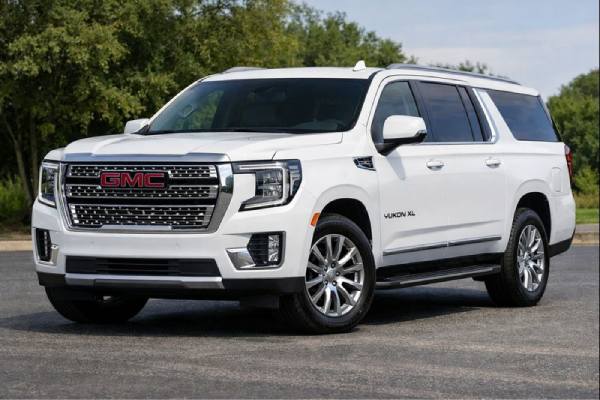
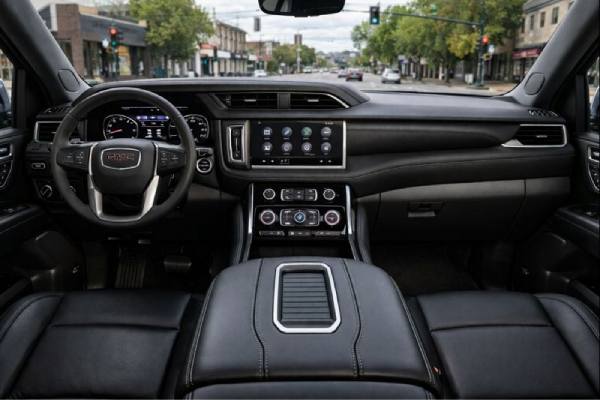
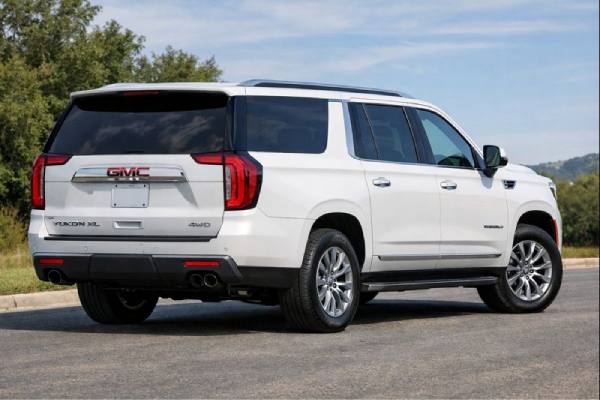
The 2021–present GMC Yukon XL RWD with the L84 5.3L V8 is a “big truck” SUV in the best sense: body-on-frame strength, a long wheelbase, and a powertrain built for hauling people, gear, and trailers without feeling strained. In RWD form, it also avoids the added weight and complexity of a transfer case and front-drive hardware—an advantage for payload, service access, and long-term cost in warm climates.
The L84 is a modern small-block V8 with direct injection and Dynamic Fuel Management (cylinder deactivation across many patterns). That helps efficiency, but it also means oil quality, software updates, and consistent maintenance matter more than on older, simpler V8s. If your priorities are maximum interior volume, stable towing manners, and an easy-to-live-with drivetrain, the Yukon XL RWD L84 is one of the more balanced choices in the full-size SUV class.
Quick Specs and Notes
- Strong towing and high-speed stability for a family-sized trailer; RWD typically carries less drivetrain weight than 4WD.
- L84 V8 is smooth and predictable under load; parts availability and shop familiarity are excellent.
- Expect real-world fuel use to rise quickly with city driving, short trips, and towing—plan around that.
- Keep the oil fresh and correct-spec; don’t stretch intervals just because the engine feels fine.
- Rotate tires about every 12,000 km (7,500 mi), and align promptly if you see edge wear on the large wheel packages.
What’s inside
- L84 Yukon XL RWD explained
- Core specs and measurements
- Trims packages and safety tech
- L84 reliability and known faults
- Service schedule and buying advice
- Driving feel and real mpg
- RWD L84 vs key rivals
L84 Yukon XL RWD explained
Think of the Yukon XL RWD L84 as a long-wheelbase tow-and-travel platform that happens to have three rows. The XL body length gives you meaningful third-row space and cargo behind it—useful for families, airport runs, or work gear—while the RWD layout keeps the underbody simpler than a 4WD model. That simplicity matters: fewer rotating parts, fewer fluid services, and fewer seals and bearings that can become noise or leak sources late in life.
The L84 5.3L V8 sits in the sweet spot of GM’s modern full-size lineup. You get V8 torque without the higher fuel and tire demands of the 6.2L, and without the diesel-specific emissions hardware and operating habits that come with the 3.0 Duramax. The 10-speed automatic is tuned to keep the engine in a calm rpm band, which helps when the cabin is full and the cargo area is packed. In normal commuting, it fades into the background; on grades or when merging, it drops gears decisively rather than “lugging” the engine.
The key engineering change versus older 5.3s is how the engine manages combustion and efficiency. The L84 uses direct injection (DI) and Dynamic Fuel Management (DFM). DI improves power density and cold-start emissions, but it can promote intake valve deposits over time because fuel no longer washes the back of the valves. DFM can reduce fuel use on light throttle, but it adds lifters and control logic that depend on clean oil and correct viscosity. None of this is a deal-breaker—it simply shifts the ownership equation: consistent maintenance and correct fluids pay dividends.
Why choose RWD specifically? If you live where winter traction is manageable with good tires, RWD can be the “best value” configuration. You often gain a little payload margin, sometimes a slightly higher tow rating, and you avoid transfer-case service and front-axle wear items. The tradeoff is obvious: in snow, mud, and steep ramps, 4WD is easier. If you plan frequent boat launches, mountain winters, or remote roads, 4WD is worth it. If your use is highways, suburbs, and towing on pavement, RWD is a strong match.
Core specs and measurements
Below are the specs owners most often want: what it is, what it carries, and what it costs you in fuel and maintenance planning. Figures can vary slightly by model year, tire size, and package (especially towing and suspension options).
Engine and performance (L84)
| Item | Specification |
|---|---|
| Code | L84 |
| Layout | V8, OHV (pushrod) |
| Valvetrain | 2 valves/cyl (16-valve total) |
| Displacement | 5.3 L (5,328 cc) |
| Bore × stroke | 96.0 × 92.0 mm (3.78 × 3.62 in) |
| Induction | Naturally aspirated |
| Fuel system | Direct injection (DI) |
| Compression ratio | 11.0:1 |
| Max power | 355 hp (265 kW) @ 5,600 rpm |
| Max torque | 519 Nm (383 lb-ft) @ 4,100 rpm |
| Timing drive | Chain |
| Emissions/efficiency basis | U.S. EPA (model-year dependent) |
| Rated efficiency (typical XL 2WD) | 13.8 L/100 km (17 mpg US / 20.4 mpg UK) combined |
| Real-world highway @ 120 km/h (75 mph) | Often ~13–15 L/100 km (16–18 mpg US / 19–22 mpg UK), wind/tires/load dependent |
Transmission and driveline (RWD)
| Item | Specification |
|---|---|
| Transmission | 10-speed automatic (10L80 family) |
| Drive type | RWD |
| Typical gear ratio spread | Deep 1st for launch; two overdrives for cruising |
| Differential | Open rear diff standard; limited-slip availability varies by package/market |
Dimensions and capacities (Yukon XL)
| Item | Specification (approx.) |
|---|---|
| Length | ~5,720 mm (225.2 in) |
| Width (body) | ~2,057 mm (81.0 in) |
| Height | ~1,943 mm (76.5 in) |
| Wheelbase | ~3,406 mm (134.1 in) |
| Fuel tank | ~106 L (28.0 US gal / 23.3 UK gal) |
| Cargo volume (behind 3rd / 2nd / max) | ~1,175 / 2,656 / 4,097 L (41.5 / 93.8 / 144.7 ft³) |
Performance and capability (what to expect)
| Item | Typical range (varies by trim/tires) |
|---|---|
| 0–60 mph (0–97 km/h) | ~7.0–7.8 s |
| 0–100 km/h (0–62 mph) | ~7.4–8.2 s |
| Braking (60–0 mph) | Often ~38–43 m (125–141 ft) |
| Towing capacity (XL 2WD, package dependent) | Up to ~3,538–3,765 kg (7,800–8,300 lb) |
| Payload (package dependent) | Up to ~765 kg (1,687 lb) |
| GVWR (typical max listing) | ~3,402 kg (7,500 lb) |
If you’re choosing options, pay attention to tire size and suspension. Large wheels can look great but may reduce ride compliance on broken pavement and increase replacement cost. The optional adaptive air suspension (where offered) can improve ride and leveling under load, but it adds components that may need attention later in life.
Trims packages and safety tech
The L84 5.3L is commonly paired with mainstream trims (SLE, SLT) and can appear in higher trims depending on year and region. Your best approach is to shop by “equipment goal” first (towing, seating, driver assistance), then pick the trim that bundles it most efficiently.
Trims and option strategy (practical view)
- SLE / SLT (most common L84 territory): Strong value for families who want the XL body and modern infotainment without paying for the most expensive interior finishes. SLT often makes it easier to find comfort and convenience options (heated/ventilated seats, upgraded audio, power features).
- AT4 (availability varies): More off-road and appearance focus; if you’re committed to RWD, prioritize tires and cooling/tow equipment over aggressive styling.
- Denali and Denali Ultimate: More often associated with the 6.2L, but always verify by VIN/build sheet—some markets and years differ.
Key packages that change the ownership experience
- Max Trailering Package (where offered): This can materially raise tow ratings and typically includes hardware that helps the vehicle feel composed under load (cooling, hitch content, sometimes axle ratio changes). If towing is a priority, look for this first—don’t assume a hitch alone means “ready to tow heavy.”
- Tow and tech camera content: The surround/aux trailer camera ecosystem can be genuinely useful, especially on an XL where rear visibility changes dramatically with cargo and passengers.
- Ride and handling upgrades: Adaptive dampers and air suspension can improve ride comfort and load leveling. If you tow frequently, leveling reduces headlight aim changes and can help stability.
Safety ratings and what they really mean here
Full-size SUVs can be tricky to compare because test coverage varies by year and agency. When there is no direct rating for a specific trim or year, look for:
- Shared-platform relatives tested under the same protocol (the Yukon XL is closely related to the Chevrolet Tahoe/Suburban).
- Headlight ratings and crash-avoidance availability, which can differ dramatically by trim and option.
Safety systems and ADAS (driver assistance) to verify
Baseline safety equipment has generally expanded across the 2021–present run, but exact “standard vs optional” content changes by year and trim. On a used example, confirm these by the vehicle’s option list and instrument-cluster menus:
- Core active safety (often under “Pro Safety” branding): Automatic Emergency Braking, Forward Collision Alert, Front Pedestrian Braking, Lane Keep Assist/Lane Departure Warning, and automatic high beams.
- Convenience safety: Rear cross-traffic alert, blind-spot monitoring, front and rear park assist, and a high-resolution rear camera.
- Higher-level ADAS (typically optional): Adaptive cruise control and hands-free highway driving (availability depends heavily on trim, model year, and subscription status).
After windshield replacement or front-end repairs, calibration matters. If a Yukon XL has erratic lane behavior, false warnings, or inconsistent adaptive cruise performance, require documentation that camera/radar calibration was completed using proper targets and procedures.
L84 reliability and known faults
Overall, the Yukon XL’s basic structure and drivetrain concept are proven. The long-term ownership story is less about “will it run?” and more about how well you manage modern systems: cylinder deactivation hardware, complex electronics, and high feature content. Below are the patterns owners and shops most often encounter, grouped by prevalence and cost risk.
Common (watch closely)
- DFM-related lifter concerns (medium to high cost):
Symptoms: Misfire at idle, ticking that persists warm, check-engine light, reduced power.
Likely root cause: Lifter or lifter-control issues associated with cylinder deactivation operation, sometimes triggered or accelerated by extended oil intervals or wrong viscosity.
Remedy: Correct diagnosis (don’t guess), then lifter replacement as needed; confirm the latest engine calibration is installed and keep oil changes conservative. - Infotainment and camera glitches (low to medium cost):
Symptoms: Black screen, dropped Bluetooth, camera lag or freezing, random reboots.
Root cause: Software bugs, module updates needed, occasionally weak battery voltage.
Remedy: Dealer or specialist module updates; ensure the 12V battery tests strong and grounds are clean.
Occasional (depends on use)
- Transmission shift quality (medium cost if ignored):
Symptoms: Harsh 1–2, delayed engagement, odd hunting on gentle grades.
Root cause: Calibration, adaptive learning issues, fluid condition, or valve-body wear in worst cases.
Remedy: Start with scan data and software updates; follow correct fluid service procedures and don’t “power flush” indiscriminately. - Direct injection deposit behavior (low to medium cost):
Symptoms: Slight roughness, reduced efficiency, power feels “duller” over time.
Root cause: Intake valve deposits, especially with lots of short trips and low-load driving.
Remedy: Use Top Tier fuel where available, keep up with oil changes, and consider periodic cleaning methods recommended by a qualified shop.
Rare (but worth checking)
- Cooling system leaks (medium cost):
Symptoms: Sweet smell, low coolant, overheating under load.
Root cause: Hose connections, radiator seams, water pump seepage.
Remedy: Pressure test; repair early to avoid overheating damage. - Suspension and steering wear on heavy use (medium to high cost):
Symptoms: Clunks over bumps, wandering, uneven tire wear.
Root cause: Ball joints, control-arm bushings, shocks, alignment drift—accelerated by big wheels and rough roads.
Remedy: Inspect during tire rotations; fix looseness early to protect tires.
Recalls, service actions, and how to verify
For any 2021–present Yukon XL, make recall verification non-negotiable:
- Run the VIN through the official recall database.
- Ask for dealer service history printouts where possible.
- Confirm completion dates and mileage.
If the seller can’t provide proof, plan a dealer check before purchase. Recalls and software campaigns are common on modern vehicles—not necessarily a “bad car” signal—but incomplete actions can create expensive, confusing symptoms later.
Service schedule and buying advice
A Yukon XL L84 rewards owners who treat it like a working machine: fluids, filters, tires, and brakes on a plan. The factory oil-life monitor is useful, but many long-term owners run a more conservative schedule—especially with short trips, dusty environments, or towing.
Practical maintenance schedule (good baseline)
| Item | Normal use | Severe use (short trips, towing, extreme heat/cold, dust) |
|---|---|---|
| Engine oil and filter (dexos 0W-20) | Follow oil-life monitor, max 12 months | Often every ~8,000 km (5,000 mi) |
| Engine air filter | Inspect every 12,000–20,000 km | Replace sooner in dust |
| Cabin air filter | Every 20,000–30,000 km | Every 15,000–20,000 km |
| Tire rotation | ~12,000 km (7,500 mi) | Same, don’t skip |
| Brake fluid | Every 2–3 years | Every 2 years |
| Coolant | Inspect annually; replace per official interval | Same, but monitor more closely |
| Spark plugs | Typically around 160,000 km (100,000 mi) | Earlier if misfire/roughness |
| Transmission fluid (10-speed) | Service by schedule and usage | More frequent if towing/heat |
| Rear differential fluid | Inspect and service by use | More frequent with towing |
Fluids and service capacities (decision-useful)
These vary by exact build and service procedure, so treat them as planning numbers and verify for your VIN:
- Engine oil: 0W-20 meeting GM dexos spec; capacity commonly around 7.6 L (8.0 US qt) with filter (verify by model year and engine).
- Transmission: Use the specified low-viscosity ATF for the 10-speed; service quantity depends on the method (simple drain/refill vs deeper service).
- Rear differential: Typical synthetic gear oil (commonly 75W-90 range depending on axle); capacity varies by axle.
A few critical torque values (verify per service manual)
- Wheel lug nuts: commonly 190 Nm (140 lb-ft) on many GM full-size SUVs (confirm for wheel type).
- Spark plugs: torque varies by plug type; avoid overtightening.
Buyer’s guide: what to inspect on a used Yukon XL RWD L84
Paperwork and history
- Oil change records with correct viscosity and reasonable intervals.
- Proof of recall completion and software updates.
- Evidence of transmission and differential servicing if it towed regularly.
Under-hood checks
- Coolant level and condition; any dried residue around the water pump.
- Oil seepage around covers and front timing cover area (minor seepage isn’t unusual; active drips matter).
- Battery age and test results (low voltage can mimic bigger electrical problems).
Road test checklist
- Smooth idle with no consistent misfire.
- Transmission behavior: no repeated harsh bangs, delays, or slipping.
- Straight tracking at highway speed; steering should not feel “loose” or floaty.
- Brake feel: consistent and stable, not pulsing or pulling.
Best “value” build for many owners
- L84 + towing package (and trailer brake controller if available)
- Sensible wheel size (ride and tire cost balance)
- Safety package you’ll actually use (ACC is a meaningful daily upgrade for highway drivers)
Long-term outlook is strong when maintained, but this is not a “skip service and hope” platform. Budget for tires, brakes, and fluids like you would for a light-duty truck.
Driving feel and real mpg
The Yukon XL’s driving character is shaped by size and wheelbase first, engine second. It tracks straight and feels stable at speed, especially on long interstate runs. The tradeoff is obvious in tight parking lots: the turning circle and sheer length demand planning. Once moving, the steering is typically light-to-moderate in effort and tuned for calmness, not feedback.
Ride, handling, and NVH (noise, vibration, harshness)
- Ride quality: On standard wheels and healthy dampers, the XL can feel surprisingly composed for its mass. Large wheels and low-profile tires tend to transmit sharper impacts. Air suspension (where fitted) can improve the “one big motion” feel over dips and can help the vehicle stay level with passengers and cargo.
- Handling: Expect safe, predictable cornering with noticeable body roll. The XL wheelbase helps stability, but it also means the vehicle prefers smooth inputs rather than quick direction changes.
- Cabin noise: The L84 is a low-frequency V8, more “present” than a turbo V6 but generally relaxed at cruise because the 10-speed can keep rpm down.
Powertrain character
The L84’s best trait is consistency. Throttle response is smooth, and the engine pulls cleanly into higher rpm when asked. Under light load, DFM can make the engine feel like it’s “coasting” efficiently; in some driving situations you may feel subtle transitions, but most owners acclimate quickly. The 10-speed tends to keep the engine in its torque band when towing, which reduces the feeling of strain compared with older 6-speed SUVs.
Real-world efficiency (what owners typically see)
EPA-rated economy for the Yukon XL 2WD 5.3L is commonly around:
- City: 15 mpg US (15.7 L/100 km; ~18.0 mpg UK)
- Highway: 20 mpg US (11.8 L/100 km; ~24.0 mpg UK)
- Combined: 17 mpg US (13.8 L/100 km; ~20.4 mpg UK)
In the real world, the biggest swings come from:
- Short trips and idling: Fuel use rises quickly; the engine may spend more time warming up than you expect.
- Speed: Above ~70 mph (113 km/h), aero drag dominates and mpg drops.
- Towing: A moderate trailer often costs 20–40% more fuel; a large, blunt trailer can cost more than that. Plan fuel stops accordingly, especially with headwinds.
Towing and load behavior (RWD notes)
When equipped correctly, the Yukon XL tows with a planted feel. The long wheelbase reduces “trailer steer,” and the V8/10-speed combination holds speed confidently on grades. For RWD owners, traction at the ramp or on wet grass is the main limitation—good tires help, but 4WD is still the safer choice for frequent slippery launches. If you tow regularly, prioritize:
- Trailer brake controller integration
- Correct hitch setup and weight distribution where required
- Fresh transmission fluid and cooling system health
RWD L84 vs key rivals
The full-size SUV market has split into two philosophies: big turbocharged V6 power with aggressive gearing, or traditional V8 torque with simpler “feel.” The Yukon XL L84 sits firmly in the second camp, but it competes well because the platform is modern—independent rear suspension, strong infotainment, and serious towing hardware.
Versus Ford Expedition Max (3.5 EcoBoost)
- Expedition Max advantages: Strong torque at low rpm, quick acceleration, and often excellent towing tech.
- Yukon XL L84 advantages: Naturally aspirated throttle predictability and broad service familiarity; the power delivery is straightforward under load.
- Decision point: If you value acceleration and turbo torque at altitude, the Ford is compelling. If you prefer simpler power delivery and proven V8 ownership patterns, the L84 is attractive.
Versus Jeep Wagoneer L
- Wagoneer L advantages: Huge interior and an upscale feel in higher trims; strong straight-line power depending on engine.
- Yukon XL L84 advantages: GM’s towing ecosystem and parts/service network depth in many regions; strong resale in truck-heavy markets.
- Decision point: Choose based on interior preference and local service support—both are large, expensive vehicles to maintain.
Versus Nissan Armada (shorter wheelbase class)
- Armada advantages: Often priced aggressively on the used market; traditional V8 character.
- Yukon XL advantages: Far more usable cargo space behind the third row, more modern platform features, and stronger “family plus gear” packaging.
- Decision point: If you truly need XL-length volume, the Armada isn’t a direct substitute.
Versus Chevrolet Suburban (closest sibling)
- Suburban advantages: Similar packaging and powertrains; sometimes broader availability.
- Yukon XL advantages: GMC styling, trim structure, and feature bundling may fit your needs better.
- Decision point: Shop the best-maintained example with the equipment you want—condition and history matter more than the badge.
Who the Yukon XL RWD L84 fits best
- Best match: Warm-climate families, road-trip heavy households, and owners towing on pavement who want V8 smoothness and the XL cargo advantage.
- Consider 4WD instead if: You see real winter, launch boats often, or travel on loose surfaces where traction is part of safety.
If you buy the Yukon XL like a long-term asset—service it on time, choose sensible tires, and keep software up to date—it delivers a calm, capable ownership experience that’s hard to replicate with smaller SUVs.
References
- 2024 FEATURES, SPECS AND OPTIONS 2024 (Brochure)
- Gas Mileage of 2024 GMC Yukon 2024 (Fuel Economy Database)
- L84 2025 (Engine Specifications)
- 10-Speed Transmission Fluid Service, Part 2: 10L80/10L90 10-Speed Automatic Transmission Fluid Change (ATF) 2020 (Service Bulletin)
- 2024 GMC Yukon XL SUV 4WD 2024 (Recall Database)
Disclaimer
This article is for informational purposes only and is not a substitute for professional diagnosis, inspection, or repair. Specifications, torque values, fluid capacities, service intervals, and procedures can vary by VIN, market, model year, and installed equipment. Always verify details using official owner and service documentation for your exact vehicle.
If you found this guide useful, please consider sharing it on Facebook, X/Twitter, or your favorite forum to help support our work.