
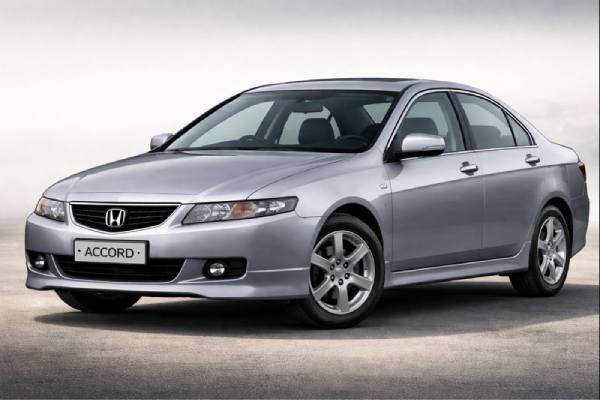
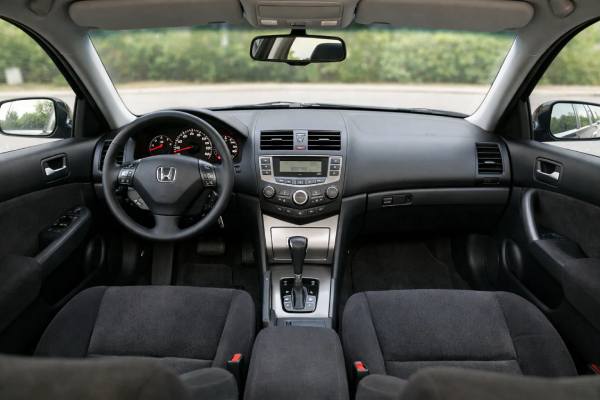
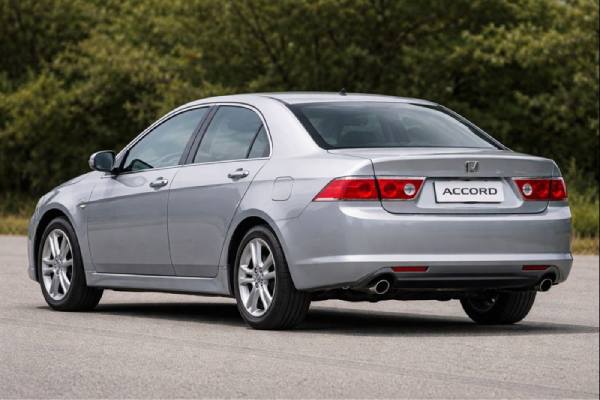
The Honda Accord CL7 with the K20A6 2.0-liter i-VTEC is the “quietly capable” choice in the 7th-gen Accord family. It isn’t the fastest Accord, but it’s often the easiest to live with: strong mid-range response, a timing chain instead of a belt, and a chassis that feels unusually precise for a mid-2000s family sedan. In most markets it was offered with either a 5-speed manual or a 5-speed automatic, and the car’s character changes a lot depending on which you choose.
For owners today, the story is simple: buy on condition and service history, keep up with fluids and brakes, and this powertrain can cover high mileage with fewer dramatic failures than many turbo-era successors. The details below focus on what matters most: real specifications, common weak points, and how to maintain one for long-term reliability.
Owner Snapshot
- Strong all-round chassis balance with predictable front-end grip and good high-speed stability.
- K20A6 i-VTEC delivers smooth power and generally ages well when serviced on time.
- Cabin and controls suit daily driving: visibility, ergonomics, and noise levels are better than many rivals of the same era.
- Watch for age-driven wear: suspension bushings, brake calipers, and A/C performance can become “money pits” if ignored.
- Plan on engine oil and filter every 10,000–15,000 km (6,000–9,000 mi) or 12 months, depending on driving conditions.
Contents and shortcuts
- CL7 K20A6: what it is
- Specs and capacities
- Trims, options, and safety
- Reliability and known problems
- Maintenance and buying advice
- Real-world driving and economy
- Rivals and alternatives
CL7 K20A6: what it is
The Accord CL7 is part of the 7th-generation Accord sold primarily outside North America (often aligned with the “Euro Accord” footprint rather than the larger U.S. model). With the K20A6 2.0-liter i-VTEC, it targets buyers who want the Accord’s refined chassis without the extra weight and running costs of the bigger engines.
What makes the K20A6 appealing today is how “normal” it is in the best way: naturally aspirated, linear throttle response, and fewer heat-related stresses than turbo engines. The K-series architecture also tends to be service-friendly—spark plugs, coils, accessory drive, and many sensors are straightforward to access. Because it uses a timing chain, you avoid the fixed belt-replacement milestone that can scare buyers away from otherwise good cars (though the chain system still needs oil-quality discipline).
On the road, the CL7’s platform tuning is a standout feature. Even by modern standards, it has a clear sense of front tire loading, stable braking behavior, and a ride that’s firm enough to feel controlled without turning harsh—assuming the suspension bushings and dampers are healthy. Owners often notice that the car feels “tight” when maintained, and “loose” when it isn’t—because worn compliance parts (bushings, drop links, ball joints) show up immediately in steering feel.
This is also an era where equipment varies widely by market and trim. Some regions emphasized value trims with simple audio and cloth; others pushed luxury features (leather, dual-zone climate control, HID headlamps). Safety equipment is generally strong for its time—ABS with electronic brakeforce distribution (EBD), front airbags, and ISOFIX/LATCH anchors are common—but advanced driver assistance (AEB, lane centering) is largely absent. A few niche systems existed in specific markets, but you should assume “classic” mid-2000s safety: good structure, good restraint design, and driver responsibility.
If you want a reliable daily that still feels engineered rather than merely assembled, the CL7 K20A6 is a smart pick—if you buy one that hasn’t been run on neglected fluids and bargain tires.
Specs and capacities
Because the CL7 K20A6 was sold across multiple regions (and with both manual and automatic transmissions), exact figures can vary by VIN, gearbox, and market. The tables below focus on the typical configuration for the 2.0 i-VTEC (155 hp class) and call out where variation is common.
Engine and Performance (ICE)
| Item | Specification |
|---|---|
| Code | K20A6 |
| Layout and cylinders | Inline-4, DOHC, 4 valves/cyl (typical K-series) |
| Displacement | 2.0 L (1,998 cc) |
| Induction | Naturally aspirated |
| Fuel system | Multi-point injection (market dependent wording) |
| Max power | 155 hp (114 kW) @ ~6,000 rpm (typical) |
| Max torque | ~188–190 Nm (139–140 lb-ft) @ ~4,500 rpm (typical) |
| Timing drive | Chain |
| Emissions standard | Often Euro 3 / Euro 4 depending on year/market |
| Real-world highway @ 120 km/h (75 mph) | ~6.8–7.8 L/100 km (34–26 mpg US / 42–36 mpg UK), depends heavily on gearing and tires |
Notes that matter:
- A healthy K20A6 should pull cleanly from low rpm and feel strongest from midrange into the upper rev band, without surging or misfire.
- If the engine feels “flat,” start with maintenance basics (spark plugs, coils, air filter), then look for intake leaks or sensor issues.
Transmission and Driveline
| Item | Typical specification |
|---|---|
| Drive type | FWD |
| Manual option | 5-speed manual (varies by market) |
| Automatic option | 5-speed automatic (varies by market) |
| Differential | Open (LSD generally not fitted on this variant) |
Why this matters: the manual typically feels more responsive and can be more durable if the clutch and fluid are managed well; the automatic can be very smooth but is less forgiving of neglected ATF service.
Chassis and Dimensions
Exact measurements vary slightly by body style and market equipment. Use these as approximate baselines and verify for your specific VIN:
| Item | Typical figure (approx.) |
|---|---|
| Suspension (front/rear) | Independent front and rear (multi-link style rear common) |
| Brakes | 4-wheel discs (spec varies by trim/market) |
| Length / Width / Height | ~4,660 mm / ~1,760 mm / ~1,445 mm |
| Wheelbase | ~2,670 mm |
| Kerb (curb) weight | Commonly ~1,350–1,500 kg depending on gearbox and trim |
| Fuel tank | Often ~60–65 L (verify by market) |
| Turning circle | Commonly ~11.4–11.8 m (varies with wheels/tires) |
Performance and Capability (realistic expectations)
| Metric | Typical expectation |
|---|---|
| 0–100 km/h (0–62 mph) | ~9.0–10.5 s (manual usually quicker) |
| Top speed | ~205–215 km/h (127–134 mph), market dependent |
| Towing | Often limited/market dependent; verify rating on VIN plate and handbook |
Fluids and Service Capacities (verify by VIN)
| Fluid / item | Typical spec (examples) |
|---|---|
| Engine oil | 5W-30 (common), capacity often ~4.0–4.5 L with filter |
| Coolant | Long-life Honda-type coolant, typically 50/50 mix; capacity varies |
| Manual transmission | Honda MTF-type fluid; capacity varies by gearbox |
| Automatic transmission | Honda ATF-type fluid; capacity varies; drain-and-fill is common service approach |
| Brake fluid | DOT 4 commonly specified in many regions |
| A/C refrigerant | Depends on year/market (R134a common in this era) |
Electrical (typical)
| Item | Typical |
|---|---|
| 12 V battery | Size and CCA vary by market |
| Spark plug | Long-life plug common (iridium/platinum depending on spec); gap per plug spec |
Safety and Driver Assistance (era-appropriate)
| Item | Typical for CL7 era |
|---|---|
| Core safety | Front airbags, ABS + EBD, brake assist common |
| Side/curtain airbags | Trim/market dependent; common on higher grades |
| Child-seat anchors | ISOFIX/LATCH commonly fitted |
| ADAS | Generally none by modern definition; stability control may be optional/standard depending on trim |
If you’re building a buyer checklist, the most important “spec” is not a number: it’s whether the car has been maintained consistently. A worn suspension can make the CL7 feel mediocre; a sorted one feels like a class above.
Trims, options, and safety
Because the CL7 Accord was sold across regions, trims can’t be described with a single universal list. Instead, it helps to think in three equipment “bands”: value-focused, comfort-focused, and sport/feature-focused. Your goal as a buyer is to identify which band a particular car belongs to and confirm that the equipment fits your needs—especially for safety and lighting.
Trims and options (how to spot differences)
Value-focused builds often have smaller wheels, simpler audio units, and fewer convenience features. They can be excellent buys because they’re lighter and sometimes better cared for by conservative owners—but they may lack side and curtain airbags in some markets. Don’t assume.
Comfort-focused builds commonly add:
- Dual-zone climate control
- Upgraded upholstery (often part-leather or full leather)
- Better audio, steering wheel controls
- Cruise control (market dependent)
- More sound insulation (or simply more equipment that reduces perceived noise)
Feature-focused or “executive/sport” builds may add:
- HID headlamps or projector housings
- Heated seats and power seat adjustments
- Navigation (period-correct systems vary widely)
- Stability control (sometimes standard, sometimes optional)
- Larger wheels/tires that sharpen turn-in but can increase tire noise and costs
Quick identifiers to use on a viewing:
- Headlamp type (reflector halogen vs projector/HID)
- Wheel size and tire brand (bargain tires often hint at cost-cutting elsewhere)
- Presence of stability-control switch/indicator lights
- Airbag labels on seats/pillars (confirm side/curtain airbags)
- ISOFIX/LATCH points in the rear seat base
Year-to-year changes (what typically matters)
Across 2002–2008, the biggest ownership-impact changes tend to be:
- Minor facelift updates (lights, bumpers, interior trims) depending on market
- Equipment shuffles (features moving from optional to standard on later years)
- Small calibration or emissions updates that can affect idle quality and sensor strategy
In practice, condition matters more than model year. A well-maintained earlier car is usually a better buy than a neglected later one.
Safety ratings and what to pay attention to
Even without modern ADAS, the CL7-era Accord was engineered with a strong safety focus for its time:
- A rigid passenger cell strategy and effective crumple zones
- Modern-for-the-era restraints (pretensioners, load limiters on many cars)
- ABS with EBD and brake assist widely fitted
- ISOFIX/LATCH anchor provision in many regions
The key buyer takeaway: don’t treat “Accord” as a guarantee of full safety equipment. Confirm:
- Airbag count (front only vs front + side + curtains).
- Stability control presence (often called VSA or similar).
- Headlamp performance (older lenses haze; poor headlamps are a real safety issue).
Driver assistance and calibration considerations
Most CL7 cars predate camera/radar safety suites. If your car does have niche driver-support features in certain markets, treat them like classic electronics: they work best when the car is stock, the battery is healthy, and alignment/steering-angle calibration is correct after suspension work. For most owners, the “assistance” that matters is simply: good tires, good brakes, and a suspension that keeps geometry stable under load.
Reliability and known problems
The CL7 K20A6 can be a long-life car, but it’s old enough now that age-related failures matter as much as design flaws. The best approach is to separate issues by prevalence and cost tier, then map them to mileage and usage patterns.
Common issues (high prevalence)
- Front suspension wear (low–medium cost):
Symptoms: clunks over bumps, vague steering, uneven tire wear.
Likely causes: drop links, lower control arm bushings, ball joints, tired dampers.
Remedy: refresh worn joints/bushings, then align properly. The CL7 is very sensitive to worn compliance parts. - Brake caliper and slider problems (low–medium cost):
Symptoms: pulling under braking, hot wheel, uneven pad wear.
Likely causes: seized slider pins, sticking caliper piston, neglected brake fluid.
Remedy: rebuild/replace calipers as needed; flush brake fluid every 2 years. - A/C performance decline (medium cost):
Symptoms: weak cooling, compressor noise, intermittent cold air.
Likely causes: leaking seals, tired compressor/clutch, condenser corrosion/stone damage.
Remedy: leak test, repair properly, and recharge by weight.
Occasional issues (moderate prevalence)
- Oil leaks from seals and solenoids (low–medium cost):
Symptoms: oil smell, residue around valve cover area, oil on the gearbox casing.
Likely causes: valve cover gasket aging, VTEC solenoid gasket, crank seal seepage.
Remedy: reseal with quality parts, then monitor oil level. - Coil/spark plug age-out (low cost):
Symptoms: misfire under load, rough idle, flashing MIL under hard acceleration.
Likely causes: old plugs, weak coils, moisture intrusion.
Remedy: replace plugs with correct type; replace coils if misfires persist. - Engine mounts (medium cost):
Symptoms: vibration at idle, thump on gear changes, harshness during takeoff.
Likely causes: rubber mount collapse over time.
Remedy: replace the worst mounts first; don’t chase vibrations with random parts.
Rare but expensive issues (low prevalence, high cost)
- Automatic transmission issues when ATF is neglected (high cost):
Symptoms: harsh shifts, flare, shudder, delayed engagement.
Likely causes: aged ATF, internal wear accelerated by heat and dirty fluid.
Remedy: if early, careful drain-and-fill cycles with correct fluid; if late, professional diagnosis. - ABS/VSA module faults (high cost):
Symptoms: ABS/VSA warning lights, stored fault codes, loss of stability features.
Likely causes: sensor issues, wiring corrosion, module failure.
Remedy: diagnose sensors and wiring first; modules are expensive, used parts may be an option.
Recalls, service bulletins, and verification
On a car of this era, recall completion can be more important than any single repair. The most practical advice:
- Run an official VIN check in your country and confirm completion with dealer records where possible.
- Ask for paperwork, not promises—especially for safety-related campaigns.
Pre-purchase checks to request
- Evidence of regular oil changes (not “long life” guesses)
- Brake fluid history and caliper service (or at least evidence of even pad wear)
- Suspension refresh history (bushings, links, dampers)
- For automatics: proof of correct ATF servicing
- For all: scan for codes, confirm all warning lights behave correctly on startup
A clean CL7 is rarely perfect, but it should feel cohesive: stable under braking, quiet over bumps, and free from drivetrain shunt. If it doesn’t, budget for a proper baseline refresh—or walk away.
Maintenance and buying advice
If you want the CL7 K20A6 to last, treat maintenance as a system, not a set of isolated tasks. These cars reward consistent fluid changes and early fixes to small chassis wear.
Practical maintenance schedule (typical best practice)
Every 10,000–15,000 km (6,000–9,000 mi) or 12 months
- Engine oil and filter
- Inspect for oil leaks, coolant seepage, and belt condition
- Tire pressure check and visual tire wear check
Every 20,000–30,000 km (12,000–18,000 mi) or 12–24 months
- Cabin air filter
- Engine air filter (more often in dusty areas)
- Brake inspection (pads/rotors, slider movement, parking brake function)
Every 40,000–60,000 km (25,000–37,000 mi)
- Manual transmission fluid (especially if shifting feels notchy)
- Automatic transmission fluid drain-and-fill (if automatic; don’t wait for symptoms)
- Coolant hoses inspection; radiator cap condition
Every 2 years (regardless of mileage)
- Brake fluid flush (DOT spec depends on market; DOT 4 is common)
- Check alignment if tire wear shows any asymmetry
Every 80,000–120,000 km (50,000–75,000 mi)
- Spark plugs (depending on plug type and market interval)
- Consider valve clearance inspection/adjustment where specified
- Inspect engine mounts and replace if vibration is increasing
Timing components
- The K20A6 uses a timing chain. There is usually no scheduled replacement, but you should inspect for chain/tensioner noise, rough cold starts, or timing correlation faults (if present). Oil quality is your best prevention.
Fluid specifications and “decision-making” capacities
Owners often get burned by using “close enough” fluids. A safer approach:
- Use the correct viscosity oil for your climate and the manufacturer’s spec for your market.
- For automatics, use the correct Honda-spec ATF; mixing random fluids is a common cause of shift quality issues.
- Use proper coolant chemistry; don’t top up with unknown universal coolant unless it’s an emergency.
Essential torque values (high-level, verify for VIN)
- Wheel nuts: commonly ~108 Nm (80 lb-ft) on many Hondas of this era (verify)
- Spark plugs: often ~18 Nm (13 lb-ft) for many aluminum-head applications (verify)
- Oil drain plug: commonly ~39 Nm (29 lb-ft) on many Honda applications (verify)
(These are typical-era figures; always confirm against official service documentation.)
Buyer’s guide checklist (what to inspect in person)
Body and corrosion hotspots
- Rear wheel arches, sill seams, and underbody mounting points
- Brake lines (especially in salted winter climates)
- Exhaust condition and heat shields
Engine bay
- Oil leaks around valve cover and VTEC solenoid area
- Coolant level stability and signs of dried residue
- Smooth idle with A/C on and off (idle control should be stable)
Chassis
- Brake pull or vibration under braking
- Clunks over sharp bumps (links/bushings)
- Uneven tire wear (alignment or worn suspension)
Electronics
- HVAC operation at all fan speeds
- Window regulators and door locks
- Dashboard warning lights (ensure bulb check works)
What years/trims to seek or avoid (practical view)
- Seek: cars with documented fluid service and recent suspension/brake refresh; higher trims can be worth it for better headlamps and added airbags.
- Be cautious with: neglected automatics with unknown ATF history; cars on cheap mismatched tires; cars with persistent warning lights.
Long-term outlook: a maintained CL7 K20A6 is a “baseline it once, then cruise” car. The first year of ownership often costs more (catch-up work), and the following years are typically inexpensive.
Real-world driving and economy
The CL7 K20A6’s driving appeal comes from cohesion. The steering, brakes, and chassis talk to you in a way that many mid-2000s family sedans didn’t bother to. If you buy one in good condition, it still feels “modern enough” for daily use—especially on highways.
Ride, handling, and NVH
Ride quality is controlled rather than soft. On standard wheel sizes, bumps are absorbed cleanly, and the body settles quickly. On larger wheels with low-profile tires, impacts sharpen and road noise increases—sometimes dramatically. A tired suspension ruins this car’s strengths: worn dampers and bushings turn the ride into a mix of float and harshness, with extra vibration through the wheel.
Handling balance is predictably front-biased (it’s FWD), but it rotates neatly if you enter a corner smoothly and stay on quality tires. The chassis feels happier at steady speed than in frantic stop-start driving, where the gearing and throttle calibration can feel less lively than newer turbo engines.
Cabin noise is typically reasonable at highway speeds for its era, but tire choice and wheel bearings matter. A droning noise that changes with road speed (not engine rpm) often points to tires or bearings rather than the engine.
Powertrain character
The K20A6 is about usable revs, not instant punch. Throttle response is clean, and it builds speed progressively. Expect the engine to feel strongest from the midrange to the upper band, especially when the intake and ignition system are healthy.
Manual transmission: usually the enthusiast’s choice. It makes the engine feel more eager, and it’s easier to keep the car in its sweet spot on hills and during overtakes.
Automatic transmission: generally smooth for commuting. If it’s well maintained, it suits the Accord’s relaxed character. If it has been neglected, shift quality becomes the entire ownership story—so prioritize service history.
Real-world efficiency (what owners typically see)
Fuel consumption varies with gearbox, tires, and driving style, but realistic ranges are:
- City: ~9.0–11.0 L/100 km (26–21 mpg US / 31–26 mpg UK)
- Highway (100–120 km/h): ~6.8–8.0 L/100 km (35–29 mpg US / 42–35 mpg UK)
- Mixed: ~7.8–9.2 L/100 km (30–26 mpg US / 36–31 mpg UK)
Cold weather, short trips, and aggressive acceleration can push these numbers higher quickly. The flip side is consistency: the K20A6 tends to deliver repeatable economy when serviced and driven smoothly, without the variability you can see in older turbo setups.
Key performance metrics that change the verdict
- Overtaking: the car rewards a downshift. If you want effortless passing without planning, you may prefer a larger engine variant.
- Braking feel: excellent when the calipers slide freely and the fluid is fresh; mediocre when sliders stick and fluid is old.
- Turning circle: adequate, but not “city-car tight”—plan your parking maneuvers.
For most owners, this is the CL7’s main selling point: it drives like a well-sorted car, not a cheap commuter. Keep it stock, keep it maintained, and it remains satisfying even after newer cars have come and gone.
Rivals and alternatives
The CL7 K20A6 sits in a crowded segment, and its best rivals depend on what you value most: reliability, handling, comfort, or parts pricing.
Toyota Avensis 2.0 (similar era)
Why consider it: often comfortable, conservative, and easy to own.
Where the Accord wins: steering feel, chassis confidence, and driver engagement.
Buyer tip: choose based on condition; Avensis tends to feel softer and less precise, while the Accord feels more “engineered.”
Mazda6 2.0 (first-gen)
Why consider it: sharper handling, lighter feel, often more fun at sane speeds.
Where the Accord wins: refinement, long-distance comfort, and usually better NVH.
Buyer tip: watch rust and suspension wear closely on either car, but especially on neglected examples.
Volkswagen Passat 2.0 (era dependent)
Why consider it: interior ambiance and highway comfort can be strong.
Where the Accord wins: simpler ownership, fewer “surprise” electrical and vacuum issues, and generally better long-term predictability.
Buyer tip: a great Passat can feel premium; a bad one can feel endless.
Ford Mondeo 2.0
Why consider it: often excellent chassis tuning and strong value on the used market.
Where the Accord wins: powertrain durability and long-term “set and forget” ownership when maintained.
Buyer tip: compare service history quality—Mondeos can be superb if looked after properly.
BMW 318i/320i (if you’re tempted by RWD)
Why consider it: rear-drive balance and badge appeal.
Where the Accord wins: running costs, reliability consistency, and a simpler ownership experience at high mileage.
Buyer tip: if you’re shopping on a tight budget, the Accord is usually the safer long-term bet.
So, who is the CL7 K20A6 best for?
- Daily drivers who want a refined, stable car without turbo complexity
- Owners who value steering and braking feel more than raw acceleration
- Buyers willing to baseline maintenance (fluids, brakes, suspension wear items)
If your priority is effortless torque, you may prefer a larger engine variant. But if you want a balanced sedan that ages gracefully with good care, the CL7 2.0 i-VTEC remains one of the smarter mid-2000s picks.
References
- All-New Honda Accord Goes on Sale in Japan 2002 (Manufacturer Press Release)
- ACCORD/ACCORD WAG0N 2002 (Manufacturer Fact Book)
- ACCORD/ACCORD WAGON 2002 (Manufacturer Fact Book)
Disclaimer
This article is for informational purposes only and is not a substitute for professional diagnosis, inspection, or repair. Specifications, torque values, service intervals, and procedures can vary by VIN, market, model year, and equipment. Always verify details using official Honda service documentation for your specific vehicle.
If you found this guide useful, please consider sharing it on Facebook, X (Twitter), or your favorite forum to support our work.