
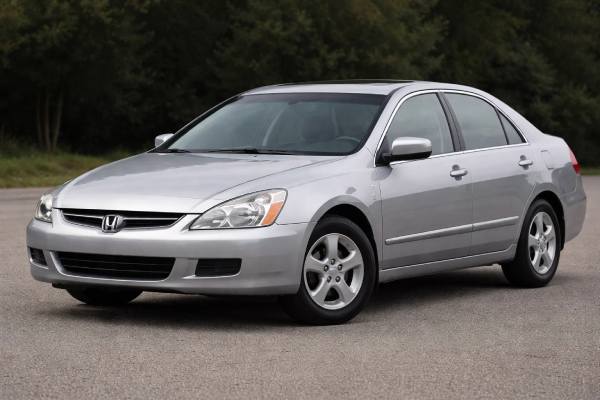
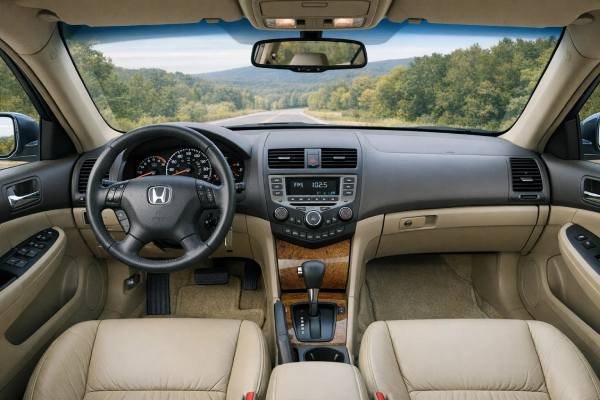
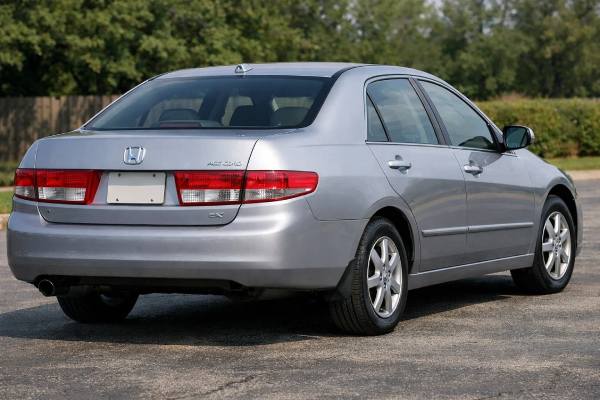
The Honda Accord CM5 with the K24A4 2.4-liter four-cylinder sits in a sweet spot: modern enough to feel refined, simple enough to keep long-term costs predictable. With 160 hp, it is not a “fast” sedan by today’s standards, but it delivers the kind of flexible, everyday torque that makes commuting and highway merging easy. The K-series design is also known for its durable timing chain layout and strong bottom end, which helps explain why many examples remain in regular use with high mileage.
Where ownership gets real is in the details: keeping fluids fresh, staying ahead of wear items like suspension bushings and brakes, and verifying recall work (especially airbags) on any used purchase. If you want a straightforward midsize sedan that rewards consistent maintenance, the CM5 Accord is still a very practical choice.
Quick Specs and Notes
- Smooth, flexible 2.4-liter power with a strong reliability record when oil changes stay consistent.
- Roomy cabin and trunk for the size, with a predictable ride and stable highway manners.
- Final-drive gearing favors relaxed cruising more than aggressive launches.
- Watch for age-related A/C and rubber wear, plus confirm airbag recall completion by VIN.
- Plan on engine oil service about every 8,000 km (5,000 mi) or 6 months for conservative longevity.
Navigate this guide
- CM5 K24A4 ownership overview
- K24A4 specifications and capacities
- Equipment and crash protection
- Reliability patterns and known faults
- Maintenance plan and buyer tips
- Real driving performance feel
- Rivals comparison for CM5
CM5 K24A4 ownership overview
Think of the CM5 Accord 2.4 as an “engine-first” car: its long-term value comes less from gadgets and more from a powertrain that holds up when treated properly. The K24A4 uses an aluminum-alloy inline-four with a chain-driven valvetrain and Honda’s i-VTEC system (variable valve timing and lift control). In plain terms, it is built to run smoothly at low rpm and still breathe well as revs rise, without needing turbocharging.
In daily driving, the 160 hp output feels calm rather than exciting. The advantage is consistency: throttle response is predictable, the engine is happy to cruise for hours, and it does not require premium fuel. Most owners who keep up with fluids and do not ignore warning signs (overheating, misfires, oil leaks) report that the engine remains tight and quiet for a long time.
The chassis is tuned for comfort with a stable “midsize sedan” footprint. Steering is generally light, and the car tracks straight on the highway. It is not a sports sedan, but it is confidence-inspiring, especially with quality tires and fresh suspension components. The interior and trunk packaging are strong points: you get adult-friendly seating and a trunk that is genuinely useful for family errands or travel.
Where age catches up is typical of early-2000s Hondas: rubber and plastic parts harden, door lock actuators can weaken, and A/C components can become a bigger-ticket repair. Also, any used example should be treated as a maintenance history project—service records matter more than odometer readings alone. The best CM5 cars are the ones that have had consistent oil changes, timely coolant and brake-fluid services, and documented recall work.
K24A4 specifications and capacities
Below are practical, ownership-focused specs for the CM5 Accord with the K24A4. Exact figures can vary by market, VIN, and transmission, so treat these as the common baseline and verify against your service literature.
Engine and performance (K24A4)
| Item | Specification |
|---|---|
| Code | K24A4 |
| Layout | Inline-4, aluminum-alloy |
| Valvetrain | DOHC i-VTEC, 16-valve |
| Displacement | 2.4 L (2,354 cc) |
| Bore × stroke | 87.0 × 99.0 mm (3.43 × 3.90 in) |
| Induction | Naturally aspirated |
| Fuel system | Multi-point fuel injection |
| Compression ratio | 9.7:1 |
| Max power | 160 hp (119 kW) @ 5,500 rpm |
| Max torque | 218 Nm (161 lb-ft) @ 4,500 rpm |
| Timing drive | Chain |
Transmission and driveline
| Item | Specification |
|---|---|
| Drive type | FWD |
| Manual option | 5-speed manual (market-dependent) |
| Automatic option | 5-speed automatic (market-dependent) |
| Final drive ratio (MT/AT) | 4.39 / 4.44 |
Common gear ratio set (typical North American 2.4):
- 5MT: 1st 3.307 / 2nd 1.809 / 3rd 1.259 / 4th 0.967 / 5th 0.757
- 5AT: 1st 2.684 / 2nd 1.517 / 3rd 1.022 / 4th 0.733 / 5th 0.525
Dimensions, weight, and capacity
| Item | Value |
|---|---|
| Wheelbase | 2,741 mm (107.9 in) |
| Length | 4,813 mm (189.5 in) |
| Width | 1,816 mm (71.5 in) |
| Height | 1,450 mm (57.1 in) |
| Turning circle | 11.0 m (36.1 ft) |
| Fuel tank | 64.7 L (17.1 US gal) |
| Cargo volume | 396 L (14.0 ft³) |
| Curb weight (typical range) | 1,385–1,441 kg (3,053–3,177 lb) |
Efficiency and real-world use
| Measure | Typical figure (2.4) |
|---|---|
| EPA (manual) | ~9.0 L/100 km (26 mpg US) combined |
| EPA (automatic) | ~9.8 L/100 km (24 mpg US) combined |
| Highway steady 120 km/h (owner-observed range) | ~7.5–8.5 L/100 km (28–31 mpg US) depending on tires, wind, and load |
Fluids, service capacities, and key torque basics
| Item | Typical spec (verify by VIN) |
|---|---|
| Engine oil | 5W-20; ~4.0–4.5 L (4.2–4.8 US qt) with filter |
| Coolant | Honda-type premix; ~5–6 L (5–6 US qt) system fill |
| ATF | Honda ATF (Z1 era; later superseded) |
| Brake fluid | DOT 3 / DOT 4 (per cap and manual) |
| Wheel lug nuts | ~108 Nm (80 lb-ft) |
| Oil drain plug | ~39 Nm (29 lb-ft) |
Equipment and crash protection
CM5 trim names and option packages vary by market, but the practical differences usually fall into a few buckets: comfort features, wheel and tire size, audio and infotainment, and safety equipment. For buyers today, the most important task is identifying what the car has (and what it does not) so you can judge parts cost and safety expectations correctly.
Trims and options that change ownership
Common equipment separators you will see on the used market:
- Transmission choice: The 5-speed automatic is common; a manual is less common and often sought after by enthusiasts. The automatic is convenient, but fluid condition matters more.
- Wheel and tire packages: Some trims move from 15-inch wheels to 16-inch alloys. Larger wheels can sharpen steering response but typically increase tire replacement cost.
- Interior and convenience: Power seats, moonroof, upgraded audio, and automatic climate control are the usual differences. These are not just “nice to have”—they add electrical complexity as the car ages.
- Exterior identifiers: Alloy wheels, fog lights, and body-color trim can hint at higher trims, but always confirm using the build label and equipment inspection.
Safety ratings and what they mean in real life
Safety performance is heavily influenced by whether the car has side airbags and what crash test is being referenced. For example, IIHS results for the Accord sedan show a strong structure in the frontal offset test, but side protection depends on airbags being present. That matters because a used-car listing may not clearly state whether side airbags exist or whether the SRS light is on.
What to look for and verify:
- Airbags: Front airbags are standard; side airbags were sometimes optional depending on year/market/trim. Confirm via seat tags, dash indicators, and VIN equipment data where possible.
- Seat and head restraint design: Older head restraints can score poorly in whiplash evaluations. A good seating position and properly adjusted head restraint help.
- Child-seat provisions: Most markets provide standardized anchors (LATCH/ISOFIX). Confirm that anchor covers and hardware are intact, and avoid cars with signs of flood or heavy interior corrosion.
Driver assistance reality check
Do not expect modern ADAS (automatic emergency braking, lane centering) in this era. Instead, think in terms of “foundational safety”:
- ABS (anti-lock brakes) is common and worth having.
- Traction and stability systems vary by market and trim.
- Headlight performance depends on lens condition and bulb type; cloudy lenses can meaningfully reduce night visibility.
If safety is a priority, prioritize a car with documented, functioning SRS systems, intact airbags, and verified recall completion. Those factors will matter more than trim badges.
Reliability patterns and known faults
The CM5 Accord with the K24A4 is generally durable, but reliability is not “automatic.” Most problems follow predictable age and mileage patterns, and the best outcomes come from catching symptoms early.
Common and usually manageable (low to medium cost)
- A/C performance decline:
Symptoms: weak cooling, compressor noise, intermittent operation.
Likely cause: aging compressor/clutch, condenser leaks, or O-rings.
Remedy: proper leak test, repair the failed component, and recharge by weight. - Power steering seepage (where hydraulic):
Symptoms: fluid drips, groan on cold starts, heavier steering.
Likely cause: pump seals or return line aging.
Remedy: fix leaks early; running low accelerates pump wear. - Door lock actuators and window regulators:
Symptoms: inconsistent locks, slow windows, clicking noises.
Likely cause: motor wear, hardened grease, cable issues.
Remedy: actuator or regulator replacement; avoid forcing switches.
Occasional but important (medium to high cost)
- Cold-start rattle near timing/VTC area:
Symptoms: brief rattle at startup, often more noticeable cold.
Likely cause: VTC actuator wear or oil drain-back issues.
Remedy: confirm oil level and change history; diagnosis matters before replacing parts. - Automatic transmission shift quality concerns:
Symptoms: flare between gears, delayed engagement, harsh shifts.
Likely cause: old ATF, internal wear, or solenoid issues.
Remedy: correct fluid service first (not aggressive “flush” if the unit is already weak), then diagnose. - Engine mounts and suspension bushings:
Symptoms: vibration at idle, clunks over bumps, vague handling.
Likely cause: rubber deterioration.
Remedy: replace worn mounts/bushings; alignment afterward is often necessary.
Recalls, service bulletins, and how to verify
On early-2000s Hondas, safety recalls—especially airbags—are a major ownership checkpoint. The only reliable approach is to run the VIN through an official recall lookup and confirm completion with dealer records. If a seller cannot prove completion, assume you will need to address it immediately after purchase.
Pre-purchase checks worth paying for
- Cold-start listening test (timing/VTC noise).
- A/C output temperature test and compressor noise inspection.
- Transmission fluid condition and a thorough test drive (low-speed and highway).
- Suspension inspection on a lift (bushings, ball joints, tie rods).
- Electrical scan for stored codes and verification that SRS/ABS lights behave correctly.
The CM5’s reliability is strongest when it is treated as a system: oil, cooling, transmission fluid, and chassis wear must all be kept in balance.
Maintenance plan and buyer tips
A practical maintenance plan for the K24A4 is not complicated, but consistency is everything. If you are buying used, assume you are “resetting the clock” unless records prove otherwise.
Core maintenance schedule (conservative, longevity-focused)
- Engine oil and filter: every 8,000 km (5,000 mi) or 6 months. If the car sees short trips or heavy traffic, shorten the interval.
- Engine air filter: inspect every oil change; replace about every 24,000–48,000 km (15,000–30,000 mi) depending on dust.
- Cabin air filter: every 15,000–30,000 km (10,000–20,000 mi) for HVAC performance and odor control.
- Coolant: typically 5 years / 160,000 km (100,000 mi) initial, then shorter intervals afterward (verify your coolant type and manual).
- Spark plugs: often 160,000 km (100,000 mi) class intervals on iridium plugs; replace earlier if misfires appear.
- Brake fluid: every 3 years regardless of mileage (moisture absorption is the issue).
- ATF (automatic): service about every 48,000–80,000 km (30,000–50,000 mi) depending on driving; smoother shifting usually follows fresh correct-spec fluid.
- Manual gearbox fluid: every 80,000–120,000 km (50,000–75,000 mi).
- Serpentine belt and hoses: inspect yearly; replace if cracking, glazing, or softness appears.
- Timing chain: no routine replacement interval, but treat noise, correlation faults, or persistent rattle as “inspect now.”
Fluids and parts: what matters most
- Use the correct oil viscosity for your market and climate, and keep the level topped up between services.
- Do not mix coolant chemistries. If history is unknown, a full drain and refill with the correct type is smarter than topping off randomly.
- Avoid “miracle additives” as a substitute for mechanical diagnosis. If a system is failing, additives often delay proper repair and can complicate future service.
Buyer’s guide checklist (quick but effective)
- Rust and corrosion: check rear quarter seams, subframe areas, and brake lines in salt climates.
- Cooling system health: look for clean coolant, stable temperature, and no dried residue at the radiator or water pump area.
- A/C: verify strong cooling at idle and at speed.
- Steering and suspension: listen for clunks over small bumps and feel for vibration under braking.
- Records: prioritize documented fluids, not just “recent oil change.”
- Recalls: verify by VIN before money changes hands.
A well-maintained CM5 is rarely “cheap” in the best sense—it is cost-effective because it avoids the expensive surprises that come from deferred basics.
Real driving performance feel
On the road, the CM5 Accord 2.4 feels like a mature, well-balanced sedan. The K24A4 engine delivers its torque in a broad, usable band, which means it responds well in normal traffic without needing constant downshifts. Throttle response is typically clean and linear. When you accelerate harder, the engine note becomes more present, but it stays generally smooth rather than harsh.
Ride, handling, and NVH
- Ride quality: tuned for comfort, with a controlled feel over larger bumps. Worn struts or tired bushings can make the car feel floaty or noisy, so suspension condition strongly shapes your impression.
- Steering: light to moderate effort. With fresh tires and alignment, straight-line stability is a strong point.
- Braking feel: generally predictable. Pulsation usually means warped rotors or uneven pad deposits rather than a “bad braking design.”
Cabin noise is typical for the era: wind and tire noise rise at highway speeds, and worn door seals or cheap tires can make it noticeably louder. The upside is that the mechanical layout is straightforward, and many NVH complaints improve with basic maintenance (engine mounts, alignment, quality tires).
Real-world efficiency
Fuel economy depends heavily on transmission, driving style, and commute type. In mixed use, the automatic version often lands around the mid-20s mpg (US), while a manual can do slightly better when driven smoothly. At a steady highway cruise, many owners see high-20s to low-30s mpg (US) depending on speed and conditions.
Performance metrics that matter
- 0–60 mph (0–97 km/h): typically around 7.8–8.7 seconds depending on transmission and traction.
- Passing response: the engine’s midrange torque helps, but the automatic may downshift more readily on grades or when loaded.
- Turning circle: about 11.0 m (36.1 ft), which feels reasonable for city parking and U-turns.
The CM5 is not about dramatic acceleration. Its advantage is that it stays consistent day after day, and it remains easy to drive smoothly even as mileage climbs—assuming the powertrain and suspension have not been neglected.
Rivals comparison for CM5
The CM5 Accord 2.4 competed in a strong midsize era, and its modern used-car value depends on what you prioritize: long-term durability, comfort, fuel economy, or repair cost.
Versus Toyota Camry 2.4 (2AZ-FE era)
- Camry advantage: typically softer ride and a “quiet comfort” tuning.
- Accord advantage: more connected steering feel and a powertrain that often feels more eager in real driving.
- Ownership angle: both are durable; your decision often comes down to condition and maintenance history more than brand.
Versus Nissan Altima 2.5 (early QR25 era)
- Altima advantage: can feel quicker on initial throttle and may offer a sportier impression.
- Accord advantage: tends to reward conservative maintenance with fewer long-term surprises, especially when comparing aging electrical and drivetrain issues.
- Ownership angle: prioritize service records either way, but the Accord often has a stronger “predictable maintenance” reputation in this period.
Versus Mazda6 2.3
- Mazda6 advantage: sharper handling and a more playful chassis balance.
- Accord advantage: a calmer highway demeanor and often broader parts availability in many markets.
- Ownership angle: rust protection and suspension wear can be bigger deciding factors for the Mazda depending on climate.
The practical verdict
Choose the CM5 Accord 2.4 if you want a midsize sedan that:
- is easy to live with daily,
- has strong parts support,
- and can remain dependable if you treat fluids and wear items as non-negotiable.
Choose a rival instead if your top priority is a softer ride (Camry) or sharper cornering character (Mazda6). In today’s market, the best strategy is simple: buy the cleanest, most documented example you can find, then budget to “baseline” maintenance immediately.
References
- 2004 Honda Accord 2004 (Fuel economy data)
- Honda Accord 2004 (Safety Rating)
- Check for Recalls: Vehicle, Car Seat, Tire, Equipment | NHTSA 2025 (Recall Database)
- AC0303MAINIXA 2003 (Owner’s Manual)
- 04_AS_brochure 2004 (Brochure PDF)
Disclaimer
This article is for informational purposes only and is not a substitute for professional diagnosis, inspection, or repair. Specifications, torque values, service intervals, and procedures can vary by VIN, market, model year, and installed equipment—always verify details using your official owner’s manual and service documentation before performing work.
If you found this guide useful, please consider sharing it on Facebook, X (Twitter), or your favorite forum to help others find reliable ownership information.