
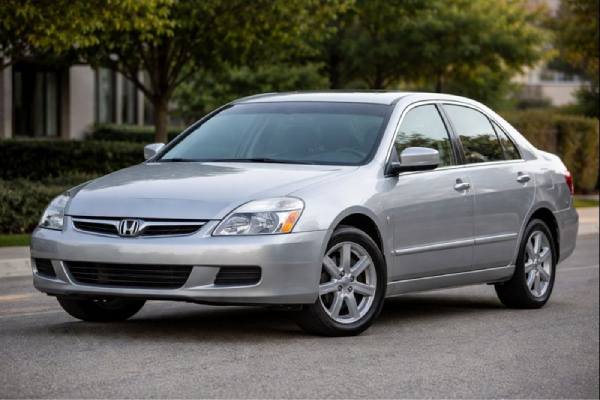
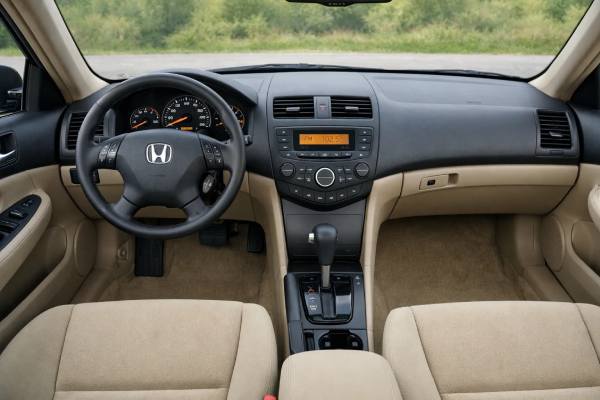
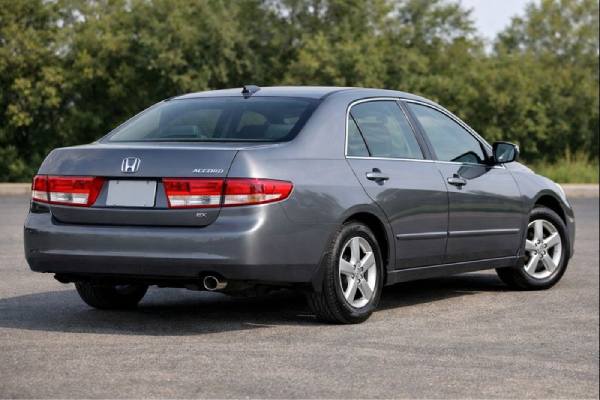
The 2005–2007 Honda Accord (CM5) with the K24A8 2.4-liter inline-four is a practical case study in “quiet engineering.” It isn’t built to impress on paper; it’s built to stay consistent through years of commuting, highway miles, and imperfect maintenance. The K24A8’s strengths come from its simple, naturally aspirated layout, timing chain (rather than a belt), and broad torque that suits a midsize sedan’s real job: moving people smoothly with low drama.
Ownership tends to be defined by condition more than mileage. A well-kept CM5 feels tight, predictable, and efficient. A neglected one can rack up costs in the usual places—fluids, rubber, suspension wear, and deferred repairs—without giving many early warnings. This guide focuses on the exact K24A8/166 hp configuration and what it means for performance, safety, reliability, and long-term upkeep.
What to Know
- Strong day-to-day drivability with a wide torque band and low-stress, naturally aspirated power delivery
- Solid parts availability and straightforward service access for most routine maintenance
- Comfortable chassis balance that stays stable at highway speed, even on rough pavement
- Automatic transmissions age best with frequent drain-and-fill service, not “lifetime” intervals
- Plan on engine oil service about every 8,000–12,000 km (5,000–7,500 mi) or 6–12 months, depending on use
Contents and shortcuts
- CM5 Accord K24A8 explained
- CM5 Accord 2.4 specs
- Accord CM5 trims and safety
- Reliability and common problems
- Maintenance plan and buying
- Road feel and economy
- Accord CM5 vs rivals
CM5 Accord K24A8 explained
The CM5 Accord is part of the seventh-generation Accord family, and in K24A8 form it’s tuned for dependable midrange response rather than high-rpm excitement. You’re working with a 2.4-liter, water-cooled DOHC i-VTEC inline-four, naturally aspirated, with a relatively mild compression ratio and conservative factory calibration aimed at regular fuel and long-term durability. The “166 hp” headline is only part of the story; what you feel is the smoothness and the way the engine pulls without needing constant downshifts.
A key ownership advantage is the timing chain. Unlike belt-driven engines that have a hard replacement interval, the K24A8 chain system is typically an inspect-and-address item—meaning you watch for noise, timing correlation faults, or evidence of poor oil history. In real terms, owners who keep up with oil changes tend to avoid major timing-related work.
The CM5 chassis also helps explain why these cars age well. The suspension geometry prioritizes stability and predictable grip, so the car doesn’t “feel old” as quickly as some competitors—at least until bushings, links, and dampers wear out. Steering is generally consistent and confidence-inspiring in normal driving, with enough feedback to place the car accurately. Braking feel is similarly linear: not sporty, but easy to modulate.
Where the K24A8 Accord can surprise buyers is how sensitive it is to maintenance habits, especially on the automatic transmission side. This generation’s automatics are not typically “fragile,” but they respond poorly to neglected fluid. If you inherit one with an unknown history, budgeting for a baseline service (fluids, filters, brakes, and key rubber items) is usually smarter than chasing individual symptoms later.
Finally, remember that “CM5” and equipment details can vary by market and trim. Output, emissions classification, and some features differ between regions and sub-trims even within the same model years. The safest way to treat this car is as a platform with a known-good powertrain and a predictable set of age-related wear points—then verify the exact equipment level by VIN/build label and service documentation.
CM5 Accord 2.4 specs
Below are practical, ownership-relevant specifications for the CM5 Accord sedan with the K24A8-family 2.4L inline-four (166 hp). Some items vary by trim and market; where that’s common, values are shown as “typical” or as ranges. Units are shown in metric and U.S./U.K. equivalents where helpful.
Engine and efficiency
| Item | Specification |
|---|---|
| Code | K24A8 |
| Engine layout and cylinders | Inline-4, DOHC i-VTEC, water-cooled, 4-stroke |
| Valvetrain | DOHC, 4 valves/cyl (typical for K-series i-VTEC) |
| Bore × stroke | 87.0 × 99.0 mm (3.43 × 3.90 in) |
| Displacement | 2.354 L (2,354 cm³ / 143.6 cu-in) |
| Induction | Naturally aspirated |
| Fuel system | Multi-point fuel injection (MPFI) |
| Compression ratio | 9.7:1 |
| Max power | 166 hp (124 kW) @ ~5,800 rpm (market-dependent rating conventions) |
| Max torque | ~160 lb-ft (217 Nm) @ ~4,000 rpm |
| Timing drive | Chain |
| Required fuel | Regular unleaded (typical) |
| Rated efficiency (EPA examples) | 5AT: 11.2 / 7.6 / 9.4 L/100 km (21 / 31 / 25 mpg US; 25.2 / 37.2 / 30.0 mpg UK) city/hwy/comb; 5MT: 10.2 / 7.6 / 9.0 L/100 km (23 / 31 / 26 mpg US; 27.6 / 37.2 / 31.2 mpg UK) |
Transmission, driveline, and gearing
| Item | Specification |
|---|---|
| Drive type | FWD |
| Transmission options | 5-speed automatic (common) or 5-speed manual (trim/market dependent) |
| 5AT gear ratios (example) | 1st 2.65; 2nd 1.52; 3rd 1.04; 4th 0.74; 5th 0.57; Rev 2.00 |
| Final drive (example) | 4.44 |
Chassis and dimensions
| Item | Specification |
|---|---|
| Suspension (front / rear) | Double wishbone / multi-link (market/trim variations exist) |
| Steering | Power rack-and-pinion (typically hydraulic on this generation) |
| Turning circle | ~10.8 m (35.4 ft) curb-to-curb (example spec) |
| Length | 4,813 mm (189.5 in) |
| Width | 1,820 mm (71.7 in) |
| Height | 1,453 mm (57.2 in) |
| Wheelbase | 2,740 mm (107.9 in) |
| Track (front / rear) | 1,553 / 1,554 mm (61.1 / 61.2 in) |
| Fuel tank | ~64.7 L (17.09 US gal) |
Fluids and service capacities
| Item | Specification |
|---|---|
| Engine oil (change, with filter) | 4.2 L (4.4 US qt) |
| Engine oil (total, dry fill reference) | 5.3 L (5.6 US qt) |
| Engine coolant (change) | Manual: 5.1 L (1.35 US gal) / Auto: 5.0 L (1.32 US gal) |
| Engine coolant (total) | Manual: 7.2 L (1.90 US gal) / Auto: 7.1 L (1.88 US gal) |
| Manual transmission fluid (change / total) | 1.9 L (2.0 qt) / 2.1 L (2.2 qt) |
| Automatic transmission fluid (change / total) | 2.5 L (2.6 qt) / 6.5 L (6.9 qt) |
| A/C refrigerant | R-134a; charge typically 700–750 g (25–27 oz), system-dependent |
| Battery (4-cylinder reference) | 12 V, ~36 Ah/5HR (common spec listing) |
Safety and driver assistance
| Item | Typical equipment |
|---|---|
| Airbags | Front airbags; side torso and side curtain airbags common (by year/market/trim) |
| ABS | Standard on most trims |
| Stability control | Often standard on V6 trims; may be absent on many 2.4 trims (market-dependent) |
| ADAS | No modern AEB/ACC/LKA; expect conventional ABS and stability/traction (if equipped) |
| Crash ratings (example sources) | IIHS: Good moderate overlap front; Good side (when equipped as tested); head restraint/seat ratings can be Poor on some trims |
Accord CM5 trims and safety
Trim names vary widely by country, but the CM5/K24A8 ownership experience often boils down to three practical questions: which transmission you have, which safety equipment is installed, and whether the car carries “comfort” options that can add repair cost later (sunroof, premium audio, heated seats, navigation in some markets).
Typical trims and how to spot them
In many regions, the 2.4-liter Accord was offered in a base trim and one or more “comfort” trims. Common identifiers include:
- Wheel size and tire spec: lower trims often run 15–16-inch wheels (comfort-focused sidewall); higher trims move to larger wheels that sharpen steering response but increase tire cost and road noise.
- Interior cues: automatic climate control, upgraded head unit, steering wheel controls, and seat materials usually track with higher trims.
- Transmission availability: manuals are more common on base or mid trims; higher trims tend to be automatic-only in some markets.
If you’re buying used, don’t rely solely on badges. Check the driver door certification label, option codes where available, and the presence of side airbags/curtain airbags (look for “SRS” tags on seat sides and headliner locations).
Options that matter mechanically
Most options are comfort-related, but a few have functional or service implications:
- Sunroof: great to have, but drains can clog with age. Water intrusion can mimic electrical failures.
- Audio/navigation: older factory navigation and premium amplifiers can fail with age; replacements can be pricey compared with a simple aftermarket head unit.
- Emissions variants (e.g., PZEV in some markets): may carry extra emissions hardware. That usually isn’t a problem, but diagnosis can be more involved when check-engine lights appear.
Safety ratings and what they mean here
For this generation, safety performance is highly influenced by whether the car has side airbags and head curtains. As tested in period evaluations, the Accord’s structure performs well in common frontal and side crash modes, but whiplash/head restraint results can be weaker on certain seat designs. In plain terms: it’s a solid midsize car in major impacts, but you still want properly adjusted head restraints and good seat condition.
Safety systems you actually get (and what you don’t)
Expect a traditional safety suite:
- Front airbags, and typically side/curtain airbags depending on trim/year
- ABS, electronic brakeforce distribution, and (in some configurations) traction/stability control
- LATCH/ISOFIX child-seat anchors (location varies; confirm in the vehicle)
What you generally won’t find is modern crash-avoidance tech like automatic emergency braking or lane-keeping assistance. That shifts more responsibility to tires, brakes, visibility, and driver attention—so maintenance quality is directly tied to real-world safety.
Reliability and common problems
A healthy CM5 Accord with the K24A8 is usually a “slow-burn” ownership experience: small issues appear over time, and neglect is what turns them expensive. Below are common patterns mapped by prevalence and cost tier, with symptoms and practical remedies.
Common, low-to-medium cost
- Power steering seepage or noise (common, low/medium): groaning at full lock, damp pump area, or small leaks. Often linked to aging seals or hose fittings. Remedy is usually an O-ring/seal service or hose replacement, then correct fluid.
- Valve cover and VTEC-related oil leaks (common, low/medium): oil smell, minor seepage on the back of the engine, or oil in spark plug wells if the gasket set is tired. Remedy is gasket replacement and inspection of PCV function.
- Engine mounts softening (common, medium): increased vibration at idle or clunks on throttle transitions. Remedy is mount replacement—often restores “newer car” feel.
- Suspension wear (common, low/medium): sway bar links, compliance bushings, and ball joints can loosen with age. Symptoms are clunks over bumps or vague steering. Remedy is targeted refresh plus alignment.
Occasional, medium cost
- A/C performance issues (occasional, medium): weak cooling, intermittent compressor operation, or noisy clutch bearing. Root causes range from clutch wear to leaks. Remedy depends on proper leak testing and component diagnosis—avoid “recharge-only” guessing.
- Automatic transmission shift quality (occasional, medium/high if ignored): flare, harsh 2–3 shifts, or delayed engagement can be linked to aged ATF, pressure switches, or solenoid issues. Start with correct fluid service (drain-and-fill, repeated if needed), then diagnose if symptoms persist.
- Cooling system aging (occasional, medium): radiator end tanks and hoses can become brittle. Symptoms include coolant smell, slow loss, or overheating in traffic. Remedy is proactive replacement of weak components and correct coolant.
Rare but expensive if it happens
- Severe oil neglect leading to timing issues (rare, high): the timing chain system generally holds up well, but extended oil change intervals with low oil levels can accelerate wear. Symptoms can include cold-start rattle, timing-related fault codes, or poor running. Remedy may require deeper inspection and component replacement.
- Electrical gremlins from water intrusion (rare, medium/high): often linked to clogged drains or past windshield leaks. Symptoms are odd module behavior rather than a single clean failure. Remedy is to fix the leak first, then address corrosion and connectors.
Recalls, TSBs, and verification
This era of vehicles commonly carries important recall history—most notably airbag-related campaigns in many markets. Treat recall completion as a purchase requirement:
- Verify by official VIN lookup and request dealer printouts where available.
- If the seller can’t document recalls, assume they’re incomplete until proven otherwise.
Pre-purchase checks worth paying for
- Cold start test (listen for unusual rattles, check idle stability)
- Transmission engagement and shift quality (especially when warm)
- Scan for stored codes and readiness monitors (emissions issues can be hidden)
- Undercarriage inspection for leaks, bushing condition, and brake line condition
- Tire wear patterns (a fast proxy for suspension/alignment health)
Maintenance plan and buying
The best way to keep a K24A8 Accord cheap to own is to treat maintenance as a schedule, not a reaction. Even if the car runs “fine,” fluids and rubber age quietly. The outline below is practical for most drivers; shorten intervals for heavy city use, short trips, extreme heat/cold, or sustained high-speed driving.
Practical maintenance schedule (distance/time)
- Engine oil and filter: every 8,000–12,000 km (5,000–7,500 mi) or 6–12 months. If you do mostly short trips, lean toward the shorter interval. Use the correct viscosity specified for your market (commonly 5W-20 for this generation).
- Engine air filter: inspect every 15,000 km (10,000 mi); replace around 30,000–45,000 km (20,000–30,000 mi) depending on dust conditions.
- Cabin air filter: replace about every 20,000–30,000 km (12,000–20,000 mi), or yearly if allergies/dust are a concern.
- Coolant: replace on a long interval (often 5 years/100,000 km then shorter repeats). If history is unknown, reset the clock with a proper drain/fill using the correct Honda-compatible coolant.
- Spark plugs (iridium): commonly 160,000–175,000 km (100,000–110,000 mi). Replace sooner if misfire codes or roughness appear.
- Automatic transmission fluid (5AT): drain-and-fill every 40,000–60,000 km (25,000–40,000 mi). If you tow (rare for this setup) or drive hot city traffic, shorten it. Avoid aggressive “flush” methods on neglected units; multiple drain-and-fills are often gentler.
- Manual transmission fluid: every 60,000–100,000 km (40,000–60,000 mi), sooner if shifts feel notchy or if the fluid is unknown.
- Brake fluid: every 3 years regardless of mileage.
- Brakes (pads/rotors): inspect every tire rotation; replace based on thickness, not noise alone.
- Serpentine belt and hoses: inspect at least yearly; budget replacement around 120,000–160,000 km (75,000–100,000 mi) depending on climate.
- Alignment: check yearly or after any suspension work; it protects tires and steering feel.
- 12V battery: test yearly after 3 years of age; replace preventively around 4–6 years in harsh climates.
Key capacities for planning
- Oil change with filter is about 4.2 L (4.4 qt), and coolant service quantities differ slightly between manual and automatic configurations. Transmission drain-and-fill quantities are much smaller than total capacity, which is why repeating the service can be effective.
Buyer’s guide: what to seek, what to avoid
Seek examples with boring evidence: receipts, fluid logs, and consistent ownership.
Prefer:
- Documented ATF service (for automatics)
- Cooling system health (no mixed coolants, no chronic top-offs)
- Even tire wear and recent alignment proof
- Clean interior electronics (window switches, locks, HVAC controls all working)
Be cautious with:
- Unknown transmission history plus shift flare/harshness
- Overheating history or “just replaced the thermostat” stories
- Water leaks, wet carpets, or mildew smell (often turns into electrical troubleshooting)
- Modified intake/exhaust tunes without proof of proper calibration
Long-term durability outlook
With routine fluids and timely suspension refreshes, it’s realistic for a K24A8 Accord to remain dependable deep into higher mileage. The ownership “break point” is usually not the engine itself—it’s the accumulated cost of deferred maintenance and wear items. Buying the cleanest, best-documented car you can find is typically cheaper than buying a bargain and “catching up” later.
Road feel and economy
The CM5 Accord’s driving character is best described as composed and predictable. It doesn’t try to feel sporty, but it avoids the floaty, isolated sensation some midsize sedans develop with age. When the suspension is in good condition, the car tracks straight on the highway, deals calmly with crosswinds, and doesn’t require constant steering correction.
Ride, handling, and NVH
- Ride: tuned for everyday comfort, with enough damping to keep the body controlled over waves and expansion joints. Worn dampers and tired bushings are what make these feel “old,” so a suspension refresh can be transformative.
- Handling balance: neutral in normal driving. Grip is limited more by tire quality than chassis design, which is good news—tires are a straightforward improvement.
- Steering: typically has natural weight and decent on-center feel for the era. If steering feels vague, suspect alignment or front-end bushings first.
- Cabin noise: road noise depends heavily on tire choice and wheel size. Larger wheels can add harshness and noise, while a conservative touring tire often improves refinement.
Powertrain character (what you’ll notice day-to-day)
The K24A8 doesn’t “hit” like a turbo engine; it builds speed smoothly. Throttle response is usually clean, and the engine is happy cruising at low rpm. For passing, the car prefers a downshift rather than relying on low-end torque alone.
- 5-speed automatic: generally smooth, but it may hunt between gears on rolling terrain if the fluid is old or if the engine mounts are soft.
- 5-speed manual: feels more direct and can improve perceived performance because you can keep the engine in its stronger midrange.
Real-world efficiency
Official ratings depend on transmission. As a practical expectation:
- City: around 10–12 L/100 km (19–24 mpg US) depending on traffic and warm-up time
- Highway (100–120 km/h / 60–75 mph): often around 7.5–8.5 L/100 km (28–31 mpg US; 34–38 mpg UK) in good condition
- Mixed: roughly 9–10 L/100 km (24–26 mpg US)
Cold weather and short trips can raise consumption noticeably because the engine spends more time warming up and the transmission stays in lower gears longer.
Key performance metrics that matter
Rather than focusing on a single number, think in ranges:
- 0–100 km/h (0–62 mph): typically high-8s to low-10s seconds depending on transmission, tires, and load
- Passing response: adequate when the transmission downshifts cleanly; sluggish if the car hesitates or the throttle body is dirty
- Braking feel: consistent when the calipers slide freely and brake fluid is fresh; sponginess usually points to old fluid or worn components
The bigger takeaway is this: the CM5 Accord performs “as designed” only when maintenance keeps it in calibration—fresh fluids, healthy mounts, good tires, and correct alignment.
Accord CM5 vs rivals
To understand the CM5 Accord’s value today, compare it to the midsize sedans it most often cross-shops against in the used market: Toyota Camry (2.4), Nissan Altima (2.5), Mazda6 (4-cylinder), and Subaru Legacy (2.5). Each has strengths, but the K24A8 Accord’s appeal is how consistently it delivers a well-rounded experience when maintained.
Versus Toyota Camry 2.4 (2AZ-FE era)
- Accord advantage: steering feel and chassis composure often feel more connected, with a more controlled body in transitions.
- Camry advantage: reputation for low-drama ownership is strong, and some owners find the ride more isolated.
- Tie-breaker: buy based on maintenance history; both can be excellent, but both punish cooling-system neglect.
Versus Nissan Altima 2.5 (QR25 era)
- Accord advantage: generally more conservative long-term wear patterns and fewer “quirky” issues as cars age.
- Altima advantage: can feel lighter and quicker in some configurations.
- Tie-breaker: if you want predictable aging, the Accord usually wins—especially when comparing unknown-history examples.
Versus Mazda6 2.3 (MZR era)
- Accord advantage: parts sourcing and mainstream service familiarity can be easier in many regions.
- Mazda6 advantage: more eager handling and a sportier feel at everyday speeds.
- Tie-breaker: if you enjoy driving feel and can accept a firmer ride, Mazda6 is compelling; if you want calm competence, Accord fits better.
Versus Subaru Legacy 2.5
- Accord advantage: simpler driveline (FWD) means fewer drivetrain components to age and service.
- Legacy advantage: AWD traction can be valuable in snow regions, but it adds maintenance complexity.
- Tie-breaker: choose AWD only if you truly need it; otherwise the Accord’s simplicity often saves money over time.
Who the CM5 K24A8 is best for
- Drivers who want a midsize car that’s easy to live with, easy to service, and hard to “surprise”
- Buyers willing to pay for condition and records, not just low mileage
- Owners who value smoothness, stability, and predictable running costs over modern tech features
In the end, the CM5 Accord isn’t the newest or the most feature-rich choice, but it remains one of the more rational used midsize picks when you prioritize drivetrain simplicity and long-term consistency.
References
- 2006 Accord Sedan Online Reference Owner’s Manual 2006 (Owner’s Manual)
- 2006 Honda Accord 2006 (Safety Rating)
- Gas Mileage of 2006 Honda Accord 2006 (Official Fuel Economy)
- Vehicle Detail Search – 2006 HONDA ACCORD 4 DR FWD | NHTSA 2006 (Recall Database and Safety Ratings)
- 2006 Honda Accord Specifications 2006 (Specs Database)
Disclaimer
This article is for informational purposes only and is not a substitute for professional diagnosis, inspection, or repair. Specifications, torque values, service intervals, and procedures can vary by VIN, market, model year, and installed equipment—always verify details using your official owner’s manual and service documentation for your exact vehicle.
If you found this guide useful, consider sharing it on Facebook, X (Twitter), or your favorite forum to help others maintain their vehicles responsibly.