
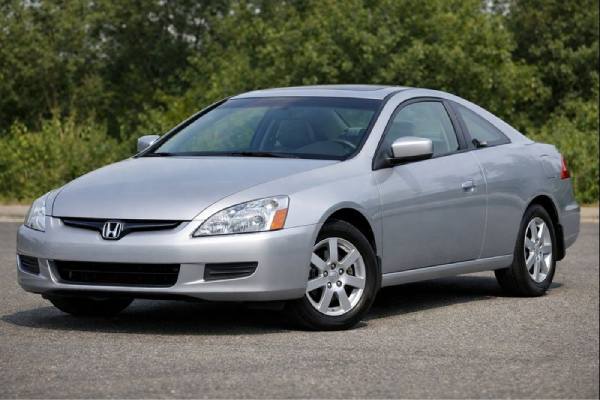
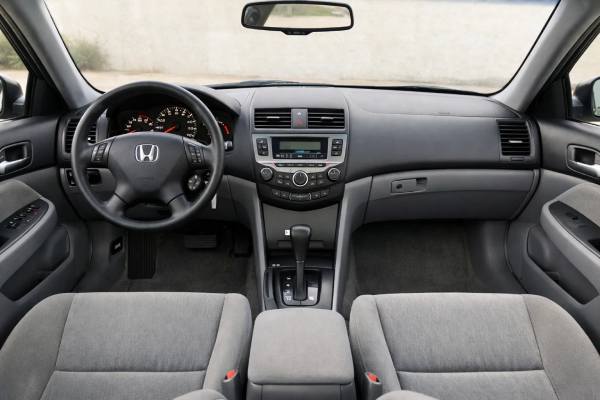

The 2002–2005 Honda Accord Coupe (CM8) with the J30A4 3.0-liter V6 is the “grown-up quick” Accord: smooth power, a relaxed highway stride, and the kind of everyday usability that makes owners keep them for a long time. The V6 doesn’t just add straight-line pace—it changes the character of the car, with stronger midrange pull for passing and a more effortless feel with passengers on board. The coupe body adds a slightly tighter, more personal cabin vibe, while still keeping real trunk space and easy parts availability.
Today, the CM8’s value depends less on the badge and more on maintenance history—especially timing-belt service and transmission care. If those basics are handled, this generation tends to reward owners with predictable running costs, solid comfort, and a drivetrain that still feels modern in daily driving.
Owner Snapshot
- Strong, smooth V6 power that makes highway passing easy even with a full load.
- Comfortable ride with stable high-speed manners; good long-distance coupe.
- Parts availability is strong, and most jobs are straightforward for independent shops.
- Budget for a timing belt service if there’s no proof it was done recently.
- Change engine oil about every 8,000–12,000 km (5,000–7,500 mi) or 6–12 months depending on use.
Guide contents
- CM8 V6 coupe character
- J30A4 specifications and data
- Equipment, trims, and safety
- Reliability risks and service actions
- Maintenance schedule and buyer checks
- Road feel and fuel use
- Competitors and ownership value
CM8 V6 coupe character
If you’re shopping this Accord Coupe, it helps to understand what Honda was aiming for: a midsize coupe that feels refined first, fast second. The CM8’s J30A4 V6 delivers power in a very “Honda” way—clean throttle response, a smooth climb to redline, and enough torque to feel easy in real traffic without needing constant downshifts. Compared with the four-cylinder coupe, the V6 car is calmer at speed and less sensitive to hills or extra passengers. It’s not a muscle coupe, but it is genuinely quick by early-2000s standards.
Chassis-wise, the coupe shares much of its architecture with the sedan, but the shorter body and coupe packaging can make it feel slightly more focused from the driver’s seat. Expect predictable front-wheel-drive balance: safe understeer at the limit, strong straight-line stability, and a ride quality that prioritizes comfort. On most trims, the suspension tuning is forgiving, which is great for daily use but means worn bushings and tired dampers show up clearly as the cars age.
Ownership today is mostly about sorting the “age stack” rather than fighting bad design. Rubber parts harden. Struts get weak. Motor mounts soften and cause vibration. The V6 itself is typically durable if oil changes are consistent, but it has a timing belt—so the car’s reliability story is tightly tied to whether that belt service is treated as mandatory, not optional.
The coupe body also shapes practicality. Front seats are comfortable and the trunk is usable, but rear-seat access and headroom are naturally more limited than the sedan. If you’re buying this as a commuter or road-trip coupe, it fits the job well. If you’re frequently carrying adults in the back, you’ll notice the compromise.
Where the CM8 shines is in its “complete package” feel: a smooth engine, a quiet cruise, and a cabin that (when cared for) still feels well-built. The downside is that neglected examples can hide expensive catch-up work—timing belt, transmission behavior, and suspension refreshes are the big three that define whether it’s a bargain or a project.
J30A4 specifications and data
Below are practical, ownership-focused specs for the 2002–2005 Accord Coupe V6 (CM8) with J30A4. Exact figures can vary slightly by market, emissions calibration, wheel package, and transmission choice, so treat these as a decision-ready baseline and verify by VIN and under-hood labels.
Engine and performance (ICE)
| Item | Specification |
|---|---|
| Code | J30A4 |
| Engine layout and cylinders | V6, 6 cylinders, SOHC VTEC, 4 valves/cyl (24-valve) |
| Displacement | 3.0 L (≈ 2,997 cc) |
| Bore × stroke | ≈ 86 × 86 mm (varies by published source; verify by service data) |
| Induction | Naturally aspirated (NA) |
| Fuel system | Port fuel injection (PFI) |
| Compression ratio | ≈ 10.0:1 (market dependent) |
| Max power | 240 hp (≈ 179 kW) @ ≈ 6,250 rpm |
| Max torque | ≈ 287 Nm (≈ 212 lb-ft) @ ≈ 5,000 rpm |
| Timing drive | Belt |
| Rated efficiency (typical real-world mixed) | ≈ 10–12 L/100 km (≈ 20–24 mpg US / 24–28 mpg UK) |
| Real-world highway @ 120 km/h | ≈ 7.8–9.0 L/100 km (≈ 26–30 mpg US / 31–36 mpg UK) |
Transmission and driveline
| Item | Specification |
|---|---|
| Drive type | Front-wheel drive (FWD) |
| Automatic option | 5-speed automatic (varies by year/market) |
| Manual option | 6-speed manual on some V6 coupe trims/markets |
| Differential | Open (factory LSD uncommon; verify if modified) |
Chassis and dimensions (typical for this generation)
| Item | Specification |
|---|---|
| Suspension (front/rear) | Independent front (strut-type), independent rear (multi-link) |
| Steering | Power-assisted rack and pinion |
| Brakes | 4-wheel discs on many V6 trims; sizes vary by year/trim |
| Wheels/tyres | Commonly 16–17 in depending on trim |
| Fuel tank | ≈ 65 L (≈ 17.2 US gal / 14.3 UK gal) |
| Turning circle | ≈ 11–12 m (spec varies by wheel/tyre) |
Performance and capability (typical ranges)
| Metric | Typical result |
|---|---|
| 0–100 km/h (0–62 mph) | ≈ 6.5–7.2 s (transmission and traction dependent) |
| Passing (80–120 km/h) | Strong midrange; typically ≈ 4.5–6.0 s |
| Top speed | Generally limited by gearing/aero; ≈ 210–230 km/h (130–143 mph) |
| Towing | Often not rated/market-limited; verify local homologation |
| Payload/roof load | Market dependent; verify door-jamb label |
Fluids and service capacities (ownership-focused)
| System | What to use | Capacity (typical) |
|---|---|---|
| Engine oil | API-grade oil; many markets list 5W-20 | ≈ 4.0–4.5 L (≈ 4.2–4.8 US qt) |
| Coolant | Honda-compatible long-life coolant | ≈ 5.5–6.5 L (≈ 5.8–6.9 US qt) |
| Automatic transmission | Honda ATF (DW-1 compatible) | Drain/fill often ≈ 2.8–3.3 L (≈ 3.0–3.5 US qt) |
| Brake fluid | DOT 3 (or DOT 4 where specified) | Fill as needed during bleed/service |
| Power steering | Honda PSF or approved equivalent | Fill as needed; do not mix fluids casually |
| A/C refrigerant | R-134a | Charge varies by system; verify under-hood label |
Key torque specs (common decision points)
| Fastener | Torque (typical) |
|---|---|
| Wheel lug nuts | ≈ 108 Nm (≈ 80 lb-ft) |
| Spark plugs (if applicable) | Often ≈ 18 Nm (≈ 13 lb-ft) (verify plug type) |
| Engine oil drain bolt | Often ≈ 39 Nm (≈ 29 lb-ft) (verify pan/bolt type) |
Safety and driver assistance (period-correct)
| Item | Notes |
|---|---|
| Airbags | Front airbags standard; side airbags and curtains vary by year/trim |
| ABS | Common/standard on many trims |
| Stability control | Availability varies by market/year; verify by trim |
| ADAS | Modern AEB/ACC/lane systems were generally not offered in this era |
Equipment, trims, and safety
For the 2002–2005 Accord Coupe V6 range, trims and equipment differ a lot by market, but the ownership logic is similar everywhere: identify the transmission, confirm the safety equipment, then verify “comfort tech” that can be costly to fix (HVAC, audio, locks, windows).
Trims and options you’ll commonly see
- V6 automatic “comfort” builds: These prioritize smooth commuting—often with automatic climate control, upgraded audio, and a generally quieter ride. They’re the easiest to live with in traffic and the most common on the used market.
- V6 manual coupes (where offered): These are the enthusiast pick. The 6-speed manual changes the car’s personality—more driver involvement and generally less heat stress than an automatic in hard use. Downside: clutch wear and driver-abuse risk are higher, and some parts are trim-specific.
- Leather and premium audio packages: Great when intact; expensive when neglected. Check seat heaters (if fitted), seat leather seams, amplifier behavior, and speaker crackle.
Quick identifiers to check in person
- The easiest confirmation is the VIN plate and emissions label under the hood, plus the shift gate (automatic PRNDL vs manual pattern).
- If the car claims to be a rarer V6 manual, confirm with the transmission tag/build codes and a quick road test for proper gear engagement and clutch take-up.
Safety ratings and what they mean today
Safety performance on early-2000s cars is very dependent on airbag configuration. A coupe with front airbags only is a very different proposition than one equipped with side airbags and side curtains. When comparing cars:
- Treat side-curtain airbags as a meaningful safety advantage, especially for real-world side impacts.
- Check whether the airbag system has any warning lights (SRS lamp). An illuminated SRS light is not a “later” fix—it can mean the airbags won’t deploy as designed.
Safety systems and service implications
- ABS: Confirm it works by ensuring no ABS warning lights and by doing a controlled brake test on a safe surface (no pulsing or warning lamps afterward).
- Seat belt pretensioners and buckles: Age, moisture, and repeated use can affect buckle switches. A buckle issue may also trip the SRS system on some configurations.
- Child seats: Coupes can handle child seats, but rear access is tighter. Confirm tether anchors and belt condition if this matters for your use case.
Bottom line: the “best” trim for most buyers is the one with (1) documented maintenance, (2) intact SRS/ABS systems, and (3) a transmission that behaves correctly under load. Luxury features are a bonus—unless they’re broken, at which point they become negotiating leverage.
Reliability risks and service actions
A well-kept CM8 V6 can be very reliable, but age changes the equation. The most useful way to judge risk is to separate issues by prevalence and cost tier, then link them to mileage/age patterns.
Common and usually low-to-medium cost
- Valve cover gasket seepage (common, low/medium):
Symptoms: oil smell, light oil wetness at the back of the engine, occasional misfire if oil reaches plug wells.
Likely cause: hardened gaskets and grommets with age.
Remedy: reseal covers, replace grommets, clean and inspect ignition components. - Engine mounts softening (common, medium):
Symptoms: vibration at idle in Drive, clunk on throttle transitions.
Cause: rubber deterioration and fluid-filled mount aging.
Remedy: replace worn mounts; avoid cheap no-name mounts that transmit vibration. - Power steering pump seep/whine (common, low/medium):
Symptoms: whining when cold, fluid seep at pump.
Cause: seal wear, incorrect fluid use.
Remedy: reseal/replace pump; flush with correct fluid, inspect return line. - A/C compressor clutch and bearings (common, medium):
Symptoms: intermittent cooling, metallic noise, clutch chatter.
Remedy: clutch/compressor service depending on failure mode; check condenser and lines for leaks.
Occasional but higher-cost tier
- Automatic transmission wear or overheating (occasional, high):
Symptoms: flare between gears, harsh 2–3 or 3–4 shift, delayed engagement, shudder at light throttle lockup.
Cause: aged fluid, heat cycling, internal clutch wear, torque converter lockup issues.
Remedy: correct-fluid drain/fill cycles (not aggressive power-flush), diagnose solenoids and pressures early, rebuild/replace if slipping is present.
Note: Many “bad transmissions” start as neglected fluid and mount issues—test carefully before assuming worst-case. - Timing belt overdue (occasional, high if ignored):
Symptoms: no symptom until it fails; sometimes squeal or tensioner noise.
Cause: time and mileage.
Remedy: belt, tensioner, and typically water pump as a set; treat as mandatory maintenance.
Rare but important checks
- Cooling system weakness (age-related) (rare/medium):
Radiator end tanks, hoses, and thermostat can age out. Overheating events are a reliability turning point—avoid cars with any overheating history. - Electrical aging (rare/medium):
Alternators, starters, and window regulators can fail with age. These are usually manageable, but they add up if several hit at once.
Recalls, TSBs, and how to verify
On older cars, recall relevance depends on market and VIN range, and the big safety campaigns can span multiple model years. The correct approach is:
- Run the VIN through an official recall lookup tool.
- Ask the seller for dealer paperwork showing completion.
- If unsure, confirm completion at a dealer using service history records.
Pre-purchase request that pays off: a scan for stored codes (even if the dash is clear), a cold-start test (listen for belt/tensioner noise), and a longer road test that includes steady cruising (to reveal lockup shudder) and full-throttle acceleration (to reveal gear flare).
Maintenance schedule and buyer checks
A CM8 V6 that feels “cheap” can become expensive if you have to catch up on neglected maintenance. The schedule below is a practical ownership plan that balances factory logic with what tends to keep these cars healthy at higher age.
Practical maintenance schedule (distance and time)
| Item | Interval (typical) | Notes |
|---|---|---|
| Engine oil and filter | 8,000–12,000 km (5,000–7,500 mi) or 6–12 months | Use the viscosity and spec listed for your market; shorten for short trips and hot climates. |
| Engine air filter | 24,000–40,000 km (15,000–25,000 mi) | Inspect more often in dusty areas. |
| Cabin air filter | 24,000–40,000 km (15,000–25,000 mi) | Helps HVAC performance and odor control. |
| Coolant | Often 5 years / 160,000 km (100,000 mi) then 3 years / 96,000 km (60,000 mi) | Verify the coolant type and service history. |
| Spark plugs | Often 160,000 km (100,000 mi) with long-life plugs | Confirm plug type and gap requirements. |
| Brake fluid | Every 3 years | Time-based; moisture matters more than mileage. |
| Automatic transmission fluid (ATF) | 40,000–60,000 km (25,000–40,000 mi) drain/fill | Earlier is better for longevity; avoid harsh flushes. |
| Manual transmission fluid | 60,000–100,000 km (40,000–60,000 mi) | Improves shift feel; verify correct fluid spec. |
| Timing belt (with tensioner, often water pump) | Often 168,000 km (105,000 mi) or 7 years | Non-negotiable if unknown; budget for it immediately. |
| Serpentine belt and hoses | Inspect every oil change; replace by condition | Replace at first signs of cracking or glazing. |
| Valve clearance (if noisy) | Inspect when symptoms appear | Ticking noise can indicate adjustment needs. |
| Tyre rotation and alignment check | Every 8,000–12,000 km (5,000–7,500 mi) | Protects tyres and keeps handling stable. |
| 12 V battery test | Yearly after 3–4 years of age | Prevents electrical gremlins and no-starts. |
Buyer’s inspection checklist (high signal items)
- Timing belt proof: invoice with date, mileage, and parts (belt + tensioner; ideally water pump). If absent, assume it’s due.
- Transmission behavior:
- Automatic: no flare, no harsh slam shifts, no steady-cruise shudder.
- Manual: smooth synchros (especially 2nd/3rd), no clutch slip under load.
- Cooling health: stable temperature on a long drive; no coolant smell; fans cycle correctly.
- Suspension and steering: listen for clunks over bumps; check front control arm bushings and ball joints; ensure straight braking.
- Rust and corrosion: inspect subframe areas, brake lines (salt states), and rear wheel arches.
- Electronics: verify windows, locks, HVAC modes, A/C cold performance, and that no ABS/SRS lights are on.
What years and configurations to seek (and why)
- Best for most buyers: V6 coupe with documented belt service + regular ATF changes (or a clean 6MT car with responsible ownership).
- Approach carefully: cars with unknown belt history, “freshly cleared” warning lights, or a transmission that behaves differently hot vs cold.
Long-term durability outlook is strong when maintenance is treated as routine rather than reactive. The CM8 doesn’t demand exotic work, but it does punish skipped services—especially the timing belt and transmission fluid.
Road feel and fuel use
On the road, the CM8 V6 feels like a refined daily coupe, not a loud sport model. The first impression is usually smoothness: the J30A4 runs with a low-vibration character, and the car settles into highway cruising with minimal effort. Wind noise depends heavily on door seals and tyre choice, but a healthy example still feels quiet for its age.
Ride, handling, and NVH
- Ride quality: tuned for comfort. Over broken pavement, the car tends to round off sharp edges rather than transmit them. If it feels crashy, suspect worn struts, tired top mounts, or low-profile tyres on aftermarket wheels.
- Steering feel: light-to-medium weight with decent accuracy, but not “talkative” by modern sport standards. A vague on-center feel often points to alignment, front bushings, or tyre issues.
- Braking: generally predictable pedal feel. Pulsation usually means warped rotors or uneven pad deposits; a soft pedal points to fluid age or air in the system.
Powertrain character and transmission behavior
The V6’s strongest advantage is how little it strains. In real traffic, it pulls cleanly from low rpm and doesn’t need to hunt for power. With the automatic, you’ll typically feel a smooth downshift for passing rather than a dramatic surge. With the 6-speed manual, the car feels more alert and controllable—especially for two-lane driving—though you should confirm the clutch engages cleanly and the gearbox doesn’t resist shifts when cold.
A key ownership note: the automatic transmission’s long-term health is closely tied to heat and fluid condition. If a test drive reveals shudder at steady speeds or inconsistent shifts once warmed up, treat it as a serious negotiating point.
Real-world efficiency (what owners usually see)
Expect fuel use that reflects a 3.0-liter V6 in a midsize coupe:
- City-heavy driving: often 12–14 L/100 km (≈ 17–20 mpg US / 20–23 mpg UK) depending on traffic and short trips.
- Highway 100–120 km/h (60–75 mph): often 7.8–9.0 L/100 km (≈ 26–30 mpg US / 31–36 mpg UK).
- Mixed use: commonly 10–12 L/100 km (≈ 20–24 mpg US / 24–28 mpg UK).
Winter fuel use rises noticeably with short trips and long warm-up times. The easiest ways to keep consumption reasonable are tyre pressure discipline, clean air filters, and avoiding a dragging brake caliper—an underrated cause of “mystery” fuel economy drops.
Competitors and ownership value
When new, the Accord Coupe V6 sat in a sweet spot: quicker and more refined than many mainstream coupes, but less expensive and less complex than premium badges. That positioning still describes its used-car value today, and it shapes which rivals make the most sense to compare.
Toyota Camry Solara V6 (same era)
- Why cross-shop: similar mission—comfortable V6 coupe with daily usability.
- Accord advantage: often feels more responsive and better tied-down in steering and chassis control.
- Solara advantage: typically softer ride and a more relaxed, cruiser personality.
- Used-market reality: buy the better-maintained car; both can be excellent when serviced.
Nissan Maxima (V6 sedan alternative)
- Why cross-shop: V6 pace with a more “sport sedan” vibe.
- Accord advantage: coupe styling and often a more balanced comfort-and-quality feel.
- Maxima advantage: strong performance reputation and sometimes more aggressive tuning.
- Tradeoff: Maxima is usually the choice if you want four doors without giving up V6 power.
Acura TL (premium cousin)
- Why cross-shop: similar Honda engineering DNA with more power and luxury.
- Accord advantage: simpler ownership, often lower repair costs, and less feature complexity.
- TL advantage: stronger performance and a more upscale interior.
- Decision tip: if you don’t need the premium features, the Accord often delivers 80–90% of the experience with fewer expensive surprises.
Volkswagen Passat V6 (European feel)
- Why cross-shop: comfortable, solid highway car with a different flavor.
- Accord advantage: typically better long-term reliability and easier parts/service availability.
- Passat advantage: some buyers prefer the cabin feel and highway demeanor.
- Ownership caution: maintenance and parts costs can rise quickly on older European V6 models.
Who the CM8 V6 coupe fits best today
- You want a comfortable, quick daily coupe with good parts support.
- You value smooth power over sporty drama.
- You’re willing to treat the timing belt and fluid services as non-optional.
If your priority is maximum safety tech, modern infotainment integration, or class-leading fuel economy, a newer car will make more sense. But if you want a durable V6 coupe with a mature driving character, the CM8 can still be a strong buy—provided the maintenance story is clear and the drivetrain behaves correctly on a thorough test drive.
References
- 2005 Accord Coupe Online Reference Owner’s Manual 2005 (Owner’s Manual)
- 2002 Accord Coupe Online Reference Owner’s Manual 2002 (Owner’s Manual)
- Honda Accord 4-door sedan 2005 (Safety Rating)
- Recalls 2025 (Recall Database) ([IIHS HLDI][1])
Disclaimer
This article is for informational purposes only and is not a substitute for professional diagnosis, inspection, or repair. Specifications, torque values, service intervals, and procedures can vary by VIN, market, model year, and installed equipment—always verify details using official owner’s and service documentation for the exact vehicle you are working on.
If you found this guide useful, please consider sharing it on Facebook, X (Twitter), or your favorite forum to support our work.