
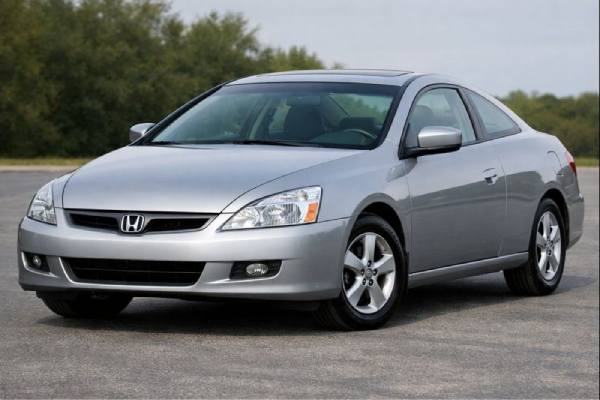
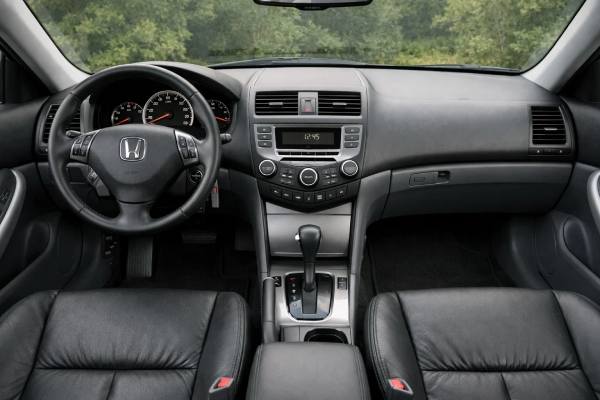
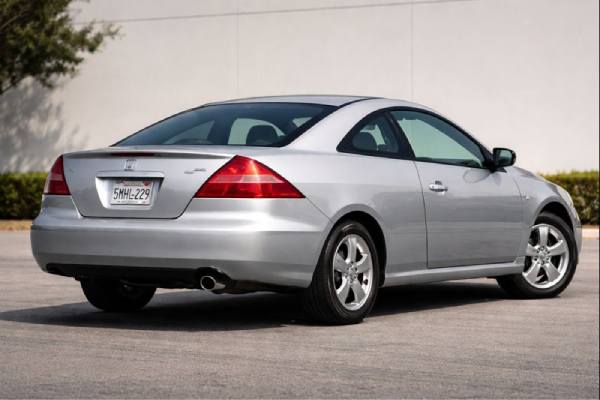
The 2005–2007 Honda Accord Coupe (CM7) with the K24A8 2.4-liter engine is a good example of Honda building a “grown-up” coupe: practical enough to daily-drive, but shaped and tuned to feel a little sharper than the sedan. The K24A8 is naturally aspirated and timing-chain driven, which keeps long-term maintenance predictable when oil service is consistent. The coupe body adds its own ownership realities—longer doors, heavier window mechanisms, and a tighter rear seat—while keeping the same core strengths: smooth drivability, strong parts availability, and a chassis that stays stable at speed.
If you shop one today, buy on condition and service history, not mileage alone. A well-maintained CM7 feels tight and refined. A neglected one can hide costs in suspension wear, aging rubber seals, and an automatic transmission that may be sensitive to old fluid.
Quick Specs and Notes
- Smooth, low-stress 2.4L powertrain that fits commuting and highway use well
- Coupe body feels a touch more responsive, often with a slightly lighter curb weight than the sedan
- Strong aftermarket and OEM parts support makes upkeep straightforward in most regions
- Automatic transmissions tend to age best with frequent drain-and-fill fluid service, not “lifetime” intervals
- Plan engine oil and filter service about every 8,000–12,000 km (5,000–7,500 mi) or 6–12 months, depending on use
Explore the sections
- CM7 coupe ownership feel
- K24A8 coupe spec sheet
- Coupe trims and protection
- Known faults and campaigns
- Service schedule and buying
- How it drives daily
- Alternatives in the market
CM7 coupe ownership feel
The CM7 Accord Coupe takes the familiar Accord formula and makes it more personal. You still get the same core engineering approach—durable powertrain, predictable handling, and an interior designed for daily use—but the two-door body changes how the car feels and how it ages. The coupe’s doors are longer and heavier, which makes entry and exit nice in open parking spaces but can stress hinges, checks, and weather seals over time. That is not a “fatal flaw,” just a coupe reality: the body asks a little more from its moving parts.
With the K24A8 2.4-liter inline-four, the coupe is tuned for smooth, usable performance rather than sporty drama. The engine is naturally aspirated (no turbo), so response is linear and easy to control in traffic. The timing chain is a long-term advantage, but only if oil changes remain consistent. On chain engines, neglect does not show up as a missed “belt interval” reminder—it shows up later as noise, timing correlation issues, or general wear that could have been avoided.
Chassis behavior is one of the CM7’s quiet strengths. In stock form, the coupe is stable on the highway and predictable in corners. It does not feel like a lightweight sports coupe, but it does feel more “tied down” than many cars of its age when the suspension is healthy. A worn example can feel loose or noisy over bumps, and this is where buyers often misread the car: what feels like an “old platform” is often just tired bushings, links, and dampers.
The coupe body also influences practicality. Rear access is naturally less convenient than the sedan, and the rear seat is better treated as “occasional use” for adults. Trunk space is still useful, but the opening and seatback design can limit bulky cargo compared with a sedan. If you plan to use it as a daily driver, the best approach is honest self-selection: the CM7 suits drivers who want an Accord that looks and feels a bit more special without stepping into high running costs.
Finally, remember that market and trim differences matter. Some regions offered more manual-transmission coupes; others leaned heavily toward automatics. Some safety equipment is trim-dependent. Treat the CM7 as a solid foundation—then verify the exact build by VIN/labels and a careful equipment check.
K24A8 coupe spec sheet
This section focuses on the 2005–2007 Accord Coupe (CM7) with the K24A8 2.4L rated around 166 hp. Exact values vary by market, trim, wheels, and transmission, so the most useful approach is to present “typical” specs and ranges and then confirm details for your specific car.
Engine and performance
| Item | Specification |
|---|---|
| Code | K24A8 |
| Engine layout and cylinders | Inline-4, DOHC i-VTEC, 4 cylinders, 4 valves/cyl |
| Bore × stroke | 87.0 × 99.0 mm (3.43 × 3.90 in) |
| Displacement | 2.4 L (2,354 cc) |
| Induction | Naturally aspirated |
| Fuel system | Multi-point injection (MPFI) |
| Compression ratio | ~9.7:1 |
| Max power | 166 hp (124 kW) @ ~5,800 rpm |
| Max torque | ~217 Nm (160 lb-ft) @ ~4,000 rpm |
| Timing drive | Chain |
| Emissions and efficiency standard | Market dependent (EPA/Euro-era variants) |
| Rated efficiency (typical) | Auto: ~11.2 / 7.6 / 9.4 L/100 km (21 / 31 / 25 mpg US) city/hwy/comb; Manual: ~10.2 / 7.6 / 9.0 L/100 km (23 / 31 / 26 mpg US) |
Transmission and driveline
| Item | Typical specification |
|---|---|
| Drive type | FWD |
| Transmission options | 5-speed automatic or 5-speed manual (market/trim dependent) |
| Differential | Open |
Chassis and dimensions
| Item | Typical specification (coupe) |
|---|---|
| Suspension (front / rear) | Double wishbone / multi-link (market dependent) |
| Steering | Power rack-and-pinion (often hydraulic on this generation) |
| Brakes | 4-wheel discs; front vented (diameters vary by trim/wheels) |
| Wheels and tires | Often 16–17 in; common sizes include 205/60 R16 or 215/50 R17 |
| Length / width / height | ~4,770–4,800 mm / ~1,815–1,820 mm / ~1,440–1,455 mm (188–189 in / ~71.5–72 in / ~56.7–57.3 in) |
| Wheelbase | ~2,740 mm (107.9 in) |
| Turning circle | ~10.8–11.2 m (35–37 ft), equipment dependent |
| Curb weight | ~1,420–1,520 kg (3,130–3,350 lb), equipment dependent |
| Fuel tank | ~65 L (17.2 US gal / 14.3 UK gal) |
| Cargo volume | Typically ~360–410 L (12.7–14.5 ft³), method dependent |
Performance and capability
| Metric | Typical range (stock) |
|---|---|
| 0–100 km/h (0–62 mph) | ~8.5–10.0 s (transmission dependent) |
| Top speed | ~195–205 km/h (121–127 mph), market/limiter dependent |
| Braking 100–0 km/h | Often ~38–42 m (125–138 ft), tire and brake condition dependent |
| Towing | Often not rated or very limited; treat as “light duty only” if permitted and equipped |
Fluids and service capacities
| Item | Typical specification (verify for VIN) |
|---|---|
| Engine oil | Commonly 5W-20 in many markets; ~4.2 L (4.4 US qt) with filter |
| Coolant | Honda-compatible long-life coolant; total often ~7.0–7.5 L (7.4–7.9 US qt) |
| Automatic transmission fluid | Honda ATF; drain-and-fill quantity is much less than total capacity |
| Manual transmission fluid | Honda MTF; capacity varies by gearbox |
| A/C refrigerant | R-134a; charge varies by equipment and market |
Electrical and ignition
| Item | Typical specification |
|---|---|
| Alternator output | Equipment dependent (often ~90–110 A range) |
| 12 V battery | Commonly ~36–45 Ah (CCA varies by climate/market) |
| Spark plugs | Iridium-type plugs common; gap and part number vary by market |
Safety and driver assistance
| Item | Typical notes |
|---|---|
| Crash ratings | Ratings often published for the 4-door Accord of the same generation; coupe may not be separately tested |
| Headlight rating | Depends on trim reflector/projector design |
| ADAS | No modern AEB/ACC/LKA; expect ABS, and possibly stability/traction control depending on trim |
Coupe trims and protection
With the CM7 coupe, trim differences usually change comfort and appearance more than mechanical hardware—but for used buyers, equipment still matters because it affects safety, repair cost, and how the car fits your routine. Since trim names vary by market, it helps to think in “equipment groups” rather than relying on a badge.
Trims and options that matter
Most K24A8 coupes were sold in a base-to-mid configuration and one or more higher trims. The differences that tend to matter most:
- Transmission: Manuals are less common in some markets but can be a durability advantage if you prefer direct control and simpler long-term maintenance. Automatics can be excellent, but fluid history matters more.
- Wheel size: A 17-inch package can sharpen steering and stance, but it often increases tire cost, adds road noise, and can make the ride harsher on broken pavement. A quality touring tire on 16-inch wheels often delivers the most refined daily experience.
- Interior electronics: Premium audio and factory navigation (where fitted) can become expensive annoyance items as the car ages. Test everything—every speaker, every button, every display function—before you buy.
- Sunroof: Not inherently unreliable, but drains clog and seals age. Wet carpets and a foggy interior are big red flags because water intrusion can create electrical problems that are hard to trace.
Quick identifiers for used shopping
When listings are vague, look for these practical tells:
- Side-airbag and curtain-airbag presence (SRS tags on seat sides and headliner areas)
- Stability control buttons/labels (varies by market and year)
- Wheel and tire size printed on the driver door label
- Factory amplifier location and trunk trim pieces (if premium audio is fitted)
Safety ratings in context
For this generation, safety results are often discussed using sedan test data because it is more commonly published. The important ownership takeaway is not the number itself, but what influences outcomes in real life:
- Airbag coverage: Front side airbags and side curtains are highly desirable on a used car of this era.
- Seat and head restraint condition: Whiplash protection can be weaker on some older seat designs; a worn seatback or misadjusted head restraint makes that worse.
- Tires and brakes as “active safety”: Since there is no modern automatic emergency braking, tire grip and brake condition matter more than many owners realize.
Safety systems and driver assistance
Expect a traditional set of systems rather than modern driver assistance:
- Dual front airbags; side torso and side curtain airbags depending on trim
- ABS with electronic brakeforce distribution
- Traction and stability control on some trims/markets (not universal)
- Child-seat anchors (LATCH/ISOFIX), location and count vary by market; confirm directly in the car
For a coupe that may be driven a bit more enthusiastically, the best safety upgrade is maintenance discipline: fresh brake fluid, quality tires, and a suspension that holds alignment properly.
Known faults and campaigns
Most CM7 coupe problems are not exotic; they are age-and-use patterns. The key is recognizing which ones are “normal wear,” which ones can become expensive if ignored, and which ones should be verified through recall completion.
Common, lower-cost issues
- Oil leaks from gaskets (common, low/medium): Seepage around the valve cover gasket or VTEC solenoid gasket is typical with age. Symptoms include oil smell after a drive or minor drips. Remedy is gasket replacement and checking the PCV valve so crankcase pressure stays controlled.
- Power steering noise or seepage (common, low/medium): Groaning at low speed or wet fittings around the pump/hose connections. Often fixed with seals or O-rings and correct fluid.
- Coupe door and window wear (common, low/medium): Long doors can stress hinges and checks; window regulators and seals also work harder. Symptoms include wind noise, slow window movement, or door sag. Remedy is usually adjustment, hinge/stop service, or regulator replacement rather than major structural repair.
- Mounts and bushings (common, medium): Engine mounts soften and suspension bushings crack over time, causing vibration at idle, clunks, and vague steering. A targeted refresh can make the car feel dramatically newer.
Occasional, medium-to-high cost issues
- Automatic transmission shift quality (occasional, medium/high): Flare, harshness, or delayed engagement often worsens when warm. Old fluid is a frequent contributor. The first step is correct drain-and-fill service (sometimes repeated), then diagnosis of solenoids or pressure switches if symptoms persist.
- Cooling system aging (occasional, medium): Radiator end tanks, hoses, and thermostats age. A slow coolant loss or any hint of overheating deserves immediate attention because overheating can create expensive secondary problems.
- A/C performance (occasional, medium): Weak cooling may be a leak, clutch issue, or compressor wear. Proper leak testing beats repeated “top-off” recharges.
Recalls, TSBs, and verification steps
For cars of this era, recall history—especially airbag-related campaigns in many markets—should be treated as a safety requirement, not a bonus.
Use a simple verification routine:
- Run an official VIN recall check using a government database or manufacturer portal.
- Ask the seller for documentation showing completion.
- If there is no proof, assume it still needs confirmation by a dealer.
Pre-purchase checks that catch expensive surprises
- Cold start: listen for abnormal rattles and confirm smooth idle
- Warm test drive: confirm transmission behavior, especially light-throttle shifts (automatic)
- Inspect for wet carpets and trunk moisture (sunroof drains and seals)
- Look for uneven tire wear (alignment and suspension health proxy)
- Scan for stored fault codes and check readiness monitors (helps spot recently cleared issues)
The CM7 coupe can be a very dependable used car, but only if you treat it like a system: fluids, rubber, suspension geometry, and recall status all matter.
Service schedule and buying
A CM7 coupe with the K24A8 stays inexpensive when you maintain it on a schedule. Most “bad Accords” are not bad designs—they are cars that missed years of basic service and then asked the next owner to pay the bill.
Practical maintenance schedule
Use these intervals as a real-world plan, then confirm your exact requirements by VIN and official documentation:
- Engine oil and filter: every 8,000–12,000 km (5,000–7,500 mi) or 6–12 months. Short trips, cold climates, and heavy traffic justify the shorter interval.
- Engine air filter: inspect every 15,000 km (10,000 mi); replace around 30,000–45,000 km (20,000–30,000 mi) depending on dust.
- Cabin air filter: replace about every 20,000–30,000 km (12,000–20,000 mi) or yearly if you drive in dusty areas.
- Coolant: long-life intervals are common, but if history is unknown, reset the clock with the correct Honda-compatible coolant and inspect hoses and radiator condition.
- Spark plugs (often iridium): commonly around 160,000 km (100,000 mi); replace sooner if misfires or roughness appear.
- Timing chain: no routine replacement interval, but inspect if you hear persistent cold-start rattle, see timing-related fault codes, or suspect poor oil history.
- Automatic transmission fluid (if equipped): drain-and-fill every 40,000–60,000 km (25,000–40,000 mi). If the car has unknown history, repeated drain-and-fills are often a conservative approach.
- Manual transmission fluid (if equipped): every 60,000–100,000 km (40,000–60,000 mi), sooner if shifting feels notchy.
- Brake fluid: every 3 years regardless of mileage.
- Brakes: inspect at every tire rotation; replace based on thickness and rotor condition, not just noise.
- Serpentine belt and hoses: inspect yearly; replace based on cracking, glazing, or age.
- Alignment: check yearly or after suspension work; it protects tires and helps the coupe track straight.
Buyer’s guide: what to seek
A well-bought CM7 is usually cheaper than a “cheap” CM7.
Prefer examples with:
- Records showing consistent oil changes
- Proof of ATF service on automatics
- Cooling system service history (coolant type and change interval matters)
- Even tire wear and a calm, straight highway feel
- A dry interior (no water intrusion)
What to avoid or price in
Plan extra budget—or walk away—if you see:
- Transmission flare/harshness on a fully warm drive with unknown fluid history
- Overheating stories, coolant loss, or “just replaced the thermostat” without deeper inspection
- Wet carpet, moldy smell, or repeated electrical oddities after rain
- Obvious door sag, major wind noise, or windows that struggle (coupe-specific wear)
Durability outlook
The K24A8 coupe can be a long-term daily driver if you treat maintenance as prevention. The biggest win is doing baseline service immediately after purchase—fluids, filters, brakes inspection, and a suspension check—so you stop guessing and start owning with confidence.
How it drives daily
The CM7 coupe’s driving experience is defined by balance. It is not a hard-edged sports coupe, but it feels more focused than many two-doors of its era because the platform underneath is fundamentally a well-sorted midsize car.
Ride, handling, and NVH
- Ride quality: Comfortable and controlled when the suspension is healthy. If the car feels bouncy or crashes over sharp bumps, suspect tired dampers or worn bushings.
- Cornering balance: Predictable and neutral in normal driving. The coupe rewards good tires; cheap tires often make the steering feel vague and increase braking distances.
- Steering feel: Typically steady and easy to place. Wandering or poor on-center feel usually points to alignment or worn front-end components.
- Cabin noise: Wheel size and tire choice matter. Larger wheels and low-profile tires can add harshness and road roar, while a quality touring tire can make the car feel more refined than its age suggests.
Powertrain character
The K24A8 does not have turbo punch; it has usable torque and smooth revs. In city driving, it feels cooperative and easy. On the highway, it settles into a relaxed cruise and responds well to moderate throttle. For quick passing, it prefers a downshift (especially with an automatic), then pulls cleanly through the midrange.
Transmission behavior shapes the experience:
- Automatic: Smooth when healthy, but can feel less decisive if fluid is old or mounts are worn. A well-maintained unit downshifts more cleanly and makes the car feel stronger than the numbers suggest.
- Manual: More engaging and often makes the coupe feel lighter on its feet because you can keep the engine in its sweet spot.
Real-world efficiency
In practical ownership terms, expect fuel use to track your driving conditions more than your intentions:
- City: often ~10–12 L/100 km (19–24 mpg US) depending on traffic and warm-up time
- Highway at 100–120 km/h: often ~7.5–8.5 L/100 km (28–31 mpg US; 34–38 mpg UK) in good condition
- Mixed: commonly ~9–10 L/100 km (24–26 mpg US)
Cold weather and short trips can increase consumption because the engine spends more time warming up and the transmission holds lower gears longer.
Performance metrics that actually matter
Numbers vary by test, tires, and transmission, but here’s what changes the verdict in daily use:
- Passing confidence: strong enough when the transmission downshifts promptly and the engine is healthy
- Braking consistency: depends heavily on fresh brake fluid and freely sliding calipers
- Stability at speed: excellent when alignment is correct and suspension bushings are not worn
A CM7 coupe in good condition feels honest and composed. If it doesn’t, the fix is usually maintenance—not chasing “performance mods.”
Alternatives in the market
When people shop a 2005–2007 Accord Coupe 2.4, they usually want a two-door that can still handle real-life responsibilities. The CM7’s main advantage is that it behaves like a practical midsize car with coupe styling—meaning it usually asks less from your wallet than many “sportier” coupes of the same era.
Versus Toyota Solara (Camry coupe)
- Accord advantage: tends to feel more composed and responsive, especially in steering and chassis control.
- Solara advantage: often prioritizes comfort and a softer ride; some owners prefer its relaxed character.
- Decision point: buy on condition. Both are good daily coupes, but the Honda often feels tighter when suspension is refreshed.
Versus Nissan Altima Coupe 2.5
- Accord advantage: predictable aging and broad service familiarity in many regions.
- Altima advantage: can feel eager and lighter in some configurations.
- Decision point: if you want “set-and-forget” ownership tendencies, the Accord often fits better—especially with a clear maintenance history.
Versus Acura TSX (similar era, 4-door)
Not a coupe, but many buyers cross-shop it because it offers a more premium feel.
- Accord advantage: usually cheaper parts and simpler ownership costs.
- TSX advantage: sportier suspension tuning and a more premium interior experience.
- Decision point: if you want sharper dynamics and accept higher upkeep, TSX is tempting; if you want a calmer daily rhythm, CM7 wins.
Versus compact sport coupes
Cars like the Civic coupe or other smaller two-doors may feel more playful, but they usually give up ride comfort and highway calm compared with the Accord. If your driving is mostly city and you want a lighter feel, smaller coupes can be fun. If you do real distance, the Accord’s stability and refinement become the point.
Who should choose the CM7 K24A8
The CM7 coupe is ideal for drivers who:
- Want a reliable, comfortable two-door with reasonable running costs
- Prefer smooth, naturally aspirated response over turbo complexity
- Are willing to maintain fluids and suspension components on schedule
If you need modern driver assistance or maximum rear-seat practicality, a newer sedan makes more sense. But if you want a two-door that still behaves like an Accord—stable, sensible, and durable—the CM7 with the K24A8 remains one of the better used-car bets.
References
- 2006 Accord Coupe Online Reference Owner’s Manual 2006 (Owner’s Manual)
- Gas Mileage of 2006 Honda Accord 2006 (Official Fuel Economy)
- 2006 Honda Accord 2006 (Safety Rating)
- Vehicle Detail Search – 2006 HONDA ACCORD | NHTSA 2006 (Recall Database and Ratings)
Disclaimer
This article is for informational purposes only and is not a substitute for professional diagnosis, inspection, or repair. Specifications, torque values, service intervals, and procedures vary by VIN, market, model year, and equipment. Always verify details using the official owner’s manual and service documentation for your exact vehicle.
If you found this guide helpful, please consider sharing it on Facebook, X (Twitter), or your preferred community to support our work.