

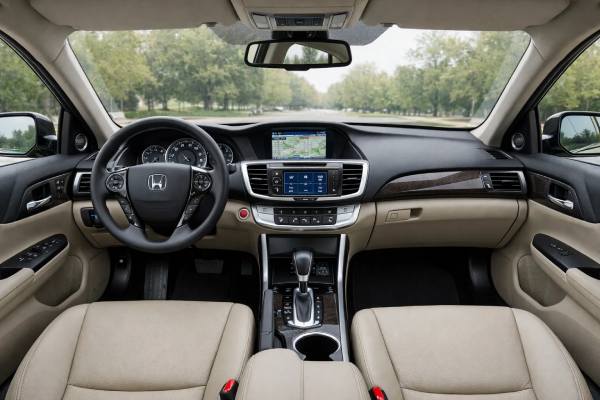
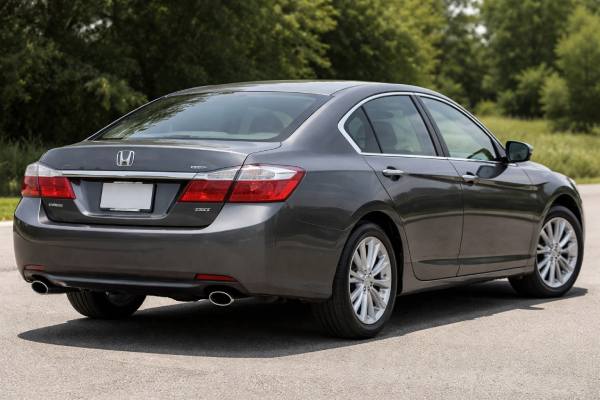
The 2012–2017 Honda Accord (CR2) with the 2.4-liter K24W1 and the 189 hp tune is the “sweet spot” version for many owners: strong real-world pace without the complexity of turbocharging, and a chassis that still feels light on its feet for a mid-size sedan. The direct-injection i-VTEC four-cylinder delivers a broad torque curve for daily driving, while the cabin and ride quality lean more “long-distance comfortable” than sporty—unless you pick the Sport-oriented setup that brought the higher output.
Where this Accord earns loyalty is in the ownership fundamentals: practical packaging, predictable operating costs, and a powertrain that tolerates high mileage when it gets clean oil and the correct fluids on time. Where it demands attention is in the details—especially CVT fluid service (if equipped) and the typical direct-injection maintenance realities over the long run.
Owner Snapshot
- A balanced midsize: roomy cabin, stable highway manners, and easy daily drivability.
- The 189 hp 2.4 l tune feels noticeably sharper at higher rpm than the lower-output calibration.
- If you buy a CVT car, treat fluid changes as a “must-do,” not a suggestion.
- Expect normal direct-injection upkeep as miles rise (intake deposits and PCV-related oil mist).
- Practical interval: change engine oil and filter at least every 12 months (even if you drive low miles).
Contents and shortcuts
- CR2 Accord 2.4 profile
- K24W1 189 hp specs
- Trims, safety, and tech
- Reliability weak spots
- Maintenance and buying tips
- Real driving and economy
- Rival check in class
CR2 Accord 2.4 profile
Think of this Accord as a “last of the clean, simple” modern Honda sedans: naturally aspirated, efficient for its size, and built around predictable behavior rather than drama. The 2.4-liter K24W1 uses direct injection (DI) and Honda’s i-VTEC valve control to deliver a surprisingly flexible engine. Around town, it feels smooth and cooperative; on the highway, it’s quiet enough to be a genuine road-trip car. The 189 hp calibration (commonly associated with the sportier trim setup in this generation) pushes the power peak a bit harder, so the engine feels more willing above midrange rpm without needing turbo boost to do it.
Chassis-wise, the CR2 has an honest, neutral balance. You get stable straight-line tracking, a steering rack that’s more precise than most family sedans of the era, and suspension tuning that prioritizes composure over harshness. The tradeoff is that it won’t hide worn bushings, tired dampers, or low-quality tires—when components age, you’ll feel it.
From an ownership angle, the Accord’s strengths show up in boring places: easy access to routine service items, abundant parts availability, and a design that typically avoids exotic one-off components. It also has a few predictable “modern Honda” themes: the CVT (where fitted) rewards regular fluid changes, and DI engines tend to collect intake valve deposits over time because fuel no longer washes the back of the valves.
If you’re shopping used, the CR2’s biggest advantage is consistency. A well-kept one drives tight and refined even at higher mileage. A neglected one still often runs—but it won’t feel right, and you’ll spend the first year catching up on fluids, suspension wear items, and deferred maintenance.
K24W1 189 hp specs
Below are practical specs for the 2.4-liter K24W1 setup in the 189 hp configuration. Some numbers vary slightly by model year, market, and transmission, so use these as a decision-grade baseline and verify against your VIN-specific documentation.
Engine and performance
| Item | Specification |
|---|---|
| Code | K24W1 (commonly referenced for CR2 2.4 l) |
| Engine layout and cylinders | Inline-4, DOHC, i-VTEC, 4 cylinders |
| Valvetrain | DOHC with variable valve control |
| Bore × stroke | 87.0 × 99.1 mm (3.43 × 3.90 in) |
| Displacement | 2.4 L (2,356 cc) |
| Induction | Naturally aspirated |
| Fuel system | Direct injection |
| Compression ratio | ~11.1:1 |
| Max power | 189 hp (141 kW) @ ~6,400 rpm |
| Max torque | ~247 Nm (182 lb-ft) @ ~3,900 rpm |
| Timing drive | Chain |
| Fuel | Regular unleaded (market dependent; follow manual) |
Transmission and driveline
| Item | Specification |
|---|---|
| Drive type | FWD |
| Automatic option | CVT (varies by year/trim/market) |
| Manual option | 6-speed manual (availability varies) |
| Differential | Open (traction is tire- and ESC-managed) |
Chassis and dimensions
| Item | Specification |
|---|---|
| Suspension (front/rear) | MacPherson strut / multi-link |
| Steering | Electric power steering |
| Brakes | 4-wheel disc (diameters vary by trim/year) |
| Wheels and tires (typical for 189 hp setup) | 235/45 R18 (varies by market) |
| Length / width / height (sedan) | ~4,860 / 1,850 / 1,465 mm (~191.3 / 72.8 / 57.7 in) |
| Wheelbase | ~2,775 mm (~109.3 in) |
| Turning circle | ~11.6–11.9 m (~38–39 ft) |
| Fuel tank | ~65 L (~17.2 US gal) |
| Cargo volume (sedan) | ~450 L (~15.8 ft³), seats up (varies by measurement method) |
Performance and capability
| Item | Typical real-world range (stock, healthy) |
|---|---|
| 0–100 km/h (0–62 mph) | ~7.3–8.2 s (transmission and tires matter) |
| Passing response | Strong midrange for an NA 2.4; best above ~3,000 rpm |
| Top speed | Typically governor-limited (market dependent) |
| Towing | Often “not rated” for North America; treat as not recommended unless your market manual states otherwise |
Fluids and service capacities (decision-grade)
| Fluid | Spec and notes |
|---|---|
| Engine oil | 0W-20 full synthetic (common spec); capacity varies by procedure |
| Coolant | Honda long-life coolant type (verify exact type by year/market) |
| CVT fluid (if equipped) | Honda-specific CVT fluid; drain-and-fill service is the norm |
| Manual transmission fluid (if equipped) | Honda MTF spec; verify exact type by year |
Electrical (typical)
| Item | Notes |
|---|---|
| 12 V battery | Size and CCA vary; test condition before winter |
| Charging system | Alternator output varies by year/trim; verify by VIN |
Safety and driver assistance (high-level)
| Item | Notes |
|---|---|
| Structure and restraints | Multi-airbag system, reinforced cabin structure |
| Core stability systems | ABS, stability control, traction control |
| Driver assist availability | FCW/LDW and later Honda Sensing features vary by year/trim/market |
Trims, safety, and tech
For the 2012–2017 CR2 generation, trims and options often matter as much as mileage because equipment levels affect daily satisfaction and resale value. The 189 hp 2.4-liter setup is most commonly associated with the sport-oriented configuration in this era (market naming varies), which typically paired the higher-output calibration with larger wheels and a firmer “tied-down” feel. If you like steering response and a more immediate chassis, this is the version to target—just remember that bigger wheels can also mean higher tire cost and a slightly sharper reaction to potholes.
What to look for when identifying the “right” build:
- Wheels and brakes: 18-inch wheels (often 235/45R18) are a common visual tell for the sport-oriented setup.
- Interior cues: Sport trims often have darker headliners, more supportive seats, or trim-specific patterns and stitching (varies by year).
- Transmission pairing: Some years offered the 6-speed manual with the 2.4; others leaned heavily toward CVT. Availability depends strongly on market and model year.
Safety ratings and what they really mean on a used car
This generation of Accord generally performed well in U.S. crash testing for its time, but it’s important to separate crashworthiness (how the structure protects you in a crash) from crash avoidance (features that help you avoid a crash). On older vehicles, both depend on maintenance: worn tires, weak brakes, tired dampers, and misaligned headlights can erase the advantage of a strong platform.
- Euro NCAP: This specific North American-spec CR2 Accord isn’t always directly comparable to Euro NCAP results because Europe often received different Accord models in the same era.
- IIHS and NHTSA: These are the most relevant rating bodies for many CR2 cars. Ratings may also differ by model year and headlight/trim configuration.
ADAS and driver assistance evolution (what changed year-to-year)
Early in the run, the Accord’s assist tech often meant Forward Collision Warning (FCW) and Lane Departure Warning (LDW) on higher trims—helpful, but not the same as modern automatic braking and lane-centering. Later years expanded availability of more integrated suites (commonly branded Honda Sensing on some trims), which can include:
- Collision Mitigation Braking System (AEB) for rear-end crash reduction
- Adaptive Cruise Control (ACC) for long highway drives
- Lane keeping assistance (lane support that works best with clear lane markings)
- Road departure mitigation (market/year dependent)
If you’re buying for safety tech, don’t assume it’s present—verify by the steering wheel controls, front camera/radar modules, and the vehicle’s build sheet. And after windshield replacement or front-end repair, confirm the system calibrations are correct; a misaligned sensor can disable features or trigger false alerts.
Reliability weak spots
The CR2 Accord with the 2.4 is usually dependable, but it isn’t “maintenance-proof.” The most expensive stories often start with ignored fluids, repeated short-trip operation, or a car that has been lightly crashed and “put back together” without proper calibration and alignment.
Common issues (higher prevalence)
- CVT drivability complaints (if equipped):
Symptoms: shudder on takeoff, flare, delayed engagement, or a “rubber band” feel that becomes harsh.
Likely root cause: old or incorrect CVT fluid; overheated fluid from heavy stop-and-go use.
Remedy: correct Honda-spec fluid drain-and-fill on schedule; if symptoms persist, diagnose rather than continuing to drive it. - Direct-injection intake deposits (long-term):
Symptoms: rough idle, hesitation at low rpm, reduced fuel economy.
Likely root cause: intake valve carbon buildup over time (typical DI behavior), sometimes worsened by short trips and extended oil intervals.
Remedy: verified induction service when symptoms appear; reduce short-trip accumulation by allowing full warm-ups when possible. - Suspension wear that changes the “Honda feel”:
Symptoms: clunks over bumps, vague steering, uneven tire wear, braking instability.
Likely root cause: lower control arm bushings, strut mounts, end links, and tired dampers as mileage rises—especially on rough roads or with larger wheels.
Remedy: replace worn components as a set where appropriate, then align; use quality tires to restore stability.
Occasional issues (medium prevalence)
- Starter and battery sensitivity: Modern electrical loads can expose a weak 12 V battery quickly. If you see slow cranking or repeated low-voltage warnings, test the battery and charging system rather than guessing.
- Oil seepage and PCV-related consumption: Not usually dramatic, but worth monitoring. A clean engine bay and regular checks prevent surprises.
- Infotainment and camera glitches (trim-dependent): More common as the car ages; confirm all functions work before purchase.
Rare but costly (lower prevalence)
- Cooling system neglect leading to overheating events: Usually owner-caused (ignored leaks or incorrect coolant), but expensive if it escalates.
- Crash repair and ADAS calibration problems: If the car has Honda Sensing-era hardware, improper repairs can create persistent warning lights or disabled safety features.
Recalls, service bulletins, and how to verify
For any used Accord, assume there may be recall history over a 2012–2017 timeframe (airbag campaigns are a common example across the industry). The smart approach is simple:
- Run the VIN through official recall databases.
- Ask for dealer completion printouts if the seller claims “all recalls done.”
- Test-drive with intention: full warm-up, multiple stops, low-speed creeping, and highway cruise to reveal hidden issues.
Maintenance and buying tips
A CR2 Accord can be low-stress for years if you treat it like a machine with schedules, not a gadget that “tells you when it feels like service.” The goal is to prevent the expensive problems: transmission complaints, cooling failures, and tire/suspension wear that ruins the car’s stability.
Practical maintenance schedule (use distance or time, whichever comes first)
| Item | Sensible interval for long life |
|---|---|
| Engine oil and filter | Follow maintenance minder; as a baseline: every 8,000–12,000 km (5,000–7,500 mi) or 12 months |
| Tire rotation and brake inspection | Every 8,000–12,000 km (5,000–7,500 mi) |
| Cabin air filter | Every 20,000–30,000 km (12,000–18,000 mi) or yearly in dusty cities |
| Engine air filter | Every 30,000–45,000 km (18,000–28,000 mi), sooner if dusty |
| Brake fluid | Every 3 years (moisture control matters more than mileage) |
| CVT fluid (if equipped) | Conservative ownership: ~40,000–60,000 km (25,000–37,000 mi) depending on use; sooner for heavy city driving |
| Manual transmission fluid (if equipped) | ~60,000–100,000 km (37,000–62,000 mi) depending on use |
| Coolant | Often long-life: first change can be many years; then every ~5 years (verify for your year/market) |
| Spark plugs | Typically long-life iridium: around 160,000 km (100,000 mi) (verify) |
| 12 V battery test/replace window | Test yearly after year 3; many last ~4–6 years |
Fluids that should not be “generic”
- CVT fluid: Use the correct Honda-spec CVT fluid. Many drivability complaints start with a well-meaning but wrong fluid.
- Coolant: Use the correct Honda long-life coolant type and mixture.
- Engine oil: 0W-20 is commonly specified for this engine family; stick with quality oil and don’t stretch intervals if you do short trips.
Buyer’s checklist (what to inspect in 30 minutes)
- Cold start behavior: listen for abnormal rattles, unstable idle, or warning lights.
- CVT check (if equipped): smooth takeoff, no shudder, no flare on gentle acceleration, predictable engine speed changes.
- Steering and braking: car should track straight, brake smoothly, and feel composed over bumps.
- Tire wear: uneven wear hints at alignment or worn suspension bushings.
- Fluid condition: clean oil is less important than consistent history; burnt-smelling transmission fluid is a red flag.
- Service records: prioritize documented CVT service (if applicable), brake fluid changes, and coolant history.
- Recalls completed: verify by VIN, not by promises.
Best “long-term durability” setup
If you want the easiest ownership path, prioritize:
- Clean service history over low mileage
- Stock intake/exhaust and correct tires (avoid cheap, mismatched sets)
- A drivetrain that feels normal when fully warm, not just when cold
Real driving and economy
On the road, the 2.4-liter 189 hp Accord feels more “grown up” than many sporty-looking sedans. The body control is calm, the cabin is usable for adults in the back, and the steering is accurate enough that you don’t need to fight it through long curves. It’s not a hot hatch—its strengths are stability and consistency. If you’re coming from an older compact car, the CR2 will feel heavier but also more planted, especially at highway speed.
Powertrain character: what it feels like day to day
- Throttle and torque: The engine responds cleanly at low rpm, but the stronger personality shows up from the midrange to the top end. The 189 hp calibration feels most rewarding when you let it rev, which suits passing maneuvers and on-ramps.
- CVT behavior (if equipped): A healthy CVT keeps the engine in its efficient zone and can make the car feel smoother than a stepped automatic. Under hard throttle, it will hold higher rpm—normal behavior, but it can sound busier than a traditional automatic.
- 6-speed manual (if equipped): Often the “enthusiast” pick: more control, a more direct feel, and fewer CVT-specific worries—at the cost of convenience in traffic.
Ride, handling, and NVH
- Ride quality: Generally composed, though 18-inch wheel packages transmit sharper impacts over broken pavement.
- Handling balance: Predictable and neutral. When suspension wear creeps in, you’ll feel looseness or clunks—fixing bushings and dampers restores the car dramatically.
- Cabin noise: Wind and road noise depend heavily on tire choice. A good touring tire can make the Accord feel one class more expensive.
Real-world efficiency (typical owner results)
Actual economy varies with traffic, temperature, and tire pressure, but the 2.4 Accord is usually efficient for a midsize sedan:
- Mixed driving: often lands around the high-20s to low-30s mpg (US), or roughly 7.5–9.0 L/100 km depending on use and transmission.
- Highway cruising: can be notably better if speeds are moderate and tires are good.
- City short trips: will be the worst-case scenario, and also the condition that accelerates DI deposit buildup.
Load and towing reality
Treat this Accord as a passenger car, not a tow vehicle. Even if it can physically pull a small trailer, many markets don’t officially rate it for towing, and heat management (especially with CVT setups) is not where you want to gamble.
Rival check in class
The 2012–2017 Accord 2.4 sits in a crowded segment, but it competes well because it blends practicality with a driver-friendly chassis. Here’s how it typically stacks up against key rivals you’ll cross-shop on the used market.
Toyota Camry 2.5 (same era)
- Why the Camry wins: often the softer, quieter “appliance” choice; some owners prefer its relaxed tuning and resale reputation.
- Why the Accord wins: steering feel and chassis confidence; the Honda tends to feel more precise and engaging on normal roads.
- Ownership note: both can be durable; buy on condition and service history rather than brand stereotypes.
Mazda6 2.5
- Why the Mazda wins: sharper handling character and steering feedback; often the “driver’s car” pick.
- Why the Accord wins: typically more rear-seat and overall day-to-day comfort, with a more relaxed ride for long commutes.
- Ownership note: Mazda’s road feel is great, but watch for tire wear and suspension harshness if roads are rough.
Nissan Altima 2.5
- Why the Altima wins: sometimes lower purchase prices and a comfortable cabin layout.
- Why the Accord wins: stronger long-term confidence in the overall package and a more “connected” feel.
- Ownership note: if you’re CVT-shopping, service history matters heavily on any brand—verify, don’t assume.
Ford Fusion 2.5
- Why the Fusion wins: solid road manners and often attractive used pricing.
- Why the Accord wins: typically better long-run parts ecosystem and a powertrain that’s well understood with broad support.
- Ownership note: electronics and trim complexity can swing either way—inspect every feature.
Bottom line
If you want a midsize sedan that feels stable, practical, and “right” when maintained, the 189 hp 2.4 Accord is a strong pick. If you prioritize the lowest possible noise and softest ride, you may prefer a Camry. If you want the sharpest handling, you may lean Mazda6. But for the balanced owner—the person who wants a car that does everything well and rarely surprises—the CR2 Accord remains one of the safer bets in this class.
References
- 2016 Accord Sedan Specifications & Features 2016 (Specifications)
- 2016 Accord Sedan Safety & Driver Assistive Features 2016 (Safety Rating)
- 2016 Honda Accord 4-door sedan 2016 (Safety Rating)
- Recalls 2025 (Recall Database)
- 2012 Honda Accord Sedan Owner’s Manual 2012 (Owner’s Manual)
Disclaimer
This article is for informational purposes only and is not a substitute for professional diagnosis, repair, or safety inspection. Specifications, torque values, fluid types, capacities, maintenance intervals, and procedures can vary by VIN, market, model year, and installed equipment—always verify details using your official owner’s manual and service documentation.
If this guide helped you, please consider sharing it on Facebook, X (Twitter), or your favorite forum to support our work.