
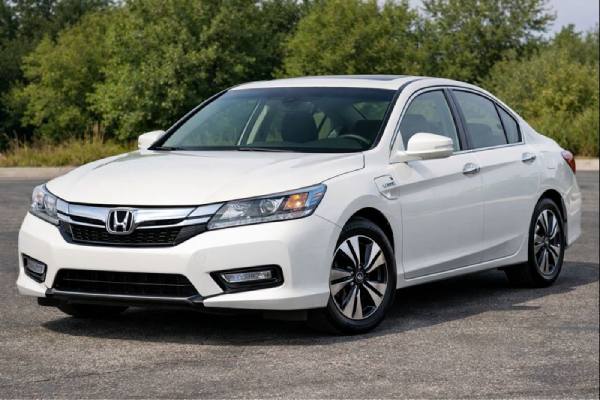
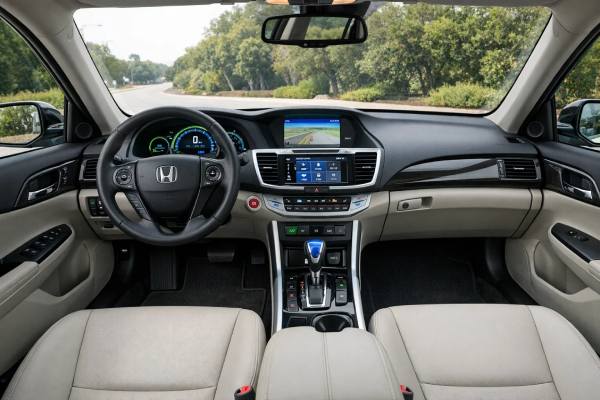
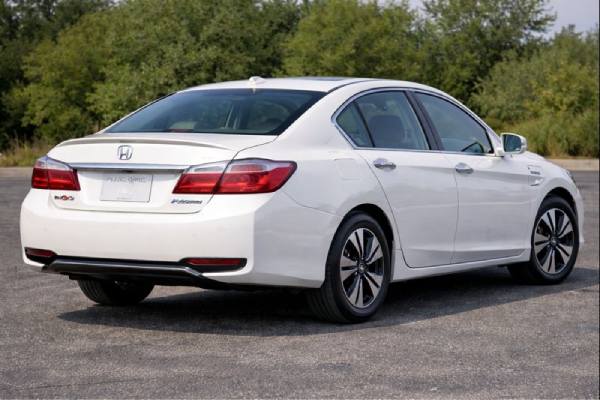
Honda’s 2014 Accord Plug-in Hybrid (CR5) is a rare one-year plug-in variant that blends a midsize-sedan body with a powertrain that behaves more like an EV than a traditional automatic. Around town, the electric traction motor does most of the work, while the 2.0-liter Atkinson-cycle engine steps in as a generator or a direct drive source when conditions suit it. The result is smooth, quiet driving at low speeds, plus strong “instant torque” response that can make it feel quicker than its efficiency-focused mission suggests.
Ownership is a mix of familiar Accord strengths—space, stability, predictable controls—and plug-in realities: a smaller trunk, charging habits that matter, and hybrid-specific service items. If you understand how the modes operate and keep the software and cooling systems healthy, this Accord can be an unusually usable, low-stress entry into plug-in life.
What to Know
- Smooth, EV-like takeoff and excellent low-speed refinement for a midsize sedan
- Strong efficiency when you can charge regularly; short EV range rewards frequent top-ups
- Very predictable road manners and a familiar Accord cabin layout
- Watch for high-voltage battery capacity deterioration signs and confirm recall/software actions are completed
- Plan on brake fluid replacement about every 3 years (typical) and rotate tires every 10,000–12,000 km (6,000–7,500 mi)
Explore the sections
- Accord Plug-in Hybrid in context
- LFA1 and MF8 specs
- Charging, trims, and safety kit
- Reliability and common repair themes
- Maintenance plan and buying checks
- Real-world EV driving feel
- Rival PHEVs and alternatives
Accord Plug-in Hybrid in context
The 2014 Accord Plug-in Hybrid (often shortened to “Accord PHEV”) sits in a very specific moment in plug-in history. It’s a conventional midsize sedan that happens to have a charge port and a high-voltage battery, not a dedicated EV platform. That matters because you get everyday Accord ergonomics, road manners, and visibility—plus the “bonus” of electric driving for short trips—without the learning curve of a more experimental layout.
What makes the CR5 especially interesting is how Honda blended the LFA1 engine with the MF8 electrified drive. In many hybrids, the engine and wheels are mechanically tied together much of the time. In this Accord, the car can behave like an electric vehicle at low speed and light load, then switch to hybrid operation as needed. The transitions are usually subtle, but they’re not random: speed, battery state of charge, temperature, and driver demand all influence which mode the car chooses.
For the right owner, the big win is consistency. If your daily driving is made of repeated short loops—school runs, commuting across town, errands—charging at home can cover a meaningful share of your fuel use even with a relatively short EV range. The Accord’s size also makes it easier to live with than smaller plug-ins: adult-friendly rear seating, stable highway behavior, and a cabin that still feels “normal” when the battery is depleted.
The compromises are the typical plug-in tradeoffs. Trunk space is notably reduced because the battery occupies volume that a non-hybrid Accord uses for cargo. Curb weight is higher than a comparable gasoline model, and while the powertrain masks it well in stop-and-go driving, you still feel the mass in quick direction changes and hard braking.
As a one-year model, it’s also a “know what you’re buying” car. Parts support is generally good because many components are shared with other Accords, but the high-voltage battery, control modules, and charge-related hardware deserve a more careful pre-purchase check than you’d do on a standard sedan.
LFA1 and MF8 specs
Below are practical, owner-relevant specifications for the 2014 Accord Plug-in Hybrid. Some figures vary by market documentation and test method, so treat them as a solid working baseline and verify by VIN when ordering parts or fluids.
Engine and electrified drive
| Item | Specification |
|---|---|
| Code | LFA1 (2.0 l) + MF8 (hybrid drive) |
| Engine layout | Front, transverse inline-4 |
| Valvetrain | DOHC, 4 valves/cyl (Atkinson-cycle operation) |
| Displacement | 2.0 l (1993 cc) |
| Induction | Naturally aspirated |
| Fuel system | Gasoline (hybrid-specific calibration) |
| System output | 196 hp (146 kW) combined rating |
| Traction motor output | 124 kW (published motor rating) |
| Battery | Lithium-ion, 6.7 kWh; ~320 V class |
| Drive type | FWD |
Efficiency and range (EPA-style figures)
| Item | Value |
|---|---|
| EV range (rated) | ~13 mi (21 km) |
| MPGe (combined) | ~115 MPGe |
| Gas-only economy (combined, battery depleted) | ~46 mpg (US) |
| Electricity use | ~29 kWh/100 mi |
| Total range (gas + electric) | ~570 mi (917 km) |
| Fuel tank | ~12.2 US gal (46 l) |
Transmission and charging
| Item | Specification |
|---|---|
| Transmission type | e-CVT / hybrid drive (electronic continuously variable behavior) |
| Charge port | J1772-style AC inlet (no DC fast charging) |
| Level 1 (120 V) charge time | Typically a few hours from low charge (often quoted around ~3 hours) |
| Level 2 (240 V) charge time | Typically under ~1 hour to a couple of hours depending on conditions and how “empty” the pack is |
Charging time deserves a short reality check: some published figures describe time to replenish only the usable EV portion, while others assume a deeper refill window. Temperature and battery conditioning also affect charge rate and completion time.
Chassis, dimensions, and capacities
| Item | Value |
|---|---|
| Wheelbase | 109.3 in (2776 mm) |
| Length | 193.5 in (4915 mm) |
| Width | 72.8 in (1849 mm) |
| Height | 57.7 in (1466 mm) |
| Curb weight | ~3780–3800 lb (1715–1725 kg) |
| Seating | 5 |
| Cargo volume | ~8.6 cu ft (about 244 l) |
Performance (typical tested results)
| Metric | Value |
|---|---|
| 0–60 mph | ~7.7 s |
| Top speed | ~114 mph (183 km/h), often limited |
| Braking (70–0 mph) | ~184 ft (56 m) |
Safety and driver assistance (high-level)
| Item | Notes |
|---|---|
| Structure | Same basic Accord body structure as the 2013–2017 sedan |
| Crash ratings | Strong IIHS performance for the Accord sedan; award conditions depend on equipment |
| Driver assistance | Forward collision warning and lane departure warning were commonly equipment-driven (not universal) |
Charging, trims, and safety kit
Because the 2014 Accord Plug-in Hybrid was sold in limited numbers, “trim strategy” is simpler than a typical Accord lineup, but equipment can still vary by build and market channel. Think of it less like “LX vs EX vs Touring” and more like a well-equipped Accord with plug-in-specific hardware and a few identifiable visual cues.
Quick identifiers and what they imply
Common ways to spot the plug-in variant include the charge door on the front fender area, plug-in badging, and aerodynamic wheel designs. Inside, you’ll usually see hybrid/EV energy-flow displays and charge scheduling menus that a standard Accord doesn’t have. These cues matter for buyers because they signal the car has the charging hardware you want (and that you should verify it actually works).
Charging equipment and options
The key “option” for any plug-in owner is not a package—it’s your charging setup:
- 120 V home charging can work for many owners because the battery is relatively small, but it’s still best for overnight top-ups rather than quick turnarounds.
- 240 V Level 2 charging is where the car becomes most convenient. If you can plug in at home, you can routinely start the day with the maximum EV portion available.
- No DC fast charging means you won’t treat this like a road-trip EV. It’s a plug-in hybrid that road-trips like a regular gasoline car once the battery is spent.
Safety hardware and how it evolves in real ownership
The underlying Accord platform is known for strong crashworthiness. On the driver-assistance side, this era of Honda tech is important to understand: you’ll see warning and support systems more often than fully automatic emergency braking.
Typical systems you may encounter include:
- Forward collision warning (FCW): alerts the driver to a closing situation. In this generation, it can be present without true autobraking.
- Lane departure warning (LDW): warns if you drift without signaling.
- LaneWatch camera: displays the right-side blind spot view in the center screen when signaling right, which is helpful but also means the camera and screen must be in good working order.
- Stability control and ABS: standard on modern Accords and foundational to safety in poor traction.
For shoppers, the practical takeaway is simple: verify the actual equipment on the car in front of you. Don’t assume “it’s a plug-in, so it has everything.” Confirm the presence of warning icons in the cluster, camera operation, and any related calibration needs after windshield replacement or front-end repairs.
Reliability and common repair themes
The Accord Plug-in Hybrid can be reliable when it’s used in a way that fits the design—regular charging, reasonable temperature management, and consistent maintenance. Where plug-ins differ from standard sedans is that software, sensors, and battery condition matter more, and some problems show up as warnings rather than obvious mechanical noises.
Below is a practical issue map, grouped by prevalence and cost tier.
Common (watch closely)
- High-voltage battery capacity deterioration (medium to high cost if out of coverage)
Symptoms: reduced EV range, warning lights, diagnostic trouble codes related to battery capacity, or a failed emissions inspection outcome tied to hybrid monitoring.
Likely root cause: battery aging and early deterioration patterns in some packs; control logic that may not flag deterioration correctly without updated software.
Remedy: confirm recall/software updates are completed; if codes indicate serious deterioration, follow the official diagnostic path. Some vehicles received extended coverage tied to campaign completion. - 12 V battery weakness (low to medium cost)
Symptoms: intermittent no-start behavior, random warning lights, infotainment resets, or odd “hybrid system” messages that disappear after a proper battery test.
Root cause: the 12 V battery still runs modules and contactors; short trips and long parking periods can strain it.
Remedy: load-test and replace with the correct specification battery; clean grounds; check parasitic draw if it repeatedly fails.
Occasional (depends on mileage and environment)
- Charge port door and inlet wear (low to medium cost)
Symptoms: charge connector feels loose, charging interruptions, or charge door mechanism issues.
Root cause: mechanical wear, contamination, or physical damage.
Remedy: inspect for corrosion or bent pins; keep the inlet clean and dry; replace damaged components rather than forcing connectors. - Brake feel variation (low to medium cost)
Symptoms: inconsistent pedal feel at very low speed or during transitions from regenerative braking to friction braking.
Root cause: normal blended-brake behavior amplified by worn pads, uneven rotors, old brake fluid, or tires with uneven grip.
Remedy: keep brake fluid fresh, inspect pads/rotors, and ensure tire condition is matched across the axle.
Rare but important (high consequence)
- High-voltage isolation faults (potentially high cost)
Symptoms: “check hybrid system” warnings, reduced power mode, charging disabled, or codes indicating insulation resistance issues.
Root cause: moisture intrusion, damaged cables, inverter issues, or battery pack internal faults.
Remedy: professional HV-safe diagnostics; do not guess on this category.
Recalls, service bulletins, and software
For this model, software updates can be more than “nice to have.” Campaigns have addressed battery control logic and warranty coverage conditions. When shopping, ask for:
- Proof of recall completion (dealer printout or official record)
- Documentation of any high-voltage battery tests or replacements
- A scan report showing no active hybrid battery deterioration codes
The best reliability strategy is straightforward: keep the car updated, keep cooling systems healthy, and don’t ignore warnings just because the car “still drives fine.”
Maintenance plan and buying checks
A plug-in Accord is still an Accord: tires, brakes, suspension, filters, and fluids age normally. The difference is that time-based maintenance can matter more than mileage because many owners drive fewer engine miles, and the car still experiences heat cycles and humidity. Use the schedule below as a practical baseline and then verify the exact intervals and fluid specifications for your VIN.
Practical maintenance schedule (distance or time, whichever comes first)
- Engine oil and filter: every 10,000–12,000 km (6,000–7,500 mi) or 12 months (short trips and cold weather: shorten)
- Cabin air filter: every 15,000–30,000 km (10,000–20,000 mi) or yearly in dusty/pollen-heavy areas
- Engine air filter: inspect every 20,000–30,000 km (12,000–20,000 mi); replace as needed
- Brake fluid: about every 3 years (moisture control is important for blended brakes)
- Coolant (engine and power electronics, if separate): typically 5 years/100,000 km (60,000 mi) first interval, then shorter; verify system layout and capacity
- Transmission/hybrid drive fluid: inspect and service by official interval; use only the specified Honda fluid
- 12 V battery test: yearly; replace proactively around 4–6 years depending on climate and parking habits
- Tires: rotate every 10,000–12,000 km (6,000–7,500 mi); alignment check annually or after pothole impacts
- Brakes (pads/rotors): inspect at every rotation; regen can reduce wear, but corrosion can increase it in wet/salty climates
Fluid specs and key torque values (owner-level decision support)
Because documentation varies by market and updates, treat these as “what to ask for” at the shop, not a substitute for the service manual:
| Item | What to use / confirm |
|---|---|
| Engine oil | Honda-approved 0W-20 is commonly specified; confirm capacity by VIN |
| Coolant | Honda long-life coolant type; confirm which loops exist (engine vs inverter) |
| Brake fluid | DOT 3/4 as specified (use fresh sealed fluid) |
| Lug nut torque | Common Honda spec is around 108 Nm (80 lb-ft); verify for your wheels |
Used-buyer inspection checklist (plug-in specific)
- Confirm charging works on both Level 1 and Level 2 if possible. A car that “drives fine” but won’t charge defeats the purpose.
- Scan for hybrid battery codes and confirm no unresolved recall actions.
- Check EV range behavior: a degraded pack can still function but may deliver noticeably less usable EV distance.
- Inspect the charge inlet and door for damage or corrosion.
- Look for coolant health (proper level, correct color, no contamination).
- Verify 12 V system stability (no low-voltage history, clean starts, no random warning clusters).
A good long-term outlook comes from buying a car with proof of campaign completion and a healthy battery report—then maintaining it like a time-aged vehicle, not just a mileage-aged one.
Real-world EV driving feel
In day-to-day driving, the 2014 Accord Plug-in Hybrid feels most distinctive at low speed. Pull away from a stop and it responds like an EV: smooth, immediate, and quiet. That character is a direct advantage in city traffic because you spend a lot of time below the speeds where engine noise and gear changes typically dominate.
Ride, handling, and NVH
- Ride quality: generally composed and comfortable, with the “midsize Accord” sense of stability on broken pavement. The extra weight is there, but Honda tuned it to avoid feeling clumsy.
- Handling balance: predictable and safe. If you push hard, you may notice softer responses than a sport-oriented sedan, and the mass shows up as mild reluctance to change direction quickly.
- Cabin noise: low at city speeds in EV operation; on the highway it feels like a normal Accord with a quiet baseline and occasional engine presence depending on load.
Powertrain character and mode behavior
The most important ownership reality is that you don’t “command” the car to stay electric under all conditions. You influence it. Light throttle, moderate speeds, and a healthy charge encourage EV operation. Heavy acceleration, steep grades, cold starts, or low battery state push the engine into the mix.
This generation’s blended approach also changes the feel of acceleration:
- Passing and merging: the electric torque makes initial response strong, and it can feel brisk even if the engine note rises in the background.
- Engine engagement: usually smooth, but you’ll feel or hear the transition more when the engine starts cold or when the system shifts its operating strategy at highway speeds.
Efficiency in real use
The Accord Plug-in rewards a specific pattern:
- Best case: frequent charging + trips near the EV range window + moderate speeds. This is where you get the “why plug-in?” payoff.
- Average case: some charging + mixed driving. You still benefit, but you’ll use more gasoline as the engine supports longer drives.
- Worst case: no charging. In that scenario, it behaves like a heavier hybrid and you lose the main advantage you paid for.
Braking and regeneration
Regenerative braking can make one-pedal-style city driving easier once you adapt. The key is consistency: smooth pedal inputs and predictable following distances help the system maximize regen and minimize friction brake use. Still, don’t neglect the friction brakes—low use can encourage rust on rotors in wet climates, and the car still needs strong conventional braking for emergencies.
Rival PHEVs and alternatives
The 2014 Accord Plug-in Hybrid competes less on maximum EV range and more on being a familiar midsize sedan that happens to plug in. When comparing, it helps to separate your priorities into three buckets: EV range, long-trip comfort, and total cost of ownership risk.
Versus Chevrolet Volt (first generation)
- Volt advantage: typically longer electric range and a more EV-centric experience.
- Accord advantage: more traditional midsize sedan packaging and a calmer “regular car” feel for passengers who dislike quirky controls.
- Decision point: if you want the most electric miles per day, the Volt often wins. If you want a conventional sedan experience with plug-in capability, the Accord is easier to live with.
Versus Ford Fusion Energi
- Fusion Energi advantage: competitive plug-in mission with a similar “normal sedan” approach.
- Accord advantage: many owners prefer Honda’s control logic smoothness and steering/ride predictability.
- Decision point: compare trunk space and battery health carefully—both models give up cargo volume to the battery.
Versus Toyota Prius Plug-in (early era)
- Prius advantage: efficiency-first mindset, often lower running costs and strong hybrid reputation.
- Accord advantage: far more midsize comfort—rear seat space, highway composure, and overall cabin feel.
- Decision point: choose Prius Plug-in for maximum efficiency priority; choose Accord PHEV for midsize comfort and a more premium daily drive.
Where the Accord Plug-in fits best
This Honda makes the most sense for drivers who:
- Can charge at home (or reliably at work)
- Drive repeated short-to-medium trips
- Want a midsize sedan rather than a hatchback shape
- Prefer a conventional cabin and predictable driving dynamics
It’s less ideal if you need long EV range or if you cannot charge consistently. In those cases, a newer-generation plug-in (or even a strong non-plug hybrid) can offer a better “efficiency per hassle” ratio.
References
- 2014 Honda Accord Plug-in Hybrid 2014 (Official fuel economy data)
- 2014 Honda Accord 4-door sedan 2014 (Safety Rating)
- Tested: 2014 Honda Accord Plug-In Hybrid 2013 (Instrumented Test)
- Emission recall: 2014 Accord Plug-In Hybrid (PHEV) Battery Control Module Software Update and High-Voltage Hybrid Battery Warranty Extension 2021 (Recall and Warranty Extension Notice)
- Emergency ResponseGuide 2014 (Emergency Response Guide)
Disclaimer
This article is for informational purposes only and is not a substitute for professional diagnosis, repair, or safety guidance. Specifications, torque values, service intervals, and procedures can vary by VIN, market, software level, and installed equipment. Always verify details using official Honda service information and the documentation that matches your exact vehicle.
If this guide helped, please consider sharing it on Facebook or X/Twitter to support our work.