
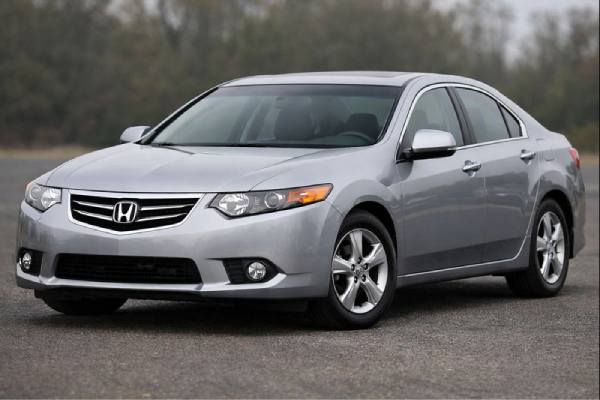
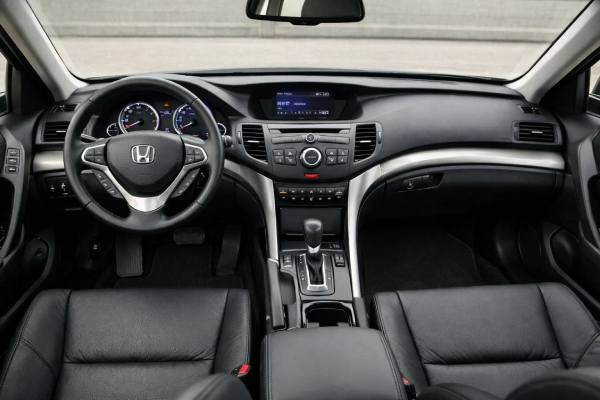
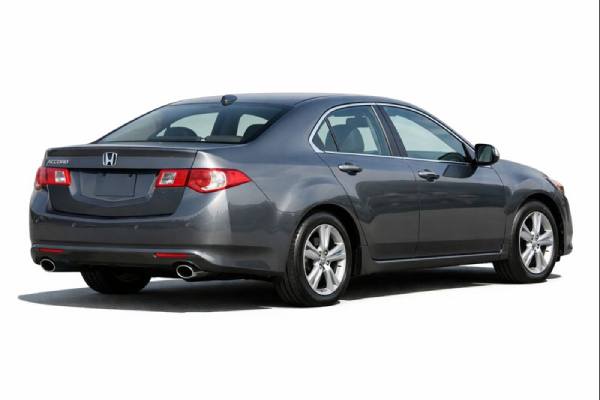
The CU2-generation Honda Accord with the K24Z3 2.4-liter is the “thinking person’s” midsize: engineered for long service life, predictable handling, and low drama ownership when it’s maintained on schedule. In this tune, the naturally aspirated i-VTEC four prioritizes smooth, linear power rather than big low-end punch, and it rewards drivers who keep it in the mid-to-upper rev range. The chassis is tuned for stability and confidence over mixed roads, with steering and body control that feel more European than many family sedans of the era.
Where owners win is in durability and parts availability. Where owners can get caught is with age-related rubber, fluids, and a few recurring electrical and sealing issues that show up when service history is thin. If you shop carefully and keep up with fluids, the CU2 2.4 is one of the easier long-term Hondas to live with.
What to Know
- Strong longevity when serviced on time, with a robust timing-chain valvetrain.
- 2.4 i-VTEC pulls hardest above midrange revs; it’s happier driven than lugged.
- Safety structure and restraint design score well in period crash testing.
- Budget for suspension bushings and brake servicing as the car ages.
- Plan on oil and filter service about every 10,000–12,000 km (6,000–7,500 mi) or 12 months, depending on use.
What’s inside
- CU2 Accord 2.4 identity
- K24Z3 specs and measurements
- Trims, safety and driver aids
- Reliability pattern and fixes
- Maintenance schedule and buyer checks
- Driving feel and real economy
- Rival check: Camry and Mazda6
CU2 Accord 2.4 identity
The 2008–2015 Accord (CU2) with the K24Z3 sits in a sweet spot: modern enough to have strong crash structure, stability control, and mature NVH (noise, vibration, harshness) control, but simple enough to avoid the complexity creep that arrived with widespread turbocharging and early stop-start systems. The 2.4 i-VTEC is naturally aspirated and uses Honda’s variable valve timing and lift strategy to balance efficiency at light load with strong breathing at higher rpm. In plain terms, it feels calm and economical when you cruise, then wakes up when you ask for top-end power.
On paper, the headline output is around 201 PS (often marketed as ~201 hp / 148 kW) at 7,000 rpm, with torque in the 230–234 Nm range depending on transmission and calibration. That tells you what the car is: not a torque-heavy commuter motor, but a smooth four-cylinder that likes clean fuel, clean oil, and being kept in its happy band.
This Accord also earned a reputation for “tight” road manners. A well-kept CU2 tracks straight on the highway, resists crosswinds better than many rivals, and doesn’t feel floaty over undulations. The flip side is that when suspension components age—especially control-arm bushings and drop links—you notice it quickly as knocks, vague steering, or inside-edge tire wear. The chassis is honest: it doesn’t hide wear.
Ownership economics are generally favorable. The engine uses a timing chain rather than a belt, and there are few truly exotic service items. Most long-term costs come from normal wear (brakes, tires, shocks) plus a handful of known oil seep and accessory issues. The best examples are the ones with boring records: regular oil service, brake fluid changes, and transmission fluid changes done before shifting quality degrades.
K24Z3 specs and measurements
Below are practical specs for the CU2 Accord 2.4, focusing on what matters for maintenance, fitment, and real-world expectations. Note that some measurements vary by market (saloon/sedan vs tourer/wagon, wheel and brake packages, and emissions calibration). Use your VIN and under-hood labels to confirm exact fluids and spark plug types.
Engine and performance
| Item | Spec |
|---|---|
| Engine code | K24Z3 |
| Layout | Inline-4, DOHC i-VTEC, 4 valves/cyl |
| Displacement | 2.4 L (2,354 cc) |
| Bore × stroke | 87.0 × 99.0 mm (3.43 × 3.90 in) |
| Induction | Naturally aspirated |
| Fuel system | Port injection (PGM-FI) |
| Compression ratio | ~10.5:1 |
| Max power | 201 PS (~198 hp / 148 kW) @ 7,000 rpm |
| Max torque | 234 Nm (173 lb-ft) @ ~4,300–4,400 rpm (manual calibration commonly higher than auto) |
| Timing drive | Chain |
| Emissions | Commonly Euro 5 in later years (market-dependent) |
Efficiency and aerodynamics
| Item | Typical figure |
|---|---|
| Rated combined economy (UK-style reporting varies) | Around 8.5–8.7 L/100 km (about 33 mpg UK) depending on transmission and body |
| Real-world highway at 120 km/h (75 mph) | Often ~7.5–9.0 L/100 km (31–38 mpg US equivalent varies heavily with gearing, tires, wind, and load) |
| CO₂ (typical published) | Around 195–201 g/km depending on transmission/body |
Transmission and driveline
| Item | Spec |
|---|---|
| Drive type | FWD |
| Manual | 6-speed (common on many CU2 2.4 markets) |
| Automatic | 5-speed automatic (common on many CU2 2.4 markets) |
| Differential | Open (traction control via braking) |
Chassis and dimensions
| Item | Typical range (market and body dependent) |
|---|---|
| Front suspension | Double wishbone / multi-link design (market-dependent naming) |
| Rear suspension | Multi-link |
| Steering | Rack-and-pinion (assist type varies by year/market) |
| Brakes | 4-wheel disc; sizes vary by wheel package |
| Wheels/tires | Commonly 16–18 in wheels; tire sizes vary by trim |
| Fuel tank | ~65–70 L (17–18.5 US gal) depending on market/body |
| Kerb weight | Roughly mid-1,500 kg range (trim/body dependent) |
Performance and capability
| Item | Typical figure |
|---|---|
| 0–100 km/h (0–62 mph) | About 8–10 s depending on transmission and body |
| Top speed | Around 220–225 km/h (135–140 mph) depending on gearing |
| Towing (where rated) | Often 1,200–1,500 kg braked (confirm local limits and cooling package) |
Fluids and key service capacities
Capacities vary by pan shape, cooler lines, and whether you measure a drain-and-fill or dry fill. These are decision-grade numbers, not a substitute for service documentation.
| System | Typical spec |
|---|---|
| Engine oil | 0W-20 or 5W-30 (market-dependent); capacity often ~4.0–4.5 L with filter |
| Coolant | Long-life ethylene glycol coolant; typically 50/50 mix |
| Manual trans fluid | Honda MTF (or equivalent spec) |
| Automatic fluid | Honda ATF (market spec varies; do not “universal” fluid this gearbox) |
| Brake fluid | DOT 3 or DOT 4 (market-dependent); flush interval matters more than brand |
| Spark plugs | Long-life iridium type (exact part varies by year/market) |
Trims, safety and driver aids
Trim naming varies widely by region, but the CU2 Accord 2.4 usually breaks into three practical layers: a base/comfort trim, a midgrade with convenience features, and a top trim with leather, upgraded audio/navigation, and larger wheels. When comparing cars, focus less on the badge and more on the functional differences that change running costs: wheel size, brake package, headlamp type, and whether the car has a sunroof (drain maintenance) and power seats (motor and switch health).
Trims and options that matter mechanically
- Wheel and tire packages: Larger wheels sharpen turn-in but can increase road noise and make the ride busier on broken pavement. They also cost more in tires and are less forgiving of alignment wear.
- Brake sizing: Higher trims may have larger discs and different pad shapes. That’s not a downside—just check parts pricing and availability before you buy.
- Transmission pairing: Many markets offered both a 6-speed manual and a 5-speed automatic. The manual is usually cheaper long-term if the clutch and hydraulics are healthy. The automatic can be excellent, but only if the fluid was changed regularly.
- Infotainment and navigation: Factory navigation and premium audio can be a deciding factor, but aging screens, disc drives, or amplifiers can be pricey. Verify every speaker and steering-wheel control.
Crash-test ratings and what they mean
Safety scores depend on the testing body and the exact vehicle specification tested. In ANCAP’s published assessment for the Accord Euro (the CU2-type car in many markets), the model achieved a 5-star outcome with strong frontal offset and side impact scores for its era. IIHS results for the U.S.-market Accord sedan from the same broader generation show strong frontal and side performance as well, with roof strength typically rated in the acceptable range for the period. In plain language: the structure and restraint systems are fundamentally sound, assuming airbags and seatbelt pretensioners are intact and no crash repairs were done poorly.
Safety systems and driver assistance
Expect solid “foundational” safety tech rather than modern hands-on ADAS:
- Front, side, and curtain airbags in most markets and trims
- ABS with electronic brake distribution and brake assist
- Stability control and traction control (often standard, sometimes trim-dependent early on)
- ISOFIX/LATCH child-seat anchors, plus top tethers (verify presence and access under the rear shelf/seatbacks)
- Later-year updates in some markets included improved lighting features (for example, cornering-light functions), but automatic emergency braking and adaptive cruise control are generally not part of the CU2 era in most regions
After any steering, suspension, or windshield work, verify that stability control calibration and steering-angle sensor behavior are correct—especially if warning lights appear intermittently. Many “mystery” stability or ABS faults trace back to wheel speed sensors, damaged wiring at the knuckle, or low system voltage from an aging battery.
Reliability pattern and fixes
Overall, the K24Z3-powered CU2 is a high-reliability package. Most failures are not catastrophic; they’re the kind that grow from small leaks, deferred fluids, and worn rubber. The goal is to recognize patterns early so you fix the root cause once instead of paying for repeated “symptom repairs.”
Common, low-to-medium cost issues
- Front suspension knocks (common):
Symptoms: clunks over sharp bumps, vague initial turn-in, uneven tire wear.
Likely causes: drop links, lower control arm bushings, ball joints, or strut top mounts.
Remedy: replace worn components as a set where appropriate, then do a proper alignment with steering centered. - Brake vibration (common):
Symptoms: steering shimmy under braking, pulsation.
Likely causes: pad material transfer from overheated brakes, sticking caliper slide pins, or tired bushings amplifying vibration.
Remedy: service slide pins, verify caliper piston action, use quality pads/rotors, bed them correctly. - Accessory belt and tensioner wear (common with age):
Symptoms: chirps, squeals, belt dust.
Remedy: replace belt and inspect tensioner and idlers; fix any oil leaks that contaminate the belt.
Occasional, medium-to-higher cost items
- Oil seepage at seals (occasional):
Symptoms: oil misting around timing cover edges, valve cover perimeter, or the oil pan.
Root cause: aging sealant, heat cycles, and over-tightened fasteners deforming covers.
Remedy: correct reseal with proper surface prep; avoid “stop leak” products. - Starter or alternator aging (occasional):
Symptoms: slow crank, intermittent no-start, battery light, dimming lights.
Root cause: heat soak, worn brushes, or voltage regulator failure.
Remedy: test charging and draw properly; replace with high-quality reman or OEM-equivalent. - A/C performance drop (occasional):
Symptoms: weak cooling, cycling compressor, oily residue at lines.
Root cause: O-ring seep, condenser damage, or compressor wear.
Remedy: leak test before recharging; replace failed components and evacuate properly.
Software, updates, and service actions
For this generation, most “updates” are not flashy new features; they’re calibration and component revisions that improve driveability or address known faults. The practical playbook:
- Run a VIN recall check and confirm completion with dealer records where possible.
- If the car has rough idle, intermittent misfires, or odd shift behavior in an automatic, ask a dealer or specialist to confirm whether any relevant ECU/TCU updates apply in your market.
- Treat persistent warning lights as electrical diagnosis problems first (battery health, grounds, connector corrosion) before you replace parts.
Maintenance schedule and buyer checks
A CU2 Accord 2.4 lasts longest when you maintain it like a machine, not like an appliance. That means frequent fluid attention and periodic inspections, even when nothing feels “wrong.”
Practical maintenance schedule
- Engine oil and filter: every 10,000–12,000 km (6,000–7,500 mi) or 12 months. If you do short trips, cold starts, or heavy city use, shorten it.
- Air filter (engine): inspect every 20,000 km (12,000 mi); replace around 40,000–60,000 km (25,000–37,000 mi) depending on dust.
- Cabin filter: every 15,000–30,000 km (9,000–18,000 mi) or yearly if you want consistent HVAC performance.
- Coolant: typically long-life coolant; replace by time and mileage (commonly around 5 years / 100,000 km for the first interval, then shorter thereafter—verify for your market).
- Spark plugs: long-life iridium; commonly around 100,000–160,000 km (60,000–100,000 mi) depending on plug spec and driving.
- Valve clearance (if applicable in your market spec): check around 100,000–160,000 km if you notice ticking, rough idle, or misfires; adjust only if out of spec.
- Automatic transmission fluid: drain-and-fill every 40,000–60,000 km (25,000–37,000 mi) is a conservative plan that preserves shift quality.
- Manual transmission fluid: every 60,000–100,000 km (37,000–62,000 mi) depending on climate and driving style.
- Brake fluid: every 2 years, regardless of mileage. This is one of the cheapest ways to protect calipers and ABS components.
- Brake pads/rotors: inspect at every tire rotation; service slide pins at least every other pad change.
- Tire rotation and alignment: rotate every 10,000–12,000 km; align annually or whenever you replace steering/suspension parts.
- 12 V battery: test annually after year 3–4; replace proactively if cold cranking performance drops.
Buyer’s checklist that prevents regret
- Cold start behavior: listen for abnormal rattles, check for hunting idle, and verify the charging system stabilizes voltage.
- Transmission feel: for automatics, confirm smooth engagement hot and cold, no flare, and no delayed reverse. Ask for proof of ATF services.
- Cooling system health: look for stable temperature, no sweet smell, no crusted coolant at seams.
- Steering and suspension: drive over a rough patch at low speed with windows down; clunks tell the truth.
- Brake condition: confirm smooth braking from 100–20 km/h (60–12 mph) with no shimmy.
- Electrics: test every window switch, HVAC modes, seat heaters, mirrors, and all exterior lights.
- Rust and water leaks: inspect rocker seams, rear subframe areas, and inside the trunk/spare wheel well; check sunroof drain behavior if equipped.
Long-term durability outlook: with clean fluids and timely suspension work, the K24Z3 Accord is a “repeatable” ownership experience—few surprises, and most repairs are straightforward.
Driving feel and real economy
The CU2 2.4’s personality is defined by refinement and linear response. At city speeds, it feels composed rather than jumpy—throttle mapping is typically smooth, and the engine note stays subdued until you lean into the upper revs. On the highway, this generation’s stability stands out: it tracks confidently, and a good example feels settled even on imperfect pavement.
Ride, handling, and NVH
- Ride: generally firm enough to control body motion, but not harsh when the suspension is healthy. Bigger wheels can add impact sharpness.
- Handling balance: predictable front-drive behavior with good mid-corner stability. Worn rear bushings can make the back feel slightly loose or “steppy” over bumps.
- Steering: accuracy is usually better than many rivals; if it feels vague, suspect alignment or front bushings before blaming the rack.
- Braking: strong and easy to modulate when caliper slides are serviced and the fluid is fresh.
Powertrain character and transmission logic
This engine is at its best when you let it breathe:
- Below midrange, it’s smooth but not punchy.
- From the midrange to redline, it feels increasingly eager, with a clean top-end pull.
- The manual transmission typically makes the car feel lighter on its feet.
- The automatic works well when it’s maintained, but old fluid can make shifts feel lazy or slightly abrupt.
A useful driving tip that also improves longevity: avoid lugging the engine at low rpm in a high gear under heavy throttle. Downshift instead. It reduces stress, improves response, and often helps economy.
Real-world economy
Expect economy to depend more on speed and route than on the engine itself:
- City-heavy use: typically higher consumption due to warm-up and stop-and-go.
- Mixed driving: often lands near the “published combined” range if the car is mechanically sound and tires are correctly inflated.
- High-speed cruising: consumption rises noticeably above 120 km/h (75 mph); roof racks and undertray damage can make it worse.
If you want the best real-world numbers, focus on fundamentals: correct tire pressures, clean air filter, fresh plugs at the right interval, and a healthy thermostat/coolant system so the engine reaches operating temperature efficiently.
Rival check: Camry and Mazda6
Shopping the CU2 Accord 2.4 usually means you’re also considering the Toyota Camry (often with a 2.4 or 2.5) and the Mazda6 (commonly 2.0/2.5). Each has a clear “best at” advantage.
Accord vs Camry
- Why the Camry may suit you: softer ride, relaxed low-end torque feel (especially in later 2.5 forms), and a comfort-first tuning that many buyers prefer for commuting. Camry ownership can be very low stress if the car has clean service history.
- Why the Accord may suit you: more tied-down highway stability and a more engaging chassis feel. The 2.4 i-VTEC rewards drivers who care about response and balance rather than pure isolation.
- Reliability comparison: both are strong. The deciding factor is often how well the specific example was maintained, especially transmission fluid history.
Accord vs Mazda6
- Why the Mazda6 may suit you: steering feel and handling sharpness often lead the class, and the cabin can feel sportier in layout.
- Why the Accord may suit you: a more refined long-distance demeanor and a powertrain that tends to be tolerant of high mileage when serviced properly.
- Cost profile: Mazda6 can be very dependable, but suspension and rust risk vary widely by region and year. The Accord’s parts ecosystem is typically excellent, which matters as these cars age.
The CU2 2.4 “best buyer” profile
Choose this Accord if you want a midsize car that feels engineered rather than merely packaged: stable at speed, consistent in braking and steering, and capable of high mileage without becoming fragile. Pass on it if you need modern ADAS features or if you only drive short trips and won’t keep up with time-based fluid changes—because age, not mileage, is what punishes neglected examples.
References
- Honda Accord Press Kit 2011 (Manufacturer Press Kit) ([Honda News][1])
- 2008 Accord Sedan Owner’s Manual (Unlinked) 2008 (Owner’s Manual)
- Honda Accord Euro | Safety Rating & Report | ANCAP 2008 (Safety Rating) ([ANCAP][2])
- 2011 Honda Accord 2011 (Safety Rating) ([IIHS HLDI][3])
- Vehicle Detail Search – 2008 HONDA ACCORD | NHTSA 2008 (Recall Database) ([NHTSA][4])
Disclaimer
This article is for informational purposes only and is not a substitute for professional inspection, diagnosis, or repair. Specifications, torque values, fluid types, capacities, service intervals, and procedures can vary by VIN, market, model year, and equipment, so always verify details using official owner and service documentation for your exact vehicle.
If this guide helped, please consider sharing it on Facebook, X (Twitter), or your favorite forum to support our work and help other owners.