
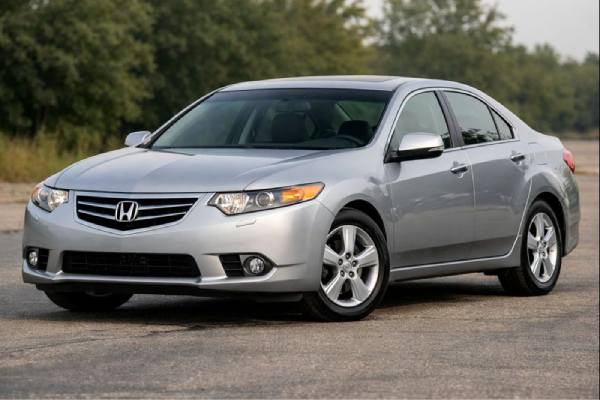
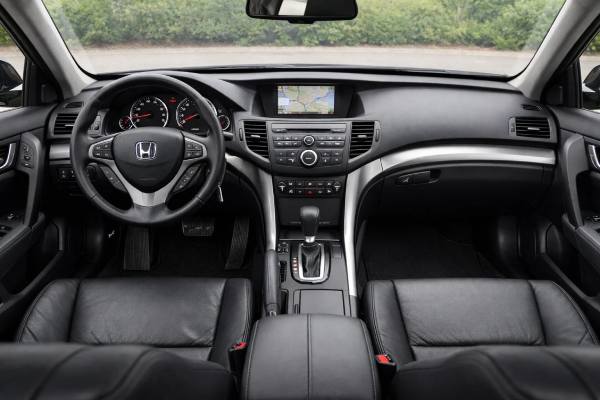
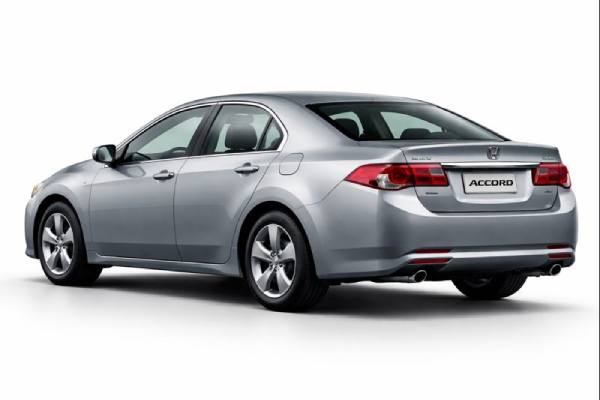
The Honda Accord (CU3) with the N22B1 2.2 i-DTEC diesel is the “long-distance” version of the eighth-generation Accord: strong mid-range torque, relaxed motorway manners, and a chassis tuned to feel stable at speed without turning harsh over broken pavement. In the 150 hp tune it’s less about headline acceleration and more about effortless passing power from around 2,000 rpm, where the variable-geometry turbo and common-rail injection do their best work.
Ownership is usually rewarding when the car is used as intended—regular longer drives that keep the diesel particulate filter (DPF) healthy. The main risk is not the engine’s core design, but the modern diesel add-ons (EGR, DPF, boost plumbing) when the car lives on short trips. Buy a well-maintained example, keep the service items current, and the CU3 can still be a durable, comfortable daily.
What to Know
- Strong real-world pull for overtakes; the 350 Nm torque band suits motorway driving.
- High-speed ride and steering feel are a highlight; the chassis is more “European” than many expect.
- The 6-speed manual is typically the better match than the automatic for response and economy.
- Short-trip use can clog the DPF and EGR system; choose a car with evidence of regular long runs.
- Plan engine oil and filter changes every 10,000–15,000 km (6,000–9,000 mi) or 12 months, depending on duty cycle.
Section overview
- CU3 i-DTEC ownership picture
- N22B1 diesel specs and measurements
- Equipment, trims, and safety tech
- Known faults, recalls, and fixes
- Service plan and used-buy advice
- Diesel driving character
- Where CU3 diesel fits
CU3 i-DTEC ownership picture
The CU3 Accord diesel sits in a sweet spot for drivers who want an “honest” midsize car that feels mature on the road. The body is solid, the steering is predictable, and the cabin was designed for long stints—supportive seats, good driving position, and a calm atmosphere at motorway pace. Honda’s engineering focus shows most in how the car carries speed: it feels planted and composed rather than soft.
The N22B1 2.2 i-DTEC (150 hp) is the mainstream tune of Honda’s all-aluminium diesel. In practice, it’s not peaky. You drive it on torque, not revs. That matters because it keeps the car efficient and relaxed, and it also reduces how hard you have to work the gearbox in daily traffic. With the 6-speed manual, the Accord can feel quietly quick in real-world conditions, especially on rolling A-roads and motorways where the engine’s mid-range dominates.
Where owners get caught out is using the car like a small petrol hatchback—short trips, cold starts, and long idle periods. The CU3’s emissions hardware (especially the DPF and EGR system) rewards heat and steady load. If the car rarely reaches full temperature, soot load rises, regeneration becomes more frequent, and oil dilution can increase. That’s not a “Honda-only” issue; it’s a modern diesel pattern. The fix is choosing the right car for the right use case.
From a buyer’s perspective, the best CU3 diesels tend to be the boring ones: higher mileage, consistent servicing, and evidence of motorway use. A low-mileage diesel with lots of city history can be the riskier purchase. If you want a reliable commuter and do regular longer drives, the CU3 i-DTEC is still one of the more satisfying diesel Accords to live with, provided you keep its service basics strict and don’t ignore early warning signs (DPF lights, hesitant boost, coolant loss, or inconsistent idle).
N22B1 diesel specs and measurements
Below are practical specifications for the 2009–2015 Accord (CU3) with the 2.2 i-DTEC N22B1 in 150 hp form. Exact figures can vary by market, body style (saloon vs Tourer), wheel and tyre package, and transmission.
Engine and performance (N22B1 150 hp)
| Item | Specification |
|---|---|
| Code | N22B1 |
| Layout and cylinders | Inline-4, DOHC, 4 valves/cyl |
| Displacement | 2.2 L (2,199 cc) |
| Bore × stroke | 85.0 × 96.9 mm (3.35 × 3.81 in) |
| Induction | Turbocharged (variable-geometry turbo) |
| Fuel system | Common-rail direct injection (diesel) |
| Compression ratio | ~16:1 (varies slightly by market) |
| Max power | 150 hp (110 kW) @ 4,000 rpm |
| Max torque | 350 Nm (258 lb-ft) @ ~2,000–2,750 rpm |
| Timing drive | Chain |
| Emissions hardware | EGR and DPF (market dependent) |
Transmission and driveline
| Item | Specification |
|---|---|
| Drive type | FWD |
| Manual option | 6-speed manual |
| Automatic option | 5-speed automatic (market dependent) |
| Differential | Open (traction managed via stability/traction control) |
Chassis and dimensions (typical CU platform values)
| Item | Specification |
|---|---|
| Suspension (front/rear) | Double wishbone / multi-link |
| Steering | Electric power steering (EPS) |
| Brakes | 4-wheel disc (sizes vary by trim) |
| Wheels and tyres | Commonly 16–18 in depending on grade |
| Wheelbase | ~2,705 mm (106.5 in) |
| Length | ~4,726 mm (186.1 in) |
| Width | ~1,840 mm (72.4 in) |
| Height | ~1,440–1,470 mm (56.7–57.9 in), body dependent |
| Fuel tank | Typically ~65 L (17.2 US gal / 14.3 UK gal) |
Performance and efficiency (typical)
| Item | Typical result |
|---|---|
| 0–100 km/h (0–62 mph) | ~9.7 s (manual, trim dependent) |
| Top speed | ~210 km/h (131 mph) (manual, trim dependent) |
| Rated economy (best-case, manual) | ~5.3 L/100 km (≈44 mpg US / ≈53 mpg UK), market cycle dependent |
| Real-world motorway @ 120 km/h | Often ~6.0–7.0 L/100 km (≈34–39 mpg US / ≈40–47 mpg UK), conditions dependent |
Fluids and service capacities (verify by VIN)
Because capacities vary with gearbox, cooler packages, and model year updates, use these as planning ranges rather than “fill to this exact number.”
| Item | Typical spec guidance |
|---|---|
| Engine oil | Low-SAPS oil suitable for DPF use; commonly 0W-30 or 5W-30 meeting ACEA C2/C3 (market dependent) |
| Engine oil capacity | ~5.5–6.0 L (5.8–6.3 US qt) with filter (verify) |
| Coolant | Honda Type 2 / long-life coolant equivalent (premixed where specified) |
| Manual transmission fluid | Honda MTF (spec varies by market) |
| Automatic transmission fluid | Honda ATF (spec varies by year/market; confirm before servicing) |
| Brake fluid | DOT 4 (typical) |
Safety and driver assistance (period-correct)
| Item | Notes |
|---|---|
| Airbags | Front, side, and curtain airbags common (count varies by market) |
| Stability systems | ABS, EBD, Brake Assist, stability and traction control typically standard |
| ADAS | Modern AEB and lane-centering are generally not fitted on this generation; higher trims may add parking sensors/camera depending on market |
| Crash ratings | Ratings depend on test body and year; check the exact listing for your market/version |
Equipment, trims, and safety tech
Trim structure varies widely across Europe and export markets, but CU3 Accords generally follow a familiar ladder: entry grades with smaller wheels and simpler audio, mid-grades with comfort upgrades, and top grades that bundle luxury features. The important point for buyers is not the badge on the boot lid—it’s the functional equipment that changes ownership cost and daily comfort.
Practical trim identifiers you can use during a viewing:
- Wheels and brakes: Larger wheels often come with different tyre sizes and sometimes larger brake hardware. This affects ride quality, tyre cost, and brake replacement cost.
- Interior “tells”: Leather, heated seats, dual-zone climate, premium audio branding, and navigation screens often mark higher grades. Check that everything works—repairs to infotainment or amplifiers can be surprisingly expensive.
- Parking aids: Rear sensors and reversing cameras are common on higher trims in later years. Sensors that constantly beep or cameras with distorted images can indicate wiring or water ingress issues.
- Transmission pairing: Some markets offered the diesel with an automatic. If you’re comparing cars, drive both—response and economy can feel very different.
Safety equipment on the CU3 is one of its strengths for the era. Most cars were sold with a strong baseline: multiple airbags, solid crash structure, and stability systems that intervene smoothly rather than abruptly. For family use, pay attention to:
- ISOFIX/LATCH points: Verify the rear ISOFIX anchors and top-tether arrangements are present and usable (and not hidden under damaged trim).
- Seatbelt function: Rear belts should retract cleanly; sluggish retraction can be a cheap fix—or evidence of past interior water issues.
- ABS/VSA behavior: On a test drive, a consistent brake pedal and no warning lights matter more than any brochure claim.
Driver assistance is “period correct.” You typically get cruise control, good headlights (depending on trim), and stability electronics—not the full modern ADAS stack. That’s a positive for some owners: fewer sensors to calibrate after a windscreen replacement, fewer camera/radar faults, and lower long-term complexity. The trade-off is that safety depends more on passive structure, tyres, brakes, and the driver.
Year-to-year updates in the 2009–2015 span often focus on equipment packaging and minor refinements rather than core mechanical change. When shopping, treat trim as a tool: choose the equipment that supports how you actually drive (lighting, parking aids, winter comfort) rather than chasing the highest badge.
Known faults, recalls, and fixes
Think about CU3 diesel issues in three buckets: (1) emissions hardware, (2) boost and air plumbing, and (3) wear items that show up on heavier, torque-rich cars. Below is a practical map by prevalence and cost tier.
Common (worth checking on every car)
- DPF loading and frequent regenerations (medium to high cost if ignored)
Symptoms: DPF warning, limp mode, rising oil level, cooling fans running after shutdown, poor economy.
Likely cause: Short-trip use, interrupted regenerations, EGR soot contribution, or underlying boost/injector issues creating excess soot.
Remedy: Diagnose properly (soot load, pressure readings), correct root cause, then perform a controlled regeneration if appropriate. Avoid repeated “forced regens” without fixing why it’s loading up. - EGR valve and intake soot (medium cost)
Symptoms: Hesitation, uneven idle, reduced low-rpm response, fault codes, smoky acceleration.
Likely cause: Soot and oil mist build-up in EGR and intake tract.
Remedy: Clean/replace EGR components as needed and ensure the car’s duty cycle supports clean operation. - Intercooler/boost hose leaks (low to medium cost)
Symptoms: Whistling, loss of pull, oily mist around hoses, overboost/underboost codes.
Likely cause: Age-hardened rubber, loose clamps, or split charge pipes.
Remedy: Replace hoses and clamps; pressure-test the system to confirm the fix.
Occasional (depends on mileage, driving, and maintenance)
- Dual-mass flywheel (DMF) and clutch wear (medium to high cost)
Symptoms: Rattle at idle, vibration on take-off, clutch slip under load in higher gears.
Cause: High torque plus stop-start urban use and poor driving technique.
Remedy: Replace clutch kit and DMF together when indicated; check hydraulic components and mounts. - Injector sealing or return-flow imbalance (medium cost)
Symptoms: Hard starts, diesel knock, rough idle, smoke, fuel smell.
Cause: Seal wear, injector issues, or fuel quality and filter neglect.
Remedy: Leak-off testing and correct replacement/resealing with proper procedures.
Rare but expensive (do not ignore early signs)
- Turbocharger control issues (high cost)
Symptoms: Persistent limp mode, unstable boost, unusual whine, heavy smoke.
Cause: Actuator problems, vane sticking, oiling issues, or chronic boost leaks leading to overspeed.
Remedy: Root-cause diagnosis first; avoid replacing the turbo without confirming oil supply/return integrity and intake/exhaust restrictions.
Recalls, TSBs, and coverage
Across this era, the biggest “must check” item for many Hondas is airbag campaign history and any market-specific safety recalls. The correct approach is simple:
- Run the VIN through an official Honda recall/update portal and keep a screenshot or printout.
- Verify completion with dealer records where possible.
- Check government recall databases if your market offers them.
A CU3 that has had recall work done on schedule and has a traceable service history is usually the safer bet than a cheaper car with vague paperwork.
Service plan and used-buy advice
A good maintenance plan for the CU3 diesel is less about exotic parts and more about consistency. Modern diesels stay healthy when oil quality stays high, filtration is not neglected, and the car is driven in a way that keeps emissions systems functioning.
Practical maintenance schedule (baseline)
Use this as a real-world schedule for mixed driving. If the car lives on short trips, tighten the intervals.
- Engine oil and filter: every 10,000–15,000 km (6,000–9,000 mi) or 12 months. If you see oil level rising, shorten intervals and investigate DPF regeneration and dilution.
- Air filter: inspect every service; replace about 30,000 km (18,000 mi) (sooner in dusty conditions).
- Cabin filter: 15,000–30,000 km (9,000–18,000 mi) or annually if allergies/urban driving.
- Fuel filter: every 40,000–60,000 km (25,000–37,000 mi) (fuel quality dependent).
- Brake fluid: every 2 years regardless of mileage.
- Coolant: follow long-life guidance (often 5 years initially, then shorter intervals); replace sooner if contamination is suspected.
- Manual transmission oil: consider 80,000–120,000 km (50,000–75,000 mi) as a preventative change if shifting feel degrades.
- Automatic transmission fluid (if equipped): conservative owners service around 60,000–80,000 km (37,000–50,000 mi); confirm the correct fluid spec before any refill.
- Timing chain: no routine replacement interval; instead, listen for abnormal chain noise and address correlation or tensioner-related faults promptly.
Key “diesel-specific” checks
- DPF health: Ask about regeneration frequency and warning lights. A car that regularly does longer drives is ideal.
- EGR and intake condition: A smooth idle and clean low-rpm response suggest the system isn’t heavily restricted.
- Boost integrity: Any whooshing, whistling, or oily spray around hoses deserves investigation.
- Cooling system: Check coolant level stability and look for evidence of past overheating or repeated top-ups.
Buyer’s guide checklist (quick but effective)
- Cold start: should fire cleanly without excessive cranking or heavy smoke.
- Warm idle: should be steady; hunting can indicate air, EGR, or fueling issues.
- Full-throttle pull in 3rd/4th: should feel strong and consistent; no limp mode.
- Clutch/DMF: listen for idle rattle and feel for vibration on take-off.
- Brakes and tyres: uneven tyre wear can signal alignment or worn suspension bushings.
- Paperwork: prioritize cars with clear oil service history and evidence of recall completion.
Long-term, the CU3 diesel rewards owners who treat it like a long-distance tool: keep fluids fresh, fix small boost and sensor issues early, and don’t ignore DPF warnings.
Diesel driving character
On the road, the 150 hp CU3 diesel feels stronger than the number suggests because of how it delivers torque. The engine’s useful band starts around 1,800–2,000 rpm, where it settles into a smooth, steady surge that suits real-world passing. You rarely need to chase the redline; instead, you short-shift and let the mid-range do the work. That character makes the Accord feel calm and capable at motorway speeds, especially on long gradients where some smaller diesels feel strained.
Ride, handling, and steering
The CU platform’s chassis tuning is a major advantage. The double wishbone front and multi-link rear layout helps the car stay composed over uneven surfaces and keeps steering behavior predictable when cornering hard or braking into bends. Electric power steering in this era is more about accuracy than “old-school” feedback, but it’s generally well judged: stable on-center at speed, light enough in town, and consistent under load.
Larger wheel packages can sharpen turn-in but also add tyre noise and cost. If your priority is comfort and low running cost, a mid-size wheel and tyre setup is often the sweet spot.
NVH (noise, vibration, harshness)
For a diesel, refinement is typically good once warm. Cold starts can sound gruffer, and worn engine mounts can add vibration at idle. At cruising speed, wind and tyre noise often matter more than engine noise—especially if the car runs wide tyres.
Real-world economy
When the car does longer trips, economy can be excellent for its size. In mixed driving with plenty of motorway miles, owners often see figures that justify the diesel choice. In heavy city use, consumption rises and—more importantly—DPF regeneration frequency increases. That’s why “how you drive” matters more than the brochure number:
- Best use case: steady commutes, frequent 20–30 minute drives, motorway travel.
- Worst use case: repeated 5–10 minute trips, long idling, stop-start congestion with cold engine.
Performance metrics that matter
The headline 0–62 mph time is respectable, but the more meaningful metric is in-gear pull at typical overtaking speeds. The CU3’s torque delivery and stable chassis make it a confident car for high-speed European roads, provided tyres and brakes are in good condition.
Where CU3 diesel fits
The CU3 2.2 i-DTEC sits among a strong field of late-2000s and early-2010s midsize diesels. Its best rivals tend to be the cars buyers cross-shop for the same reasons: long-distance comfort, low consumption, and a solid cabin.
Versus Volkswagen Passat 2.0 TDI
A Passat often offers more variety (body styles, trims, transmissions) and can feel more “fleet familiar.” The Honda typically counters with a more involving chassis and a reputation for durable fundamentals when maintained. On the risk side, both live and die by emissions-system health—so the deciding factor is often service history and use pattern rather than brand.
Versus Ford Mondeo 2.0 TDCi
The Mondeo’s strengths are space and an easy, relaxed ride. The Accord often feels tighter and more precise in steering and body control. If you value handling polish and a slightly more premium feel in the driver’s seat, the Honda tends to land well—though parts availability and pricing can vary by region.
Versus Mazda6 diesel (2.2)
Mazda’s diesel can be rewarding to drive, but some markets associate it with higher risk if maintenance was neglected. The Honda’s appeal is its balanced “tool-like” competence: strong motorway behavior, good stability, and predictable ownership when the car has been used properly.
Versus Toyota Avensis diesel
The Avensis leans into comfort and low drama. The Accord often feels more driver-focused, with stronger chassis discipline at speed. If you prioritize simple, conservative running above all else, a Toyota can be attractive; if you want a bit more steering and chassis confidence without going full sport saloon, the Honda is a compelling middle ground.
The CU3 verdict in today’s market
Choose the CU3 diesel if you:
- Do frequent longer trips and want torque-rich, relaxed cruising.
- Prefer a stable, well-engineered chassis over flashy tech.
- Can buy based on history and condition, not just price and mileage.
Consider alternatives if you:
- Drive mostly short urban journeys (a petrol or hybrid may fit better).
- Want modern driver assistance features as standard.
- Prefer the simplest emissions setup possible.
References
- Honda Accord Press Kit 2012 (Press Kit)
- Honda Accord Achieves Highest Overall Rating in EuroNCAP Crash Tests for Large Family Cars | Honda Global Corporate Website 2008 (Safety Rating)
- Honda Accord Euro | Safety Rating & Report | ANCAP 2008 (Safety Rating)
- Honda Owners | Recalls and Updates | Honda UK 2025 (Recall Database)
- Check if a vehicle, part or accessory has been recalled – GOV.UK 2025 (Recall Database)
Disclaimer
This article is for informational purposes only and is not a substitute for professional diagnosis, inspection, or repair. Specifications, torque values, service intervals, and procedures vary by VIN, market, model year, and equipment. Always verify details using the official owner’s manual and service documentation for your specific vehicle, and consult a qualified technician when needed.
If this guide helped, please consider sharing it on Facebook, X (Twitter), or your favorite forum to support our work.