
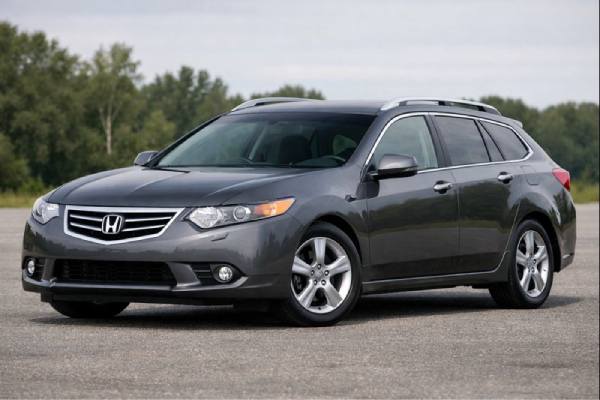
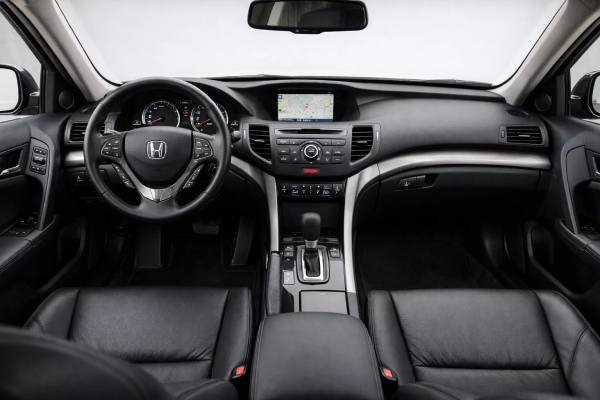
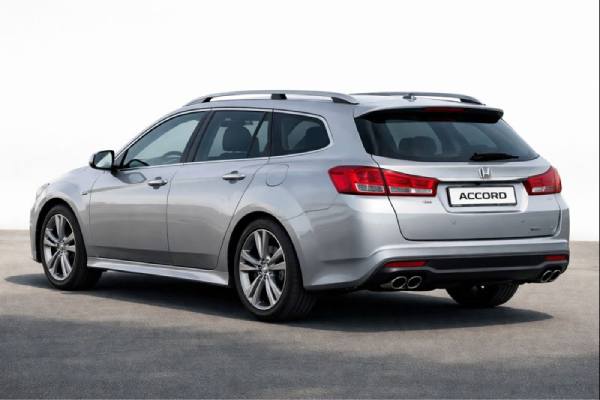
The 2012–2015 Honda Accord (CU3) with the 2.2 i-DTEC “180” diesel is one of those rare family sedans that feels engineered, not merely assembled. Its N22-series diesel focuses on strong mid-range torque for real-world overtakes, while the chassis aims for stability and clean feedback rather than soft isolation. For owners, that balance can be rewarding: it’s a long-distance car that stays composed at motorway speeds, carries adults comfortably, and can still feel precise on a curving road.
The trade-off is that this is modern diesel ownership. If your driving is mostly short trips, you must actively manage diesel-specific systems like the DPF (diesel particulate filter) and EGR. Buy a good one, maintain it correctly, and it can be a durable, efficient, high-mileage Accord.
Owner Snapshot
- Strong 380 Nm-class torque delivery suits motorway cruising and loaded driving better than many petrol rivals.
- Stable, confidence-first handling with a “grown-up” ride that works well on long trips.
- Cabin ergonomics and build tend to age well if the car has not been abused or neglected.
- Short-trip use raises DPF and EGR risk; a diesel that never warms fully is a diesel that complains.
- Plan at least one longer run every 1–2 weeks (30–45 minutes at operating temperature) to support clean DPF operation.
Navigate this guide
- CU3 diesel identity
- N22B2 specs and measurements
- Trims, options, and safety
- Reliability and known problems
- Maintenance and buying advice
- Real-world driving and economy
- Rivals and where it fits
CU3 diesel identity
This late-production CU3 Accord pairs Honda’s 2.2 i-DTEC high-output diesel (commonly referred to as the “180”) with a mature, comfort-first chassis. In everyday use, the engine is the headline: it is built around effortless mid-range pull, so the car feels strongest from roughly 1,800–3,000 rpm where overtakes happen without constant downshifts. That character makes the Accord especially convincing for drivers who cover long distances, carry passengers, or drive in hilly terrain.
The N22B2 designation matters because Honda evolved the N22 diesel family over time. The “B2” generation is typically associated with later calibrations and emissions detail changes compared with earlier N22 variants. In practice, you should treat the output and torque figures as “nominal” (they can vary slightly by market, gearbox, and emissions certification), while also paying attention to how the car has been used. A well-driven, well-serviced diesel Accord often feels tight and strong well past 200,000 km. A neglected one can feel tired earlier, not because the bottom end is weak, but because diesel ancillaries (EGR, DPF, boost control, injectors, mounts) were left to drift out of spec.
Why choose this Accord today? It has three ownership advantages that still hold up:
- Powertrain usability: the torque curve reduces stress, noise, and gear-hunting in normal driving.
- Chassis confidence: the CU3 is tuned for composure—high-speed stability and predictable grip.
- Practical durability: interior materials, switchgear, and overall fit tend to age gracefully.
And the honest downsides are also consistent:
- Diesel-system sensitivity: repeated cold starts and short trips push soot loading up and regeneration opportunities down.
- Parts quality matters: cheap sensors, low-grade oil, or incorrect fluids can create problems that look “mysterious” but are actually maintenance-related.
- Specialist diagnostics help: when something does go wrong, correct fault tracing (live DPF data, boost requested/actual, injector balance) saves money.
If your driving pattern is mostly urban and short, a petrol Accord can be a calmer long-term choice. If you drive mixed routes and regularly reach full operating temperature, the 2.2 i-DTEC 180 is one of the more satisfying diesel sedans of its era.
N22B2 specs and measurements
Below is a practical spec set for the 2012–2015 Accord CU3 2.2 i-DTEC “180”. Treat any single number as market-dependent unless you confirm it by VIN or official regional documentation. The goal here is usability: the specs you actually rely on when comparing cars, planning maintenance, or diagnosing issues.
Engine and performance (diesel ICE)
| Item | Specification |
|---|---|
| Code | N22B2 (late N22-series i-DTEC) |
| Layout | Inline-4, turbocharged дизел |
| Valvetrain | DOHC, 4 valves/cyl (16V) |
| Displacement | 2.2 L (2,199 cc) |
| Induction | Turbocharged (intercooled) |
| Fuel system | Common-rail direct injection (diesel) |
| Max power | 180 hp (132 kW) @ ~4,000 rpm (market dependent) |
| Max torque | ~380 Nm (~280 lb-ft) @ ~2,000 rpm (market dependent) |
| Timing drive | Chain (inspect for noise and correlation issues rather than a fixed “belt interval”) |
Transmission and driveline (typical EU fit)
| Item | Specification |
|---|---|
| Drive type | FWD |
| Transmission | 6-speed manual (most common for the 180); some markets may differ |
| Differential | Open (traction relies on tyres, suspension geometry, and stability control) |
Typical 6MT ratios for the 2.2 i-DTEC family are close to the following (verify by gearbox code and VIN—final drive is the most likely to vary):
| Gear | Ratio (typical) |
|---|---|
| 1st | ~3.64 |
| 2nd | ~2.04 |
| 3rd | ~1.37 |
| 4th | ~1.03 |
| 5th | ~0.81 |
| 6th | ~0.69 |
| Reverse | ~3.58 |
| Final drive | ~3.55 (varies by variant) |
Dimensions, mass, and capacity (CU3 saloon focus)
| Item | Typical value |
|---|---|
| Wheelbase | ~2,705 mm (106.5 in) |
| Width (overall) | ~1,840 mm (72.4 in) |
| Length (overall) | ~4,726 mm (186.1 in) |
| Height (overall) | ~1,440 mm (56.7 in) |
| Turning circle | Typically ~11.8 m (38.7 ft), equipment dependent |
| Kerb weight | Often in the ~1,550–1,650 kg (3,417–3,638 lb) range, by trim and gearbox |
| Fuel tank | Commonly ~65 L (17.2 US gal / 14.3 UK gal), market dependent |
| Cargo volume | Saloon boot typically around the mid-400 L range; confirm by body style (CU3 vs tourer) |
Performance and efficiency (real-world useful view)
| Metric | Typical expectation |
|---|---|
| 0–100 km/h (0–62 mph) | High-8s seconds depending on traction, tyres, and test method |
| Top speed | ~215–220 km/h (134–137 mph), variant dependent |
| Motorway economy at 120 km/h | Often ~5.8–6.6 L/100 km (41–33 mpg US / 49–43 mpg UK) depending on wind, tyres, and load |
Fluids and service capacities (practical guidance)
Because exact capacities and torque specs can vary by VIN and service bulletin, use these as planning ranges, not workshop commands:
| System | Typical spec to verify |
|---|---|
| Engine oil | Low-SAPS ACEA C2/C3 (market dependent); common grades 0W-30 or 5W-30 |
| Coolant | Honda Type 2 / equivalent long-life coolant (verify regional spec) |
| Brake fluid | DOT 4 (change on time, not only on mileage) |
| Manual trans fluid | Honda MTF (verify correct generation) |
If you are building a maintenance plan, the key is not “the perfect number” but correct spec and clean intervals—especially on a DPF diesel.
Trims, options, and safety
European-market CU3 Accords generally came in a ladder of trims that mixed comfort, audio/infotainment, and driver-assistance features. The 2.2 i-DTEC 180 was typically positioned above the base diesels, so it often appears with stronger standard equipment—though you should never assume; confirm by VIN decode, build sheet, or original sales brochure for your market.
Trims and equipment patterns (what usually changes)
Expect trim differences to show up in:
- Wheels and tyres: higher trims often run larger wheels, which can sharpen steering feel but worsen ride on rough surfaces and slightly reduce economy. Check for uneven inner shoulder wear, which can hint at alignment or worn bushes.
- Seats and interior: leather/Alcantara mixes, power adjustment, heated seats, and upgraded door trims. Look for seat bolster wear that signals high mileage or frequent short-trip use.
- Infotainment and audio: navigation units, premium audio, Bluetooth modules, and steering wheel controls. Verify all functions because retrofits and battery disconnects can create “ghost” issues.
- Lighting: HID/xenon or upgraded halogen setups on some trims; check lens haze and self-leveling behavior if fitted.
Quick identifiers that help when shopping
- Badging is not enough. Many cars have swapped grilles, wheels, or “Type S” styling pieces.
- Check brake hardware. Some trims use different disc sizes. Measure or visually confirm if you care about replacement cost.
- Look for factory sensors. Parking sensors, radar modules, and camera housings should look OEM-clean, not like aftermarket add-ons.
Safety ratings and what they mean in practice
The 8th-generation Accord achieved strong crash-test recognition in its class era. When you see references to 5-star results, remember the protocol year matters. A 5-star 2008–2009 result does not equal a 5-star 2025 result, because tests and scoring thresholds tightened over time.
For a practical owner, the key safety takeaways are:
- Strong occupant protection structure for its period (frontal offset and side performance were widely praised).
- Solid restraint design: front pretensioners and load limiters, proper three-point rear belts, and generally good child-seat compatibility.
Driver assistance (ADAS) reality check for 2012–2015
Do not expect modern AEB as standard in this era. Depending on market and trim, the Accord could be equipped with:
- ABS and stability control (core safety baseline).
- Cruise control (common; adaptive cruise may exist on higher trims in some markets).
- Lane support features (market/trim dependent).
- Parking sensors and camera (often optional or trim-linked).
If the car has radar- or camera-based systems, factor calibration into your maintenance thinking. Windscreen replacement, bumper repairs, and alignment work can affect system accuracy.
Reliability and known problems
A well-kept 2.2 i-DTEC Accord can be a strong long-term car, but reliability is shaped heavily by driving style and service discipline. The engine itself can tolerate mileage; the usual trouble spots are diesel emissions hardware, air management, and wear items that suffer when the car spends its life cold.
Below is a practical map of issues by prevalence and severity. Mileage bands are intentionally broad because condition and use matter more than the odometer.
Common (expect to check) — low to medium cost
- DPF soot loading / frequent regenerations
Symptoms: rising fuel use, fans running after shutdown, uneven idle, “DPF” warnings on some clusters.
Root cause: repeated short trips, interrupted regenerations, wrong oil spec, failed EGR or sensors feeding bad data.
Remedy: correct diagnosis first (pressure sensor data, regen history); then restore basics—oil spec, driving pattern, sensor integrity. Avoid “delete” solutions; they create legal and resale problems. - EGR valve and EGR cooler contamination
Symptoms: hesitation, smoke under load, rough idle, fault codes, reduced power.
Root cause: soot buildup + oil mist from crankcase ventilation.
Remedy: cleaning may help early; replacement is sometimes the durable fix. Verify the rest of the air path (intercooler hoses, boost leaks) so the new part is not blamed for another problem. - Boost leaks (intercooler hoses and clamps)
Symptoms: whistle, reduced torque, overboost/underboost codes, oily residue around joints.
Remedy: pressure test the charge system; replace degraded hoses and use proper clamps.
Occasional — medium cost
- Injector balance drift / hard starting
Symptoms: longer cranking, uneven idle, diesel knock, smoke, poor economy.
Root cause: injector wear, fuel quality, or carbon buildup; sometimes sensor misreads.
Remedy: run a proper balance/leak-off test before replacing parts. Confirm the fuel filter history (where applicable). - Dual-mass flywheel (DMF) and clutch wear (manual cars)
Symptoms: shudder on take-off, rattling at idle, vibration through pedal.
Root cause: torque + urban stop-start use.
Remedy: replace as a set when confirmed. Avoid driving habits that “lug” the engine at low rpm in high gears. - Thermostat and warm-up performance
Symptoms: slow cabin heat, DPF trouble, poor economy.
Root cause: thermostat stuck open or cooling system issues.
Remedy: restore correct operating temperature; diesels hate running cold.
Rare but expensive — high cost (don’t ignore early signs)
- Turbocharger actuator/control problems
Symptoms: inconsistent boost, limp mode, fault codes under load.
Root cause: actuator wear, vacuum/control faults, or soot-related vane sticking depending on turbo type.
Remedy: diagnose control system before condemning the turbo. - Oil dilution concerns (diesel regeneration side-effect)
Symptoms: rising oil level, oil smell, increased DPF regeneration frequency.
Root cause: repeated regen events and short-trip shutdowns.
Remedy: shorten oil intervals when usage is harsh; correct the driving pattern and investigate why regen is too frequent.
Recalls, service actions, and how to verify
Because campaigns vary by region, the best practice is simple:
- Run an official recall check by VIN.
- Ask the seller for dealer invoices or campaign completion proof.
- Treat missing recall history as a negotiation point, not an automatic deal-breaker—unless the seller refuses verification.
Airbag inflator campaigns are a common theme for this era across many brands, so you should check even if the car “seems fine.”
Maintenance and buying advice
The smartest way to own the CU3 2.2 i-DTEC 180 is to maintain it like a modern diesel, not like an old mechanical one. That means correct oil spec, correct temperature behavior, and proactive checks of soot-related systems.
Practical maintenance schedule (distance and time)
Use this as a conservative baseline if you do not have a reliable variable-service readout or you drive in harsh conditions:
- Engine oil and filter: every 10,000–15,000 km (6,000–9,000 mi) or 12 months
Short-trip cars should lean to the shorter end. Always use the correct low-ash oil specification for DPF compatibility. - Cabin air filter: every 15,000–30,000 km (9,000–18,000 mi) or yearly if you drive dusty urban routes.
- Engine air filter: inspect every 15,000 km (9,000 mi); replace as needed (more often in dust).
- Fuel filter (if serviceable in your market): commonly 30,000–60,000 km (18,000–37,000 mi). If fuel quality is uncertain, shorten it.
- Brake fluid: every 2 years regardless of mileage.
- Coolant: follow the long-life interval in your official documentation; replace sooner if contamination is present.
- Transmission fluid (manual): refresh around 60,000–100,000 km (37,000–62,000 mi) for shift quality and synchro life.
- Serpentine belt and pulleys: inspect at each service; replace on noise, cracking, or age hardening.
- DPF health checks: do not “service” the DPF blindly—monitor soot load, regen frequency, and differential pressure trends.
Essential torque values (decision-making, not a workshop manual)
Torque values are VIN- and procedure-specific, so treat these as reminders of what to look up, not numbers to guess:
- Wheel lug nuts/bolts
- Brake caliper carrier bolts
- Engine oil drain plug
- Suspension arm-to-subframe bolts (especially if alignment work is done)
If a seller cannot show correct torque practice (or you see stripped fasteners and rounded bolts), assume the car has had rough maintenance.
Buyer’s inspection checklist (CU3 diesel-focused)
Before you drive:
- Cold start behavior: quick fire-up, stable idle, no heavy smoke.
- Check oil level and smell: rising level or strong diesel smell suggests dilution and frequent regens.
- Look for coolant staining and hose sweat around the cooling system.
During the drive:
- Full-throttle pull in 3rd/4th: smooth boost, no limp mode, no flat spots.
- Observe temperature: it should reach and hold normal operating temperature.
- Listen for DMF noise at idle and on shut-down (manual).
After the drive:
- Fans running is not automatically bad, but frequent post-drive fan operation can hint at repeated regeneration patterns.
- Scan for codes if possible, even if the dash is clean. A stored DPF or boost code matters.
Which cars to target
- Best bet: cars with documented oil spec and regular servicing, mixed-route mileage, and evidence of sensible long runs.
- Be cautious: “city-only” diesels with unknown oil, modified exhausts, or sellers who cannot explain DPF history.
- Equipment to seek: working cruise control, intact undertrays (they protect wiring and airflow), and unmodified intake/boost piping.
Long-term outlook is favorable if the car’s usage matches the diesel’s needs. The Accord is not fragile—but it does punish neglect more than a simple petrol engine would.
Real-world driving and economy
On the road, the CU3 2.2 i-DTEC 180 feels like a car designed for distance. The steering and chassis are typically tuned for stability rather than quick rotation, and that suits the engine’s torque-rich nature. You do not drive this Accord by chasing redline; you drive it by riding the mid-range and letting the car cover ground smoothly.
Ride, handling, and NVH
- Ride quality: generally firm-controlled rather than soft. It resists float and stays composed on motorways. On larger wheels, sharp edges (potholes, expansion joints) can feel more pronounced, so tyre choice matters.
- Handling balance: safe and neutral. The front end is predictable, and the car tends to push wide rather than snap. Good tyres and fresh suspension bushes make a noticeable difference.
- Noise and refinement: at a steady cruise, it can be impressively quiet for a diesel-era sedan. Under hard acceleration you will hear classic diesel clatter and turbo whoosh, but it should not sound harsh or metallic.
Powertrain character
- Throttle response: strong once boost is in, typically from the high-1,000s rpm. If the car feels sleepy below 2,000 rpm, consider EGR or boost leak diagnostics before you blame “turbo lag.”
- Gearing: the 6-speed manual (where fitted) is usually geared to keep revs low at motorway speeds. That supports economy, but it also means you should downshift for brisk acceleration rather than lugging the engine.
- Stop-start driving: this is where the diesel’s compromises appear. Short trips increase soot accumulation and reduce regeneration opportunities.
Real-world economy (what owners actually see)
Expect economy to swing mainly with route type:
- City-heavy / short trips: often ~7.0–8.5 L/100 km (34–28 mpg US / 40–33 mpg UK), plus higher DPF stress.
- Mixed driving: often ~5.8–7.0 L/100 km (41–34 mpg US / 49–40 mpg UK).
- Motorway steady-state: often ~5.5–6.6 L/100 km (43–36 mpg US / 51–43 mpg UK).
Cold weather can reduce economy and increase regeneration frequency, especially if cabin heat demands keep the engine working harder while it is still warming.
Braking feel and consistency
The Accord typically offers confident braking with a predictable pedal. If you feel vibration under braking, check for disc warp, sticky calipers, or worn suspension components that allow wheel movement under load. Brake fluid age also matters more than many owners think—two-year changes keep pedal feel consistent.
If your use case is long-distance commuting or cross-country trips, this Accord feels in its element. If your use case is school-run-only urban driving, you will spend too much time managing diesel behavior rather than enjoying the car.
Rivals and where it fits
In the 2012–2015 European family-sedan market, the Accord CU3 2.2 i-DTEC 180 competed in a crowded field. The interesting part today is not “which was best new,” but which makes sense as a used car—especially as diesel restrictions and emissions compliance become more important.
Volkswagen Passat 2.0 TDI (similar era)
Why people choose it: huge market presence, parts availability, strong economy.
Where the Accord can win: steering consistency, long-distance stability, and a “less fleet” feel in some trims.
Where the Passat can win: cabin space packaging, resale familiarity, and broad specialist support.
Ford Mondeo 2.0 TDCi
Why people choose it: excellent chassis dynamics and comfort, very common in Europe.
Where the Accord can win: perceived build solidity and a more restrained, premium-leaning cabin design.
Where the Mondeo can win: ride comfort tuning and easy-to-source used parts in many regions.
Toyota Avensis 2.0/2.2 D-4D
Why people choose it: conservative ownership profile and a reputation for “just getting on with it.”
Where the Accord can win: engine response (in 180 form), cabin ergonomics, and high-speed composure.
Where the Avensis can win: simpler ownership expectations for some buyers (though diesel systems still exist).
Mazda6 diesel alternatives (era-dependent)
Why people choose it: sharp driving feel and lightness.
Where the Accord can win: mature refinement and a calmer long-haul demeanor.
Watch-outs: diesel complexity exists across the segment; do not assume any modern diesel is “fit-and-forget.”
The real decision: match the car to your routes
The Accord 2.2 i-DTEC 180 makes the most sense for:
- Motorway commuters
- Frequent intercity travel
- Owners who can commit to correct oil spec and periodic long runs
- Buyers who value stability and torque over trendy infotainment
If you mostly drive short urban routes, a petrol rival (or a petrol Accord) is often the more rational purchase in 2025. But if your driving pattern suits diesel, the CU3 180 remains a strong, underrated choice—especially when you buy on condition and history rather than badges.
References
- Honda Accord Press Kit 2012 (Press Kit)
- Nowy Honda Accord – nowe standardy w segmencie D 2008 (Press Release)
- Honda Accord Achieves Highest Overall Rating in EuroNCAP Crash Tests for Large Family Cars 2008 (Safety Rating)
- Check if a vehicle, part or accessory has been recalled 2025 (Recall Database)
- Product recalls and updates 2025 (Recall Checker)
Disclaimer
This article is for informational purposes only and is not a substitute for professional inspection, diagnosis, or repair. Specifications, torque values, service intervals, and procedures can vary by VIN, market, model year, and equipment. Always verify details using your official Honda owner’s manual, service documentation, and dealer service records.
If this guide helped, please consider sharing it on Facebook, X (Twitter), or your favorite forum to support our work.