
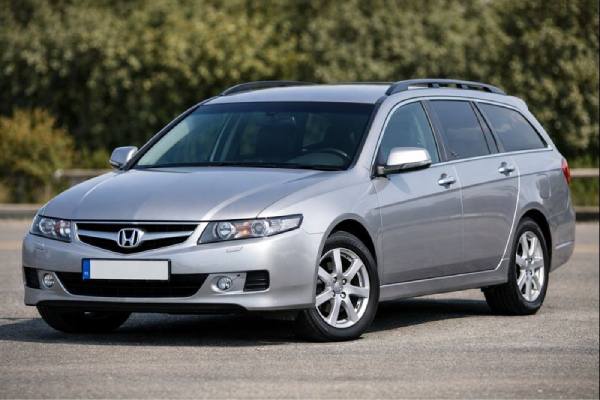
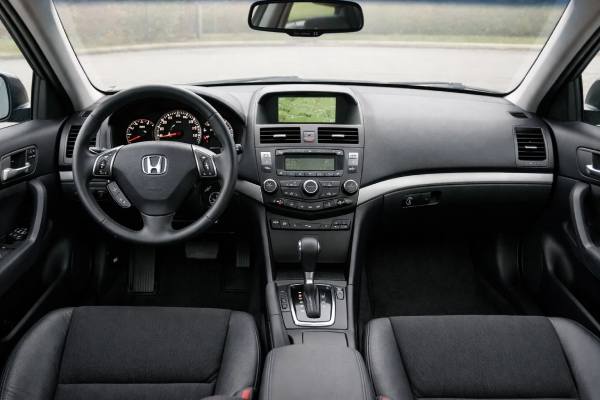

The Honda Accord Tourer (CN2) with the N22A1 2.2 diesel (often known as the 2.2 i-CTDi) is one of the more thoughtfully engineered mid-size estates of its era. It combines a practical cargo shape with a diesel that focuses on real torque and refinement, not just fuel numbers. In normal driving, the engine’s strong low-rpm pull makes the Tourer feel effortless when loaded, while the chassis stays composed at motorway speeds—one of the reasons these cars still appeal to long-distance owners.
Where this model wins is balance: stable handling, a calm cabin when everything is in good condition, and a drivetrain that can cover high mileage when serviced on time. Where it can bite is typical early-2000s diesel reality—EGR and intake soot, turbo control hardware, and clutch/dual-mass flywheel wear on hard-driven examples. Buy on condition and service evidence, not optimism.
Core Points
- Strong 340 Nm torque delivery suits towing-style loads and highway cruising without constant downshifts.
- Generally refined for a diesel of its age; good long-distance stability in Tourer form.
- Most issues are age-and-use related (EGR soot, vacuum/turbo controls, suspension wear), not catastrophic engine design flaws.
- Replace engine oil every 10,000–12,000 km (6,000–7,500 mi) or 12 months.
- Refresh brake fluid every 2 years to protect ABS hardware and maintain pedal feel.
Explore the sections
- CN2 diesel Tourer at a glance
- N22A1 specs, dimensions, and capacities
- Trims, options, and safety equipment
- Diesel reliability issues and service actions
- Maintenance schedule and smart buying checks
- Driving feel, performance, and real economy
- How the 2.2 diesel Tourer compares
CN2 diesel Tourer at a glance
In the CN2 Accord Tourer, Honda’s 2.2 i-CTDi was designed to feel like a “Honda engine that happens to be diesel,” rather than a noisy economy special. That matters because estates are often used as genuine workhorses: commuting during the week, family travel on weekends, and the occasional heavy load or long motorway run. The N22A1’s defining trait is usable torque at low rpm, which makes the Tourer feel calmer than many petrol rivals when fully loaded.
A well-sorted example drives with a confident, planted character. The steering is not ultra-light, the body control is typically tidy, and the car tracks straight at speed. The Tourer body adds practical touches—wide tailgate access, a flatter cargo floor than many saloons, and a load area that is genuinely useful for bulky items. If you want an estate that feels “grown up” on long journeys, this Accord is still a strong candidate.
The ownership story is mostly about condition. These cars are now old enough that wear items shape the experience more than the original design does. A Tourer with tired suspension bushes can feel vague and noisy; a Tourer with sticky brake calipers can feel slower, less efficient, and less stable under braking. The same logic applies to the diesel system: with clean intake and healthy vacuum/turbo control hardware, the engine feels strong and smooth; with soot build-up and leaking hoses, it can become hesitant or fall into limp mode under load.
It also helps to understand the “year split” mindset. Early cars and later cars can differ in details like gearbox setup and trim packaging, depending on market. In practice, you judge the exact car in front of you: confirm what safety equipment it actually has, check for diesel-system maintenance evidence, and look underneath for corrosion and brake line condition if the car lived in salty climates.
Choose the CN2 i-CTDi if you value relaxed torque, long-distance stability, and practical space. Skip it if your priority is modern crash-avoidance tech (automatic emergency braking and lane support) or if you need diesel efficiency without the maintenance realities of an older EGR-and-turbo diesel.
N22A1 specs, dimensions, and capacities
Specifications can vary by market, VIN, and model year. The tables below reflect commonly published Honda Motor Europe figures for the Accord diesel and typical service capacities used in workshops. Treat them as a solid baseline and verify against your exact vehicle documentation.
Engine and performance (N22A1 2.2 i-CTDi)
| Item | Specification |
|---|---|
| Code | N22A1 |
| Engine layout and cylinders | Inline-4, DOHC, 4 valves/cyl (16-valve), balancer shaft |
| Bore × stroke | 85.0 × 97.1 mm (3.35 × 3.82 in) |
| Displacement | 2.2 L (2204 cc) |
| Induction | Turbocharged (variable-nozzle turbo) with intercooler |
| Fuel system | Common-rail direct injection |
| Compression ratio | 16.7:1 |
| Max power | 140 hp (103 kW) @ 4000 rpm |
| Max torque | 340 Nm (251 lb-ft) @ 2000 rpm |
| Emissions standard (typical) | Euro IV (market dependent) |
| Rated efficiency (combined, typical) | 5.8 L/100 km (40.6 mpg US / 48.7 mpg UK) Tourer (cycle dependent) |
| Real-world highway @ 120 km/h | ~5.8–7.2 L/100 km (40.6–32.7 mpg US / 48.7–39.2 mpg UK), load and tyres dependent |
Transmission and driveline
Market and year can change the exact gearbox. Many owners will encounter an early 5-speed manual or a later 6-speed manual, depending on region and facelift timing.
| Item | Specification |
|---|---|
| Drive type | FWD |
| Differential | Open |
| Transmission | Manual (5-speed early / 6-speed later in some markets) |
Published manual gear ratios (5-speed manual, where fitted)
| Gear | Ratio |
|---|---|
| 1st | 3.933 |
| 2nd | 2.037 |
| 3rd | 1.250 |
| 4th | 0.883 |
| 5th | 0.687 |
| Reverse | 4.008 |
| Final drive | 3.285 |
Chassis, brakes, and wheels
| Item | Specification (typical) |
|---|---|
| Suspension (front) | Double wishbone, coil springs, anti-roll bar |
| Suspension (rear) | Multi-link / 5-link layout, coil springs, anti-roll bar |
| Steering | Hydraulic rack-and-pinion |
| Brakes (front) | 300 mm ventilated discs |
| Brakes (rear) | 282 mm solid discs (some variants list 260 mm) |
| Wheels and tyres (common) | 16 × 6.5J; 205/55 R16 (higher trims often 17 in) |
Dimensions, weights, and cargo (Tourer)
| Item | Measurement (typical Tourer) |
|---|---|
| Length / width / height | 4750 / 1760 / 1470 mm (187.0 / 69.3 / 57.9 in) |
| Wheelbase | 2720 mm (107.1 in) |
| Ground clearance | ~140 mm (5.5 in) |
| Fuel tank | 65 L (17.2 US gal / 14.3 UK gal) |
| Cargo volume (VDA, seats up) | 576 L (20.3 ft³) |
| Kerb (curb) weight | ~1578–1632 kg (3479–3599 lb), equipment dependent |
| GVWR (max permissible weight) | ~2100 kg (4630 lb), market dependent |
Performance and capability (typical published figures)
| Metric | Typical result |
|---|---|
| 0–100 km/h (0–62 mph) | ~10.1 s (Tourer figure varies by gearbox/trim) |
| Top speed | ~198 km/h (123 mph) (varies) |
Fluids and service capacities (common workshop baselines)
| Item | Specification and typical notes |
|---|---|
| Engine oil | Use handbook-approved diesel oil; common viscosity 5W-30; capacity often around 5.5–6.0 L with filter (verify by VIN) |
| Coolant | Long-life coolant; typical 50/50 mix; capacity varies by system (verify) |
| Brake fluid | DOT 4 |
| Manual gearbox fluid | Manufacturer-specified MTF (avoid “universal” oils unless approved) |
| Power steering | Honda-approved PS fluid |
Electrical
| Item | Specification (published for Accord diesel) |
|---|---|
| 12 V battery | 74 Ah |
| Alternator | 105 A |
Safety and driver assistance (era-appropriate)
| Item | Notes |
|---|---|
| ABS / EBD / Brake Assist | Commonly fitted across markets |
| Airbags | Front and side airbags common; curtain airbags vary by market/trim/year |
| ADAS | Modern AEB and lane centring are generally not available on this generation |
Trims, options, and safety equipment
Because trim naming varies by market, the most useful way to shop a CN2 diesel Tourer is to focus on what changes the driving and ownership experience: wheels, braking and stability features, seating and lighting, and the presence of key safety hardware. Most markets offered a core “mid” trim, a higher equipment trim, and at least one sport-leaning trim. The diesel usually paired with a manual gearbox and was often positioned as the long-distance, high-torque choice in the lineup.
Trims and options that matter in practice
Wheels and tyre packages
A Tourer on 16-inch wheels often rides with more compliance and can be quieter on rough surfaces. Stepping up to 17-inch wheels typically improves turn-in response but can add tyre roar and sharper impacts. For buyers who value comfort and low running costs, 16-inch setups are usually the safer bet.
Lighting and visibility
Higher trims may add projector headlamps, headlamp washers, and fog lights. On older cars, good lighting is a real safety and fatigue-reduction feature, not a luxury detail.
Comfort and touring features
Dual-zone climate control, cruise control, heated seats, upgraded audio, and factory navigation (where offered) are common differentiators. These do not change the car’s reliability fundamentals, but they can affect what breaks (screen units, amplifiers, switches) and what it costs to put right.
Mechanical and functional differences
Depending on market, some equipment grades bundle stability control and traction management. If you drive in rain, snow, or mixed road conditions, prioritise examples with stability control and confirm it functions correctly (dash self-test and no stored ABS/VSA faults).
Safety ratings and what to take from them
Early-2000s crash-test results are useful for comparing cars of the same era, but they do not equal modern standards. For the Accord/Accord Euro family tested around 2003, key takeaways are less about “stars” and more about the safety hardware that may or may not be fitted on your exact car:
- Dual front airbags and front side airbags were commonly present.
- Curtain airbags were standard in some European specifications but could be trim-dependent elsewhere.
- Seat belt geometry and front pretensioners matter, and they must be intact and fault-free.
When shopping, treat airbags as “verify, don’t assume.” A replaced steering wheel, an illuminated SRS light, or missing interior trim can be a sign of previous accident history or poor repairs.
Driver assistance reality check
Most CN2 Tourers rely on foundational safety systems rather than modern automation:
- ABS with electronic brake distribution
- Brake Assist on many variants
- Stability and traction systems on some trims/markets
- ISOFIX/LATCH provisions that are often present but should be confirmed
After any brake, steering, or suspension work, ensure the car tracks straight and the ABS system performs normally. A test drive with a few controlled stops can reveal sticking calipers, warped discs, or uneven tyre wear that might otherwise hide behind “it drives fine.”
Diesel reliability issues and service actions
The N22A1 can be a long-life diesel, but it lives in a world of soot, vacuum control, and heat. Most problems show up as drivability symptoms before they become expensive failures, which is good news for careful owners. The key is to recognise patterns early and fix the cause rather than chasing symptoms.
Common issues (high prevalence)
1) EGR and intake soot build-up (low to medium cost)
- Symptoms: hesitation, flat spots, smoke under load, occasional limp mode, rough idle on cold start.
- Likely root cause: exhaust gas recirculation (EGR) and intake deposits from lots of short trips and gentle driving.
- Recommended remedy: clean or replace the EGR valve and relevant intake components; verify boost and airflow readings afterward. Regular long runs at full operating temperature help reduce recurrence.
2) Vacuum hoses and turbo control problems (low to medium cost)
- Symptoms: weak boost, inconsistent acceleration, overboost/underboost faults, limp mode during overtakes.
- Likely root cause: aging vacuum lines, tired boost control solenoid, sticky variable-nozzle turbo mechanism.
- Recommended remedy: replace cracked hoses, test the solenoid and actuator movement, and confirm correct boost control under load.
3) Brake caliper slider seizure (low to medium cost)
- Symptoms: pulling, hot wheel, poor economy, uneven pad wear.
- Likely root cause: corrosion and dried grease in slider pins and rear mechanisms.
- Recommended remedy: service or rebuild calipers properly, refresh brake fluid, and confirm handbrake operation.
Occasional issues (depend on mileage and driving style)
4) Clutch and dual-mass flywheel wear (medium to high cost)
- Symptoms: vibration on take-off, rattling at idle, slipping under torque in higher gears.
- Likely root cause: diesel torque plus city driving, towing-style use, or aggressive launches.
- Recommended remedy: replace clutch kit and DMF as a matched job when symptoms appear; check mounts to avoid repeat failures.
5) Injector sealing and combustion blow-by (medium cost)
- Symptoms: chuffing sounds, diesel smell, oily residue around injectors, poor starting.
- Likely root cause: leaking injector seals or seat contamination.
- Recommended remedy: reseal and clean seats correctly; address early to avoid carbon buildup that complicates removal.
6) Cooling system aging (medium cost)
- Symptoms: slow coolant loss, heater inconsistencies, temperature creep under load.
- Likely root cause: old hoses, tired radiator, thermostat issues.
- Recommended remedy: pressure test, replace weak components, and refresh coolant on schedule.
Rare but expensive (screen carefully)
7) Turbocharger failure from neglect (high cost)
- Symptoms: loud siren noise, heavy smoke, oil consumption, sudden loss of power.
- Likely root cause: poor oil quality/intervals, contaminated oil feed, long periods of hot shutdown.
- Recommended remedy: fix root cause (oil supply and service discipline) and replace turbo as required.
Recalls, TSBs, and verification
For any used CN2, the smartest reliability step is confirming recall status and campaign completion. Airbag-related campaigns are especially important for this age range. Use official VIN-based lookups and keep dealer documentation if updates were completed. On a car this old, “paper certainty” is a real safety and resale advantage.
Maintenance schedule and smart buying checks
If you want the CN2 diesel Tourer to stay inexpensive, treat maintenance as a system, not a list. Diesels reward clean oil, correct filters, healthy boost control, and a cooling system that never runs marginal. Below is a practical schedule that fits real ownership; adapt it to your driving pattern and always defer to VIN-specific guidance.
Practical maintenance schedule (distance/time)
| Item | Interval | Why it matters |
|---|---|---|
| Engine oil and filter | 10,000–12,000 km (6,000–7,500 mi) or 12 months | Protects turbo and high-pressure diesel hardware. |
| Engine air filter | 30,000–40,000 km (20,000–25,000 mi) | Supports correct boost and MAF readings. |
| Cabin air filter | 15,000–30,000 km (10,000–20,000 mi) or 12 months | Helps HVAC performance and demisting. |
| Fuel filter | 40,000–60,000 km (25,000–37,000 mi) | Reduces injector and pump stress. |
| Brake fluid | Every 2 years | Protects ABS components and pedal feel. |
| Coolant | 5 years then every 3–5 years | Controls corrosion and temperature stability. |
| Manual gearbox fluid | 60,000–100,000 km (37,000–62,000 mi) | Improves shift feel and bearing life. |
| Serpentine belt and pulley check | 80,000–120,000 km (50,000–75,000 mi) | Prevents accessory failures and squeal. |
| Suspension and alignment check | Annually or with tyre changes | Saves tyres and restores stability. |
| EGR/boost system inspection | Every 40,000–60,000 km (25,000–37,000 mi) if mostly city-driven | Catches soot and vacuum issues early. |
Fluid specifications, capacities, and torque values (buyer-useful basics)
Because diesel oil specs can vary by market and emissions equipment, the safest guidance is: use the exact oil approval listed in your handbook, then choose viscosity by climate. Many owners run a high-quality 5W-30 with the correct diesel rating and keep intervals conservative.
A few workshop-friendly baselines:
- Wheel nuts: around 108 Nm (80 lb-ft) is common for this platform.
- Brake fluid: DOT 4 is typical; change schedule matters more than brand.
- Oil capacity: often in the mid-5-litre range with filter, but verify for your exact sump and service procedure.
Buyer’s checklist: what to inspect and what it implies
Underbody and corrosion (decides the whole purchase)
- Inspect sills/jacking points, subframes, suspension mounts, and brake/fuel lines.
- Surface rust is manageable; structural corrosion is a walk-away issue.
Diesel system health (test drive under load)
- Warm the engine fully, then do a firm uphill pull in 3rd/4th.
- Watch for limp mode, hesitation, or abnormal smoke. Those often point to boost control, EGR soot, or vacuum leaks.
Clutch and flywheel (high-cost risk area)
- Test for shudder on take-off, slip in higher gears, and rattles at idle with clutch engaged/disengaged.
- A strong clutch feel with clean engagement is worth paying extra for.
Brakes and suspension (easy to miss, expensive to ignore)
- Check for pulling, vibration, hot wheels, and clunks over bumps.
- Assume some bushing work on higher-mile cars and budget accordingly.
Paperwork that actually matters
- Oil service evidence at sensible intervals
- Fuel filter and brake fluid history
- Cooling system work (thermostat, hoses, radiator) if high mileage
- Recall confirmation by VIN
A good CN2 diesel is a satisfying, capable estate. A neglected one can turn into a cycle of “small fixes” that add up. The difference is visible if you inspect thoroughly and insist on evidence.
Driving feel, performance, and real economy
On the road, the N22A1 diesel changes the Accord Tourer’s personality compared with the petrol versions. The car feels less “rev driven” and more like a strong, steady pull from low rpm. That is exactly what many estate owners want: effortless progress without constantly hunting for the right gear.
Ride, handling, and NVH
When suspension components are healthy, the Tourer rides with controlled firmness. It is not a soft, floaty wagon; it feels planted. The steering is generally predictable and confidence-inspiring on motorways. If a test drive reveals wandering, tramlining, or a nervous rear end mid-corner, suspect tyres, alignment, and rear suspension bushes first.
Cabin noise is respectable for an early-2000s diesel, but condition makes a big difference:
- Worn engine mounts can add vibration at idle.
- Cheap tyres can dominate road noise.
- A tired exhaust flex section can add diesel “boom” under load.
Powertrain character
The N22A1’s key advantage is torque: it pulls strongly around 1500–2500 rpm, which suits overtakes and hills. Turbo lag exists, but it is usually mild when everything is working correctly. The car should feel eager once boost arrives; if it does not, assume boost control or EGR/airflow issues rather than “it’s just old.”
Gearbox feel depends on the exact year and market. Some cars use an earlier 5-speed manual ratio set; later cars in some markets gained a 6-speed, which typically reduces cruising rpm and can improve refinement and economy on fast roads. Regardless of the exact gearbox, shift action should feel positive without crunching, and the drivetrain should not clunk on/off throttle transitions. If it does, check mounts and driveline wear.
Real-world fuel economy expectations
Older diesels can deliver excellent motorway economy, but only if the car is healthy and used as intended (fully warmed, steady cruising). Typical owner-style results:
- City-heavy use: ~7.0–8.5 L/100 km (33.6–27.7 mpg US / 40.4–33.2 mpg UK)
- Highway at 100–120 km/h: ~5.8–7.2 L/100 km (40.6–32.7 mpg US / 48.7–39.2 mpg UK)
- Mixed driving: ~6.2–7.5 L/100 km (37.9–31.4 mpg US / 45.6–37.7 mpg UK)
Short trips and cold weather can erase diesel efficiency quickly. If your use is mostly urban and short-distance, you may be happier with a petrol model, because soot-related maintenance becomes more frequent.
Performance metrics that matter day to day
The published 0–100 km/h time is useful, but what you feel most is mid-range shove. The Tourer will usually overtake confidently without needing to rev hard, and it stays stable while doing it. Braking consistency depends heavily on caliper health and fluid condition—two items you can improve significantly with correct servicing.
How the 2.2 diesel Tourer compares
The CN2 2.2 diesel Tourer sits in a competitive mid-2000s estate class where many rivals offer strong engines but vary widely in long-term ownership character. The Honda’s strongest selling point is how complete the package feels when maintained: predictable handling, good refinement, and a diesel that delivers torque without feeling agricultural.
Versus Volkswagen Passat Variant (TDI era)
- Honda advantages: generally smooth, refined diesel response for its time; stable chassis feel; strong torque with a “linear” delivery once on boost.
- Passat advantages: vast parts availability in many markets and strong fuel economy reputation, especially on long runs.
- What decides it: buy the Honda if you want a less fussy driving feel and a solid touring chassis. Buy the Passat if you prioritise the biggest ecosystem of parts and specialists—then still shop carefully because condition matters.
Versus Ford Mondeo Estate (TDCi era)
- Honda advantages: relaxed motorway composure and a diesel that feels strong at everyday rpm.
- Mondeo advantages: often more playful steering and chassis balance, sometimes cheaper to buy.
- What decides it: the Mondeo can feel more “driver’s car,” but the Accord often feels more mature on long journeys, especially when loaded.
Versus Toyota Avensis Wagon (D-4D era)
- Honda advantages: more engaging chassis feel and very strong mid-range torque character.
- Avensis advantages: conservative ownership profile and often straightforward servicing in many markets.
- What decides it: choose Toyota for a calm, conservative approach; choose Honda if you want a wagon that still feels confident and composed at speed.
Versus Mazda6 Wagon (diesel era)
- Honda advantages: typically strong long-distance stability and a diesel tuned for torque and refinement.
- Mazda advantages: lighter, more agile feel in many trims.
- What decides it: pick Mazda for agility; pick Honda for a composed “touring” personality and a strong torque curve.
Bottom-line guidance
The CN2 diesel Tourer is best for drivers who:
- Do regular longer trips that fully warm the engine
- Want an estate that stays stable, calm, and confident on fast roads
- Prefer torque-led driving over rev-heavy performance
It is less ideal if:
- Your use is mostly short urban trips (soot management becomes a recurring theme)
- You want modern crash-avoidance tech rather than ABS/stability-era safety
- You need the lowest possible repair costs without proactive maintenance
In the right hands, this Accord Tourer remains one of the more satisfying “old-school practical” diesels—capable, refined, and genuinely useful.
References
- Accord i-CTDi | Specifications 2003 (Press Kit) ([Honda News][1])
- Accord i-CTDi 04 | Drivetrain 2004 (Press Kit) ([Honda News][2])
- Honda Owners | Recalls and Updates | Honda UK 2025 (Recall Database) ([Honda UK][3])
- Honda Accord Euro | Safety Rating & Report | ANCAP 2003 (Safety Rating) ([ancap.com.au][4])
Disclaimer
This article is for informational purposes only and is not a substitute for professional diagnosis, inspection, or repair. Specifications, torque values, service intervals, and procedures can vary by VIN, market, model year, and equipment. Always verify details using your vehicle’s official service documentation and follow manufacturer-approved methods, fluids, and safety procedures.
If you found this guide useful, please consider sharing it on Facebook, X (Twitter), or your preferred community to support our work.