
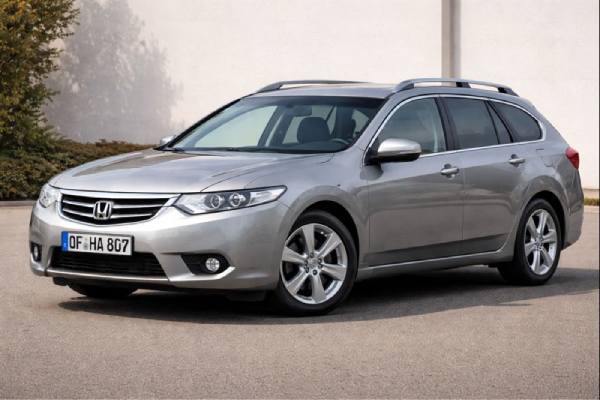
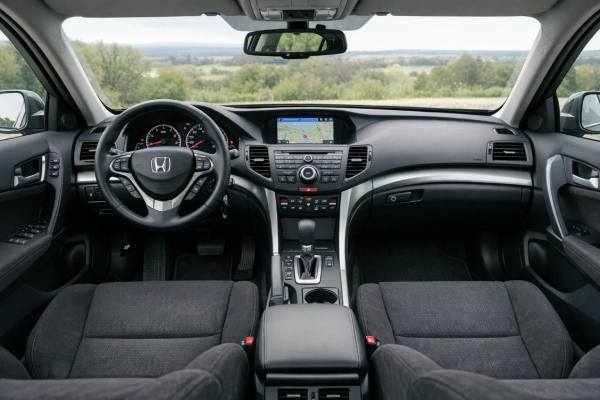
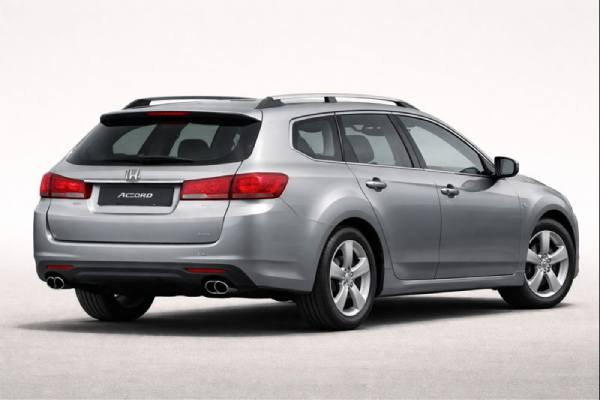
The Honda Accord Tourer (CW1) with the R20A3 2.0 i-VTEC is the “sensible engineer’s choice” in the 8th-gen Accord range: a large estate that prioritizes stability, predictable handling, and long-term usability over headline acceleration. This powertrain is naturally aspirated, so it delivers linear response and avoids many turbo-era complications, and it uses a timing chain rather than a scheduled belt replacement. In daily use, the Tourer’s strength is how calmly it covers distance—solid high-speed manners, good seating, and a practical cargo bay—while still feeling tighter and more “driver-focused” than many mainstream wagons of its era.
Ownership is usually straightforward if you stay ahead of fluids, brakes, and suspension wear items. The key is buying a car with clear service history and verified recall completion, then maintaining it like a long-distance tool.
What to Know
- Strong long-distance comfort and straight-line stability, especially on motorways.
- Naturally aspirated response feels predictable in traffic and on wet roads.
- Tourer cargo space is genuinely usable for family and work loads.
- Watch for suspension bushing wear and brake slider corrosion on higher-mileage cars.
- Plan engine oil service about every 15,000 km (12 months) unless your use is mainly short trips.
Jump to sections
- CW1 Tourer essentials
- R20A3 specs and capacities
- Trims, equipment and safety tech
- Known weak points and service actions
- Maintenance plan and buying checks
- How it drives in real life
- Against Passat, Avensis, and Mazda 6
CW1 Tourer essentials
The CW1 Accord Tourer is the estate version of the European 8th-generation Accord. It’s a big car by class standards, built around a stiff structure and a suspension design that aims for control first and softness second. If you like a wagon that feels planted at speed and doesn’t get unsettled by crosswinds, ruts, or fast lane changes, this chassis is one of the model’s best traits.
With the R20A3 2.0 i-VTEC (156 hp), you’re choosing the “steady, low-drama” engine in the range. It won’t shove you into the seat like the 2.4, and it certainly won’t match the midrange surge of the 2.2 diesels. What you get instead is consistent response, good cold-start manners, and fewer diesel-specific ownership risks (DPF loading, EGR soot, turbo wear). The engine’s character encourages clean, smooth driving: short-shift in town, then let it rev freely when you need to merge or pass.
The Tourer body adds meaningful practicality. The load floor is long, the tailgate opening is easy to use, and the rear seats fold to create a flat, usable space. For many owners, that practicality is the reason to pick the CW1 over a saloon: it can handle airport runs, DIY loads, strollers, and dogs without feeling like a compromise.
Where expectations need to be realistic is performance under load. With passengers and luggage, the 2.0 will feel “adequate” rather than quick, especially with an automatic transmission. If your driving is mostly urban stop-and-go, you may also see fuel consumption climb because the car’s mass works against you. The upside is that the drivetrain generally tolerates age well when it’s serviced on time and driven regularly on longer trips.
R20A3 specs and capacities
Below are specs that most owners and buyers actually use when comparing cars, planning maintenance, and budgeting running costs. Exact values can vary by market, VIN, wheel size, and trim, so treat the tables as a “decision baseline” and verify details against the car’s handbook and service documentation.
Engine and performance (R20A3)
| Item | Spec |
|---|---|
| Code | R20A3 |
| Engine layout and cylinders | Inline-4, SOHC i-VTEC, 4 cylinders, 4 valves/cyl |
| Bore × stroke | 81.0 × 96.9 mm (3.19 × 3.81 in) |
| Displacement | 2.0 L (1997 cc) |
| Induction | Naturally aspirated |
| Fuel system | PFI/MPFI (Honda PGM-FI) |
| Compression ratio | ~10.6:1 (varies by market calibration) |
| Max power | 156 hp (115 kW) @ ~6,300 rpm |
| Max torque | 192 Nm (142 lb-ft) @ ~4,200 rpm |
| Timing drive | Chain |
| Emissions standard | Typically Euro 4 (early) to Euro 5 (later) depending on year/market |
| Rated efficiency (official) | Commonly ~7.4–7.8 L/100 km (30–32 mpg US / 36–38 mpg UK) depending on gearbox/wheels |
| Real-world highway @ 120 km/h | Often ~7.5–8.5 L/100 km (28–31 mpg US / 33–38 mpg UK), wind and load dependent |
Transmission and driveline
| Item | Spec |
|---|---|
| Drive type | FWD |
| Transmission | 6-speed manual or 5-speed automatic (market dependent) |
| Differential | Open |
| Notes | Smoothest results come from correct fluid and gentle warm-up; avoid “flushes” on high-mileage automatics unless history is known |
Chassis and dimensions (Tourer)
| Item | Typical spec (approx.) |
|---|---|
| Suspension (front/rear) | Double wishbone / multi-link |
| Steering | Rack and pinion with power assist (market dependent) |
| Brakes (front/rear) | 4-wheel discs (sizes vary by trim) |
| Wheels/tyres (common) | 16–18 in wheels; tyre sizes vary by trim |
| Length / width / height | ~4,750 / 1,840 / 1,475 mm (~187.0 / 72.4 / 58.1 in) |
| Wheelbase | ~2,705 mm (~106.5 in) |
| Turning circle | ~11.8 m (~38.7 ft) |
| Curb weight | ~1,500–1,620 kg (~3,307–3,571 lb), trim dependent |
| Fuel tank | ~65 L (17.2 US gal / 14.3 UK gal) |
| Cargo volume | About 406 L (14.3 ft³) seats up; about 1,252 L (44.2 ft³) seats folded (measurement method varies) |
Performance and capability (realistic expectations)
| Metric | Typical range |
|---|---|
| 0–100 km/h (0–62 mph) | ~10–11.5 s (gearbox and wheels matter) |
| Top speed | ~205–215 km/h (127–134 mph) |
| 100–0 km/h braking | Often ~38–41 m (tyres and brake condition dominate) |
| Towing | Market dependent; verify the VIN plate and registration data |
Fluids and service capacities (planning figures)
| Item | Spec (typical) |
|---|---|
| Engine oil | 0W-20 or 5W-30 (market spec); ~4.0–4.5 L (4.2–4.8 US qt) with filter |
| Coolant | Honda long-life type (50/50 typical); capacity varies by year |
| Brake fluid | DOT 4 (common) |
| Spark plugs | Iridium type; gap varies by plug spec |
Electrical
| Item | Typical spec |
|---|---|
| 12 V battery | Commonly ~60 Ah class (check the installed battery label) |
| Charging system | Alternator output varies by equipment load |
Trims, equipment and safety tech
Trim strategy for the Accord Tourer differs by country, but most markets followed a familiar ladder: a well-equipped base model, a mid-grade with comfort upgrades, and a high-grade with leather, premium audio, navigation, and larger wheels. When you’re shopping used, the fastest way to identify a high-spec car is often inside the cabin: seat material, head unit/nav screen, steering wheel controls, and the presence of driver-assist switches.
Trims and options that affect ownership
Some options change how the car feels and what it costs to keep:
- Wheel size and tyre width: Larger wheels improve turn-in but tend to increase road noise and tyre costs. They can also make the car more sensitive to alignment issues.
- Headlights: HID/xenon systems (where fitted) improve night visibility but cost more when bulbs/ballasts age.
- Navigation and premium audio: Great when working; expensive and annoying when older screens or amplifiers fail.
- Driver-assistance package (market dependent): Some late cars offered features like adaptive cruise control and lane-support functions. These systems add sensors and calibration requirements after bumper or windscreen work.
Safety ratings and what they mean here
For this generation, European crash-test results are commonly summarized as a 5-star Euro NCAP-era car (test protocols evolved during the period). When you read safety ratings for older vehicles, keep two realities in mind:
- Test standards became stricter over time, so a “5-star in 2008” is not directly comparable to a “5-star in 2023.”
- Equipment can vary by market, and some safety technologies (like advanced autonomous emergency braking) were not widely standard in this era.
Core safety systems you should expect
Even without modern ADAS, the Accord Tourer is typically well covered in fundamentals:
- Multiple airbags (front, side, and curtain in most markets)
- ABS with electronic brakeforce distribution
- Stability control and traction control
- ISOFIX/LATCH child-seat anchors on rear seats (market dependent)
- Strong braking feel when the system is maintained and sliders are clean
If the car has radar/camera-based driver assistance, treat it as a system that needs correct repair practices. After front-end repairs or windscreen replacement, many cars require sensor alignment or calibration. A “cheap” repair that ignores calibration can lead to warning lights, poor system behavior, or a failed inspection later.
Known weak points and service actions
The R20A3 Accord Tourer is not known for one catastrophic flaw. Most problems fall into the normal “age and mileage” category: rubber parts harden, fluids degrade, and previous owners delay preventative work. The best way to think about reliability is by prevalence and cost tier.
Common (expect to see on higher-mileage cars)
- Front suspension wear (medium cost):
Symptoms: clunks over potholes, vague steering, uneven tyre wear.
Likely cause: tired bushes, drop links, ball joints, or worn dampers.
Remedy: replace worn components in pairs; follow with proper alignment. - Brake slider corrosion (low to medium cost):
Symptoms: pulling under braking, hot wheels, uneven pad wear.
Cause: sticky caliper pins/boots and neglected brake servicing.
Remedy: clean and lubricate sliders, replace boots/pins as needed; refresh fluid. - Battery and charging age-out (low to medium cost):
Symptoms: slow cranking, random warning lights, start/stop issues on equipped cars.
Cause: old battery, corroded terminals, or high electrical load from accessories.
Remedy: battery test under load; clean grounds; confirm alternator output.
Occasional (depends heavily on use and maintenance)
- Oil seepage from seals (low to medium cost):
Symptoms: oil smell, dampness around timing cover or valve cover.
Cause: aging gaskets/seals and heat cycles.
Remedy: reseal at the correct points; don’t overtighten covers. - Air-conditioning performance drop (medium cost):
Symptoms: weak cooling, intermittent operation.
Cause: leaks, compressor clutch wear, condenser damage from road debris.
Remedy: leak test, repair properly, then recharge to the correct mass. - Cabin electronics glitches (low to medium cost):
Symptoms: audio/nav quirks, steering wheel button issues.
Cause: aging connectors, moisture, or weak battery causing undervoltage faults.
Remedy: start with battery/ground health; diagnose rather than “parts-darting.”
Rare but expensive (verify before buying)
- Automatic transmission neglect (high cost if abused):
Symptoms: harsh shifts, flare, shudder, delayed engagement.
Cause: wrong fluid, overdue drain/fills, overheating, or internal wear.
Remedy: confirm service history; use the correct OEM-spec ATF; avoid aggressive flushing on unknown history.
Recalls, TSBs, and campaign mindset
For cars built in this era, the biggest “must verify” category is safety campaigns—especially airbags—because completion depends on VIN and region. The practical approach:
- Ask for paperwork showing completed campaigns.
- Run the VIN through your region’s official recall portal and confirm with a dealer.
- Treat missing proof as a negotiation item, not a deal-breaker—unless the seller refuses verification.
Maintenance plan and buying checks
A well-maintained Accord Tourer can be a long-service car, but it rewards owners who treat maintenance as a schedule, not a reaction. Short trips, cold starts, and city traffic are the conditions that create “mystery problems,” so adjust intervals to your usage rather than copying the longest factory interval you’ve heard.
Practical maintenance schedule (distance/time)
Use this as a durable baseline; shorten intervals for frequent short trips or very cold climates.
| Item | Interval (typical) | Notes |
|---|---|---|
| Engine oil and filter | 10,000–15,000 km or 12 months | Short trips: use the lower end |
| Tyre rotation and inspection | 10,000–12,000 km | Helps noise, wear, and stability |
| Engine air filter | 20,000–30,000 km | Dusty areas: sooner |
| Cabin filter | 15,000–20,000 km | Prevents blower strain and smells |
| Brake fluid | Every 2 years | Moisture drives corrosion and soft pedal |
| Coolant | Typically 5 years then periodic | Verify exact coolant type and interval for your VIN |
| Spark plugs | 90,000–120,000 km | Misfires often show under load first |
| Manual gearbox fluid | 60,000–100,000 km | Improves shift quality and synchro life |
| Automatic ATF drain/fill | 40,000–60,000 km | Frequent drain/fills beat “ignore it” |
| Serpentine belt and hoses | Inspect yearly; replace by condition | Replace at first cracking or glazing |
| Alignment | When tyres or suspension parts change | Essential after any bushing/arm work |
Fluids, specs, and “decision torque” values
Because market specs differ, the safest rule is to follow the service literature for your VIN. Still, a few practical points help owners avoid mistakes:
- Use OEM-spec fluids, especially for automatic transmissions. “Universal ATF” often causes shudder or shift quality complaints.
- Don’t overtighten fasteners. Two common reference values owners ask for are:
- Wheel nuts: typically around 108 Nm (80 lb-ft) (verify by model year/wheels)
- Oil drain bolt: commonly around 39 Nm (29 lb-ft) (verify by sump design)
Buyer’s guide: what to check before you commit
Bring a flashlight, look underneath, and be systematic:
- Service history quality: not just stamps—look for invoices showing fluids, brakes, and suspension work.
- Cold start behavior: listen for rattles, rough idle, or misfire; confirm smooth warm-up.
- Transmission feel: manual should shift cleanly without crunch; automatic should engage promptly and shift smoothly.
- Brakes: check for pulsing, pulling, or uneven pad wear (common if sliders stick).
- Suspension and tyres: uneven wear suggests alignment neglect or tired bushes.
- Rust and corrosion hotspots: subframes, brake lines, and seam edges in salted climates.
- Tourer specifics: tailgate struts, rear latch operation, rear wiper, and water leaks around seals.
Long-term outlook: if you buy a straight, rust-minimal example and keep up with fluids and suspension wear items, the CW1 Tourer is one of the more rational “keep it for years” wagons from this period.
How it drives in real life
The Accord Tourer’s road manners are the reason many owners stick with it. It feels composed at speed, resists float, and tracks cleanly through long motorway curves. Compared with softer family estates, the Honda often feels more “tied down,” especially when the suspension is fresh and the tyres are matched as a set.
Ride, handling, and NVH (noise and vibration)
- Ride quality: Firm-but-controlled is the theme. Small sharp bumps can be noticeable on larger wheels, but the body stays stable rather than bobbing. If the ride feels harsh, suspect worn dampers or incorrect tyre pressures before blaming the design.
- Steering and balance: It’s not a sports wagon, but it responds accurately. The front end is predictable, and mid-corner corrections don’t unsettle the car the way they can in softer rivals.
- Braking feel: With good pads, clean sliders, and fresh fluid, the pedal is consistent. Many “brake problems” on older examples trace back to neglected slider service rather than expensive hardware failure.
- Cabin noise: Expect moderate tyre noise on rough surfaces, especially with low-profile tyres. Wind noise is usually well controlled if door seals are healthy.
Powertrain character
The R20A3’s strength is smoothness and linear delivery. Around town it’s easy to modulate, and it doesn’t surprise you with sudden torque spikes. The trade-off is that meaningful acceleration often requires revs. For passing, it’s normal to downshift and let it spin; it’s designed to do that.
- Manual gearbox: Generally the best match for this engine if you care about responsiveness. It helps the car feel lighter than it is.
- Automatic gearbox: Best for relaxed driving, but it can make the car feel more “touring” than “eager,” especially with passengers.
Real-world efficiency
For a large estate, consumption is reasonable when driven smoothly, but it’s sensitive to load and speed.
- City: commonly higher due to weight and stop-start patterns.
- Highway at 100–120 km/h: often in the high-7s to mid-8s L/100 km when tyres, alignment, and airflow are good.
- Mixed: typically sits between city and highway, as you’d expect.
Cold weather matters: short winter trips can raise consumption noticeably because the engine spends more time in warm-up enrichment and the cabin heater load encourages more idling or higher revs. If your use is mostly short hops, shorten oil intervals and keep the battery in good condition.
Against Passat, Avensis, and Mazda 6
The Accord Tourer sits in the same real-world space as the Volkswagen Passat Variant, Toyota Avensis Wagon, Mazda 6 Wagon, Ford Mondeo Estate, and (depending on market) the Subaru Legacy wagon. Each rival makes different trade-offs; here’s how the Honda typically stacks up.
Versus Volkswagen Passat Variant (similar years)
- Honda advantages: naturally aspirated simplicity, strong high-speed stability, often fewer “systems” that age badly.
- Passat advantages: torque-rich turbo options make passing easier, and some trims feel more premium inside.
- Buyer takeaway: choose the Honda if you want predictable ownership; choose the VW if you prioritize effortless midrange power and accept higher complexity.
Versus Toyota Avensis Tourer
- Honda advantages: often feels more planted and confident at speed; steering and chassis tuning can be more engaging.
- Toyota advantages: reputation for low-drama running, and some engines can be very economical.
- Buyer takeaway: the Avensis is the “quiet appliance”; the Honda is the “calm long-distance tool” with a slightly more driver-focused edge.
Versus Mazda 6 Wagon
- Honda advantages: heavier, more stable motorway feel; solid structural impression.
- Mazda advantages: often lighter-feeling and more playful; some engines deliver better punch for the displacement.
- Buyer takeaway: pick Mazda for agility; pick Honda for composed touring and a more substantial feel.
Versus Ford Mondeo Estate
- Honda advantages: strong build feel, smooth NA response, generally good long-term cabin integrity.
- Ford advantages: typically excellent steering and ride balance, plus broad parts availability in many regions.
- Buyer takeaway: the Mondeo can be a bargain driver’s estate; the Honda often feels “tighter” when both are well kept.
The overall verdict
If your priority is a durable, stable, practical wagon that doesn’t demand constant attention, the Accord Tourer R20A3 makes a strong case—especially when you find one with verified recall completion, clean maintenance history, and suspension work already addressed. It’s not the fastest option, but it’s one of the more trustworthy long-distance estates of its era.
References
- Honda Accord and Accord Tourer 2011 model year 2011 (Press Release)
- Owner Manuals 2025 (Owner’s Manual Portal)
- Recalls 2025 (Recall Database)
Disclaimer
This article is for informational purposes only and is not a substitute for professional diagnosis, inspection, or repair. Specifications, torque values, fluid capacities, service intervals, and procedures can vary by VIN, market, model year, and equipment. Always verify details against the official owner’s manual and service documentation for your specific vehicle.
If you found this guide useful, please consider sharing it on Facebook, X (Twitter), or your favorite forum to support our work.