
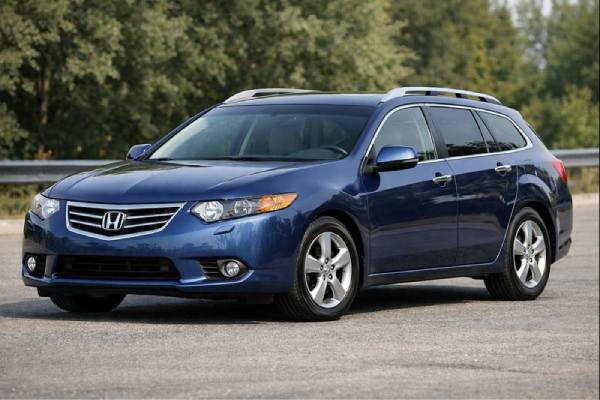
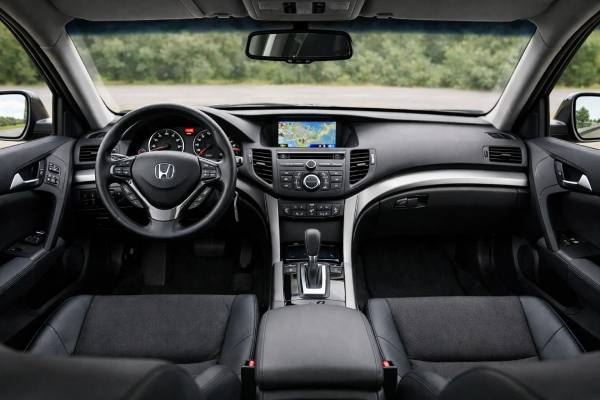
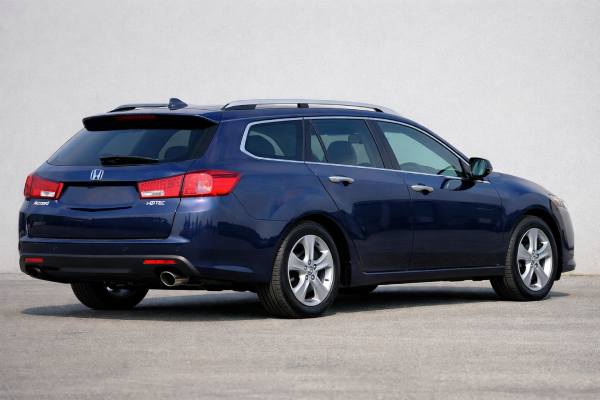
The Honda Accord Tourer (CW3) with the 2.2 i-DTEC (N22B1) is one of the more “engineered” estate cars of its era: strong mid-range torque, long-legged cruising manners, and a chassis tuned to feel secure at speed without punishing you on rough roads. In 150 hp form it’s not a hot estate, but it’s a capable daily that carries people and cargo with less drama than many rivals—especially when it has been serviced correctly and driven in a way that keeps the emissions hardware healthy.
For owners today, the big story is how well the diesel’s modern systems (DPF, EGR, common-rail injection) match your driving pattern. If your use case fits, the CW3 can deliver efficient motorway miles, a calm cabin, and a practical boot in a body that still feels solidly built.
Owner Snapshot
- Strong low-end pull for effortless overtakes and loaded driving.
- Stable, confidence-inspiring motorway ride with a “grown-up” chassis feel.
- Practical Tourer cargo shape with a low, usable load area and clever storage.
- Short-trip use can accelerate DPF and EGR-related headaches—drive pattern matters.
- Plan on an oil and filter service roughly every 12 months (or sooner with heavy city use), even with variable servicing.
Guide contents
- Detailed CW3 overview
- CW3 2.2 i-DTEC specs
- Trims, options and safety
- Reliability and common faults
- Maintenance and buyer’s guide
- Driving and real-world performance
- Rivals and positioning
Detailed CW3 overview
The CW3 Accord Tourer sits in the “large family estate” sweet spot: big enough to do airport runs and long holidays, but still sized like a European D-segment car rather than a full executive barge. Honda’s positioning for the facelift era leaned on comfort, refinement, and safety technology, while still aiming for an involving drive rather than a soft, floaty tune.
With the 150 PS 2.2 i-DTEC, the character is defined by torque delivery and relaxed gearing. Peak torque is broad (about 350 Nm across roughly 2000–2750 rpm), which matters more in daily use than the headline horsepower number: it makes the Tourer feel willing when joining fast traffic or climbing grades with passengers and luggage.
The ownership trade-off is complexity. This engine family relies on a diesel particulate filter (DPF) and EGR to meet its emissions targets, and it uses a high-pressure common-rail fuel system. That combination is perfectly manageable, but it is less forgiving of repeated short runs, long oil intervals, or “fix it later” maintenance. When these cars go wrong, the most expensive problems usually relate to emissions hardware, turbo control, or drivetrain wear from high torque (clutch and dual-mass flywheel on manuals).
What the CW3 does especially well is long-distance stability. Many drivers notice the Tourer tracks straight, feels planted in crosswinds, and stays calm at typical European cruising speeds.
Bottom line: the 150 hp i-DTEC Tourer is a high-mileage-friendly estate when it’s used as intended—regular longer drives, timely fluids, and careful attention to intake and DPF health.
CW3 2.2 i-DTEC specs
Below are the key specifications for the Accord Tourer (CW3) with the 2.2 i-DTEC 150 PS diesel. Where markets differ (equipment, weights, tyres), treat values as typical rather than VIN-perfect.
Engine and performance (N22B1)
| Item | Spec |
|---|---|
| Code | N22B1 |
| Engine layout and cylinders | Inline-4 turbo diesel (common-rail) |
| Displacement | 2.2 L (2199 cc) |
| Induction | Turbocharged |
| Fuel system | Common-rail direct injection |
| Max power | 150 PS (≈148 hp / 110 kW) @ 4000 rpm |
| Max torque | 350 Nm @ 2000–2750 rpm |
| Timing drive | Not consistently published in public-facing specs; verify via service documentation for your VIN |
| Emissions standard | Euro 5 (typical for facelift-era markets) |
| Rated efficiency (Tourer) | 51.3 mpg UK (≈5.5 L/100 km) manual; 44.8 mpg UK (≈6.3 L/100 km) auto |
Transmission and driveline
| Item | Spec |
|---|---|
| Drive type | FWD |
| Transmission options | 6-speed manual; 5-speed automatic (by market/year) |
| Gear ratios and final drive | Not consistently published in press materials; confirm via workshop data for exact gearbox code |
Dimensions and practicality (Tourer)
| Item | Spec |
|---|---|
| Wheelbase | 2705 mm |
| Width | 1840 mm (body; mirrors excluded) |
| Length / height | Around 4748 mm / 1470 mm (can vary slightly by trim/market) |
| Cargo volume | 406 L (seats up), up to ~1183 L (seats down) |
Performance and capability (Tourer 2.2 i-DTEC)
| Item | Manual | Automatic |
|---|---|---|
| 0–62 mph (0–100 km/h) | 10.1 s | 10.7 s |
| Top speed | 129 mph (≈208 km/h) | 125 mph (≈201 km/h) |
Fluids and service capacities (practical owner guidance)
Public-facing material rarely includes full workshop-grade capacities (oil fill by filter type, coolant circuit volume, A/C charge). For safe decision-making without guessing:
- Use only Honda-approved, DPF-compatible “low-SAPS” oil that meets the exact handbook spec for your VIN.
- Confirm oil capacity and drain-plug torque in official service documentation before DIY servicing.
- Treat any “internet capacity figure” as a starting point, not an instruction.
Safety and driver assistance (high-level)
| Item | Notes |
|---|---|
| Crash ratings | Strong results under the Euro NCAP scheme of its test era; exact breakdown depends on protocol year |
| Driver assistance availability | Higher trims could add adaptive cruise and lane support; equipment varies by grade and year |
Trims, options and safety
Because the Accord Tourer was sold across many European markets, trim names can vary, but the structure is usually similar: a lower comfort grade, one or two mid grades with popular tech, and a top grade that bundles leather, navigation, premium lighting, and the more advanced driver-assistance functions. In many markets, the 150 hp engine was the mainstay, while sport-focused grades sometimes paired with higher-output diesels.
What changes by trim (the stuff that matters)
- Lighting: Higher grades often bring xenon/HID headlamps and cornering or beam-support features. They improve night driving but can increase replacement cost if housings, ballasts, or levelling sensors fail.
- Wheels and tyres: Many Tourers run 16–18 inch packages depending on grade. Larger wheels sharpen response but can make ride quality harsher on broken surfaces and raise tyre cost.
- Interior and seats: Cloth vs half-leather vs full leather can be a quick identifier, along with seat memory controls and the presence of factory navigation.
Quick identifiers when shopping used
- Headlamp design and detailing can help separate earlier cars from facelift-era lighting updates.
- Steering wheel button layout can hint at whether factory phone and cruise functions are present.
- Instrument cluster messages (adaptive cruise and lane-support status indications) can be a clue on cars with more advanced systems.
Safety ratings and what they mean today
For 2008–2010-era vehicles, be careful when comparing “stars” across brands: crash-test protocols changed meaningfully over time. A five-star result under an older system still indicates strong structure and restraint performance for its era, but it does not mean the car matches a modern 2020s five-star vehicle in pedestrian protection or automated braking capability.
Safety systems and ADAS
Core systems you should expect on most CW3 Tourers include ABS with electronic brakeforce distribution, stability control, and multiple airbags, plus ISOFIX/child-seat anchoring. Higher grades can add long-distance fatigue reducers like adaptive cruise control and lane-keeping support (names and standard/optional status depend on market). If you buy an ADAS-equipped example, budget for camera and radar calibration after windshield replacement, front-end repair, or suspension geometry changes.
Reliability and common faults
A well-maintained Accord Tourer 2.2 i-DTEC can be durable, but reliability depends heavily on service quality and driving pattern. Below is a practical “what fails, when, and what it feels like” map for the N22B1/DPF-era Tourer.
Common (expect to see in the market)
- DPF loading and regeneration problems (medium–high cost tier)
Symptoms: rising oil level, frequent fans running after shutdown, limp mode, warning lamps, poorer fuel economy.
Likely cause: repeated short trips, interrupted regens, clogged DPF or pressure sensor issues.
Remedy: confirm ash load and pressure readings, repair sensor faults, correct driving pattern; DPF cleaning or replacement if saturated. - EGR and intake soot buildup (medium cost tier)
Symptoms: hesitant throttle response, rough idle, smoke under load, reduced mpg.
Likely cause: soot and oily deposits in the EGR system and intake tract.
Remedy: inspection and cleaning (or replacement where required), plus ensuring the engine regularly reaches full operating temperature.
Occasional (varies by mileage and use)
- Turbo control and boost leaks (medium–high cost tier)
Symptoms: weak pull above ~2000 rpm, overboost/underboost codes, “surging” under load.
Likely cause: vacuum leaks, sticky actuator, split charge hoses, intercooler leaks.
Remedy: smoke test boost plumbing, verify actuator operation, repair leaks before condemning the turbo. - Clutch and dual-mass flywheel wear (manuals) (high cost tier)
Symptoms: vibration at idle, shudder on takeoff, rattle on shutdown, slipping under torque.
Likely cause: high torque plus city use or towing.
Remedy: clutch and DMF replacement as a set; check for oil leaks that contaminate friction surfaces. - Injector sealing or fuel system sensitivity (high cost if neglected)
Symptoms: hard starting, diesel knock, fuel smell, smoke, poor economy.
Likely cause: injector sealing issues, return-flow imbalance, contaminated fuel.
Remedy: professional diagnostic with leak-off testing; address sealing early to avoid collateral damage.
Rare (but worth screening for)
- Cooling system leaks and radiator aging (medium cost tier)
Symptoms: coolant smell, slow loss, overheating under load.
Remedy: pressure test; replace tired hoses, radiator, or thermostat before it becomes a head-gasket story. - Electrical aging issues (low–medium cost)
Symptoms: intermittent sensors, weak starting, odd warning lights.
Remedy: battery and charging-system test first; many “mystery faults” start there.
Recalls, TSBs, and how to verify
Recall scope can be VIN-specific and country-specific. Use Honda’s official recall and update checker (and dealer history) to confirm what has been done on the exact vehicle you’re viewing.
Pre-purchase checks to request:
- Proof of correct oil spec and sensible service cadence (not just “variable servicing” stamps).
- Evidence of DPF-related work (if any) and what triggered it.
- Clutch and DMF status on manuals above ~160,000–220,000 km (varies widely by use).
- Any ADAS calibration paperwork after windshield replacement (if equipped).
Maintenance and buyer’s guide
If you want this Tourer to be “Honda-reliable,” you need a maintenance plan that respects modern diesel reality. The factory can use variable service intervals, but used-car survival improves when you run a conservative schedule—especially for oil and filters.
Practical maintenance schedule (good baseline)
| Item | Interval (distance) | Interval (time) | Notes |
|---|---|---|---|
| Engine oil and filter | 10,000–15,000 km | 12 months | Shorten for city and short-trip use; always use the correct DPF-safe oil spec for your VIN. |
| Cabin filter | 15,000–30,000 km | 12–24 months | Helps HVAC performance and reduces misting. |
| Engine air filter | 30,000–45,000 km | 24 months | Inspect more often in dusty conditions. |
| Fuel filter (diesel) | 30,000–60,000 km | 24–36 months | Frequency varies by market and fuel quality. |
| Brake fluid | — | 24 months | DOT 4 class is typical; verify cap and handbook. |
| Coolant | — | 5 years then per handbook | Use Honda-approved long-life coolant; verify mix ratio. |
| Manual gearbox oil (if serviced) | 80,000–120,000 km | 6–8 years | Often “lifetime” in marketing; not in real life if you plan to keep it. |
| Automatic fluid (if equipped) | 50,000–80,000 km | 4–6 years | Use only the correct Honda ATF; wrong fluid can create shudder and shift issues. |
| Serpentine belt and pulleys | Inspect every service | Replace by condition | Replace early if cracking or noise appears. |
| Brakes and suspension | Inspect every service | — | Pay attention to bushings and front lower arms on high-mileage cars. |
Fluids, capacities, and torque values (use safely)
Public sources are inconsistent, and wrong numbers cause expensive mistakes. If you DIY:
- Oil: only the handbook-specified low-SAPS oil for DPF-equipped i-DTEC; confirm fill quantity and drain-plug torque in official service documentation.
- Coolant: Honda long-life coolant (product naming varies by market), often used as a premix or ~50/50 depending on the product—verify the container and handbook.
- Torque values: if you are not looking at the official number, do not guess—especially on drain plugs and aluminium components.
Buyer’s inspection checklist (what actually saves money)
- Cold start: listen for uneven idle, excessive smoke, or hunting.
- Test drive at steady speed: check for warning lights, surging, or limp behavior under load.
- Full boost pull (once warmed): it should pull cleanly from ~1800 rpm; weak midrange often points to boost leaks, EGR issues, or sensor faults.
- Manual cars: check for clutch slip in a tall gear at low rpm; feel for DMF vibration at idle.
- Underside and seams: look for corrosion at subframes, brake lines, and pinch welds—especially on cars from salty climates.
- History quality: invoices beat stamps. You want proof of oil spec, filters, and any emissions-system work.
Long-term durability outlook
If you do frequent longer runs and service it like a modern diesel, the CW3 Tourer can be a strong long-term keeper. If your life is mostly short trips, a petrol Accord or a simpler alternative can be a better match.
Driving and real-world performance
On the road, the Accord Tourer’s strengths feel deliberate rather than flashy. The chassis is stable and predictable, and the steering tends to be accurate without being nervous—more “fast motorway tool” than “hot hatch in disguise.” Many drivers notice the Tourer stays composed over long distances, with a firm-but-controlled ride that suits European motorway use.
Ride, handling, and NVH
- Motorway stability: long wheelbase and careful tuning help it track cleanly, and the Tourer body doesn’t feel floaty when loaded.
- Urban ride: on larger wheels, potholes and broken tarmac can feel abrupt. A smaller wheel package can be a genuine comfort upgrade in rougher cities.
- Cabin noise: diesels announce themselves more at cold start, but once warm the i-DTEC settles into a muted hum.
Powertrain character (150 hp i-DTEC)
The 150 PS tune is about usable torque rather than top-end drama. With broad torque delivery, you can short-shift and still make progress. In manual form the gearing typically feels long, which suits fuel economy and relaxed cruising. In automatic form, performance is a little softer off the line, but it can still be an easy long-distance companion if the transmission is healthy and fluid is correct.
Real-world efficiency (what to expect)
Official combined figures for the Tourer equate to roughly 5.5 L/100 km (manual) and 6.3 L/100 km (auto) when converted from UK mpg values. In real use:
- Steady 120 km/h cruising: many owners will see something in the mid-5s to high-6s L/100 km depending on tyres, load, wind, and temperature.
- Cold weather and short trips: expect a noticeable penalty. DPF regeneration and longer warm-up time increase fuel use, and repeated short runs are also the most common path into DPF and EGR complaints.
Selective performance metrics
Expect roughly 10 seconds to 62 mph (0–100 km/h) and a top speed around the low-200 km/h range. That matches the car’s personality: not quick, but never strained at typical European speeds.
Rivals and positioning
The Accord Tourer competed with some of the most popular D-segment estates of its day, including the Volkswagen Passat, Audi A4, and Ford Mondeo. Here’s how the 2.2 i-DTEC 150 Tourer tends to compare in the used market now.
Versus Volkswagen Passat Variant (2.0 TDI era)
- Honda advantages: often feels more “mechanically honest” in steering and pedal response; strong long-distance stability; fewer complicated drivetrain variations in many trims.
- Passat advantages: broader parts availability in many regions, more specialist familiarity, and often more cabin and storage cleverness depending on generation.
Versus Audi A4 Avant (2.0 TDI era)
- Honda advantages: usually better value for similar mileage and condition; simpler option structure; strong practicality-to-price ratio.
- A4 advantages: premium-brand interior feel, strong infotainment ecosystem for the time, and (in some markets) AWD availability—which Honda does not offer on the CW3 Tourer.
Versus Ford Mondeo Estate (2.0 TDCi era)
- Honda advantages: typically a more refined motorway demeanor; interior and switchgear often feel built to last.
- Mondeo advantages: very strong ride and handling balance in many trims and usually cheaper suspension and brake parts.
Who should pick the Accord Tourer diesel?
Choose the CW3 2.2 i-DTEC Tourer if you:
- Drive enough motorway or mixed-distance miles to keep the DPF healthy.
- Want a stable, comfortable estate with a solid, understated feel.
- Prefer “well-engineered” over “feature-stuffed.”
Look elsewhere (or choose petrol) if you:
- Mostly do short urban trips.
- Need AWD.
- Want the newest safety automation and pedestrian protection performance by modern standards.
References
- Honda Accord Press Kit 2011 (Press Kit)
- The last time best-selling cars score five stars 2008 (Safety Rating)
- Honda Owners | Recalls and Updates | Honda UK 2025 (Recall Database)
Disclaimer
This article is for informational purposes only and is not a substitute for professional diagnosis, inspection, or repair. Specifications, torque values, service intervals, and procedures can vary by VIN, market, model year, and equipment; always verify details against the official owner’s manual and service documentation for your exact vehicle.
If this guide helped, please consider sharing it on Facebook, X (Twitter), or your favorite forum/community to support our work.