
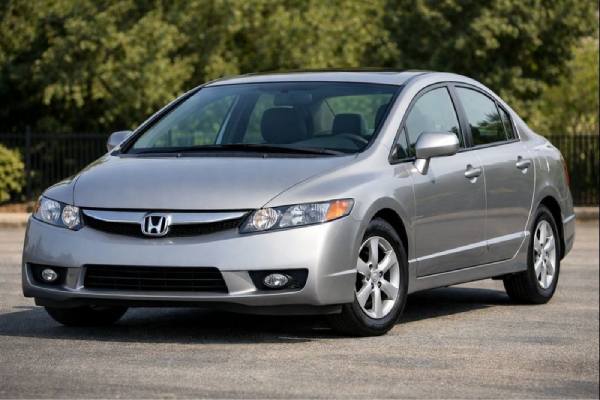
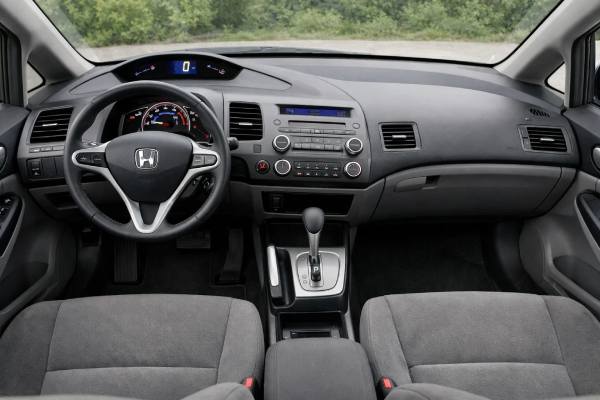
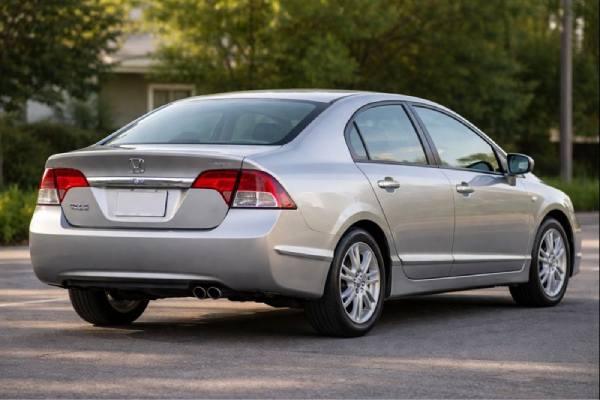
The Honda Civic FA1 with the R18A1 1.8-liter engine is the “quietly competent” choice in the compact class: simple hardware, efficient packaging, and an engine designed to run a long time on basic upkeep. You get a lightweight, chain-driven SOHC i-VTEC (variable valve timing and lift electronic control) four-cylinder that prioritizes low friction and real-world economy over headline power. The payoff is predictable operating costs and an ownership experience that stays consistent as the miles add up.
Where this generation earns its reputation is balance. It’s easy to park, stable on the highway, and generally tolerant of mixed driving. The key is to treat it like a system—fluids, mounts, brakes, and suspension wear all matter more than chasing small performance gains. Buy well, service on time, and it remains one of the more dependable daily drivers of its era.
Owner Snapshot
- Chain-driven R18A1 is low-maintenance and efficient when oil level is kept correct.
- Parts availability is strong, and most repairs stay straightforward for independent shops.
- The chassis is stable and easy to live with, especially on stock-size tires.
- Watch for cooling-system leaks and aging rubber (mounts, bushings) on higher-mileage cars.
- Change engine oil and filter about every 8,000–12,000 km (5,000–7,500 mi) or 6–12 months, depending on driving conditions.
What’s inside
- FA1 Civic sedan snapshot
- R18A1 numbers and capacities
- FA1 trims, options, and safety
- Weak points and service bulletins
- Long-term care and prebuy checks
- Daily driving and pace
- Alternatives worth cross-shopping
FA1 Civic sedan snapshot
The FA1 Civic sedan (often sold as DX/LX/EX-type trims depending on market) sits in the sweet spot of Honda’s mid-2000s engineering: modern enough to feel refined, but not so complex that age turns it into a troubleshooting project. Its R18A1 engine is a 1.8-liter inline-four tuned for efficiency and smoothness. Unlike high-strung performance variants, the R18 focuses on usable midrange and low pumping losses—great for commuting, highway cruising, and the kind of mixed driving that defines most real ownership.
A big part of the FA1 formula is how “ordinary” it is in the best sense. It uses front-wheel drive with a simple open differential. Most examples came with either a 5-speed manual or a 5-speed automatic, both chosen for predictable behavior rather than aggressive gearing. The chassis is tuned for stability and low noise, vibration, and harshness (NVH), with steering effort that stays light at parking speeds but doesn’t feel twitchy on the freeway.
From an owner’s point of view, this Civic tends to reward consistency. It doesn’t ask for exotic fluids or complicated service routines, but it does respond poorly to neglect—especially low oil level, overdue transmission fluid, or ignored cooling-system warnings. As these cars age, the issues you’ll actually feel are usually “support systems” rather than the core engine: tired engine mounts, worn suspension bushings, sticky brake calipers, or A/C components that no longer seal like they did when new.
The best way to think about the FA1 is as a durable platform with predictable wear patterns. If you keep fluids clean, address small leaks early, and refresh rubber and brakes when needed, it stays calm and dependable. If you buy a cheap example with unknown service history, you can still bring it back—but your first year will often be catch-up work rather than simple maintenance.
Advantages that still matter today:
- Efficient, low-stress powertrain that’s comfortable at highway speeds
- Strong aftermarket and parts availability without requiring “project car” habits
- Practical sedan packaging with good visibility and easy city maneuvering
- Generally strong crash-test performance for its class and era, with common airbag coverage on many trims
R18A1 numbers and capacities
Below are the core specifications that most owners and buyers look for. Exact figures can vary by VIN, market, and trim (especially tires, brakes, and curb weight), so treat this as the “baseline envelope” for an FA1 Civic sedan with the R18A1 140 hp engine.
Powertrain and efficiency
| Item | Specification |
|---|---|
| Engine code | R18A1 |
| Layout and valvetrain | Inline-4, SOHC i-VTEC, 4 valves/cyl |
| Bore × stroke | 81.0 × 87.3 mm (3.19 × 3.44 in) |
| Displacement | 1.8 L (1,799 cc) |
| Induction | Naturally aspirated |
| Fuel system | PGM-FI (multi-point injection) |
| Compression ratio | 10.5:1 |
| Max power | 140 hp (104 kW) @ 6,300 rpm |
| Max torque | 174 Nm (128 lb-ft) @ 4,300 rpm |
| Timing drive | Chain |
| Rated efficiency (typical EPA) | 6.7–9.4 L/100 km (25–35 mpg US / 30.0–42.0 mpg UK) |
| Real-world highway @ 120 km/h (75 mph) | Often ~7.0–8.0 L/100 km (29–34 mpg US), temperature and tires matter |
| Aerodynamics (Cd / frontal area) | Not consistently published for all trims/markets |
Transmission and driveline
| Item | Specification |
|---|---|
| Transmission | 5-speed manual or 5-speed automatic (market/trim dependent) |
| Drive type | FWD |
| Differential | Open |
Chassis and dimensions
| Item | Specification |
|---|---|
| Suspension (front / rear) | MacPherson strut / multi-link |
| Steering | Electric power steering, rack-and-pinion |
| Brakes (typical) | Front vented discs; rear drums or rear discs (varies by trim/market) |
| Wheels/tires (common) | 195/65 R15 or 205/55 R16 (trim dependent) |
| Length | ~4,490 mm (176.8 in) |
| Width | ~1,753 mm (69.0 in) |
| Height | ~1,435 mm (56.5 in) |
| Wheelbase | 2,700 mm (106.3 in) |
| Track (front / rear) | ~1,499 / 1,529 mm (59.0 / 60.2 in) |
| Curb weight (typical range) | ~1,240–1,315 kg (2,730–2,900 lb) |
| Fuel tank | 50 L (13.2 US gal / 11.0 UK gal) |
| Cargo volume (sedan trunk) | About 340 L (≈12 ft³), varies with trim and measurement method |
Performance and capability (typical)
| Item | Typical result (stock, healthy car) |
|---|---|
| 0–100 km/h (0–62 mph) | ~9–10 s (transmission and conditions matter) |
| 0–60 mph | ~8.5–9.5 s |
| Top speed | ~190–200 km/h (118–124 mph), depending on gearing |
| Braking (100–0 km/h / 62–0 mph) | Often ~40–43 m / ~130–140 ft with good tires |
| Towing capacity | Not recommended for most markets; follow your owner documentation |
| Payload / roof load | Varies by market and tire rating; verify the door-jamb label |
Fluids, service capacities, and key torque values
| Item | Specification |
|---|---|
| Engine oil | API-grade oil, commonly 5W-20; capacity (oil + filter) 4.0 L (4.2 US qt) |
| Drain plug torque | 39 Nm (29 lb-ft) |
| Coolant | Honda long-life coolant (typically 50/50 mix); capacity varies by service operation |
| Manual transmission fluid | Honda MTF (capacity varies by drain/fill procedure) |
| Automatic transmission fluid | Honda ATF (spec depends on year; verify the correct fluid for your VIN) |
| Wheel nut torque | 108 Nm (80 lb-ft) |
| A/C refrigerant | Typically listed on the under-hood label; confirm before service |
| Spark plugs | Commonly iridium-type; gap varies by plug part number—verify by VIN/emissions label |
Safety and driver assistance (era-appropriate)
| Item | Notes |
|---|---|
| Crash ratings (IIHS) | “Good” ratings in key crashworthiness tests for 2006–2011 4-door Civic sedan; award status varies by criteria and equipment |
| Airbags | Front airbags standard; side torso and side curtain airbags common on many trims (verify in-car tags and VIN build) |
| ABS and stability control | ABS common; stability control availability varies by year/trim/market |
| ADAS | No modern ADAS (no AEB, ACC, lane centering) on this generation |
FA1 trims, options, and safety
Most buyers come to the FA1 Civic sedan expecting “one car,” but equipment can vary more than people realize. Trims were structured differently by region, yet a common pattern holds: lower trims emphasize affordability and tire life, while higher trims add comfort equipment, larger wheels, and sometimes meaningful safety upgrades.
Trims and options that matter mechanically
Common identifiers you can use on a walk-around:
- Wheel size and tire profile: 15-inch wheels with taller sidewalls usually indicate a base or economy-oriented trim; 16-inch wheels often show up on mid or higher trims. The ride difference is noticeable—15-inch setups tend to feel calmer over broken pavement.
- Rear brakes: Some cars use rear drums; others have rear discs depending on trim and market. Don’t assume—look through the wheel or check the rear backing plate. Rear discs can improve pedal consistency under repeated hard stops, but drums can be durable and cheap to maintain.
- Transmission availability: Manual transmissions are more common on lower trims in some markets and rarer overall as model years progress. If you want a manual, verify it early in your search rather than treating it as a “nice surprise.”
- Climate and audio packages: Higher trims may add automatic climate control, upgraded audio, steering-wheel controls, and sometimes a sunroof. These are comfort choices, but they can influence long-term cost if parts fail (controls, actuators, drains).
Year-to-year changes can be subtle. Instead of relying on “model year lore,” focus on what the specific car has: wheel and brake hardware, presence of side curtains, and whether stability control is fitted.
Safety ratings and how to read them
Safety performance is best understood by separating structure from equipment:
- Structure: The 2006–2011 Civic 4-door platform tested well in crashworthiness evaluations for its era. That’s a foundation you benefit from even on a base trim.
- Equipment: Airbags and stability systems vary. Side curtain airbags, for example, are a major upgrade in real-world side impacts and rollovers—but some markets made them standard earlier than others.
If you’re shopping, confirm equipment with simple checks:
- Airbag tags: Look for “SRS” tags on the outboard front seatbacks (side torso airbags) and along the headliner or A-pillar area (side curtains).
- Instrument cluster indicators: Stability control and ABS typically show specific warning icons at key-on.
- VIN build and door-jamb labels: These help you confirm the exact configuration and tire load ratings.
Driver assistance and ADAS reality check
This generation predates today’s driver-assist suites. You will not get factory automatic emergency braking, adaptive cruise control, or lane centering. That means safety depends more on tires, brakes, alignment, lighting condition, and driver attention than on electronics. If you want a meaningful safety upgrade while keeping the car stock, the best returns usually come from:
- High-quality tires in the correct load rating
- Fresh brake fluid and healthy calipers
- Proper headlight restoration/aim and good wiper performance
Weak points and service bulletins
A well-kept R18A1 Civic can run for a long time, but “reliable” does not mean “immune.” The most expensive surprises usually come from cooling-system leaks, deferred fluid services, or a neglected suspension that slowly turns the car from tight to tiring.
Below is a practical way to think about issues by prevalence and cost tier.
Common (low to medium cost)
- Engine mounts and drivetrain vibration
Symptoms: Noticeable vibration at idle in gear, clunks on takeoff, harshness over bumps.
Likely cause: Aging rubber mounts and bushings.
Remedy: Replace the worst mount(s) first; confirm no misfire or idle-control issue is disguising itself as “mount vibration.” - Front suspension wear (bushings, links, struts)
Symptoms: Clunks over sharp bumps, vague steering on-center, uneven tire wear.
Likely cause: Control arm bushings, sway bar links, strut wear, or alignment drift.
Remedy: Inspect systematically, then align with correct camber/toe targets. Fresh tires cannot “fix” a worn front end. - Brake service quality issues
Symptoms: Pulsation, pulling, squeal, or inconsistent pedal feel.
Likely cause: Sticking caliper pins, cheap rotors/pads, old brake fluid, or rear drum adjustment out of spec (if equipped).
Remedy: Service slides properly, use decent friction parts, and refresh brake fluid on schedule.
Occasional (medium to high cost)
- Cooling-system leak concerns (including engine block casting issues on some early cars)
Symptoms: Coolant smell, slow coolant loss, residue near the block, rising temperature in traffic.
Likely cause: Hose/connection seepage, radiator aging, or (on some early production ranges) engine block porosity/cracking concerns addressed by warranty extensions in certain cases.
Remedy: Pressure test cold and hot; do not “top up and hope.” Persistent coolant loss needs a confirmed source before it becomes an overheat event. - A/C performance decline
Symptoms: Weak cooling, compressor cycling, oily residue on condenser lines.
Likely cause: Leaks at seals/condenser, clutch/compressor wear, or incorrect prior service.
Remedy: Leak-test and charge by weight, not by guess. Confirm condenser and compressor condition before replacing parts. - Automatic transmission shift quality with old fluid
Symptoms: Harsh engagement, flare, shudder, or inconsistent shifting.
Likely cause: Fluid shearing and varnish from extended intervals, sometimes combined with driving on mismatched tire sizes.
Remedy: Use the correct Honda ATF for the car’s year and service history; avoid “universal” fluids unless explicitly approved for the spec.
Rare (high cost, but avoidable)
- Overheat damage from ignored leaks
Symptoms: Misfire after overheating, milky oil, persistent temperature spikes.
Likely cause: Continued driving with low coolant or a failing radiator fan/thermostat.
Remedy: Stop driving when the gauge rises abnormally. A small tow bill can prevent an engine replacement.
Recalls, campaigns, and how to verify completion
For this era, recall activity can include airbags and other safety-related hardware. The only trustworthy method is to check the vehicle’s recall status using official VIN tools and confirm completion with dealer records. When you test-drive, ask for:
- Proof of recall completion (printout or service invoice)
- Any documentation related to cooling-system repairs or warranty extensions
- Evidence of regular oil changes and correct fluid type usage
Long-term care and prebuy checks
A good FA1 Civic is usually easy to maintain, but it benefits from a plan. The most common mistake is treating it like a “cheap car” rather than a “simple car.” Cheap cars get deferred maintenance; simple cars reward routine service.
Practical maintenance schedule (distance/time)
Use the car’s maintenance system and owner documentation as your baseline, then adjust for driving conditions. As a practical ownership approach:
- Engine oil and filter: Every 8,000–12,000 km (5,000–7,500 mi) or 6–12 months. Short trips, high heat, or heavy city driving push you toward the shorter end.
- Engine air filter: Inspect every 15,000 km (10,000 mi); replace around 30,000–45,000 km (20,000–30,000 mi) depending on dust.
- Cabin air filter: Replace about every 20,000–30,000 km (12,000–18,000 mi) or yearly if airflow drops.
- Coolant: Follow the owner documentation and coolant type. If the system stays sealed and filled with the correct long-life coolant, intervals are long—but any leak repair is a reason to reset your “coolant confidence” and verify mix quality.
- Spark plugs: Often long-life; many owners plan around ~160,000–175,000 km (100,000–110,000 mi), but confirm the exact plug spec for your VIN.
- Transmission fluid:
- Manual: service on a sensible interval (for many owners, ~50,000–80,000 km / 30,000–50,000 mi) depending on shift feel and use.
- Automatic: do not stretch intervals; prioritize correct fluid spec and consistent service history.
- Brake fluid: Every 2–3 years regardless of mileage (moisture absorption is time-driven).
- Tires: Rotate about every 8,000–10,000 km (5,000–6,000 mi); align yearly or when new tires go on.
- 12 V battery: Test yearly after year 3; many batteries last 4–6 years depending on climate.
Fluid specs, capacities, and decision-grade torque values
For planning and DIY decision-making, these are the numbers owners use most:
- Engine oil capacity (oil + filter): 4.0 L (4.2 US qt)
- Engine oil drain plug torque: 39 Nm (29 lb-ft)
- Wheel nut torque: 108 Nm (80 lb-ft)
- Fuel tank: 50 L (13.2 US gal)
Always verify exact procedures and specs for your VIN, especially for transmission fluid type and A/C service details.
Buyer’s guide: inspection checklist
Bring a flashlight, and try to inspect the car cold.
Cooling and leaks
- Check coolant level and look for residue around hoses, radiator seams, and the engine block area.
- Confirm the radiator fan cycles normally once warm.
Engine behavior
- Cold start should be smooth without persistent ticking or surging.
- Watch for a check-engine light that returns after a “recent reset.”
Transmission and driveline
- Automatic: smooth engagement from Park/Reverse to Drive, no delayed engagement.
- Manual: clean shifts under light throttle; no grinding on quick 2–3 shifts.
Chassis and brakes
- Uneven tire wear suggests alignment or worn bushings.
- Brake pedal should be firm; pulsation suggests rotor issues or caliper problems.
Interior electronics
- Verify A/C performance, blower speeds, and that all windows and locks behave consistently.
Long-term durability outlook
If you start with a decent example and keep up with fluids and wear items, the R18A1 Civic sedan is typically a “many-year” car. The ownership experience stays best when you budget proactively for rubber parts (mounts, bushings) and keep the cooling system absolutely leak-free. That’s the difference between a Civic that feels solid at 250,000 km and one that feels worn out at 160,000 km.
Daily driving and pace
The FA1 Civic’s driving character is shaped more by calibration than raw power. With 140 hp, it’s not fast by modern standards, but it is predictable—and predictability is a real performance advantage in daily traffic.
Ride, handling, and NVH
On stock tire sizes, the car’s ride quality is usually composed. It absorbs highway expansion joints without drama, and it tracks straight if alignment and tires are healthy. As mileage climbs, what people interpret as “Honda road noise” is often a combination of:
- Aged door seals and weatherstripping
- Tire choice (aggressive tread patterns get loud)
- Worn struts and rear bushings that allow more vibration into the body
Handling is neutral and confidence-building rather than sporty. The chassis responds well to a clean set of dampers and quality tires, but it doesn’t need oversized wheels to feel stable. In fact, many owners find that staying with 15-inch or conservative 16-inch setups preserves the car’s comfort and reduces suspension stress.
Powertrain character and transmission behavior
The R18A1 is smooth and willing, but it does its best work when you keep it in the midrange. It won’t deliver the top-end rush of performance-oriented Honda engines; instead, it offers a steady pull and a refined feel for an economy-focused four-cylinder.
- Manual: Typically the more engaging choice. The car feels lighter on its feet, and passing performance improves because you can choose the gear.
- Automatic: Prioritizes smoothness. With clean, correct fluid, it should shift consistently and remain easy to live with.
A practical tip: if an automatic car feels “lazy,” don’t assume it’s just the engine. Check for overdue fluid, dragging brakes, underinflated tires, and old oxygen sensors that can slowly reduce efficiency and response without obvious fault codes.
Real-world efficiency
EPA ratings show that these Civics can be genuinely efficient, especially on steady highway runs. In real use:
- City driving: Expect higher consumption in short-trip, stop-and-go patterns—especially in winter.
- Highway (100–120 km/h / 60–75 mph): The car can stay impressively efficient if tires are correctly inflated and alignment is good.
- Mixed driving: Typically lands in the “economical but not hybrid-like” range; driving style makes a bigger difference than many owners expect.
Cold weather has an outsized effect because short trips prevent full warm-up, and the cabin heater load increases. If you do mostly short runs, consider shorter oil intervals and be more attentive to battery health.
Key performance metrics that affect the verdict
What matters most is not a single 0–60 number, but consistency:
- Passing performance is acceptable when downshifted (manual) or when the automatic responds cleanly.
- Braking confidence depends heavily on tire condition and whether the brake hardware is maintained properly.
- High-speed stability is one of the FA1’s strengths; it feels settled when suspension and alignment are in good order.
Alternatives worth cross-shopping
Shopping an FA1 Civic is easier when you define what you want: lowest operating cost, best driving feel, or maximum safety and refinement for the money. Here’s how the Civic typically stacks up against key compact rivals of the same era.
Toyota Corolla (mid/late-2000s)
Why choose it: Often the simplest ownership profile with excellent parts availability and a comfort-first tuning approach.
Why choose the Civic instead: The Civic generally feels more planted at highway speed and more composed in steering response. If you value a “connected” feel without needing a sport trim, the Civic tends to satisfy.
Mazda3 (same era)
Why choose it: More engaging steering and cornering feel; often a “driver’s compact” pick.
Why choose the Civic instead: Lower appetite for suspension wear costs and, in many cases, a calmer ride over rough pavement. If you want fewer “feel everything” moments on broken roads, the Civic is usually the easier long-term companion.
Volkswagen Jetta (2.5-era and similar)
Why choose it: Solid highway manners and a heavier, more substantial feel.
Why choose the Civic instead: Typically simpler maintenance, fewer specialized parts needs, and less sensitivity to deferred service. If you’re prioritizing long-term predictability over cabin heft, the Civic usually wins.
Hyundai Elantra and similar Korean rivals
Why choose them: Value-oriented feature sets and sometimes lower purchase price.
Why choose the Civic instead: Broad repair ecosystem, deep parts supply, and a long-established maintenance playbook. The Civic’s advantage is often not “newer features,” but how straightforward it is to keep it running well at higher mileage.
The practical conclusion
The FA1 Civic sedan is often the best choice for buyers who want:
- A proven compact with strong crash-test performance for its era
- Manageable long-term repair complexity
- Good fuel economy without hybrid-specific concerns
- A car that feels stable and “normal” even as it ages—if you keep up with basics
If you want modern ADAS features or significantly quicker acceleration, you’ll need a newer generation. But if your goal is a durable, efficient daily driver you can maintain with a clear plan, the R18A1 Civic remains one of the safer bets in the used market.
References
- 2006 Civic Sedan Online Reference Owner’s Manual 2006 (Owner’s Manual)
- Honda Announces All New 2006 Civic for the US 2005 (Manufacturer Technical Release)
- Gas Mileage of 2011 Honda Civic 2011 (Official Fuel Economy Data)
- 2011 Honda Civic 2011 (Safety Rating)
- Vehicle Detail Search – 2011 HONDA CIVIC | NHTSA 2011 (Recall Database)
Disclaimer
This article is for informational purposes only and is not a substitute for professional diagnosis, inspection, or repair. Specifications, torque values, service intervals, and procedures vary by VIN, market, and equipment. Always verify details using your official owner’s manual and service documentation for the exact vehicle you are working on.
If this guide helped, please consider sharing it on Facebook, X (Twitter), or your favorite forum to support our work.