
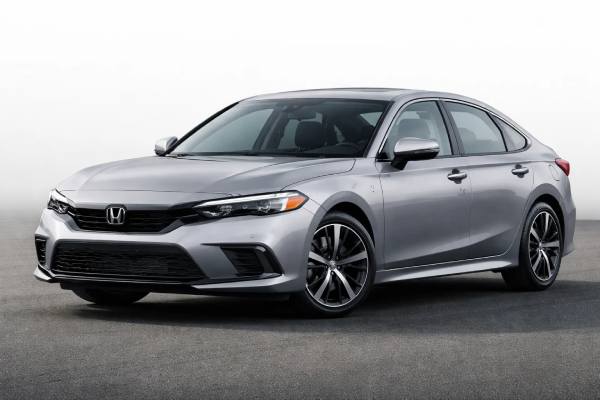
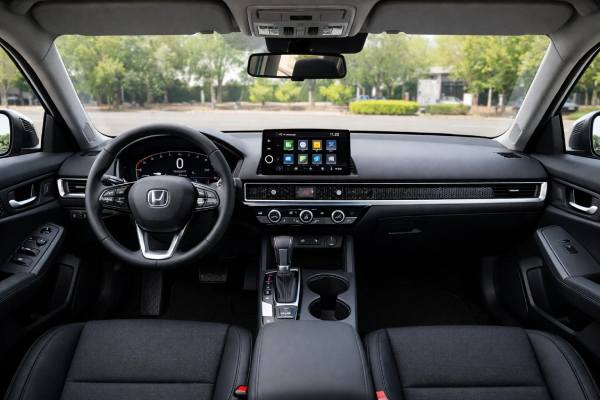
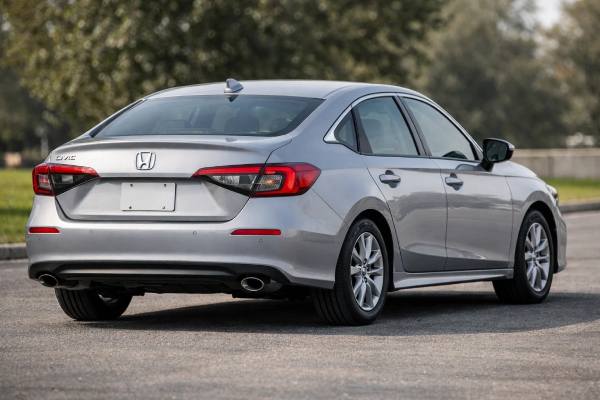
The 11th-generation Honda Civic (FE1) with the 1.5-liter turbo four is the “do-everything” choice in the lineup: strong mid-range torque for daily traffic, a calm chassis at highway speed, and a cabin that feels more grown-up than most compact cars. This powertrain’s appeal is not headline horsepower—it’s usable pull from low rpm paired with a smooth CVT and a rigid body that makes the suspension work efficiently. For owners, the big wins are predictable operating costs, high parts availability, and a safety suite that is typically standard in many markets.
At the same time, modern turbo direct-injection engines reward correct oil habits and warm-up discipline. If you treat it like a short-trip appliance, you can invite oil dilution and deposit buildup. Treat it like a machine, and it tends to age well.
What to Know
- Strong real-world acceleration from 1,700–4,500 rpm makes passing and merging easy.
- Mature ride and straight-line stability for a compact, with good steering precision when healthy.
- Typically efficient on the highway for a turbo gas car, especially at steady speeds.
- Watch for “sticky steering” symptoms and confirm recall completion before buying.
- Change engine oil every 8,000–10,000 km (5,000–6,000 mi) or 6 months if you do short trips.
Quick navigation
- FE1 L15B7 ownership picture
- Specs and dimensions FE1 1.5T
- Trims, options and driver assist
- Reliability issues, recalls and TSBs
- Maintenance plan and buying advice
- Driving feel and real-world economy
- Rivals and when to pick
FE1 L15B7 ownership picture
Think of the FE1 Civic 1.5 turbo as a “balanced tool” rather than a personality car. Its core strength is how it blends everyday refinement with enough torque to feel effortless. The turbo four delivers most of its useful pull in the mid-range, so you do not need to rev it hard to make progress. Pair that with a CVT tuned for smoothness and you get a car that feels quick in normal traffic while staying quiet and easy on long trips.
Underneath, the FE1’s structure is stiffer than earlier Civics, which matters more than people realize. A rigid body lets the suspension do its job without fighting flex, so you get better control over bumps and more consistent tire contact. The result is a Civic that tracks straight on the highway and feels stable in crosswinds for its class. Road noise depends heavily on wheel and tire choice: larger wheels with low-profile tires sharpen response but add impact harshness and more tire roar on rough surfaces.
Where ownership differs from an older naturally aspirated Civic is the engine’s “modern habits.” Turbo direct injection (DI) improves response and efficiency, but it also increases the importance of:
- Oil quality and change frequency (especially if you drive short trips in cold weather).
- Clean air flow (filters matter because the turbo compresses everything it ingests).
- Fuel quality (use the recommended octane; avoid consistently poor fuel from unknown sources).
Also remember “2021–present” is market-dependent. The FE1 platform continues, but some regions shift engines and trims over time (including the addition of hybrids). If you are shopping used, verify the exact engine family by the emissions label under the hood and by VIN build data—not just by the badge on the trunk.
Who is this powertrain for?
- Best fit: commuters, mixed city/highway drivers, families needing a compact with adult-friendly ergonomics, and owners who want strong resale and straightforward maintenance.
- Less ideal: drivers who do only 2–5 km trips year-round without warm-ups, or anyone who wants a traditional stepped automatic feel.
If you follow the right service rhythm and confirm recall work is done, the FE1 1.5T is one of the lowest-stress ways to get “near-premium” daily driving in the compact class.
Specs and dimensions FE1 1.5T
Below are the key technical numbers for the FE1 Civic with the 1.5-liter turbo engine. Figures can vary slightly by market, emissions certification, and trim (sedan vs hatchback, wheel size, and curb weight). Use these as decision-grade references, then confirm against your VIN-specific documentation.
Powertrain and efficiency
| Item | Spec (typical FE1 1.5T) |
|---|---|
| Code | L15B7 (market naming may vary) |
| Engine layout and cylinders | Inline-4, DOHC, 4 valves/cyl |
| Bore × stroke | 73.0 × 89.5 mm (2.87 × 3.52 in) |
| Displacement | 1.5 L (1,498 cc) |
| Induction | Turbocharged |
| Fuel system | Direct injection |
| Compression ratio | ~10.3:1 |
| Max power | 180 hp (134 kW) @ 6,000 rpm |
| Max torque | 240 Nm (177 lb-ft) @ 1,700–4,500 rpm |
| Timing drive | Chain (typical for this engine family) |
| Rated efficiency (example figures) | ~6.9–7.1 L/100 km combined (varies by trim/market) |
| Real-world highway @ 120 km/h (75 mph) | Often ~6.5–7.5 L/100 km if conditions are mild and tires are properly inflated |
Transmission and driveline
| Item | Spec |
|---|---|
| Transmission | CVT (market-specific tuning; some trims add paddle simulation) |
| Drive type | FWD |
| Differential | Open diff; traction control and brake-based vectoring assist |
Chassis and dimensions (sedan example)
| Item | Spec (sedan example) |
|---|---|
| Suspension (front/rear) | MacPherson strut / multi-link |
| Steering | Electric power steering; ratio ~11.5:1 |
| Ground clearance | ~134 mm (5.3 in) |
| Length | 4,673 mm (184.0 in) incl. plate bracket; 4,655 mm (183.3 in) without |
| Width | 1,900 mm (74.8 in) mirrors folded; ~2,081 mm (81.9 in) incl. mirrors |
| Height | ~1,415 mm (55.7 in) |
| Wheelbase | 2,735 mm (107.7 in) |
| Turning circle (curb-to-curb) | ~11.0–11.6 m (36.1–38.1 ft) |
| Fuel economy example (L/100 km) | ~7.6–7.8 city / ~6.0–6.3 highway / ~6.9–7.1 combined |
Performance and capability (typical, test-dependent)
| Metric | What to expect |
|---|---|
| 0–100 km/h (0–62 mph) | ~7.8–8.6 s (trim/tires/weather matter) |
| Passing 80–120 km/h | Strong mid-range; usually feels quicker than the 0–100 number suggests |
| Braking 100–0 km/h | Often ~36–40 m on good tires and dry pavement |
| Towing | Generally not rated or not recommended in many markets (check your handbook) |
Fluids and service capacities (verify by VIN)
| Fluid | Typical spec guidance |
|---|---|
| Engine oil | 0W-20 full synthetic; capacity varies by filter and market |
| Coolant | Honda-spec long-life coolant; premix ratios vary |
| CVT fluid | Honda-spec CVT fluid (market naming varies); do not substitute “universal” fluids |
| A/C refrigerant | Varies by model year and market; check under-hood label |
Electrical and ignition (typical)
| Item | Spec guidance |
|---|---|
| 12V battery | Size and CCA vary by trim and climate package |
| Spark plugs | Iridium long-life type; gap and part number per service manual |
Safety and driver assistance (high-level)
| Item | Notes |
|---|---|
| Euro NCAP | 5-star class result for the Civic range; strong adult/child and safety assist scores |
| IIHS | Strong crashworthiness in many tests; trim-specific headlight performance can vary |
| ADAS suite | Honda Sensing features commonly include AEB, ACC, lane support, and traffic sign recognition (market/trim dependent) |
Trims, options and driver assist
Trim structure varies by region, but the FE1 Civic 1.5T is usually positioned as the “step-up” engine over the base naturally aspirated option. In practice, that means you often see it in mid and upper trims with more comfort and tech equipment. When you shop, focus on mechanical and functional differences first—wheels/tires, brakes, lighting, and driver-assist sensor coverage—because these affect ride, road noise, and replacement cost more than interior color or badging.
Typical trims and how to spot them quickly
- Mid trims (often EX-type naming): usually the most value-dense choice. You often get the 1.5T, upgraded infotainment, heated seats in many markets, and broader Honda Sensing coverage. Wheels are often 17–18 inches.
- Sport-styled trims: may add larger wheels, cosmetic body pieces, and sometimes different seats. The ride can become firmer and tire cost rises.
- Top trims (Touring-type naming): add premium audio, leather or upgraded upholstery, larger screens, navigation in some markets, and more advanced lighting. Larger wheels are common, which can increase noise and reduce pothole tolerance.
Options that change ownership costs
- Wheel and tire packages: moving from 17 to 18 inches usually increases tire cost and can reduce winter comfort. If you live with bad roads, smaller wheels are often the smarter long-term play.
- LED headlight grade: some trims offer better beam performance and visibility; also check replacement cost (complete LED units can be expensive).
- Blind spot monitoring (BSM): availability varies by year and market. If you want it, confirm by physically checking the mirror icon and the rear bumper sensor configuration—not just the seller’s description.
- Sunroof: nice to have, but inspect drain function and listen for wind noise.
Safety ratings and what they mean in daily use
- Euro NCAP: the Civic range performs strongly for adult and child protection and also scores well for safety assist features. This matters if you do a lot of highway or mixed driving where lane and cruise support reduce fatigue.
- IIHS: the Civic is a consistent performer in crashworthiness. However, IIHS results can be sensitive to headlight grade and trim. If nighttime visibility matters to you, shop trims with the higher headlight rating and aim the lights properly after suspension work.
ADAS calibration implications after service
Modern Civics rely on radar/camera alignment. After a windshield replacement, front-end collision repair, or suspension changes that alter ride height, many systems may require recalibration:
- Confirm the shop has the right targets and software access.
- Test AEB/ACC and lane support on a safe road after repairs.
- Make sure warning lights are cleared properly; “no light” is not the same as “calibrated correctly.”
If safety tech is a priority, the best used-buy approach is to pick a trim where the desired features are standard, not optional—fewer surprises, fewer missing parts.
Reliability issues, recalls and TSBs
The FE1 Civic 1.5T is generally dependable, but it has a few “modern car” themes: software matters, maintenance habits matter, and certain known campaigns should be verified before you trust the car.
Common, occasional, and rare issues (with cost tiers)
Common (low to medium cost if addressed early)
- Oil dilution risk on short trips (cold climate):
- Symptoms: fuel smell on dipstick, rising oil level, rough cold idle.
- Likely cause: repeated cold starts and short runs prevent full warm-up; DI and turbo enrichment add fuel to the oil.
- Remedy: shorten oil interval (time-based), use correct oil spec, and include longer drives to fully heat the oil.
- Direct-injection intake deposits (higher mileage):
- Symptoms: slight loss of smoothness, occasional misfire, reduced efficiency.
- Likely cause: DI does not wash intake valves with fuel.
- Remedy: quality fuel, correct PCV function, and periodic intake valve cleaning if symptoms appear.
Occasional (medium cost)
- CVT fluid degradation (heat and stop-and-go):
- Symptoms: shudder on takeoff, “rubber band” flare worse than normal, higher rpm at steady speed.
- Likely cause: old CVT fluid, thermal stress, poor service history.
- Remedy: drain/fill with the correct Honda-spec CVT fluid; do not power-flush unless the service manual explicitly allows it.
- Battery and charging system sensitivity:
- Symptoms: intermittent warning lights, start/stop issues, infotainment resets.
- Likely cause: weak 12V battery (especially if the car sits).
- Remedy: load test the battery; clean grounds; confirm correct battery spec.
Rare (high cost)
- Turbo hardware failures: uncommon on stock cars with good oil care, but possible if oil changes are neglected or if the engine is frequently shut down immediately after hard driving.
- Symptoms: smoke, power loss, boost leaks, unusual whistle.
- Remedy: proper diagnosis (boost leak test), confirm correct oil grade, and repair the specific component.
Recalls, TSBs, and service actions you should know
- Steering gearbox “sticky steering” recall (major):
Some Civics are included in a safety recall where steering effort can increase and the wheel can feel momentarily sticky. The issue is linked to steering gearbox worm wheel/worm gear friction and grease film reduction, which can raise steering effort. - What to do: run the VIN through the official recall database in your country and request dealer proof of completion.
- What to test on a drive: low-speed turns, lane-center corrections on the highway, and gentle left-right transitions; any notchiness or sudden “hang” deserves attention.
- Service-part campaigns (less obvious):
Some advisories apply to replacement parts installed during repair (not necessarily factory-built cars). If the car has had a steering rack replaced, confirm the part number and campaign status.
Software and calibration notes
For modern Civics, the “repair” is sometimes a reflash rather than a part swap. When shopping used, ask for:
- Dealer service history printout (shows software updates and campaign completion).
- Documentation for windshield replacement and ADAS recalibration.
- Evidence of correct CVT fluid servicing.
Pre-purchase checks to request (fast but meaningful)
- Service records showing oil intervals and correct oil spec.
- Proof of steering recall completion where applicable.
- A scan for stored or pending diagnostic codes (including “history” codes).
- A cold start test (idle quality and smoke).
- A CVT behavior check (smooth takeoff, no shudder, no odd surging).
Most FE1 issues are manageable if you catch them early and confirm recall work. The expensive outcomes usually come from ignoring symptoms or skipping maintenance.
Maintenance plan and buying advice
A Civic 1.5T can be very low drama, but only if you maintain it like a turbo DI engine—not like an old naturally aspirated commuter. The schedule below is intentionally practical and biased toward longevity. Always reconcile it with your market’s official maintenance minder and service manual.
Practical maintenance schedule (distance/time)
Every 8,000–10,000 km (5,000–6,000 mi) or 6 months
- Engine oil and filter (0W-20 full synthetic recommended in many markets).
- Tire pressure check; inspect for uneven wear.
- Visual check: coolant level, brake fluid level, oil leaks, and turbo plumbing clamps.
Every 16,000 km (10,000 mi) or 12 months
- Rotate tires; measure brake pad thickness.
- Replace cabin air filter (sooner in dusty cities).
- Inspect battery health (load test is better than a voltage check).
Every 24,000–32,000 km (15,000–20,000 mi)
- Replace engine air filter (more often if you drive in dust or snow-salt regions).
- Inspect serpentine/aux belt and hoses (cracking, glazing, seepage).
Every 40,000–60,000 km (25,000–37,000 mi)
- CVT fluid drain and fill (shorter interval if you do heavy city driving, mountains, or hot climates).
- Brake fluid replacement (2–3 years is a sensible interval in many climates).
Every 80,000–100,000 km (50,000–62,000 mi)
- Spark plugs (iridium type; replace sooner if tuned or frequently driven hard).
- Coolant service per official interval (often long, but verify the exact spec and timing).
Ongoing driving habits that protect the drivetrain
- Avoid repeated cold micro-trips; combine errands when possible.
- Let the engine reach full operating temperature regularly.
- After hard driving, give the turbo a short cool-down drive before shutoff.
Fluid specifications and decision-grade torque notes (verify by VIN)
Because capacities and torque values can vary by model year and sub-trim, use this as a buying checklist:
- Confirm the oil spec and filter type used in service invoices (wrong oil is a red flag).
- Confirm CVT fluid type is Honda-approved and correctly documented.
- Ask whether wheels have been removed and reinstalled with a torque wrench (uneven wheel torque can cause rotor distortion symptoms).
Buyer’s guide: what to inspect and what to budget
Inspection checklist (high value)
- Steering feel: no notchiness, no sticky return, no sudden effort changes.
- CVT behavior: smooth takeoff, stable rpm at cruise, no shudder after a long test drive.
- Cooling system: no dried coolant residue, fans cycle normally, heater works.
- Underbody and seams: check for corrosion at pinch welds, rear subframe areas, and suspension mounting points if you live in salted regions.
- Electronics: check every camera and sensor (rear camera, radar cruise, lane assist). Small sensor faults can be time-consuming.
Common reconditioning items
- Tires (especially larger wheel trims).
- Brake pads/rotors if the car lived in stop-and-go.
- A 12V battery if it is more than 3–5 years old or shows weak load results.
Recommended “sweet spot” strategy
- Choose a trim that includes the safety features you want as standard.
- Prefer cars with documented oil service and at least one CVT fluid service if mileage is above ~50,000 km.
- If you plan to keep the car long-term, prioritize smaller wheels and conservative tire choices for comfort and durability.
Long-term outlook: the FE1 1.5T rewards owners who shorten oil intervals in harsh use and who keep the CVT fluid fresh. Do that, and it is usually a stable, predictable compact to own.
Driving feel and real-world economy
The FE1 Civic 1.5T’s personality is “quiet confidence.” It is not the sharpest sports sedan in the class, but it is one of the easiest to drive quickly without trying. The steering is light to moderate in effort with clear on-center behavior, and the chassis feels planted on the highway—something you notice immediately on long trips.
Ride, handling, and NVH
- Ride: composed over small bumps and highway expansion joints, with firmness increasing as wheel size increases. The multi-link rear suspension helps the car settle quickly after impacts rather than bouncing.
- Handling balance: neutral and predictable. If you push hard, the car tends toward safe understeer, but it rotates cleanly with proper tire pressure and good tires.
- NVH: engine noise is subdued at steady speeds; most noise comes from tires and road texture. Switching to quieter touring tires can make the car feel a class higher.
Powertrain character (what it feels like day to day)
The 1.5 turbo’s torque band is the reason it feels strong. Peak torque arrives low, so the car responds well at urban speeds and on inclines without needing high rpm. The CVT keeps the engine in its efficient zone when cruising and in its torque zone when accelerating. If you mash the throttle, you will hear the CVT’s “hold rpm” behavior. It is normal, but some drivers prefer using moderate throttle for a more natural sound and feel.
Drive modes (when fitted) typically change:
- Throttle mapping and CVT response.
- Steering weight.
- Sometimes the instrument cluster layout.
Real-world efficiency and highway consumption
For an FE1 Civic 1.5T with CVT, official EPA results for the turbo sedan configuration show strong highway numbers (low fuel use at steady speed). In the real world, your biggest variables are speed, temperature, tire choice, and trip length:
- City: expect higher consumption if you do short trips and heavy traffic.
- Highway at 100–120 km/h (60–75 mph): the car often performs efficiently if conditions are mild and you hold a steady pace.
- Cold weather: consumption rises meaningfully; warm-up time and winter fuel blends matter.
Practical tips to keep economy consistent:
- Keep tires at the door-jamb recommended pressures (check monthly).
- Use the correct oil and do not extend intervals if you do short trips.
- Replace clogged air filters on time (turbo engines feel it earlier).
- Keep alignment in spec—toe settings can silently raise fuel use and tire wear.
Key performance metrics that matter
- Passing power: the mid-range torque makes merging and 2-lane passing feel confident, even with a full cabin.
- Braking feel: generally easy to modulate. If you feel vibration, check wheel torque and rotor condition before assuming a “big brake problem.”
- Traction: as a FWD car, tire quality matters more than marketing. Good all-seasons or proper winter tires transform wet and snow behavior.
If you want a compact that is comfortable at 120 km/h, easy in traffic, and still willing on a back road, the FE1 1.5T hits a rare balance.
Rivals and when to pick
The Civic 1.5T competes in the heart of the compact class, where small differences in tuning and ownership costs matter more than brochure numbers. Here is how it typically stacks up against common rivals, and when the Civic is the smart choice.
Versus Toyota Corolla (gas or hybrid)
- Why choose the Civic: more relaxed highway manners, a roomier feel up front, and stronger mid-range punch in turbo form.
- Why choose the Corolla: often simpler powertrains (depending on market) and strong hybrid efficiency if you drive mostly city.
- Decision tip: if you do long highway trips and want a “bigger car” feel, the Civic usually wins.
Versus Mazda3
- Why choose the Civic: more rear-seat friendliness, a calmer ride on rough roads, and typically lower long-term parts friction in many regions.
- Why choose the Mazda3: richer steering feel and interior design flair; some prefer its non-CVT drivability when equipped with a conventional automatic (market-dependent).
- Decision tip: if you value cabin refinement and balanced comfort, Civic; if you prioritize tactile steering feel and style, Mazda3.
Versus Hyundai Elantra and Kia Forte
- Why choose the Civic: long track record for resale and broad service familiarity; very cohesive chassis tuning.
- Why choose the Korean rivals: value features for the money and often generous warranty structures (vary by market).
- Decision tip: if you plan to keep the car a long time and want predictable ownership, Civic; if you want maximum features per dollar, cross-shop carefully.
Versus Volkswagen Jetta
- Why choose the Civic: typically lower risk tolerance needed for long-term ownership, especially in regions where parts and labor for European brands cost more.
- Why choose the Jetta: strong highway comfort and turbo torque character; some trims deliver excellent road-trip ergonomics.
- Decision tip: compare local service costs and parts pricing—this is where the Civic often pulls ahead.
The “best reasons” to pick the FE1 1.5T specifically
Choose this configuration if you want:
- The most usable torque in the Civic range without stepping into performance models.
- Strong highway efficiency for a turbo gas car and a calm chassis.
- A mainstream compact that still feels engineered, not merely assembled.
Skip it (or shop very carefully) if:
- Your usage is almost entirely short trips in cold weather and you will not adjust oil intervals.
- You find CVT behavior unpleasant and will never adapt to it.
- The car shows any sign of steering stickiness and the recall status is unclear.
A well-maintained FE1 1.5T is one of the most complete “one-car solutions” in the segment—quick enough, comfortable enough, and typically easy to live with, provided you respect its modern maintenance needs.
References
- 025290_67_22MY_Civic_Sedan_specs_header_EN_V4.indd 2022 (Specifications)
- Fuel Economy of 2022 Honda Civic 4Dr 2022 (Official Fuel Economy Data)
- 2022 Honda Civic 2022 (Safety Rating)
- Official Honda Civic 2022 safety rating 2022 (Safety Rating)
- Part 573 Safety Recall Report 24V-744 2024 (Recall Database)
Disclaimer
This article is for informational purposes only and is not a substitute for professional diagnosis, inspection, or repair. Specifications, torque values, fluid types, service intervals, and procedures can vary by VIN, market, model year, and equipment. Always verify details using your vehicle’s official owner’s manual and service documentation, and consult a qualified technician when needed.
If you found this guide useful, please consider sharing it on Facebook, X (Twitter), or your favorite forum to help others and support our work.