
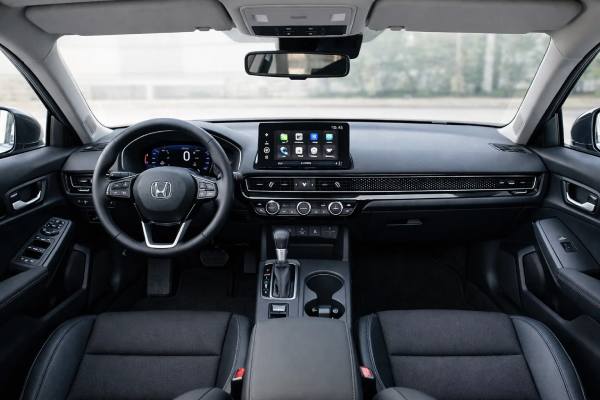
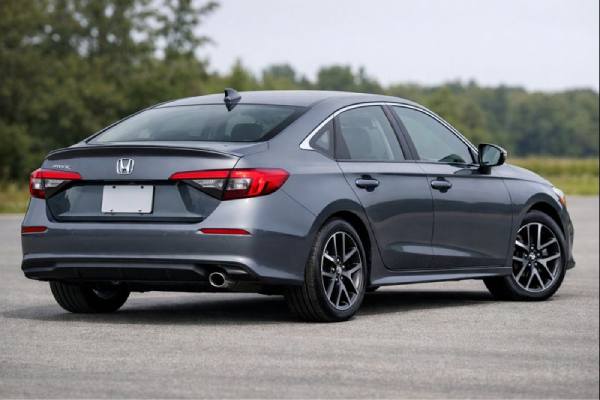
The 11th-generation Honda Civic in FE2 form with the K20C2 2.0-liter engine is the “simple” Civic done right: naturally aspirated, multi-point fuel injected, and tuned for smooth daily use rather than headline power. With 158 hp, it won’t chase hot hatches—but it rewards owners with predictable throttle response, fewer turbo-related variables, and a chassis that feels more mature than past Civics. The platform’s longer wheelbase and multi-link rear suspension deliver stable highway manners, while the CVT calibration is generally relaxed when you drive it like a commuter. The appeal is ownership confidence: strong parts availability, straightforward service needs, and safety tech that is competitive for the class. If you want an efficient, modern compact car without paying the complexity tax, this is the FE2’s strongest argument.
What to Know
- Smooth, low-stress powertrain that favors consistency over speed, especially in city driving.
- Stable, composed chassis with a multi-link rear that rides better than many compact rivals.
- Strong safety performance history, with modern crash avoidance features widely available.
- CVT health depends on fluid changes; don’t treat it as “lifetime” oil.
- Plan oil changes about every 12,000 km (7,500 mi) or 12 months (earlier for short-trip use).
Navigate this guide
- FE2 K20C2 ownership picture
- K20C2 specs and measurements
- Trims, options, and driver aids
- Reliability patterns and known faults
- Maintenance plan and buying advice
- Driving feel and real efficiency
- How it stacks up against rivals
FE2 K20C2 ownership picture
Think of the FE2 Civic 2.0 as the “low drama” pick in the 11th-gen lineup. The K20C2 is a naturally aspirated inline-four that relies on displacement, efficient breathing, and conservative calibration rather than boost. That matters for long-term ownership because heat and pressure are the enemies of rubber seals, plastic housings, and marginal cooling capacity. In plain terms: fewer turbo parts, fewer charge-air plumbing connections, and fewer ways for performance mods to compromise drivability.
That does not mean the FE2 is old-school. The engine uses modern controls, precise ignition and fueling, and a broad torque curve for daily traffic. The CVT pairing is tuned to keep revs low in steady cruising, which is where many owners notice the biggest benefit: quiet, stable highway travel with very little “busy” shifting. If you prefer a more traditional feel, you can still drive it with a light foot and let the transmission behave like a single-speed—this is one of the easiest ways to keep it smooth over time.
Chassis character is a second reason FE2 owners tend to stay loyal. The 11th-gen Civic is less edgy and more composed than earlier generations. The longer wheelbase helps it track straight, and the multi-link rear suspension gives it better control over bumps than compact cars that still use simpler rear layouts. The steering is typically light at parking speeds and more settled once you’re moving, and the braking system is easy to modulate in normal driving.
Where the FE2 asks you to be thoughtful is usage pattern. Short trips, cold starts, and heavy stop-and-go driving put more contamination into engine oil and more heat cycles into a battery and charging system. If you treat the car as an appliance, it will usually behave like one—but it still rewards basic care: timely oil changes, clean air filtration, and CVT fluid service. Do those, and this Civic tends to deliver what most owners want: low surprises, predictable costs, and a refined everyday feel.
K20C2 specs and measurements
Below are practical, commonly referenced specifications for the FE2 Civic with the K20C2 2.0-liter and CVT. Exact numbers can vary slightly by market, body style (sedan vs hatch), wheel/tire package, and model year updates—so use this as a decision and comparison baseline, then confirm by VIN when ordering parts.
Powertrain and efficiency
| Item | Specification |
|---|---|
| Engine code | K20C2 |
| Layout | Inline-4, DOHC, i-VTEC |
| Valves | 16 valves (4 per cylinder) |
| Displacement | 2.0 L (1,996 cc) |
| Bore × stroke | 86.0 × 85.9 mm (3.39 × 3.38 in) |
| Induction | Naturally aspirated |
| Fuel system | Multi-point injection (MPI) |
| Compression ratio | 10.8:1 |
| Max power | 158 hp (118 kW) @ 6,500 rpm |
| Max torque | 187 Nm (138 lb-ft) @ 4,200 rpm |
| Timing drive | Chain |
| Rated efficiency (typical, CVT) | about 6.7 L/100 km (35 mpg US / 42 mpg UK) combined |
| Real-world highway @ 120 km/h (75 mph) | commonly ~6.8–7.6 L/100 km (31–35 mpg US) depending on wind, tires, and temperature |
Transmission and driveline
| Item | Specification |
|---|---|
| Transmission | CVT (varies by trim/market calibration) |
| Drive type | FWD |
| Differential | Open (traction/brake-based assist via stability system) |
Chassis, dimensions, and weights (typical sedan baseline)
| Item | Specification |
|---|---|
| Front suspension | MacPherson strut |
| Rear suspension | Multi-link |
| Steering | Electric power steering (rack-and-pinion), variable ratio on many trims |
| Brakes (front/rear) | Ventilated disc / solid disc, ~282 mm / ~259 mm (11.1 in / 10.2 in) |
| Common tires | 215/55R16 or 235/40R18 (trim dependent) |
| Length | ~4,674 mm (184.0 in) |
| Width | ~1,801 mm (70.9 in) |
| Height | ~1,415 mm (55.7 in) |
| Wheelbase | ~2,737 mm (107.7 in) |
| Turning circle (kerb-to-kerb) | ~11.0–11.6 m (36.1–38.1 ft), wheel dependent |
| Kerb weight | roughly ~1,305–1,335 kg (2,877–2,935 lb), trim dependent |
| Fuel tank | about 47 L (12.4 US gal / 10.3 UK gal) |
| Cargo volume (sedan) | ~419 L (14.8 ft³), method varies by market |
Fluids, service capacities, and key torque specs (decision-use level)
| Item | Spec and typical note |
|---|---|
| Engine oil | 0W-20 (API SP / ILSAC GF-6 class oils commonly specified); ~3.7 L (3.9 US qt) with filter (verify by VIN) |
| Coolant | Honda Type 2 or equivalent long-life coolant; capacity varies by market—confirm before refill |
| CVT fluid | Honda HCF-2 or equivalent spec for the unit; drain-and-fill quantity varies—confirm before service |
| A/C refrigerant | Varies by year/market (R-1234yf common on newer models); confirm under-hood label |
| Lug nuts | ~108 Nm (80 lb-ft) typical Honda passenger-car spec |
| Oil drain bolt | commonly ~39 Nm (29 lb-ft) on many Hondas (verify for your pan/bolt style) |
Safety and driver assistance snapshot (high-level)
| Area | Typical availability |
|---|---|
| Core active safety | ABS, stability and traction control, rear camera |
| ADAS | AEB, ACC, lane support, and road-departure features widely available; blind-spot monitoring often optional/trim-based |
Trims, options, and driver aids
Because “FE2” and “K20C2” describe a powertrain configuration rather than a single global trim, your real-world equipment depends heavily on region and model year. In many markets, the naturally aspirated 2.0-liter sits in the value-focused trims—often the ones that sell in high volume because they hit a price point without feeling stripped.
Trims and equipment patterns you’ll usually see
Common K20C2 trims typically emphasize daily comfort and low running costs:
- Wheel and tire packages: 16-inch wheels and taller sidewalls on base trims ride best and are cheapest to replace. Sportier trims can use 18-inch wheels with wider tires that improve turn-in and lateral grip, but raise tire cost and make pothole impacts harsher.
- Cabin and tech: The base infotainment and audio setups are usually simpler and, ironically, can be easier to live with long-term. Higher trims bring larger screens, more speakers, and sometimes wireless phone integration—nice upgrades, but also more components that can glitch or require updates.
- Lighting: Headlight performance can vary by trim. This matters because many safety-rating organizations evaluate headlights, and some awards apply only when a vehicle has the better headlight package.
How to identify what you’re looking at quickly
When shopping used, you can often spot K20C2 cars without a scan tool:
- The 2.0-liter trims commonly avoid “Turbo” badging and usually have a more understated exhaust look.
- Many markets pair the 2.0 with simpler wheel designs and smaller tire widths on base models.
- The easiest verification is still the VIN/build sheet or an under-hood emissions label showing displacement and engine family.
Safety ratings: what matters in practice
Safety results are strongest when you separate two topics: crashworthiness (structure, restraints) and crash avoidance (AEB, headlights, lane support). The 11th-gen Civic platform has performed very well in U.S. testing, and it has also posted strong results in European testing protocols. The key ownership takeaway is not just “it scored well,” but why that helps you:
- A strong structure tends to remain protective over time, even as a car ages, as long as it has not been repaired poorly after a crash.
- Driver-assistance systems reduce risk most when the sensors remain calibrated and the windshield/camera area is kept clean and undamaged.
ADAS and service implications (often overlooked)
Modern Civics can require recalibration after certain repairs. Plan for this if you do:
- Windshield replacement (camera view and mounting matter)
- Front bumper cover work (radar alignment, if equipped)
- Suspension alignment changes (lane-keeping performance can degrade when alignment is out)
If you value safety tech, choose a trim with the systems you actually want and confirm they function correctly on a test drive. A warning light, a blocked sensor message, or a windshield with poor replacement work is not a small issue—on modern cars it can be a budget line item.
Reliability patterns and known faults
Overall, the FE2 Civic with the K20C2 has a reputation for being one of the more straightforward 11th-gen configurations to own. The engine is not highly stressed, it avoids turbo heat management, and it uses a timing chain rather than a belt. Most reliability complaints tend to cluster around “modern car” systems—electronics, sensors, and calibration—not around core engine hard parts.
Below is a practical issue map by prevalence and cost tier. Consider it a starting point for inspection and budgeting.
Common (low to medium cost)
- Infotainment bugs or connectivity drops
Symptoms: random reboots, Bluetooth instability, intermittent camera behavior.
Likely cause: software version issues, phone compatibility, or module glitches.
Remedy: dealer software updates, battery reset procedure, and confirming firmware levels before replacing hardware. - 12V battery sensitivity (short-trip use)
Symptoms: slow crank, warning messages after sitting, random electrical oddities.
Likely cause: frequent short trips don’t recharge fully; parasitic draw can feel more obvious on newer cars packed with modules.
Remedy: test battery and charging output, consider a maintenance charger for low-use vehicles, confirm no aftermarket device is causing draw. - Brake noise or dust (trim/tire dependent)
Symptoms: squeal at low speed, surface rust noise after rain.
Likely cause: pad compound characteristics and light corrosion in humid climates.
Remedy: cleaning, pad bedding, or pad swap during brake service if it annoys you.
Occasional (medium cost)
- “Sticky” steering feel or notchy on-center behavior
Symptoms: steering resists small corrections, especially at highway speeds; driver feels like they must “break free” then correct back.
Likely cause: steering rack or EPS-related friction issues on some builds; alignment can worsen the feel.
Remedy: verify alignment first, then check for service bulletins and dealer guidance if the feel persists. - A/C performance concerns
Symptoms: weak cooling, cycling, or refrigerant loss.
Likely cause: refrigerant leak points, seals, or condenser damage; modern refrigerants can be more leak-sensitive.
Remedy: proper leak test and repair—avoid repeated “top-offs” without diagnosis.
Rare (higher cost, but watch for signs)
- CVT abuse wear
Symptoms: shudder, delayed engagement, flaring RPM under load, or persistent whining that increases with speed.
Likely cause: neglected fluid service, aggressive driving with overheated fluid, or heavy loads.
Remedy: confirm correct CVT fluid type, perform fluid service if history is unknown, and avoid “universal” fluids. - Sensor and camera faults (ADAS-equipped cars)
Symptoms: AEB/ACC unavailable messages, lane-keeping warnings, repeated calibration prompts.
Likely cause: misalignment after bumper/windshield work, damaged brackets, or wiring issues.
Remedy: inspect mounting, check for accident repair quality, and recalibrate via proper equipment.
Recalls, TSBs, and how to verify completion
Instead of relying on memory or seller claims, treat recall confirmation as a normal part of buying:
- Run the VIN through an official recall portal.
- Ask for dealer printouts showing completion dates.
- During inspection, confirm the car has no unresolved warning lights and that safety systems behave normally.
For a platform as popular as the Civic, many “issues” you see online are actually a mix of trim differences, aftermarket modifications, and neglected maintenance. Your best filter is documentation: service history, correct fluids, and evidence of competent repairs.
Maintenance plan and buying advice
A FE2 Civic 2.0 will usually treat you well if you follow a simple rule: service it like a long-term appliance, not like a disposable lease car. The engine is forgiving, but the CVT and modern driver-assistance hardware are less tolerant of neglect and poor-quality repairs.
Practical maintenance schedule (distance/time)
Use the car’s maintenance minder if your market has it, but anchor your plan to real intervals:
- Engine oil and filter: every 12,000 km (7,500 mi) or 12 months; use 8,000 km (5,000 mi) if you do frequent short trips, cold starts, or heavy city driving.
- Engine air filter: inspect every 12,000–16,000 km; replace about 24,000–40,000 km depending on dust.
- Cabin air filter: every 20,000–30,000 km or yearly if allergies are a concern.
- CVT fluid (drain and fill): every 40,000–60,000 km (25,000–37,000 mi) for mixed driving; shorten interval for hot climates, mountains, or heavy traffic.
- Brake fluid: every 3 years, regardless of mileage.
- Coolant: commonly 10 years / 200,000 km first change, then 5 years / 100,000 km (verify for your market).
- Spark plugs: typically around 160,000 km (100,000 mi) for iridium plugs, sooner if misfires occur or fuel quality is poor.
- Alignment and tire rotation: rotate every 8,000–10,000 km; align when you replace tires or if you see uneven wear.
- 12V battery: test annually after year three; many last 4–6 years depending on climate and trip length.
Fluids and parts that should match the spec
Modern Hondas are generally tolerant, but two areas deserve “no improvisation”:
- CVT fluid: use the specified Honda CVT fluid (commonly HCF-2 type) or an exact-spec equivalent. Wrong fluid can create shudder and accelerated wear.
- Engine oil: 0W-20 of the correct modern API/ILSAC class helps with cold-start wear and fuel efficiency.
Essential torque values (everyday service)
These values are typical for many Hondas and help you avoid stripped threads and warped rotors—but confirm if you have model-year documentation:
- Wheel lug nuts: ~108 Nm (80 lb-ft)
- Oil drain bolt: ~39 Nm (29 lb-ft)
- Spark plugs (common range): ~18 Nm (13 lb-ft)
Buyer’s guide: inspection checklist (used market)
Bring this checklist to a test drive and you will catch most costly surprises:
- Service history: proof of oil changes and, ideally, at least one documented CVT fluid service if mileage is above ~50,000 km.
- Tires: uneven wear suggests alignment issues or past curb impacts. Wide 18-inch packages can hide expensive wear patterns.
- Steering feel: on a straight road, verify smooth micro-corrections without “stickiness.”
- CVT behavior: no shudder on gentle takeoff, no delayed engagement when shifting from P to D, and no loud whining under light load.
- ADAS function (if equipped): confirm cruise, lane support, and AEB-related alerts behave normally and do not show persistent errors.
- Accident repair quality: inconsistent panel gaps, overspray, or aftermarket windshields can lead to sensor problems later.
Long-term durability outlook
If you choose the K20C2 specifically to avoid complexity, keep your ownership plan aligned with that goal: stay close to factory spec, avoid questionable “tunes,” and maintain the CVT like it is a precision component—because it is. Do that, and the FE2 Civic 2.0 is one of the easier modern compact cars to keep for the long haul.
Driving feel and real efficiency
The FE2 Civic 2.0 is not about dramatic acceleration. Its strengths show up in the parts of driving that happen every day: low-speed smoothness, predictable control inputs, and stable highway behavior.
Ride, handling, and cabin comfort (real-world)
- Ride quality: With 16-inch wheels and taller tires, the car does an impressively calm job over sharp edges—especially for a compact. The structure feels stiff, so it absorbs bumps without sounding hollow.
- Handling balance: The multi-link rear helps the car stay planted through mid-corner bumps that can unsettle simpler rear suspensions. You feel this most on imperfect back roads.
- Steering: Light and easy at low speeds, more settled at speed. It is tuned for confidence rather than chatter, which many owners prefer for commuting.
- Braking feel: Typically linear pedal response and easy modulation. Hard repeated stops depend heavily on the pad compound and tire grip; economy-focused tires will reach their limit sooner.
Powertrain character: what it feels like
- Throttle response: Clean and predictable. Without turbo boost, you get a more direct relationship between pedal and acceleration.
- CVT behavior: In gentle driving it keeps RPM low and quiet. Under heavy throttle it may “hold” revs to stay near peak power, which can sound busy. If you want it to feel more natural, use progressive throttle rather than abrupt full-throttle requests.
- Passing power: Expect adequate rather than punchy. Plan passes with a small run-up and avoid last-second merges on short ramps if the car is fully loaded.
Performance metrics that matter
Exact numbers vary by tires, trim weight, and test method, but typical expectations for the 158 hp CVT setup are:
- 0–100 km/h (0–62 mph): roughly 8.5–9.5 s
- Highway stability: a strong suit—this Civic feels “bigger” than the segment at 110–130 km/h.
Real-world fuel economy (with useful conversions)
Efficiency is one of the FE2 2.0’s strongest day-to-day advantages because it delivers good results without requiring a turbo engine to stay in its sweet spot.
Typical observed ranges many owners see:
- City: ~7.4–8.7 L/100 km (27–32 mpg US / 32–38 mpg UK)
- Highway (100–120 km/h): ~6.1–7.6 L/100 km (31–38 mpg US / 37–46 mpg UK)
- Mixed driving: ~6.7–7.6 L/100 km (31–35 mpg US / 37–42 mpg UK)
Cold weather will raise consumption because warm-up time increases and winter tires add rolling resistance. Short trips amplify this effect more than most owners expect—one reason a conservative oil interval is smart if your driving is mostly stop-start.
Tires change the whole verdict
If you want the best blend of comfort and cost, 16-inch tires are usually the sweet spot. If you want sharper response and grip, the wider 18-inch setup helps—but you pay in noise, ride harshness, and replacement cost. For many owners, tire choice does more to shape satisfaction than any other single “mod.”
How it stacks up against rivals
In the compact segment, the FE2 Civic 2.0 competes less on raw power and more on ownership balance. Here’s how it typically compares in the ways that matter after the novelty wears off.
Versus Toyota Corolla 2.0
- Civic advantage: More grown-up ride and composure, especially at highway speeds; multi-link rear helps it feel stable on rougher pavement.
- Corolla advantage: Strong reputation for low running costs; some buyers prefer the simpler “set-and-forget” feel.
- Decision tip: If you care about cabin refinement and road feel, Civic often wins. If you prioritize lowest-drama ownership and don’t care about dynamics, Corolla is a safe bet.
Versus Mazda3 (2.5 NA)
- Mazda advantage: Stronger low-end torque feel and a more premium interior presentation in many trims; steering often feels more “connected.”
- Civic advantage: More rear space usability and, in many markets, a more efficient daily fuel economy profile.
- Decision tip: If driving enjoyment is your top priority, Mazda3 is compelling. If you want practical space with modern safety tech and consistent costs, Civic feels more neutral.
Versus Hyundai Elantra 2.0
- Elantra advantage: Feature-per-dollar can be excellent, and the cabin tech may feel generous for the price.
- Civic advantage: More mature chassis tuning and often stronger resale stability in many regions.
- Decision tip: Elantra can be a value play on features, while Civic tends to be the “long-term safe choice” if you plan to keep the car.
Versus VW Jetta
- Jetta advantage: Turbo torque can feel stronger in real passing situations, and the highway gearing can be relaxed.
- Civic advantage: Naturally aspirated simplicity in the FE2 2.0, plus widely available parts and service familiarity in many places.
- Decision tip: If you want torque-rich feel and enjoy German driving character, Jetta is worth a look. If you want fewer variables and predictable upkeep, Civic is hard to beat.
The FE2 Civic 2.0 “best fit” buyer
Choose this Civic if you want a modern compact that:
- drives with composure rather than excitement,
- keeps maintenance straightforward,
- stays efficient without needing turbo boost,
- and retains strong everyday usability.
It’s not the fastest car in its class, but it is often one of the easiest to recommend to someone who simply wants to buy smart and drive for years.
References
- 2024 Civic Sedan Features & Specs 2024 (Manufacturer Specifications)
- 2022 Honda Civic 2022 (Safety Rating)
- 2022 Top Safety Pick s 2022 (Safety Rating)
- Official Honda Civic 2022 safety rating 2022 (Safety Rating)
- Check for Recalls: Vehicle, Car Seat, Tire, Equipment | NHTSA 2025 (Recall Database)
Disclaimer
This article is for informational purposes only and is not a substitute for professional diagnosis, inspection, or repair. Specifications, torque values, fluid capacities, service intervals, and procedures can vary by VIN, market, model year, and equipment. Always verify details using official owner’s literature and service documentation for your exact vehicle before servicing or ordering parts.
If this guide helped you, please consider sharing it on Facebook, X (Twitter), or your favorite forum—it supports our work and helps other owners.