
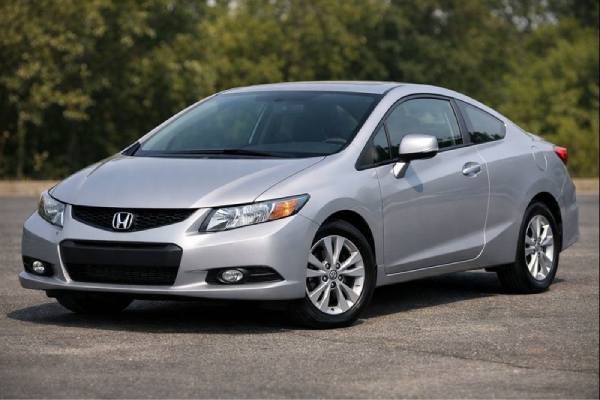


The Honda Civic FG3 equipped with the R18Z1 1.8-liter engine represents Honda’s pragmatic approach to compact-car engineering during the early 2010s. Rather than chasing turbocharged performance trends, Honda focused on mechanical simplicity, predictable behavior, and long-term ownership confidence. The FG3 variant, closely related to other ninth-generation Civics, emphasizes everyday usability, stable handling, and consistent fuel economy across a wide range of driving conditions.
For owners, this Civic is defined less by headline performance and more by how reliably it performs routine tasks year after year. The naturally aspirated R18Z1 engine is tuned for smooth power delivery and low stress on internal components, while the chassis favors ride comfort and straight-line stability. When serviced on schedule and driven with mechanical sympathy, the FG3 Civic can deliver high mileage with modest running costs.
This article provides a complete, owner-focused breakdown of the Civic FG3: how it is engineered, how it drives in the real world, what commonly wears or fails, how to maintain it effectively, how safe it is by modern standards, and how it compares with key rivals from the same era.
What to Know
- Proven naturally aspirated engine favors durability over peak performance.
- Comfortable suspension tuning works well on rough or uneven roads.
- Transmission fluid condition is critical for long-term reliability.
- Spark plugs typically last about 168,000 km (105,000 mi).
- Annual oil changes are advisable even with low mileage.
Start here
- Detailed overview
- Specifications and technical data
- Trims, options, and safety
- Reliability and common issues
- Maintenance and buyer’s guide
- Driving and performance
- How it compares to rivals
FG3 Civic detailed overview
The Civic FG3 sits firmly in the “dependable daily driver” category. Its engineering priorities are evident from the first drive: light controls, predictable responses, and a chassis that prioritizes stability over sharpness. Compared with earlier Civics that leaned more toward sporty character, the FG3 feels more composed and mature, particularly on highways and longer journeys.
The R18Z1 engine is central to this character. With its single overhead camshaft and i-VTEC system, it focuses on efficiency and emissions compliance rather than aggressive valve timing or high specific output. Power delivery is linear and easy to modulate, making the car approachable for drivers of all experience levels. The absence of turbocharging reduces heat stress and simplifies long-term maintenance.
From an ownership perspective, the FG3 rewards consistency. Regular oil changes, correct transmission fluid service, and timely replacement of wear items keep the car operating smoothly. Neglect, rather than design weakness, accounts for most major failures. As a result, well-maintained examples often remain mechanically sound well past average vehicle lifespans.
Specifications and technical data
Powertrain and efficiency
| Item | Specification |
|---|---|
| Engine code | R18Z1 |
| Layout | Inline-4 |
| Valvetrain | SOHC i-VTEC |
| Valves per cylinder | 4 |
| Bore × stroke | 81.0 × 87.3 mm |
| Displacement | 1.8 L (1,799 cc) |
| Induction | Naturally aspirated |
| Fuel system | Multi-point fuel injection |
| Compression ratio | 10.6:1 |
| Max power | 140 hp (104 kW) @ ~6,500 rpm |
| Max torque | 174 Nm (128 lb-ft) @ ~4,300 rpm |
| Timing drive | Chain |
| Rated efficiency | ~7.4 L/100 km (32 mpg US / 38 mpg UK) |
| Real-world highway @ 120 km/h | ~6.3–6.7 L/100 km |
| Aerodynamic drag | Cd ~0.27 |
Transmission and driveline
| Item | Specification |
|---|---|
| Transmissions | 5-speed manual, automatic, or CVT |
| Drive type | Front-wheel drive |
| Differential | Open |
Chassis and dimensions
| Item | Specification |
|---|---|
| Front suspension | MacPherson strut |
| Rear suspension | Multi-link |
| Steering | Electric power assist |
| Brakes | Disc front / disc or drum rear |
| Wheelbase | 2,670 mm |
| Length | ~4,500 mm |
| Width | ~1,750 mm |
| Height | ~1,435 mm |
| Turning circle | ~10.8 m |
| Kerb weight | ~1,180–1,270 kg |
| Fuel tank | ~50 L |
| Cargo volume | ~354 L (VDA) |
Trims, options, and safety
Trim availability for the FG3 Civic varies by market, but the structure generally progresses from basic transport to comfort-oriented variants. Lower trims emphasize durability and ride comfort, while higher trims add convenience features and larger wheels.
Safety equipment includes electronic stability control, multiple airbags, and child-seat anchor points across most markets. Advanced driver-assistance systems are limited compared with newer vehicles, but the FG3’s structural design and braking systems provide solid baseline safety performance.
Reliability and common issues
The FG3 Civic is considered reliable when maintained correctly. Common issues include transmission fluid degradation, worn engine mounts, suspension bushings, and aging air-conditioning components. Serious failures are uncommon and usually linked to overheating events or long-term maintenance neglect.
Maintenance and buyer’s guide
A disciplined maintenance routine is essential. Annual oil changes, brake-fluid replacement every two to three years, timely transmission service, and cooling-system maintenance form the backbone of long-term reliability. Buyers should prioritize service records over trim level or cosmetic condition.
Driving and performance
The FG3 Civic delivers calm, predictable road manners. Steering is light, suspension tuning favors comfort, and high-speed stability is strong. The engine performs best when allowed to rev, and fuel economy remains competitive when driven smoothly.
How it compares to rivals
Compared with rivals such as the Toyota Corolla, Mazda3, and Ford Focus, the FG3 Civic emphasizes reliability and ease of ownership over engagement or torque. It is often the safer long-term choice for buyers prioritizing durability and operating costs.
References
- 2012 Honda Civic Sedan Specifications and Features 2011 (Manufacturer Specifications)
- 2012 Honda Civic 4-door sedan 2012 (Safety Rating)
- Honda Civic 2012 (Safety Rating)
Disclaimer
This article is provided for informational purposes only and does not replace professional diagnosis or repair. Specifications, service intervals, and procedures vary by VIN, market, and equipment. Always verify details using official Honda service documentation. If you found this guide helpful, please consider sharing it on social platforms to support our work.