
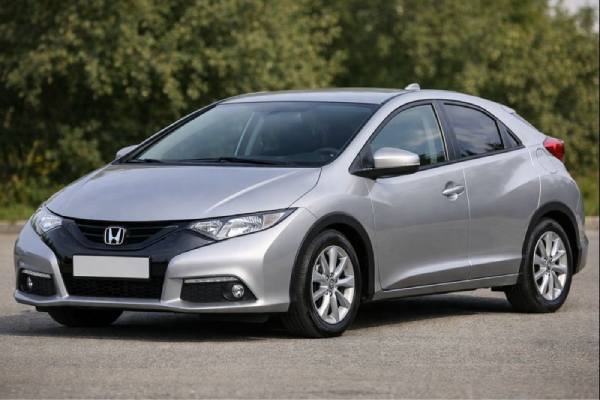
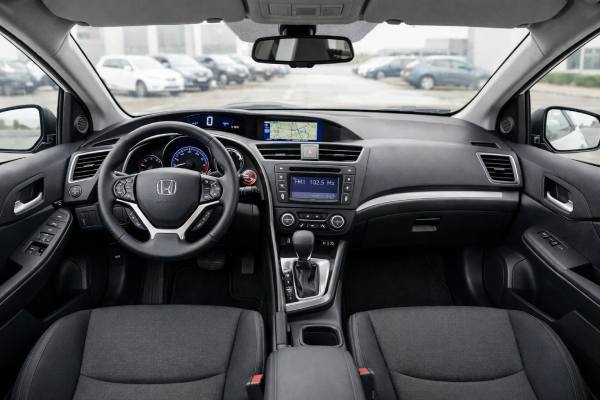
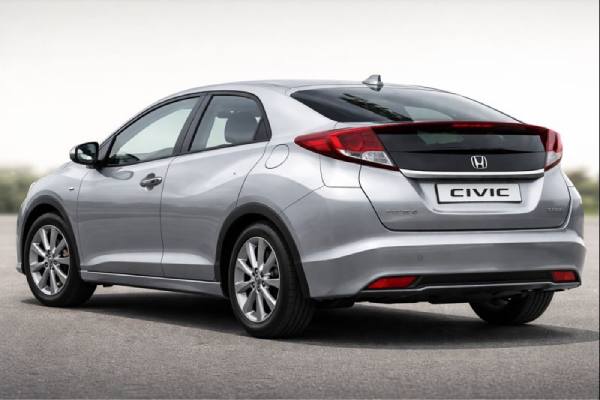
The FK1-generation Civic hatchback was engineered for European roads, and the L13Z1-badged 1.3/1.4 i-VTEC variant is the “quiet achiever” in the range: light on running costs, easy to live with, and surprisingly practical for its footprint. This engine is naturally aspirated and tuned for smooth, predictable response rather than punch, which suits city traffic and steady motorway cruising. Where the FK1 shines is in packaging—its low cowl, wide cabin, and hatchback utility make it feel like a larger car day to day.
For owners, the priorities are simple: keep up with fluids, don’t ignore small suspension noises, and treat rust prevention as part of long-term care if you drive in wet or salted climates. If you want a durable commuter with honest mechanicals and sensible economy, the FK1 1.3/1.4 i-VTEC remains a strong used-car bet.
Essential Insights
- A simple, naturally aspirated engine that rewards regular oil changes and gentle warm-ups.
- Practical hatch packaging with a large boot for the class and good outward visibility for daily driving.
- Balanced ride and steering that feel stable at speed without being harsh in town.
- Watch for age-related suspension knocks, brake slider sticking, and early corrosion on exposed underbody areas.
- Plan engine oil and filter service every 10,000–15,000 km or 12 months (whichever comes first), depending on usage and climate.
Guide contents
- FK1 1.3 engine ownership
- L13Z1 specs and dimensions
- Trims, options, and safety
- Common faults and service actions
- Maintenance plan and buying advice
- Driving feel and real economy
- Rivals and value judgement
FK1 1.3 engine ownership
Honda’s FK1 Civic hatch was designed around a clear brief: make a European-focused family hatch that feels planted at speed, efficient in mixed driving, and genuinely useful as a daily tool. In the 1.3/1.4 i-VTEC form (often registered as 1.3 L in some markets despite its 1339 cc displacement), the character is about consistency rather than excitement. You get a naturally aspirated petrol engine with straightforward servicing needs, a manual gearbox that typically feels positive when healthy, and chassis tuning that prioritizes stability.
From an ownership perspective, the best way to understand this model is to think in systems:
- Powertrain: The engine is low-stress and happiest when maintained on schedule. It does not rely on turbocharging, so there’s no turbo heat management, wastegate, or high-pressure boost plumbing to age out. The trade-off is modest low-end torque, so it prefers revs when merging or climbing.
- Chassis: The FK1’s suspension layout is simple and robust, but rubber parts still age. If you hear knocks over broken pavement, you’re usually looking at common wear items (links, bushings, top mounts) rather than something exotic.
- Body and cabin: The hatchback shape is the “secret advantage.” It swallows bulky loads and is easy to park, while the driving position and dash layout suit long stints. Interior wear is usually predictable: steering wheel shine, seat bolster wear, and rattles if trim clips loosen with age.
In real life, the FK1 1.3/1.4 i-VTEC is best for drivers who value low surprise costs over outright speed. It suits commuters, new drivers, and families who want a compact car that behaves like a larger one on the motorway. The cars that disappoint owners tend to be those bought without inspection—especially examples with neglected fluids, uneven tyre wear (alignment), or rust starting underneath.
A good FK1 feels tight: straight tracking on level roads, calm braking with no pull, and a gearbox that engages cleanly without graunching. If you find one like that and keep maintenance boring and regular, the Civic typically stays boring in the best way.
L13Z1 specs and dimensions
Below is a practical, owner-focused spec set for the FK1 Civic with the 1339 cc i-VTEC rated around 100 PS (commonly marketed as ~100 hp), paired most often with a 6-speed manual in Europe. Values can vary slightly by market, tyres, and certification method, so treat them as a baseline and verify against VIN-specific documentation.
Powertrain and efficiency
| Item | Specification |
|---|---|
| Engine code | L13Z1 (commonly associated with 1339 cc i-VTEC in registrations) |
| Layout | Transverse inline-4 |
| Valvetrain | SOHC i-VTEC, 4 valves/cylinder |
| Bore × stroke | 73.0 × 80.0 mm |
| Displacement | 1.339 L (1339 cc) |
| Induction | Naturally aspirated |
| Fuel system | PGM-FI (port injection) |
| Compression ratio | 10.5:1 |
| Max power | 100 PS (73 kW) @ 6000 rpm |
| Max torque | 127 Nm @ 4800 rpm |
| Rated combined consumption | 5.4 L/100 km |
| Urban / Extra-urban | 6.7 / 4.7 L/100 km |
| CO₂ emissions | 129 g/km |
Transmission and driveline
| Item | Specification |
|---|---|
| Drive type | FWD |
| Transmission | 6-speed manual (typical for this engine) |
| Gear ratios (1st–6th) | 3.461 / 1.869 / 1.235 / 0.948 / 0.809 / 0.727 |
| Reverse | 3.307 |
| Final drive | 4.750 |
Chassis and dimensions
| Item | Specification |
|---|---|
| Suspension (front/rear) | MacPherson strut / torsion beam axle |
| Steering | Electric power steering |
| Lock-to-lock (typical) | ~2.6 turns (varies by wheel size) |
| Length / width / height | 4285 / 1770 / 1472 mm |
| Wheelbase | 2605 mm |
| Ground clearance | 150 mm |
| Turning circle (approx.) | ~11.3 m (kerb-to-kerb equivalent) |
| Kerb weight | ~1181 kg |
| GVWR (max permitted weight) | ~1680 kg |
| Fuel tank | 50 L |
| Cargo volume | ~477 L seats up; up to ~1210 L seats folded (measurement method varies) |
Performance
| Item | Specification |
|---|---|
| 0–100 km/h | ~13.4 s |
| Top speed | ~187 km/h |
Electrical (common baseline)
| Item | Specification |
|---|---|
| 12 V battery | 12V 60Ah |
| Alternator | 12V 95A |
Trims, options, and safety
FK1 trim naming varies by country, but the ownership logic is consistent: the 1.3/1.4 i-VTEC is typically the entry petrol, often paired with sensible wheel sizes (15–16 inch), and the “must-have” comfort features depend on whether the first owner chose convenience packs.
Trims and options that matter mechanically
Most versions share the same fundamentals (engine, FWD layout, torsion-beam rear), so focus on options that change day-to-day cost or feel:
- Wheel and tyre packages: Larger wheels can sharpen steering response but increase tyre cost and can make pothole impacts harsher. If you drive rough city roads, the smaller wheel setup is often the happier long-term choice.
- Infotainment and cameras: Higher trims may add navigation, Bluetooth upgrades, and reversing aids. On older cars, these features can date more quickly than the mechanicals, so make sure everything works before paying extra.
- Idle stop and economy aids: Many FK1 cars include an ECON mode and idle stop strategies. These are generally reliable, but a weak 12 V battery can make stop-start behavior inconsistent.
Quick identifiers when viewing a used car
- Badging: “i-VTEC” on the tailgate is common; some markets add displacement badges, others don’t.
- Tachometer behavior: The engine pulls cleanly but needs revs for brisk acceleration—if it feels unusually flat or jerky, suspect maintenance (plugs, coils, dirty throttle body) rather than “this is just how it is.”
- Service history clues: Regular oil changes and brake-fluid changes are a strong sign of a careful owner. Missing records usually mean you should budget for a full baseline service.
Safety ratings and what they mean here
The FK1-era Civic achieved a 5-star Euro NCAP rating under the protocols of its time. In practical terms, the car’s structure and restraint systems were competitive for its class, and the Civic nameplate in this period is known for solid crash performance.
Key safety equipment you should expect on most FK1s:
- Multiple airbags (front, side, and curtain airbags are common on mainstream European specs).
- ESC/VSA stability control and traction control.
- Seatbelt reminders and ISOFIX/LATCH anchor points in the rear outboard seats.
Driver assistance and ADAS availability
This generation sits in the “transition era” before today’s widespread standard AEB and lane-keeping. Some higher-grade Civics in certain markets offered forward-collision mitigation features packaged as premium options, but most 1.3/1.4 i-VTEC examples should be treated as having core passive safety plus ESC, not modern ADAS. That is not a problem—just align expectations:
- You’ll rely more on tyres, brakes, and good headlights than on automated intervention.
- After any windscreen replacement or front-end repair, verify sensor and camera systems (if fitted) behave normally and no warning lights remain.
Common faults and service actions
The FK1 Civic 1.3/1.4 i-VTEC tends to be mechanically dependable, but age and mileage create predictable patterns. Below is a practical map by prevalence and cost severity, followed by symptoms and fixes you can use during diagnosis or a pre-purchase inspection.
Issues by prevalence and cost tier
Common (low–medium cost):
- Brake caliper slider sticking (uneven pad wear, heat smell).
- Suspension knocks from drop links or tired bushings (noise over bumps).
- 12 V battery weakness (stop-start oddities, slow cranking, random warnings).
- Worn tyres from misalignment (feathering, pull to one side).
Occasional (medium cost):
- Air conditioning performance loss (leaks, condenser damage, compressor wear).
- Ignition coil or spark plug wear (misfire under load, rough idle).
- Wheel bearing noise (humming that rises with speed and changes with cornering).
Rare (higher cost if ignored):
- Persistent oil leaks from seals or covers (usually manageable early).
- Exhaust heat shield corrosion or rattles (annoying, sometimes time-consuming).
Symptom → likely cause → remedy
- Clunk over small bumps → worn anti-roll bar links or top mounts → replace links/mounts, then re-check alignment.
- Steering pull or uneven tyre wear → alignment out, worn bushings, or mixed tyres → correct mechanical wear first, then align.
- Vibration under braking → pad deposits or warped-feeling discs → inspect calipers/sliders; replace discs and pads if needed and lubricate sliders correctly.
- Rough idle, hesitation, or misfire light → plugs/coils overdue or intake/throttle deposits → service plugs at interval, test coils, clean throttle body if appropriate.
- Stop-start inconsistent → weak battery or charging health → load-test battery and verify alternator output under load.
Recalls, TSBs, and why VIN checks matter
For this generation, the most important ownership habit is simple: run a VIN-based recall check and keep proof of completion. Takata-type airbag inflator campaigns affected many manufacturers and model years across the industry, and the only safe approach is confirmation by VIN, not assumptions by year.
When you evaluate a used FK1, request:
- A printout or invoice showing recall work completed.
- Evidence of recent brake service (pads, discs, fluid).
- Proof of routine maintenance rather than “it was serviced at some point.”
Corrosion hotspots (worth checking on every car)
Even a well-maintained Civic can lose value fast if corrosion is ignored. Check:
- Rear underbody seams and exposed brackets.
- Front subframe and suspension mounting points.
- Brake and fuel lines (especially in salted-winter regions).
- Tailgate lower edge and hatch water drains for blockage.
If rust is superficial, treatment and prevention can keep it stable. If you see structural corrosion or heavy scaling on critical mounts, walk away unless you plan for proper repair.
Maintenance plan and buying advice
A good maintenance routine for the FK1 1.3/1.4 i-VTEC is not complicated, but it does need consistency. The goal is to control wear (oil, filters), prevent corrosion (fluids, underbody care), and avoid “cascading” failures (brakes and cooling system neglect).
Practical maintenance schedule (distance/time)
Use the tighter end of intervals for short trips, cold climates, or heavy city use.
- Engine oil and filter: every 10,000–15,000 km or 12 months. Use the exact viscosity and spec listed for your market; many owners run quality 0W-20 or 5W-30 depending on climate and approval.
- Cabin filter: every 15,000–30,000 km or yearly if you drive dusty cities.
- Engine air filter: every 30,000–45,000 km (inspect yearly).
- Brake fluid: every 2 years, regardless of mileage.
- Coolant: typically 5 years initially, then every 3–5 years (verify the specific long-life coolant spec for your region).
- Spark plugs: commonly 100,000–120,000 km or 6 years (earlier if misfires or hard starting appear).
- Manual gearbox oil: every 60,000–100,000 km if you want long synchro life (especially in high-heat city use).
- Aux belt and hoses: inspect annually; replace by condition or around 100,000–160,000 km depending on wear and cracking.
- Tyre rotation and alignment: rotate every 10,000–12,000 km; align when tyres are replaced or if the car pulls.
Fluids and capacities (owner decision level)
Exact capacities vary by engine sub-variant and sump design, so verify before filling:
- Engine oil: typically around 3.5–3.8 L with filter.
- Coolant: typically around 5–6 L for a full drain and refill.
- Manual transmission fluid: often around 1.5–2.0 L.
Critical torque values (verify by service data)
Use these only as common Honda benchmarks until confirmed for your VIN:
- Wheel nuts: typically 108 Nm
- Engine oil drain plug: commonly 30–40 Nm range
Buyer’s checklist (what to inspect)
- Cold start: should be clean with no chain rattle-like noise and no warning lights staying on.
- Road test: track straight, no steering shimmy, no vibration under braking.
- Brakes: check for uneven pad wear and seized sliders (one wheel hotter after a drive).
- Tyres: matching brand/model across an axle, even wear, no feathering.
- Rust: inspect underbody seams, subframe, and brake lines.
- Paperwork: routine services, brake fluid changes, and confirmed recall completion.
If you find a straight, quiet, well-documented car, the FK1 usually rewards you with predictable costs and long service life.
Driving feel and real economy
On the road, the FK1 Civic with the 1.3/1.4 i-VTEC feels like a well-sorted tool: stable, easy to place, and more grown-up at speed than many small family hatches of the same era. You do not buy this powertrain for effortless overtakes, but you can enjoy how consistent the car feels when you drive it the way it likes to be driven.
Ride, handling, and NVH
- Ride: Firm enough to control body movement, but not brittle if the suspension is healthy. Worn links and bushings quickly turn the ride into “busy,” so condition matters more than design here.
- Handling balance: Predictable front-end grip with safe understeer at the limit. The rear torsion beam is tuned for stability, not rotation.
- Steering: Light at parking speeds and steady on the motorway. If the wheel feels vague, check tyre condition and alignment first.
- Noise levels: Wind and tyre noise depend heavily on tyres and wheel size. Quiet tyres make the car feel a class above.
Powertrain character and gearing
This engine is smooth and responds cleanly, but peak torque arrives relatively high, so downshifting is normal when you want pace. Around town, it’s easy; on faster roads, plan overtakes with a gear in hand. The 6-speed manual typically helps by keeping the engine in its useful band without forcing constant shifting.
Real-world efficiency
Official combined consumption is about 5.4 L/100 km, but real numbers depend on speed and temperature:
- City: often 6.5–8.0 L/100 km in heavy traffic, especially in winter.
- Highway at 100–120 km/h: commonly 5.8–6.8 L/100 km if tyres and alignment are good.
- Mixed driving: many owners land around 6.0–7.0 L/100 km.
Short trips are the biggest penalty. If your usage is mostly 5–10 km hops, you’ll see higher fuel use and faster oil contamination—so choose the shorter oil interval and keep the battery strong.
Braking and confidence
The Civic’s braking feel is usually consistent, but neglected caliper sliders create uneven pad wear and a “pull” sensation under braking. A properly serviced brake system (fresh fluid, free-moving sliders, quality pads) transforms the car’s confidence.
Overall, the FK1 1.3/1.4 i-VTEC is a car you can drive all day without feeling tired—provided you keep tyres, alignment, and suspension wear items under control.
Rivals and value judgement
The FK1 Civic 1.3/1.4 i-VTEC sits in a crowded class, and its rivals each offer a different “best at something” story. The Civic’s advantage is rarely a single headline number—it’s the combination of packaging, stability, and long-term predictability.
Versus Volkswagen Golf (similar-era 1.2/1.4 petrol)
- Golf strengths: Often feels more premium inside; strong aftermarket support; wide engine range.
- Civic advantage: Typically simpler ownership in naturally aspirated form (no small-turbo complexity) and often better hatch practicality for the footprint.
- Decision tip: If you want refined cabin feel, the Golf can win. If you want straightforward, low-drama running, the Civic is compelling.
Versus Ford Focus (petrol, including small turbo options)
- Focus strengths: Sharp steering and chassis feel; fun at legal speeds.
- Civic advantage: Stable motorway demeanor and often fewer powertrain variables in the NA i-VTEC model.
- Decision tip: Choose the Focus for driving engagement; choose the Civic for steady, consistent everyday use.
Versus Toyota Auris (1.33 petrol)
- Auris strengths: Strong reputation for durability; sensible running costs.
- Civic advantage: Often feels roomier and more flexible as a hatch, with a driving position many owners prefer for long trips.
- Decision tip: Both can be sensible. Pick based on condition and service history first.
Versus Hyundai i30 and Kia cee’d (1.4 petrol)
- Korean pair strengths: Good value equipment; sometimes newer-feeling infotainment for the money.
- Civic advantage: Honda’s chassis stability and the Civic’s practical packaging still stand out.
- Decision tip: A well-kept i30/cee’d can be a bargain, but don’t underestimate Civic resale stability and parts quality.
Bottom line
If your priority is a dependable commuter that can handle motorway speeds calmly, carry real luggage, and avoid surprise complexity, the FK1 Civic 1.3/1.4 i-VTEC makes sense. The smartest purchase strategy is to buy the best-maintained example, even if it has slightly higher mileage. A clean underbody, even tyre wear, smooth braking, and documented servicing are worth more than a low odometer reading.
References
- 2012 Honda Civic 5-Door 2012 (Press Kit)
- Honda Civic 2012 (Safety Rating Report PDF)
- Product recalls and updates 2025 (Recall Checker)
- Airbag inflator recall 2025 (Recall Safety Campaign)
- Check if a vehicle, part or accessory has been recalled 2017 (Recall Database)
Disclaimer
This article is for informational purposes only and is not a substitute for professional diagnosis, inspection, or repair. Specifications, torque values, service intervals, and procedures can vary by VIN, market, model year, and equipment, so always verify details using official Honda service documentation for your exact vehicle.
If this guide helped, please consider sharing it on Facebook, X, or your preferred platform to support our work.