
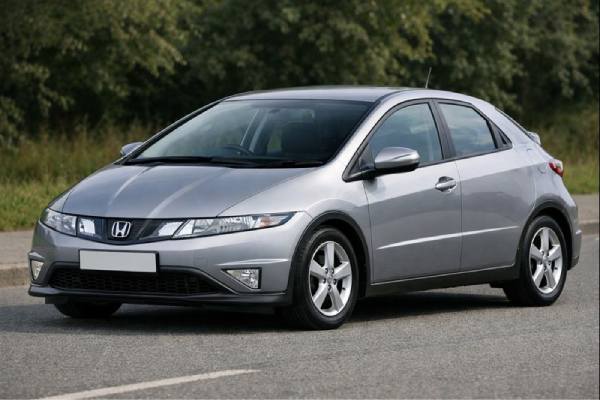
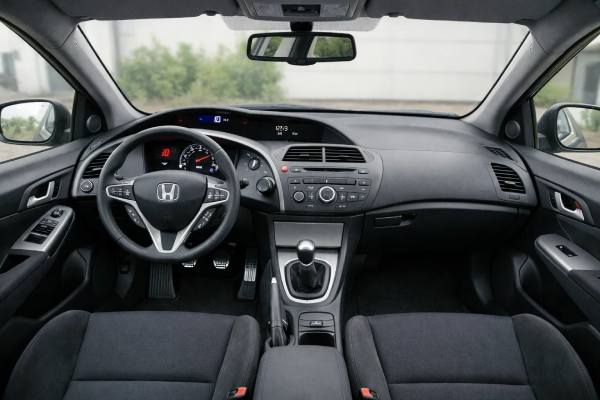
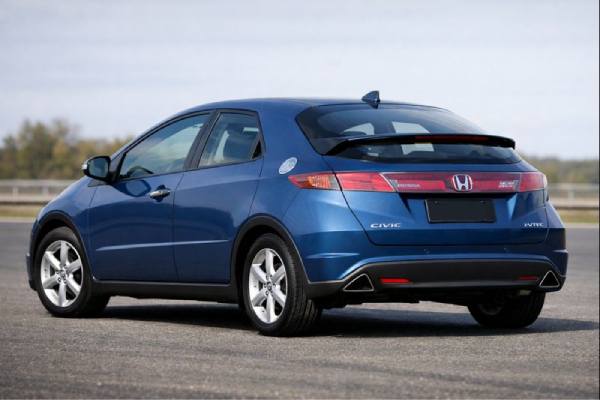
The Honda Civic (FK1) with the L13A7 1.3-liter engine sits at the “simple and efficient” end of the Civic family. Instead of chasing outright speed, this setup prioritizes low running costs, light front-end feel, and easy day-to-day drivability. The L13A7 is part of Honda’s L-series: an aluminum four-cylinder with a timing chain and a reputation for tolerating high mileage when basic maintenance is kept up. In the real world, ownership success is less about the engine block and more about the details—correct oil, clean air paths, healthy ignition parts, and suspension wear that creeps in with age.
If you’re shopping one today, the biggest advantage is predictable, low-stress mechanicals. The biggest risk is buying a neglected example: small issues (misfires, cooling neglect, worn mounts) can stack up and make an otherwise honest car feel tired.
What to Know
- Best fit for city and mixed driving where smooth torque and light weight matter more than acceleration.
- Timing chain design avoids scheduled belt changes, but oil quality and level matter.
- Expect age-related wear in suspension bushings, wheel bearings, and engine mounts on higher-mileage cars.
- If equipped with i-DSI-style ignition hardware, plug and coil condition strongly affects fuel use and smoothness.
- Plan engine oil and filter service every 10,000–15,000 km (6,000–9,000 mi) or 12 months, depending on use.
Quick navigation
- FK1 Civic 1.3 in context
- L13A7 specs and measurements
- Equipment, trims, and safety kit
- Known faults and service campaigns
- Maintenance schedule and buying tips
- On-road feel and economy
- Rivals and better alternatives
FK1 Civic 1.3 in context
Think of the FK1 Civic 1.3 as the “efficiency-first” Civic: it’s built around steady commuting, not fast overtakes. In markets where this powertrain was offered, it appealed to drivers who valued Honda’s engineering consistency—good ergonomics, predictable handling, and simple ownership—while keeping fuel and servicing costs manageable.
From an engineering perspective, the biggest story is balance. A small-displacement, naturally aspirated four-cylinder keeps under-hood heat and mechanical stress modest. That helps longevity, especially compared with highly boosted engines that make more power from less displacement. The trade-off is obvious: you need to drive it with intent. On steep grades or highway merges, you’ll use more throttle and more revs than you would in a larger Civic engine.
Where the FK1 platform tends to shine is the chassis. Even in modest trims, the Civic’s basic structure and suspension tuning usually deliver a stable, confidence-inspiring feel. As the car ages, that advantage depends heavily on condition. Worn dampers, cracked bushings, or cheap tires can turn a composed car into a noisy one. The smart buyer treats suspension and tires as part of the “powertrain,” because they shape the whole driving experience as much as horsepower does.
Ownership costs are typically friendly if you keep the fundamentals tight:
- A smooth, even idle (no misfires)
- Stable operating temperature (cooling system maintained)
- Clean intake path (filters and throttle body not neglected)
- Quiet accessory drive (belts, pulleys, and mounts in good shape)
If you can find a well-kept example, the FK1 Civic 1.3 tends to be a calm, dependable daily. If you find a neglected one, the same car can feel sluggish, rough, and thirsty—not because the design is flawed, but because small maintenance misses show up more clearly when the engine has limited reserve power.
L13A7 specs and measurements
This section focuses on commonly seen specifications for an FK1 Civic with the L13A7 1.3-liter engine. Exact values can vary by model year, gearbox, wheel/tire package, and market homologation—so treat the numbers as a well-informed baseline, then verify against the vehicle’s VIN-specific documentation.
Powertrain and efficiency (typical)
| Item | Spec |
|---|---|
| Code | L13A7 |
| Engine layout and cylinders | Inline-4, aluminum block and head; SOHC; typically 2 valves/cyl (market-dependent) |
| Displacement | 1.3 L (≈1339 cc) |
| Induction | Naturally aspirated |
| Fuel system | PGM-FI / multi-point fuel injection (PFI) |
| Bore × stroke | ≈73.0 × 80.0 mm (2.87 × 3.15 in) |
| Compression ratio | ≈10.5–11.0:1 (varies by calibration) |
| Max power | 83 hp (≈62 kW) @ ~5,500–6,000 rpm |
| Max torque | typically ~115–120 Nm (85–89 lb-ft) @ ~2,800–4,000 rpm |
| Timing drive | Chain |
| Rated efficiency | commonly ~5.5–6.5 L/100 km (43–36 mpg US / 51–43 mpg UK), depending on gearbox and trim |
| Real-world highway @ 120 km/h | often ~6.5–7.5 L/100 km (36–31 mpg US / 43–38 mpg UK), wind and tires matter |
| Aerodynamics | Cd commonly in the ~0.31–0.33 range for similar Civic hatch profiles |
Transmission and driveline (typical)
| Item | Spec |
|---|---|
| Transmission | Most commonly 5-speed manual; some markets may use an automatic/CVT variant |
| Drive type | FWD |
| Differential | Open |
Chassis and dimensions (typical FK hatchback proportions)
| Item | Spec |
|---|---|
| Suspension (front/rear) | Strut front; rear layout varies by platform/market (commonly torsion beam on many Civics of this era) |
| Steering | Electric power steering (EPS) on many trims; ratio varies |
| Brakes | Front discs; rear discs or drums depending on trim/market |
| Wheels/tires | Often 15–16 in wheels on efficiency-focused variants |
| Length / width / height | roughly 4,240–4,280 / 1,760–1,780 / 1,450–1,480 mm |
| Wheelbase | ~2,620–2,640 mm |
| Turning circle | commonly ~10.8–11.0 m (35–36 ft) |
| Curb weight | often ~1,150–1,260 kg (2,535–2,778 lb), equipment dependent |
| Fuel tank | commonly ~50 L (13.2 US gal / 11.0 UK gal) |
| Cargo volume | varies widely by measurement standard and seat configuration |
Fluids and service capacities (typical ranges)
| Item | Spec (verify by VIN) |
|---|---|
| Engine oil | 0W-20 or 5W-30 (market/climate dependent); ~3.3–3.7 L (3.5–3.9 US qt) with filter |
| Coolant | long-life ethylene glycol mix; often ~4–5 L (4.2–5.3 US qt) total system fill |
| Manual trans fluid | Honda MTF-type fluid; often ~1.5–2.0 L (1.6–2.1 US qt) |
| A/C refrigerant | varies by system; check under-hood label |
Electrical (typical)
| Item | Spec |
|---|---|
| 12 V battery | commonly 35–45 Ah class (varies by market) |
| Spark plugs | configuration varies by ignition system; verify correct plug type and quantity |
Equipment, trims, and safety kit
Because FK1 trims and option structures vary heavily by country, the most useful approach is to think in “layers”: base functional equipment, mid-grade comfort, and top-tier convenience. Then confirm what the specific car has by VIN decode, original build sheet, and a physical check.
Trims and options that matter mechanically
Even when engines match, trims can change how the car feels and what it costs to refresh:
- Wheel and tire size: Smaller wheels typically ride better, cost less, and protect suspension on rough roads. Larger wheels sharpen response but can add tire noise and harshness.
- Rear brake type: Some trims use rear drums; others use rear discs. Discs usually offer better repeated braking feel and easier visual inspection, while drums can be durable but need occasional adjustment/service.
- Stability control availability: Some markets offered stability control (often branded as VSA or similar) as standard later in the run, optional earlier, or tied to higher trims. It’s worth having for wet, snow, and emergency maneuvers.
- Air conditioning type: Manual A/C is simpler; automatic climate control adds sensors and blend door mechanisms that can fail with age.
Quick identifiers when you’re standing next to the car:
- Brake check: Look through the rear wheel—disc rotor visible = rear discs; enclosed drum = drums.
- Stability control: Look for a dash button/icon and confirm by a scan tool if unsure.
- Headlights: Projectors vs reflectors can indicate higher trim, but retrofits exist—inspect wiring quality.
Safety ratings (how to interpret them)
Safety ratings depend on the exact body style, year, and test protocol. A Civic tested under one protocol year is not directly comparable to a newer car tested with modern requirements like autonomous emergency braking (AEB) and stricter occupant metrics. Use crash-test results as a baseline indicator of structure and restraint performance, then focus on the car’s real safety condition today: tires, brake performance, and functioning airbags/pretensioners.
Safety systems and driver assistance (typical for this era)
For most Civics from this period, you can generally expect:
- Front airbags plus side airbags (trim-dependent)
- Side curtain airbags on many higher trims
- Seatbelt pretensioners and load limiters in front seats
- ABS (anti-lock braking system) often standard
- EBD (electronic brakeforce distribution) commonly included with ABS
- ISOFIX/LATCH child-seat anchors in many markets (verify presence and condition)
What you should not expect on many 2005–2011-era vehicles:
- True modern ADAS suites: AEB, adaptive cruise control (ACC), lane centering, and blind-spot monitoring were not widely standard in this class and period.
After any crash repair or steering/suspension work, verify wheel alignment and ensure steering angle sensors (if equipped) are calibrated correctly. Even without advanced driver aids, stability control (when present) relies on accurate sensor inputs.
Known faults and service campaigns
A well-maintained FK1 Civic 1.3 can be very dependable, but age and usage patterns create predictable problem clusters. The best way to think about issues is by prevalence and cost tier, so you can prioritize what matters in a pre-purchase inspection.
Common (low–medium cost)
1) Rough idle or hesitation
- Symptoms: uneven idle, mild shaking, occasional misfire under load, worse in damp weather.
- Likely causes: worn spark plugs, tired coils, aging plug leads/connectors (system dependent), vacuum leaks, dirty throttle body.
- Remedy: correct plugs to spec, inspect/replace coils as needed, smoke-test intake, clean throttle body and confirm idle learn procedure if required.
2) Engine mount wear
- Symptoms: vibration at idle in gear, clunk on throttle on/off, harshness over bumps.
- Likely causes: collapsed hydraulic mount(s) or torn rubber mounts.
- Remedy: replace mounts in priority order (usually torque mount + main mount first), then reassess.
3) Suspension knocks and vague handling
- Symptoms: clunks over small bumps, wandering on highway, uneven tire wear.
- Likely causes: worn drop links, control arm bushings, ball joints, tired dampers, alignment drift.
- Remedy: refresh worn joints/bushings, fit quality dampers, align after repairs.
Occasional (medium cost)
4) A/C performance drop
- Symptoms: weak cooling, intermittent compressor cycling, noise when A/C engages.
- Likely causes: low refrigerant from slow leak, condenser corrosion, compressor clutch wear.
- Remedy: leak test, repair leaks before recharging, verify correct refrigerant charge weight.
5) Wheel bearing hum
- Symptoms: rising road noise with speed, changes slightly with load during lane changes.
- Likely causes: bearing wear (age, pothole impacts, heavy wheel packages).
- Remedy: replace affected hub/bearing assembly; align if tire wear is present.
Rare (higher cost, but watch for it)
6) Cooling system neglect leading to overheating
- Symptoms: temperature spikes, coolant smell, repeated top-ups, heater performance changes.
- Likely causes: old coolant, stuck thermostat, weak radiator cap, radiator clogging, water pump wear.
- Remedy: pressure test, restore correct coolant, replace weak components early—overheating is what turns a cheap fix into an expensive one.
Recalls, TSBs, and extended coverage (how to handle it)
Campaigns vary by market, but for this era, always check for:
- Airbag inflator campaigns (common across many manufacturers in the late 2000s/2010s)
- Seatbelt/pretensioner-related campaigns (less common, but high importance)
- Fuel system or wiring-related campaigns (market-dependent)
Verification best practice:
- Run a VIN recall check using an official database.
- Ask for dealer documentation showing completion.
- Confirm warning lights illuminate and then go out normally at startup (airbag light behavior matters).
Maintenance schedule and buying tips
For a Civic 1.3 like this, the goal is not just “change the oil.” The goal is to keep the engine breathing, sparking, cooling, and mounting correctly—because modest powertrains feel dramatically worse when any one system is slightly off.
Practical maintenance schedule (baseline)
Every 10,000–15,000 km (6,000–9,000 mi) or 12 months
- Engine oil and filter (use the correct viscosity for your climate and spec)
- Inspect for leaks, coolant level, and belt condition
- Tire pressure check and a quick tread scan
Every 20,000–30,000 km (12,000–18,000 mi) or 2 years
- Engine air filter (more often in dusty areas)
- Cabin air filter
- Brake inspection (pad thickness, rotor condition, caliper slide pins)
- Brake fluid (many owners do every 2 years regardless of mileage)
Every 40,000–60,000 km (25,000–37,000 mi)
- Manual transmission fluid change (a big help for shift quality and synchro life)
- Inspect suspension bushings and ball joints closely
- Alignment check (especially if tire wear is uneven)
Every 80,000–120,000 km (50,000–75,000 mi)
- Spark plugs (earlier if misfires, poor fuel economy, or rough cold starts)
- Coolant service interval varies: many long-life coolants are 5 years initially, then shorter—verify for your market
- Accessory belt replacement if cracked or noisy
Timing components
- Timing chain: no fixed replacement interval, but listen for rattles, monitor for timing correlation faults, and avoid oil neglect. A chain system usually fails from poor lubrication, not from “normal age” alone.
Fluid specifications and “decision-grade” torque values
Because values vary by engine variant and market, use these as practical decision points, then verify in official documentation:
- Wheel nuts: commonly around 108 Nm (80 lb-ft) on many Hondas
- Spark plugs: commonly 18–25 Nm (13–18 lb-ft) depending on plug type
- Oil drain plug: commonly 30–40 Nm (22–30 lb-ft) depending on pan design
Buyer’s guide: inspection checklist
Bring a flashlight and take your time:
- Cold start: should fire quickly and settle to a stable idle. Any hunting or shaking points to ignition/air issues.
- Cooling behavior: engine should warm steadily and stay stable; check for oily residue in coolant reservoir.
- Clutch and gearbox (manual): smooth engagement, no shudder, no crunch on 2nd/3rd when shifting briskly.
- Suspension and steering: test over small sharp bumps and during slow full-lock turns; listen for knocks.
- Brakes: consistent pedal feel, no steering pull, no vibration under moderate braking.
- Rust and water ingress: check wheel arches, underbody seams, tailgate area, and cabin carpets for dampness.
- Electrics: windows, mirrors, A/C, blower speeds, central locking; older Hondas are usually solid, but failures do happen.
Long-term durability outlook: buy on condition. A healthy L-series engine and a tidy chassis can go a long time, but neglected examples often need a “catch-up” package (mounts, suspension, ignition, fluids) to feel right again.
On-road feel and economy
With 83 hp on tap, performance is defined by momentum. The Civic 1.3 is at its best when you drive smoothly, keep speed through corners, and anticipate traffic rather than sprinting between gaps.
Ride, handling, and NVH
A good FK1 chassis generally feels stable at speed and predictable in corners. Steering is usually light and easy in town, and the car tends to track straight if alignment and tires are correct. The main age-related changes you’ll notice are:
- More road noise as door seals and tire compounds age
- More impact harshness if dampers are tired or if oversized wheels are fitted
- A “busy” feel on uneven pavement when bushings and mounts are worn
If you’re evaluating a car, pay attention to how it behaves at 90–120 km/h (55–75 mph). A healthy one feels calm. A worn one can feel noisy and slightly restless.
Powertrain character
The L13A7’s character is typically smooth and cooperative rather than punchy:
- Throttle response: usually clean at low speeds; hesitation suggests ignition, intake leaks, or dirty throttle body.
- Low-rpm torque: adequate for city use; you’ll downshift for hills and overtakes.
- High-rpm behavior: you may need to use the upper half of the rev range on highways. That’s normal—just make sure it sounds smooth and doesn’t misfire.
Manual gearboxes (where fitted) often feel light and direct when fluid is fresh. Notchy shifting can improve noticeably after a correct fluid change—assuming synchros are still healthy.
Real-world fuel economy
Real-world consumption depends heavily on speed, tires, and driving style:
- City driving: often around 6.5–8.0 L/100 km (36–29 mpg US / 43–35 mpg UK)
- Highway 100–120 km/h: often 6.0–7.5 L/100 km (39–31 mpg US / 47–38 mpg UK)
- Mixed use: commonly 6.2–7.2 L/100 km (38–33 mpg US / 46–39 mpg UK)
Cold weather can add a meaningful penalty because the engine spends more time warming up and the heater load increases. Short trips are the worst case: the car may never reach fully efficient operating temperature.
Key performance metrics (typical expectations)
Because actual figures vary with gearing and vehicle weight, it’s best to think in ranges:
- 0–100 km/h (0–62 mph): often 13–14.5 s
- Top speed: often 165–175 km/h (103–109 mph)
If your test drive feels substantially slower than this, it’s a sign to check for misfires, dragging brakes, low tire pressure, or intake restrictions.
Rivals and better alternatives
In the 2005–2011 compact class, the Civic’s main competition came from cars that either offered more low-end torque (often through larger displacement) or similar economy with simpler servicing. The right choice depends on how much you value Honda’s chassis feel and long-term predictability versus outright performance and parts pricing in your local market.
Versus Toyota Corolla (similar years)
- Corolla advantage: often feels more relaxed at low rpm with comparable economy; tends to be extremely tolerant of basic maintenance.
- Civic advantage: typically sharper steering/handling and a more “connected” feel.
- Decision point: if you want the lowest-effort commuting experience, Corolla can be easier. If you care about chassis feel, Civic often wins.
Versus Volkswagen Golf (Mk5/Mk6 era)
- Golf advantage: many engines offer stronger midrange, and cabin refinement can be excellent.
- Civic advantage: Honda powertrains often handle high mileage with fewer “surprise” failures if serviced correctly.
- Decision point: Golf can be great when well maintained, but repair complexity and parts costs can rise faster as it ages.
Versus Ford Focus (Mk2 era)
- Focus advantage: strong steering feel and chassis balance; usually enjoyable at everyday speeds.
- Civic advantage: often more consistent long-term powertrain reliability and strong resale in many regions.
- Decision point: if you find a clean Focus with solid service history it’s a strong alternative, but condition matters as much as brand.
Versus Honda Jazz/Fit (with similar L-series engines)
- Jazz/Fit advantage: often lighter, very city-friendly, and sometimes cheaper to run.
- Civic advantage: generally more stable at highway speeds, often more spacious for passengers, and can feel more “grown up.”
- Decision point: if you’re mostly urban, a Jazz/Fit can be the smarter tool. If you do more highway, the Civic tends to feel better.
Bottom line
Choose the FK1 Civic 1.3 if you want a compact that rewards being maintained properly and you’re comfortable with modest acceleration. If you need frequent high-speed overtakes or carry heavy loads, a larger-engine Civic or a torque-richer rival will reduce daily effort—often with only a small penalty in real-world fuel use.
References
- Check for Recalls: Vehicle, Car Seat, Tire, Equipment | NHTSA 2025 (Recall Database)
- Check if a vehicle, part or accessory has been recalled – GOV.UK 2025 (Recall Database)
- Euro NCAP | Search results 2025 (Safety Rating)
Disclaimer
This article is for informational purposes only and is not a substitute for professional diagnosis, inspection, or repair. Specifications, torque values, fluid capacities, service intervals, and procedures can vary by VIN, market, model year, and installed equipment—always verify details using the official service information and owner documentation for the exact vehicle you are working on.
If this guide helped, please consider sharing it on Facebook, X/Twitter, or your favorite forum to support our work.